STAY CONNECTED


Government Licence No.: 131483/071/072
STAY CONNECTED
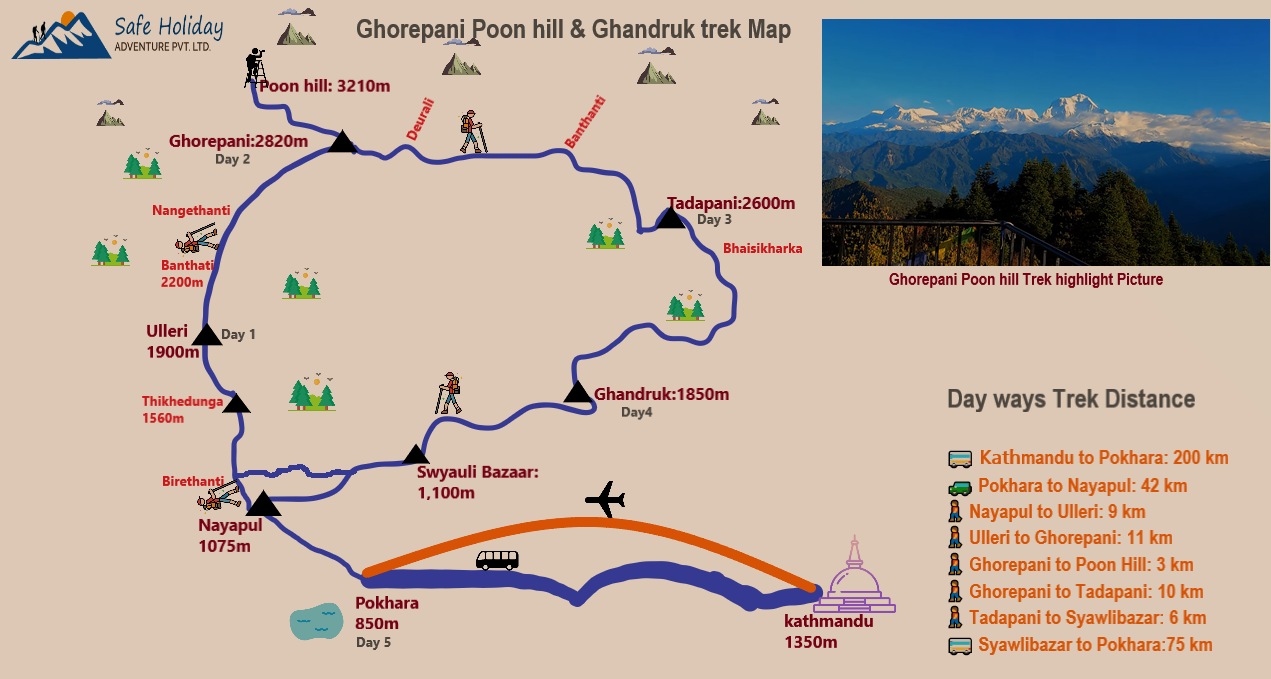
The 5-day Ghorepani Trek from Pokhara is a perfect getaway for those looking to explore the Annapurna region in a short time. The trek offers stunning views of the mountains, sunrise from Poon Hill, and a glimpse into the local culture and lifestyle.


The Ghorepani trek 5 days is one of the most scenic short treks in the Annapurna region of Nepal. It covers approximately 51 kilometers and can be completed in about 4 to 5 days. Each day involves trekking 7 to 12 kilometers, with 4 to 6 hours of walking over varied terrain. Expect uphill and downhill paths, including some steep climbs. A major highlight is the sunrise view from Poon Hill, where you can see the Annapurna and Dhaulagiri mountain ranges in their full glory. This trek is best done between March to May and September to November. You will walk through beautiful rhododendron and oak forests, enjoying glimpses of local flora and fauna. For a safe trekking experience, carry appropriate gear and ensure proper acclimatization.
The Ghorepani Trek 5 days begins from the beautiful city of Pokhara (850 m). From there, you’ll take a scenic drive to Nayapul (1,070 m), which is the official starting point of the trek. Along the way, you’ll pass lush rice fields, rivers, and green hills. The walk starts by crossing a small bridge and continues toward the village of Birethanti (1,025 m), where you check your trekking permits. The trail then leads gently through the peaceful villages of Hille (1,430 m) and Tikhedhunga (1,540 m).
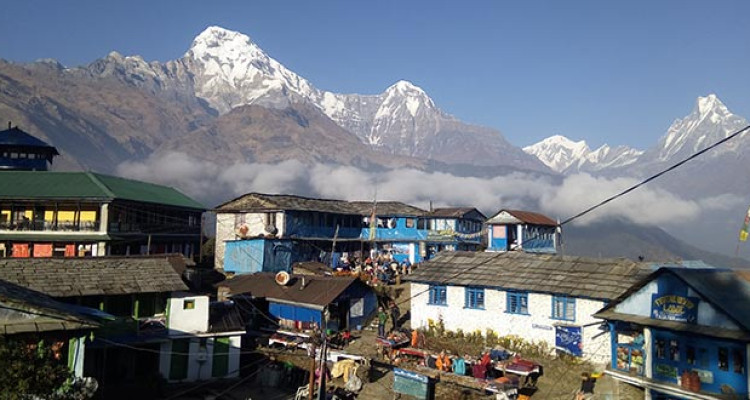
From Tikhedhunga, a steep stone staircase climbs up to Ulleri (2,070 m), a Magar village offering your first views of Annapurna South (7,219 m) and Hiunchuli (6,441 m). As you climb higher, the trail passes through dense rhododendron and oak forests, alive with birds and mountain views. This scenic trek offers clear sights of Machhapuchhre (Fishtail, 6,993 m) and Annapurna I (8,091 m).
Once you reach Ghorepani (2,874 m), you’ll stay overnight in a teahouse. Early next morning, a short uphill hike takes you to Poon Hill (3,210 m), a famous viewpoint to watch the sunrise over the Himalayas. From here, you can see over 20 snow-capped peaks, including the Dhaulagiri Range (8,167 m) and the full Annapurna Range.
After enjoying the views, the trail descends to Tadapani (2,630 m), surrounded by rhododendron trees and wildlife. The last leg takes you to Ghandruk (1,940 m), a traditional Gurung village known for its culture, museum, and stunning views. From Ghandruk, you’ll either drive back to Pokhara or extend your journey.
Many trekkers choose to combine or extend the Ghorepani trek to Annapurna Base Camp, Mardi Himal, or Khopra Ridge Trek. These routes offer more adventure, higher altitudes, and quieter trails. With its easy access, breathtaking views, and rich local culture, the 5-day Ghorepani Trek is one of the best short Himalayan treks in Nepal.
The classic Ghorepani trek route usually starts from Nayapul or Birethanti. From Pokhara, trekkers take a jeep or bus to Nayapul and begin their trek towards Ghorepani.
However, some people prefer to start from Ghandruk. In this case, you take a jeep or bus from Pokhara to Ghandruk, a beautiful Gurung village. From Ghandruk, the trek continues to Tadapani, then to Bhaishikharka, and finally reaches Ghorepani.
This route offers wonderful views of the mountains, rhododendron forests, and chances to experience local culture along the way. It is a popular choice for those who want a slightly different and scenic trekking experience
To enter the Annapurna Conservation Area, trekkers need a valid Annapurna Conservation Area Permit (ACAP). This permit is compulsory and costs about USD 26. While the Trekkers’ Information Management System (TIMS) card used to be required, it is not strictly needed nowadays for the Ghorepani trek. Both permits (if needed) are available in Kathmandu and Pokhara. Always carry your ACAP permit during the trek, as you must show it at checkpoints along the trail.
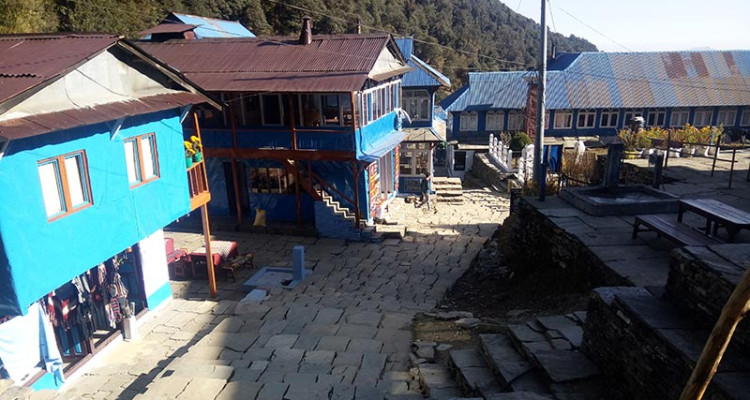
This trek provides meaningful encounters with the Poon and Gurung communities. These ethnic groups are known for their hospitality and distinctive architecture—homes built from stone and mud with carved wooden details. As you pass through their villages, observe daily activities like farming, weaving, and cattle herding. You can also enjoy traditional foods such as dal-bhat, momos, and thukpa. These experiences give you a deeper understanding of the Himalayan lifestyle.
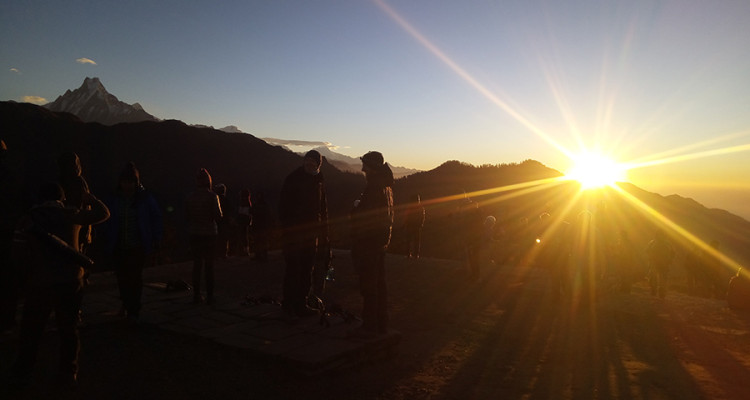
The sunrise from Poon Hill is a highlight of the trek. Starting early in the morning, trekkers ascend to the viewpoint at 3,210 meters. As the sun rises, it lights up the peaks of Annapurna I (8,091 m), Dhaulagiri (8,167 m), Hiunchuli (6,441 m), and Machhapuchhre (Fishtail, 6,993 m). The vibrant colors and dramatic shadows create a memorable moment. It’s a favorite spot for photography and a main reason many travelers choose this route.
2-Day Ghorepani Trek: Short and Sweet Adventure
This option is ideal for those with limited time who still want to experience the beauty of the Himalayas. The journey begins with a drive from Pokhara to Banthati (2,210 m), followed by a trek uphill to Ghorepani (2,874 m). After an overnight stay, wake up early for the breathtaking sunrise at Poon Hill (3,210 m). Later, you’ll retrace your steps back to Banthati and drive to Pokhara the same day. This trek is short yet rewarding, offering stunning mountain views in just two days.
3-Day Ghorepani Trek: Quick but Comfortable
A slightly more relaxed version, this itinerary allows for extra overnight stops to reduce the rush. Day one involves driving to Nayapul (1,070 m) and trekking up to Tikhedhunga (1,540 m) or Ulleri (2,070 m). On day two, continue to Ghorepani, enjoy the sunrise at Poon Hill the next morning, and descend to Banthati or Hille before heading back to Pokhara. This plan balances speed and comfort, suitable for travelers who want a brief yet complete experience.
4-Day Ghorepani Trek: Cultural and Scenic Walk
This version offers a more immersive journey, ideal for trekkers who want time to explore local culture. Begin from Nayapul, hike through Tikhedhunga, Ulleri, and Banthati, and spend the night at Ghorepani. Watch the sunrise from Poon Hill, then trek down to Tadapani (2,630 m). On the final day, descend to Ghandruk (1,940 m) and drive back to Pokhara. This option allows time for village interaction, photography, and nature appreciation.
5-Day Ghorepani Trek: Full Himalayan Experience
This is the most popular itinerary, offering a complete trekking package. Starting from Nayapul, walk through Tikhedhunga, Ulleri, and Banthati, reaching Ghorepani on the second night. After experiencing the sunrise from Poon Hill, continue to Tadapani, then descend to Jhinu Danda (1,780 m), where you can relax in the natural hot springs. On the final day, trek to Ghandruk and return to Pokhara. This route combines mountain views, cultural villages, and natural relaxation.
6-Day Ghorepani Trek: Extended Scenic Circuit
For those who want a longer adventure, the 6-day version is a scenic and peaceful route. Trek from Nayapul to Thikhedunga, then proceed to Ghorepani, enjoy the sunrise at Poon Hill, and continue to Tadapani and Ghandruk. From there, walk through Landruk (1,565 m) and Dhampus Phedi (1,130 m) before returning to Pokhara. This trek covers multiple Gurung villages, more valley views, and varied landscapes, making it ideal for photographers and cultural explorers.
The 5-day Ghorepani trek is considered to be of moderate difficulty, making it accessible to most hikers with a reasonable level of fitness. The trail features a mix of uphill climbs, stone staircases, and forest paths. You will ascend from Nayapul (1,070 m) to Ghorepani (2,874 m), with the highest point being Poon Hill at 3,210 meters. Although the altitude is moderate, some trekkers may experience mild altitude sickness, so proper acclimatization and hydration are important.
The trek’s moderate pace and availability of comfortable tea houses for overnight stays make it manageable for beginners and experienced trekkers alike. The paths are well-marked and maintained, but the steep sections, especially around Ulleri with its 3,000+ stone steps, require good stamina.
The best time to trek Ghorepani is during spring (March to May) and autumn (September to November). In spring, the trails burst with vibrant rhododendron blooms, painting the landscape in stunning colors. Meanwhile, autumn offers crystal-clear mountain views, including spectacular sights of the Annapurna and Dhaulagiri ranges, alongside dry and pleasant weather conditions. Both seasons provide ideal temperatures and stable weather, perfect for comfortable trekking.
For those seeking a quieter journey, the shoulder seasons of February and June offer fewer crowds and a peaceful trekking experience without sacrificing too much on weather. These months are great for travelers who want to avoid peak tourist times while still enjoying the beauty of the Annapurna region.
Choose the right season to make your Ghorepani trek unforgettable!
The Poon hill view tower
Day 01: Arrive in Kathmandu (1,300 m/4,264 ft)
A safe holiday adventure will get you when you land at the Kathmandu TIA airplane terminal and take you to the hotel we have given in the trip package. In the wake of achieving the lodging, we let you rest for quite a while, and after our guide and pioneer will meet you for short trek instructions and excursion readiness. On the off chance that you have time, we will be glad to take you to the Nepali local restaurant for a welcome dinner.
Day 02: Drive from Kathmandu to Pokhara (823 m/2,700 ft),
We take early traveler standard transport from Sorakhutte Kathmandu, which is a 5-minute stroll from Thamel toward the west. The transport ride will be extremely picturesque in that you can see many green cultivating, slopes, streams, and run-of-the-mill houses.
The 7-hour transport drive will take you to Beautiful Pokhara. Upon your landing, in Pokhara, you register with your inn at that point stroll around the city close to the Phewa Lake from where we can see Annapurna mountain run, Mt. The Machhapuchhre, and Many green moving slopes. Medium-term remain in Pokhara inn.
Day 03: Drive to Nayapul in the first part of the day at that point trek to Ulleri using Nayapul and Birethanti.
After eating in Pokhara lodging we drive to Nayapul in a private vehicle and stroll towards Birethanti. we need to demonstrate our licenses and TIMS cards. After that checkpoint of the Annapurna trek, we stroll along Rivers, and valleys through some neighboring villages Ramgai, the Sudamevillage, and Hille.
We will eat at Ramgai most likely as it is a lunch place, however, if you are not all that we can walk further up to get to the next settlements. In having a Local new lunch, we walk an additional 2 hours to Ulleri. The last 2:30-minute walk will be steep, however, you get ever more elevated from where you can see the scene of Mt. Annapurna and Fishtail. Medium-term remains at Ulleri.
Day 04: Hike to Poon slope for dawn at that point trek to Tadapani (2,700 m/8,860 ft).
Today is our major trekking day as we are going to dawn perspective Poon Hill promptly in the first part of the day. We convey our day pack, water, little cash, and camera for this short climb to Poon Hill from where we can see simply indescribable perspectives over the Himalayas. The Poon (Pun) hill is a standout among the most visited trekking courses in the Annapurna district. Once we reach the viewpoint at Poon hill, we have a brilliant view of Annapurna and Dhaulagiri mountain massif. It is a morning hike that takes about an hour. The Poon hill view tower provides stimulating sunrise views and countless rolling hills. Though, Poon Hill sunrise is the best part of this trek that means you should not miss it.
We return to Ghorepani to have breakfast and we climb Gurung hill. It is practically comparable altitude to Poon Hill. Once we reach there you have the shocking perspective of the Himalayas still there.
We strolled through the Rhododendron forest and passed some awesome scenes. We, then reach Banthati where we will stop for lunch.
After lunch, we will have a simple slow downhill stroll on the little stream at the base of the slope we about 40 minutes steeply up to Tatapani. We are staying at Tadapani tonight. It is a beautiful village on the ridge of the Mountain.
Day 05: Trek from Tadapani to Tolka (1850 m).
After breakfast at Tadapani, we have an easy walk in the woodland forest for 30 to 40 minutes. Recently, we reached Bhaisikharka. From here we have descent strolling through the dim and timberland along the little stream. If you start your day very early you may encounter some wild animals in this area.
The 2 hours of serene strolling into the backwoods, we will reach Beautiful Ghandruk town where we will stop for lunch at that point soak down to the Kyumi then climb to Landruk which is only the inverse of Ghadruk and its wonderful Gurung Village from that point forward, we will have simple level streets strolling to the Tolka village around 1 more hour. We spent a night at Tolka.
Day 06: Trek from the Tolka to Phedi & Pokhara via Deaurali, Pothana, and Dhampus.
Today is our last strolling day of this trek. We start our day after breakfast at Tolka. The trek today will be simple for an hour in an open huge rough terrain we at that point pursue the common soak trail to Pitam Deurali which is around a 35-minute stroll through the timberland.
The Pitam Deurali resembles an intersection from where trekkers go to the Mardi Himal trek, a recently opened trekking course in Annapurna. After Deurali, we are good right down for Phedi however, in some towns and woods from Phedi we will have to return to Pokhara via vehicle/taxi. It’s a solitary 30-minute drive to your inn in Pokhara. Medium-term remain in Pokhara.
Day 07: Drive to Kathmandu in the morning.
It is around 7-hour drive-by visitor standard transport from Pokhara to Kathmandu and the transport will have your lunch and breakfast in the middle. You will have a charming drive along the waterways and great scenes. Stay in Kathmandu.
Day 08: Departure
We will deal with your private vehicle for dropping you off at the airplane terminal on your flight time. Would like to see you sometime or another in Nepal for another delightful outing thank you, and have a sheltered adventure back to your home.
Private transportation with pickup and drop-off services as outlined in the itinerary
Accommodation in Pokhara – 2 Nights ( Before and after the trek),
Tea house accommodation and breakfast are provided throughout the trek
Annapurna Conservation Area Permit (ACAP) for trekking authorization
Services of a well-trained, licensed guide
Coverage of the guide’s salary, meals, accommodation, and all necessary local transportation
Tourist-standard bus tickets for the Kathmandu–Pokhara–Kathmandu route
Inclusive of all applicable VATs and taxes
Lunch and dinner meals throughout the itinerary
Travel insurance, which is mandatory for all trekkers and should be arranged independently
Domestic and international airfare, including all flight tickets to and from Nepal
Any personal expenses incurred during the trip
Charges for bar bills and related services
All alcoholic and non-alcoholic beverages, including bottled water, soft drinks (Coke, Fanta), tea, and coffee
Rescue operations or emergency evacuations while on the mountain, which must be covered separately
Tips and gratuities for guides and porters, which are customary and appreciated upon successful completion of the trek
| Start Date | End Date | Price In US Dollar($) | AVAILABILITY | Booking |
|---|
What is the best time to do the Ghorepani Poon Hill trek?
The best time to do the Ghorepani Poon Hill trek is from March to May (spring) and September to November (autumn). The weather is generally clear and stable, with mild temperatures and little rainfall. The skies are usually clearer during these months, offering better visibility of the mountains. In addition, the rhododendron forests are in full bloom during spring, adding to the natural beauty. However, it is still important to check the weather forecast and be prepared for unexpected changes in weather conditions.
How difficult is the Ghorepani Poon Hill trek?
The Ghorepani Poon Hill trek is considered to be a relatively easy and short trek, suitable for beginners and experienced trekkers alike. The trek typically takes around 4-5 days to complete, and the maximum altitude reached is around 3,210 meters at Poon Hill. The trail is well-maintained and marked, and there are teahouses and lodges along the way for accommodation and meals. However, the trek does involve some uphill and downhill walking, so it is important to have a moderate level of fitness and to acclimatize properly. It is also recommended to take some time to prepare for the trek, such as doing cardio exercises and hiking before the trip. Overall, the Ghorepani Poon Hill trek is considered to be a relatively easy and accessible trek for most people.
What is the total duration of the trek?
The total duration of the Ghorepani Poon Hill trek is typically 4 to 5 days. The trek starts and ends in Nayapul, a 1-2 hour drive from Pokhara. The first day involves trekking from Nayapul to Tikhedhunga, which takes 4-5 hours. The second day involves a steep climb to Ghorepani, which takes 6-7 hours. On the third day, trekkers wake up early to hike up to Poon Hill to witness the sunrise over the Himalayas. After that, trekkers descend to Tadapani, which takes around 5-6 hours. The fourth day involves trekking from Tadapani to Ghandruk, which takes around 3-4 hours, and the fifth day involves trekking from Ghandruk to Nayapul and then driving back to Pokhara. However, the duration of the trek can be customized according to the preferences and fitness level of the trekkers.
What are the accommodation options on the trek?
The Ghorepani Poon Hill trek offers a range of accommodation options, including teahouses and lodges. These basic guesthouses provide a simple and comfortable place to sleep and eat. The rooms typically shared twin beds and shared bathrooms. The teahouses and lodges also have dining areas where trekkers can enjoy meals, snacks, and drinks. Some teahouses also offer additional facilities such as hot showers, Wi-Fi, and charging points for electronic devices, but these facilities may not be available in all teahouses. It is recommended to carry a sleeping bag, as they may not be sufficient, especially during the colder months. The accommodation options are usually available on a first-come, first-served basis, so arrive early or book in advance during peak season.
What kind of food can I expect on the trek?
During the Ghorepani Poon Hill trek, trekkers can expect a range of food options, including Nepali and international cuisine. Most of the teahouses and lodges on the trek offer a menu with a variety of dishes, such as Dal-Bhat (a traditional Nepali meal consisting of rice, lentil soup, and vegetables), noodles, pasta, momos (dumplings), and fried rice. Breakfast options typically include pancakes, omelets, muesli, porridge, and toast with jam or honey. The teahouses also offer hot drinks such as tea, coffee, and hot chocolate, as well as soft drinks and bottled water. It is recommended to stick to vegetarian food options on the trek, as meat may not be fresh or stored properly. It is also important to carry some energy bars or snacks for extra fuel during the trek. Some of the teahouses also offer packed lunches for trekkers to carry on the trail. Overall, trekkers can expect simple and filling meals on the Ghorepani Poon Hill trek.
Do I need to obtain any permits for the trek?
Do I need to obtain any permits for the trek?
Yes, trekkers need to obtain two permits for the Ghorepani Poon Hill trek: the Annapurna Conservation Area Permit (ACAP) and the Trekkers’ Information Management System (TIMS) card.
The ACAP is a permit required for trekking in the Annapurna Conservation Area. This permit can be obtained from the Nepal Tourism Board or the Nepal Tourism Board Office in Kathmandu or Pokhara. The permit fee is 3,000 Nepali Rupees (approximately USD 25) for foreign nationals and 1,000 Nepali Rupees (approximately USD 8) for SAARC nationals.
The TIMS card is a permit required for trekking in any part of Nepal. This card can be obtained from the Nepal Tourism Board Office in Kathmandu or Pokhara. The permit fee is 1,000 Nepali Rupees (approximately USD 8) per person.
It is important to carry the original copies of these permits during the trek, as they may be checked by officials at various checkpoints. It is also advisable to bring a photocopy of these permits for backup.
What kind of clothing and gear should I bring on the trek?
If you’re planning to trek to Ghorepani Poon Hill, which is located in the Annapurna region of Nepal, you’ll need to pack a variety of clothing and gear to ensure that you’re prepared for the changing weather conditions and the physical demands of the trek. Here are some items you should consider bringing:
Clothing:
Gear:
Is it possible to do the trek without a guide?
Yes, it is possible to do the Ghorepani Poon Hill trek without a guide, as the trail is well-marked and there are plenty of other trekkers and locals along the way. However, it’s important to keep in mind that having a guide can enhance your experience by providing cultural and historical context, ensuring your safety, and helping you navigate any unexpected challenges that may arise.
If you do choose to trek without a guide, make sure you do your research ahead of time and have a good understanding of the trail, weather conditions, and necessary permits. You should also consider bringing a good-quality map, a GPS device or mobile app, and a reliable means of communication in case of emergency.
Additionally, it’s recommended that you inform someone of your itinerary and expected return time, and check in with local authorities and lodges along the way to ensure your safety.
Can I charge my phone/camera on the trek?
Yes, it is possible to charge your phone and camera on the Ghorepani Poon Hill trek. Most lodges and teahouses along the trail have electricity and offer charging services for a fee, usually around NPR 200-300 per hour.
However, keep in mind that the availability of charging may vary depending on the location and weather conditions. At higher altitudes, for example, power may be limited or only available during certain hours of the day. It’s always a good idea to bring extra batteries and a portable charger or solar panel as a backup in case of power outages or unavailability.
Also, note that charging fees may be higher at higher elevations due to the additional cost of transporting fuel or electricity. It’s recommended that you bring Nepalese currency (NPR) to pay for charging services, as foreign currencies may not be accepted.
What should I do if I get altitude sickness?
Altitude sickness, also known as acute mountain sickness (AMS), is a common condition that can occur when trekking at high altitudes, including on the Ghorepani Poon Hill trek. Symptoms of AMS may include headaches, nausea, dizziness, fatigue, shortness of breath, and difficulty sleeping.
If you experience symptoms of AMS, the first and most important step is to rest and descend to a lower altitude as soon as possible. This is the most effective way to alleviate symptoms and prevent them from getting worse.
In addition to descending, there are several other steps you can take to manage AMS:
It’s important to take AMS seriously and not to continue trekking if you are experiencing symptoms, as AMS can progress to more serious conditions such as high altitude pulmonary edema (HAPE) and high altitude cerebral edema (HACE), which can be life-threatening. Therefore, it’s recommended that you acclimatize properly and ascend slowly, allowing your body time to adjust to the altitude. Additionally, it’s a good idea to travel with a guide who can help you recognize and manage the symptoms of AMS.
The cost of the Ghorepani Poon Hill trek can vary depending on several factors, including the length of the trek, the time of year, and the level of comfort you prefer. However, here are some estimated costs to give you an idea of what to expect:
Ghorepani Trekking questions and Answers ( FAQs):
Certainly! Here are fresh and relevant FAQs about the Ghorepani Trekking 5 Days that do not repeat the topics you already provided:
Q1: How physically demanding is the Ghorepani Trek for children or older adults?
The Ghorepani trek is moderately challenging but manageable for healthy children above 10 years old and older adults who maintain a reasonable level of fitness. The trek involves some steep uphill climbs and descents, but the availability of frequent rest stops and tea houses helps in pacing. Children and seniors need to take it slow, stay hydrated, and acclimate properly.
Q2: What wildlife or flora can I expect to see during the trek?
The trek passes through the Annapurna Conservation Area, home to diverse flora and fauna. Trekkers often see rhododendron forests (especially in spring), oak and pine trees, colorful bird species like pheasants and eagles, and possibly small mammals such as monkeys and Himalayan langurs. Wildlife sightings are more common early in the morning or late in the afternoon.
Q3: Is mobile network coverage available along the Ghorepani trail?
Mobile network coverage is generally available at larger villages like Nayapul, Tikhedhunga, Ghorepani, and Ghandruk through Nepali providers like Ncell and Nepal Telecom. However, signal strength can be weak or intermittent in remote forested areas and higher altitudes. It’s advisable to inform family/friends in advance about limited connectivity.
Q4: Can I carry my luggage, or is porter service recommended?
Trekkers can carry their backpacks on the Ghorepani trek since the trail is not very long or technically difficult. However, hiring a porter is recommended if you want to reduce your physical strain or carry heavier loads, especially if you have health concerns or prefer a more comfortable trek. Porters are affordable and also provide local insights during the trek.
Q5: Are there opportunities for cultural interaction on the Ghorepani trek?
Yes, the Ghorepani trek offers rich cultural experiences with visits to traditional Gurung and Magar villages such as Ghandruk and Ghorepani itself. You can interact with locals, learn about their customs, traditional dress, and lifestyle, and sometimes enjoy cultural shows or homestays, which enhance the overall trekking experience.
Q6: What is the typical daily walking distance and elevation gain during the trek?
Daily trekking distances vary but typically range between 8 to 15 kilometers per day. Elevation gain can be significant on certain days, especially the climb from Tikhedhunga to Ghorepani (about 1,200 meters ascent). Most trekking days involve moderate uphill and downhill sections, so pacing yourself and taking breaks is important.
Q7: Are there any health or hygiene concerns to be aware of during the trek?
Basic hygiene facilities are available in teahouses but may be limited, especially in more remote areas. It’s advisable to carry hand sanitizer, wet wipes, and personal toiletries. Drinking bottled or purified water is essential to avoid waterborne illnesses. Food hygiene is generally good in popular trekking areas, but exercise caution with street food or uncooked items.
Q8: What kind of emergency support or rescue options are available during the trek?
Most teahouses have radio communication with nearby villages or rescue services. In case of emergencies, helicopter evacuation is possible from higher points like Ghorepani or Ghandruk, but it can be costly. It is recommended to purchase travel insurance that covers emergency evacuation. Guides and porters can assist in emergencies as well.
Q9: Can the Ghorepani trek be combined with other treks or activities?
Yes, trekkers sometimes combine Ghorepani with short side trips to nearby villages or extend the trek towards Annapurna Base Camp for a longer itinerary. Additionally, since the trek starts and ends near Pokhara, many trekkers enjoy boating on Phewa Lake, visiting local caves, or exploring the city before or after the trek.
Q10: What are the power and internet facilities like on the trail?
Electricity is available in most teahouses, but power outages are common. Charging electronic devices usually incurs a small fee. Some lodges offer Wi-Fi, though the connection is often slow and unreliable. It’s wise to keep devices charged and bring portable power banks.
Q11: How should I prepare physically and mentally for the trek?
Physical preparation should include cardio exercises like walking, jogging, or cycling to improve stamina. Training with some uphill hiking is helpful. Mentally, be prepared for basic facilities, changing weather, and the physical effort of daily walking with some elevation gain. Staying positive and flexible helps maximize enjoyment.
Q12: Is tipping customary for guides, porters, and staff?
Tipping is customary but voluntary. If you are satisfied with the service, tipping your guide around 10-15% of the total trekking cost and the porters proportionally is appreciated. Additionally, small tips to lodge staff for good service are welcome but not mandatory.
Safe Holiday Adventure Pvt. Ltd.
P.O.Box: 20065 Tarkeshwor-6, Kathmandu, Nepal
Cell: 00977 9849116284
Email: info@safeholidayadventure.com,
safeholidayadventure@gmail.com
Europe Contact
Mark Brosius
mark.brosius@hotmail.com
Oude baan, 41, 3060 Bertem, Belgium
We are associated with


We accept