STAY CONNECTED


Government Licence No.: 131483/071/072
STAY CONNECTED
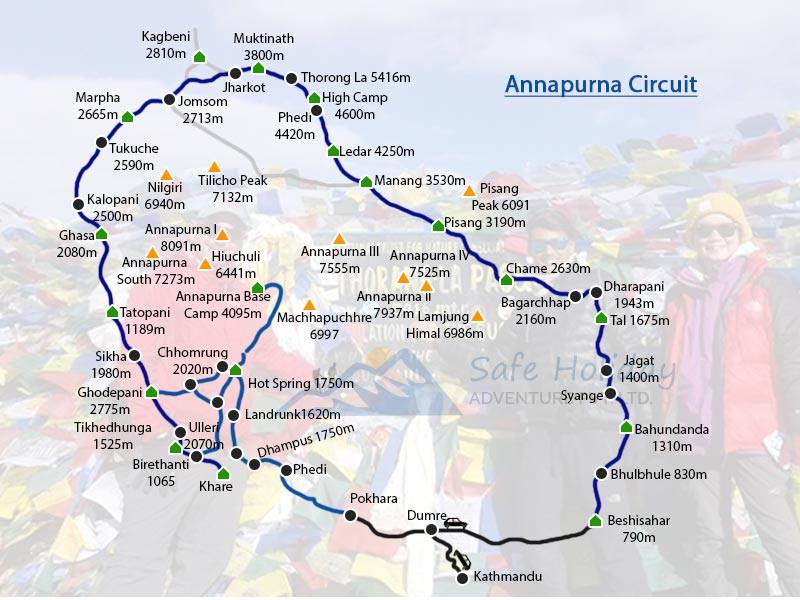
Join the Annapurna Circuit Trek in 15 Days and explore Nepal’s most famous trekking route! Cross Thorong La Pass ( 5,416 meters (17,769 feet) According to 2 sources, visit Muktinath Temple, and enjoy stunning Himalayan views. Perfect for solo trekkers and groups. Safe Holiday Adventure offers expert guides, full support, and affordable packages. Book now for an unforgettable Himalayan experience!


Since opening in 1977, the Annapurna Circuit Trek in 15 Days has captivated trekkers worldwide. This classic loop circles the Annapurna Mountains, showcasing some of Nepal’s most breathtaking scenery.
Unlike many other treks, the Annapurna Circuit Trek offers remarkable diversity. As you move forward, lush forests give way to deep gorges, while arid high-altitude deserts open into snow-capped peaks. Moreover, crossing Thorong La Pass (5,416m) rewards trekkers with jaw-dropping views of Dhaulagiri, Nilgiri, and the magnificent Annapurna range.
Adding to its charm, the trail passes through iconic destinations such as Muktinath Temple, Kagbeni, Jomsom, and the famous Kali Gandaki Valley. On your way, stops at the Tatopani hot springs, the Alpine Zone, and finally, vibrant Pokhara, enrich your overall Annapurna trekking experience.
Commonly known as the Annapurna Round Trek, this adventure generally takes 13 to 20 days, depending on your pace and chosen route. However, for those seeking a balanced experience, the Annapurna Circuit Trek in 15 Days remains the most popular choice.
While some trekkers prefer guided groups, many solo trekkers to Annapurna confidently embark on this journey alone, often hiring local guides for safety. Our 15-day Annapurna Circuit Trekking Package is carefully crafted by highly experienced guides with over 18 years of expertise in the Nepalese Himalayas.
Your adventure begins with a scenic 5-6 hour drive from Kathmandu to Bhulbhule via Beshishahar. Along the route, lush valleys like Trisuli and Marshyangdi provide a beautiful introduction to the trek. Once at Bhulbhule, your actual trek to Annapurna commences, guiding you through Manang before ultimately reaching the iconic Thorong La Pass.
One of the most exciting aspects of the Annapurna Circuit Trek in 15 Days is its rich variety of natural and cultural wonders. As you cross Thorong La Pass (5,416m), you’re rewarded with spectacular views of snow-covered Himalayan giants.
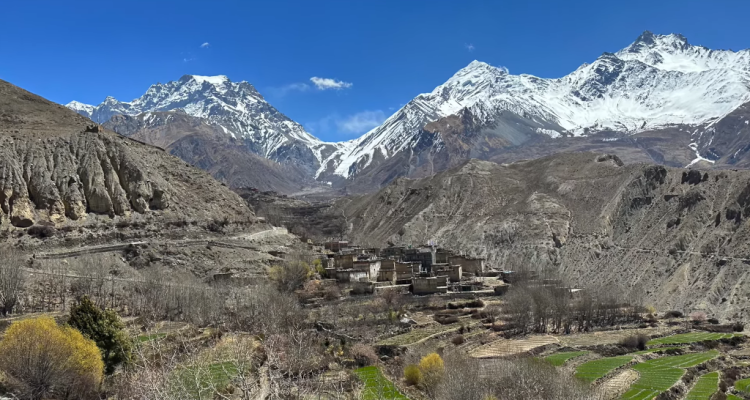
Further along the journey, suspension bridges sway over gushing rivers, while cascading waterfalls and tranquil forests create a serene trekking environment. Villages such as Marpha, Tukuche, and Jomsom showcase warm hospitality and centuries-old cultural traditions that captivate every visitor.
At the same time, trekkers must remain cautious of altitude sickness. Listening to your guide’s advice plays a critical role in ensuring safety at higher elevations. Beyond the high passes, rejuvenating stops like Muktinath Temple and Tatopani hot springs provide a perfect break for both locals and tourists.
Moreover, if your schedule allows, optional side trips to Ghorepani Poon Hill or Annapurna Base Camp present even more jaw-dropping views of the Annapurna massif, Fishtail (Machapuchare), and Dhaulagiri. Every step of the journey offers new cultural encounters through Buddhist monasteries, ancient temples, and diverse ethnic communities.
Choosing the right season is essential for a successful trek. Without a doubt, the Annapurna Circuit trekking best season to go falls during spring (March-May) and autumn (September-November). These periods offer stable weather, crystal-clear skies, and spectacular mountain views.
Nevertheless, peak seasons (October to mid-November) attract large crowds. Therefore, those seeking solitude may prefer off-peak months such as September, late November, February, or after mid-May. Each season offers its unique charm.
For those who value a quieter atmosphere, I strongly recommend these off-season months to fully appreciate the natural beauty of the Annapurna Circuit Trek in 15 Days.
Undoubtedly, the Annapurna Circuit Trek in 15 Days offers one of Nepal’s most rewarding trekking experiences. However, preparation remains crucial for a safe and enjoyable journey.
Whether you are an experienced trekker or one of many enthusiastic solo trekkers to Annapurna, this journey promises breathtaking scenery, cultural richness, and personal achievement.
➜ Thorong La Pass (5,416m): The highest point of the Annapurna Thorong La Pass trek, presenting stunning panoramic views of towering Himalayan peaks.
➜ Annapurna Base Camp (4,130m): Nestled among giant mountains, it remains a favorite for many trekkers.
➜ Tilicho Lake (4,919m): One of the world’s highest lakes, offering crystal-clear waters ideal for nature lovers and photographers alike.
➜ Manang Village: Known for its unique Tibetan culture and architecture, this village plays a crucial role in the acclimatization process.
➜ Muktinath Temple: A sacred pilgrimage site cherished by both Hindus and Buddhists, often highlighted in the Annapurna Circuit trek itinerary.
➜ Kaligandaki Gorge: Famous for being the world’s deepest gorge, surrounded by dramatic landscapes.
➜ Jomsom: A charming village, well-known for its apple orchards and stunning mountain vistas.
➜ Marpha Village: Popular in many Annapurna Round Trek packages, Marpha delights visitors with traditional mud houses and peaceful alleyways.
➜ Kagbeni: Rich in culture and history, Kagbeni serves as the gateway to the Upper Mustang Trek.
➜ Dhaulagiri Icefall: An awe-inspiring ice formation that attracts photographers from around the world.
➜ Throughout your trek, you remain within the protected Annapurna Conservation Area, home to diverse flora and fauna.
Upon arriving at the airport, you will need to go through immigration and customs before leaving. It is a good idea to have all necessary documents, such as your passport and visa, ready to present to the immigration officer. After passing through immigration and customs, you can collect your luggage and exit the airport.
We will manage your pick-up service from TIA airport to the hotel in Kathmandu upon your arrival. Our airport representative will meet you at the airport and transfer you to the hotel in a private car/Jeep.
On Day 2, you’ll begin your journey early in the morning with a 6-7 hour drive from Kathmandu to Besisahar. The route follows the Prithvi Highway, offering scenic views of green hills, terraced rice fields, and the Trishuli River. As you leave Kathmandu Valley, the Annapurna and Manaslu mountain ranges start to appear in the distance, making for a beautiful backdrop.
After reaching Besisahar, you’ll take a 2-3 hour ride by sharing a jeep to Syange, located at an altitude of 1,130 meters (3,710 feet). The bumpy jeep ride travels through small villages like Khudi and Bhule, offering stunning views of waterfalls and the Marsyangdi River. The landscapes become more rugged as you approach Syange, with views of the towering Annapurna Range in the distance.
From Syange, the Annapurna Circuit Trek continues to Taal, which is a small village located at an altitude of 1,690 meters. The trek from Syange to Taal is a moderate to challenging hike that takes about 4-6 hours to complete, depending on your pace. The trail passes through forests, fields, and small villages, offering breathtaking views of the surrounding mountains.
As you make your way from Syange to Taal, you will encounter several small streams and bridges, and may also encounter some steep sections. The trail is generally well-marked, but it is a good idea to have a map and a guide with you to ensure you stay on track.
Upon arriving in Taal, you can find accommodation and other facilities such as restaurants and shops. Taal is a good place to take a rest and acclimatize to the higher altitude before continuing your trek. From Taal, you can continue your journey through the Annapurna Circuit, taking in the stunning scenery and experiencing the culture and hospitality of the local people.
From Taal, the Annapurna Circuit Trek continues to Danagyu, which is a small village located at an altitude of 2,300 meters. The trek from Taal to Danagyu is a moderate to challenging hike that takes about 6-8 hours to complete, depending on your pace. The trail passes through forests, fields, and small villages, offering breathtaking views of the surrounding mountains.
As you make your way from Taal to Danagyu, you will encounter several small streams and bridges, and may also encounter some steep sections. The trail is generally well-marked, but it is a good idea to have a map and a guide with you to ensure you stay on track.
Upon arriving in Danagyu, you can find accommodation and other facilities such as restaurants and shops. Danagyu is a good place to take a rest and acclimatize to the higher altitude before continuing your trek. From Danagyu, you can continue your journey through the Annapurna Circuit, taking in the stunning scenery and experiencing the culture and hospitality of the local people.
From Danagyu, the Annapurna Circuit Trek continues to Chame, which is a small town located at an altitude of 2,710 meters. The trek from Danagyu to Chame is a moderate to challenging hike that takes about 5-7 hours to complete, depending on your pace. The trail passes through forests, fields, and small villages, offering breathtaking views of the surrounding mountains.
As you make your way from Danagyu to Chame, you will encounter some small streams and bridges, and may also encounter some steep sections. The trail is generally well-marked, but it is a good idea to have a map and a guide with you to ensure you stay on track.
The temperature during the trek from Danagyu to Chame can vary depending on the time of year, but it is generally cool to cold at higher altitudes. It is important to dress in layers and bring warm clothing, especially for evenings and overnight.
Upon arriving in Chame, you can find accommodation and other facilities such as restaurants and shops. Chame is a good place to take a rest and acclimatize to the higher altitude before continuing your trek. From Chame, you can continue your journey through the Annapurna Circuit, taking in the stunning scenery and experiencing the culture and hospitality of the local people.
The trek from Chame to Pisang is a moderate to challenging hike that takes about 5-7 hours to complete, depending on your pace. The trail passes through forests, fields, and small villages, offering breathtaking views of the surrounding mountains.
As you make your way from Chame to Pisang, you will follow the Marsyangdi River and cross several small streams and bridges. The trail is generally well-marked, but it is a good idea to have a map and a guide with you to ensure you stay on track. The route from Chame to Pisang is relatively well-developed, with several lodges and guesthouses along the way where you can rest and replenish your supplies.
The first part of the trek from Chame to Pisang takes you through the lower part of the Marsyangdi Valley, passing through forests and fields. The trail follows the river, and you will have the opportunity to see several waterfalls and small villages along the way. As you get closer to Pisang, the landscape becomes more barren and rocky, with high cliffs and snow-capped peaks in the distance.
Upon arriving in Pisang, you can find accommodation and other facilities such as restaurants and shops. Pisang is a good place to take a rest and acclimatize to the higher altitude before continuing your trek. From Pisang, you can continue your journey through the Annapurna Circuit, taking in the stunning scenery and experiencing the culture and hospitality of the local people.
From Pisang, the Annapurna Circuit Trek continues to Manang, which is a small town located at an altitude of 3,450 meters. The trek from Pisang to Manang is a moderate to challenging hike that takes about 6-8 hours to complete, depending on your pace. The trail passes through forests, fields, and small villages, offering breathtaking views of the surrounding mountains.
As you make your way from Pisang to Manang, you will follow the Marsyangdi River and cross several small streams and bridges. The trail is generally well-marked, but it is a good idea to have a map and a guide with you to ensure you stay on track. The route from Pisang to Manang is relatively well-developed, with several lodges and guesthouses along the way where you can rest and replenish your supplies.
The first part of the trek from Pisang to Manang takes you through the lower part of the Marsyangdi Valley, passing through forests and fields. The trail follows the river, and you will have the opportunity to see several waterfalls and small villages along the way. As you get closer to Manang, the landscape becomes more barren and rocky, with high cliffs and snow-capped peaks in the distance.
Upon arriving in Manang, you can find accommodation and other facilities such as restaurants and shops. Manang is a good place to take a rest and acclimatize to the higher altitude before continuing your trek. From Manang, you can continue your journey through the Annapurna Circuit, taking in the stunning scenery and experiencing the culture and hospitality of the local people.
Day 9 of the Annapurna Circuit Trek is a designated acclimatization day in Manang, which is a small town located at an altitude of 3,450 meters. Acclimatization days are an important part of the trek, as they allow your body to adjust to the higher altitude and reduce the risk of altitude sickness.
On this day, you can take it easy and relax in Manang, or you can explore the surrounding area and visit some of the attractions in the town. Manang has several interesting cultural and historical sites, including the Gangapurna Lake, the Manang Monastery, and the Yak Museum. You can also visit some of the local shops and markets to purchase souvenirs or try some of the local cuisine.
It is important to remember that acclimatization days are not rest days, and you should still be active and do some light walking or other activities to keep your body acclimatized. It is also important to stay well-hydrated and avoid alcohol and other dehydrating beverages during the acclimatization day.
from Manang to Yak Kharka is a moderate to challenging hike that takes about 4-6 hours to complete, depending on your pace. The trail passes through forests, fields, and small villages, offering breathtaking views of the surrounding mountains.
As you make your way from Manang to Yak Kharka, you will follow the Marsyangdi River and cross several small streams and bridges. The trail is generally well-marked, but it is a good idea to have a map and a guide with you to ensure you stay on track. The route from Manang to Yak Kharka is relatively well-developed, with several lodges and guesthouses along the way where you can rest and replenish your supplies.
The first part of the trek from Manang to Yak Kharka takes you through the upper part of the Marsyangdi Valley, passing through forests and fields. The trail follows the river, and you will have the opportunity to see several waterfalls and small villages along the way. As you get closer to Yak Kharka, the landscape becomes more barren and rocky, with high cliffs and snow-capped peaks in the distance.
Upon arriving in Yak Kharka, you can find accommodation and other facilities such as restaurants and shops. Yak Kharka is a good place to take a rest and acclimatize to the higher altitude before continuing your trek. From Yak Kharka, you can continue your journey through the Annapurna Circuit, taking in the stunning scenery and experiencing the culture and hospitality of the local people.
The trail from Yak Kharka to Thorong Phedi is likely a strenuous and potentially challenging hike, depending on the specific route taken and the individual hiker’s experience and ability. The trail may pass through rugged, mountainous terrain, and could involve steep inclines and descents, as well as potential exposure to extreme weather conditions.
It is important for hikers to be properly prepared and equipped for the demands of the trail, and to be aware of their physical limitations. It is also advisable to hike with a partner or group and to take appropriate safety precautions while on the trail. The specific nature of the trail from Yak Kharka to Thorong Phedi may vary depending on the specific route taken and the time of year.
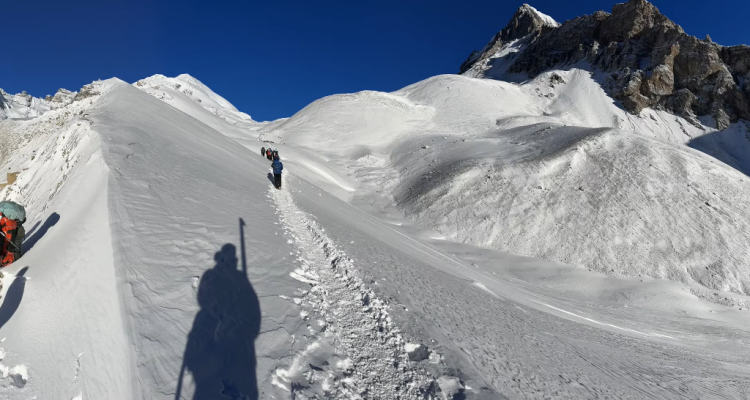
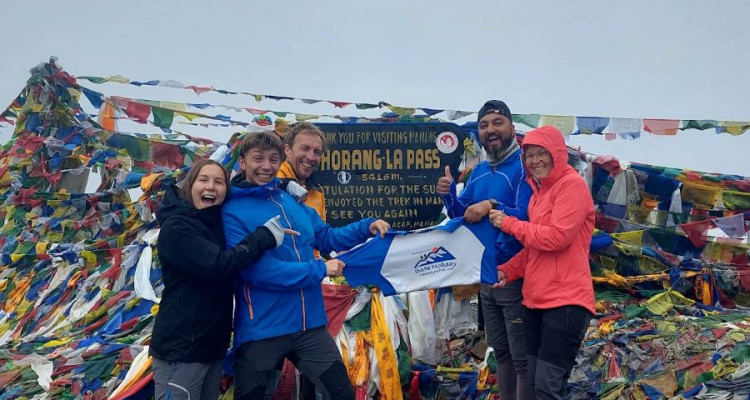
Crossing Thorong-La Pass (5,416 meters) is a challenging and potentially strenuous hike, and is considered the highlight of the Annapurna Circuit Trek in Nepal. The trail to the pass involves a steep ascent through rugged, mountainous terrain, and may involve hiking over rocky and snowy trails, depending on the time of year. Along the way, hikers may be treated to stunning views of the surrounding mountain ranges, including Annapurna South, Annapurna I, and Dhaulagiri. The pass itself offers panoramic views of the surrounding peaks and is a popular destination for trekkers and mountaineers.
After crossing Thorong-La Pass, the trail descends to the holy site of Muktinath (3,800 meters). The trail from the pass to Muktinath is likely to be more gradual and may involve hiking through forests, along streams, and through small villages. The trail may offer beautiful views of the surrounding landscape, including forests, waterfalls, and snow-capped peaks. Upon arriving in Muktinath, hikers can visit the temple and other holy sites and may have the opportunity to rest and recharge before continuing their journey.
After exploring Muktinath, you begin a scenic drive from Muktinath (3,800m) to Tatopani (1,150m), which takes around 4-5 hours. The drive descends through a beautiful landscape of rocky terrain, green hills, and charming villages. As you follow the Kali Gandaki River, you’ll pass through small settlements and terraced fields. The journey offers stunning views of the surrounding mountains. Once in Tatopani, you can relax and enjoy the famous natural hot springs, perfect for unwinding after the trek. Overnight stay in Tatopani.
Starting the day from Tatopani, a charming village known for its natural hot springs, you’ll begin your trek heading uphill toward Sikha. Tatopani is situated at an altitude of 1,190 meters (3,904 feet), and the day begins with a climb through terraced fields and small villages. The path follows a mix of stone steps and dirt trails, gradually gaining elevation as you head toward your next destination.
Along the way, you’ll pass through Dhulikhel and several other small villages, where you can interact with the locals and get a glimpse of traditional mountain life. The landscape is dominated by lush green forests, and you’ll start to see panoramic views of the Dhaulagiri and Annapurna ranges. As you climb higher, the air becomes cooler, and the surroundings become more peaceful and serene.
After a steady climb of 5-6 hours, you’ll reach Sikha, a beautiful village at an altitude of 1,950 meters (6,398 feet). Sikha offers spectacular views of the surrounding mountains, including Dhaulagiri, and is an excellent place to relax and enjoy the natural beauty of the region. The village is a great spot to observe traditional Gurung culture, with small stone houses, fields of crops, and warm hospitality from the local people.
On this day, you will trek from Sikha to Ghorepani, a beautiful and popular destination on the Annapurna Circuit. Starting at Sikha (1,950 meters), the day begins with a steady climb, taking you through lush forests and scenic landscapes. The trail weaves through dense oak and rhododendron forests, providing a refreshing environment as you ascend.
As you walk through the forest, the path offers glimpses of the majestic Dhaulagiri and Annapurna mountain ranges, which become more visible as you gain altitude. You will pass through small settlements, including Chitre, where you can stop for a rest or a snack. Along the way, you may also encounter local villagers working in their terraced fields or grazing livestock.
The trek to Ghorepani is a steady uphill climb, gaining around 870 meters in altitude. After 6-7 hours of trekking, you will reach Ghorepani, a popular village at an altitude of 2,820 meters (9,252 feet). The village is known for its stunning panoramic views of the Annapurna and Dhaulagiri ranges, especially at sunrise. Ghorepani is a well-known stop for trekkers, and from here, you can head to Poon Hill for one of the best sunrise views in the region.
An early morning visit to Poon Hill Sunrise Viewpoint offers breathtaking views of the Himalayan peaks, including Mount Annapurna I, Mount Dhaulagiri, Machapuchare (Fishtail), Annapurna South, Hiunchuli, and Nilgiri. As the sun rises, these snow-capped mountains glow with golden light, creating a spectacular sight. After enjoying the sunrise, trek down to Ulleri, passing through lush rhododendron forests and scenic villages. The trail is mostly downhill, offering peaceful views of the surrounding landscape. From Ulleri, a short drive back to Pokhara awaits, where you can relax and reflect on the beautiful journey. This trip combines stunning mountain views, cultural experiences, and a perfect way to conclude your trek in the Annapurna region.
Note ⇒We offer the flexibility to customize your itinerary for the Annapurna Circuit Trek based on your time, budget, and interests. If you would like us to create a personalized itinerary, please let us know. We would be happy to make your trekking experience a memorable one.
| Start Date | End Date | Price In US Dollar($) | AVAILABILITY | Booking |
|---|
⭐️⭐️⭐️⭐️⭐️
An Unforgettable Experience on the Annapurna Circuit with a Safe Holiday Adventure
I recently completed the 15-day Annapurna Circuit Trek in Nepal with Safe Holiday Adventure Pvt. Ltd., and I must say, it was a life-changing experience! From start to finish, their team ensured every aspect of the trip was seamless, well-organized, and thoroughly enjoyable.
Our guide, Rupes was an absolute gem. His deep knowledge of the region, trekking expertise, and warm personality made the journey unforgettable. Rupes always went above and beyond to ensure we were comfortable, safe, and the best experience possible. His attention to detail, from helping us acclimate to introducing us to local culture, was commendable.
The trek was breathtaking, with stunning landscapes, diverse terrains, and vibrant local communities. Safe Holiday Adventure curated the perfect itinerary, balancing adventure with ample time to soak in the natural beauty. Every teahouse we stayed at was welcoming and cozy, offering delicious meals and a chance to rest after long trekking days.
I highly recommend Safe Holiday Adventure to anyone considering trekking in Nepal. Their professionalism, personalized service, and genuine passion for creating unforgettable adventures set them apart.
Thank you, Safe Holiday Adventure and Rupes, for an incredible journey I will cherish forever!
I recently had the pleasure of embarking on an incredible trek with Safe Holiday Adventure Pvt. Ltd., and I can’t praise them enough for their exceptional service. From the moment we landed in Kathmandu, the team was there to take care of every detail. Our guide, Dukpa, and porter, Hariu from Lukla, were outstanding. They guided us seamlessly from Kathmandu all the way to the Thorong La Pass and back to Kathmandu, ensuring our journey was as smooth and enjoyable as possible.
The weather was perfect throughout our trek, which only added to the experience. We were provided with private rooms, and fresh food, and never felt any pressure to walk beyond our comfort level. The small group size made the trek even more enjoyable, allowing for personalized attention and a more intimate experience.
A special thank you to Mr. Gauli for his excellent management and the helpfulness of our guide and porter. This was undoubtedly one of the best treks we’ve ever had, and we are already thinking about returning in a few years for the Everest Base Camp trek. Thank you, Safe Holiday Adventure Team, for making this journey unforgettable. Best of luck with your business!
My friend and I were planning a trip to Nepal and a friend recommended us to contact Safe Holiday Adventures as we wanted to do a short trek. We contacted the company and responded quickly and were so helpful with organizing our trip and made us feel comfortable the moment we arrived in Kathmandu. Santosh was our guide for the Annapurna circuit trek. We had the most incredible experience. Santosh was sp passionate and knowledgeable about the Nepalese culture, history and the villages we learned so much. Which made our experience richer.
We also found Santosh to be understanding, kind, considerate and very patient throughout the trek as it was a bit harder than I expected. Truly a most amazing experience. One I will never forget.
I definitely recommend Safe Holiday Adventures to anyone looking for an awesome Adventure of a lifetime.
I had the pleasure of booking our Annapurna Circuit Trek with Safe Holiday Adventure Pvt. Ltd. in November 2022, and it was an unforgettable experience. Our group of 10 friends wanted a customized itinerary that catered to our interests and time constraints, and the team at Safe Holiday Adventure delivered. Our guide was knowledgeable, attentive, and ensured our safety throughout the trek. The accommodations and meals were of excellent quality, and the views of the Annapurna mountain range were breathtaking. I highly recommend Safe Holiday Adventure for anyone seeking a safe and personalized trekking experience in Nepal. Thank you for an incredible journey!
Jenny Lara
Experience the Ultimate Safe Adventure Holiday in Nepal’s Annapurna Circuit with Us. From the Friendly People, to the Stunning Countryside, and Affordable Prices, Our Trip was Simply the Best. Thank you for your Wonderful Hospitality. We can’t wait to reconnect with you for another amazing journey in Nepal. All the best!”
I have done budget trek to Annapurna region with safe holiday team it was awesome Trek, the managment, guide and budget every thing was perfect… Thank you all. Good luck..
The trip to Nepal was a great experience. I organized the tour (10 days) with Santosh Gauli . Very good flexibility on his part to change the program to suit our needs (both of time and things to see). Santosh welcomed us at the airport and we have always followed the best. I was really happy for his organization of all the programme for us, Santosh Gauli is the best guide ever and he is really helpfull, caring and polite with everyone. Santosh Gauli, in addition to being very knowledgeable about the mountains is very well prepared on the most culture of Nepal, in fact, thanks to him we could learn more about the culture and customs of the people of Nepal. Advice to those who want to organize trip to Nepal to book with this guy Santosh because we really enjoyed with his hospitality and caring. Good luck !!!!!!!
The distance of the Annapurna Circuit Trek can vary depending on the specific route taken, as well as any detours or side trips. However, the standard Annapurna Circuit Trek distance is approximately 160-230 kilometers (100-145 miles), depending on the starting and ending points of the trek. The trek usually takes around 15-20 days to complete, depending on the trekker’s pace, fitness level, and acclimatization. It is important to note that the trek involves high altitudes and difficult terrain, so it is advisable to prepare accordingly and take the necessary precautions for a safe and enjoyable trek.
The Annapurna Circuit Trek is a popular trekking route in Nepal, known for its stunning scenery and challenging terrain. Along the way, there are several side trips and attractions that trekkers can explore. Here are some of the most popular ones:
These side trips and attractions offer a break from the challenging trekking route and provide an opportunity to explore the natural and cultural beauty of the Annapurna region.
If you are planning to do the Annapurna Circuit Trek, it’s highly recommended to hire a guide and/or porter for your trek. Here are some options for hiring guides and porters:
Hire through a trekking agency: Many trekking agencies in Nepal can provide you with guides and porters. They usually have a team of experienced guides and porters who are familiar with the Annapurna Circuit Trek and can assist you with logistics, accommodation, and safety.
Hire a freelance guide or porter: If you prefer to have more control over your trek, you can hire a freelance guide or porter. They can be found in Kathmandu or Pokhara, and you can negotiate their fee directly with them. Keep in mind that it’s important to hire a qualified and experienced guide or porter, so make sure to ask for references and check their credentials.
Use a trekking website: There are several websites that connect trekkers with guides and porters, such as TrekkingPartners, FindTrekking, and TourRadar. These websites allow you to search for guides and porters based on their experience, availability, and reviews from other trekkers.
Regardless of the option you choose, it’s important to communicate clearly with your guide and porter about your expectations, itinerary, and any medical conditions or dietary requirements you may have. This will ensure that you have a safe and enjoyable trek on the Annapurna Circuit.
To trek the Annapurna Circuit in Nepal, you must obtain a TIMS card and Annapurna Conservation Area Permit (ACAP) beforehand. The permit fees vary depending on your nationality. While it is no longer mandatory to have a guide or porter, at least one member of a trekking group must have one. It is still recommended to have a guide or porter, especially for those new to trekking. You can obtain the permits from the Nepal Tourism Board office in Kathmandu or Pokhara or the entry checkpoint.
ATMs were available in some larger towns along the Annapurna Circuit Trek route, such as Besisahar, Chame, Manang, and Jomsom. However, availability may change, so it’s essential to check for recent updates before starting the trek.
Preparing and training for the Annapurna Circuit Trek is essential to ensure a safe and enjoyable trekking experience. Here are some tips and recommendations to help you prepare:
The Annapurna Circuit Trek is a popular and challenging trekking route in Nepal, known for its diverse landscapes and stunning views of the Annapurna mountain range. It is important to have a good understanding of the food and water options and recommendations before embarking on the trek. Here are some guidelines to help you plan your food and water requirements:
Food Options:
Water Options:
Food and Water Safety:
The Annapurna Circuit Trek is challenging and rewarding, but it also comes with its own set of challenges. Here are some common challenges faced during the Annapurna Circuit Trek and how to overcome them:
Altitude sickness: This is a common challenge on high-altitude treks like the Annapurna Circuit. To prevent altitude sickness, it is advisable to acclimatize slowly by taking rest days and ascending gradually. In case you do experience symptoms such as headache, nausea, or dizziness, it is important to descend immediately and seek medical attention.
Cold weather: The weather at higher altitudes can be very cold, and it is important to bring appropriate clothing that will keep you warm, including a good-quality down jacket, gloves, and a hat. Dressing in layers is also recommended, as it allows you to adjust your clothing according to the temperature.
Difficult terrain: The trail can be steep and rocky, and the altitude can make it challenging to breathe. To overcome this, it is important to train beforehand and build up your fitness level. You can do this by going on training hikes, doing cardio exercises, and strengthening your leg muscles. It is also recommended to take breaks and rest whenever needed during the trek.
Breaking in hiking equipment: Breaking in your hiking equipment, especially your boots, is crucial to prevent blisters and injuries during the trek. Wear your hiking boots around the house or on shorter hikes before embarking on the Annapurna Circuit so that they have already adjusted to your foot shape.
Food and water safety: Maintaining good hygiene standards while trekking, especially when it comes to food and water, is essential. Avoid consuming raw or uncooked food items, as they can carry bacteria and parasites. Make sure the water you drink is purified or boiled to kill any harmful bacteria and viruses.
The Annapurna Circuit Trek in Nepal is a beautiful and popular route for families with kids who love outdoor adventures. To ensure a safe and enjoyable experience, plan the trek during the spring or autumn seasons, prepare for altitude sickness, choose a family-friendly trekking agency, pack wisely, trek at a comfortable pace, embrace the local culture, and be flexible with your plans. By following these tips, you can have a fun and memorable family adventure.
Female solo trekking on the Annapurna Circuit presents both challenges and rewards. Safety is a concern, so precautions like avoiding night treks and carrying self-defense items are essential. Physical demands are significant, requiring fitness and acclimatization. Yet, the breathtaking Himalayan views, diverse landscapes, and cultural experiences make it a remarkable adventure. Empowering and enriching, it fosters independence, personal growth, and connections with fellow female trekkers.
Safety considerations and precautions are crucial to ensure a safe and enjoyable trekking experience on the Annapurna Circuit Trail in Nepal. Here are some tips to help you prepare:
Trekking the Annapurna Circuit with a guide provides expertise, safety, and cultural insights. Guides arrange accommodations, handle logistics, and offer support. For experienced and confident trekkers, going without a guide allows more freedom and cost savings. However, self-guided trekkers must be well-prepared and aware of the challenges.
Here is a basic packing list for the Annapurna Circuit Trek:
Clothing:
Gear:
It is important to keep your backpack as light as possible, so only pack the essentials. Additionally, consider the time of year you plan to trek and adjust your clothing and gear accordingly. It is always a good idea to check the weather forecast and consult with experienced trekkers or tour guides for additional packing recommendations.
Q: What is the Annapurna Circuit Trek, and where is it located?
A: The Annapurna Circuit Trek is a popular trekking route in Nepal that takes you through the Annapurna mountain range. It is situated in the central part of Nepal, encompassing the Annapurna Conservation Area.
Q: How long does the Annapurna Circuit Trek take to complete?
A: The duration of the Annapurna Circuit Trek varies depending on the starting and ending points, but typically it takes around 12-21 days to complete the entire circuit.
Q: What is the best time of the year to undertake the Annapurna Circuit Trek?
A: The best time for the Annapurna Circuit Trek is during the pre-monsoon (spring) season, from March to May, and the post-monsoon (autumn) season, from September to November. These months offer stable weather and clear views of the mountains.
Q: Are there any permits required for the Annapurna Circuit Trek?
A: Yes, trekkers need two permits for the Annapurna Circuit Trek: the Annapurna Conservation Area Permit (ACAP) and the Trekkers’ Information Management System (TIMS) card. These permits help support conservation efforts and provide important information about trekkers in the region.
Q: What is the level of difficulty of the Annapurna Circuit Trek?
A: The Annapurna Circuit Trek is considered a moderate to challenging trek. While no technical climbing skills are required, trekkers should have a good level of physical fitness and be prepared for long and steep ascents and descents.
Q: What are the accommodation options available during the trek?
A: Accommodation along the Annapurna Circuit Trek varies from basic teahouses or lodges in the lower regions to more comfortable lodges in popular trekking spots. In peak season, it’s advisable to book in advance to secure a room.
Q: How is the availability of food and water during the trek?
A: Food is readily available at teahouses and lodges along the trail. The menu mainly offers local Nepali dishes, as well as international options like pasta, pizza, and fried rice. Bottled water is available for purchase, but it’s more eco-friendly to carry a water purifier and refill your bottles from the tap.
Q: Are there any altitude-related risks during the Annapurna Circuit Trek?
A: Yes, there are altitude-related risks, as the trek reaches high altitudes, with Thorong La Pass being the highest point at 5,416 meters (17,769 feet). Trekkers should be aware of the symptoms of altitude sickness and acclimatize properly to minimize risks.
Q: What are some of the highlights of the Annapurna Circuit Trek?
A: The Annapurna Circuit Trek offers stunning views of snow-capped mountains, diverse landscapes, and cultural experiences with local communities. Highlights include the Thorong La Pass, Muktinath Temple, and the picturesque villages of Manang and Kagbeni.
Q: Can solo travelers undertake the Annapurna Circuit Trek, or is it better to join a group?
A: Both solo travelers and group trekkers undertake the Annapurna Circuit Trek. While going with a group provides added support and companionship, solo travelers can also find many other trekkers along the trail and join ad-hoc groups if they wish.
Safe Holiday Adventure Pvt. Ltd.
P.O.Box: 20065 Tarkeshwor-6, Kathmandu, Nepal
Cell: 00977 9849116284
Email: info@safeholidayadventure.com,
safeholidayadventure@gmail.com
Europe Contact
Mark Brosius
mark.brosius@hotmail.com
Oude baan, 41, 3060 Bertem, Belgium


We are associated with


We accept