

Chola Pass Trek Highlights: Highlights
- Scenic Lukla Arrival – Begin your journey with a thrilling mountain flight into the heart of the Himalayas.
- Namche Bazaar Exploration – Immerse in Sherpa culture, bustling markets, and panoramic valley vistas
- Tengboche Monastery – Spiritual landmark set against majestic Ama Dablam and Himalayan panoramas.Acclimatization at Dingboche – High-altitude alpine village with breathtaking views of Lhotse and Island Peak.
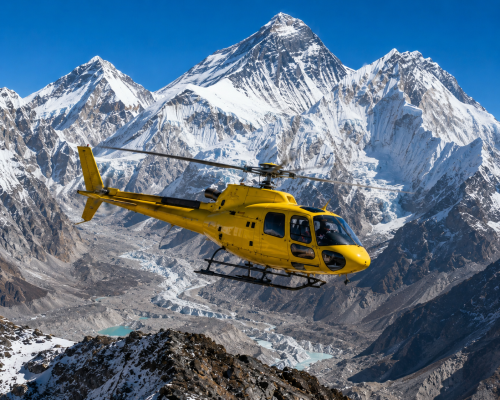
- Everest Base Camp – Stand at the legendary base of the world’s highest peak and witness the Khumbu Icefall.
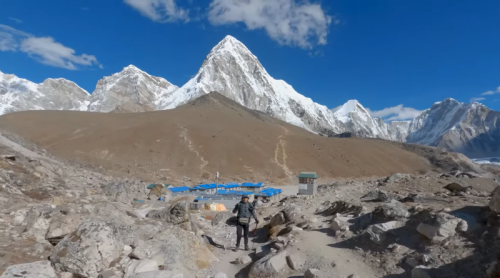
- Sunrise from Kala Patthar – Experience a once-in-a-lifetime sunrise over Everest, Nuptse, and surrounding giants.
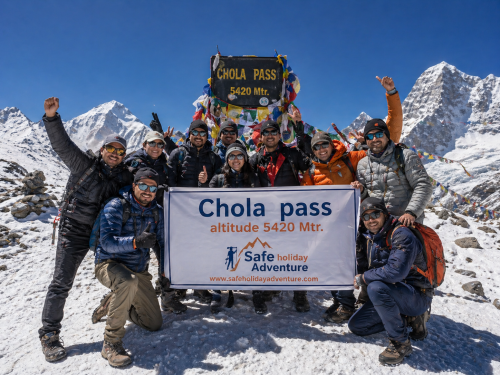
- Chola Pass Crossing – Conquer a challenging high-altitude pass with sweeping glacier and mountain vistas.
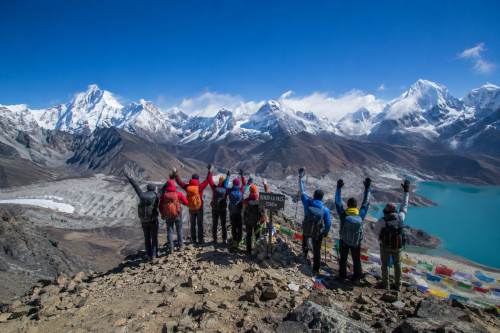
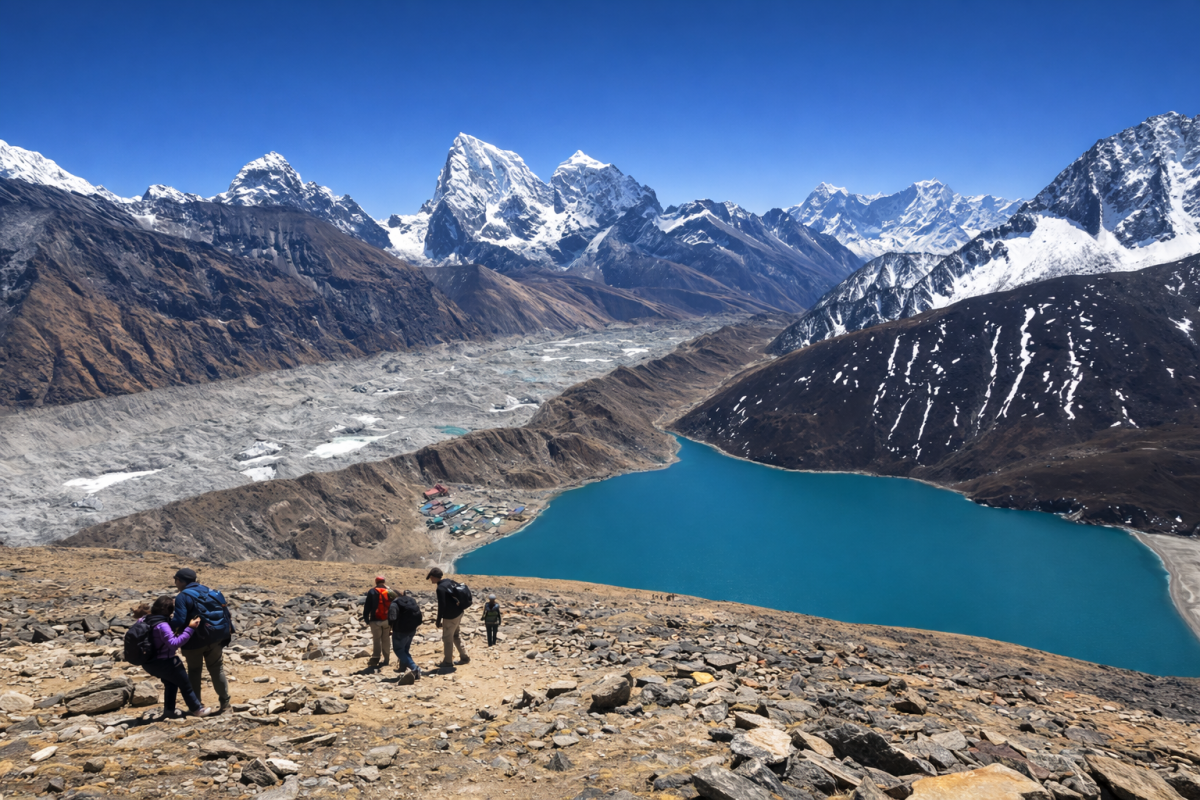
- Gokyo Lakes – Marvel at the turquoise glacial lakes framed by towering peaks in a serene Himalayan setting.
- Gokyo Ri Summit – Panoramic views of Everest, Lhotse, Makalu, and Cho Oyu from this iconic vantage point.
- Diverse Sagarmatha Landscapes – Trek through pristine glaciers, moraines, forests, and remote Sherpa villages.
Chola Pass Trek introduction: Overview
The Chola Pass Trek is a challenging and rewarding adventure that covers a total distance of approximately 125 kilometers. The daily walking time ranges from 4 to 8 hours per day, covering an average distance of 10-12 kilometers per day. Safety precautions such as acclimatization in Namche and Dingboche, and hiring a guide, are highly recommended. The best time to go is from March to May and September to November. The trek begins and ends in Lukla, and includes passes like Chola from Dzogla. Be prepared for high altitude and unpredictable weather.
The Everest region is home to some of the world’s most spectacular scenery, including soaring mountain peaks, glacier-fed rivers, and traditional Sherpa villages. One of the most popular treks in this region is the Everest Chola Pass Trek. The trek begins with a 30-minute flight from Kathmandu to Lukla, followed by a trek to Phakding, passing Chheplung, Thadokoshi, and Ghat. On the second day, trekkers walk 6-7 hours from Phakding to Namche, passing through Toktok villages, Banker, and Manjo(2850m). After showing the permit at the Sagarmatha National Park office at Manjo, trekkers continue to Jorsalley for lunch and then trek to Namche.
Namche Bazar is a big Sherpa town and the main gateway to the Everest region trek for Gokyo Valley (Lake), Everest Base Camp, Island Peak, Thame, Khumjung, and more. After spending two nights there for acclimatization, trekkers move on to Tengboche-3780m, passing through beautiful Sherpa villages such as Kenjuma, Sanasa, and Funki Thanga. After trekking for about two hours, they reach Tengboche, where they can enjoy a magical sunrise view over the Himalayas, including Mount Everest, Lhotse, Nupse, and Ama Dablam.
The trek then continues to Debuche, crossing a suspension bridge and following the steep trails to Pangboche, a big Sherpa village with many guesthouses and an old monastery. After lunch in Somare, trekkers cross the tree line area and have an even better view of the beautiful Imja Valley. They then trek to Dingboche, where they will spend two nights for acclimatization.
From Dingboche (4,360 m), trekkers head to Lobuche-4910m, passing through Dhugla and Memorial Hills, where famous climbers are remembered. After resting at the small tea houses in Dhugla4645m, they make a steep 40-minute walk to the memorial hill and then continue with an easy 50-minute walk to Lobuche.
The next day, trekkers start early in the morning and attempt to reach Everest Base Camp (EBC)-5,364m. The first 50-minute walk is easy and offers spectacular mountain views, but the rocky terrain to Gorakshep requires a slow pace due to the High altitude. After reaching Gorakshep (5,180 m), trekkers rest and trek to Everest Base Camp (EBC) with day backpacks. The next morning, we trek to Kala Patthar, 5,550 m, for sunrise and panoramic views of the Everest region before returning to Gorakshep and trekking back to Lobuche.
The following day, trekkers head to Dzogla (4,810 m) and spend the night before crossing the Chola Pass (5,420 m) and trekking to Thangnak (4,700 m). After spending the night in Thangnak, they trek to Gokyo through rocky terrain and Glaciers. Gokyo is a beautiful village with blue Lakes around it. After spending the night in Gokyo, trekkers trek to Gokyo Ri (5,380m), which takes about five hours to go and back. From Gokyo Ri, trekkers can see Mount Everest, Makalu, Lhotse, Beautiful Blue Lakes, Nogzompa Glacier, and Mt. Cho Oyu.
After retracing their steps back to Gokyo from the Gokyo-Ri top (5,380m), trekkers can either descend to Machhermo 4,400m) or Dole 4,100m). The next day, they trek for about 5-6 hours to Namche, where they can celebrate their successful trip with their Guide and Porter. The following day, they retrace their steps back to Lukla (2,860 m), which takes about seven hours, before flying back to Kathmandu in the morning.
We at Safe Holiday Adventure are excited to offer you a thrilling adventure to the Chola Pass Trek, which includes a visit to Gokyo. We provide a range of options to suit your preferences, from a luxurious package to a budget-friendly one, or even just hiring a guide and porters. Whatever your choice, we can customize the trek to your liking. Let’s embark on a journey together to explore the magnificent Himalayas in Nepal.
Who Will Guide You to Cho La Pass?
Safe Holiday Adventure Pvt. Ltd provides experienced, government-licensed trekking guides for the Cho La Pass crossing. Most of our guides have more than 10 years of trekking experience in the Everest region, and several have over 15 years on these trails. They have crossed Cho La (5,420 m / 17,782 ft) many times in different seasons and weather conditions, so they know when to start, how to pace the group, and when conditions call for extra care.
Cho La is a high-altitude pass with a rocky climb, a short glacier section, and loose stones on the Gokyo side. It is not a route to walk without local knowledge. Your guide stays with you from your arrival in Kathmandu to the end of the trek and takes care of:
- Safety on the pass: checking the weather, trail and ice conditions before the early start, and deciding whether to cross or wait
- Altitude health: monitoring how you feel each day, adjusting the pace, and acting quickly if symptoms of altitude sickness appear
- Route and logistics: navigating the Dzongla to Gokyo section, booking teahouses, and coordinating porters
- Local knowledge: sharing the culture of the Khumbu, Sherpa traditions, and the stories behind the mountains you pass
With Safe Holiday Adventure, you are never left on your own at altitude. Our guide stays beside you from start to finish, so you can focus on the views and enjoy your Everest Base Camp trek via Gokyo and Cho La Pass.
What to Expect on the Chola Pass Trek:
- Expect a Magical Himalayan Flight: Experience breathtaking views of the Himalayas during the thrilling flight to Lukla.
- Explore Authentic Sherpa Villages: Encounter traditional Sherpa culture in villages like Chheplung, Thado Koshi, and Phakding.
- Namche Bazaar Delights: Immerse yourself in the lively atmosphere of Namche Bazaar, with its markets and views from Durbin Danda.
- Scenic Hike to Everest View Hotel: Enjoy a picturesque hike to the Everest View Hotel for stunning vistas of Mount Everest.
- Gokyo Valley Wonders: Trek through the serene Gokyo Valley, soaking in views of Cholache and Tawache peaks.
- Marvel at Gokyo Lakes: Witness the mesmerizing blue hues of the Gokyo Lakes, including the 5th lake, amidst the majestic Ngozumpa Glacier.
- Spectacular Sunset from Gokyo- Ri: Catch breathtaking sunset views over Everest and Cho Oyu mountains from Gokyo.
- Challenge of Cho La Pass: Conquer the challenging Cho La Pass, navigating steep ascents and descents with panoramic mountain vistas.
- Ultimate Destination: Everest Base Camp: Reach the legendary Everest Base Camp, surrounded by the towering peaks and the Khumbu Icefall.
- Sunrise at Kala Patthar: Experience the awe-inspiring sunrise over Everest from the summit of Kala Patthar, the trek’s highest point.
- Reflect on Your Adventure: Descend through lush forests and villages, reflecting on the incredible journey before returning to Lukla.
Benefits of traveling to Gokyo-Chola pass-EBC-Trekking with us
- We Provide Experienced Guides: Our skilled trekking guides prioritize your safety and enrich your experience with local knowledge, ensuring a secure and insightful journey.
- We Offer All-Inclusive Packages: Enjoy hassle-free trekking with packages covering permits, accommodations, meals, and transportation—no hidden fees or cancellation charges.
- We Customize Itineraries: Tailored plans suit various fitness levels and preferences, ensuring comfort throughout your trekking adventure.
- We Ensure Safety and Security: Trained guides, proper acclimatization, and emergency protocols guarantee your safety throughout the trek.
- We Promise Stunning Scenery: Capture breathtaking views of Mt. Everest, Gokyo Lakes, Cho La Pass, and other Himalayan landmarks, perfect for memorable photos.
- We Encourage Cultural Exploration: Immerse yourself in Sherpa villages, monasteries, and local communities, promoting cultural exchange and enriching your trekking experience.
- We Offer Small Group Benefits: Enjoy personalized attention and itinerary flexibility with small group sizes, enhancing your trekking enjoyment.
- We Practice Environmental Responsibility: Committed to eco-friendly practices, we preserve the Himalayan environment’s beauty and sustainability.
- We Support Local Communities: Through responsible tourism, we contribute positively to local economies and businesses.
- We Offer Competitive Pricing with Superior Service: Enjoy our affordable rates without compromising on quality service.
- We provide a Complimentary Agency Duffel Bag and T-shirt: As a token of appreciation, each trekker receives a free duffel bag and T-shirt → branded by our agency.
- We Serve Fresh and Healthy Local Cuisine: Enjoy nutritious meals prepared from locally sourced ingredients throughout your trekking adventure.
- Accommodation in Private Rooms: Rest comfortably in private accommodations during your trek, ensuring privacy and relaxation after each day’s journey.
Everest Base Camp Trek via Gokyo and Cho La Pass: ItineraryOutline Itinerary
Day 01: Arrive in Kathmandu (1,400 m / 4,593 ft)
Day 02: Fly to Lukla (2,860 m) and trek to Phakding (2,610 m)
Day 03: Trek to Namche Bazaar (3,450 m / 11,319 ft)
Day 04: Acclimatization day in Namche Bazaar
Day 05: Namche Bazaar to Tyangboche/Deboche (3,820 m / 12,533 ft), 5 to 6 hours
Day 06: Trek to Dingboche (4,260 m / 13,976 ft), 4 hours
Day 07: Acclimatization day in Dingboche
Day 08: Dingboche to Lobuche (4,930 m / 16,175 ft), 7 km, 5 to 6 hours
Day 09: Lobuche to Gorakshep (5,180 m / 16,994 ft), then Everest Base Camp (5,364 m / 17,598 ft) and back to Gorakshep
Day 10: Early morning hike to Kala Patthar (5,545 m / 18,192 ft), then trek to Dzongla (4,850 m / 15,912 ft)
Day 11: Dzongla to Thangnak (4,750 m / 15,583 ft) via Cho La Pass (5,420 m / 17,782 ft), 7 to 8 hours
Day 12: Thangnak to Gokyo (4,800 m / 15,748 ft), 3 km, 4 hours
Day 13: Gokyo to Dole (4,100 m / 13,451 ft), 4 km, 5 to 6 hours
Day 14: Dole to Namche Bazaar (3,450 m / 11,318 ft)
Day 15: Namche Bazaar to Lukla (2,860 m / 9,383 ft), 19 km, 7 to 8 hours
Day 16: Fly from Lukla to Kathmandu (1,400 m / 4,593 ft)
Day 17: Final departure for your flight home
Whats Included?
What’s Included in Your Cho La Pass Trek Package
Your trek is fully organised from the moment you land in Kathmandu to the day you fly home. Safe Holiday Adventure Pvt. Ltd handles the permits, guides, meals and transport, so you can focus on the climb over Cho La Pass and the views along the way.
Kathmandu
- Private vehicle pick-up and drop-off between the airport and your hotel
- 2 nights in a Kathmandu hotel with breakfast included
Permits and paperwork
- Everest National Park entry permit
- Khumbu Pasang Lhamu rural municipality Entry fee
Your trekking team
- An experienced, licensed trekking guide who stays with you throughout the trek
- Food, salary, insurance, equipment, transport, accommodation and local taxes for all guides and porters
On the trail
- Local transportation by car or jeep
- Three meals a day (breakfast, lunch and dinner)
- Teahouse accommodation throughout the trek
- Tea or coffee with breakfast each morning
Flights and visa
- International flights and departure tax
- Domestic flight tickets
- Nepal entry visa fee
Kathmandu
- Lunch and dinner in Kathmandu
Insurance and emergencies
- Your personal travel insurance
- Rescue and evacuation costs
Personal expenses
- Any personal expenses
- All alcoholic and non-alcoholic drinks
- Any bar bills
Extras
- Additional porter (beyond the shared porter service)
- Tips for your guide and porters ( if you take porter extra), which are expected at the end of the trip
Dates and Availability Departures
All our published dates are guaranteed departures. We also provide customized departures tailored to your travel plans.
October 2026
November 2026
Travellers Reviews
Roberto Furlanetto
dubai | may, 2025
Memorable Himalayan Journey: Cho La Pass Trek


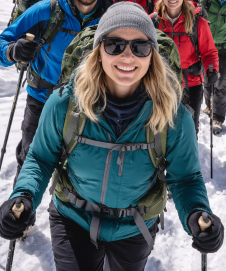
Ellen Chu
Italy | feb,2026
An Unforgettable Cho La Pass Trek with Expert Local Support
I have just returned from trekking across the Cho La Pass with Safe Holiday Adventure, and I can honestly say it was an unforgettable experience. The entire journey was very well organized, with a strong focus on safety, comfort, and an authentic Himalayan adventure.
A special mention goes to our guide, Dharma, whose professionalism, knowledge, and friendly support made the trek even more enjoyable and smooth from start to finish. The porter team was also excellent, always helpful and hardworking, ensuring our journey was comfortable throughout the challenging sections of the trail.
If you are looking for a reliable company that combines local expertise with genuine care, this is an excellent choice. Miscoe from Germany, along with her friends, also greatly appreciated the outstanding support and service throughout the trek.


Genaral Trip InfoInfos
Best Time to do Chola Pass Trek:
The best time to do the Everest Gokyo Trek is during the spring season (March to May) and the autumn season (September to November). During these seasons, the weather is usually clear, dry, and stable, with minimal rainfall, making it ideal for trekking.
In spring, the temperature gradually rises, and the snow melts, creating beautiful scenery with blooming rhododendron forests and colorful wildflowers. In the autumn, the temperature is mild, and the skies are clear, offering magnificent views of the surrounding mountains.
However, the trek can also be done during the winter and monsoon seasons, but it’s not recommended, as the trails can be slippery and the weather can be unpredictable, making the trek challenging and risky.
Best time to go to Nepal: more information: Click here
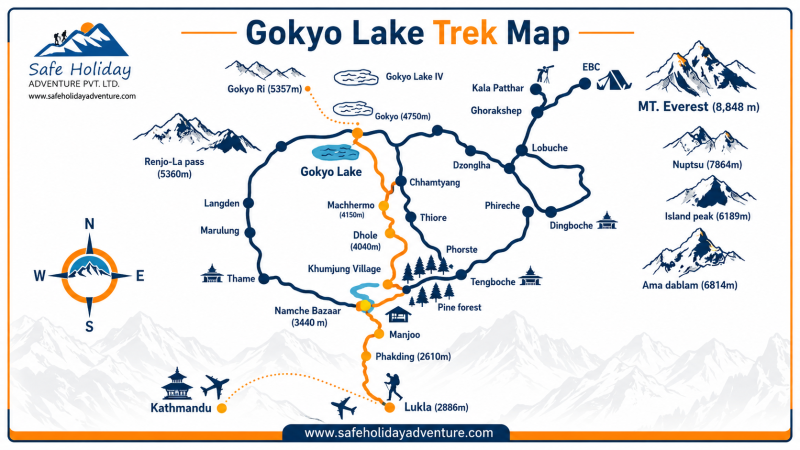
Chola Pass Trek Travel Map:
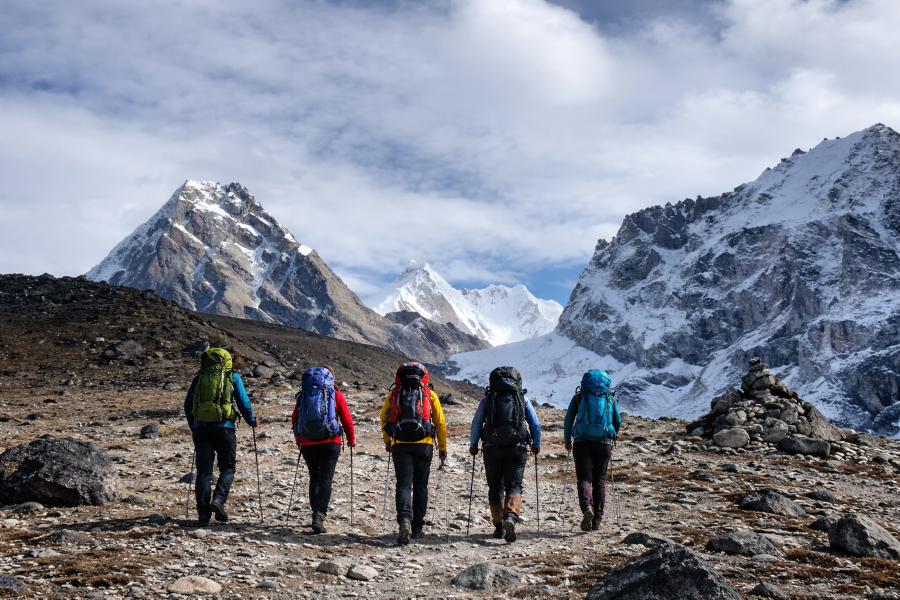
The trek starts with a flight from Kathmandu to Lukla, and then the trekkers follow the Dudh Koshi River towards Namche Bazaar, which is the gateway to the Khumbu region. From Namche, the trail leads to Tengboche, where the famous Tengboche Monastery is located. From Tengboche, trekkers will head to Dingboche where they acclimatize.
The trail then leads to Lobuche, Gorak Shep, and the base camp of Mount Everest. From the base camp, trekkers will hike to Kalapatthar, which offers a panoramic view of the surrounding peaks. After Kalapatthar, the trekkers will head to the Gokyo Valley, crossing the challenging Chola Pass. After visiting Gokyo Ri, the trekkers will head to Dole, Namche, and to Lukla and fly back to Kathmandu.
Total Distance of Gokyo-Chola pass-EBC-Trekking & Walking hours:
The total distance and duration of the Gokyo-Chola pass-EBC trek can vary depending on the specific itinerary and route chosen by the trekking company, but generally, the trek covers a distance of approximately 120-150 kilometers (75-93 miles) and takes around 12 to 18 days to complete.
In terms of walking hours per day, it can vary depending on the trail conditions, your fitness level, and the altitude. Typically, trekkers can expect to walk for around 5-7 hours per day, with some days being shorter and others being longer. The trail can be steep and rocky in some sections, and trekkers may also have to cross high passes like Chola pass, so it’s important to be prepared for some challenging days. To make the most of your experience and to avoid altitude sickness, it’s important to walk at a steady and slow pace, taking regular breaks, and listen to your body.
Acute Mountain Sickness(AMS)
Acute Mountain Sickness (AMS) is a common condition that can occur when trekking at high altitudes. It is caused by the lack of oxygen at high elevations and can range from mild symptoms to severe, life-threatening conditions. Symptoms of AMS include headaches, nausea, fatigue, shortness of breath, and difficulty sleeping.
It is important to take necessary precautions to avoid AMS while trekking the Gokyo-Chola pass trek. Trekkers should be aware of the symptoms and take the necessary steps to prevent or treat the condition. This includes proper acclimatization, staying well-hydrated, and avoiding alcohol and other depressants. It’s also important to note that AMS can occur at any altitude above 2,500m (8,200ft) and can affect anyone, regardless of age, sex, or physical condition.
If you experience severe symptoms or worsening symptoms, it is important to descend immediately and seek medical attention. This trek is considered a moderate to challenging trek and includes a significant risk of altitude sickness, so it’s important to take necessary precautions and be well-informed about the symptoms before embarking on the trek.
Gokyo-Chola-pass-trekking Difficulties
The Gokyo-Chola pass trek is considered a moderate to challenging trek. Some of the difficulties that trekkers may face on this trek include:
- High Altitude: The trek reaches high altitudes, and the risk of altitude sickness is significant. It’s important to take necessary precautions and be well-informed about the symptoms before embarking on the trek.
- Cold temperatures: The temperatures can drop significantly at night, especially at higher elevations, so it’s important to pack warm clothing and gear.
- Steep and rocky terrain: The trail can be steep and rocky in some sections, which can be challenging for some trekkers.
- Long days: Some days of the trek involve long hours of walking, which can be physically demanding.
- Accommodation: Accommodation is basic, mostly in a teahouse and you will be sharing the room with other trekkers.
- Weather: The trek passes through high mountain passes and passes through snowy areas, so the weather can be unpredictable, and trekkers should be prepared for rain, snow, or sunshine.
- Remote Area: The trek takes place in a remote area, and medical facilities are limited. It’s important to have comprehensive travel insurance before embarking on the trek.
It’s important to note that the trek is challenging but with adequate preparation, a positive attitude, and the right gear, it can be a truly rewarding and unforgettable experience.
Guide and Porter for Gokyo-Chola pass-EBC trek and their salary:
A guide and a porter are essential for a successful and enjoyable Gokyo-Chola pass-EBC trek. A guide is responsible for leading the trek and providing information about the culture, history, and natural environment of the area, as well as helping with navigation, arranging accommodations, and handling any problems that may arise. A porter, on the other hand, is responsible for carrying trekkers’ personal gear and supplies.
The salary of a guide and a porter depends on the trekking company and the region. In Nepal, the average daily salary for a guide ranges from $25 to $35 per day, and for a porter, it ranges from $18 to $20 per day. However, it’s important to note that the salary may vary depending on the company and the region. Some agencies may charge more and some may charge less.
It’s also important to note that the salary of the guide and porter should include their insurance, meals, and accommodation during the trek. Additionally, it’s important to tip them on the last day of the trek as a token of appreciation for their hard work and service. A good tip would be around $10-13 per day for the guide and $6-9 per day for the porter.
Detailed ItineraryItinerary
Arrival in Kathmandu-1450m
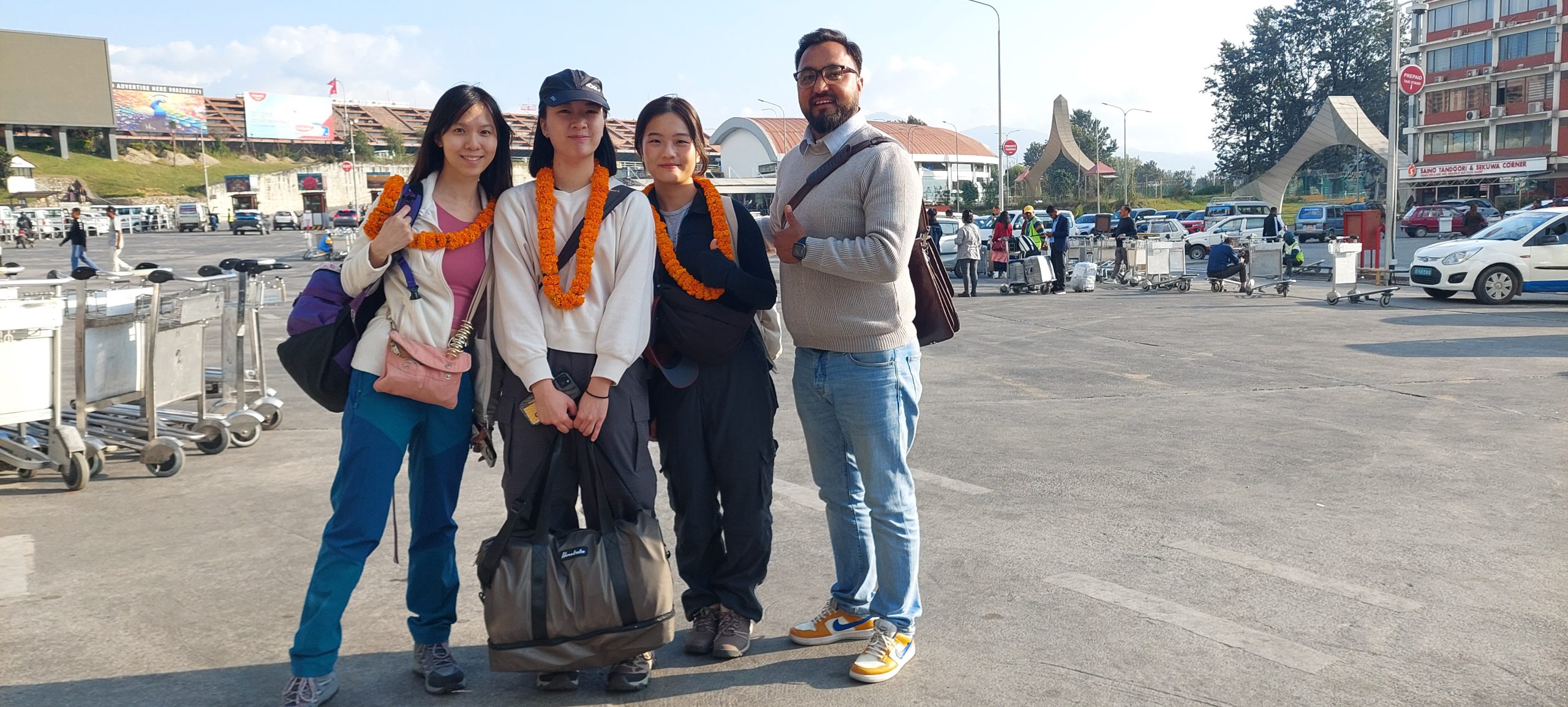
Upon arriving in Kathmandu (at 1450m altitude), you’ll receive a warm airport greeting, followed by a 30-minute drive to your hotel. After check-in, you’ll have time to rest before attending a trek preparation briefing. Explore the vibrant streets of Thamel, known for its shops, restaurants, and local markets. The night will be spent in Kathmandu, where you can immerse yourself in the city’s unique cultural blend. Get ready for an incredible trekking adventure in the majestic mountains of Nepal.

Accommodation : Hotel
Fly to Lukla & same-day trek to Phakding (2,660 m)
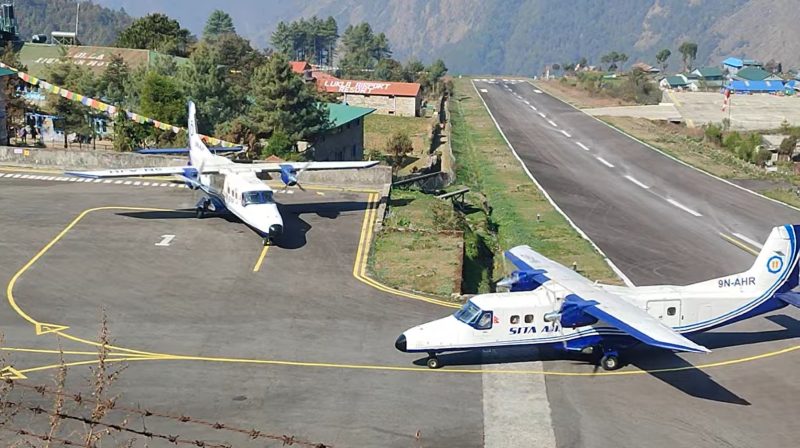
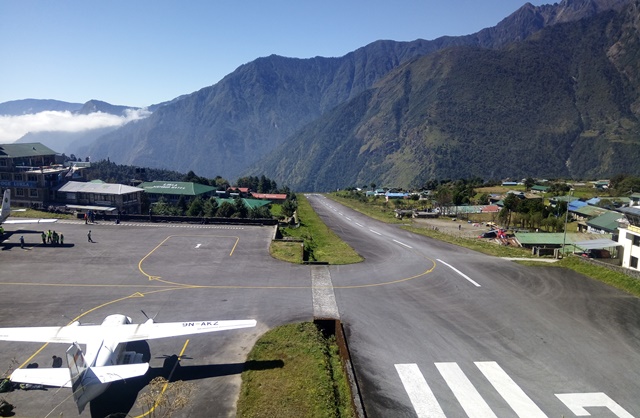
Your adventure begins with an early morning flight from Kathmandu to Lukla. The 35-minute flight follows the Himalayan foothills, and on a clear day you will see snow-capped peaks from the window. You land at Tenzing-Hillary Airport, one of the most famous mountain airstrips in the world. After a short breakfast, you meet your porters and set off.
Just beyond Lukla you pass the local check post, where your permits are checked. The trail then drops gently through Chheplung village, where stone houses, small tea shops, and barley and potato fields line the path. Look for prayer flags, mani walls carved with Buddhist mantras, and prayer wheels that you pass on the left, as is the Buddhist custom.
Next you reach Thadokoshi (Dhadokosi), a quiet settlement beside the Dudh Koshi River, and then Ghat, a small village with a mani wall and a monastery. You will meet Sherpa and Rai families working in their fields, children on their way to school, and yaks and porters moving along the trail. The route crosses the Dudh Koshi on suspension bridges, with views of Kusum Kanguru in the distance.
The walk is gentle and mostly downhill, which is a good start for your body at this altitude. A few hours later, you arrive in Phakding, a friendly riverside village with comfortable teahouses. You spend the night here, resting and preparing for the climb to Namche Bazaar tomorrow.
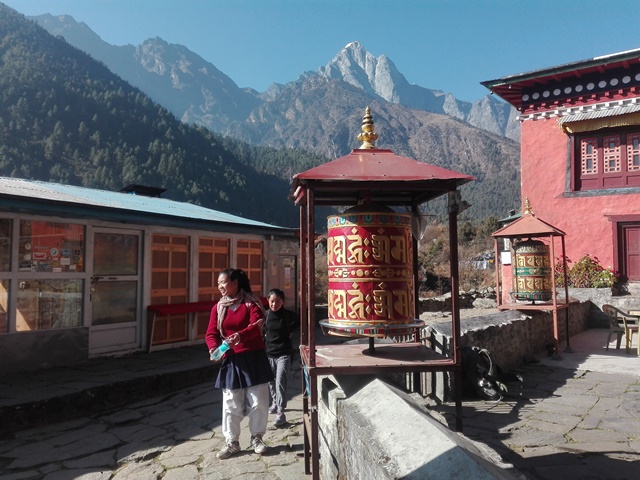
Accommodation : Teahouse Meals : Breakfast, Lunch & Dinner
Trek to Namche Bazaar (3,450 m)
Today you walk to Namche Bazaar, the Sherpa capital of the Khumbu. It is a big day, but a rewarding one. After breakfast in Phakding, you follow the Dudh Koshi River through pine forests and small villages. You pass Toktok and Benkar, then cross a suspension bridge to reach Monjo. Here you enter Sagarmatha National Park, and your permits are checked at the gate.
The trail continues to Jorsale, the last village before Namche, where you stop for lunch. After the meal, the real climb begins. You cross the river for the last time on the high Hillary Suspension Bridge, with the rushing water far below. Then you climb steadily for about 2 to 3 hours through pine forest. Go slowly and drink plenty of water. If the weather is clear, you may see Everest and Lhotse through the trees.
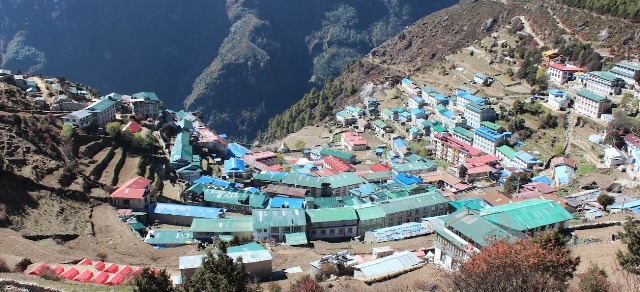
At the top, Namche Bazaar appears on a hillside shaped like a bowl, with stone houses, shops, bakeries, and teahouses. Spend the evening resting. Tomorrow is an acclimatization day.
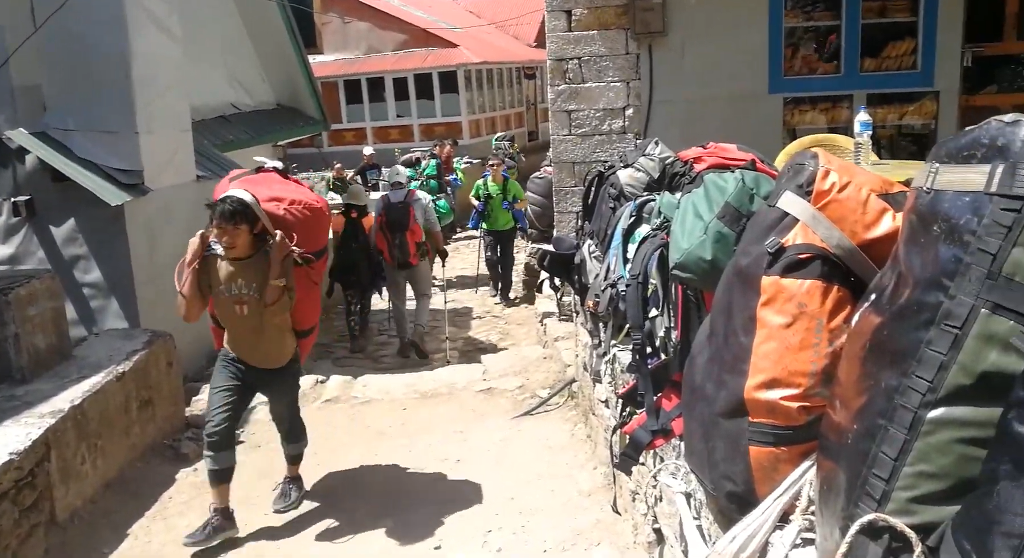
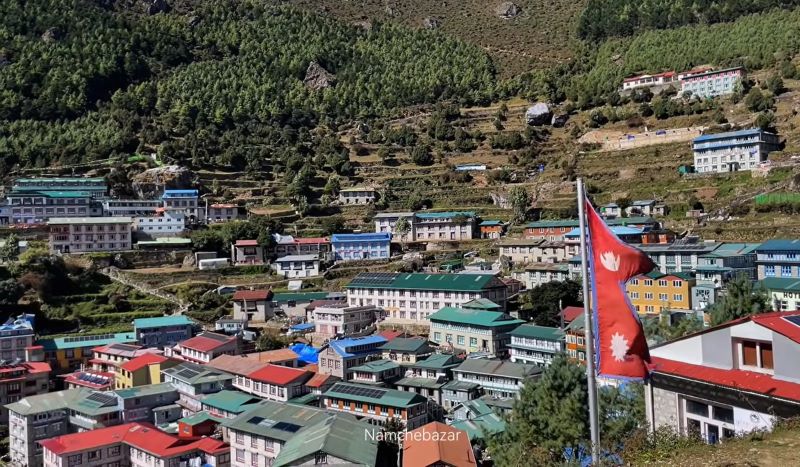
Accommodation : Teahouse Meals : Breakfast, Lunch & Dinner
Acclimatization Day
Today is a rest day in Namche Bazaar, and it is important for your body. At this altitude, your body needs time to adjust to the thinner air. After breakfast, take a short hike to the Army Camp viewpoint, about 20 minutes uphill from the town. If the sky is clear, you can see Everest, Lhotse, Ama Dablam, and Thamserku rising above the valley.
If you feel strong, continue higher to Khumjung village or the Everest View Hotel (3,880 m) and return to Namche for the night. This follows the golden rule of altitude: climb high, sleep low. In the afternoon, explore the Sherpa Museum, bakeries, and the famous Saturday market (when it is open), or simply relax with a hot drink.
Drink plenty of water and walk slowly. Tomorrow you continue to Tyangboche.
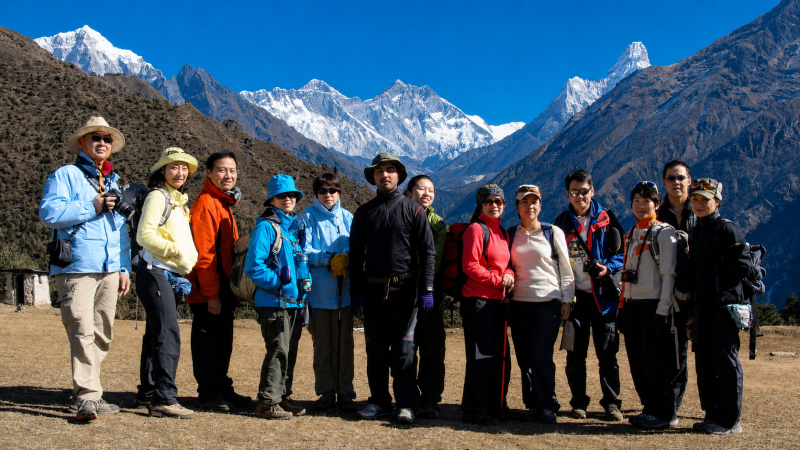
Accommodation : Teahouse Meals : Breakfast, Lunch & Dinner
Namche Bazaar to Tyangboche/Deboche (3,820 m/1,235 ft)
After breakfast, leave Namche Bazaar and follow a gentle trail along the hillside above the Dudh Koshi valley. The first 2 hours are the best part of the day. You get wide views of Everest, Thamserku, Ama Dablam, and Lhotse. The path rises and dips gradually, so you can walk at an easy pace and enjoy the scenery.
You pass through Kyanjuma and Sanasa, where the trail to Gokyo splits off to the left. Keep right for Tyangboche. Along the way, look out for Himalayan thar, musk deer, colorful Himalayan monal pheasants, and eagles circling overhead.
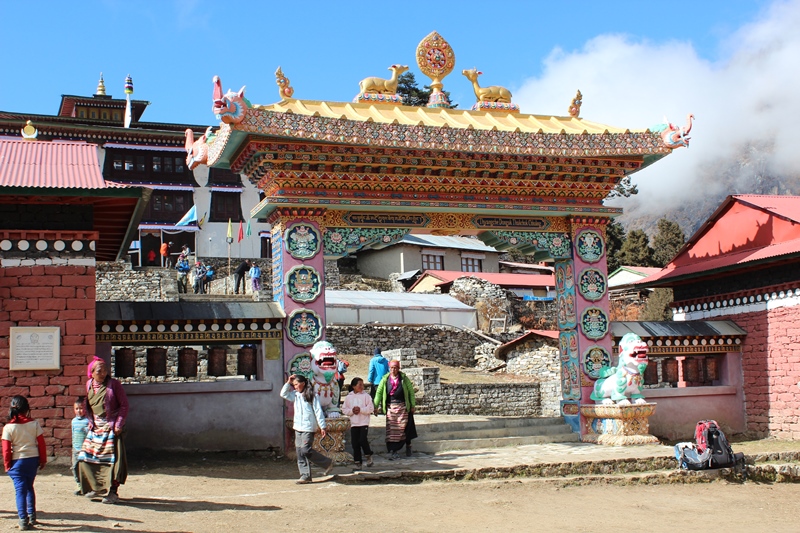
The trail then drops through quiet forest to Phunki Tenga, where you stop for lunch beside the river. After lunch, the trail climbs steeply through pine and rhododendron forest to Tyangboche, home to the famous Tyangboche Monastery. As the busiest stop on the Everest Base Camp route, its teahouses fill up fast. If they are full, you walk another 20 minutes down to Deboche, a quieter village with comfortable lodges.

Accommodation : Teahouse Meals : Breakfast, Lunch & Dinner
Trek to Dingboche (4,260 m/13976 ft) – 4 hours trek
Start the day with a warm breakfast near Tyangboche Monastery, then walk down through a peaceful forest of rhododendron, birch, and juniper. At Deboche, you cross a suspension bridge over the Imja Khola and begin a steady climb. The views open up along the way, with Ama Dablam, Lhotse, and Everest rising above the valley.
Your next stop is Pangboche, one of the oldest Sherpa villages in the Khumbu. It is a good place for a tea break and a look at its old monastery. From here, the trail follows the river through open, windswept hills with fewer trees. You pass Shomare, where you stop for lunch at a simple teahouse, then continue to Orsho.
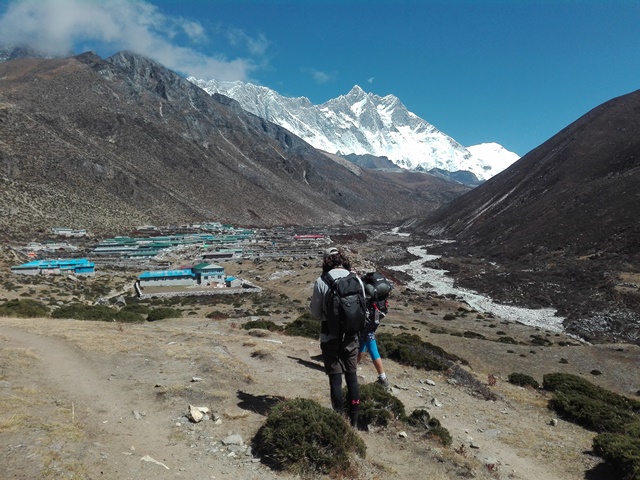
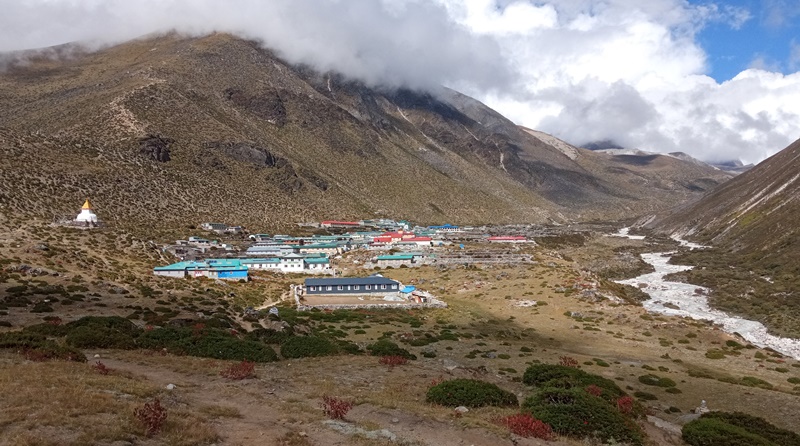
The last stretch is a short, steep climb above the Imja Khola. You may feel the thin air now, so walk slowly and drink plenty of water. Soon you reach Dingboche, a village of stone-walled fields, bakeries, and cozy lodges. As the sun sets, Ama Dablam glows right above the village.
Accommodation : Teahouse Meals : Breakfast, Lunch & Dinner
Acclimatize day at Dingboche
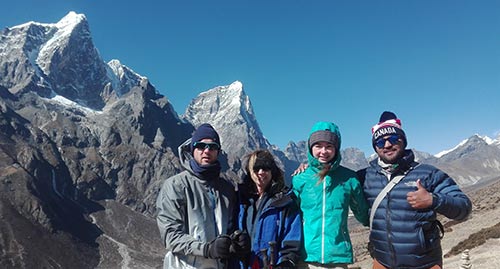
Today is a rest day from the long trail, but not from walking. Your body adjusts best when you climb high and sleep low, so after an early breakfast you hike up Nangkartshang Hill, the ridge directly behind Dingboche village.
The trail starts from the edge of the village and climbs steadily over open, grassy slopes dotted with yak pastures and prayer flags. The path is steep in places, so walk slowly, take short breaks, and drink plenty of water. After about 2 to 3 hours, you reach the viewpoint at around 5,080 m, which is higher than most of the trail ahead.
The effort is worth it. On a clear morning, you look across the Imja valley to Ama Dablam, Lhotse, Makalu, Island Peak, Taboche, and Cholatse. Far below, Dingboche and the quiet village of Chhukung sit in the valley, and the trail toward Lobuche winds into the distance. Spend some time at the top, then walk back down to Dingboche for lunch.
Spend the afternoon resting, doing laundry, or enjoying a hot drink and a bakery treat. Tomorrow you continue to Lobuche.

Accommodation : Teahouse Meals : Breakfast, Lunch & Dinner
Trek From Dingboche to Lobuche (4,930 m/ 16,108 ft): 7 km- 5 to 6 Hrs
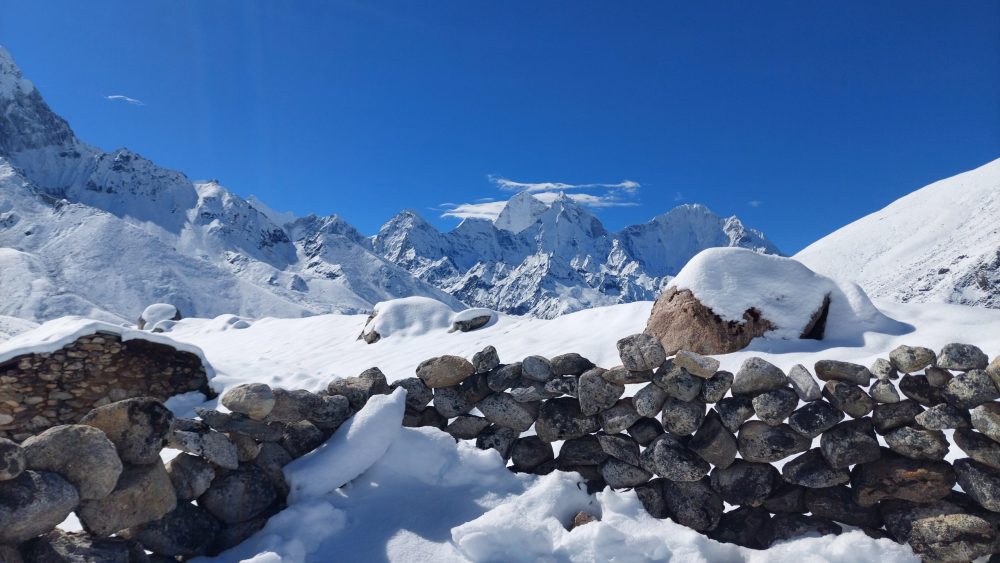
Today you leave the green valleys behind and walk into the high, wild landscape of the upper Khumbu. After breakfast in Dingboche, the trail climbs gently across wide, open hillsides with Ama Dablam, Taboche, and Cholatse towering above you. There are almost no trees now, only yak pastures, stone walls, and prayer flags.
You reach Dughla (Thukla), a small settlement beside the Khumbu Khola, where you stop for lunch. Right after the meal, the trail climbs steeply to Thukla Pass (Chupki Lhara). This is a quiet and moving place, where stone memorials honor climbers and Sherpas who lost their lives on Everest and nearby peaks. Take your time here, and let your body rest at the top.
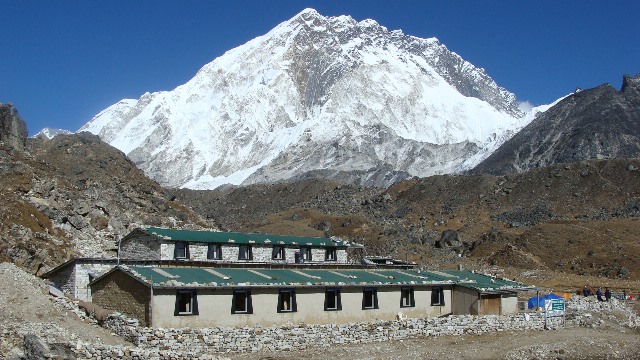
From the pass, the path follows the rocky moraine beside the Khumbu Glacier. The views are among the best of the trek, with Nuptse, Pumori, Lobuche Peak, and Changri Shar standing around you. The air is thin and cold, so walk slowly, drink plenty of water, and keep warm layers close. After a final gentle climb, you arrive in Lobuche, a small village of simple teahouses. Spend the evening resting, as tomorrow is the big day to Everest Base Camp.
Accommodation : Teahouse Meals : Breakfast, Lunch & Dinner
Trek from Lobuche to Gorakshep (5,180 m/16,990 ft) then Visit Everest Base Camp(5,364 m/17, 594 ft) & Back to Gorakshep
This is the day you have been walking toward. After an early breakfast in Lobuche, you follow the rocky moraine trail beside the Khumbu Glacier. The path rises and dips over loose stones, with Nuptse, Pumori, and Lobuche Peak around you. The air is thin and cold, so walk slowly and take regular sips of water.
After about 3 hours, you reach Gorakshep, a tiny settlement on a sandy flat that was once a lake bed. Check in to your teahouse, have lunch, and rest for a short while.
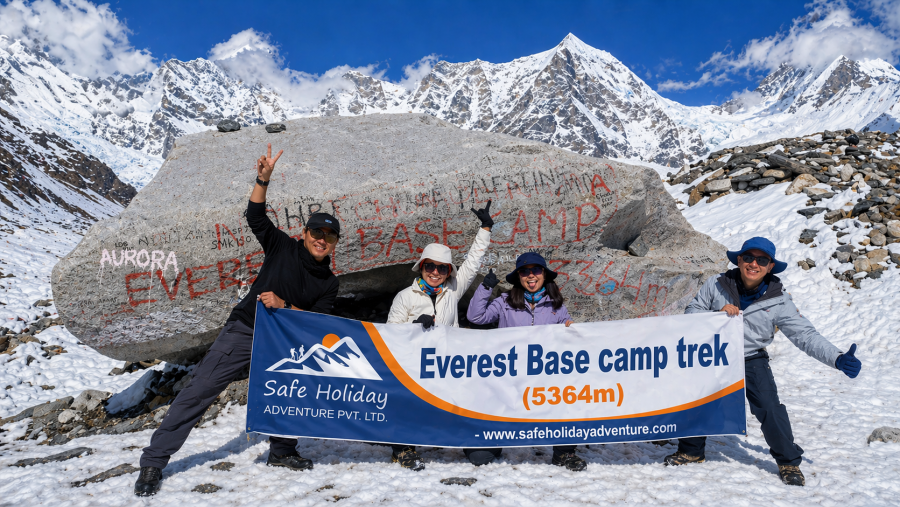
In the afternoon, you continue to Everest Base Camp, about 2 to 3 hours each way. The trail winds over moraine and ice ridges, with views of the Khumbu Icefall ahead. At the base camp, stand among the prayer flags and the stone markers, and take your photos with the glacier below. During the spring climbing season (March to May), you will also see the colorful expedition tents. Everest itself is hidden behind Nuptse here, but you will see it clearly from Kala Patthar tomorrow.
Walk back to Gorakshep for dinner and rest. It is a long day at high altitude, so go to bed early.

Accommodation : Teahouse Meals : Breakfast, Lunch & Dinner
Hike to Kalapathar (5,545 m/18192 ft) early in the morning trek to Dzongla (4,850 m/15912 ft),
Today begins in the dark. Wake up early in Gorakshep, put on all your warm layers, and walk up Kala Patthar with your guide. The trail is steep and sandy, so go slowly and rest often. After about 1.5 to 2 hours, you reach the top just as the first light touches the peaks.
This is the best view of the whole trek. Mount Everest finally stands in front of you, with Nuptse, Lhotse, Changtse, and Pumori around it, and the Khumbu Glacier winding far below. Take your photos, enjoy the moment, and then walk back down to Gorakshep for breakfast.
After breakfast, leave Gorakshep and follow the moraine trail back to Lobuche, about 2 hours away. Just past Lobuche, you turn off the main Everest Base Camp trail and take a quieter path across open hillsides toward Dzongla. The route is much less crowded, and Cholatse, Taboche, and Ama Dablam rise ahead of you. Dzongla is a small, peaceful village where you spend the night at a simple teahouse. Rest well, because tomorrow you cross Cho La Pass.
Accommodation : Teahouse Meals : Breakfast, Lunch & Dinner
Trek from Dzongla to Thangnak (4,750 m) via Cho La Pass (5,420 m)
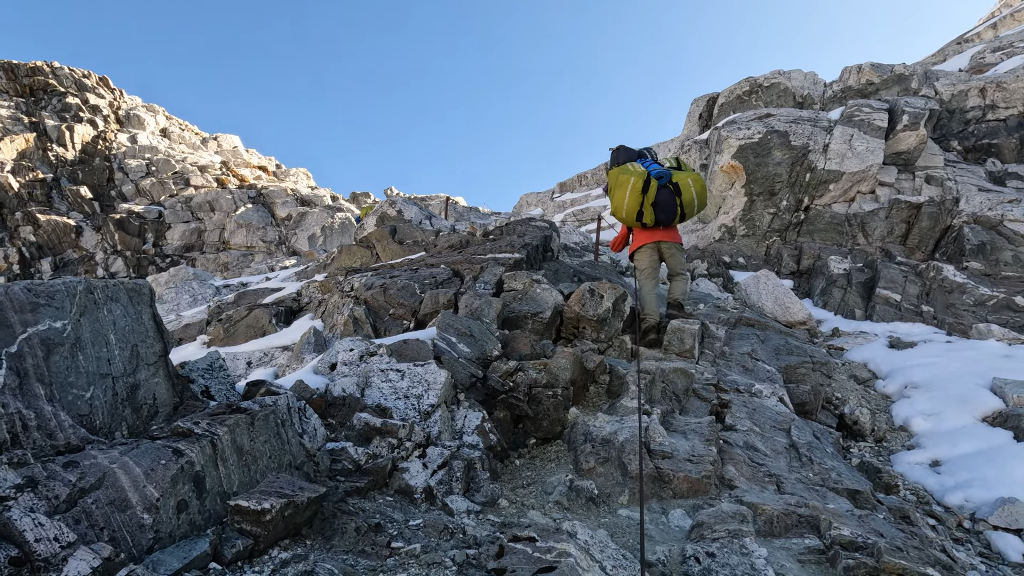
Today is the highlight of the whole journey. You wake up early, have a hot breakfast in Dzongla, and set off before sunrise with your guide. The trail first crosses open, rocky hillsides toward Cho La Phedi, the base of the pass. Then the real climb begins. The path is steep and rocky, with loose stones in places, so walk slowly and follow your guide’s pace.
After about 3 to 4 hours, you stand on top of Cho La Pass, covered in colorful prayer flags. Take a long pause here. On a clear day, you look back at Cholatse, Taboche, and Lobuche Peak, and ahead toward the Gokyo valley and the giant peaks beyond it. This is the moment you trained for, so take your photos and enjoy the view.
The descent is just as important as the climb. A short section crosses the Cho La Glacier, where the ice and loose rock can be slippery. Your guide chooses the safest route and tells you if microspikes are needed. After the glacier, the trail drops steadily over rocky terrain to Thangnak (Dragnag), a small settlement with a few teahouses below the pass. Rest, eat well, and drink plenty of water. Tomorrow you walk to Gokyo and its turquoise lakes.

Accommodation : Teahouse Meals : Breakfast, Lunch & Dinner
Trek from Thangnak to Gokyo (4,800 m)
After yesterday’s big crossing, today is shorter, but the scenery is just as special. Enjoy a slow breakfast in Thangnak, then set off with a view of the Cho La behind you and the Gokyo valley ahead.
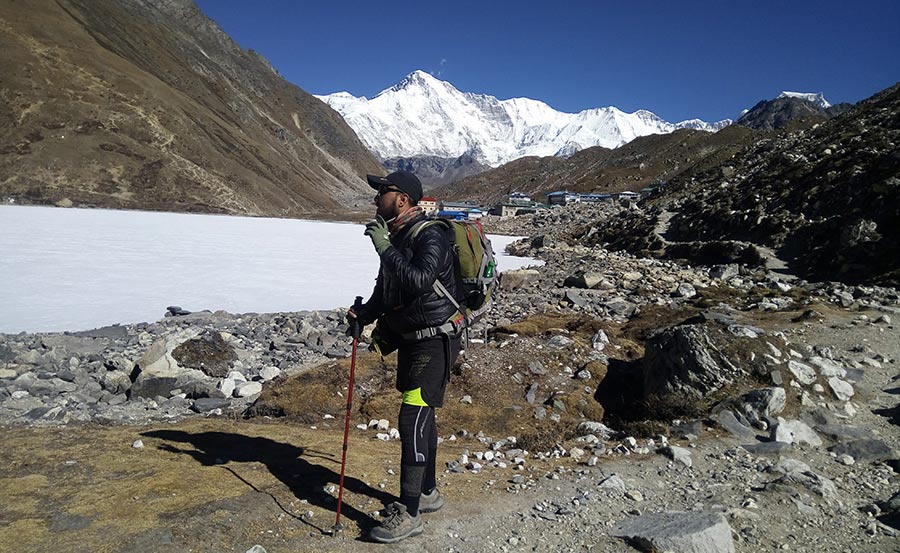
The trail crosses the Ngozumpa Glacier, the longest glacier in Nepal. It is a wide river of rock and ice, and the path winds over loose stones and small ridges. Your guide leads the way, so watch your footing and take your time. Along the way you pass small blue meltwater ponds, and on a clear day you can see Cholatse, Taboche, and Cho Oyu around you.
Once you are across, the trail climbs gently along the moraine to the first of the Gokyo Lakes. The turquoise water against the dry brown hills is a beautiful contrast. You pass the second lake, then reach the third lake, Dudh Pokhari, and the village of Gokyo on its shore. Gokyo Ri rises right above the teahouses.
Check in, have lunch, and spend the afternoon resting or walking along the lake. Tomorrow is a rest day for exploring the valley.

Accommodation : Teahouse Meals : Breakfast, Lunch & Dinner
Gokyo Ri (5,357 m) Sunrise Hike and Trek to Dole (4,100 m)
This is a long day, but a beautiful one. Wake up early in Gokyo, wear your warm layers, and climb Gokyo Ri with your guide. The trail is steep, with rocky switchbacks and prayer flags along the way. Walk slowly and rest often. After about 2 to 3 hours, you reach the top as the sun rises.
The view is one of the best of the whole trek. Four mountains above 8,000 m stand in front of you: Everest, Lhotse, Makalu, and Cho Oyu. Below you, the turquoise Gokyo Lakes shine beside the village, and the huge Ngozumpa Glacier stretches down the valley. Take your time here and enjoy the moment.
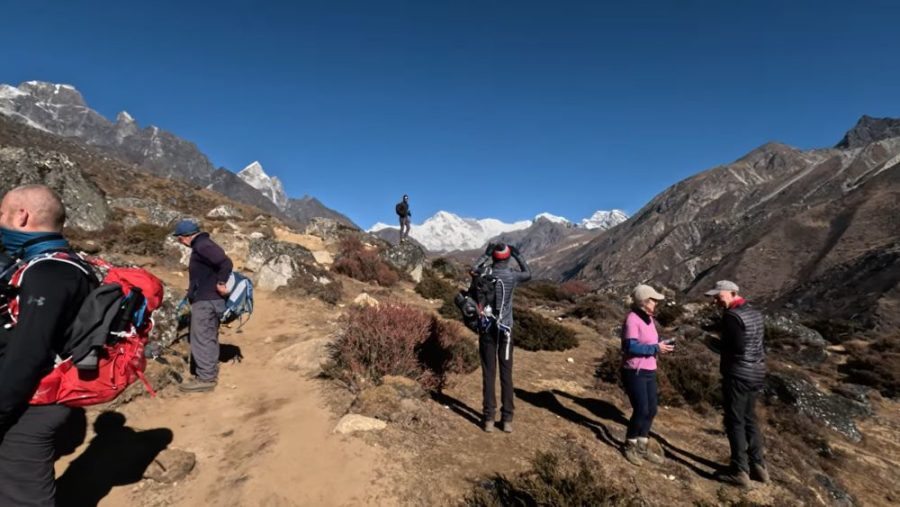
Walk back down to Gokyo for breakfast and pack your bags. Then begin the long descent along the Dudh Koshi valley. The trail passes Longponga and Machhermo, then continues through Luza to Dole. The path goes down through open hillsides and then into forest of juniper and rhododendron, and the air feels thicker with every step. Yaks graze on the slopes, and you may see Himalayan thar along the way.
By the time you reach Dole, you have walked a long day, but your body is happy at the lower altitude. Have a hot dinner and rest well.

Accommodation : Teahouse Meals : Breakfast, Lunch & Dinner
Trek from Dole to Namche Bazaar (3,450 m) via Phortse Tenga and Mong La
Today you leave the quiet Gokyo valley and rejoin the main Khumbu trail. After breakfast in Dole, the path drops steadily through juniper and rhododendron forest, with the Dudh Koshi River far below. You pass the small settlements of Lhabarma and Kharka, and the trees grow thicker and greener as you lose height.
At Phortse Tenga (about 3,680 m), you cross the river on a suspension bridge and stop for lunch beside the water. After the meal, the trail climbs steeply through pine forest to Mong La (Mong Danda), a windy pass marked with prayer flags and stone memorials. This is the best viewpoint of the day. On a clear afternoon, you look across the valley to Ama Dablam, Thamserku, Kangtega, and Everest. Take a short rest here, as this is the last big climb of the day.
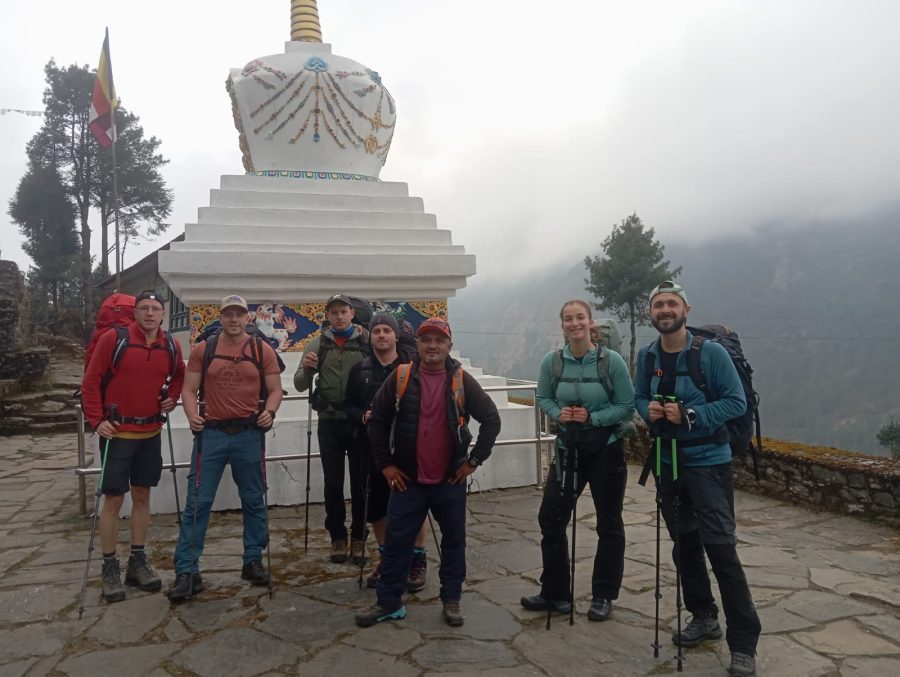
From the pass, the trail descends gently through forest to Sanasa, then to Kyanjuma, where you join the main Everest Base Camp trail. A final stretch of easy walking brings you to Namche Bazaar. After many days in remote valleys, the lively streets, bakeries, and warm teahouses feel like a treat. Enjoy a hot shower and a good meal.
Accommodation : Teahouse Meals : Breakfast, Lunch & Dinner
Trek from Namche Bazaar to Lukla (2,860 m)
This is your last day on the trail, and you walk back along the same route you took on the way up. After an early breakfast in Namche Bazaar, take a final look at the Himalayan peaks above the town, then follow the stone steps down toward the river. The descent is steep at first, so walk slowly and use your poles to protect your knees.
You cross the high Hillary Suspension Bridge again, then walk through pine forest to Jorsale, where you can stop for a tea break. Just beyond, you pass the Sagarmatha National Park gate at Monjo. The trail now follows the Dudh Koshi River, crossing several suspension bridges, with prayer flags, mani walls, and prayer wheels along the way. Remember to keep them on your left.
You stop for lunch at Phakding, then continue through Ghat and Chheplung. The last stretch is a gentle climb to Lukla. Your trek is complete, and your guide and porters will celebrate with you. Tonight is a good time to share a farewell dinner, say thank you to your team, and enjoy your last evening in the mountains.

Accommodation : Teahouse Meals : Breakfast, Lunch & Dinner
Fly from Lukla to Kathmandu
The flight from Lukla to Kathmandu takes around 30 minutes and offers views of the Himalayas. Upon arrival at Kathmandu airport, private transportation to a hotel is provided. An authentic Nepali dinner with a guide is also offered, and feedback is expected in the future. The overnight stay will be in a Kathmandu hotel.

Accommodation : Hotel
Chola Pass Trek Most Asked Questions ( FAQs):
Previous high-altitude trekking experience is helpful but not essential. Good fitness, preparation, acclimatization, and a steady pace are important.
It is a challenging high-altitude trek. The Cho La Pass crossing is the most demanding section because of steep terrain, altitude, and possible snow or ice.
The trek usually takes about 15-18 days to complete.
The trek is considered to be a difficult trek, and requires a good level of physical fitness and acclimatization to altitude.
The highest altitude reached during the trek is 5,550 meters at the top of Kalapathar.
The best time to do the trek is from March to May and from September to November, which are the two peak trekking seasons in Nepal.
It is recommended to acclimatize for at least two to three days in Namche Bazaar and/or Dingboche during the trek.
There are tea houses and lodges available for accommodation along the trekking route.
There are various options of Nepalese, Tibetan, and Western food available at the tea houses and lodges along the trekking route.
A Sagarmatha National Park Permit and a TIMS (Trekkers’ Information Management System) card are required for the trek.
You will need good quality trekking boots, warm clothes, a sleeping bag, a backpack, and other basic trekking gear. It is recommended to bring trekking poles, crampons, and an ice axe for the Chola Pass.
Yes, it is possible to hire a guide and a porter for the trek.
The cost of hiring a guide and a porter varies depending on the trekking agency and the duration of the trek.
The trek usually starts from Lukla, which can be reached by a short flight from Kathmandu.
The trek is generally safe as long as you follow the advice of your guide and take the necessary precautions for altitude sickness and other potential hazards.
The region is home to various species of wildlife such as musk deer, Himalayan Thar(Mountain goat), snow leopard, and different species of birds.
Refund & Cancellation Policy
- Booking requires 20% non-refundable deposit (Nepal) or 100% upfront (Tibet/Bhutan).
- Remaining payment due before the trip or on arrival (trip-dependent).
Cancellation charges:
- 31+ days: 20%
- 16–30 days: 45%
- 8–15 days: 75%
- 7 days or less: 90%
- Prices may change due to flights, taxes, or exchange rates.
- Trip changes are allowed, but extra costs apply.
- If the company cancels, a full refund, except for unavoidable events (some costs deducted).
- Good health and travel insurance are mandatory.
- No refund if removed for unsafe or illegal behavior.
- Travel involves personal risk, which the client accepts.