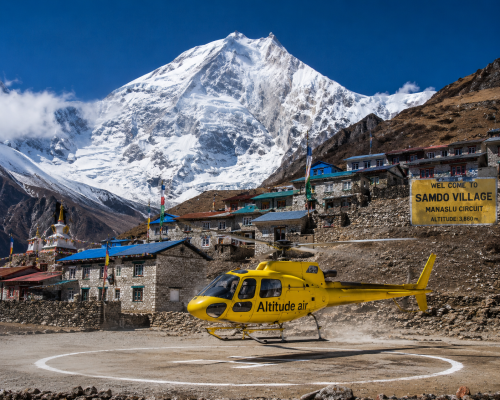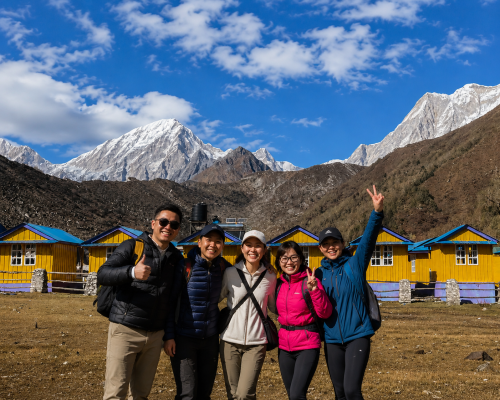



Nar-Phu valley Trek Highlights: Highlights
- Marvel at the snow-capped Himalayan peaks, including Annapurna, Manaslu, and Lamjung Himal.
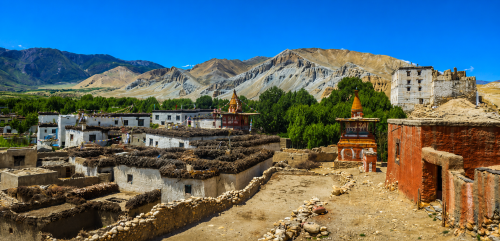
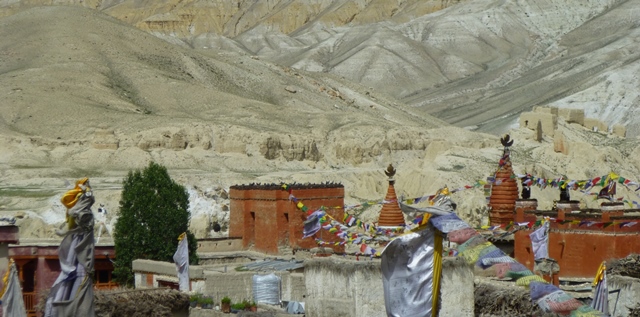
- Visit the remote Nar and Phu villages and discover the rich Tibetan culture and traditions.
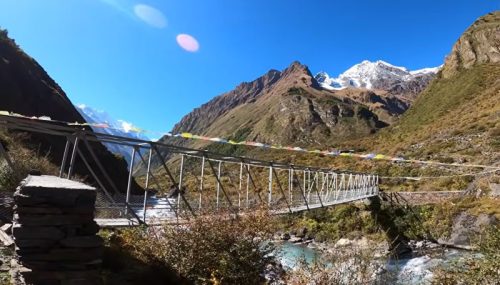
- Walk through dramatic landscapes with deep gorges, narrow canyons, and lush green forests.Cross high suspension bridges over fast-flowing rivers and streams.
- Climb scenic mountain passes and enjoy panoramic views of the Himalayan range.
- Relax and rejuvenate in natural hot springs surrounded by mountains.
- Explore ancient monasteries and sacred meditation caves.
- Spot rare Himalayan wildlife, including snow leopards, blue sheep, and musk deer.
- Taste authentic local cuisine, such as yak cheese and traditional butter tea.
- Meet warm-hearted locals and trekking companions, creating unforgettable connections and lifelong memories.
Nar Phu Valley Trek Short Overview: Overview
The Nar Phu Valley Trek is a hidden gem in Nepal’s Annapurna Conservation Area (ACA), nestled in the northern Manang District. Beginning at Koto village on the renowned Annapurna Circuit Trail , this trek leads to the pristine Nar and Phu villages, perched at 4,110 m and 4,250 m above sea level. Immerse yourself in the rich Tibetan-influenced culture, ancient Buddhist traditions, and traditional Himalayan lifestyles of these remote communities.
The trek usually begins from Besishahar, in Lamjung district, following trails that pass through Rhododendron forests, farmlands, and picturesque villages. As the path ascends, trekkers experience changing landscapes—from green hills to rocky valleys and high mountain passes. The journey takes about 9 to 15 days, depending on your itinerary and pace. Each step brings new views, cultural encounters, and memorable moments, making it one of Nepal’s most rewarding Himalayan adventures.
A major highlight of the 9-Day Nar Phu Valley Trek is the incredible view of the Annapurna and Dhaulagiri mountains. These towering peaks are among the highest in the world and create dramatic backdrops throughout the journey. Beyond natural beauty, trekkers also connect with the Nar and Phu communities, who still live in traditional stone houses and follow Tibetan Buddhist culture. Their warm hospitality, local food, and centuries-old lifestyle make the trek truly special.
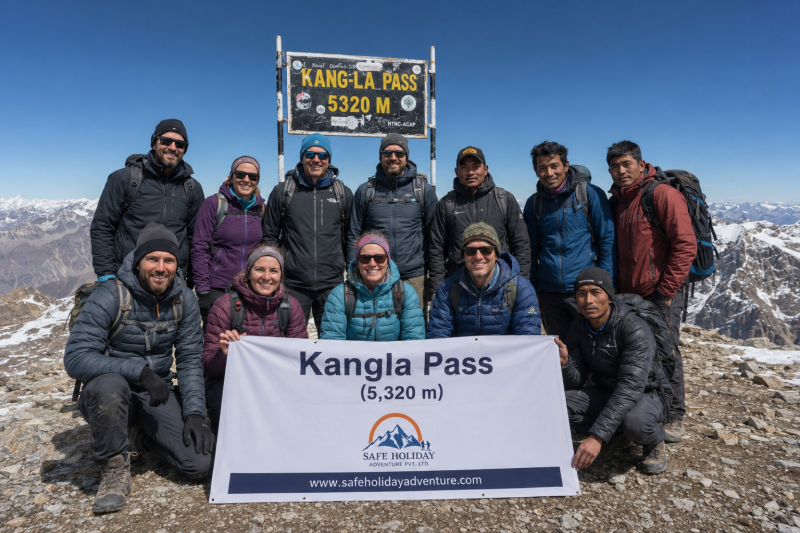
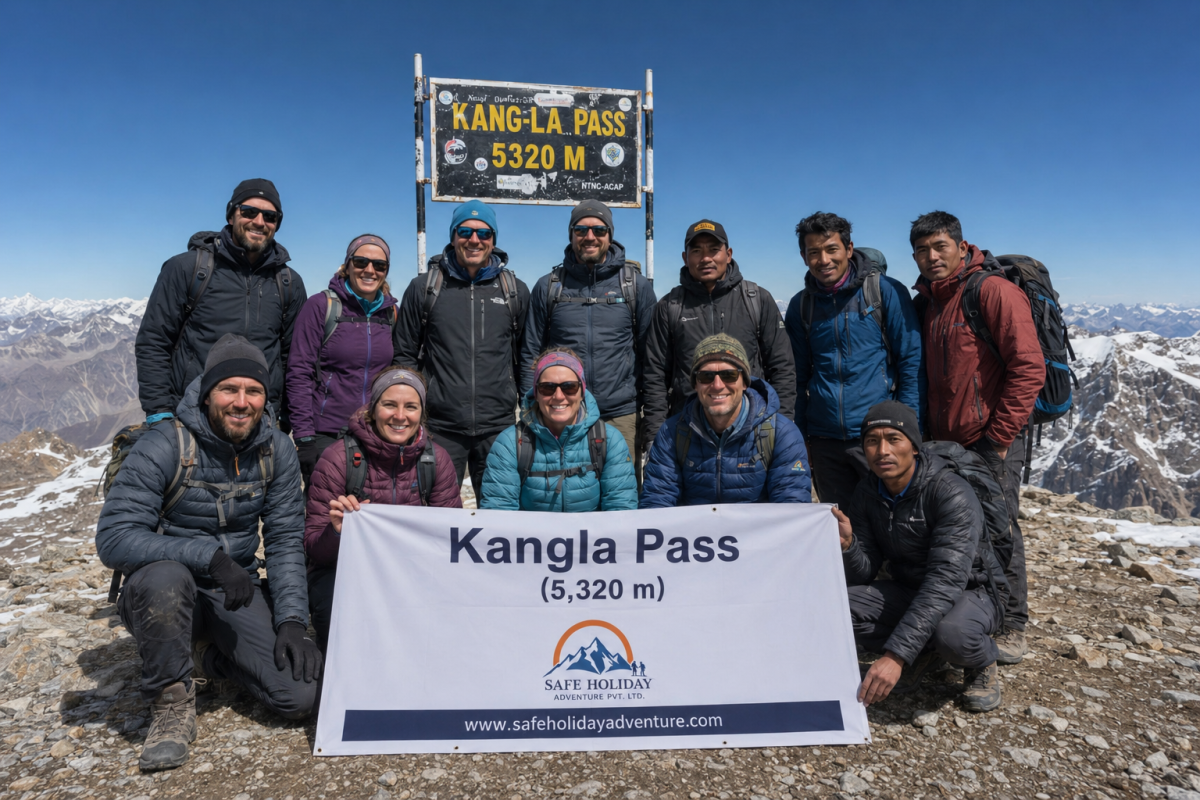
The trek is considered moderate to challenging, with steep climbs and high altitude. The highest point is Kang La Pass (5,300m), offering jaw-dropping Himalayan views. Good fitness and some trekking experience are recommended. Proper acclimatization is also important to avoid altitude sickness. Trekkers who prepare well will find this adventure safe, enjoyable, and full of achievement.
The best time to trek Nar Phu Valley is during Autumn (September–November) and Spring (March–May). These seasons offer clear skies, pleasant temperatures, and the best Himalayan views. Winter can be too harsh, while the summer monsoon brings heavy rain. Packing the right gear, warm clothing, and reliable trekking equipment ensures comfort and safety throughout the trip.
In conclusion, the Nar Phu Valley Trek in Nepal is an off-the-beaten-path adventure combining mountain beauty, culture, and adventure. It is perfect for those seeking something different from the popular Annapurna region or Everest region routes. With remote valleys, friendly locals, and dramatic landscapes, this trek guarantees unforgettable memories. If you want to explore a hidden Himalayan treasure, the Nar Phu Valley Trek is the perfect choice for your next adventure.
Who Leads the Nar Phu Valley Trek with Safe Holiday Adventure?
Your Nar Phu Valley trek is led by a government-licensed, English-speaking trekking guide from Safe Holiday Adventure Pvt. Ltd. Nar Phu is a restricted area, so a licensed guide is required for your special permit, and we handle that paperwork for you.
Our guides know the trail from Koto to Phu Village and Nar Village, and they are trained in first aid and altitude sickness awareness. They set a steady pace, check on your health every day, and make the call to rest or descend if needed. They also share the stories of the Tibetan-influenced villages and monasteries along the way.
A porter helps carry your main bag, so you can enjoy the walk. Our Kathmandu office stays in contact with your guide throughout the trek, so help is always one call away.
What Makes Nar Phu Valley Trek Special?
Nar Phu Valley Trek is special because it lies in a restricted Himalayan region near Annapurna, keeping it far less crowded than other popular trails in Nepal. The route offers dramatic landscapes, including deep canyons, high passes like Kang La Pass, and untouched mountain wilderness that feels raw and remote.
The trek is also known for its strong Tibetan-influenced culture, where ancient villages, stone houses, and centuries-old monasteries still preserve traditional life and spirituality. Local people follow age-old customs, giving trekkers a rare cultural experience.
Its isolation, silence, and preserved nature make Nar Phu Valley a truly authentic and peaceful Himalayan adventure.
Nar Phu Valley Trek Cost & Package Options:
Based on updated 2026 and 2027 trekking information for Nar Phu Valley, there are actually more than just budget and luxury options. Trekking companies and guides now usually offer 4–5 clear package styles depending on comfort, cost, and service level.
Here are the main options explained simply:
1. Budget Trek Option (Low Cost) – Around USD 700–1000
This is the cheapest way to do Nar Phu Valley. You stay in basic teahouses, eat simple local food, and travel in shared transport. A guide is usually included, but services are minimal. It is best for experienced trekkers who want adventure over comfort.
2. Standard Trek Option (Most Popular) – Around USD 900–1500
This is the most balanced choice. It includes a professional guide, porter service, proper meals, and better-organized transport. Accommodation is still simple, but more comfortable and reliable. Most trekkers choose this option because it gives good value and safety.
3. Luxury Trek Option (High Comfort) – Around USD 1500–2500+
This option focuses on comfort and convenience. You get private transport, high-quality hotels in Kathmandu, better lodge arrangements where possible, and personalized service. It is designed for trekkers who want less stress and more comfort in remote areas.
4. Solo / Custom Private Trek Option
This is fully flexible. You can design your own itinerary, choose your pace, and upgrade services as needed. It is usually more expensive because you are not sharing costs, but it gives full freedom and privacy.
5. Group Joining Trek Option (Cost Saving)
You join other trekkers in a fixed departure group. This reduces cost for guides, transport, and permits. It is one of the cheapest ways after budget trekking and is great for meeting other travelers.
Best Time to Do Nar Phu Valley Trek
The best time to trek Nar Phu Valley is during autumn (September–November) and spring (March–May). In these seasons, the weather is clear, the skies are blue, and the mountains show their best views. The temperature is moderate, making trekking comfortable and safe.
During autumn, the air is fresh after the monsoon, offering stunning views of Annapurna, Dhaulagiri, and Kang La Pass. Spring brings colorful rhododendron forests and blooming landscapes, adding charm to the journey. Both seasons are perfect for photography, cultural experiences, and high-altitude trekking.
Winter (December–February) is cold, and heavy snow can block passes, while the summer monsoon (June–August) brings rain and slippery trails. For the best Himalayan adventure, choose autumn or spring, when conditions are ideal for both scenery and safety.
Nar Phu Valley Trek: Route Options in Manaslu Region
Embark on a journey through the Nar Phu Valley, a hidden gem nestled in the Manaslu region. Trekkers can choose from various routes, each offering unique experiences:
Classic Loop: Begin in Koto, trek through Meta to Phu Gaon, and return via Nar. This 12-day itinerary offers a comprehensive exploration of the valley’s culture and landscapes.
Via Kang La Pass: For seasoned adventurers, ascend to Kang La Pass (5,320m), connecting Nar Phu Valley to the Annapurna Circuit. This challenging route rewards trekkers with panoramic views and a sense of accomplishment.
Extended Adventures: Combine the Nar Phu Valley trek with the Manaslu Circuit or the Annapurna Circuit for a 24 to 26-day expedition. Cross multiple high passes, including Larke La and Thorong La, and immerse yourself in diverse cultures and terrains.
Each route requires a special permit and a licensed guide, ensuring safety and compliance with Nepal’s trekking regulations.
How to Prepare for the Nar Phu Trek: Fitness, Gear, and Safety Tips
- Altitude Acclimatization: The highest point on the trek reaches 5,400 meters (17,700 feet) at Thorong La Pass. Proper acclimatization is essential to avoid altitude sickness. Take your time, walk slowly, and listen to your body.
- Proper Clothing and Gear: The weather in the Himalayas can change quickly. Bring warm layers, waterproof jackets, sturdy trekking shoes, gloves, and hats. Don’t forget trekking poles and a reliable backpack.
- Hydration and Food: Access to clean water and food may be limited. Carry a water purification system, energy snacks, and light meals to stay energized throughout the trek.
- Health and Safety: Ensure you are in good health before starting the trek. Travel insurance, first aid kits, and awareness of potential risks are essential for safety.
- Cultural Sensitivity: The Nar Phu region is home to Tibetan-influenced communities. Respect local customs and traditions to enrich your trekking experience.
Benefits of Doing the Nar Phu Valley Trek with Safe Holiday Adventure
- Expert Guides & Support – Experience the trek with skilled guides and porters. They ensure safety and assist you every step of the way.
- All Permits Handled – Your ACAP and Restricted Area Permit (RAP) are fully arranged, making your trek hassle-free.
- Cultural Immersion – Explore Tibetan-influenced villages, visit monasteries, and learn about local traditions.
- Breathtaking Scenery – Discover remote valleys, snow-capped peaks, and mesmerizing Himalayan landscapes.
- Challenging High-Altitude Experience – Conquer Kang La Pass at 5,240 m and enjoy a truly rewarding adventure.
- Customized Itineraries – Routes are tailored to your fitness level and personal preferences for a perfect trekking experience
- Comprehensive Services – Accommodation, meals, transportation, and logistics are fully managed for your convenience.
- Positive Reviews & Trust – Trekkers praise our professionalism, smooth planning, and unforgettable experiences.
- Photography Opportunities – Capture incredible mountain views, traditional villages, and stunning sunrises or sunsets.
- Wildlife & Nature – Spot rare Himalayan flora and fauna along the trail.
- Adventure & Exploration – Trek through one of Nepal’s most remote and less-crowded regions.
- Ideal Trekking Seasons – Spring and autumn offer clear skies, mild temperatures, and stable weather conditions
- Local Cuisine Experience – Enjoy authentic local food at teahouses scattered along the route.
- Support for Emergencies – Safe Holiday Adventure provides emergency response and helicopter assistance whenever needed.
Nar Phu Valley Trek Itinerary:Outline Itinerary
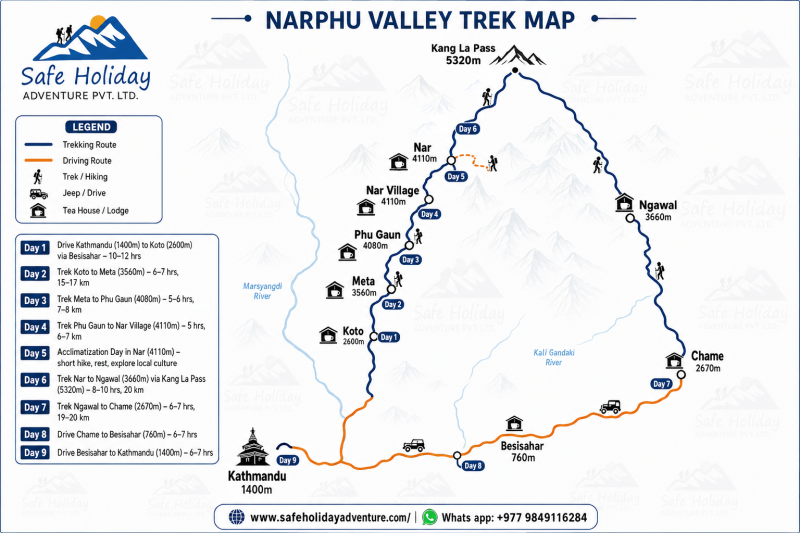
Day 1: Drive Kathmandu (1400m) to Koto (2600m) via Besisahar – 10–12 hrs, river valleys, scenic road journey.
Day 2: Trek Koto to Meta (3560m) – 6–7 hrs, 15–17 km, forest trails, enter restricted Nar Phu region.
Day 3: Trek Meta to Phu Gaun (4080m) – 5–6 hrs, 7–8 km, canyon views, ancient Tibetan village.
Day 4: Trek Phu Gaun to Nar Village (4110m) – 5 hrs, 6–7 km, monasteries, mani walls, cultural walk.
Day 5: Acclimatization Day in Nar (4110m) – short hike, rest, explore local culture.
Day 6: Trek Nar to Ngawal (3660m) via Kang La Pass (5320m) – 8–10 hrs, 20 km, highest pass & Himalayan views.
Day 7: Trek Ngawal to Chame (2670m) – 6–7 hrs, 19–20 km, forest descent, riverside trail.
Day 8: Drive Chame to Besisahar (760m) – 6–7 hrs, off-road mountain drive.
Day 9: Drive Besisahar to Kathmandu (1400m) – 6–7 hrs, return journey.
Nar Phu Valley Trek Package: Inclusions and Exclusion
- Airport Transfers: Pick-up on arrival and drop-off on departure.
- Accommodation:
- One-night hotel stay in Kathmandu on arrival.
- All lodges/tea houses during your trek and in cities as per the itinerary.
- Meals: Standard meals (Breakfast, Lunch, and Dinner) throughout the trek and city stays.
- Transportation:
- Kathmandu to Besisahar by bus, then shared jeep to Koto.
- Chame to Besisahar, and Besisahar to Kathmandu via public transport.
- Permits & Documentation:
- Narphu Valley Trek permits and all Manaslu region entry permits.
- All necessary trekking permits and official documents.
- Taxes & Fees: All applicable taxes and VAT included.
- Guides & Staff:
- Experienced guide’s salary and all expenses.
- Company-provided T-shirt and duffel bag.
- Nepal entry visa and international flights
- Meals in the city (lunch & dinner)
- Personal expenses like Wi-Fi, charging, hot showers, and souvenirs
- All drinks, including alcoholic and non-alcoholic beverages
- Tips for guides, porters, and drivers
- Any service not mentioned in the inclusions
Upgrade Your Comfort: For a premium travel experience, opt for a private jeep. It’s slightly higher in cost but offers maximum convenience, comfort, and flexibility throughout your journey
Dates and Availability Departures
All our published dates are guaranteed departures. We also provide customized departures tailored to your travel plans.
There are no group joining dates available at the moment. Please contact us for a private trip.
Travellers Reviews
Genaral Trip InfoInfos
Is Nar Phu Valley Trek difficult?
The biggest challenge is altitude and isolation. The trail goes above 4,000m, and crossing Kang La Pass (5,320m) is the toughest day. At this height, thin air, cold wind, and fatigue can hit hard if you are not properly acclimatized. Weather can also change quickly, especially in spring and autumn shoulder periods.
In simple terms: if you can comfortably walk 6–7 hours a day on uneven terrain and you prepare with a few training hikes, you’ll be fine. But if you expect teahouses every hour or easy trails, Nar Phu will feel demanding. It rewards effort with very raw, quiet Himalayan landscapes—but you need to earn it.
Do I need permit for Narphu Valley:
Yes, you need a special permit for the Nar Phu Valley Trek. This region is a restricted area of Nepal, so entry is not allowed with a regular trekking permit. You must obtain a Restricted Area Permit (RAP) through a registered trekking agency, and solo trekking is not permitted under regulations.
For the Nar Phu Valley trek, you also need an Annapurna Conservation Area Permit (ACAP) in addition to the restricted permit. Both permits are checked at entry points like Koto. Without them, you cannot legally enter the Nar Phu Valley trekking route.
Weather and temperature like during the Spring and Autumn seasons:
The weather in Nar Phu Valley Trek is best during spring and autumn, offering clear skies, mild temperatures, and very little rain, making trekking conditions comfortable and stable.
Food and Tea House Facilities on Nar Phu Valley Trek:
Food and tea house facilities on the Nar Phu Valley Trek are basic but sufficient for trekkers. Along the route, especially in lower sections, you will find small teahouses run by local families serving simple, fresh meals like dal bhat, noodles, soups, eggs, potatoes, and Tibetan bread. The food is clean, filling, and designed to support long trekking days rather than luxury dining.
As you move higher into Phu and Nar villages, the availability becomes more limited and the menu more basic. Tea houses provide essential accommodation with simple rooms and a shared dining area for warmth. While meals are always available, options are fewer at higher altitude, so carrying extra snacks like energy bars or dry fruits is highly recommended for added convenience and energy.
Essential Gear for Nar Phu Valley Trek:
1. Footwear
- Strong broken-in trekking boots
- Comfortable trekking socks (wool or thermal)
- Optional: lightweight camp shoes
2. Backpack
- 50–60L trekking backpack
- Small daypack (for essentials during walks)
3. Clothing (Layer System)
- Thermal base layers (top & bottom)
- Fleece or warm mid-layer jacket
- Waterproof windproof jacket & pants
- Warm down jacket (very important for cold nights)
- Trekking pants (quick dry)
4. Cold Weather Accessories
- Warm gloves + inner liners
- Wool hat / beanie
- Neck buff or scarf
- Sunglasses (UV protection)
5. Sleeping Gear
- -10°C to -20°C sleeping bag
- Sleeping bag liner (optional but useful)
6. Trekking Equipment
- Trekking poles
- Headlamp with extra batteries
7. Hydration & Health
- Reusable water bottle or hydration bladder
- Water purification tablets or filter
- Basic first aid kit
8. Extra Essentials
- Sunscreen & lip balm
- Energy snacks (bars, nuts, chocolate)
- Light crampons/microspikes (seasonal for snow near Kang La Pass)
What is the Weather Like on Nar Phu Valley Trek
The Nar Phu Valley Trek weather is generally cold, dry, and clear, especially in spring and autumn. Days are usually sunny, giving strong mountain views and comfortable walking conditions at lower elevations.
In the daytime, temperatures range from about 10°C to 20°C, while in the evening it drops sharply to around 0°C to -10°C in higher villages. Nights near higher passes can feel even colder, especially in open areas.
During winter, temperatures can fall below -15°C, with snow at higher altitudes, while monsoon brings rain and poor visibility, making trekking more difficult and less safe.
Is Altitude Sickness a Risk on the Nar Phu Valley Trek?
Yes, altitude sickness is a real risk on the Nar Phu Valley Trek because the route climbs quickly above 3,000m and reaches over 5,000m at high passes. The body needs time to adjust to reduced oxygen, especially in remote Himalayan conditions.
The risk becomes higher near high points like Kang La Pass (5,320m), where symptoms like headache, nausea, dizziness, and fatigue can appear if you ascend too fast. Proper acclimatization days in places like Phu or Nar are very important.
With a slow pace, good hydration, and proper rest, most trekkers complete the route safely. The key is not rushing—listen to your body, avoid overexertion, and descend immediately if symptoms worsen.
Wildlife and Monasteries of Nar Phu Valley Trek:
In the Nar Phu Valley under the Annapurna Conservation Area, trekkers can witness unique Himalayan wildlife such as Himalayan blue sheep, Himalayan tahr, musk deer, marmots, and rare sightings of the snow leopard. High-altitude skies are often home to golden eagles and Himalayan vultures.
The valley also reflects deep Tibetan Buddhist culture. Key sites include the historic Tashi Lhakhang Monastery in Phu village and the peaceful Nar Phedi Monastery on the trekking route. The trail is filled with mani walls, chortens, and prayer flags, showing the strong spiritual heritage of the region.
Detailed ItineraryItinerary
Drive from Kathmandu to Koto via Besisahar
Distance: 230 km (140 miles)
Description:
The journey begins early in the morning from Kathmandu. After a quick breakfast at your hotel, we drive toward Besisahar, following the Prithvi Highway. The first hour passes through bustling small towns and roadside villages. At around 2 hours, we reach Malekhu, a small riverside town known for its freshwater fish and terraced hills. Pause here for a short tea break and take in views of the Trishuli River. After another 2–3 hours, we reach Besisahar, where lunch is served at a local riverside café. Post-lunch, the road ascends steeply through pine forests and small mountain settlements, with your first glimpse of snow-capped peaks in the distance. Arrive in Koto by late afternoon, check into the teahouse, and enjoy dinner while watching the sunset on the surrounding hills.
Accommodation : Teahouse Meals : Breakfast, Lunch, Dinner
Trek from Koto to Meta
Distance: ~12 km
Description:
Today we wake up in Koto and start trekking after a warm breakfast at 7:00 AM. The trail begins gently through terraced fields, with a 20-minute walk along stone-paved lanes. We then descend toward the Marsyangdi River, following its course for 30 minutes while crossing a small wooden bridge. The path gradually ascends into dense pine forests, where the sound of chirping birds accompanies our walk. Around mid-morning, we encounter a cluster of small villages; here, locals often wave and offer greetings. Lunch is enjoyed beside a cascading stream, providing a refreshing break. In the afternoon, we continue the steep ascent, passing prayer flags and small mani walls. By late afternoon, we arrive at Meta village, checking in at a cozy teahouse and soaking in views of Pisang Peak and the Annapurna Massif.
Accommodation : Teahouse Meals : Breakfast, Lunch, Dinner
Trek from Meta to Phu Gaun
Distance: ~19 km
Description:
Rise early in Meta village and start trekking around 7:00 AM. The morning trail meanders through stone steps and narrow valleys, following the Phu Khola for about 40 minutes. You will cross a small wooden suspension bridge, entering the more remote landscapes of the Nar Phu Valley. By mid-morning, the trail ascends sharply through steep cliffs, giving breathtaking views of Himlung Himal and Kang Guru. Lunch is served near a small riverbank with panoramic mountain views. After lunch, the trek continues along ancient trails lined with Tibetan stupas, with prayer flags fluttering in the wind. By late afternoon, we arrive at Phu Gaun, a traditional Tibetan village with stone houses and spectacular Himalayan vistas. Enjoy a quiet evening interacting with locals and soaking in the mountain serenity.
Accommodation : Teahouse Meals : Breakfast, Lunch, Dinner
Trek from Phu Gaun to Nar Village
Distance: ~17 km
Description:
This morning, we begin at 7:00 AM after a hearty breakfast. The trail first descends gently along Phu Khola for 30 minutes before climbing steadily through stone terraces and yak pastures. By mid-morning, we cross a wooden suspension bridge over a stream, entering narrow gorges that open onto panoramic mountain views. Lunch is served at a scenic spot overlooking Pisang Peak. After lunch, the trek continues through small villages where locals tend their fields. The afternoon walk passes more stone houses and prayer walls, eventually reaching Nar village in the late afternoon. This hidden valley is rich in Tibetan culture, with a serene ambiance and impressive views of the surrounding peaks.
Accommodation : Teahouse Meals : Breakfast, Lunch, Dinner
Acclimatization Day at Nar Village
Description:
After breakfast at 7:30 AM, we take a short acclimatization hike from Nar village. First, we visit Tashi Lhupchen Gumba, a 500-year-old monastery founded by Padmasambhava. The trail then gently ascends toward Himlung Base Camp, offering unparalleled views of Chulu East, Pisang Peak, and Annapurna ranges. Lunch is served back in the village. The afternoon is free to explore the narrow lanes of Nar village, interact with local families, or rest in preparation for tomorrow’s high pass crossing. Evening tea and sunset views of snow-capped peaks complete the day.
Trek from Nar to Ngawal via Kang La Pass
Distance: ~16 km
Description:
Today, we rise early at 6:30 AM, as this is the most physically demanding day of the trek. The trail ascends steeply from Nar village through rocky terrain, snow patches, and narrow ridges. By mid-morning, we follow the Kang La Khola for 30 minutes, with scenic views of cascading waterfalls. Around 11:00 AM, we reach the base of Kang La Pass and begin the final 2–3 hour climb. At the summit, we pause to admire Annapurna II, Gangapurna, Tilicho Peak, and Marsyangdi Valley. After photos, we descend into Ngawal village, walking through rhododendron and pine forests, reaching our teahouse by late afternoon for dinner and rest.
Accommodation : Teahouse Meals : Breakfast, Lunch, Dinner
Trek from Ngawal to Chame
Distance: ~18 km
Description:
After breakfast at 7:00 AM, we begin our descent toward Chame. The trail first passes through open meadows and yak grazing areas, providing wonderful photo opportunities. Mid-morning, we cross a series of small suspension bridges over streams, with the surrounding oak and pine forests creating a serene atmosphere. Lunch is served at a riverside spot along the Marsyangdi River, before continuing downhill. Afternoon trekking leads to warmer valleys with lush green fields and terraced farms. By late afternoon, we arrive at Chame, check into a teahouse, and enjoy a well-earned rest.
Accommodation : Teahouse Meals : Breakfast, Lunch, Dinner
Drive from Chame to Besisahar
Distance: 65 km
Description:
We depart Chame after breakfast at 7:30 AM for a scenic drive through lush forests, waterfalls, terraced fields, and rivers. Mid-morning, stop for tea at a riverside café and enjoy picturesque views of cliffs and valleys. Lunch is served at a local restaurant along the route. The road is bumpy but scenic, offering countless photo opportunities. Arrive at Besisahar by mid-afternoon and check into a comfortable hotel, reflecting on the amazing Nar Phu journey.
Accommodation : Hotel Meals : Breakfast, Lunch, Dinner
Drive from Besisahar to Kathmandu
Distance: 175 km
Description:
After a hearty breakfast, we set off for Kathmandu, passing terraced fields, small towns, and dense forests. Midway, we stop for tea or a snack, with photo opportunities along the Trishuli and Marsyangdi rivers. Lunch is served at a roadside café. The journey continues, gradually approaching the bustling Kathmandu Valley. Arrive at your hotel in the afternoon, with the evening free to explore Thamel, shop for souvenirs, or enjoy local cuisine.
Accommodation : Hotel Meals : Breakfast, Lunch, Dinner
Short Nar Phu Valley Trek- 9 Days FAQs
It is better for fit beginners; prior trekking experience is helpful.
Usually 10 to 15 days depending on the route.
The highest altitude on the Narphu Valley Trek is Kang La Pass (5,240m/17,192ft).
It starts from Koto, reached via road from Kathmandu.
The best time to do the Narphu Valley Trek is during the spring (March to May) and autumn (September to November) seasons.
The Narphu Valley Trek is considered a moderate to difficult trek due to its remote location and high altitude passes.
Trekkers are required to obtain the Annapurna Conservation Area Permit (ACAP) and the Restricted Area Permit (RAP) for the Narphu Valley Trek.
While it is not mandatory to hire a guide for the Narphu Valley Trek, it is highly recommended due to the remote and challenging nature of the trek.
The cost of the Narphu Valley Trek can vary depending on the trekking company and the length of the trek, but it typically ranges from $1,500 to $2,500.
Accommodation on the Narphu Valley Trek consists of tea houses and camping.
You should pack warm and waterproof clothing, sturdy hiking boots, a sleeping bag, a trekking pole, and a first-aid kit.
The Narphu Valley is home to rare Himalayan species such as snow leopards, blue sheep, and musk deer, but they are not considered a threat to trekkers.
The weather on the Narphu Valley Trek can vary, but it is generally dry and cold with occasional snowfall in the higher altitudes.
While it is possible to do the Narphu Valley Trek solo, it is not recommended due to the challenging terrain and remote location.
The number of hours of trekking required each day on the Narphu Valley Trek can vary, but it typically ranges from 5 to 8 hours.
The food on the Narphu Valley Trek is mainly Nepalese and Tibetan cuisine, including dal bhat (lentil soup and rice), momos (dumplings), and thukpa (noodle soup).
Hot showers are available at some tea houses on the Narphu Valley Trek, but they may come at an additional cost.
Very limited and unreliable in higher villages.
Refund & Cancellation Policy
- Booking requires 20% non-refundable deposit (Nepal) or 100% upfront (Tibet/Bhutan).
- Remaining payment due before the trip or on arrival (trip-dependent).
Cancellation charges:
- 31+ days: 20%
- 16–30 days: 45%
- 8–15 days: 75%
- 7 days or less: 90%
- Prices may change due to flights, taxes, or exchange rates.
- Trip changes are allowed, but extra costs apply.
- If the company cancels, a full refund, except for unavoidable events (some costs deducted).
- Good health and travel insurance are mandatory.
- No refund if removed for unsafe or illegal behavior.
- Travel involves personal risk, which the client accepts.