


The Ghandruk Trek Highlights: Highlights
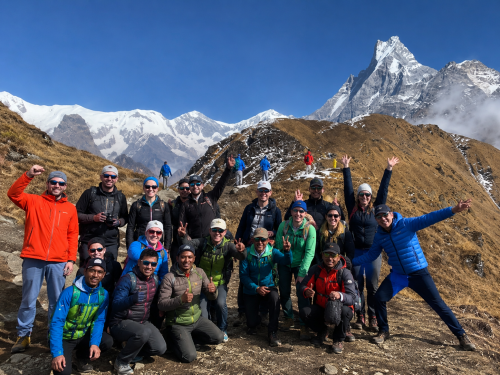
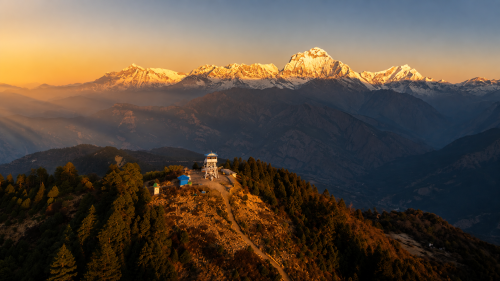
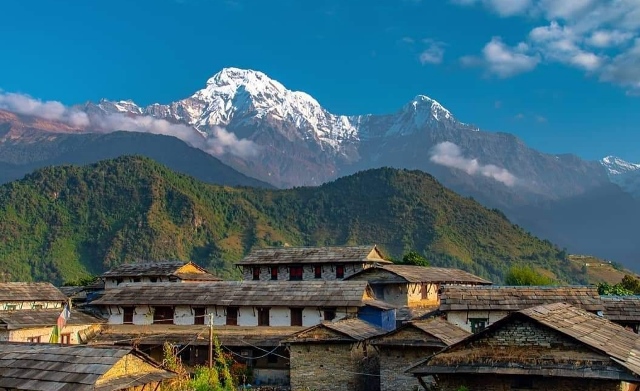
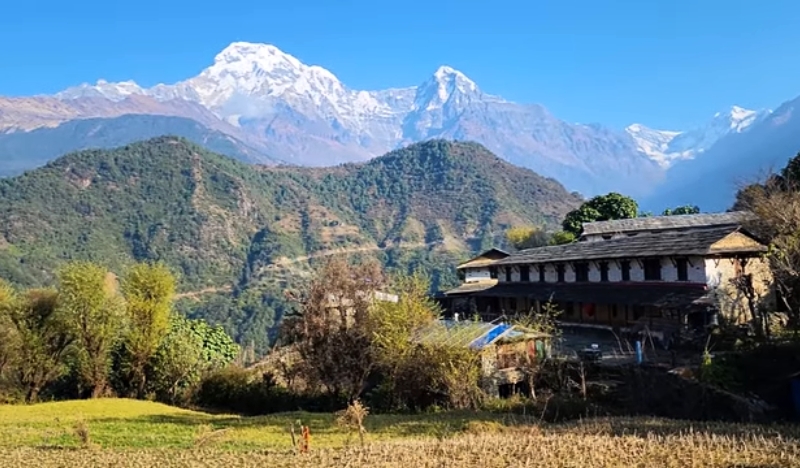
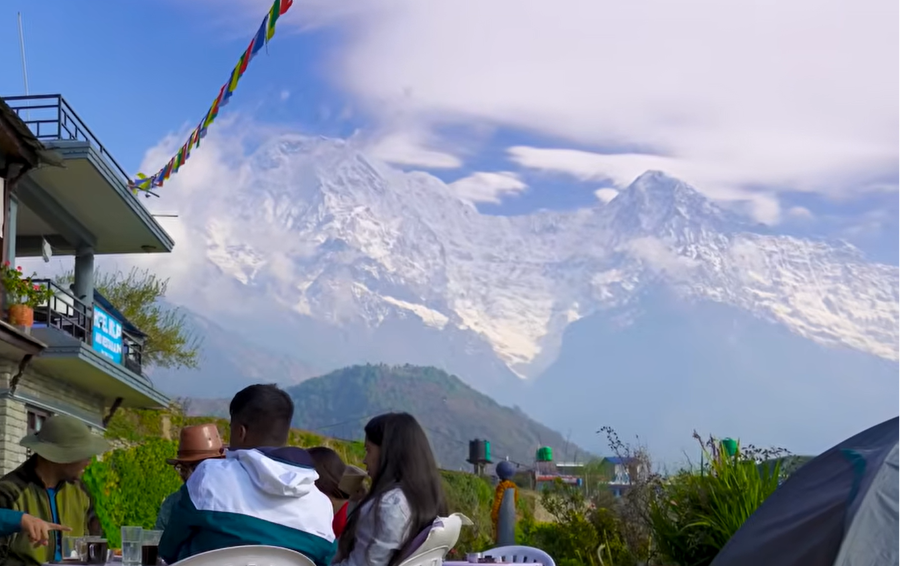
- Enjoy stunning panoramic views of Annapurna South, Machhapuchhre, and Hiunchuli.
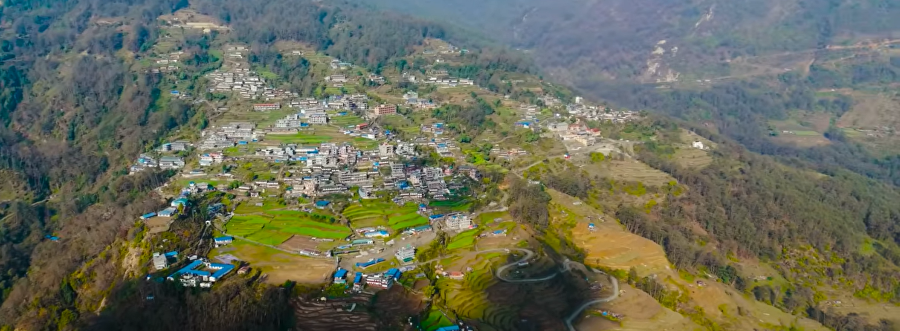
- Explore the beautiful traditional Gurung village of Ghandruk.
- Walk through terraced farmlands and lush green forest trails.
- Experience authentic local culture and warm Gurung hospitality.
- Trek peaceful routes on one of the fastest Annapurna Base Camp Trek itineraries, surrounded by breathtaking Himalayan scenery.
- Capture excellent opportunities for photography and nature watching.
- Follow an easy-to-moderate route, ideal for beginners and family travelers.
3 Day Ghandruk Trek Introduction: Overview
The 3 Day Ghandruk Trek is a popular trekking route in Nepal that takes about 3 days to complete. The trek is located in the Annapurna region, and it is a great option for those who want to experience the beautiful scenery and culture of the area without committing to a longer trek.
The trek starts in the village of Ghandruk, which is located about 3 hours from Pokhara. Ghandruk is a traditional Gurung village, and it is known for its beautiful stone houses and traditional culture. From Ghandruk, the trail climbs to Kimrung Danda, which offers great views of the Annapurna South and Hiunchuli peaks. After that, the trail descends to the Modi Khola river and then climbs up to the village of Landruk. Landruk is another traditional Gurung village and it is located on a terrace above the Modi Khola. The village offers great views of the Annapurna South and Machhapuchhre.
After that, the trail goes through the beautiful forest of Rhododendrons and oak, passing by some small villages and local teahouses, reaching the Australian Camp from where you will be able to enjoy the panoramic views of Annapurna South, Hiunchuli, Machhapuchhre, and Gangapurna. It is a great spot for photography and sunsets; you can spend some time here.
The next day, you will start your journey back to Ghandruk, which is the final destination of this trek, passing through the beautiful and lush forests, typical mountain villages, and terraced fields. The trek is considered a moderate level of difficulty.
Throughout the 3 Day Ghandruk Trek, you will have the opportunity to experience the local culture and tradition of the Gurung people, and you will be able to see some of the most beautiful mountain scenery in the world. The best time to do the trek is from September to November and March to May.
It is important to have all necessary permits, hire a good guide, carry enough cash, water, and wear proper clothes and shoes. Avoiding peak seasons and preparing well would also be beneficial for an enjoyable experience.
When is the best time to go on the 3-day Ghandruk Trek?
Why Trek Ghandruk in 3 Days With Safe Holiday Adventure?
Planning a short escape into the Annapurna foothills? Here’s what makes our 3-day Ghandruk trek the smarter choice:
- Local, experienced guides – Our guides are from the Annapurna region and know Ghandruk’s Gurung culture, trails, and hidden viewpoints firsthand, not just from a manual.
- Perfect for beginners and busy travelers – At just 3 days, this trek fits into a short holiday without sacrificing stunning close-up views of Annapurna South, Hiuchuli, and Machhapuchhre (Fishtail).
- Authentic cultural immersion – Stay in a genuine Gurung village, learn about local traditions, and enjoy home-style Nepali meals along the way.
- Well-planned, flexible itinerary – We build in realistic acclimatization and pacing so you’re not rushed, even on a short trek.
- Transparent pricing, no hidden costs – Your package includes permits, accommodation, and guide fees upfront, so there are no surprise charges midway.
- Safety-first approach – All our guides carry first-aid training and communication equipment, and we monitor weather and trail conditions closely.
- Support for local communities – Booking with us means your trek directly supports local guides, porters, and teahouse owners in Ghandruk.
- Easy booking and responsive support – From your first inquiry to your return, our team is available to answer questions and adjust plans as needed.
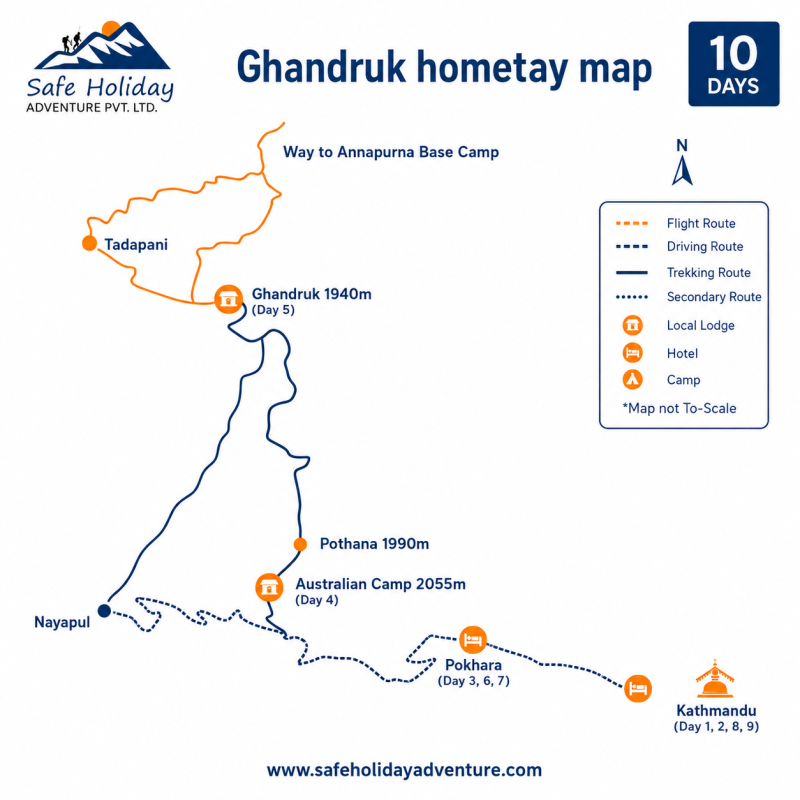
3-Day Ghandruk Trek OutlineOutline Itinerary
Day 1: Drive to Ghandruk
Day 2: Trek from Ghandruk to Tolka
Day 3: Trek from Tolka to Kande, Than Drive to Pokhara.
Whats Included?
- Experienced Mountain Guide,
- Dinner at Ghandruk, and Tolka,
- Breakfast at Ghandruk, and Tolka,
- Lunch at Landruk, and in Pokhara at a Local place,
- Annapurna Conservation area project entrance fees,
- 1 Night Hotel in Pokhara After The Trek,
- Trek Guide Salary, Food, Accommodation, insurance during your trek,
- Helicopter emergency service management, but paid for your travel insurance,
- Visa Fee: The package does not cover the cost of obtaining a visa; you will need to arrange this on your own.
- Meals in the City: Lunch and dinner in the city are not included and will be at your expense.
- Personal Expenses: Items like souvenirs or anything not specifically mentioned in the package are excluded.
- Drinks: All beverages, including bottled water, soft drinks (e.g., Coke, Fanta), tea, coffee, and chocolates, are not included.
- Additional Activities: Optional or extra programs outside the itinerary are not part of the package and will require additional payment.
- Tips for Field Staff: Tipping is optional but highly appreciated as a gesture of gratitude for the team’s effort and support during your trek.
Dates and Availability Departures
All our published dates are guaranteed departures. We also provide customized departures tailored to your travel plans.
October 2026
November 2026
December 2026
Travellers Reviews
Louis
France | April, 2025
Ghandruk Village – A Beautiful Himalayan Experience
Visiting Ghandruk was a wonderful experience. The traditional stone houses, beautiful mountain scenery, and peaceful atmosphere made the village truly special. I enjoyed walking through the narrow village paths and experiencing the warm hospitality of the local Gurung people.
The stunning views of Annapurna South and Machhapuchhre (Fishtail) made this visit unforgettable. I would highly recommend Ghandruk to anyone who wants to experience the natural beauty and local culture of Nepal.
— Louis, France
Genaral Trip InfoInfos
What to pack for 3 days Ghandruk Trek?
Essentials:
- Hiking boots or shoes
- Comfortable and moisture-wicking clothing (including long-sleeve shirts and pants to protect from the sun and insects)
- Warm layers (fleece or down jacket)
- Rain gear (jacket and pants)
- Sun protection (hat, sunglasses, sunscreen)
- First aid kit
- Navigation tools (map, compass or GPS)
- Water bottles or hydration system
- Snacks and meals
- Headlamp or flashlight
Recommended gear:
- Trekking poles (helpful for steep ascents and descents)
- Daypack (to carry essentials for the day)
- Camera or binoculars (for capturing the stunning views)
- Quick-dry towel
- Toiletries (toothbrush, toothpaste, hand sanitizer, etc.)
- Sleeping bag liner (in case the lodge blankets are not warm enough)
- Personal medication (if required)
Trek route options of 3 days Ghandruk trek
The Ghandruk 3-day trek offers several route options, including variations that may include Australian Camp, Pothana, Deurali, and Landruk. Here are some of the most popular route options:
Option 1: Ghandruk Loop
Day 1: Nayapul – Ghandruk
Day 2: Ghandruk – Landruk
Day 3: Landruk – Nayapul
Option 2: Ghandruk-Australian Camp Loop
Day 1: Nayapul – Ghandruk
Day 2: Ghandruk – Australian Camp
Day 3: Australian Camp – Kande – Nayapul
Option 3: Ghandruk-Pothana-Deurali Loop
Day 1: Nayapul – Ghandruk
Day 2: Ghandruk – Pothana – Deurali
Day 3: Deurali – Tolka – Landruk – Nayapul
These routes can be adjusted based on your fitness level and time constraints. Keep in mind that the Ghandruk 3-day trek involves steep ascents and descents, so it’s important to be prepared and acclimatized. Whichever route you choose, you’ll have the opportunity to experience the stunning scenery and rich culture of the Annapurna region.
Hiring Guide and Porter for Ghandruk trek
Hiring a guide and porter for the Ghandruk Loop trek is a personal choice, but it can make your trekking experience easier and more enjoyable. A guide can provide valuable information about the local culture, history, and geography of the region, as well as help with navigation, accommodations, and communication with locals. A porter can carry your backpack, leaving you free to enjoy the trek without the burden of heavy luggage.
To hire a guide and/or porter, you can book through a trekking agency or hire them independently in Nayapul, the starting point of the trek. It’s important to do your research and choose a reputable agency or individual, as there have been cases of exploitation and mistreatment of porters in the past. You can also negotiate the price and terms of the arrangement before hiring, including responsibilities, payment, and insurance.
Keep in mind that hiring a guide and/or porter is mandatory now(From 2023 April 1st).
Difficulty level of Ghandruk Trek:
The Ghandruk Trek is considered easy to moderate in difficulty. It is a good choice for beginners, families, and first-time trekkers in Nepal. The trail is well-marked and safe, but it includes some uphill and downhill walking on stone steps, which can be a little tiring.
The trek does not go to very high altitude, so there is very low risk of altitude sickness. Most people can complete it comfortably with normal fitness. You will walk through villages, forests, and scenic viewpoints, making the journey enjoyable rather than very hard. Overall, it is a short and pleasant trek suitable for all age groups.
Preparation and training tips for hiking the Ghandruk Loop trek.
Preparing for the Ghandruk Loop trek requires physical and mental preparation to ensure a successful and enjoyable experience. Here are some tips to help you prepare:
- Start training early with regular aerobic exercise such as hiking, walking, or running
- Build up your endurance with progressively longer walks or hikes
- Practice hill climbing and descending on steep terrain
- Pack appropriate clothing and gear for the weather and terrain
- Stay hydrated and carry enough water and snacks during the trek
- Be mentally prepared for the challenges of trekking and the cultural differences you may encounter
- Consider acclimatization and altitude sickness prevention measures
- Consult with a doctor or trekking agency if you have any medical concerns or pre-existing conditions.
3-day Ghandruk Trek cost:
Weather Conditions in Ghandruk Throughout the Year:
Ghandruk has a moderate mountain climate that changes with the seasons. In spring (March to May), the weather is warm and pleasant, with clear skies and blooming rhododendrons. Summer (June to August) is the monsoon season, bringing heavy rainfall, cloudy weather, and lush green landscapes.
In autumn (September to November), the weather is the best for trekking, with clear blue skies, stable temperatures, and excellent mountain views. Winter (December to February) is cold, especially at night, with occasional snowfall, but days are usually sunny and crisp.
Safety and Trekking Tips for Beginners:
If you are new to trekking, a few simple habits can make your journey safer and more enjoyable.
Start by choosing an easy and well-marked trail, and always check the weather before you go. Wear comfortable trekking shoes and carry light but essential items like water, snacks, a rain jacket, and basic first aid supplies.
Walk at a steady pace and don’t rush, especially on uphill sections. Stay hydrated and take short breaks when needed. It is also better to start trekking early in the day so you can reach your destination before dark.
Always inform someone about your trekking plan, and if possible, trek with a guide or in a group. Respect local rules, nature, and culture during your journey.
Mobile network, Wi-Fi, and electricity availability:
In Ghandruk village and nearby trekking areas, basic communication and utilities are available, but they are not always strong or fully reliable.
Mobile network:
Ghandruk has mobile coverage from major Nepal networks like NTC and Ncell. Signal works in most parts of the village, but it can be weak or unstable during bad weather or in deeper trail sections. Internet through mobile data is possible but not very fast.
Wi-Fi:
Most teahouses and homestays offer Wi-Fi, but it is usually slow and may not support heavy use like video calls or streaming. Sometimes it works only in common dining areas and may require a small extra fee.
Electricity:
Electricity is available in Ghandruk through the national grid. Rooms and common areas usually have lights and charging points. However, power cuts can happen occasionally, so it is good to carry a power bank for backup.
What to pack for Ghandruk trek:
Detailed ItineraryItinerary
Drive to Ghandruk
Morning drive from your hotel in Pokhara to Hari Chok. From Hari Chok, take a shared jeep to Ghandruk via Nayapul and Birethanti. The drive follows the Modi River, passing small villages like Swalibazar, Siwi, and Klue, with views of terraced farmland.
Upon arrival in Ghandruk, explore the traditional Gurung village, visit the Gurung Museum, and enjoy snow-capped mountain views of Annapurna South (7,219m), Hiunchuli (6,441m), and Machhapuchhre (6,993m). If the weather is clear, you can witness a beautiful sunset.
- Drive Duration: 3 hours
- Trekking Distance: Short village walks (~2 km)
- Trekking Hours: 1-2 hours exploring the village
- Overnight Stay: Tea House in Ghandruk (2,012m)
Accommodation : Tea House
Trek from Ghandruk to Tolka
Enjoy breakfast with a sunrise view of Annapurna South and Hiunchuli. Begin the trek by descending to Kyumi (2 hours), located on the bank of the Modi River. Cross the suspension bridge and ascend steeply to Landruk, a quiet and scenic village similar to Ghandruk, with views of Annapurna South, Hiunchuli, and a stunning valley landscape.
Take a lunch break in Landruk and explore the village. Continue trekking for about 1 hour to Tolka on a flat and easy trail, surrounded by green hills and farmland. Tolka is a peaceful village with mountain views and local temples.
- Trekking Distance: 11 km
- Trekking Hours: 5-6 hours (including breaks)
- Overnight Stay: Tea House in Tolka (1,700m)
Accommodation : Tea house
Trek from Tolka to Kande Than Drive to Pokhara
After breakfast, start trekking on an easy road for about 1 hour until you cross a small suspension bridge. Begin a steady ascent to Bhedikharka, passing two small houses. From there, follow stone steps through a forest for 45 minutes to reach Deurali.
At Deurali, enjoy views of Mount Dhaulagiri (8,167m), Machhapuchhre (Fishtail), Annapurna II, Annapurna IV, Lamjung Himal, Manaslu, the Pokhara Valley, and Sarangkot.
Descend through a forest trail to Pothana, where you check out at the ACAP permit checkpoint. Trek uphill for 20 minutes to Australian Camp, a stunning spot with panoramic views of the Annapurna Mountain Range and surrounding valleys.
Descend for about 50 minutes through a forest trail to Kande, where a private vehicle will take you back to Pokhara (1-hour drive).
- Trekking Distance: 12 km
- Trekking Hours: 5-6 hours (including breaks)
- Overnight Stay: Trek ends at Kande; drive to your hotel in Pokhara
Accommodation : Hotel
Trek Summary
- Total Distance: ~25 km
- Total Trekking Hours: 15-17 hours over 3 days
- Highlights: Gurung culture in Ghandruk, sunrise, and sunset views, Annapurna Mountain Range, Machhapuchhre, Dhaulagiri, peaceful villages, and panoramic valley views.
Ghandruk Trek FAQs
The Ghandruk Loop Trek is considered to be a moderate trek. It involves some steep inclines and descents, but overall it is suitable for people with a good level of fitness.
The best time to do the Ghandruk Loop Trek is from September to November and March to May. The monsoon season is between June and August and can make the trail muddy and slippery. The winter months can be quite cold and snowy.
During the Ghandruk Loop Trek, you will be staying in teahouses, which are small guesthouses that offer basic accommodation, food, and drink. Most teahouses will provide you with a bed and a blanket, but it’s best to bring your own sleeping bag for added comfort.
During the Ghandruk Loop Trek, you can expect to find a variety of traditional Nepali and continental food options at the teahouses. Some popular dishes include Dal Bhat (lentils and rice), momos (Nepali dumplings), pasta, and pizza. Some teahouses may also serve local alcohol such as Rakshi and Tongba(Locally made soft drinks).
You will need to pack your backpack with clothing and equipment. Some recommended items include warm clothing, a waterproof jacket and pants, sturdy hiking boots, a sleeping bag, a headlamp, a water bottle, a first aid kit and personal toiletries. Sunscreen, sunglasses, and a hat or cap are also important.
Yes, you will need a TIMS (Trekkers’ Information Management Systems) permit and an Annapurna Conservation Area Permit (ACAP) to trek in the Annapurna region. These can be obtained in Kathmandu or Pokhara.
It is possible to do the Ghandruk Loop Trek independently, but it is recommended to hire a guide and/or porter to help you navigate the trail and provide valuable information about the culture and history of the region.
Technically it’s possible, but it’s not recommended. The trail can be muddy and slippery, which can make the trek more challenging and dangerous. It is also less pleasant than during the dry season. So best to avoid the monsoon season.
It is always best to be well-informed and well-prepared when embarking on a trek in a foreign country. It’s also recommended to consult with a professional guide or trekking agency to ensure you have the most accurate information and all the necessary permits, equipment, and guides to have an enjoyable and safe trek.
Refund & Cancellation Policy
- Booking requires 20% non-refundable deposit (Nepal) or 100% upfront (Tibet/Bhutan).
- Remaining payment due before the trip or on arrival (trip-dependent).
Cancellation charges:
- 31+ days: 20%
- 16–30 days: 45%
- 8–15 days: 75%
- 7 days or less: 90%
- Prices may change due to flights, taxes, or exchange rates.
- Trip changes are allowed, but extra costs apply.
- If the company cancels, a full refund, except for unavoidable events (some costs deducted).
- Good health and travel insurance are mandatory.
- No refund if removed for unsafe or illegal behavior.
- Travel involves personal risk, which the client accepts.