

14 Aug 2026 13 min to read
The Everest Base Camp Trek is one of the world’s most famous Himalayan adventures, but many first-time trekkers have the same question before starting: What is the hardest day of the Everest Base Camp Trek?
There is no single answer because the difficulty changes throughout the journey. Some sections are difficult because of steep uphill climbs, while others become challenging because of altitude, rocky terrain, cold temperatures, or long walking hours.
A trekker may find the climb from the Hillary Suspension Bridge to Namche Bazaar exhausting, while another may consider the climb from Phunki Thanga to Tengboche the hardest section. Above Dingboche, altitude becomes an increasingly important factor, and the final journey toward Gorak Shep, Everest Base Camp and Kala Patthar can feel particularly demanding.
The classic Everest Base Camp route gradually climbs from Lukla at around 2,860 m to Everest Base Camp at approximately 5,364 m, with Kala Patthar reaching about 5,545 m. Because the body needs time to adjust to higher elevations, a well-planned Everest Base Camp Trek itinerary normally includes acclimatization days at Namche Bazaar and Dingboche.
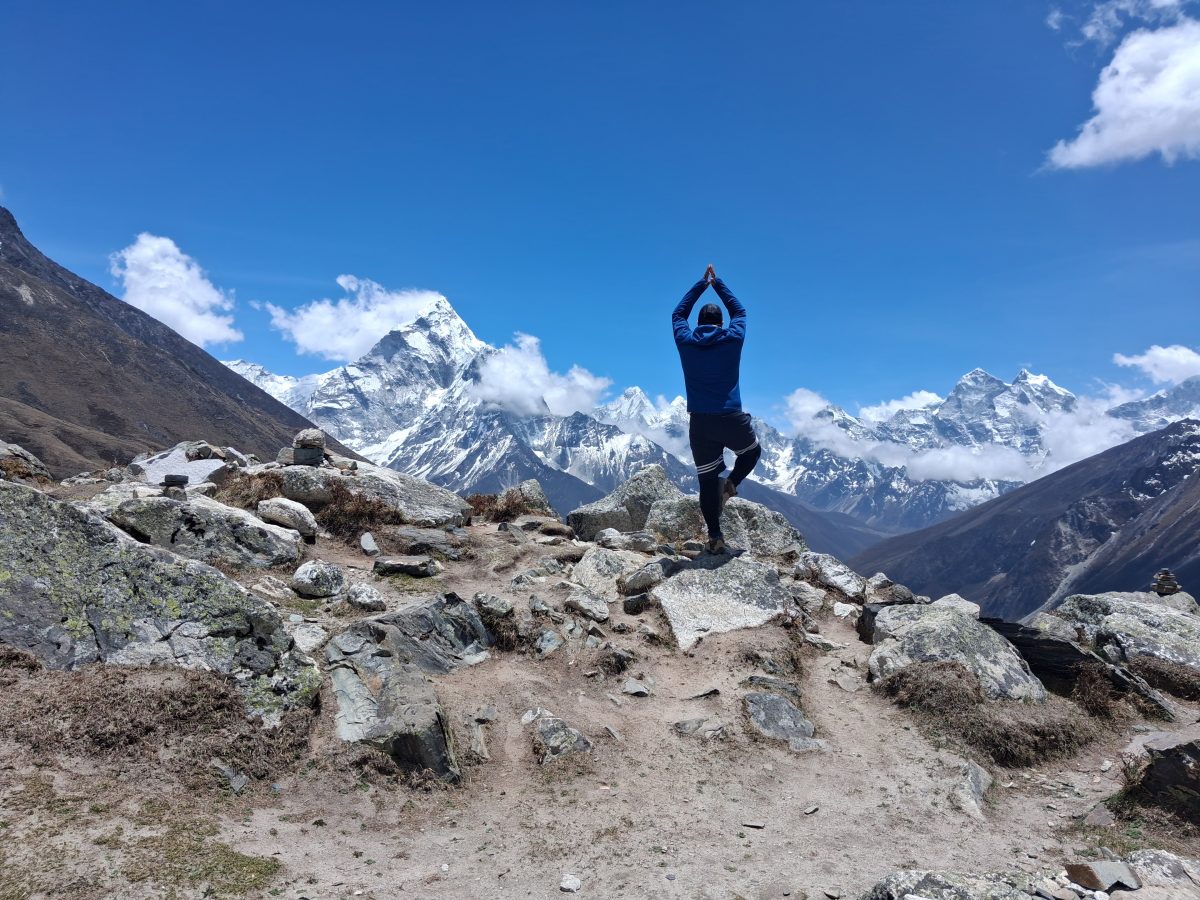
Before looking at each section in detail, these are some of the places where trekkers commonly feel the greatest physical challenge:
So, rather than asking which single day is hardest, it is more useful to understand why these sections are difficult and how the challenge changes as you gain altitude.
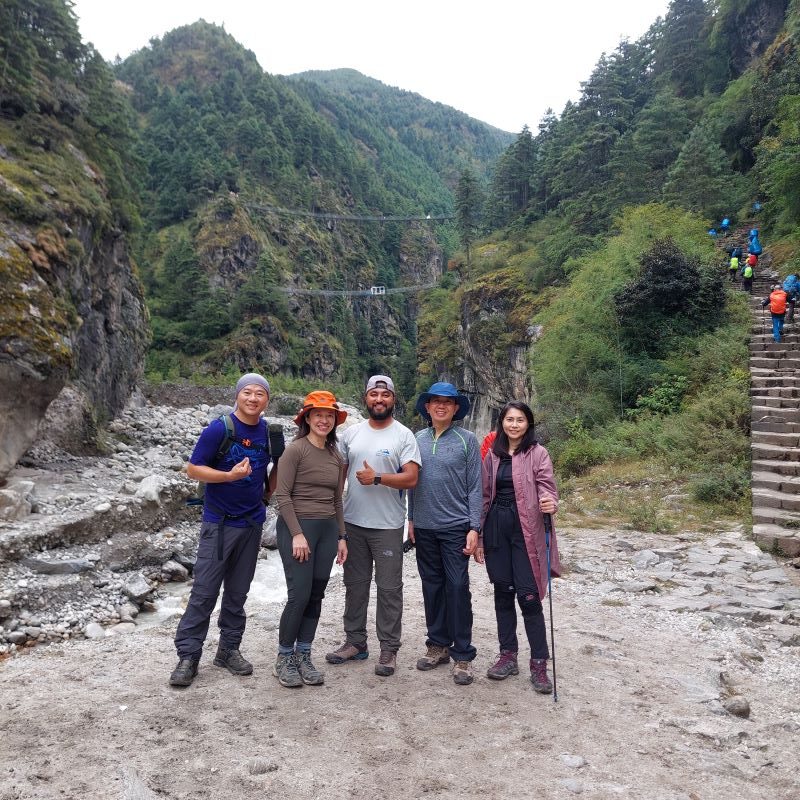
For many trekkers, the trail from the Hillary Suspension Bridge toward Namche Bazaar is the first section that feels genuinely difficult.
After crossing the suspension bridges in the Dudh Koshi Valley, the trail begins a sustained climb toward Namche. The final approach involves a series of uphill sections through the forest, and the elevation gain is significant compared with the earlier part of the trek.
This is often the point where trekkers realize that the Everest trail is more demanding than an ordinary hiking route.
The key is not to rush.
A steady walking pace is much more comfortable than trying to climb quickly. Take short breaks when needed, drink regularly, and allow your guide to establish a sensible pace for the group.
Nepal Tourism Board also describes the trail beyond the suspension bridge near Jorsale as climbing toward Namche, with the town reached after a substantial uphill walk.
The challenge comes mainly from:
Reaching Namche Bazaar feels particularly rewarding because the village becomes an important rest and acclimatization point.
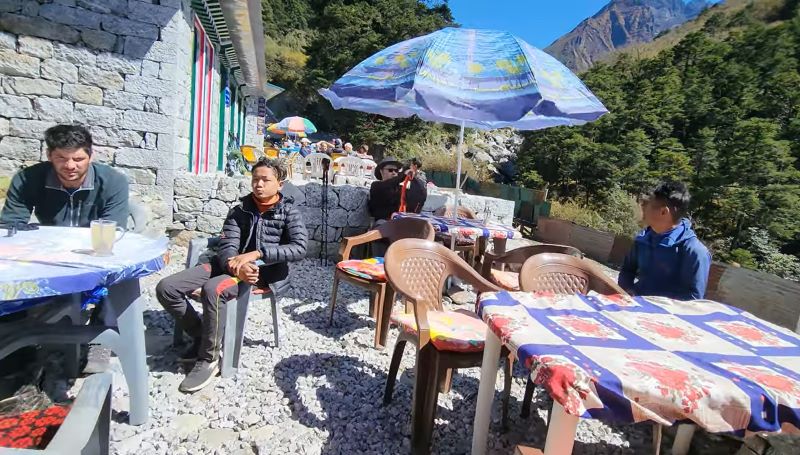
The section from Phunki Thanga to Tengboche is another part of the Everest Base Camp Trek that many trekkers remember as particularly challenging.
The trail climbs steadily through the forest toward Tengboche. The uphill walking can take around two hours depending on the pace, conditions and itinerary.
Although the distance is not enormous, the continuous ascent makes it feel harder than some longer sections of the trek.
This is also where the scenery begins to change dramatically. The forest trail opens toward spectacular Himalayan views, and eventually trekkers arrive at Tengboche, famous for its Buddhist monastery and views toward Ama Dablam.
Walk slowly.
There is no advantage to trying to maintain the same pace you used at lower elevations. A comfortable rhythm, regular breathing and short breaks can make the climb much more manageable.
The Everest Base Camp Trek difficulty is not determined only by distance. Elevation gain and altitude become increasingly important as the route continues upward.
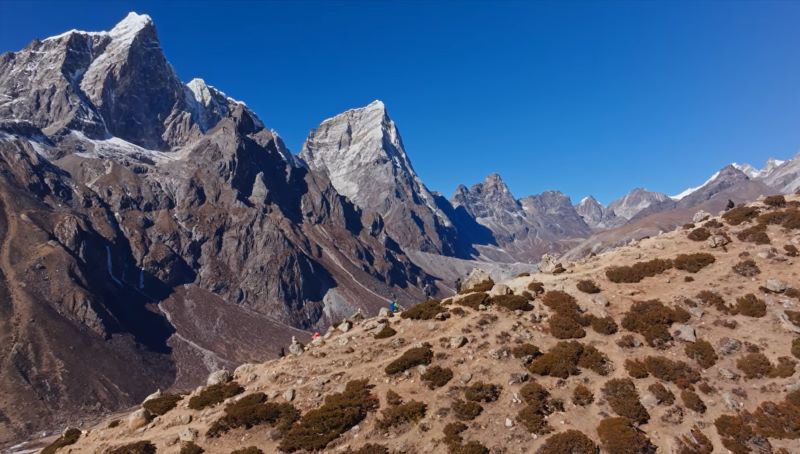
The acclimatization day at Dingboche is one of the most important parts of a good Everest Base Camp Trek itinerary.
Dingboche sits at approximately 4,410 m, and trekkers commonly take an acclimatization hike toward Nangkartshang Hill, with the high point reaching around 5,000 m or slightly above depending on the route and viewpoint. Current trekking references commonly place Nangkartshang around 5,000–5,083 m.
This is not supposed to be a race.
Even a relatively short uphill hike can feel difficult at this elevation. The trail is steep in places, and the higher you climb, the more slowly most people naturally move.
The purpose is to spend time at higher elevation and then return to sleep at Dingboche rather than simply pushing higher and higher.
The main reason is altitude.
At lower elevations, you may comfortably walk uphill for an extended period. At around 5,000 m, the same physical effort can feel considerably harder.
This is why the acclimatization day should be treated as an important part of the trek rather than as a wasted rest day.
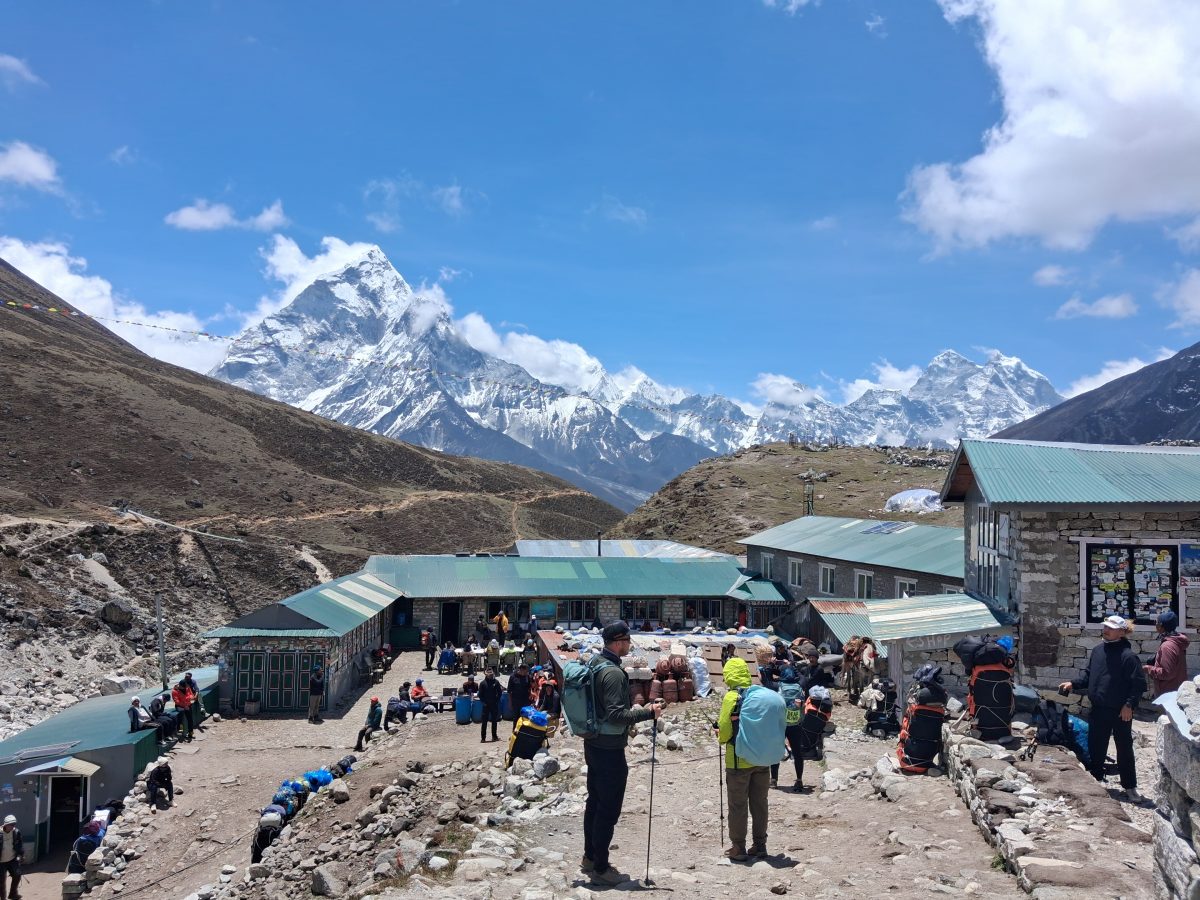
After Dingboche, the Everest Base Camp Trek enters a much more rugged high-altitude environment.
The route toward Lobuche, approximately 4,900–4,940 m depending on the overnight location, gradually leaves the greener lower valleys behind. The landscape becomes more open, rocky and dramatic.
This day may not contain the most dramatic single climb, but many trekkers find it challenging because the entire journey takes place at high elevation.
The walking pace becomes slower.
The trail may appear easy from a distance, but at this altitude, even gradual uphill sections require patience.
This is a good example of why Everest Base Camp Trek difficulty should never be judged only by kilometers.
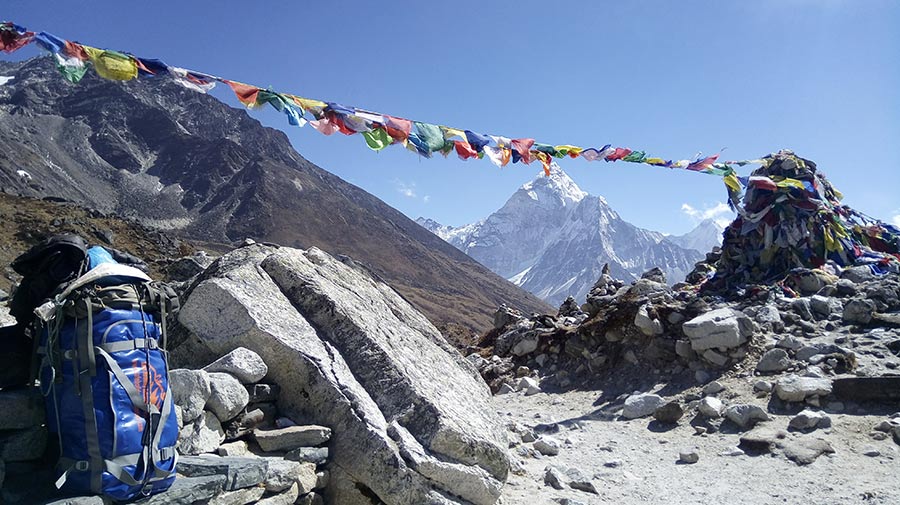
The trail around Thukla Pass is another important challenging section.
From Thukla, the trail climbs toward the memorial area dedicated to climbers and expedition members who lost their lives in the Everest region.
The climb is relatively short compared with some other sections, but the altitude makes it demanding.
This part of the trek also has a very different emotional atmosphere. The memorials stand among the high Himalayan landscape, reminding trekkers that the mountains are beautiful but also demanding environments.
For many visitors, stopping here is not simply another trekking break. It becomes one of the most memorable moments of the entire journey.
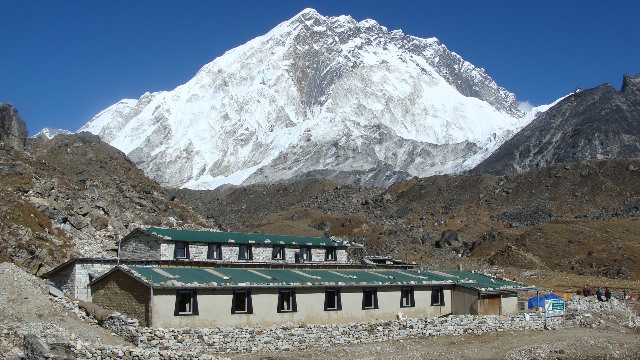
The route from Lobuche to Gorak Shep can be deceptively difficult.
On paper, the elevation gain may not appear dramatic. But Gorak Shep is around 5,164 m, and the combination of high altitude, cold conditions, rocky ground and reduced walking speed makes this section demanding.
At this point, trekkers are very close to their ultimate goal, but the trail should not be underestimated.
You may look ahead and think, “It is not far now.”
However, the final stages can take longer than expected because walking at more than 5,000 m is very different from walking at lower elevations.
The best approach is simple:
Slow down, stay patient and focus on one section of trail at a time.

For many people, Gorak Shep to Everest Base Camp is one of the most exciting and physically demanding parts of the entire trek.
Everest Base Camp itself is around 5,364 m, and reaching it requires walking across rugged high-altitude terrain near the Khumbu Glacier.
The trail is not necessarily difficult because of a massive uphill climb. Instead, the combination of altitude, rocky terrain, cold temperatures and the cumulative fatigue from the previous days makes the journey demanding.
This is also an out-and-back section for most standard itineraries: trekkers reach Everest Base Camp and then return to Gorak Shep for the night.
The emotional reward, however, is enormous.
Standing at Everest Base Camp after days of walking through the Khumbu Valley is a moment many trekkers remember for the rest of their lives.

If you ask experienced trekkers which section feels hardest, Kala Patthar will often be mentioned.
The climb normally starts very early, sometimes before sunrise, because the goal is to reach the viewpoint for the morning Himalayan scenery.
Kala Patthar rises to approximately 5,545 m, making it higher than Everest Base Camp itself.
The climb is steep in sections, and the altitude makes every step slower.
You may be walking before breakfast, in cold temperatures and darkness, after already spending several days trekking at high altitude.
Yet this difficult morning has a spectacular reward.
From Kala Patthar, trekkers can enjoy one of the classic panoramic viewpoints toward Mount Everest and the surrounding peaks. Interestingly, Everest’s summit is not ideally visible from Base Camp itself because of surrounding mountain ridges; Kala Patthar is one of the classic viewpoints used for a clear Everest panorama.
For many trekkers, this becomes the visual highlight of the entire Everest Base Camp journey.
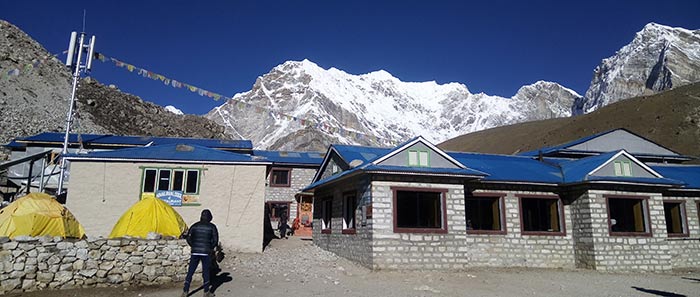
The Everest Base Camp Trek is a demanding high-altitude trek, but it does not require technical mountaineering skills on the standard route.
The bigger challenge is being prepared for long days of walking and increasing altitude.
A person who regularly walks, hikes and maintains reasonable fitness can prepare for the trek, but preparation should be realistic. It is also important to understand that fitness alone does not determine how your body responds to altitude.
That is why itinerary design matters.
A rushed itinerary may reduce the amount of time available for acclimatization. A well-planned itinerary gives trekkers time to adapt and includes sensible rest and acclimatization stops.
The Nepal Tourism Board specifically recommends spending time acclimatizing around Namche rather than rushing through it.
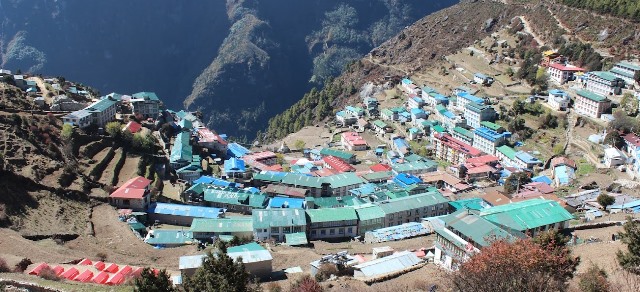
A good Everest Base Camp Trek itinerary normally includes acclimatization stops at Namche Bazaar and Dingboche.
At Namche, trekkers can take a shorter acclimatization hike and explore the surrounding area before continuing higher.
At Dingboche, a higher-altitude day hike provides another opportunity to experience elevation while returning to the same overnight altitude.
These days are not simply “days off.”
They are an important part of the overall trekking plan.
A standard itinerary commonly places Namche around 3,440 m and Dingboche around 4,410 m, before continuing toward Lobuche, Gorak Shep and Everest Base Camp.
There is no way to remove the mountains from the Everest Base Camp Trek—but good preparation can make the experience much better.
Do not try to compete with other trekkers. A consistent, comfortable pace is more useful than walking fast and becoming exhausted.
Avoid changing the schedule simply to reach the destination faster. Proper acclimatization is one of the most important elements of a high-altitude trekking plan.
Long walking days require regular food and fluids. Choose meals that provide enough energy for the day’s walking.
Your Everest Base Camp Trek packing list should be based on the season and route. Good footwear, warm layers, waterproof protection, sun protection and a comfortable daypack are among the practical essentials.
An experienced guide knows the route, understands the pace of the group and can help with practical decisions when trail conditions or weather change.
A 5 km walk at high altitude can feel very different from a 5 km walk at a much lower elevation.
This is perhaps the most important thing for first-time EBC trekkers to understand.
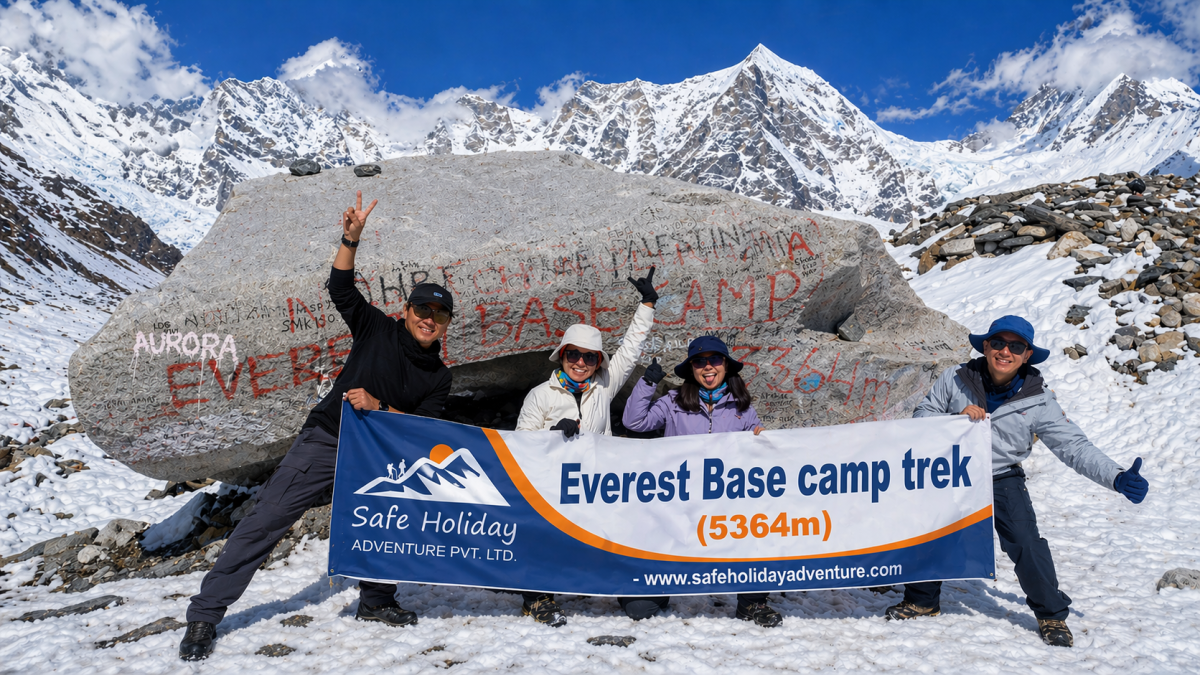
If we have to choose, there are several strong candidates.
And Kala Patthar can be one of the toughest individual climbs because it combines a steep ascent, very high elevation, cold early-morning conditions and accumulated fatigue.
Therefore, there is no universal “hardest day.”
The hardest section depends on the individual trekker, weather, walking pace, acclimatization and how their body responds to altitude.
The Everest Base Camp Trek is not difficult because of one giant mountain pass or a technical climbing section.
Its challenge comes from the combination of distance, elevation, changing terrain, cold conditions and several consecutive days of walking.
From the steep trail after the Hillary Suspension Bridge to Namche, through the forest climb to Tengboche, the high-altitude trails around Dingboche and Thukla, and finally the rocky route from Gorak Shep to Everest Base Camp and Kala Patthar, every section offers a different challenge.
But that is also what makes the journey special.
You begin among green valleys and suspension bridges around Lukla and gradually enter the high Himalayan world of Namche, Tengboche, Dingboche, Lobuche and Gorak Shep.
By the time you reach Everest Base Camp, you have not simply traveled to a famous destination—you have walked there step by step.
If you are planning your journey, explore our Everest Base Camp Trek itinerary to understand the day-by-day route, and see our guides to Everest Base Camp Trek difficulty, Everest Base Camp Trek packing list, Everest Base Camp Trek cost, and the best time to visit the Everest region.
The hardest steps are often the ones that create the strongest memories.
Note: Altitudes and walking times can vary slightly according to the exact overnight lodge, route conditions, weather and itinerary. Current published route references place Everest Base Camp around 5,364 m and Kala Patthar around 5,545 m. Always follow the advice of your trekking guide and local authorities regarding altitude and trail conditions.
When trekkers arrive at Tenzing-Hillary Airport in Lukla, they are entering one of the world’s
Continue Reading
Langtang National Park is one of Nepal’s most accessible Himalayan protected areas, combining spec
Continue Reading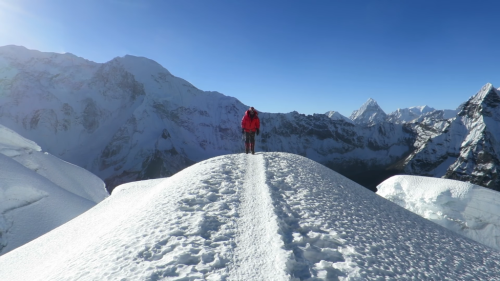
Island Peak Climbing for Beginners: Everything You Need to Know Before You Go Standing on a 6,189-me
Continue Reading
The global tourism industry recently turned its attention toward Nepal after Shinta Mani Mustang rec
Continue Reading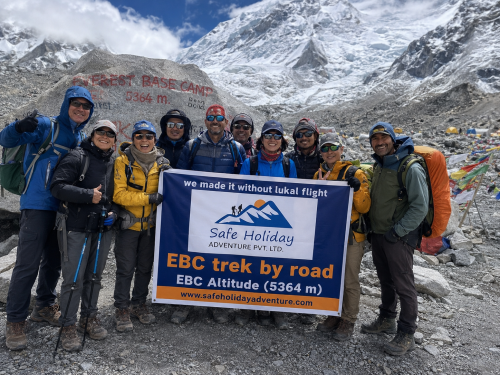
Standing at the foot of the world’s highest mountain is a dream shared by millions of adventure lo
Continue Reading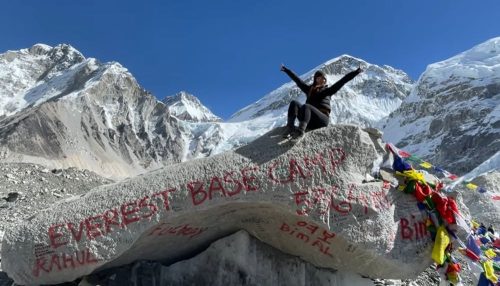
Introduction Every trekking season, thousands of travelers arrive in Nepal with the dream of reachin
Continue Reading