
11 Aug 2026 12 min to read
When trekkers arrive at Tenzing-Hillary Airport in Lukla, they are entering one of the world’s most famous mountain destinations. From Lukla, trails lead toward Namche Bazaar, Tengboche, Dingboche, Everest Base Camp, Gokyo Lakes and the high passes of the Khumbu.
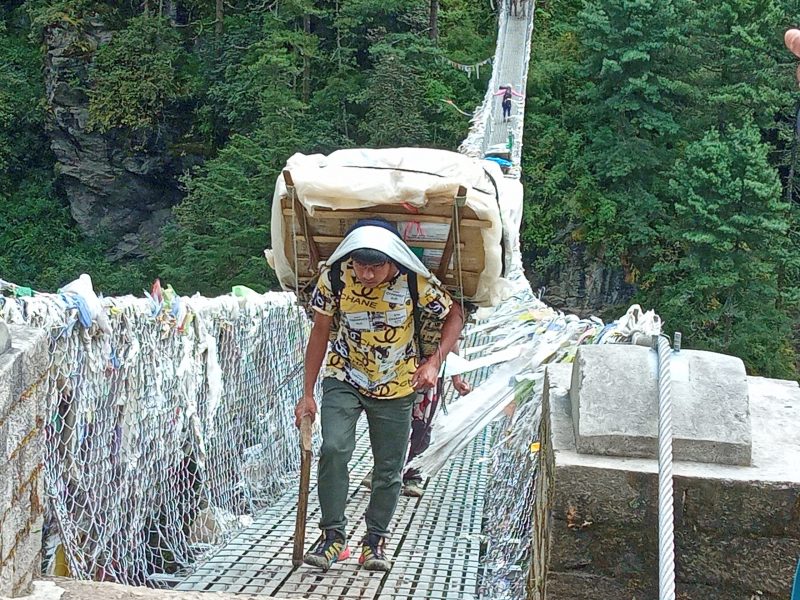
Behind almost every successful trek in this region are local guides, porters, cooks and other mountain workers. They carry luggage, organize logistics, explain local culture, help trekkers navigate the trails and provide support when weather, altitude or difficult terrain creates challenges.
For visitors, a guide or porter may be part of a trekking package. For the people working in the mountains, however, trekking is also a livelihood connected with family, farming, village life and the seasonal economy of Solukhumbu.
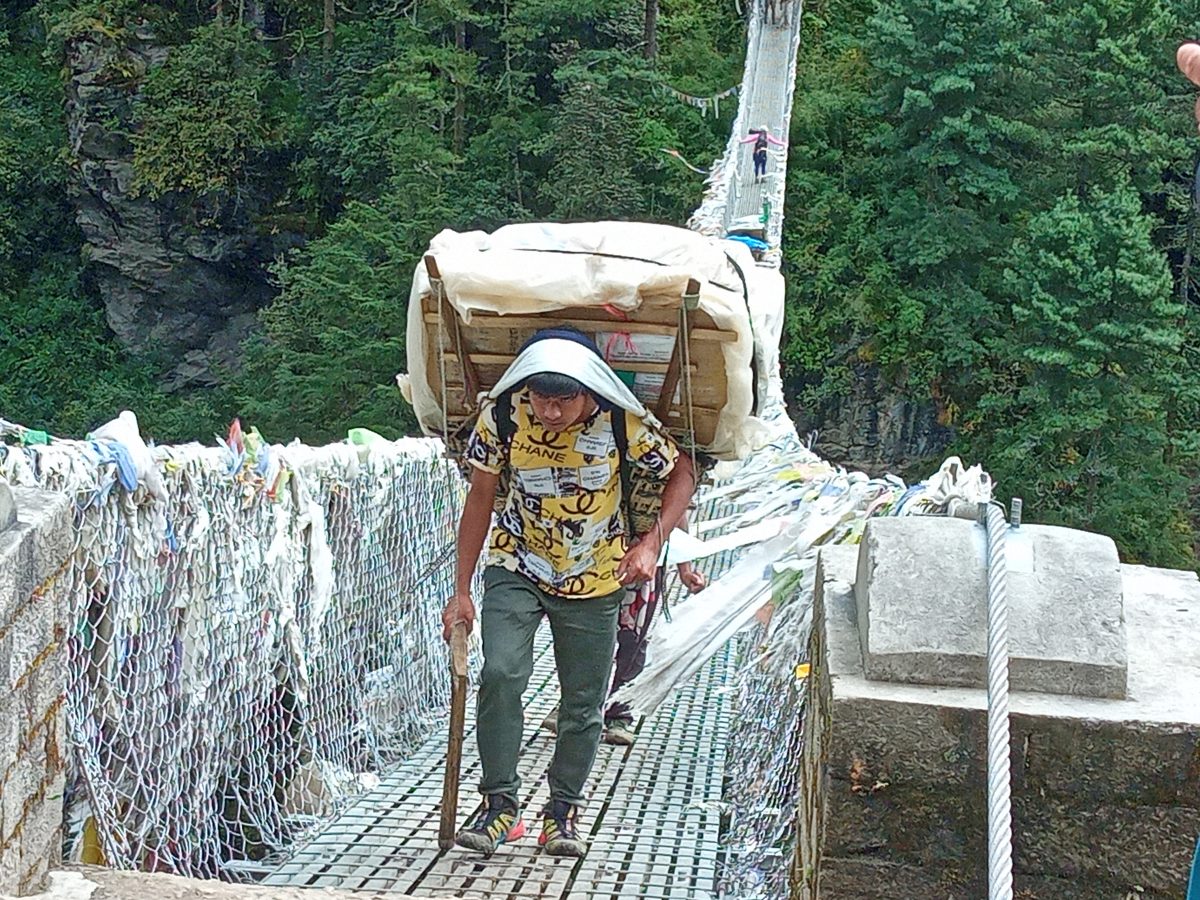
Many of the local porters working around Lukla and the lower Everest trail come from nearby communities and villages, including Lower Lukla, Khari Khola, Lokhim and surrounding areas.
The wider porter workforce in the Khumbu is diverse. Historical research on local porters in Solukhumbu also describes workers coming into the Khumbu from lower areas to carry goods and supplies, with some later moving into trekking work.
It is therefore better to understand Everest-region porters as a local and seasonal mountain workforce, rather than assuming that every porter belongs to one particular caste or ethnic community.
Many have grown up around steep hills and mountain trails and are accustomed to walking long distances. Their knowledge of local paths, villages, weather patterns and mountain conditions can be extremely valuable to trekking groups.
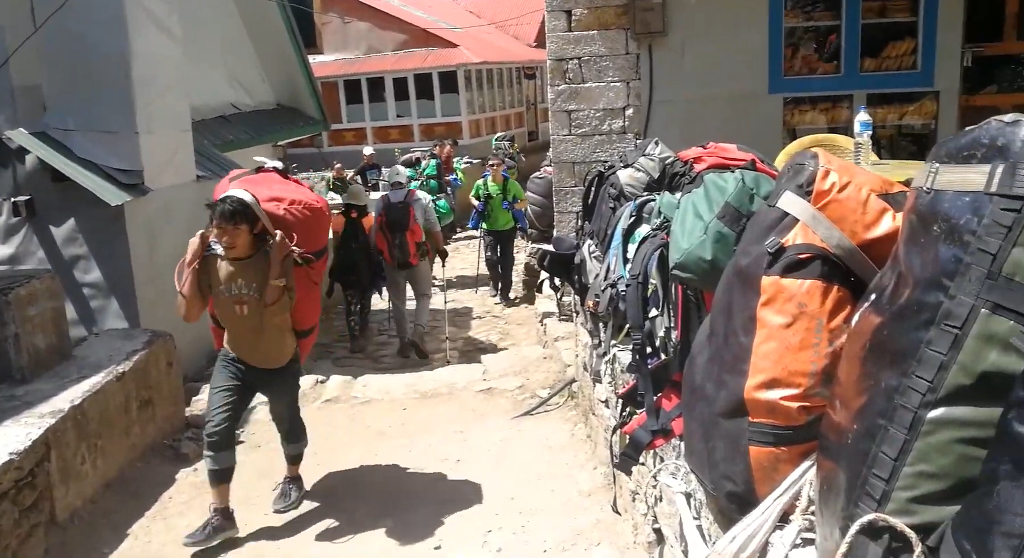
One of the most important things visitors should understand is that many local porters do not work as porters throughout the year.
During the main trekking seasons, when visitors arrive in large numbers, they may work for trekking companies, guides, lodges or directly with trekking groups. When the busy trekking season ends, many return to their villages.
Back home, they may work in agriculture, farming, livestock care, household activities and other local jobs.
This creates a unique lifestyle in the Everest region. The same person who spends the spring or autumn carrying a trekker’s duffel bag toward Everest Base Camp may later return home and work in the fields.
For many families, tourism and agriculture complement each other. Trekking provides seasonal cash income, while farming remains an important part of everyday village life.
A trekking porter is responsible primarily for carrying luggage and supplies along the trail.
Depending on the trekking arrangement, a porter may carry:
On a typical day, porters may begin walking early and sometimes reach the next overnight village before the clients. They unload the bags, arrange their accommodation and prepare for the following day’s journey.
The work can be physically demanding because Everest-region trails include steep stone steps, suspension bridges, rocky paths, long ascents and high-altitude terrain.
A porter is therefore not simply someone carrying a backpack. It is physically demanding mountain work requiring experience, strength and knowledge of the environment.
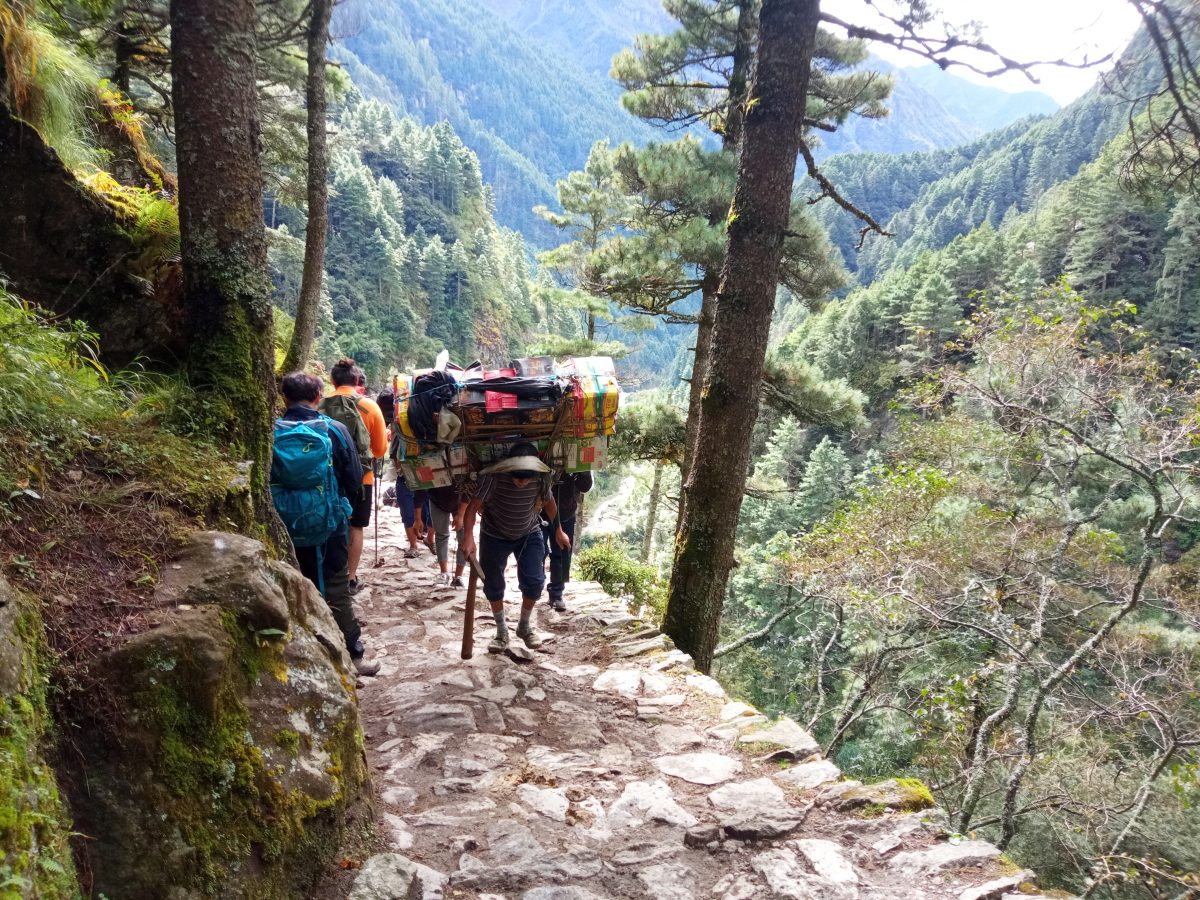
Load management is one of the most important issues in responsible trekking.
The International Porter Protection Group (IPPG) benchmark commonly referenced for Nepal sets a maximum load of 20 kg per porter, together with appropriate clothing, footwear, shelter, food and medical protection.
In practice, responsible trekking companies may set their own lower limits depending on the route, altitude, porter and trekking arrangement.
Trekkers should avoid asking porters to carry unnecessarily heavy luggage. A lighter personal bag is better for the porter and also encourages travelers to pack more responsibly.

A porter primarily carries luggage and trekking supplies.
A trekking guide has a much broader responsibility. A professional guide may:
A guide is therefore responsible for much more than navigation.
Nepal’s adventure-tourism framework requires guides accompanying tourists on adventure activities to have appropriate training/licensing, and agencies and guides have responsibilities relating to tourist safety and risk management. (Nepal Tourism)
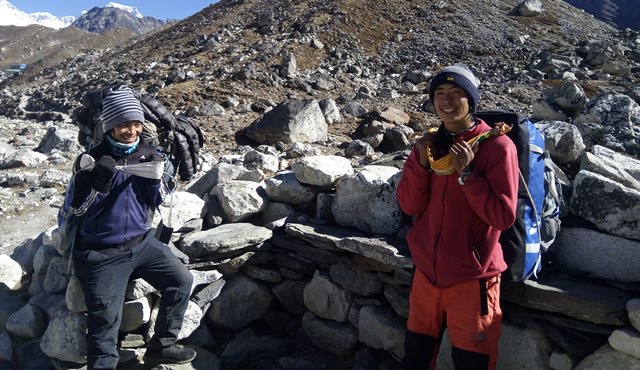
A porter-guide is different from a traditional porter.
A porter-guide usually has more trekking experience and communication skills and can perform some guiding responsibilities while also carrying the client’s luggage.
This can be an attractive option for solo trekkers, couples and small groups who want local support without hiring a separate full trekking crew.
However, trekkers should confirm exactly what services a porter-guide provides. A porter-guide should not automatically be assumed to have the same training, licensing and responsibilities as a fully licensed trekking guide.
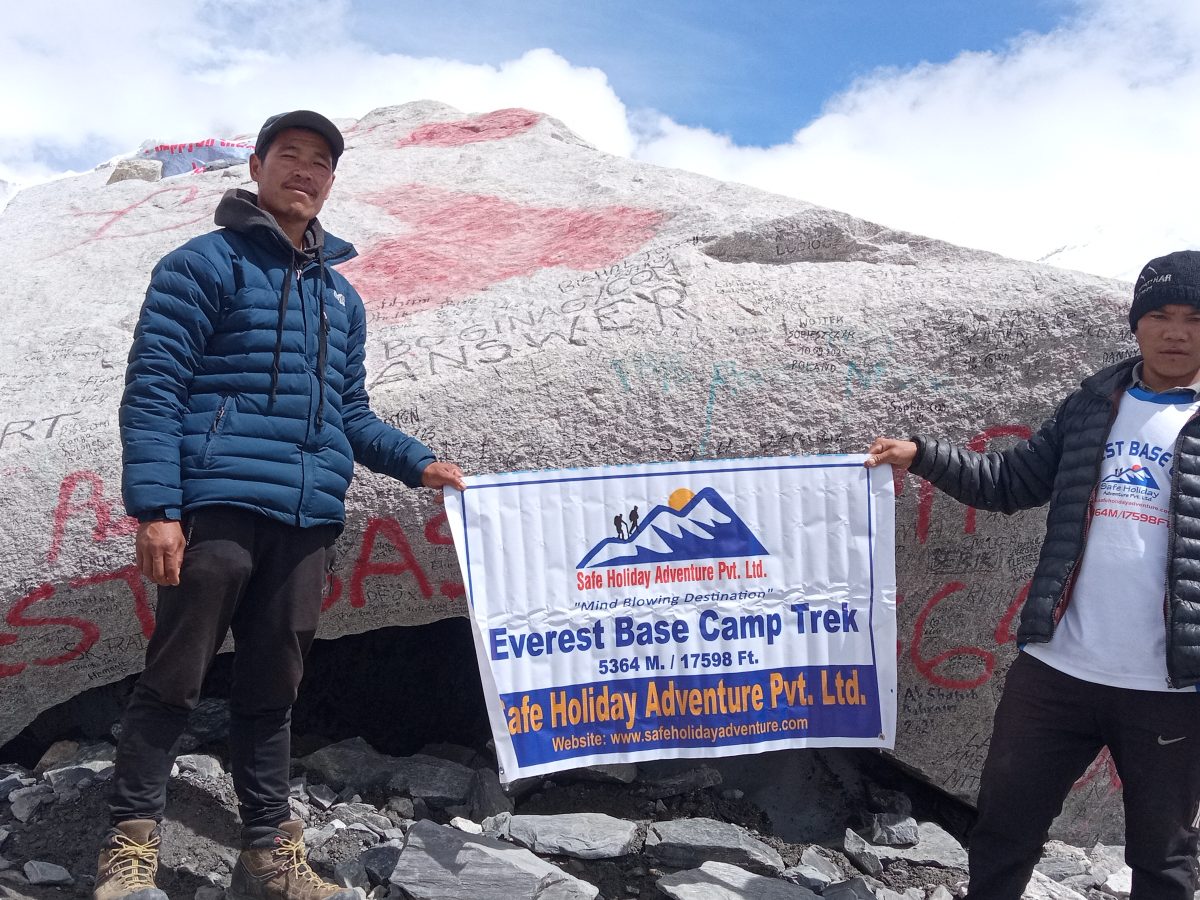
Lukla is an important meeting point for Everest-region trekking teams. Trekkers may arrange guides and porters through a registered trekking agency before arriving in Nepal, or, depending on the arrangement, connect with local trekking workers in Lukla.
Hiring locally can provide an opportunity to work directly with people from the Everest region and nearby communities.
However, the cheapest option is not always the best option. Before hiring someone, ask about:
A clear agreement before departure prevents misunderstandings later.
For organized Everest treks, using a registered trekking agency can simplify arrangements for guides, porters, permits, insurance, transportation and emergency support.
Nepal Tourism Board currently lists Everest Base Camp, Gokyo, Cho La, Everest High Passes, Everest View and several other Everest-region routes among routes requiring a licensed trekking guide and agency-issued TIMS under its revised TIMS provisions.
Agency packages commonly include guide and porter salary, food, accommodation, insurance and transportation, although inclusions vary between companies.
For this reason, trekkers should always check the detailed inclusions rather than comparing companies only by the headline package price.
There is no single nationwide fixed daily rate that applies to every Everest-region guide or porter. Pay varies according to experience, role, route, season, employer and whether food, accommodation, insurance and transportation are included.
Recent 2026 trekking-industry information places typical Everest porter wages in the broad range of around NPR 2,400–3,000 per day, but actual arrangements can differ.
A guide generally earns more than a porter because the guide has additional responsibilities, skills, training and client-safety duties.
The important point for trekkers is to ask:
“How much is the staff member actually receiving, and what expenses are covered separately?”
A package price paid by a traveler is not necessarily the same as the staff member’s take-home wage.
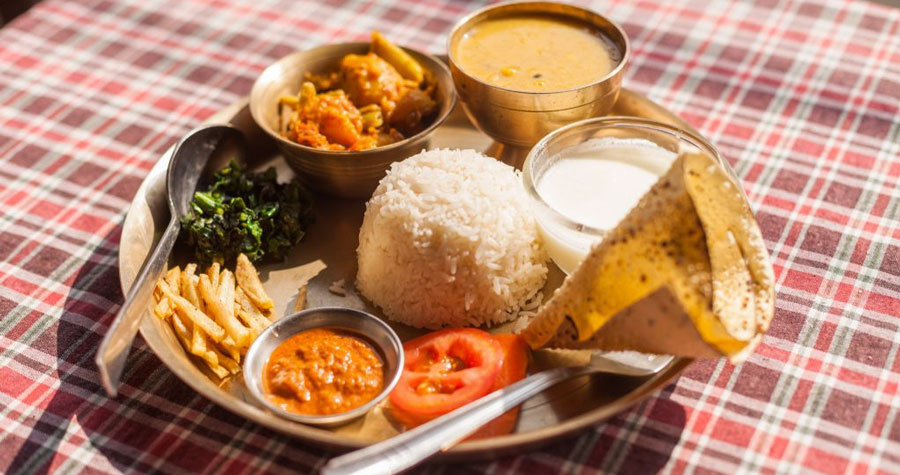
A professional trekking arrangement should clearly cover the basic welfare of guides and porters.
This normally includes:
Examples of trekking packages listed through TAAN include guide and porter salary, food, accommodation, insurance and transportation as included staff costs.
This is particularly important above 4,000 metres, where cold, altitude and changing weather create additional risks for everyone working on the trail.
During a trek, guides and porters generally stay in local teahouses, lodges or staff rooms.
The accommodation may be simpler than the rooms provided to international trekkers. What matters is that staff have a safe and sufficiently warm place to sleep.
At higher elevations, adequate shelter and warm clothing become especially important. Porter welfare standards emphasize appropriate shelter, food and cold-weather protection rather than expecting workers to tolerate poor conditions simply because they are accustomed to the mountains.
A guide or porter can experience the same environmental hazards as trekkers, including:
Responsible trekking companies should have emergency procedures for staff as well as clients.
The Nepal government’s adventure-tourism framework places safety responsibilities on agencies and guides and recognizes rescue situations involving guides and helpers as well as tourists.
A porter should never be expected to continue working when they are seriously ill or unsafe.
It is sometimes incorrectly assumed that local porters cannot suffer from altitude sickness because they are Himalayan residents.
That is not true.
People living at lower elevations of Solukhumbu can still experience altitude-related problems when they travel to much higher elevations. Even experienced mountain workers need appropriate acclimatization, rest, hydration, and medical attention when necessary.
A strong porter is not an excuse for unsafe working conditions.
The Everest and Solukhumbu region has a diverse social and cultural population.
Visitors may meet people from Sherpa, Rai, Tamang and other communities, but it is important not to label every porter according to one caste or ethnic group. The workforce changes according to village, season, family background and employment opportunities.
Historically, tourism created different forms of porter work in Solukhumbu, including local workers who transported goods for businesses and workers who moved into trekking-related employment.
For a respectful travel article, it is better to focus on their village, work, skills and individual stories rather than reducing a person to their caste.
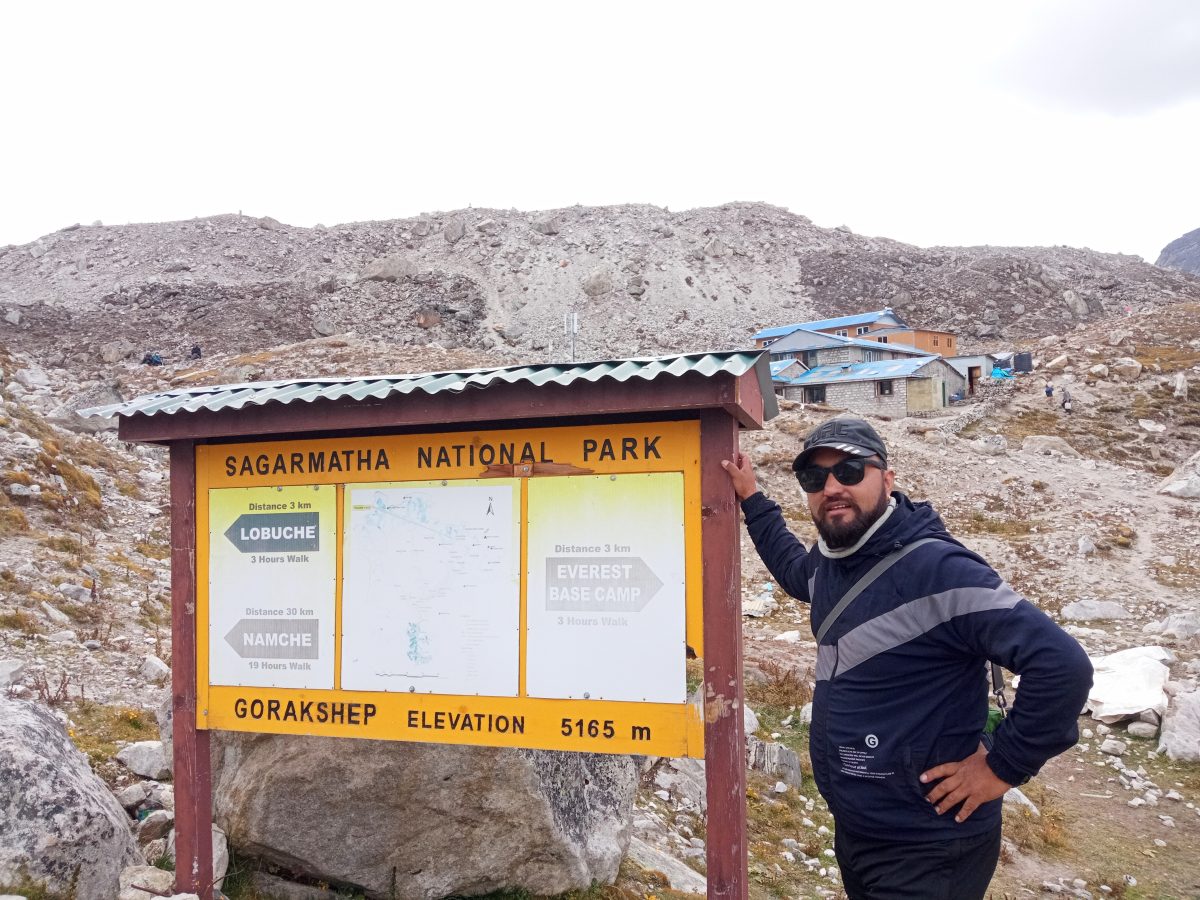
One of the most memorable parts of trekking in Nepal is the relationship that develops between travelers and their mountain crew.
At the beginning, a porter may simply be the person carrying your duffel bag. After several days together, however, you may share conversations, jokes, meals and stories.
A guide may teach you the names of mountains and explain local traditions. A porter may tell you about their village, family or farming life. These conversations can turn a trekking service into a genuine cultural exchange.
For many travelers, the people they meet along the trail become just as memorable as Everest, Ama Dablam, Tengboche and Namche Bazaar.
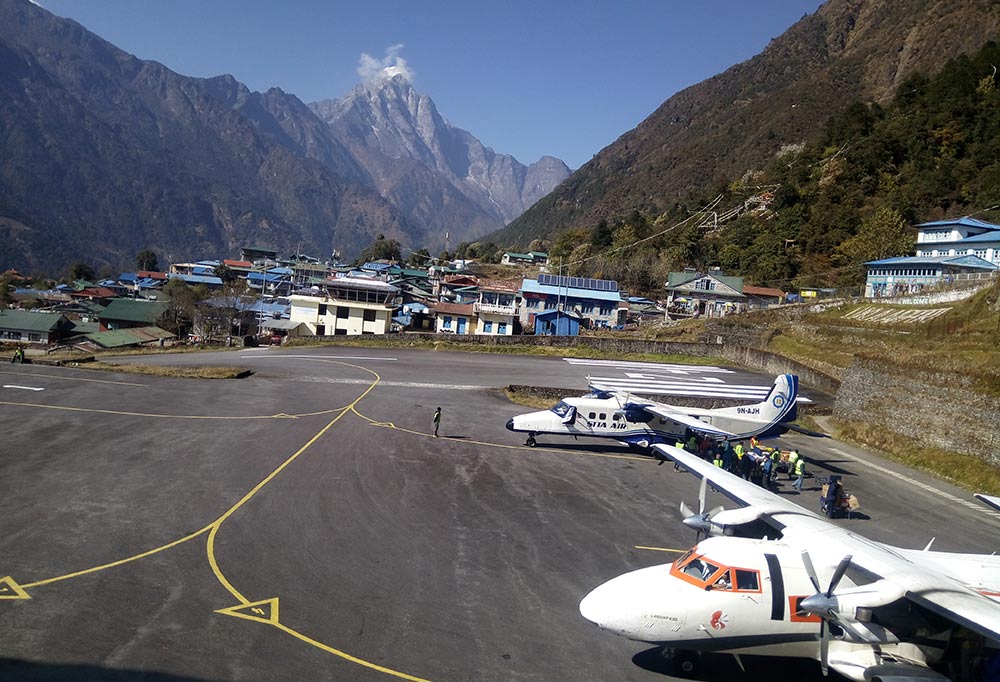
After days or weeks in the mountains, returning to Lukla can be an emotional moment for the entire team.
The trek may have involved cold mornings, long climbs, tired legs, difficult weather and unforgettable mountain views. Reaching Lukla safely means the team has completed the journey together.
Many trekking groups celebrate with a final meal, tea, music, conversation or a few drinks. If clients and staff choose to have a beer or another drink together, it can be a relaxed way to celebrate the successful completion of the trek.
However, drinking should always remain a personal choice. A porter or guide should never feel pressured to drink with clients.
The most important celebration is the friendship, appreciation and shared achievement after completing the journey.
Tipping is customary in Nepal’s trekking industry and is normally given at the end of the trek.
The amount depends on the length of the trek, quality of service, group size, difficulty of the route and personal satisfaction. Recent Everest-region guidance commonly discusses porter tips around USD 8–12 per day, but this should be treated as a guideline rather than a compulsory fee.
A good tip is a meaningful way to recognize hard work, but it should be given in addition to—not instead of—a fair agreed wage.
If several trekkers share one porter, the group can contribute collectively.
Travelers can make a real difference through a few simple choices:
Trekking creates employment throughout the Everest region. The benefits extend beyond the person carrying a trekker’s bag.
Porter income can support families, village shops, agriculture, transportation and local services. When a seasonal porter returns to Lower Lukla, Khari Khola, Lokhim or another nearby village, the money earned during trekking season can contribute to household and community life.
This is one reason responsible tourism matters.
A trekker who hires a local porter is not simply paying someone to carry luggage. They are participating in a local tourism economy that connects Lukla, the lower Solukhumbu villages, Namche Bazaar and the wider Khumbu.
The Everest Base Camp trek is often described through its mountains: Everest, Lhotse, Nuptse, Ama Dablam, Thamserku and the Khumbu Glacier.
But the experience is also shaped by people.
The guide who explains a Buddhist monastery, the porter who carries a heavy duffel through a steep trail, the lodge worker who prepares a warm meal and the local family working on their farm after trekking season are all part of the Everest story.
For visitors, the best trekking experience is therefore not only about reaching a destination. It is about traveling responsibly, respecting local people and understanding the communities behind Himalayan tourism.
The next time you land at Lukla and see a porter preparing a load, remember that you are seeing only one part of his or her life. During the trekking season, they may work on the mountain trails. When the season ends, they return home to their families, farms and villages.
That connection between tourism, mountain work and traditional village life is one of the most fascinating and important parts of the Everest region.

Introduction Kathmandu doesn’t ease you in. You step out of the airport into a chorus of horns
Continue Reading
Every Everest Base Camp trekking package includes a line item for “guide” and “por
Continue Reading
Understanding Everest Base Camp Trek Permits Cost is one of the first things every Everest Region tr
Continue Reading
Introduction Namche Bazaar is the beating heart of the Khumbu region and the first major stop for ev
Continue Reading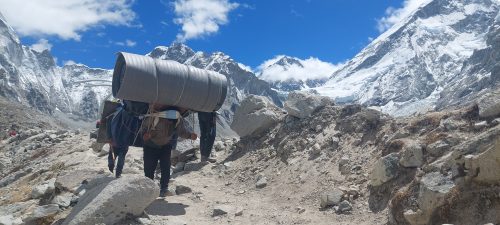
Standing at the foot of the world’s highest mountain is a moment that stays with you forever.
Continue Reading
The Everest Base Camp trek is moderate to hard. There is no climbing, no ropes and no technical skil
Continue Reading