
26 Sep 2026 7 min to read
Understanding Everest Base Camp Trek Permits Cost is one of the first things every Everest Region trekker needs to sort out – right alongside flights, gear, and acclimatization planning. Before any of that, every trekker has to clear one step first: permits.
The Everest region keeps its permit system refreshingly simple compared to Nepal’s restricted areas, but that doesn’t mean it’s free or unchanging. Between the Sagarmatha National Park fee, the Khumbu Pasang Lhamu Rural Municipality permit, and the now-retired TIMS card, it’s easy to end up confused about what you actually need – or worse, to overpay at the trailhead because you’re working off outdated information.
This guide breaks down exactly which permits are required for the EBC trek in 2026, what each one costs, where to buy them, and a few simple tips to make sure your paperwork is sorted before you ever set foot on the trail to Lukla.
Yes — every trekker heading into the Khumbu region, foreign or Nepali, needs permits to legally enter the trail. Unlike some high-altitude treks in Nepal, EBC does not require a special “restricted area” permit, and as of a few years ago, it no longer requires the old TIMS (Trekkers’ Information Management System) card either. Instead, the Khumbu region operates its own local entry system alongside the national park fee.
In short, two permits cover almost everyone doing the standard Lukla–EBC route:
That’s it for most trekkers. No TIMS card, no separate restricted-area clearance, no group requirement.
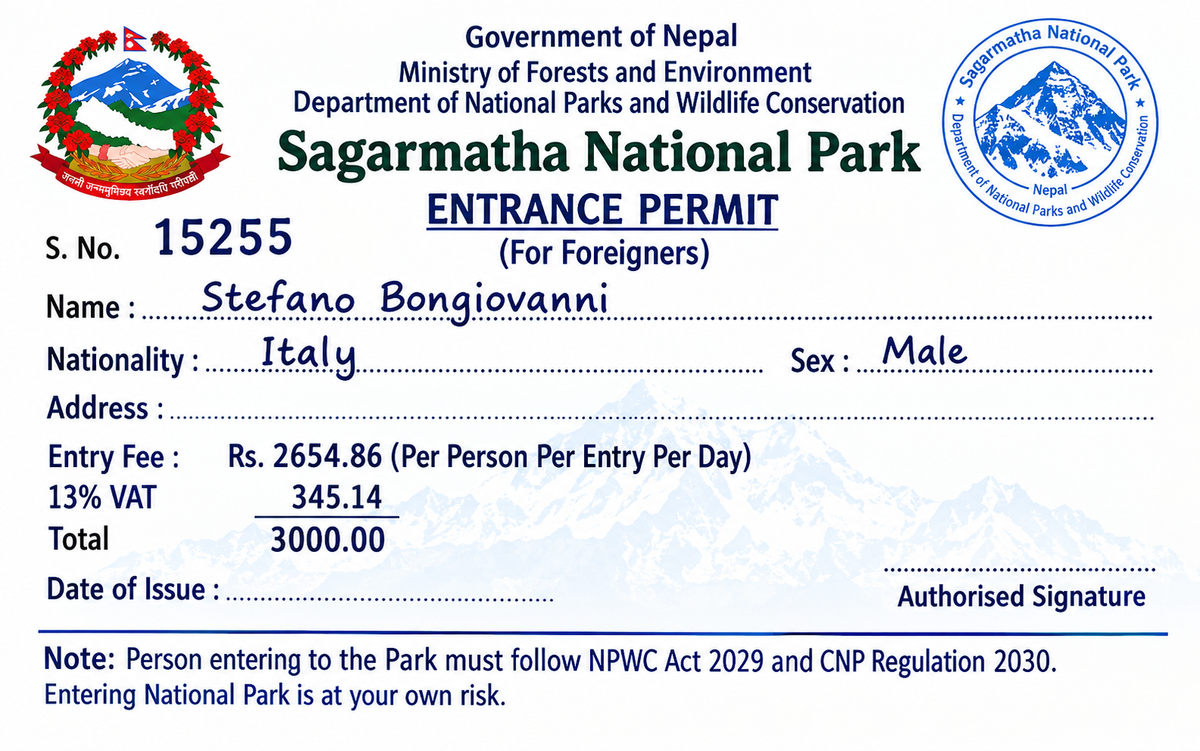
Everest Base Camp sits inside Sagarmatha National Park, a UNESCO World Heritage Site protecting the upper Khumbu’s forests, wildlife, and the world’s highest peaks. Entering the park legally requires this permit, and the fee goes directly toward conservation work and park management.
Cost (2026):
VAT is already built into these figures, so there’s nothing extra added at the counter. Children under 10 are typically exempt, though it’s worth double-checking at the point of purchase since local rules occasionally shift.
Where to buy it:
Buying it in Kathmandu can save you a small amount of time on the trail, but purchasing at Monjo is just as straightforward and is what most independent trekkers do.
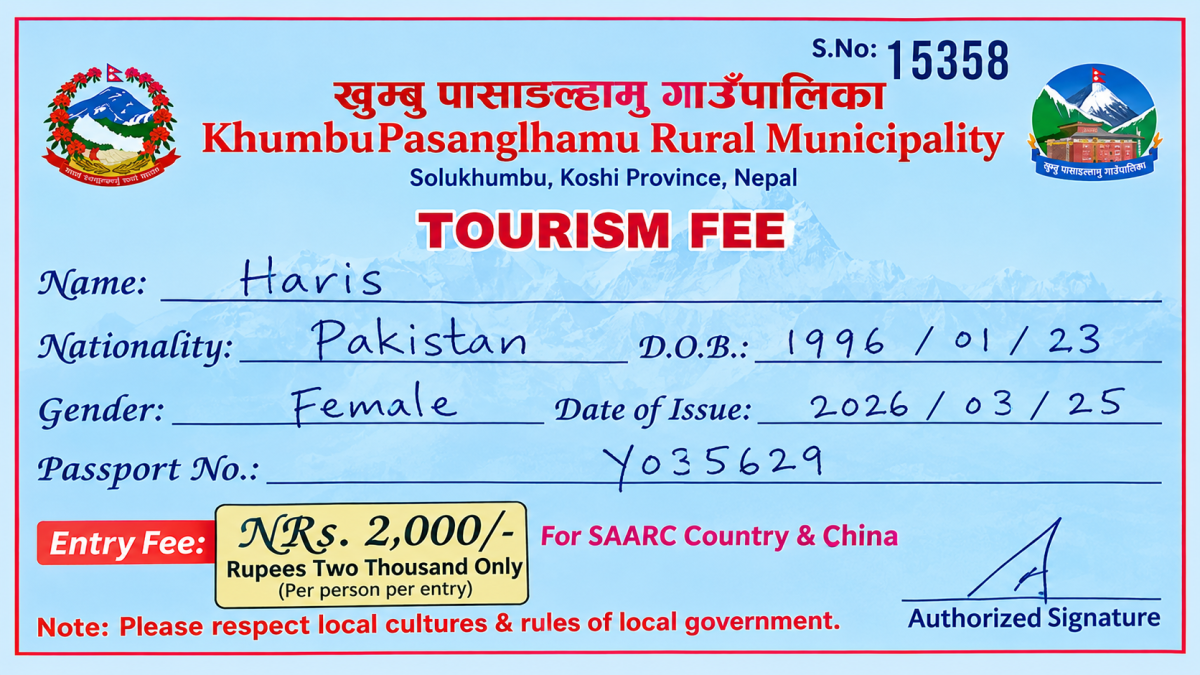
This is the local permit, introduced after Nepal’s 2018 governance restructuring, when the villages around Lukla were consolidated into the Khumbu Pasang Lhamu Rural Municipality — named in honor of Pasang Lhamu Sherpa, the first Nepali woman to summit Everest. This permit effectively replaced the old TIMS card for anyone trekking in the Everest region.
Cost (2026):
If you come across older blog posts or travel forums quoting NPR 2,000 for this permit, that figure is outdated — the fee increase has been in effect since late 2024, and most current operators now quote NPR 3,000.
Where to buy it:
Unlike the national park permit, this one is not available in Kathmandu — you can only pick it up once you’re in the Khumbu itself, either in Lukla or Monjo.
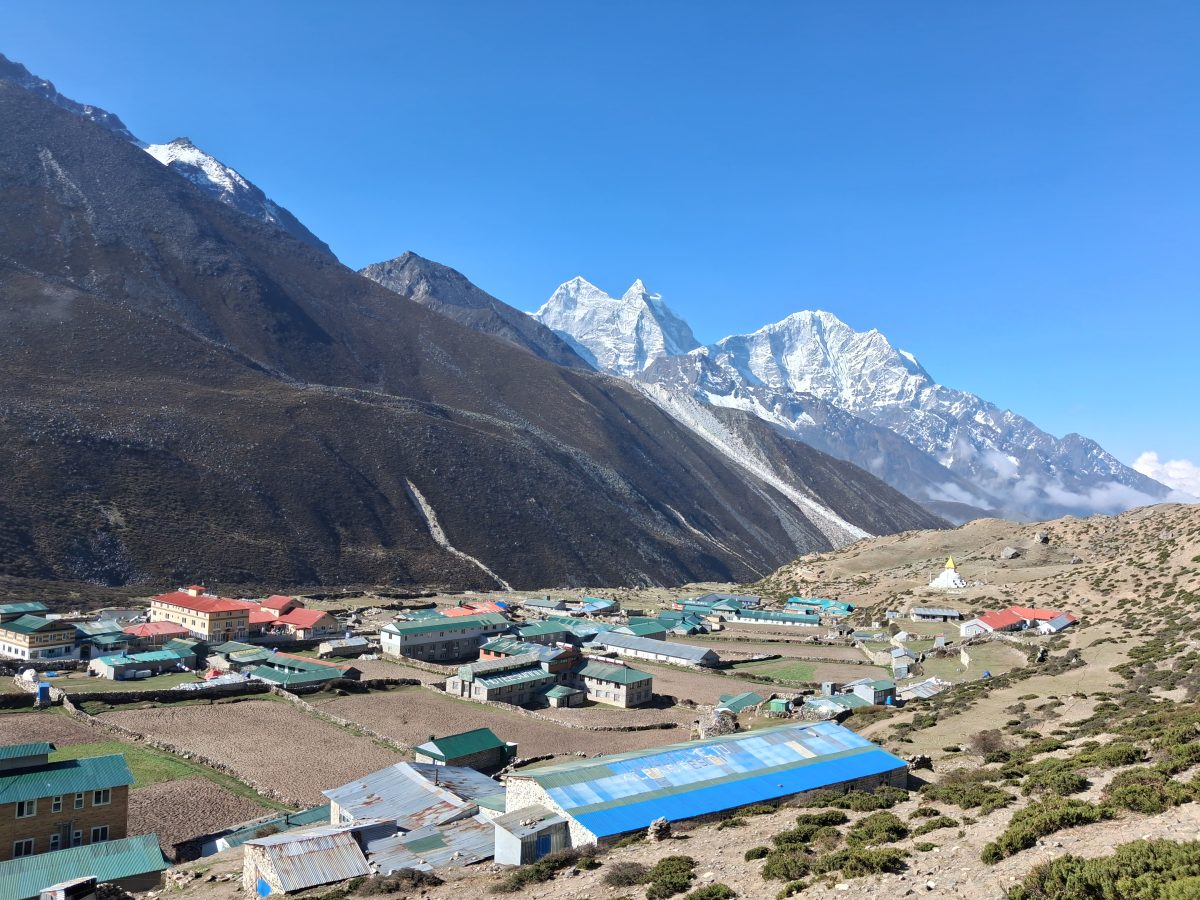
Putting the two together, most foreign trekkers on the standard Lukla-in, Lukla-out route pay:
| Permit | Cost (Foreign Nationals) |
|---|---|
| Sagarmatha National Park Entry Permit | NPR 3,000 (~US$21–25) |
| Khumbu Pasang Lhamu Rural Municipality Permit | NPR 3,000 (~US$21–25) |
| Total | NPR 6,000 (~US$45–50) |
That’s the full permit cost for the entire duration of your trek — you pay once at entry, not per day, and the permit remains valid for your whole stay in the region, regardless of whether your trek runs 10 days or 20.
If you’ve researched Nepal trekking permits before, you’ve probably seen the TIMS card mentioned constantly. Here’s the important update: TIMS is no longer required for the Everest Base Camp trek. It was phased out for the Khumbu region back in 2018 when the local municipality permit took over that role. You may still see TIMS required for other trekking regions in Nepal, but for EBC specifically, you can skip it entirely — don’t let anyone sell you one you don’t need.
Some trekkers choose the classic overland approach, walking in from Jiri or Salleri rather than flying into Lukla. If this is your route, there’s one more permit to factor in:
This covers the section of trail outside Sagarmatha National Park that the Jiri/Salleri route passes through before joining the main EBC trail. Once you reach the park boundary, you’ll still need the standard Sagarmatha and Khumbu permits above.
Here’s some good news: bringing a guide or porter along won’t blow your budget. A guide entry permit costs around $12, while a porter permit runs about $1–2 — small change compared to everything else you’ll spend on the trek. Both are easy to sort out, and you don’t need to arrange them in advance. You can pick them up right at Lukla, at the Sagarmatha National Park entry permit office, or a little further along the trail at Jorsalle/Monjo, where the checkpoint handles it just as quickly.
Nepal’s broader trekking rules have shifted in recent years toward requiring registered guides on many routes, but the Everest region has largely stayed the exception — independent trekking without a guide has remained possible for those entering via the standard Lukla route. That said, guide requirements are a moving target across Nepal’s trekking industry, so it’s worth confirming current rules before you finalize your plans. Your trekking agency (or the Nepal Tourism Board) can confirm the latest policy at the time of booking, since rules here get updated more often than the trail itself changes.
Even where it isn’t strictly required, hiring a guide or porter comes with real benefits: local trail knowledge, sharper altitude sickness awareness, and a smoother time securing teahouse rooms during the busy trekking seasons.
Compared to Nepal’s restricted trekking regions, the Everest Base Camp Trek permit process is refreshingly straightforward: two permits, one flat fee of around NPR 6,000 (roughly US$45–50), and no TIMS card to worry about. The bigger challenge isn’t the paperwork — it’s making sure you have accurate, current information, since fees and rules here do shift from year to year. Buy your permits at the official checkpoints in Monjo and Lukla (or in Kathmandu for the national park permit), keep some Nepali cash on hand, and you’ll clear this part of the trek in minutes, leaving you free to focus on the real challenge ahead: the climb to 5,364 meters and the first sight of Everest itself.
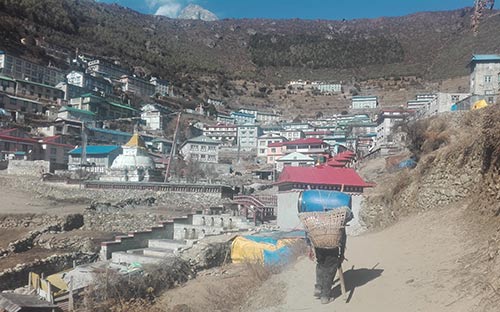
Introduction Namche Bazaar is the beating heart of the Khumbu region and the first major stop for ev
Continue Reading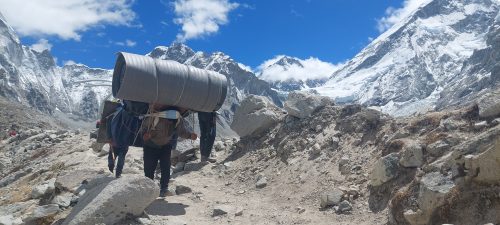
Standing at the foot of the world’s highest mountain is a moment that stays with you forever.
Continue Reading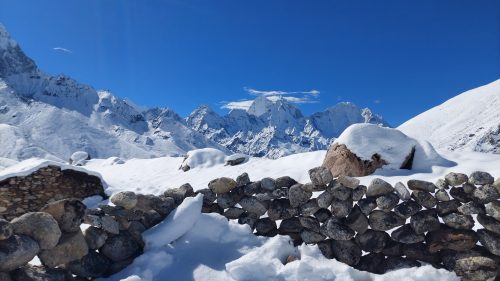
The Everest Base Camp trek is moderate to hard. There is no climbing, no ropes and no technical skil
Continue Reading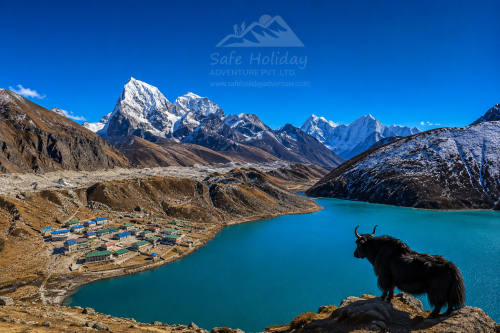
The Gokyo Lakes and Gokyo Ri Trek is one of the most rewarding ways to explore the Everest region wi
Continue Reading
Manaslu Circuit Trek weather is more complicated than simply checking the forecast before leaving Ka
Continue Reading
The Gokyo Lakes Trek is one of the most beautiful trekking journeys in Nepal’s Everest region.
Continue Reading