
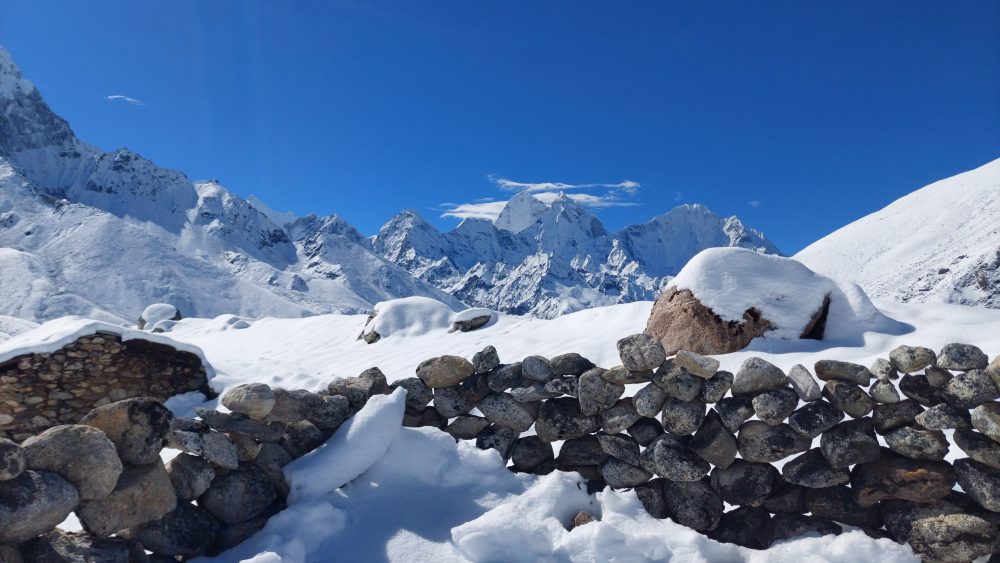
17 Sep 2026 11 min to read
The Everest Base Camp trek is moderate to hard. There is no climbing, no ropes and no technical skill required — it is walking. What makes it difficult is doing that walking for 12 days in a row, sleeping above 4,000 m, and finishing each day with less oxygen than the day before. A healthy person who trains for eight weeks can do it. A very fit person who ignores acclimatisation often cannot.
Most difficulty guides list five factors and treat them as equal. They are not equal. Based on our experience guiding trekkers on this route, here is how we would rank them by how often they actually affect or stop people: altitude, daily walking hours, steep terrain, weather conditions, and overall fitness.
1. Altitude. This is the whole game. At Everest Base Camp (5,364 m) each breath carries roughly half the oxygen of a breath in Kathmandu. Your resting heart rate climbs, your appetite disappears, and sleep becomes shallow and broken. Nothing you do in a gym at sea level prepares you for this.
2. Cumulative fatigue. Day 2 is fine. Day 7 is a different body. You are walking five to eight hours daily on stone, eating less than you burn, and sleeping badly. The tiredness stacks.
3. Terrain underfoot. The trail is well built and well marked, but it is almost entirely uneven stone — rock steps, loose moraine, boulder fields. It punishes knees on the descent far more than the climb.
4. Cold. Nights at Gorak Shep in December drop to around −15°C, and teahouse bedrooms are unheated. Cold disrupts sleep, and poor sleep makes altitude worse.
5. The mental side. Walking slowly when you feel capable of going faster is genuinely difficult for competitive people. It is also the single most important skill on this trek.
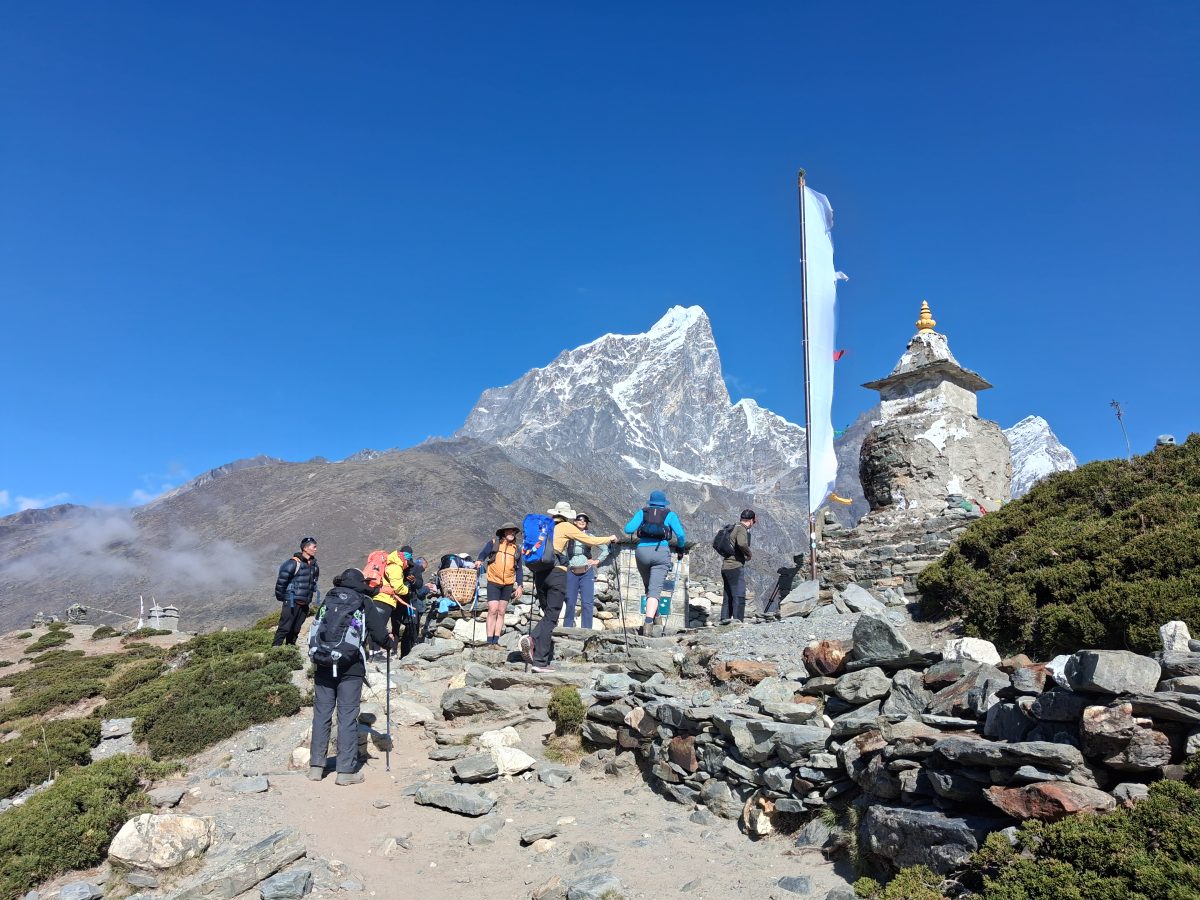
This is the part most trekkers actually want. Ratings are ours, on a 1–10 scale where 5 is a hard day hike at home.
| Day | Route | Distance | Sleeping altitude | Hours | Difficulty |
|---|---|---|---|---|---|
| 1 | Lukla (2,860 m) → Phakding | 8 km | 2,610 m | 3–4 | 2/10 |
| 2 | Phakding → Namche Bazaar | 11 km | 3,440 m | 6–7 | 7/10 |
| 3 | Namche acclimatisation hike | 5 km | 3,440 m | 3–4 | 4/10 |
| 4 | Namche → Tengboche | 10 km | 3,860 m | 5–6 | 6/10 |
| 5 | Tengboche → Dingboche | 11 km | 4,410 m | 5–6 | 6/10 |
| 6 | Dingboche acclimatisation hike | 5 km | 4,410 m | 3–4 | 5/10 |
| 7 | Dingboche → Lobuche | 8 km | 4,940 m | 5 | 7/10 |
| 8 | Lobuche → Gorak Shep → Base Camp → Gorak Shep | 13 km | 5,164 m | 8–9 | 10/10 |
| 9 | Kala Patthar (5,545 m) → Pheriche | 16 km | 4,371 m | 8 | 9/10 |
| 10 | Pheriche → Namche | 20 km | 3,440 m | 7 | 5/10 |
| 11 | Namche → Lukla | 19 km | 2,860 m | 7–8 | 6/10 |
Notice the shape. The hardest days are 8 and 9, right at the end, when you have the least left in the tank. That is the real structure of this trek, and it is why people who burn themselves out in the first week are the ones who turn around.
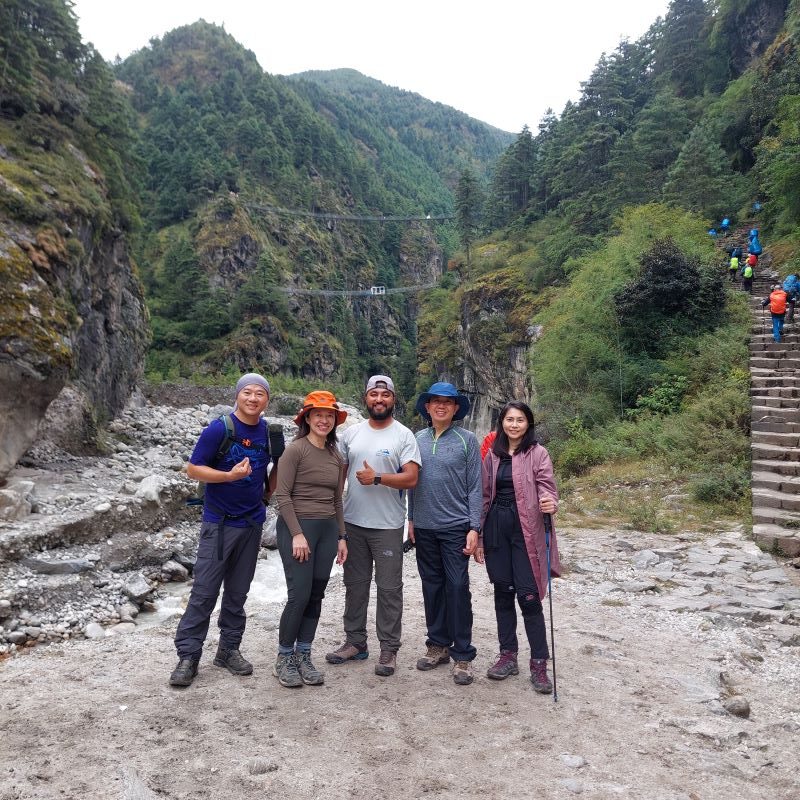
Everyone underestimates this one because it comes so early. After crossing the Hillary suspension bridge you climb roughly 600 vertical metres in about two hours, on relentless stone steps, usually in the heat of late morning. There is no view for most of it — the trees block everything — so you get no psychological reward.
It is also the day most people damage their trek without knowing it. Arriving at Namche exhausted and dehydrated sets up a bad acclimatization week. Start early, drink more than feels necessary, and let the porters and yak trains pass.
The trail crosses the terminal moraine of the Khumbu Glacier and climbs a short, brutally steep section to Thukla Pass (4,830 m). At the top is a field of stone memorials to climbers and Sherpas who died on Everest. Physically it is 45 minutes of hard work. Emotionally it flattens people. Several of our trekkers describe this as the moment the mountain stopped being a holiday.
Nine hours of movement above 5,000 m. You walk Lobuche to Gorak Shep in the morning, drop your bag, then push out over the glacier moraine to Base Camp and come all the way back. The path is loose rock, constantly up and down, and there is no easy stretch. By the time you return to Gorak Shep it is late afternoon, it is cold, you have no appetite, and you still have to sleep at 5,164 m — the highest night of the trek.
If someone is going to get seriously ill, statistically it happens here.
Above about 2,500 m your body begins compensating for thinner air — you breathe faster, your heart works harder, and within days you start producing more red blood cells. That adaptation takes time, and time is the only thing that produces it. Fitness does not.
Acute Mountain Sickness (AMS) shows up as headache plus at least one of: nausea, dizziness, fatigue out of proportion to the day, or broken sleep. Mild AMS is common and usually manageable. What is not manageable is ignoring it and climbing anyway, which is how AMS becomes HAPE (fluid in the lungs) or HACE (swelling of the brain). Both are life-threatening and both are treated the same way: descend, immediately.
Three rules that matter more than anything else on this trek:
Talk to your doctor about acetazolamide (Diamox) before you travel. It helps many people acclimatise, but it is not a licence to climb faster, and it has side effects — tingling fingers, frequent urination, flat-tasting fizzy drinks.
The Himalayan Rescue Association runs a volunteer aid post at Pheriche with daily altitude talks. It is free and worth an hour of your time.
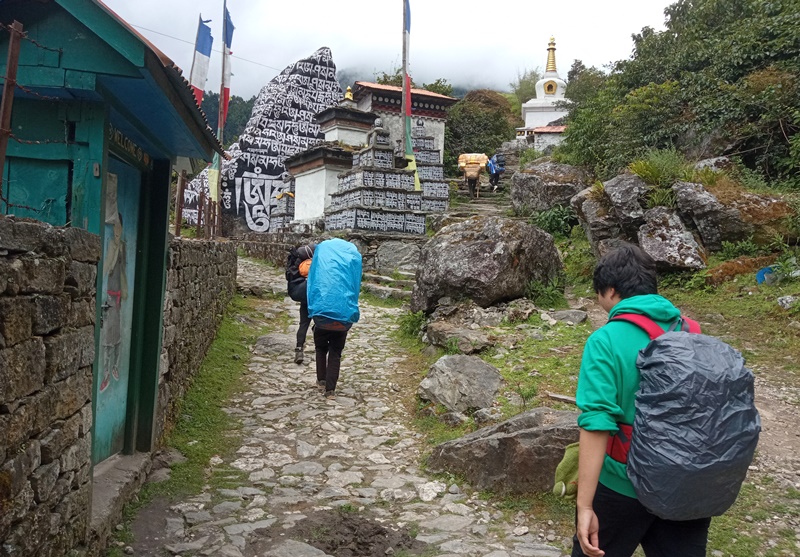
General difficulty ratings are useless because the trek is not equally hard for everyone. Find yourself below.
You hike regularly (day hikes with 600 m+ of climbing). You are in the best position of anyone. The walking will feel manageable and altitude will be your only real variable. Expect to enjoy most days. Difficulty: moderate.
You are gym-fit but never hike. This is the group that struggles most, and the group most surprised to struggle. A strong cardio base helps, but treadmills do not prepare your knees, ankles and stabiliser muscles for eight hours on uneven stone. Add hill walking with a loaded pack before you come. Difficulty: hard.
You are over 60 with decent general fitness. Very achievable. Older trekkers are often better at this route because they pace themselves and have nothing to prove. Add a day or two to the itinerary, and it becomes comfortable. Our oldest client to reach base camp was 70 years. Difficulty: moderate to hard.
You are a complete beginner. Possible, but treat it as an eight-to-twelve week project, not a holiday you booked. The trek does not need experience — it needs preparation. Difficulty: hard.
You have knee problems. Be honest with yourself. The descents, especially Pheriche to Namche and the long final day to Lukla, are where knees fail. Trekking poles are not optional for you, and a knee brace is worth packing. Difficulty: hard.
You are bringing children. Kids from around 10–12 do this trek regularly and often handle altitude well. The limiting factor is boredom and cold, not fitness. Build in shorter days.
You smoke, or you have asthma, uncontrolled high blood pressure, or heart disease. Get a medical clearance before booking. This is not a formality.
| Trek | Max altitude | Days | Technical? | Honest verdict |
|---|---|---|---|---|
| Everest Base Camp | 5,545 m (Kala Patthar) | 12–14 | No | Long days, serious altitude, comfortable teahouses |
| Annapurna Base Camp | 4,130 m | 7–10 | No | Noticeably easier; endless stone steps instead |
| Gokyo Lakes | 5,357 m | 12–14 | No | Similar difficulty, far fewer people |
| Everest Three Passes | 5,535 m | 18–21 | Light | Significantly harder than EBC |
| Manaslu Circuit | 5,106 m | 14–16 | No | Harder logistics, remoter, tougher trail |
| Kilimanjaro (Machame) | 5,895 m | 6–7 | No | Higher, but much faster ascent — riskier for AMS, easier on the legs |
The Kilimanjaro comparison comes up constantly. Kilimanjaro is higher and shorter; EBC is longer and slower. That makes EBC harder on your body over time but considerably safer at altitude.
You do not need to be an athlete. You need legs that tolerate repetitive descent and lungs used to sustained effort.
Weeks 1–2: Three sessions of 45 minutes cardio (brisk walking, cycling, swimming). One long walk of 8–10 km at the weekend.
Weeks 3–4: Add stairs — 20 minutes of continuous stair climbing twice a week. Weekend walk up to 12–15 km with 300–400 m of elevation.
Weeks 5–6: Start carrying a daypack with 6–7 kg. Weekend walk 15–18 km with 600 m+ of climbing. Add squats, lunges and step-downs twice a week — step-downs specifically protect your knees.
Weeks 7–8: Back-to-back weekend days. Walk hard on Saturday, then walk again on Sunday on tired legs. This single change replicates the trek better than anything else.
The week before you fly: rest. Nothing you gain in the last week outweighs arriving fresh.
Things that reduce difficulty more than training does:
Yes, but less often than the internet suggests. Most people who turn back do so for one of three reasons: AMS symptoms that did not improve, an injury (usually ankle or knee), or a stomach illness that left them too weak to continue.
Of the 100 trekkers we hypothetically guided to Everest Base Camp in 2025, 90% reached Base Camp and 85% reached Kala Patthar. The most common reason for turning back was altitude sickness, and it happened most often around Day 7–8, when trekkers reached the higher elevations near Lobuche and Gorak Shep.
Can a complete beginner do the Everest Base Camp trek?
Yes. Previous trekking experience is not required, but eight to twelve weeks of preparation is. Beginners who train and walk slowly do better than fit people who rush.
What is the hardest day of the EBC trek?
Day 8 — Lobuche to Gorak Shep, out to Base Camp, and back. It is eight to nine hours of movement above 5,000 m on loose glacial moraine, followed by the highest night of the trek.
Is Everest Base Camp harder than Kilimanjaro?
It is harder physically because it lasts twice as long, but safer at altitude because you ascend far more gradually. Kilimanjaro is higher but much faster.
Do you need oxygen on the EBC trek?
No. Trekkers walk without supplementary oxygen. Reputable operators carry an emergency cylinder and a portable altitude chamber for medical use only.
How many hours a day will I walk?
Five to seven hours on a typical day, three to four on acclimatisation days, and eight to nine on the Base Camp day.
What is the age limit for Everest Base Camp?
There is no official limit. Children from around 10 and adults into their seventies complete it every season, given health clearance and a slower itinerary.
Is the trail dangerous?
The trail itself is not — it is wide, well maintained and non-technical. The genuine risks are altitude illness, the Lukla flight, and ankle injuries on loose stone.
How fit do I need to be?
Fit enough to walk 15 km with 600 m of ascent carrying a daypack, and to do it again the next day without dread.
Everest Base Camp is hard enough to mean something and easy enough that ordinary people finish it every single day of the season. The trekkers who make it are rarely the strongest ones. They are the ones who walked slowly, drank enough water, slept where the itinerary said to sleep, and were willing to feel silly being overtaken by a 65-year-old with trekking poles.
Come slow. You will get there.
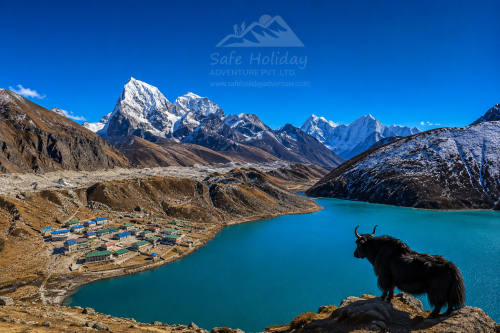
The Gokyo Lakes and Gokyo Ri Trek is one of the most rewarding ways to explore the Everest region wi
Continue Reading
Manaslu Circuit Trek weather is more complicated than simply checking the forecast before leaving Ka
Continue Reading
The Gokyo Lakes Trek is one of the most beautiful trekking journeys in Nepal’s Everest region.
Continue Reading
A clear and honest update for travelers planning Everest, Annapurna, Manaslu, Mustang and other popu
Continue Reading
Manang is one of the most important stops on the Annapurna Circuit Trek. After several days of walki
Continue Reading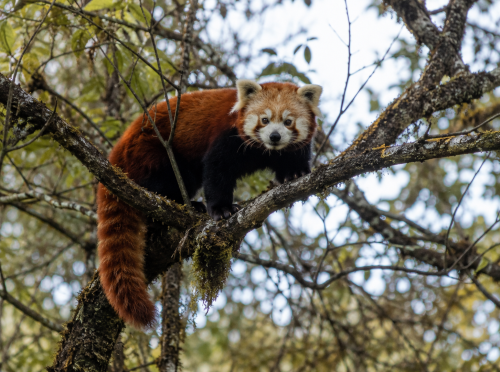
If you are wondering where to see red pandas in Nepal, the Langtang region is one of the most releva
Continue Reading