

9 Jul 2018 5 min to read
A Nepal helicopter tour is a fast, scenic way to experience the Himalayas without committing to days or weeks of trekking. Instead of walking for a week to reach a viewpoint, you can fly there in a matter of hours, taking in sweeping views of snow-capped peaks, glaciers, and remote valleys from above. It’s a popular choice for travelers who are short on time, have physical limitations that make trekking difficult, or simply want a once-in-a-lifetime aerial perspective of the world’s highest mountains.
Beyond sightseeing, helicopters in Nepal also serve practical purposes, including emergency medical evacuations from high-altitude regions, support for mountaineering expeditions, and logistics for remote project work.
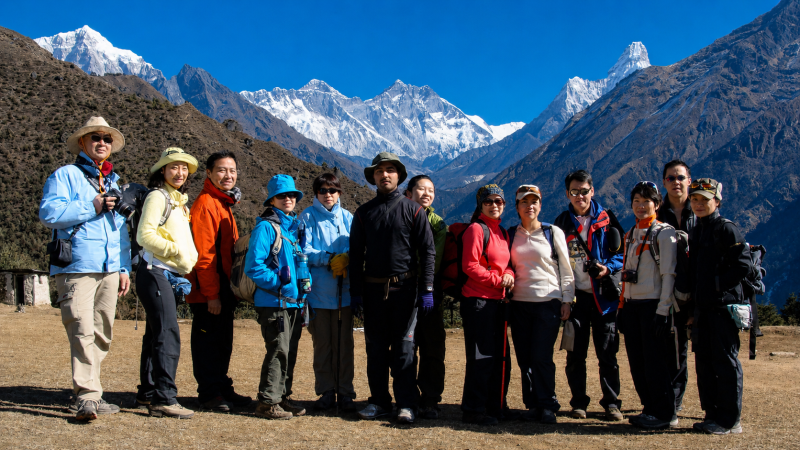
Nepal offers several standout helicopter tour routes, each showcasing a different part of the Himalayan range.

Helicopter tour pricing in Nepal depends on several factors: the destination, flight duration, number of passengers sharing the helicopter, and the specific operator. As a general guide, most standard helicopter tours in Nepal range between $600 and $2,500 per person for shorter routes, while a full Everest Base Camp helicopter tour with a landing can run higher, especially if booked as a private charter rather than shared.
Sharing the cost with other passengers significantly reduces the per-person price, since helicopters typically fly with a fixed rate regardless of how many seats are filled. Booking a shared tour through a trekking agency is usually the most cost-effective way to experience a helicopter flight without paying for a private charter.
Prices also rise during peak season (autumn and spring), when demand for helicopter tours increases alongside standard trekking traffic.
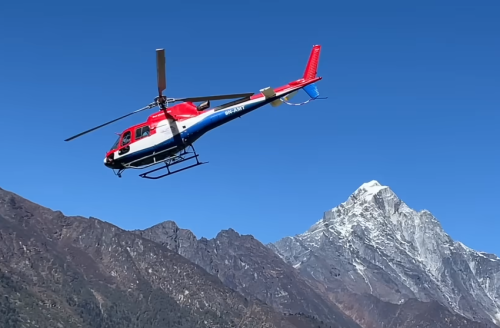
Most Everest Base Camp helicopter tours follow a similar structure, typically completed in a single morning:
The entire tour, including stops, generally takes between 4 and 5 hours, making it possible to experience Everest Base Camp and be back in Kathmandu the same day.

The best months for a Nepal helicopter tour are September to November and February to April. These periods offer the clearest skies and driest weather, both of which are essential for safe, scenic mountain flights.
From September to November, the monsoon has just ended, leaving the landscape green and the mountain views exceptionally clear. From February to April, the weather is dry and stable again after winter, with comfortable temperatures for early morning departures.
Outside these windows, weather in the mountains becomes far less predictable, increasing the risk of flight delays or cancellations due to poor visibility.
Because helicopter tours can take passengers to altitudes above 5,000 meters within minutes, it’s worth understanding a few basic risks tied to rapid altitude exposure:
Reputable helicopter tour operators carry oxygen equipment and maintain direct communication with ground teams throughout the flight, and pilots are trained to monitor weather conditions closely before and during each tour.
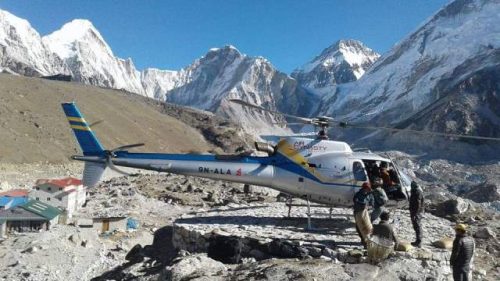
Most helicopter tours in Nepal use small aircraft seating between 4 and 6 passengers, which keeps the experience intimate and gives everyone a window view. Seatbelts are mandatory throughout the flight, and a safety briefing is provided before takeoff. Depending on the route and altitude, oxygen masks may be available on board for passenger comfort during high-altitude landings.
For travelers with limited time, physical constraints, or simply a desire to see the Himalayas from a completely different perspective, a helicopter tour offers an experience that’s hard to replicate on foot. While it comes at a higher price point than trekking, the ability to witness Everest, Annapurna, or Langtang up close within a matter of hours makes it a compelling option — whether as a standalone trip or a bucket-list add-on to a longer Nepal itinerary.
A Nepal helicopter tour offers an unmatched way to experience the grandeur of the Himalayas without the physical demands of a multi-day trek. With flexible routes to Everest Base Camp, Annapurna, and Langtang, favorable weather windows in autumn and spring, and the option to share costs with other travelers, it’s an increasingly popular way to see Nepal’s mountains from a perspective few ever get to experience.
There is a moment on every Everest trek when your legs have an opinion. For most people, it arrives
Continue Reading
If you are asking how difficult the Everest Three Passes Trek is, the honest answer is this: it is t
Continue Reading
My name is Peng Chang, and I travelled to Nepal from Malaysia with a small group of friends. Before
Continue Reading
In this story Why I Chose Everest Base Camp My name is Chyling, and I come from Malaysia, a country
Continue Reading
Ask anyone who has finished the Annapurna Circuit which day they remember most, and the answer is al
Continue Reading
Introduction Kathmandu doesn’t ease you in. You step out of the airport into a chorus of horns
Continue Reading