

6 Jan 2020 9 min to read
There is a moment on the Mardi Himal ridge that most trekkers never forget. You climb out of the last stretch of rhododendron forest, the trees suddenly give up, and the whole sky opens. Machapuchare, the famous Fishtail peak, stands so close it feels like you could argue with it. Whether you see that scene or spend the morning inside a grey cloud depends on one thing: the weather.
That is why the weather matters more here than on almost any other short trek in Nepal. Mardi Himal is not a long expedition, but it climbs fast, from warm foothills to a cold, exposed ridge above 4,000 meters. This guide walks you through what the mountain feels like in each season, how temperatures change as you gain height, and how to prepare so the weather works for you.

Mardi Himal sits in the Annapurna region, directly above Pokhara, one of the wettest places in Nepal. That position shapes everything. Warm, moist air rises from the lowlands and bumps into the mountains, so clouds build quickly, usually by late morning. This is why locals and guides always repeat the same advice: start early, because the mornings belong to the mountains and the afternoons belong to the clouds.
The other thing to understand is elevation. The trek starts around 1,100 to 1,700 meters, depending on where you begin, and reaches Mardi Himal Base Camp at roughly 4,500 meters. A simple rule of thumb is that the air cools by about six degrees for every thousand meters you climb. So when Pokhara is warm and sticky in shirtsleeves, the ridge can be properly wintry. You are really walking through several climates in a few days.

The lower forest (about 1,500 to 2,500 meters). The first day or so takes you through villages, terraced fields and then thick forest of oak and rhododendron. It is mild here, often damp, and in the right seasons very green. Daytime is comfortable, and nights at Forest Camp (around 2,500 meters) are cool but easy to handle with a normal jacket.
The middle section (about 3,000 meters). At Low Camp the air feels noticeably thinner and cooler. Morning frost is possible in colder months, and views begin to open between the trees. Evenings are chilly enough that everyone crowds around the dining room stove.
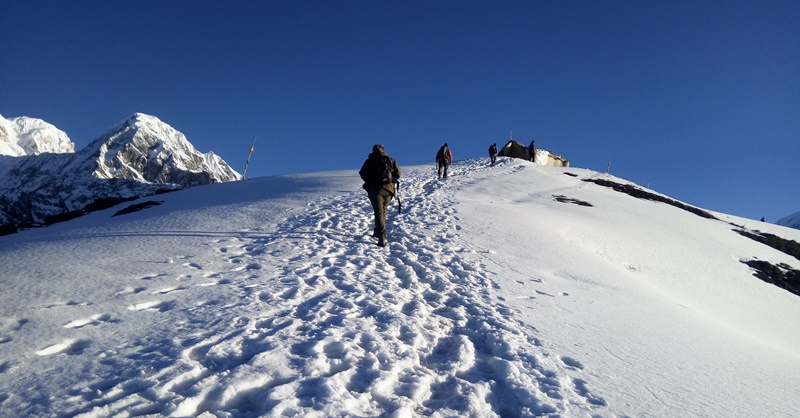
High Camp (about 3,580 meters). This is where the trek really changes character. The forest is gone, wind arrives, and temperatures drop fast once the sun slips behind the ridge. Even in good seasons, nights hover around freezing or below. This is also the camp with the best sunset and sunrise views of Machapuchare, Annapurna South and Hiunchuli, so everyone is willing to put up with the cold.
The upper ridge and Base Camp (about 4,000 to 4,500 meters). Above High Camp you are walking on an open, grassy and then rocky ridge. There is nothing to block the wind, and the weather can switch from bright to misty in minutes. Mornings can be crisp and stunningly clear, but you will want your warm layers, gloves and a hat on.
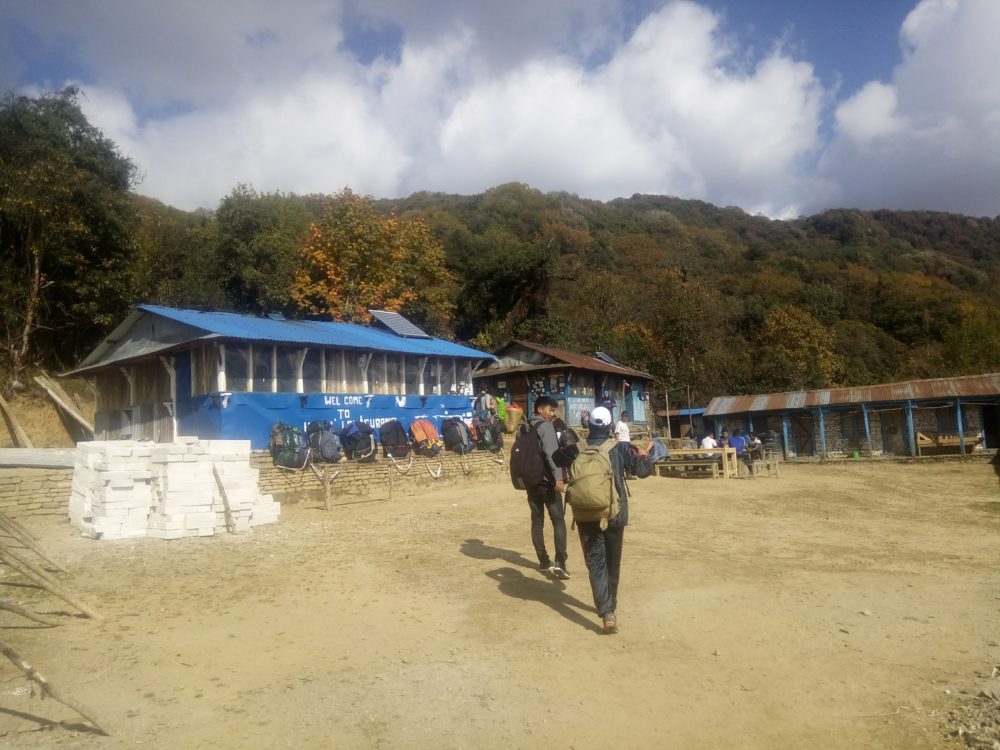
Spring is one of the two best seasons, and many people argue it is the prettiest. From late March through May, the lower forests explode with blooming rhododendrons, red, pink and white, which is a wonderful bonus on a trail already famous for its scenery.
Days are warm in the lower sections, comfortable T-shirt weather while you are hiking. At High Camp, daytime temperatures are usually pleasant when the sun is out, perhaps ten degrees or a little more, but nights drop to around freezing, sometimes a couple of degrees below. Higher up on the ridge, the wind can make it feel colder than the thermometer says.
The catch with spring is haze. As the season warms, dust and moisture build in the air, and distant peaks can look slightly softer by late April and May. Mornings are still usually clear. Spring is also busier, so book your teahouse stays a little ahead if you can, especially in April.
From June to August, the monsoon soaks Nepal, and Pokhara receives huge amounts of rain. On Mardi Himal, that means daily showers, cloud-covered views, slippery trails and, in the lower forest, leeches. The air is warm and humid at the bottom, and the upper ridge stays cool, wet and often foggy.
Is it impossible? No. Some trekkers choose these months precisely because the trails are nearly empty and the forests are lush and glowing. But you should go in with realistic expectations. Many days you will see very little of the mountains, and on others the clouds may part for just a short time at dawn. If your main goal is a clear Himalayan panorama, this is not the best season. If you love quiet and green landscapes and you pack proper rain gear, it can still be rewarding.
For most people, autumn is the answer to the question “when should I go?” The monsoon has washed the air clean, and from late September through November, skies are typically deep blue and visibility is exceptional. October is the star: stable weather, sharp mountain views and a warm glow on the trail.
Daytime temperatures are comfortable for hiking, and the lower forest stays pleasant. At High Camp, days are mild in the sun, but nights are properly cold, often around freezing and sometimes a few degrees below. By late November, the chill deepens, and the ridge can feel quite wintry in the early morning.
The trade-off is popularity. October brings the largest crowds, so teahouses at Low Camp and High Camp can fill up. A guide or an agency usually handles bookings, which is one of the simplest ways to make sure you have a bed at the end of the day.
Winter on Mardi Himal is for people who do not mind the cold. Mornings can be spectacularly clear, the air is crisp, and the snow-covered peaks look extraordinary. The trails are far quieter than in autumn.
But the cold is real. At High Camp, nighttime temperatures can fall well below freezing, sometimes reaching minus ten or lower on the coldest nights. Snow may appear on the upper trail, and the ridge can become icy, so slow, careful footing matters. Shorter daylight means less time to walk, and some teahouses at the upper camps may close or have limited supplies during the coldest weeks.
If you go in winter, treat your gear seriously: a proper down jacket, a warm sleeping bag, thermal layers and good gloves. Take the weather as a part of the adventure, and keep a flexible day or two in your plan in case snow slows you down.
Rather than memorizing numbers, think of it this way. In the warm seasons, the lower trail feels pleasantly warm, High Camp feels like a cold evening in the hills, and the ridge feels like a windy autumn morning. In winter, everything shifts several steps colder, and High Camp feels like a deep freeze after dark. Remember that sunshine matters enormously: a sunny afternoon at 3,500 meters can feel almost warm, while the same spot in shadow or cloud feels bitterly cold. These figures are general guidance, since mountain weather changes from year to year.
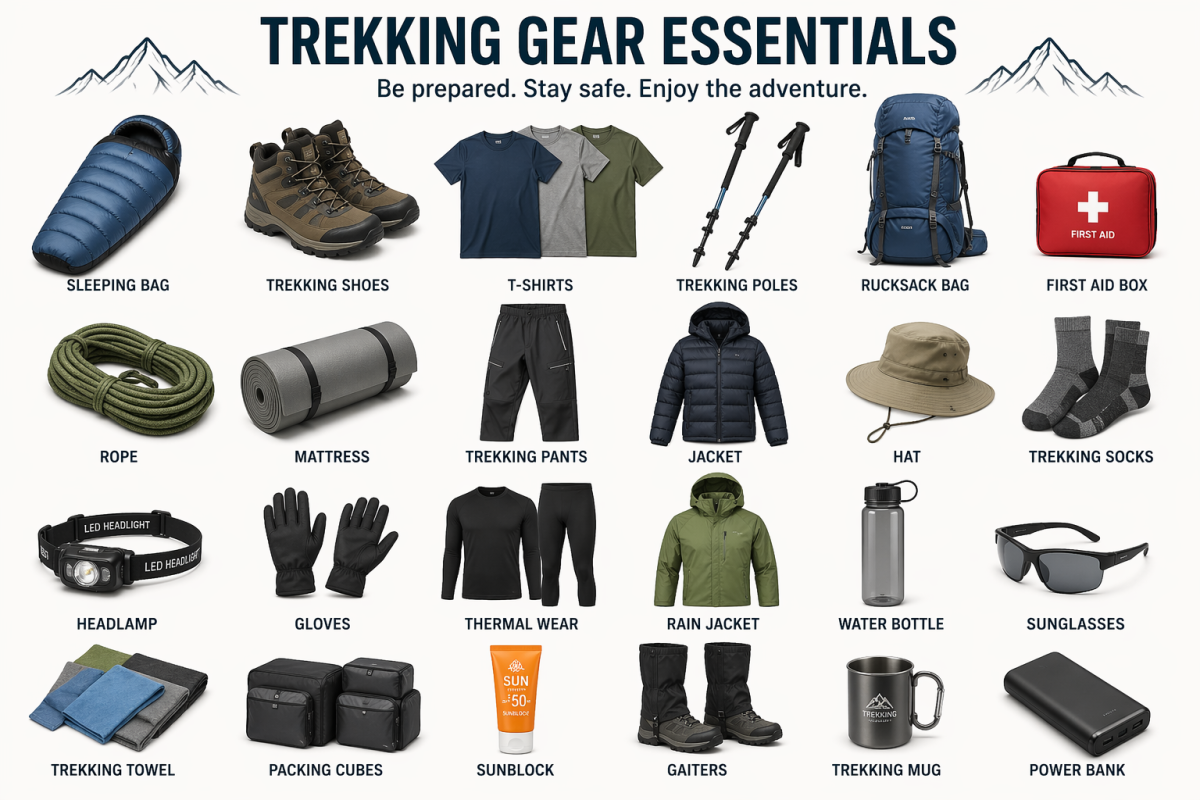
You do not need expedition gear, but you do need smart layers. Think in three levels: a breathable base layer, a warm fleece or light insulated layer, and a windproof, waterproof shell on top. Add a warm down jacket for the evenings at High Camp. In every season, pack a sun hat, sunglasses and strong sunscreen, because UV is intense at altitude, even on cloudy days.
Sturdy, broken-in hiking boots are essential, and trekking poles help a lot on the steep ridge descent. A warm hat and gloves are worth carrying even in spring and autumn. Many teahouses provide blankets, but a good sleeping bag rated for cold nights is a comfort you will thank yourself for. For wet months, add a rain cover for your backpack and extra socks, and carry something to keep leeches away.
Cold weather and altitude go together, and it is worth respecting both. The ascent from Low Camp to High Camp and then up toward the viewpoint gains height steadily. Walk slowly, drink plenty of water, and do not rush to the top because a clear window opened. Headache, nausea or unusual tiredness are signs to rest or descend. Bad weather is another reason to stay flexible: if the ridge is storming, it is wiser to wait a few hours or turn back than to push on.
Most trekkers take about five to seven days, starting with a drive from Pokhara to the trailhead, climbing through forest to Low Camp, continuing to High Camp, and then making a very early push to the viewpoint or Base Camp for sunrise. The descent usually goes down through Badal Danda and on to Siding or Lwang before returning to Pokhara. Along the way, you will sleep in simple teahouses, eat dal bhat and noodles, and share the trail with a friendly mix of locals and travelers. A permit for the Annapurna Conservation Area is required, and an experienced local guide helps with route finding, weather decisions and bookings.
If you want reliable views and comfortable walking, choose October or November, or April for spring blooms. If you want solitude and do not mind the cold, winter can be magical. If you love lush green landscapes and can accept rain and clouds, the monsoon has its own quiet beauty. Whatever season you pick, start every day early, carry layers, and keep a little flexibility in your schedule.
The Mardi Himal Trek rewards people who respect its weather. The mountain does not owe you a clear sky, but it gives plenty back when you arrive prepared: a forest that changes under your feet, a ridge that feels like walking along the roof of the world, and a sunrise on Machapuchare you will think about for years. Pack well, move slowly, trust your guide, and let the mountain set the pace.
There is a moment on every Everest trek when your legs have an opinion. For most people, it arrives
Continue Reading
If you are asking how difficult the Everest Three Passes Trek is, the honest answer is this: it is t
Continue Reading
My name is Peng Chang, and I travelled to Nepal from Malaysia with a small group of friends. Before
Continue Reading
In this story Why I Chose Everest Base Camp My name is Chyling, and I come from Malaysia, a country
Continue Reading
Ask anyone who has finished the Annapurna Circuit which day they remember most, and the answer is al
Continue Reading
Introduction Kathmandu doesn’t ease you in. You step out of the airport into a chorus of horns
Continue Reading