
16 Jul 2019 13 min to read
The 12 days Everest Base Camp trek is the classic route into the Khumbu, the Sherpa homeland at the foot of the world’s highest mountain. In under two weeks, you walk from green river valleys to glacier moraine, crossing high suspension bridges, passing mani walls and stopping at Buddhist monasteries along the way. Your goal is Everest Base Camp at 5,364 m, plus the Kala Patthar viewpoint at 5,545 m, where Lhotse, Nuptse and Pumori stand in one frame.
Twelve days is the sweet spot. It is long enough for two acclimatization days, which makes the climb safer and more enjoyable, and short enough for travelers with limited leave. This guide covers the full price, the itinerary, permits, flights, seasons, difficulty and packing, so you can decide with real information. For a wider overview, see our [Everest Base Camp Trek Guide (internal link)].
| Detail | Information |
|---|---|
| Trek length | 12 days, Lukla to Lukla (add 1 to 2 days in Kathmandu) |
| Start and end | Lukla (Tenzing-Hillary Airport) |
| Everest Base Camp | 5,364 m |
| Kala Patthar | 5,545 m |
| Daily walking | 4 to 8 hours |
| Total distance | About 130 km return |
| Difficulty | Moderate to challenging |
| Accommodation | Teahouse lodges |
| Best seasons | March to May, September to November |
| Group size | Solo with guide, small group or private |
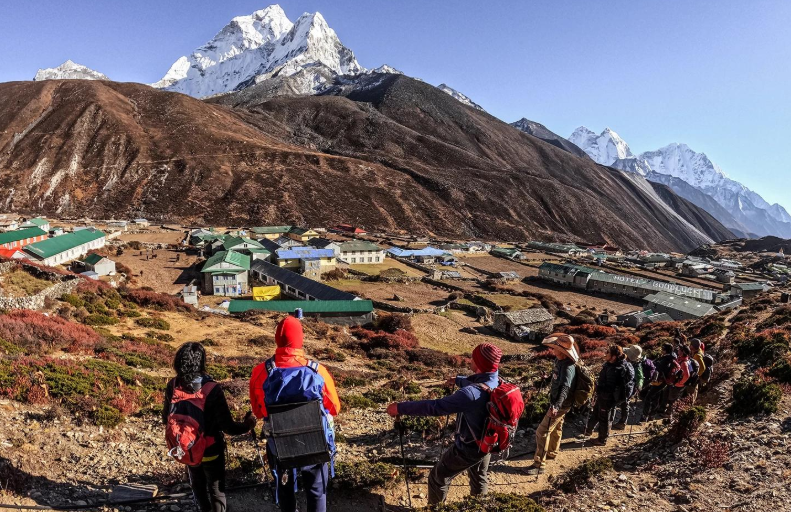
Your adventure starts with a short mountain flight into one of the most dramatic airstrips on Earth. Landing in [Lukla (outbound link: Wikipedia)], you meet your porters, repack and walk down along the Dudh Koshi river. The trail is gentle with prayer wheels and small bridges. Walking time is 3 to 4 hours. This easy first day lets your body settle in.
Follow the river through pine forest and cross several suspension bridges, ending with the high Hillary Bridge. After checking in at the [Sagarmatha National Park (outbound link: UNESCO)] gate at Monjo, you face the long, steep climb to Namche. On clear days you get your first glimpse of Everest on the way. Walking time is 5 to 6 hours.
Namche is the Sherpa capital, with cafes, gear shops, a bakery and a Saturday market. Take a short hike to the Everest View Hotel or the Sherpa museum, then walk back down to sleep low. The rule of “climb high, sleep low” is the foundation of [altitude acclimatization (outbound link: Wilderness Medical Society)].
A scenic traverse above the river leads to Phunki Tenga, then a forested climb to [Tengboche Monastery (outbound link)]. Ama Dablam rises directly across the valley. Visit the monastery in the afternoon, when monks gather for prayers. Walking time is 5 to 6 hours.
Descend through rhododendron and juniper to Deboche, cross the Imja river and climb through Pangboche, one of the oldest villages in the region. Above the treeline the valley opens into stone-walled fields and wide views of Ama Dablam and Lhotse. Walking time is 5 to 6 hours.
Hike up Nagarjun Hill to about 5,100 m for a panoramic view of Makalu, Cho Oyu and Lhotse. Return to rest, hydrate and eat well. This second acclimatization day is what helps most trekkers reach Base Camp feeling strong.
Climb to the memorial ridge at Thukla, where stone chortens honor climbers who died on Everest. Continue beside the Khumbu Glacier. The air is thin and cold, so walk slowly and keep your layers handy. Walking time is 5 to 6 hours.
Follow the glacier moraine to Gorak Shep, drop your bag and continue to [Everest Base Camp (outbound link: Wikipedia)]. In spring you will see expedition tents; in autumn the site is quieter but the icefall views are the same. Celebrate with photos, then return to Gorak Shep for the night. Walking time is 7 to 8 hours.
Wake before dawn and climb Kala Patthar to watch sunrise turn Everest gold. This is the best view of the trek. After breakfast, descend through Lobuche to Pheriche. Learn more in our [Kala Patthar guide (internal link)]. Walking time is 7 to 8 hours.
Thicker air and easy downhill make this a joyful day. Many trekkers enjoy a hot shower and a bakery treat in Namche.
A long final descent along the Dudh Koshi valley. Share a farewell dinner with your guide and porters.
Take the morning flight back and rest in Kathmandu. Keep one buffer day in your schedule, because Lukla flights are often delayed by weather.
Prices for the 12 days Everest Base Camp trek vary by operator, season and service level. These are typical market ranges per person:
| Package level | Typical price (USD) | What you get |
|---|---|---|
| Budget | 1,300 to 1,500 | Basic teahouses, shared guide and porter, flights often extra |
| Standard | 1,500 to 2,000 | Licensed guide, porter, permits, domestic flights, hotel in Kathmandu |
| Comfort | 2,000 to 2,800 | Better lodges, private guide, extra support |
| Luxury | 3,500 and above | Premium lodges, private service, helicopter return options |
Our price: from USD 1250 per person.
Be careful with extremely cheap offers. If the price is far below the market range, ask what is missing, such as insurance, permits or fair wages.
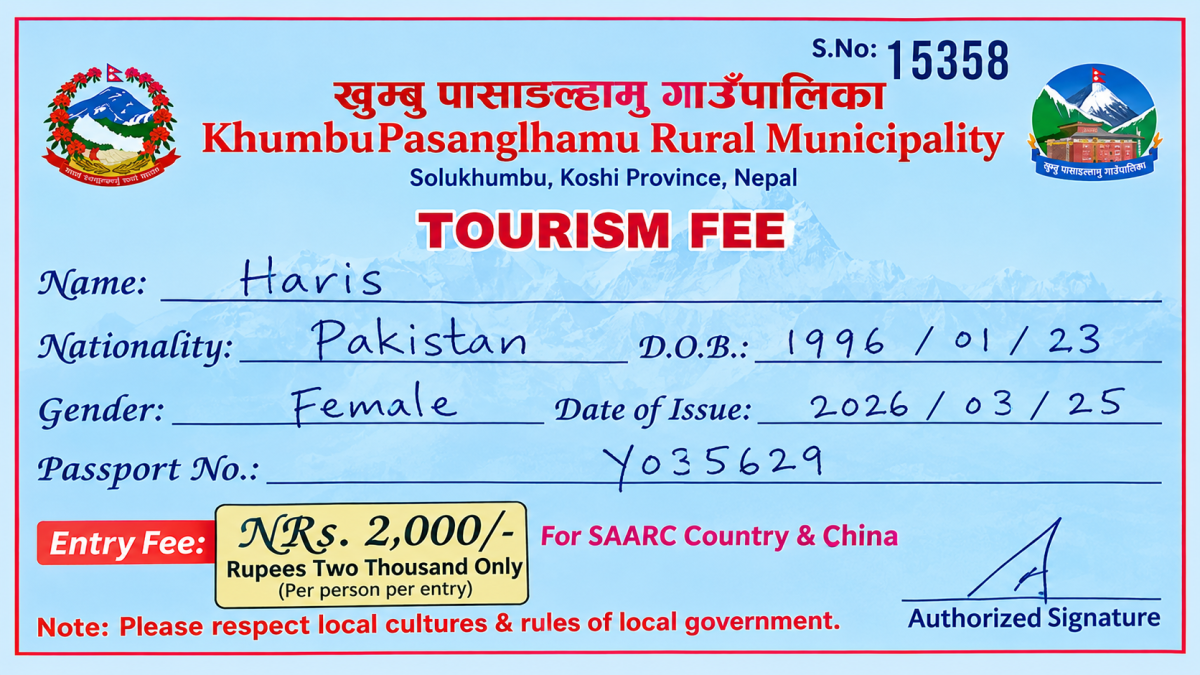
You need two permits for the Everest region:
Fees are set by the government and can change, so check the [Nepal Tourism Board (outbound link)] and our [Everest Base Camp permits and fees guide (internal link)] before you book. Your operator normally arranges both permits for you. You also need a valid passport and a Nepal visa, which you can apply for through the [Nepal Department of Immigration (outbound link)].
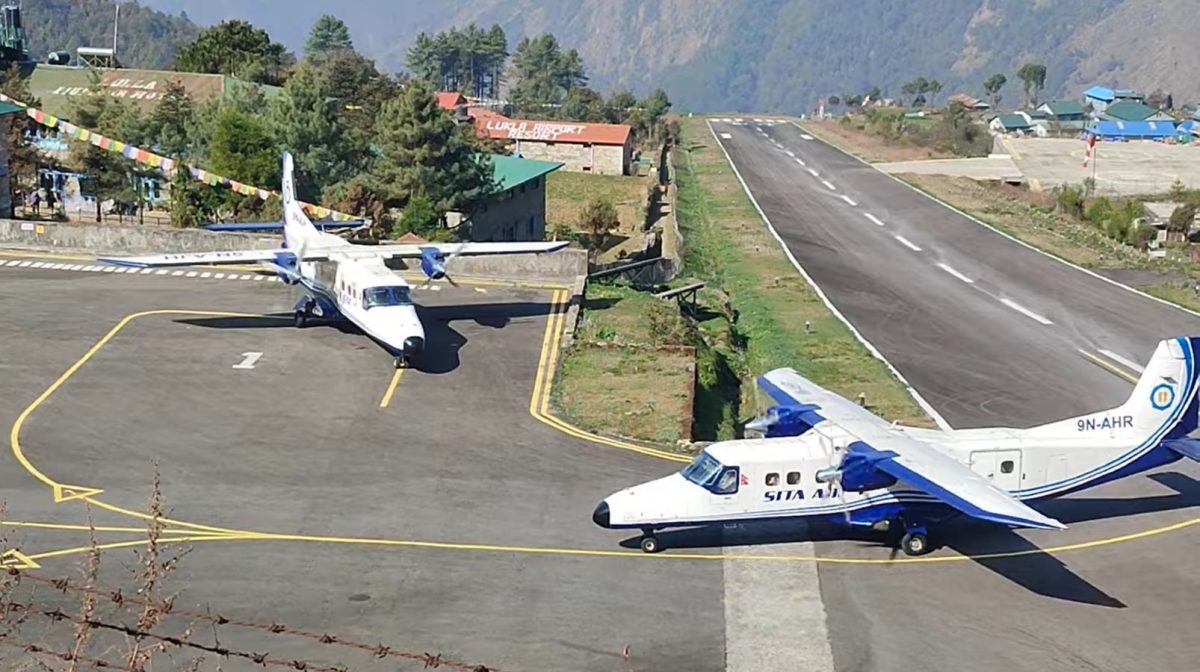
Most trekkers fly to Lukla because it saves several days of walking. During busy seasons, flights often depart from Ramechhap (Manthali) airport, about 4 to 5 hours by road from Kathmandu, rather than from Kathmandu itself. Leave early, expect an early-morning departure and keep a spare day at the end of your trip for weather delays. If you want a faster return, see our [Everest Base Camp helicopter tour guide (internal link)].
The trek is moderate to challenging. There are no technical sections, but you walk several hours daily at altitude, and the air above 4,500 m contains much less oxygen. People of many ages complete it with proper preparation.
Training plan (8 to 12 weeks):
Read our Everest Base Camp trek difficulty guide for more tips.
Acute mountain sickness (AMS) can affect anyone, regardless of fitness. Learn the signs from the Himalayan Rescue Association or the altitude illness guide.
Early symptoms: headache, nausea, poor appetite, dizziness, trouble sleeping.
How to reduce risk:
Buy travel insurance that covers emergency helicopter evacuation up to 6,000 m.
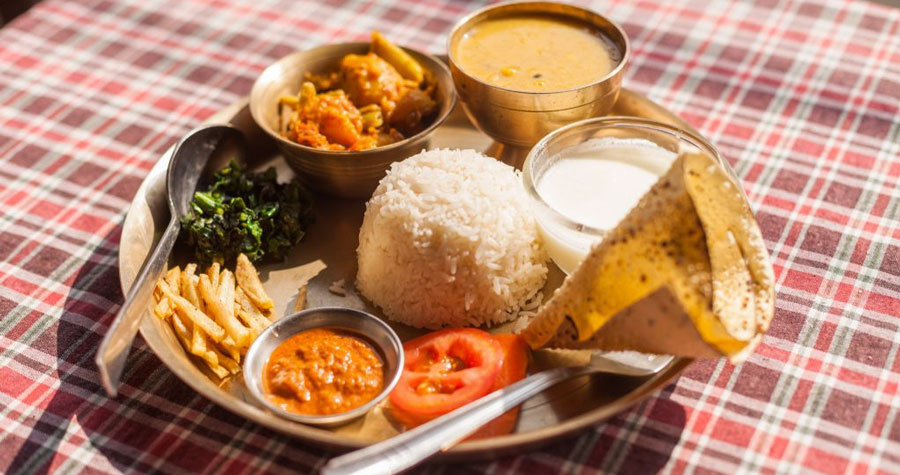
Rooms: Teahouses offer twin-bed rooms with mattresses and blankets. Bathrooms are usually shared, and rooms are unheated. Rooms and facilities become simpler as you climb.
Food: Dal bhat, the Nepali rice and lentil meal, is filling and often comes with free refills. Menus also include noodles, soups, pasta, eggs, pancakes and momos. Vegetarian meals are usually the safest choice at altitude.
Water: Use boiled water, purification tablets or a filter. Avoid single-use plastic bottles where possible. See our [EBC teahouse accommodation guide (internal link)] for more.

You can rent or buy quality gear in Kathmandu’s Thamel district before you start.
Carry out all non-biodegradable waste, respect Buddhist customs (walk clockwise around mani walls and stupas), ask before photographing people and make sure your porters carry fair loads and have proper clothing. Choosing an ethical operator protects both people and the mountains.
1. How much does the 12 days Everest Base Camp trek cost?
Most packages cost USD 1,300 to 2,000 per person. Budget deals start lower, and premium services cost more. See our [12 days Everest Base Camp trek price section (internal link)].
2. Is 12 days enough to reach Everest Base Camp?
Yes. A 12-day Lukla to Lukla schedule is standard and includes two acclimatization days.
3. How difficult is the 12 days Everest Base Camp trek?
It is moderate to challenging. No climbing skills are needed, but you must be fit enough to walk 5 to 8 hours a day at altitude.
4. Can beginners do the Everest Base Camp trek?
Yes, if they are healthy and train for 8 to 12 weeks. Many first-time trekkers complete it successfully.
5. How far do you walk each day?
Most days are 5 to 8 hours of walking, covering about 8 to 15 km depending on the stage.
6. What is the best time for the 12 days Everest Base Camp trek?
March to May and September to November offer the clearest views and most stable weather. See our [best time to trek Everest Base Camp guide (internal link)].
7. Do I need permits for the trek?
Yes. You need a Sagarmatha National Park permit and a local municipality permit. Your operator arranges both. See our [Everest Base Camp permits and fees guide (internal link)].
8. Do I need a guide for Everest Base Camp?
A licensed guide is strongly recommended for safety, navigation and altitude support.
9. How high is Everest Base Camp?
Everest Base Camp sits at 5,364 m (17,598 ft). Kala Patthar, the best viewpoint, is at 5,545 m.
10. Can you see Mount Everest from Base Camp?
Not clearly. Everest is hidden behind Nuptse from Base Camp. The best view is from Kala Patthar. Learn more in our [Kala Patthar guide (internal link)].
11. What is altitude sickness and how can I avoid it?
It is illness caused by thin air at high altitude. Walk slowly, drink plenty of water, rest on acclimatization days and tell your guide about any symptoms. See the [CDC altitude illness guide (outbound link)].
12. What is the accommodation like on the trek?
You stay in simple teahouses with twin rooms and shared bathrooms. Facilities get more basic as you climb. See our [EBC teahouse accommodation guide (internal link)].
13. What food is available on the trek?
Dal bhat, noodles, soups, pasta, eggs, pancakes and momos. Vegetarian meals are safest at altitude.
14. Is drinking water safe on the trek?
Only if boiled, filtered or treated. Use purification tablets or a filter to avoid buying plastic bottles.
15. Is there wifi and phone signal on the trek?
Yes, but it is limited. Most lodges sell wifi, and local SIM data works in some villages. Do not rely on it.
16. What happens if my Lukla flight is cancelled?
Weather delays are common. Keep a spare day in your schedule, or consider a helicopter option. See our [Everest Base Camp helicopter tour guide (internal link)].
17. What should I pack for the 12 days Everest Base Camp trek?
Pack layers, a down jacket, waterproof shell, broken-in boots, a -15°C sleeping bag, trekking poles, headlamp and sun protection. See our [Everest Base Camp packing list (internal link)].
18. Do I need travel insurance?
Yes. Choose cover for trekking up to 6,000 m including emergency helicopter evacuation.
19. How much should I tip guides and porters?
Tips are customary and depend on group size and service. See our [tipping in Nepal guide (internal link)].
20. How do I book the 12 days Everest Base Camp trek with you?
Contact Safe Holiday Adventure Pvt. Ltd. through our and we will confirm dates, price, and your itinerary.
The 12 days Everest Base Camp trek gives you Himalayan peaks, Sherpa culture and a real sense of achievement in a manageable schedule. Prepare well, pick a trustworthy operator and allow time for acclimatization.
There is a moment on every Everest trek when your legs have an opinion. For most people, it arrives
Continue Reading
If you are asking how difficult the Everest Three Passes Trek is, the honest answer is this: it is t
Continue Reading
My name is Peng Chang, and I travelled to Nepal from Malaysia with a small group of friends. Before
Continue Reading
In this story Why I Chose Everest Base Camp My name is Chyling, and I come from Malaysia, a country
Continue Reading
Ask anyone who has finished the Annapurna Circuit which day they remember most, and the answer is al
Continue Reading
Introduction Kathmandu doesn’t ease you in. You step out of the airport into a chorus of horns
Continue Reading