

10 Apr 2018 13 min to read
Trekking in Nepal in May and June offers a different experience from the popular spring and autumn trekking seasons. May is generally the end of the main spring trekking season, while June gradually moves toward the summer monsoon period.
Conditions vary greatly depending on altitude and region. Lower elevations can become warm and humid, while higher mountain areas remain considerably cooler. Rainfall also becomes more frequent as June progresses, particularly toward the end of the month.
Despite the changing weather, May can still be a good month for several Himalayan treks. June requires more careful route selection because monsoon rain can affect roads, trails, mountain views, and domestic flights.
For travelers who prefer quieter trails and are prepared for changing weather, trekking in late spring and early summer can still be rewarding.
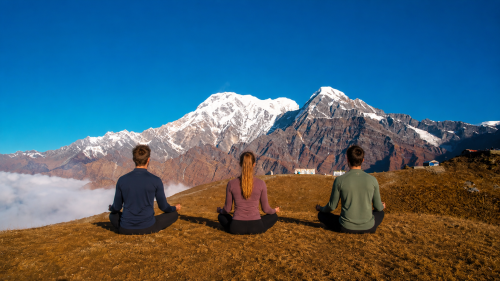
May is generally warmer and wetter than March and April, especially at lower elevations. As the month progresses, humidity and the possibility of afternoon rain increase.
June is more strongly influenced by the approaching monsoon. Rainfall varies considerably by region, and some parts of Nepal receive much more rain than others.
At higher elevations, temperatures remain cooler, but trekkers should still prepare for changing conditions, including rain at lower elevations, strong winds, clouds, and occasional snowfall in high mountain areas.
The exact temperature depends on the trekking route and altitude, so it is better to check the forecast for your specific destination rather than relying on one temperature range for the whole country.
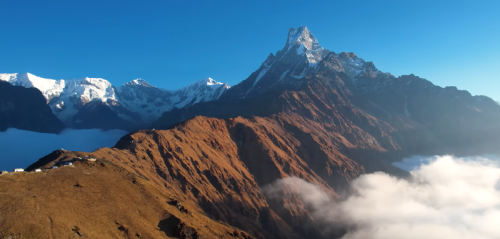
May can be a good month for trekking in Nepal, particularly during the first part of the month.
Many high-altitude routes remain accessible, mountain views can still be excellent, and spring vegetation adds color to the landscape. However, weather becomes increasingly unpredictable toward the end of May as the monsoon approaches.
If you are planning a May trek, it is wise to allow some flexibility in your itinerary and prepare for occasional rain.
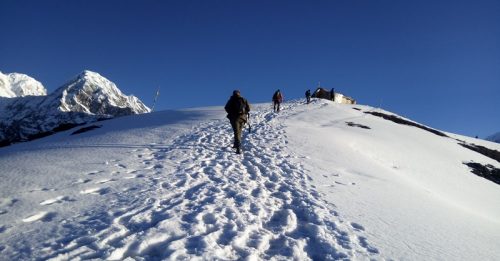
June is more challenging for trekking in Nepal because the summer monsoon begins to affect many parts of the country.
Rain can make lower trails muddy and slippery, while clouds can reduce mountain visibility. Road travel can also be affected by heavy rainfall and landslides in some areas.
However, June does not mean that every trekking region is closed or unsuitable. Some rain-shadow areas receive considerably less rainfall and can be better choices for trekking during this period.
For June travel, Upper Mustang and Dolpo are among the regions worth considering because their geography keeps them relatively dry compared with Nepal’s wetter southern slopes.
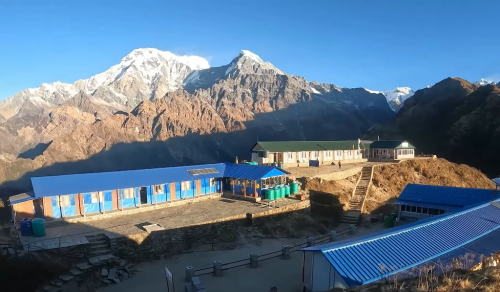
Yes, tea houses and lodges are generally open during May and June on the major trekking routes.
May is still an active trekking period in many regions, so accommodation is usually operating normally.
By June, the number of trekkers decreases on many routes as the monsoon approaches. Some smaller lodges in less-traveled areas may operate with fewer services or limited staff.
Before starting a June trek, it is useful to confirm accommodation availability along your particular route. Weather can also affect transportation and supplies, especially in remote mountain areas.
A local guide can help check current trail, lodge, road, and transportation conditions before and during the trek.
Packing for May and June requires preparation for both warm weather and rain. Your packing list should also change according to the altitude of your trek.
A waterproof backpack cover is particularly useful during this period because sudden rain can occur even when the morning begins with clear skies.
A few simple preparations can make trekking during this transitional season much easier.
Mountain weather can change quickly. Check the latest forecast for your trekking region and remain flexible with your daily schedule.
Morning conditions are often more favorable for mountain views. Starting early can also help you complete the day’s walking before afternoon rain.
Keep your passport, money, electronics, documents, sleeping clothes, and other important items inside waterproof bags.
Not every trekking region experiences the same amount of rainfall. If you are traveling in June, consider areas with lower rainfall rather than choosing a route only because it is popular.
Rain can affect roads and domestic flights. If your itinerary depends on a flight from Lukla or another mountain airstrip, keep some flexibility in your schedule.
Trail and transportation conditions can change quickly during the pre-monsoon and monsoon periods. Local guides can provide current information about trail conditions, accommodation, transportation, and weather.
The best trek depends on the month, altitude, region, and current weather conditions. The following routes can be considered, but conditions should always be checked shortly before departure.

The Everest Base Camp Trek remains one of Nepal’s most famous Himalayan adventures.
The standard route begins with a flight toward Lukla and continues through Phakding, Namche Bazaar, Tengboche, Dingboche, Lobuche, and Gorak Shep before reaching Everest Base Camp.
The highest point on the standard route is Kala Patthar at about 5,545 meters, which provides one of the classic viewpoints of Mount Everest and the surrounding Khumbu peaks.
May is generally more suitable than June for the Everest Base Camp route because it is still within the main spring trekking period.
The higher elevations remain cold, while lower sections can become warmer. Mountain views can be excellent, although clouds and changing weather become more common as the monsoon approaches.
May can also be a busy period in the Everest region because of the popularity of the trekking and climbing season.
June is more unpredictable. Rain and cloud are more common at lower elevations, while flight operations to Lukla can be affected by poor visibility.
However, conditions are not identical throughout the month or at every altitude. Travelers planning an EBC trek in June should allow extra days and monitor the weather closely.
Day 1: Arrival in Kathmandu
Day 2: Fly to Lukla and trek to Phakding
Day 3: Trek from Phakding to Namche Bazaar
Day 4: Acclimatization day in Namche Bazaar
Day 5: Trek from Namche Bazaar to Tengboche
Day 6: Trek from Tengboche to Dingboche
Day 7: Acclimatization day in Dingboche
Day 8: Trek from Dingboche to Lobuche
Day 9: Trek to Gorak Shep and hike to Everest Base Camp
Day 10: Hike to Kala Patthar and return to Gorak Shep
Day 11: Trek from Gorak Shep to Pheriche
Day 12: Trek from Pheriche to Namche Bazaar
Day 13: Trek from Namche Bazaar to Lukla
Day 14: Fly from Lukla to Kathmandu
Day 15: Departure from Kathmandu
The itinerary can be adjusted according to weather, flight schedules, acclimatization needs, and the trekker’s walking pace.

The Annapurna Circuit Trek crosses a remarkable range of landscapes, from subtropical valleys and traditional villages to high mountain terrain around the Thorong La Pass.
The route passes through areas such as Dharapani, Chame, Pisang, Manang, Yak Kharka, Thorong Phedi, Muktinath, and Jomsom.
The highest point is Thorong La Pass at approximately 5,416 meters.
May can still be a useful month for the Annapurna Circuit, particularly for trekkers who are prepared for warmer conditions and possible rain at lower elevations.
As the month progresses, clouds and rainfall become more likely.
The scenery can be particularly beautiful in spring, with green hills, flowering vegetation, and dramatic mountain landscapes.
June becomes more challenging as monsoon conditions develop. Lower sections can experience increased rainfall, while road conditions may change.
The northern sections around Manang and Mustang are relatively drier because of the rain-shadow effect, but reaching and crossing Thorong La still requires suitable weather and careful planning.
Day 1: Arrival in Kathmandu
Day 2: Drive from Kathmandu to Jagat via Besisahar
Day 3: Trek from Jagat to Dharapani
Day 4: Trek from Dharapani to Chame
Day 5: Trek from Chame to Pisang
Day 6: Trek from Pisang to Manang
Day 7: Acclimatization day in Manang
Day 8: Trek from Manang to Yak Kharka
Day 9: Trek from Yak Kharka to Thorong Phedi
Day 10: Cross Thorong La Pass and trek to Muktinath
Day 11: Travel from Muktinath to Jomsom
Day 12: Travel from Jomsom to Pokhara
This is a sample itinerary. Road conditions, acclimatization requirements, and weather may require changes.
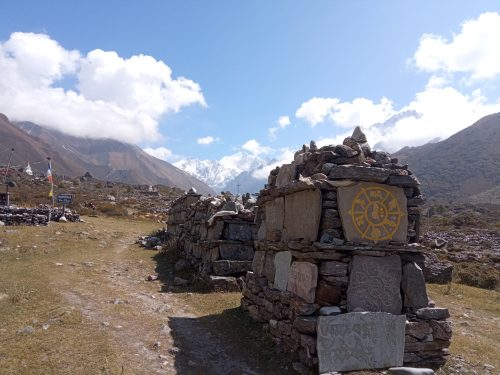
The Langtang Valley Trek is one of the closest major Himalayan trekking routes to Kathmandu.
The trail begins at Syabrubesi and follows the Langtang River through forests and traditional villages before reaching Langtang Village and Kyanjin Gompa.
The route offers views of Langtang Lirung and other Himalayan peaks while passing through areas influenced by Tamang and Tibetan Buddhist culture.
May can provide beautiful spring scenery in Langtang, including flowering rhododendrons and green mountain landscapes.
Temperatures are warmer at lower elevations, while higher sections remain cool.
Rain becomes increasingly possible toward the end of May, so trekkers should carry proper rain protection.
June can bring more frequent rainfall and cloud cover. Lower sections of the trail may become wet and slippery.
However, the trek can still be possible depending on current conditions. Travelers should check local weather and trail information before departure.
Day 1: Drive from Kathmandu to Syabrubesi
Day 2: Trek from Syabrubesi to Lama Hotel
Day 3: Trek from Lama Hotel to Langtang Village
Day 4: Trek from Langtang Village to Kyanjin Gompa
Day 5: Explore Kyanjin Gompa and take an optional high-altitude hike
Day 6: Trek from Kyanjin Gompa to Lama Hotel
Day 7: Trek from Lama Hotel to Syabrubesi
Day 8: Drive from Syabrubesi to Kathmandu
The itinerary can be extended or adjusted for acclimatization and weather conditions.
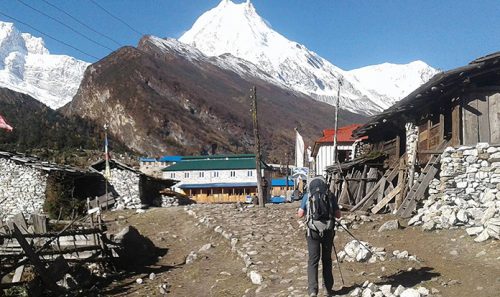
The Manaslu Circuit Trek is a challenging Himalayan route that travels through remote mountain villages, Buddhist cultural landscapes, forests, and high-altitude terrain.
The route eventually crosses Larkya La Pass, which reaches around 5,100 meters depending on the exact point measured.
The trek requires more preparation than shorter routes and is generally undertaken with a licensed guide and the required permits.
May can still offer spring scenery, green valleys, and flowering rhododendrons. However, the route becomes increasingly affected by changing weather as the month progresses.
The high-altitude sections require careful planning, particularly around Larkya La.
June is less predictable because monsoon conditions begin affecting Nepal. Rain can make lower trails muddy and can affect road transportation to and from the trekking region.
Trekkers considering Manaslu in June should obtain current information about road, trail, accommodation, and pass conditions before starting.
Day 1: Arrival in Kathmandu
Day 2: Trek preparation and sightseeing
Day 3: Drive from Kathmandu to Soti Khola
Day 4: Trek from Soti Khola to Machha Khola
Day 5: Trek from Machha Khola to Jagat
Day 6: Trek from Jagat to Deng
Day 7: Trek from Deng to Namrung
Day 8: Trek from Namrung to Samagaon
Day 9: Acclimatization and exploration in Samagaon
Day 10: Trek from Samagaon to Samdo
Day 11: Acclimatization and exploration in Samdo
Day 12: Trek to Dharamsala or Larkya Phedi
Day 13: Cross Larkya La Pass and trek to Bimthang
Day 14: Trek from Bimthang to Tilije
Day 15: Trek toward Tal
Day 16: Continue toward the roadhead
Day 17: Drive toward Kathmandu
Day 18: Departure from Kathmandu
The exact itinerary should be adapted according to road conditions, acclimatization, weather, and the group’s walking pace.
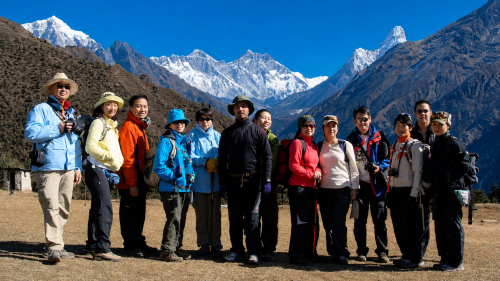
The Everest View Trek is a shorter alternative for travelers who want to experience the Khumbu region without trekking all the way to Everest Base Camp.
The route normally begins with a flight toward Lukla and continues through Phakding and Namche Bazaar. Depending on the itinerary, trekkers can visit Khumjung and Tengboche before returning toward Lukla.
The trek offers views of Mount Everest, Ama Dablam, Thamserku, and other Himalayan peaks, along with opportunities to experience Sherpa culture and Buddhist monasteries.
May can offer good mountain views and spring scenery, although cloud cover becomes more likely as the monsoon approaches.
The route can be busy during the main spring trekking and climbing season, particularly around Namche Bazaar.
June brings a greater possibility of rain, cloud, and flight delays. If you plan to trek in June, allow extra time for possible transportation changes.
Day 1: Arrival in Kathmandu
Day 2: Fly to Lukla and trek to Phakding
Day 3: Trek from Phakding to Namche Bazaar
Day 4: Acclimatization and Everest View Hotel hike
Day 5: Trek from Namche Bazaar to Khumjung or Tengboche
Day 6: Trek back toward Namche Bazaar
Day 7: Trek from Namche Bazaar to Lukla
Day 8: Fly from Lukla to Kathmandu
Day 9: Departure from Kathmandu
The itinerary can be adjusted according to flight schedules, weather, and walking preferences.
Yes, trekking in Nepal is possible during the monsoon, but route selection becomes much more important.
Many popular trekking areas receive substantial rainfall during the monsoon months. Trails can become muddy and slippery, mountain views can be limited by clouds, and road travel can be affected by landslides.
However, Nepal also has several rain-shadow regions where trekking conditions can be comparatively drier.
Upper Mustang and Dolpo are particularly notable options for travelers looking for a Himalayan trekking experience during the summer monsoon period.
Always check current local conditions before traveling because weather and transportation conditions can change quickly.
Trekking in Nepal in May and June can still be rewarding, but the two months should not be treated exactly the same.
May is generally more favorable for many high-altitude trekking routes, although rain and cloud become more common toward the end of the month. June brings stronger monsoon influence, making weather, trail conditions, mountain visibility, and transportation more unpredictable.
If you are planning a trek during this period, choose your region carefully, check current weather conditions, pack proper rain protection, and keep some flexibility in your itinerary.
For the most reliable planning, speak with a knowledgeable local trekking guide before departure and confirm the latest trail, accommodation, transportation, and weather conditions for your chosen route.
There is a moment on every Everest trek when your legs have an opinion. For most people, it arrives
Continue Reading
If you are asking how difficult the Everest Three Passes Trek is, the honest answer is this: it is t
Continue Reading
My name is Peng Chang, and I travelled to Nepal from Malaysia with a small group of friends. Before
Continue ReadingIn this story Why I Chose Everest Base Camp My name is Chyling, and I come from Malaysia, a country
Continue Reading
Ask anyone who has finished the Annapurna Circuit which day they remember most, and the answer is al
Continue Reading
Introduction Kathmandu doesn’t ease you in. You step out of the airport into a chorus of horns
Continue Reading