

26 Mar 2019 11 min to read
The Mardi Himal Trek is one of the most popular short, accessible, and budget-friendly trekking routes in Nepal, recently discovered by avid hikers seeking an off-the-beaten-path experience. Known for its stunning mountain views and relatively easy trails, this trek is suitable for all types of travelers. It offers a perfect combination of cultural experiences, rich biodiversity, and breathtaking landscapes.
This short Mardi Himal trek is ideal for adventure enthusiasts who have limited time, as it can be completed in just a few days. Despite its shorter duration, trekkers can enjoy a variety of experiences—from forested trails and charming mountain villages to spectacular panoramic views of the Himalayan peaks.
Trekking to Mardi Himal Base Camp is an excellent alternative for those who prefer peaceful trails, close interactions with friendly mountain communities, and an immersive experience in nature. The journey begins with a short drive from Pokhara to Phedi or Kande, followed by a gentle uphill walk through scenic forests and terraced fields. Along the route, trekkers pass through Australian Camp, Pothana, Deurali, Forest Camp, High Camp, and finally reach the Mardi Himal Viewpoint. The return journey takes a culturally rich route through Siding Village, providing opportunities to explore local traditions and lifestyles.
During the trek, adventurers may also encounter rare wildlife, including black bears, langur monkeys, deer, and various birds, making the journey even more memorable.
Experience the magic of the Annapurna region on the Mardi Himal Trek, a serene and spectacular journey through forests, alpine meadows, and panoramic Himalayan vistas. This trek combines adventure, culture, and breathtaking scenery, perfect for nature lovers and mountain enthusiasts.

On arrival at Kathmandu Airport, a member of Safe Holiday Adventure will warmly welcome you and provide a private transfer to your hotel in the heart of Kathmandu city (approximately 25 minutes). After check-in, our team will brief you with useful tips and guidelines for your trek, ensuring you are fully prepared. Enjoy your overnight stay in a comfortable Kathmandu hotel.
Altitude: 1,350 m / 4,429 ft

We begin our journey early after breakfast. A private microbus will take us to Pokhara, a scenic 6–7 hour drive, where we continue for 30 minutes to Phedi, the starting point of our trek. From Phedi, enjoy a gentle 1.5-hour trek to Dhampus, a charming village offering stunning views of the surrounding mountains. The trail passes through traditional homes, terraced farms, and small forested areas. Overnight stay in a cozy tea house in Dhampus.
Altitude: 1,650 m / 5,413 ft

After breakfast, we trek through villages and lush forests toward Pothana, where trekking permits are checked. The path gradually ascends to Pitam Deurali, a perfect spot to enjoy a packed lunch and panoramic views of the Pokhara Valley and Annapurna range. Continuing through serene forests, we reach Forest Camp, a small, picturesque settlement with comfortable tea house accommodation.
Altitude: 2,554 m / 8,379 ft
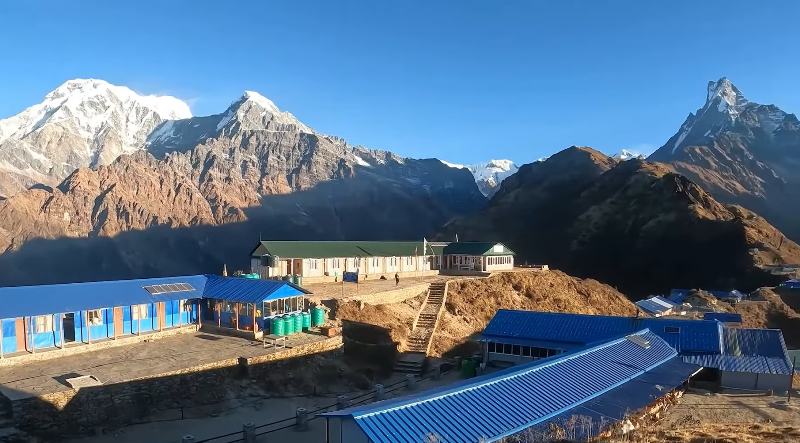
Today, the trail ascends through dense forests and tranquil landscapes. Along the way, we may spot wildlife such as snow leopards, mountain goats, barking deer, and black bears. Trekking past Badal Danda, we enter the alpine zone with wide, grassy trails and open views of the magnificent Himalayas. We reach High Camp, a small settlement that offers unparalleled panoramic views of Annapurna South, Hiunchuli, and Machhapuchhre (Fishtail) mountains.
Altitude: 3,980 m / 13,057 ft
Trekking Duration: ~7 hours
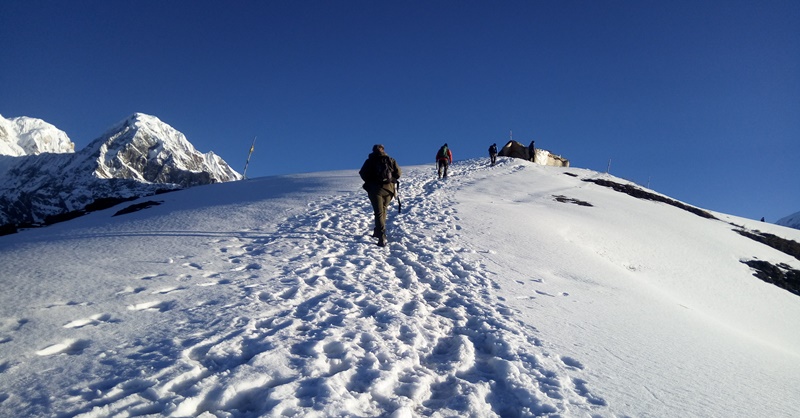
This is the highlight of the trek. From High Camp, we ascend the ridge to Mardi Himal Base Camp, with awe-inspiring close-up views of Machhapuchhre, Annapurna South, and surrounding peaks. The trail can be steep and rocky, adding a thrilling challenge to the trek. After soaking in the views, we return to High Camp for an overnight stay.
Base Camp Altitude: 4,350 m / 14,271 ft
High Camp Altitude: 3,580 m / 11,745 ft
Trekking Duration: ~7 hours
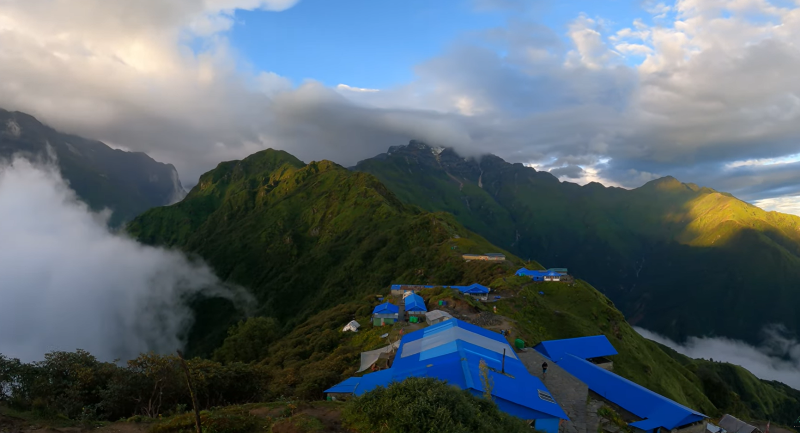
Wake up early to witness a breathtaking sunrise over the Himalayas. After breakfast, descend along the same trail to Forest Camp and continue to the charming Sidding Village, a vibrant cultural settlement. Enjoy the evening with cultural performances by local villagers, immersing yourself in traditional Nepali life. Overnight stay in a tea house.
After breakfast, we take shared transport or a jeep back to Pokhara. Spend the day relaxing by the scenic Phewa Lake, exploring the lakeside, or enjoying a farewell dinner with your trekking team. Overnight stay in a Pokhara hotel.
Altitude: 950 m / 3,116 ft
After a hearty breakfast, we drive back to Kathmandu in a comfortable tourist bus. Arrival in Kathmandu marks the conclusion of your Mardi Himal Trekking adventure, leaving you with unforgettable memories of Nepal’s natural beauty and cultural richness.
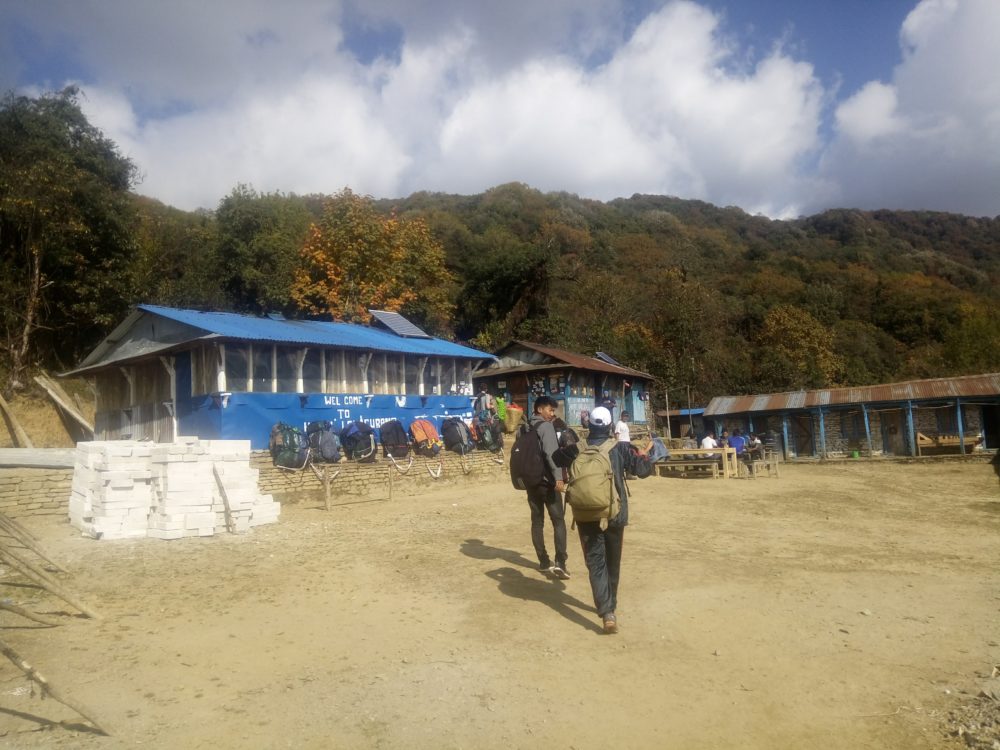
Mardi Himal Trek is one of the most beautiful trekking routes in Nepal, offering amazing views of the Annapurna range and a peaceful trail through forests and local villages. Choosing the right season is very important to make your trek safe and enjoyable.
The best time for the Mardi Himal Trek is during autumn (September to November) and spring (March to May). In autumn, the weather is clear, the skies are blue, and the mountains look stunning. Spring brings colorful rhododendron flowers along the trail and fresh greenery everywhere. Both seasons are perfect for photography, nature lovers, and adventure seekers.
Winter (December to February) can be very cold at higher altitudes, while the monsoon (June to August) brings heavy rain and slippery trails, which makes trekking risky.
If you want to enjoy clear mountain views, safe trekking trails, and pleasant weather, autumn and spring are the ideal seasons for your Mardi Himal adventure.
Start your Mardi Himal Trek with Safe Holiday Adventure and explore the hidden beauty of the Annapurna region with the best weather conditions!
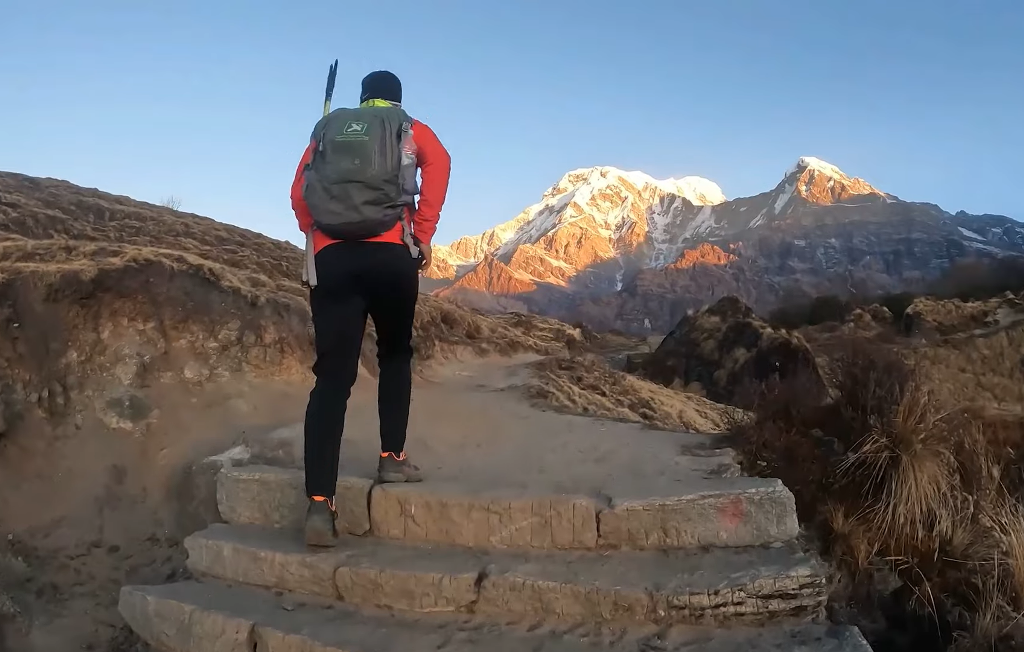
The Mardi Himal Trek in Nepal is a moderately challenging trek that takes adventurers through lush forests, traditional villages, and panoramic Himalayan landscapes. The trek offers an off-the-beaten-path experience, making it less crowded compared to popular routes like the Annapurna Base Camp.
The highest point of the trek is Mardi Himal Base Camp, which sits at an altitude of 4,500 meters (14,764 feet). From here, trekkers can enjoy breathtaking close-up views of Machapuchare (Fishtail), Annapurna South, and Hiunchuli. The base camp provides a serene and dramatic Himalayan panorama, ideal for photography and mountain appreciation.
Reaching this altitude requires proper acclimatization, steady pace, and preparation. Trekkers often spend several days ascending gradually to avoid altitude sickness. The journey combines scenic trails, rhododendron forests, and traditional villages, making Mardi Himal a rewarding adventure for nature and mountain lovers alike.

Going on the Mardi Himal Trek is fun and exciting, but guides and porters make the trek much easier and safer. Guides know the trail very well. They help trekkers find the right way, explain local culture, point out mountains and animals, and keep everyone safe. They also help prevent problems with altitude sickness and sudden weather changes.
Porters carry heavy backpacks, tents, and food. This lets trekkers walk comfortably without getting too tired. They also help with setting up rooms and carrying supplies along the trail.
Having guides and porters makes the trek easier, safer, and more enjoyable. Trekkers can focus on the beautiful mountains, forests, and villages without worrying about hard work or getting lost.
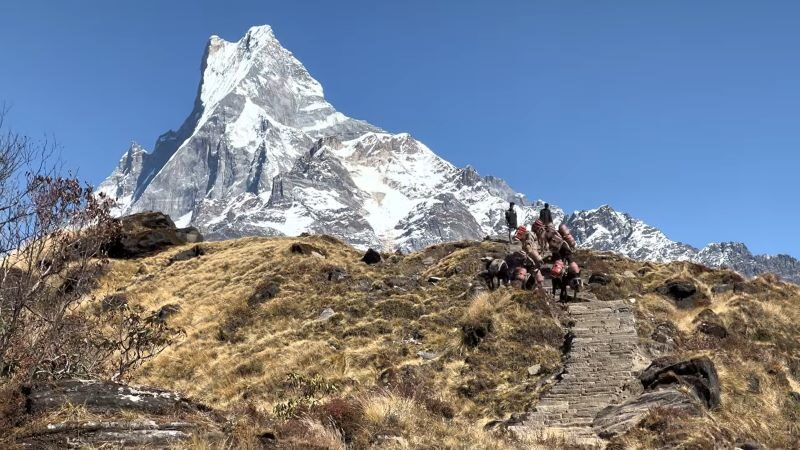
The Mardi Himal Trek is one of the most beautiful trekking routes in the Annapurna region, and a guided package typically costs around $490 USD per person. This package generally includes an experienced English-speaking guide who ensures your trek is safe, well-organized, and enjoyable. If you choose to hire a porter, the cost may increase slightly, usually around $80–$100 per person if shared between two trekkers.
The package also covers necessary trekking permits, including the TIMS card and Annapurna Conservation Area Permit, which together cost approximately $45–$55. Along the trail, accommodation is provided in teahouses or lodges, which are simple but comfortable, with prices included in the package. Meals such as breakfast, lunch, and dinner are provided at these lodges throughout the trek, costing roughly $120–$160 as part of the package.
Transportation to and from the trailhead, usually by private jeep or tourist bus, is included as well, adding another $30–$60 to the overall value. The remaining portion of the cost covers agency services, booking support, and local taxes.
However, the package does not include international flights, personal gear like sleeping bags or jackets, travel insurance, tips for guides and porters, or drinks and snacks during the trek. Overall, the $490 USD package offers a convenient and cost-effective way to enjoy the Mardi Himal Trek with professional guidance, meals, accommodation, and all essential permits.

Mobile network coverage on the Mardi Himal Trek is generally good in most villages and along the main trail. Popular networks like Ncell and Nepal Telecom usually work well, allowing you to stay connected during your trek.
Most tea houses and lodges along the route also provide Wi-Fi for a small fee. While speeds may be slow in remote areas, it’s sufficient for messaging and light browsing.
In higher altitudes or isolated sections, mobile signals may be weak or unavailable. It’s recommended to inform family or friends about limited connectivity in advance and rely on offline maps or apps when needed.
There is a moment on every Everest trek when your legs have an opinion. For most people, it arrives
Continue Reading
If you are asking how difficult the Everest Three Passes Trek is, the honest answer is this: it is t
Continue Reading
My name is Peng Chang, and I travelled to Nepal from Malaysia with a small group of friends. Before
Continue Reading
In this story Why I Chose Everest Base Camp My name is Chyling, and I come from Malaysia, a country
Continue Reading
Ask anyone who has finished the Annapurna Circuit which day they remember most, and the answer is al
Continue Reading
Introduction Kathmandu doesn’t ease you in. You step out of the airport into a chorus of horns
Continue Reading