

4 Jan 2019 9 min to read
Tucked between the well-known Annapurna Base Camp and Ghorepani Poon Hill routes, the Mardi Himal Trek remains one of the Annapurna region’s best-kept secrets. This short, off-the-beaten-path trek leads through quiet rhododendron forests and ridgeline trails to a jaw-dropping viewpoint of Machhapuchhre (Fishtail) and the Annapurna massif — all without the crowds found on more popular routes.
Compared to longer treks in the region, Mardi Himal takes just 5 to 7 days, making it an ideal choice for travelers with limited time who still want a genuine high-altitude Himalayan experience. The trail climbs steadily from Kande or Pokhara through forested lower villages up to High Camp, sitting at over 3,700 meters, before reaching the Mardi Himal View Point.
Despite its shorter length, the trek rewards hikers with some of the closest views of Machhapuchhre available on any trekking route in Nepal — a peak that remains legally unclimbed and considered sacred. Teahouse accommodation is available along most of the route, though options thin out near High Camp, adding a touch of real wilderness to the final stretch.
Whether you’re a first-time trekker in Nepal or an experienced hiker looking for a quieter alternative to the Annapurna Circuit, this guide covers everything you need — the best season, permits, cost, itinerary, and difficulty level — to plan your Mardi Himal Trek with confidence.
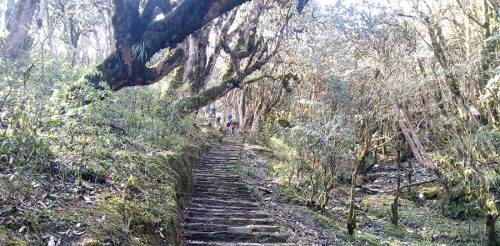
Mardi Himal sits in the Annapurna Conservation Area, just south of the main Annapurna Sanctuary. While thousands of trekkers pass through Ghorepani or head deep into the Annapurna Base Camp trail each season, the Mardi Himal ridge sees a fraction of that traffic. The trail was only opened to trekkers in the last couple of decades, which is part of why it still feels undiscovered. Geographically, it offers something rare: a ridge walk that puts you directly in front of Machhapuchhre’s fishtail summit, rather than viewing it from a distance as most other Annapurna routes do.
Day 1 — Pokhara to Kande, then onward to Deurali (2,100 m)
A short drive out of Pokhara drops you at Kande, where the ascent begins immediately through shaded forest toward Deurali. Expect roughly 4–5 hours of walking on your first day, with a steady but manageable gradient.
Day 2 — Deurali to Low Camp (2,550 m)
The trail winds deeper into rhododendron and oak woodland, climbing at a gentle, steady pace along the ridgeline. This is one of the most peaceful stretches of the trek, with birdsong and filtered light through the canopy replacing any crowd noise.
Day 3 — Low Camp to High Camp (3,580 m)
Beyond Badal Danda, the forest thins out and gives way to open slopes, with Machhapuchhre’s summit dominating the view ahead. The air noticeably thins here, and afternoon clouds often roll in, so an early departure helps you catch the clearest views.
Day 4 — High Camp to the Upper Viewpoint (4,200–4,500 m), Return to Low Camp
A pre-dawn departure gets you to the ridge in time for sunrise over the Annapurna massif — widely considered the highlight of the entire trek. After soaking in the panorama, the descent back to Low Camp takes 4–5 hours.
Day 5 — Low Camp to Siding, Drive Back to Pokhara
The trek wraps up with a descent through terraced farmland and village trails before a short vehicle transfer to Pokhara, where a hot shower and real bed await.
Trekkers with extra days can build in acclimatization stops or add a night at High Camp; stronger hikers sometimes compress the itinerary into 4 days.
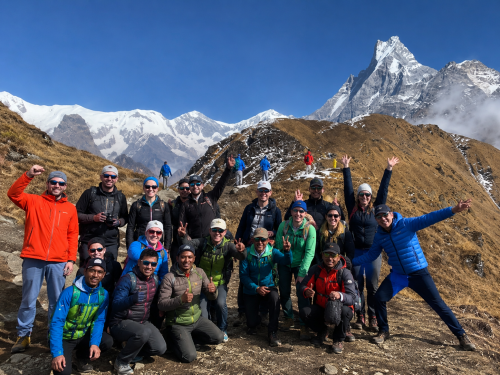
Rated easy to moderate, this route suits both trekking newcomers and experienced hikers looking for something less demanding than Annapurna Base Camp or the Three Passes. Expect 5–6 hours of walking most days, with the steepest push coming just before High Camp. Because the trail doesn’t linger at extreme altitude for multiple days, the risk of altitude sickness is comparatively low — though the usual precautions (steady pace, proper hydration, and rest above 3,500 m) still apply. A reasonable level of everyday fitness — the ability to walk several hours on uneven terrain — is enough preparation for most people.
Timing your Mardi Himal Trek correctly makes the difference between clear mountain views and a wasted climb. Nepal’s four seasons each bring a different trekking experience, so here’s what to expect:
March to May (Spring): Spring paints the lower trail in blooming rhododendron forests, turning entire hillsides pink and red. Skies stay mostly clear, making this one of the best windows for mountain photography.
September to November (Autumn): Autumn is the peak season for the Mardi Himal Trek, and for good reason. Weather stays stable, humidity drops, and visibility hits its sharpest point of the year — ideal for uninterrupted views of Machhapuchhre and the Annapurna range.
December to February (Winter): Winter tests trekkers with cold temperatures, especially at High Camp, where nights can drop well below freezing. In exchange, you get near-empty trails and crisp, dust-free mountain views without the autumn crowds.
June to August (Monsoon): Monsoon is best avoided on this route. Frequent rain, leech-infested lower trails, and persistent cloud cover block most of the mountain views that make the trek worthwhile.
For first-time trekkers, autumn (September–November) remains the safest and most rewarding choice, while spring offers a strong alternative for those who want fewer crowds and blooming scenery.
Both permits are obtainable in Kathmandu or Pokhara, whether you’re booking through an agency or arranging the trek independently. Unlike some restricted areas in Nepal, Mardi Himal doesn’t require a special or costly restricted-area permit, which keeps the overall trip more budget-friendly.
A guided teahouse package for the Mardi Himal Trek typically runs between US$450 and US$700 per person, depending on group size, trek duration (5–7 days), and whether a porter is included. Solo travelers on a customized itinerary usually pay toward the higher end, while groups of 3 or more can bring the per-person cost down closer to $400.
The main fixed costs are permits: the Annapurna Conservation Area Permit (ACAP) costs NPR 3,000 (~US$23) for foreign trekkers, and the TIMS card costs NPR 2,000 (~US$15) for independent trekkers or NPR 1,000 (~US$8) if trekking through a registered agency. Both are one-time fees valid for the whole trek.
On the trail, teahouse lodging averages US$5–10 per night for a basic room, while meals (breakfast, lunch, dinner) typically add US$15–25 per day, since menu prices rise with altitude due to portering costs. A licensed guide costs roughly US$25–30 per day, and a porter US$20–25 per day, with each porter usually carrying gear for two trekkers.
Budget trekkers who arrange permits independently, share a porter, and stick to dal bhat at meals can complete the trek for as little as US$350–400, while those wanting private rooms, hot showers, and full board comfort should budget closer to US$600–700.
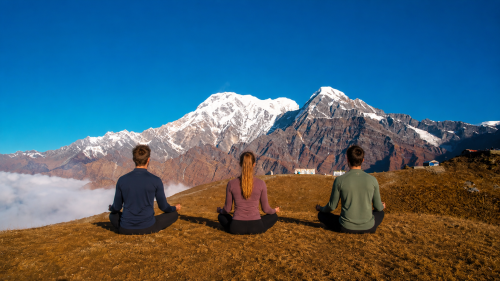
Mardi Himal Trek is a moderate trek suitable for people with average fitness. No technical climbing skills are required.
The Mardi Himal Trek usually takes 4–6 days, depending on the route and itinerary.
The highest point is Mardi Himal Base Camp at about 4,500 meters (14,764 feet).
The best seasons are March to May and September to November, when the weather is generally clear and suitable for trekking.
The cost depends on the itinerary, guide, transportation, permits, and accommodation. Budget options are available from Pokhara.
The trek commonly starts from Kande, which is about an hour’s drive from Pokhara.
The trek usually ends at Siding or Lumre, followed by a drive back to Pokhara.
A licensed guide is recommended for navigation, permits, accommodation, and safety, especially for first-time trekkers.
Yes. You need the required Annapurna Conservation Area permit and trekking registration documents.
Yes. Beginners can do the Mardi Himal Trek with reasonable fitness and proper preparation.
Yes, it is generally safe with proper preparation, suitable clothing, a good itinerary, and attention to altitude and weather.
Weather changes with altitude and season. Spring and autumn usually offer the clearest mountain views.
Wi-Fi is available at some teahouses, but the connection can be slow or unreliable at higher elevations.
You stay in local teahouses and lodges with basic rooms and shared facilities in most places.
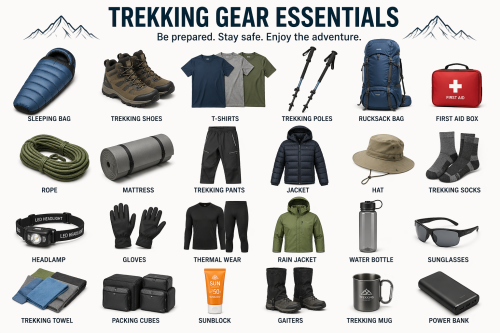
Pack trekking shoes, warm clothes, a waterproof jacket, sleeping bag, sunglasses, sunscreen, water bottle, and personal medicines.
If your Nepal itinerary has room for just one short trek, this route earns its place. It delivers the drama of the high Himalaya- ridgelines, forest, and close mountain faces – in a fraction of the time longer treks demand, making it one of the Annapurna region’s best-kept secrets.
There is a moment on every Everest trek when your legs have an opinion. For most people, it arrives
Continue Reading
If you are asking how difficult the Everest Three Passes Trek is, the honest answer is this: it is t
Continue Reading
My name is Peng Chang, and I travelled to Nepal from Malaysia with a small group of friends. Before
Continue Reading
In this story Why I Chose Everest Base Camp My name is Chyling, and I come from Malaysia, a country
Continue Reading
Ask anyone who has finished the Annapurna Circuit which day they remember most, and the answer is al
Continue Reading
Introduction Kathmandu doesn’t ease you in. You step out of the airport into a chorus of horns
Continue Reading