
1 Aug 2019 12 min to read
Nepal is the ultimate destination for trekking, adventure and culture. The best treks in Nepal lead you past eight-thousanders, through Sherpa and Gurung villages, and beside ancient monasteries. They also end in teahouses where a hot meal and a mountain view are always waiting.
The country is small, but it holds eight of the world’s fourteen highest peaks, including Mount Everest (8,848 m). It is also the birthplace of Lord Buddha, so spiritual travelers and adventurers both find something here. You can choose a gentle 5-day hike or a demanding 17-day crossing of a high pass. You can do either on a limited budget.
This guide compares five popular routes: the Annapurna Circuit, Everest Base Camp, Ghorepani Poon Hill, the Short Everest Trek and Annapurna Base Camp. Each section covers quick facts, highlights, a day-by-day itinerary, and food and lodging costs. That way you can pick the trek that matches your time, fitness and budget.
Table of Contents
| Trek | Duration on trail | Highest point | Difficulty | Best for |
|---|---|---|---|---|
| Annapurna Circuit | 12 to 15 days | 5,416 m | Moderate to hard | Variety and culture |
| Everest Base Camp | 12 to 14 days | 5,364 m (Kala Patthar about 5,545 m) | Moderate to hard | Bucket-list views |
| Ghorepani Poon Hill | 4 to 5 days | 3,210 m | Easy to moderate | First-time trekkers |
| Short Everest | 6 to 8 days | 3,890 m | Easy to moderate | Limited time |
| Annapurna Base Camp | 7 to 9 days | 4,130 m | Moderate | Close-up mountain scenery |
Quick facts
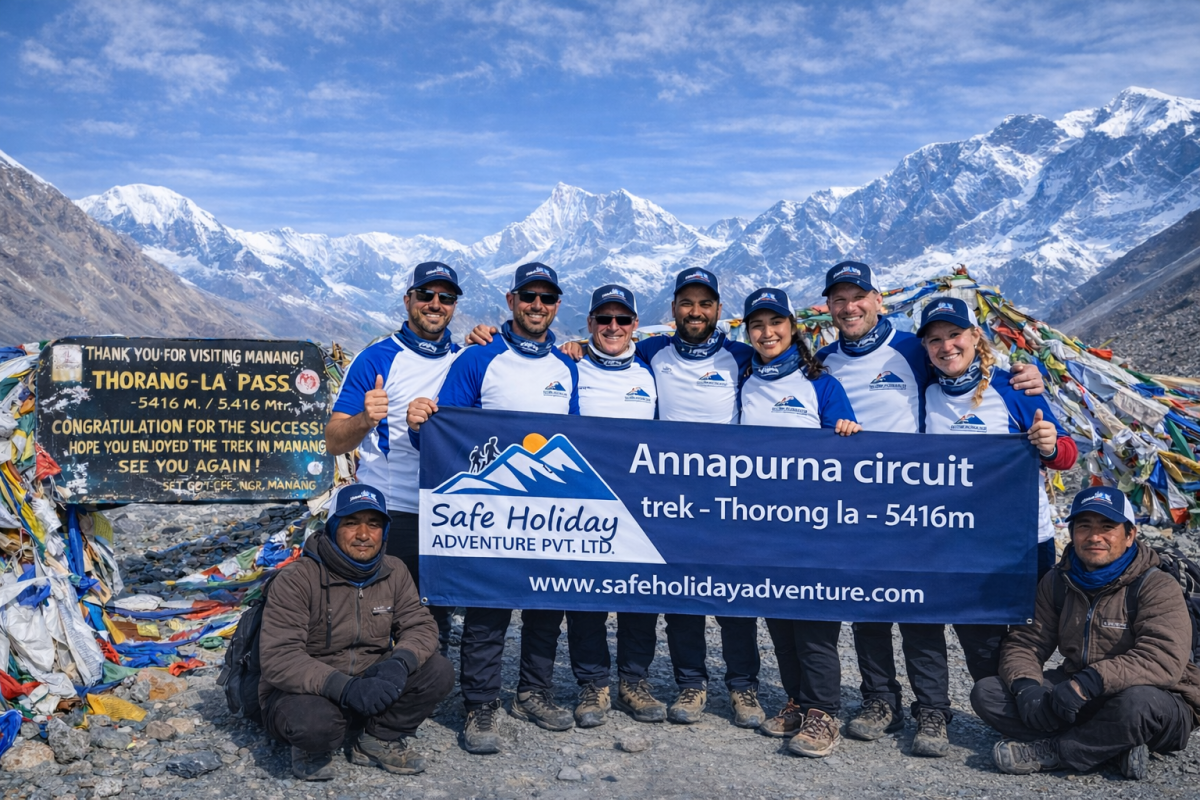
The Annapurna Circuit is often listed among the world’s best long-distance treks. After a 7 to 8 hour drive from Kathmandu to Besisahar, the trail climbs from subtropical farmland into alpine forest. It then reaches Thorong La, one of the highest trekking passes on Earth.
The scenery changes almost daily. You see Annapurna, Dhaulagiri, Manaslu and Nilgiri, then descend into the dry, windswept Kali Gandaki valley. Villages shift from Hindu to Tibetan Buddhist, so you pass temples, gompas and prayer-flag ridges along the way.
Day 1: Arrive in Kathmandu
Day 2: City tour and trek preparation
Day 3: Drive to Syange or Jagat (1,340 m)
Day 4: Trek to Dharapani (1,960 m), 6 to 7 hours
Day 5: Trek to Chame (2,630 m), 5 hours
Day 6: Trek to Pisang (3,210 m), 5 hours
Day 7: Trek to Manang (3,540 m), 6 to 7 hours
Day 8: Acclimatization day in Manang
Day 9: Trek to Ledar (4,250 m), 3 to 5 hours
Day 10: Trek to Thorong Phedi (4,400 m), 2 hours
Day 11: Cross Thorong La to Muktinath (3,800 m), 6 to 8 hours
Day 12: Jeep to Tatopani (1,190 m)
Day 13: Trek to Ghorepani (about 2,750 m), 7 to 8 hours
Day 14: Trek to Hille or Tikhedhunga, 5 hours
Day 15: Trek to Nayapul, drive to Pokhara
Day 16: Return to Kathmandu by flight or bus
Day 17: Departure
Tea houses offer simple private rooms, usually with two beds and a mattress. Power is limited, so you can usually charge devices only in the dining hall, often for a fee. Menus range from Nepali dal bhat to Tibetan, Chinese, Italian and Indian dishes. Budget roughly USD 4 to 10 per meal and USD 3 to 10 per room.
Quick facts
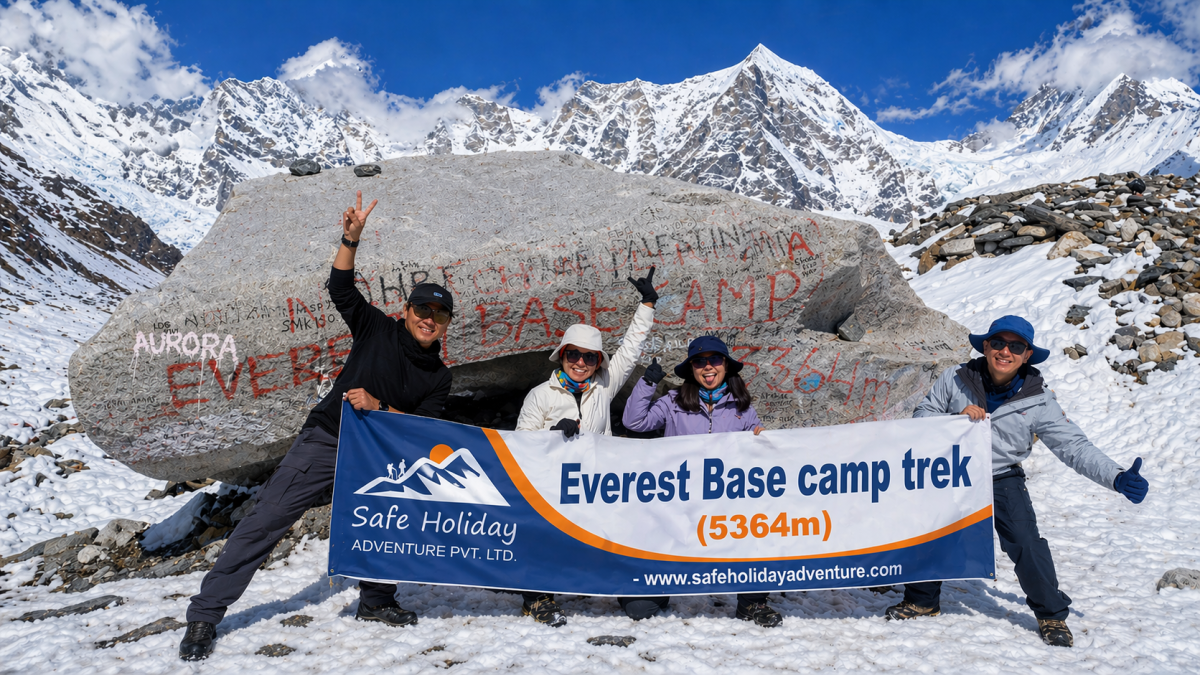
Everest Base Camp (EBC) is Nepal’s most famous trek. There is no road to Lukla, so most trekkers fly in from Kathmandu. During peak seasons, flights often operate from Ramechhap, so confirm this when booking.
The trail follows the Dudh Koshi River up to Namche Bazaar (about 3,440 m), the hub of the Khumbu region. Most trekkers spend two nights there to acclimatize. The route then climbs through Tengboche and Dingboche to Gorak Shep and Base Camp. Around 35,000 trekkers walk this route each year, and it rarely feels empty in peak season.
Day 2: Fly to Lukla, trek to Phakding
Day 3: Trek to Namche Bazaar
Day 4: Acclimatization day at Namche
Day 5: Trek to Tengboche
Day 6: Trek to Dingboche
Day 7: Acclimatization day at Dingboche
Day 8: Trek to Lobuche
Day 9: Trek to Gorak Shep, visit Everest Base Camp
Day 10: Climb Kala Patthar, descend to Pheriche
Day 11: Trek to Namche Bazaar
Day 12: Trek to Phakding
Day 13: Trek to Lukla
Day 14: Fly to Kathmandu
Lodges serve Nepali, Tibetan and continental meals. Prices rise with altitude because everything is carried up by porters or animals. Rooms are basic and unheated, so bring a warm sleeping bag.
Quick facts
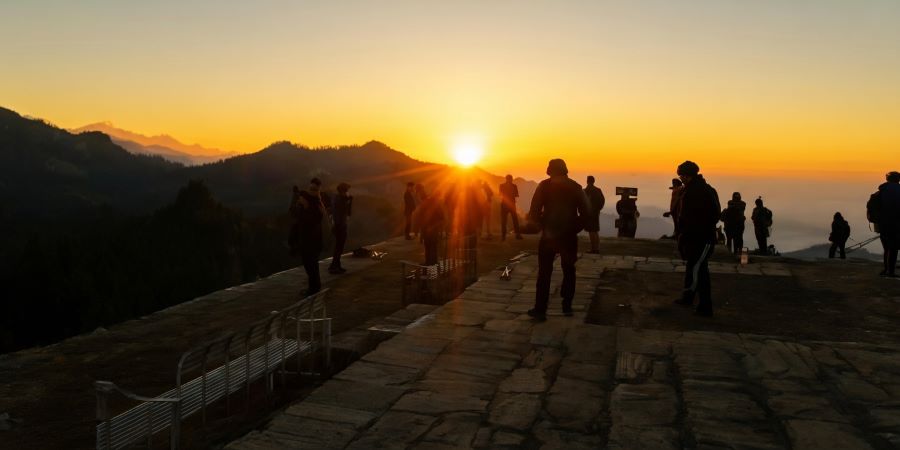
Ghorepani Poon Hill is the best starting point if you are short on time or budget. Road access up to Ulleri means some trekkers finish in three days. If you can walk 4 to 7 hours a day, most of this route is manageable, even for beginners.
The highlight is sunrise from Poon Hill. You see Dhaulagiri (8,167 m, the world’s seventh highest mountain), Annapurna South and Nilgiri in one 360-degree panorama. On the way you walk through rhododendron forest and stay in Gurung and Magar villages.
Day 1: Arrive in Kathmandu
Day 2: Drive to Pokhara
Day 3: Drive to Nayapul, trek to Ulleri
Day 4: Trek to Ghorepani
Day 5: Hike to Poon Hill, trek to Tadapani
Day 6: Trek to Ghandruk and Syauli Bazaar
Day 7: Trek to Nayapul, drive to Pokhara
Day 8: Drive to Kathmandu
Day 9: Departure
Food is cheaper here than on most routes, at about USD 3 to 10 per meal. Rooms cost roughly USD 2 to 10. Tadapani has only a handful of small lodges, so book ahead in high season.
Quick facts
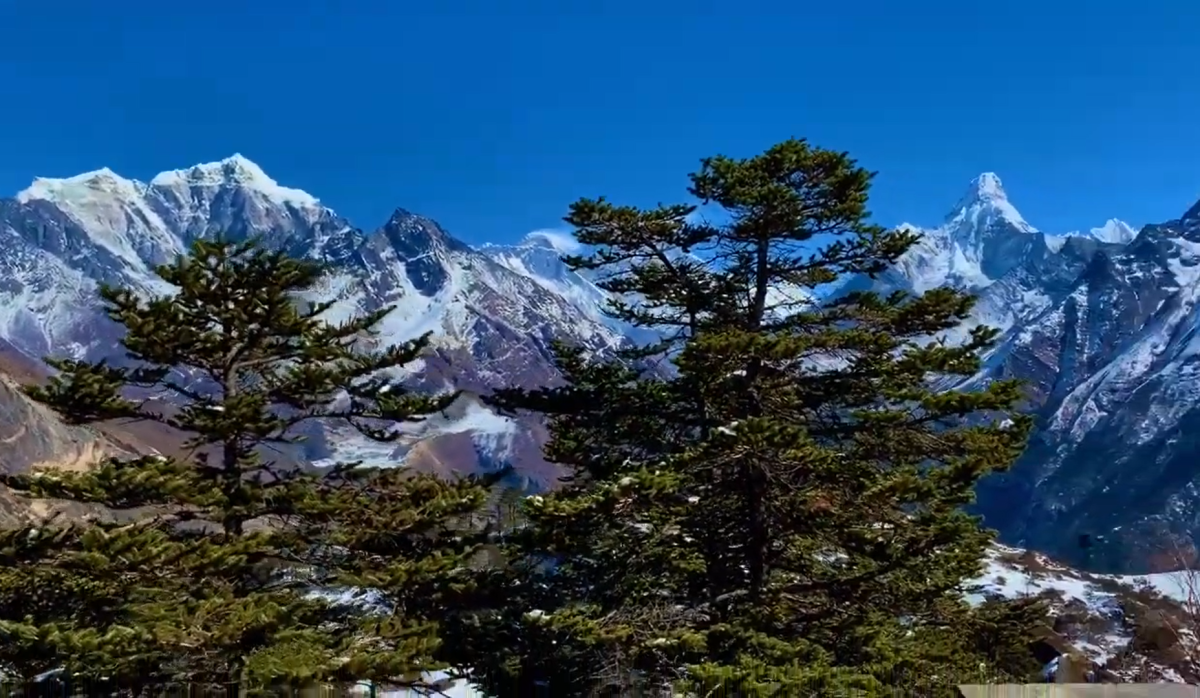
The Short Everest Trek, also called the Everest Panorama Trek, is for travelers who want to see the world’s highest peak without a long expedition. You fly to Lukla and follow the Dudh Koshi valley through Sherpa villages to Namche Bazaar.
From Namche, a short hike leads to the Everest View Hotel, with views of Everest, Lhotse, Nuptse, Ama Dablam and Thamserku. The trek then continues to Tengboche, where Ama Dablam towers over the monastery. You return along the same trail to Lukla.
Day 1: Arrive in Kathmandu
Day 2: Kathmandu sightseeing
Day 3: Fly to Lukla, trek to Phakding
Day 4: Trek to Namche Bazaar
Day 5: Rest day and hike to the Everest View Hotel
Day 6: Trek to Tengboche
Day 7: Return to Namche Bazaar
Day 8: Trek to Lukla
Day 9: Fly to Kathmandu
Day 10: Departure
Food and accommodation
A main meal costs about USD 8. Rooms range from roughly USD 5 to 40, depending on the lodge.
Quick facts
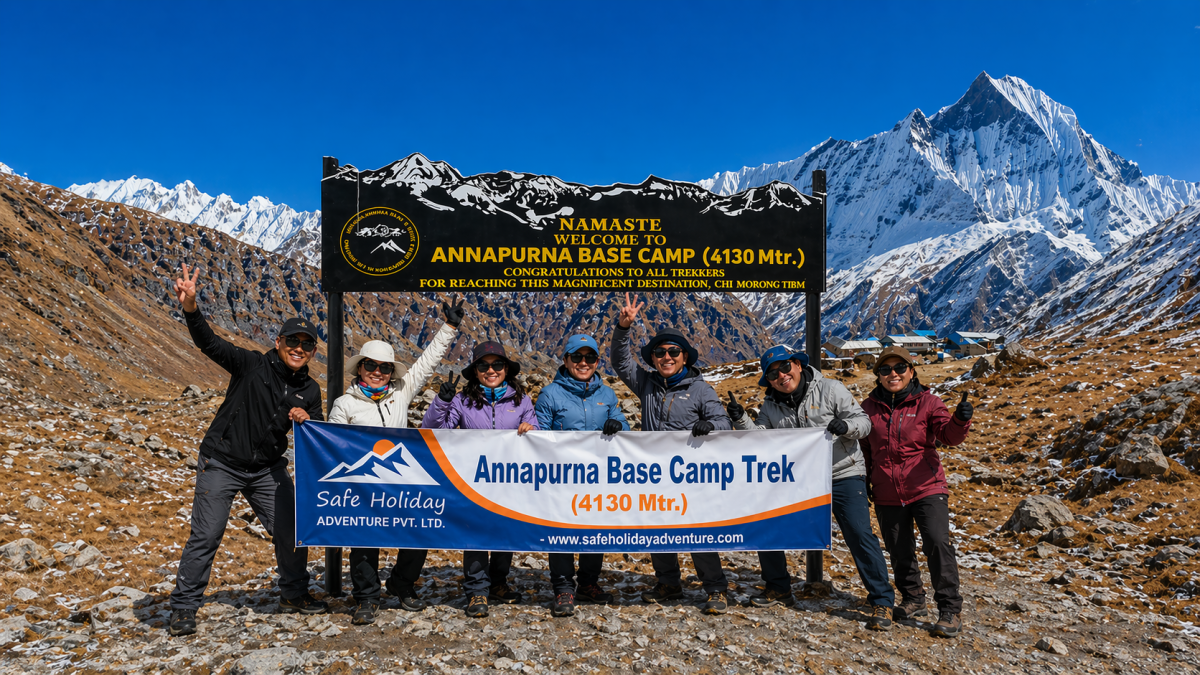
Annapurna Base Camp (ABC), also called the Annapurna Sanctuary, puts you in a ring of high peaks within a short distance. The trail follows the Modi Khola valley past terraced millet and rice fields, Gurung villages, and hot springs.
You can also extend the trek by adding Ghorepani Poon Hill at the start, if you have more time.
Day 1: Arrive in KathmanduDay 2: Kathmandu sightseeing
Day 3: Drive to Pokhara
Day 4: Trek to Chhomrong (2,170 m)
Day 5: Trek to Dovan (2,430 m)
Day 6: Trek to Annapurna Base Camp (4,130 m)
Day 7: Trek down to Jhinu Danda (1,760 m)
Day 8: Trek to Pothana (1,890 m)
Day 9: Trek to Dhampus Phedi, drive to Pokhara
Day 10: Drive to Kathmandu
Day 11: Departure
Expect similar prices to the Poon Hill route. Meals and rooms get more expensive near Base Camp.
Spring (March to May) and autumn (September to November) are the most popular seasons for trekking in Nepal. Autumn brings clear mountain views, dry trails, and generally stable weather, while spring offers warmer days, fresh landscapes, and colorful rhododendron blooms.
Winter (December to February) is suitable for lower-altitude routes such as Ghorepani Poon Hill, although mornings and nights can be cold. Higher treks require more preparation because of snow and freezing temperatures.
Monsoon (June to August) brings frequent rain, muddy trails, leeches, and cloudy mountain views. However, some rain-shadow destinations can still be suitable. Choosing the right season helps you enjoy better trail conditions, mountain scenery, and a more comfortable trekking experience.
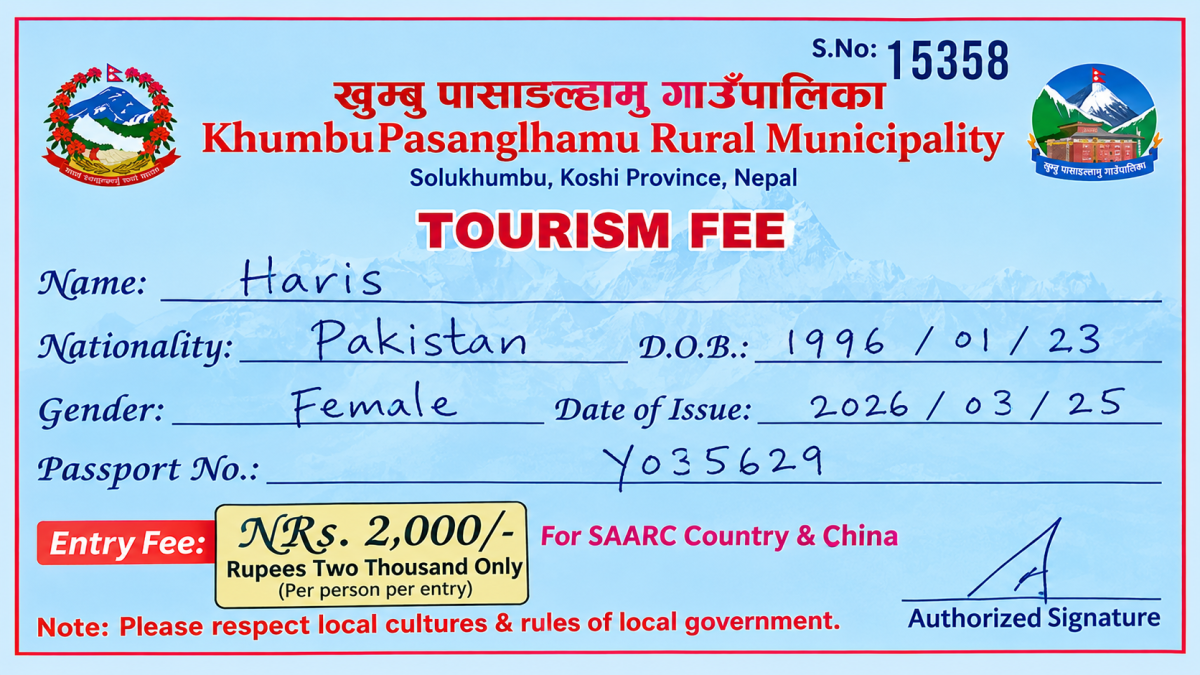
Most routes need a conservation area permit, and some also need a TIMS card or a local municipality permit. Rules and fees change, so check the latest details with the Nepal Tourism Baord or with your trekking agency before you travel.
Budget roughly USD 25 to 50 per day on the trail for food, lodging and water, before guides, porters and permits. Hiring a licensed guide and porter adds safety and supports local families.
Which Nepal trek is best for beginners?
Ghorepani Poon Hill is one of the easier options, while ABC and short Everest treks suit beginners with good preparation.
Which trek reaches the highest altitude?
The Annapurna Circuit reaches 5,416 m at Thorong La Pass, while Everest Base Camp reaches 5,364 m.
How difficult is the Everest Base Camp Trek?
It is challenging due to high altitude, long walking days, and the need for proper acclimatization.
How long does the Everest Base Camp Trek take?
A standard EBC itinerary usually takes around 12–14 days from Kathmandu and back, depending on the route.
Is the Annapurna Circuit suitable for first-time trekkers?
Yes. Beginners can complete it with proper training, gradual acclimatization, and a well-planned itinerary.
How long does the Annapurna Circuit Trek take?
A typical itinerary takes around 10–14 days, depending on transportation, route, and walking pace.
How difficult is the Annapurna Base Camp Trek?
ABC is generally moderate to challenging, with uphill sections, stone steps, and high-altitude walking.
How high is Annapurna Base Camp?
Annapurna Base Camp is approximately 4,130 m (13,550 ft) above sea level.
Is Poon Hill good for a short Nepal holiday?
Yes. Poon Hill is ideal for travelers with limited time and can usually be completed in 3–5 days.
How high is Poon Hill?
Poon Hill stands at approximately 3,210 m (10,531 ft) and is famous for sunrise views.
What is a short Everest trek?
A short Everest trek focuses on places such as Namche Bazaar and nearby viewpoints without continuing all the way to Everest Base Camp.
Which trek offers the best sunrise views?
Poon Hill is particularly famous for sunrise over the Annapurna and Dhaulagiri mountain ranges.
Do these treks require previous trekking experience?
No. Previous experience is not essential, but good fitness, preparation, and appropriate acclimatization are important.
What is the best season for these five treks?
Spring and autumn are generally preferred because of favorable trekking conditions and good mountain visibility.
Do I need a guide for these trekking routes?
Current guide and permit requirements vary by trekking area and regulations. A licensed local guide can also provide navigation, safety, and acclimatization support.
Nepal has a trek for every traveler. Choose Poon Hill for an easy first trek, Short Everest if time is tight, and ABC for close-up mountain scenery. Pick Everest Base Camp for the classic experience, and the Annapurna Circuit for a long, varied adventure.
There is a moment on every Everest trek when your legs have an opinion. For most people, it arrives
Continue Reading
If you are asking how difficult the Everest Three Passes Trek is, the honest answer is this: it is t
Continue Reading
My name is Peng Chang, and I travelled to Nepal from Malaysia with a small group of friends. Before
Continue Reading
In this story Why I Chose Everest Base Camp My name is Chyling, and I come from Malaysia, a country
Continue Reading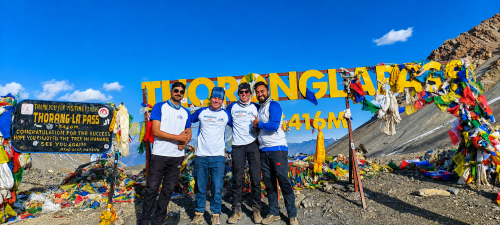
Ask anyone who has finished the Annapurna Circuit which day they remember most, and the answer is al
Continue Reading
Introduction Kathmandu doesn’t ease you in. You step out of the airport into a chorus of horns
Continue Reading