

30 Aug 2026 10 min to read
Manang is one of the most important stops on the Annapurna Circuit Trek. After several days of walking uphill from the lower valleys, trekkers arrive at a much higher elevation where the air becomes noticeably thinner. This is why spending an acclimatization day in Manang is not simply a break from trekking. It gives your body valuable time to adjust to the increasing altitude before you continue toward Tilicho Lake, Yak Kharka, Thorong Phedi, and Thorong-La Pass.
Located at around 3,500 meters above sea level, Manang also offers an excellent opportunity to experience Himalayan village life while preparing for the more demanding sections of the trek. A well-planned rest day can make the following days more comfortable, but acclimatization does not mean staying inside your teahouse all day. Light activity, proper hydration, enough food, and gradual elevation gain are all important parts of adapting to high altitude.
Altitude is one of the biggest challenges of the Annapurna Circuit. As you climb higher, atmospheric pressure decreases, which means there is less oxygen available with every breath. Your body needs time to adapt to this change.
The journey from Besisahar toward Manang involves a gradual increase in elevation, but the difference becomes more noticeable once you reach the Manang area. Continuing immediately toward higher settlements without allowing your body to adjust can increase the likelihood of Acute mountain sickness (AMS) and other altitude-related problems.
For this reason, Manang is commonly used as an acclimatization stop on the Annapurna Circuit. Instead of gaining a large amount of elevation in one day, trekkers spend an additional night in the area and use the day to explore nearby places at a higher altitude before returning to Manang to sleep.
The idea is simple: climb higher during the day, then return to sleep at a lower elevation. This gives your body exposure to higher altitude without requiring you to spend the night significantly higher.

A rest day in Manang does not necessarily mean complete rest. In fact, gentle walking is generally more useful than remaining in bed all day when you are feeling well. A typical acclimatization day starts with breakfast followed by a short hike to a nearby viewpoint or village. Depending on your fitness, weather conditions, and how your body is responding to the altitude, your guide may recommend a suitable walking route.
One popular option is hiking toward Gangapurna Lake and the surrounding viewpoint. The area provides beautiful views of the mountains and glaciers while allowing trekkers to gain some additional elevation during the day.
Another possibility is exploring the traditional villages and surrounding hills around Manang. You do not need to complete a long or exhausting hike. The purpose is to give your body some gentle exposure to higher altitude while keeping enough energy for the next stage of the trek.After the hike, you return to Manang, have lunch, relax, drink fluids, and enjoy the afternoon. Some trekkers use the remaining time to explore the village, visit a monastery, talk with other hikers, or simply rest at their teahouse.
Manang sits at approximately 3,500 meters (11,500 feet) above sea level, although the exact elevation can vary slightly depending on the location within the Manang area. At this height, you may already notice a difference in the environment. The air is cooler and thinner, vegetation becomes more limited, and physical activity can feel harder than it did in the lower valleys. Do not be surprised if a short uphill walk makes you breathe more heavily than expected. This does not automatically mean that something is wrong. Your body is working with less available oxygen and needs time to adapt.
The important thing is to pay attention to how you feel rather than comparing your walking speed with another trekker. People acclimatize at different rates, and being physically fit does not completely protect someone from altitude sickness.
Mild symptoms of altitude sickness can sometimes appear as you gain elevation. Common symptoms include:
A mild headache or tiredness does not necessarily mean that you must stop the trek, but it should not be ignored either. Tell your guide or trekking partner how you are feeling so that your condition can be monitored.
The most important rule at high altitude is not to continue climbing if symptoms are becoming worse.
More serious symptoms can include confusion, difficulty walking normally, severe breathlessness even while resting, or a persistent cough, particularly if it produces frothy or pink sputum. These can indicate potentially life-threatening altitude illnesses and require immediate descent and medical attention.
Never try to hide symptoms because you are worried about changing your itinerary. Your safety is more important than reaching the next destination according to schedule.

There are several ways to make your acclimatization day useful without turning it into another exhausting trekking day.
A short morning hike is usually a good option if you are feeling healthy. You can explore the hills around Manang, visit a nearby viewpoint, or walk toward Gangapurna Lake. The scenery is spectacular, and the gentle activity helps you experience a little more elevation before returning to the village.
You can also spend some time exploring Manang itself. The village has traditional stone houses, small shops, bakeries, teahouses, and cultural sites. Depending on your interests, you may visit a monastery or learn more about the local lifestyle.Many trekkers also appreciate having a slower afternoon. After several days on the trail, there is nothing wrong with reading, taking photographs, washing clothes, enjoying a hot drink, or simply sitting outside and looking toward the mountains.
The goal is not to prove how much distance you can cover. The goal is to prepare your body for the higher sections of the Annapurna Circuit.
Food and hydration become particularly important as you move into higher elevations.
Drink water regularly throughout the day. You may not always feel thirsty in the cold mountain environment, but your body still loses fluids through breathing and physical activity. Tea, soup, and other warm drinks can also be useful, although plain water should remain an important part of your daily fluid intake.
For meals, choose foods that provide enough carbohydrates and calories for trekking. Dal bhat, noodles, rice, potatoes, pasta, soups, eggs, vegetables, and other teahouse meals are common choices along the Annapurna Circuit.You do not need a special luxury diet to acclimatize. What matters most is eating enough, staying hydrated, and choosing food that you can comfortably digest.
Alcohol is best avoided at high altitude because it can contribute to dehydration and may make it harder to recognize or manage altitude-related symptoms. Smoking can also make breathing more difficult.
If you are feeling well, a controlled hike to a higher elevation during the day can be beneficial. This follows the basic acclimatization principle of “climb high, sleep low.”
However, higher does not mean harder. There is no advantage in exhausting yourself on your acclimatization day.
Your guide can assess the weather, your condition, and the available routes before deciding how far you should go. A moderate hike followed by a return to Manang is generally more appropriate than attempting a long-distance excursion.If you already have symptoms of altitude sickness, do not use an acclimatization hike as a test of your endurance. In that situation, you should discuss your condition with your guide and consider whether rest or descent is necessary.
Your body is already working hard to adapt, so avoid activities that unnecessarily increase physical stress.
Try not to spend the day on a very long hike simply because you have extra time. You should also avoid drinking alcohol and getting dehydrated. Sleeping poorly can make the following morning more difficult, so give yourself enough time to rest.Another common mistake is rushing the next section of the trek.
After your acclimatization day, you may feel better and become tempted to walk faster or cover more distance. Continue at a steady pace instead.The Annapurna Circuit is not a race. A slower and consistent pace is usually more comfortable at altitude.
For trekkers combining the Annapurna Circuit with Tilicho Lake, the acclimatization stop in Manang becomes particularly important.
The route toward Tilicho Base Camp and Tilicho Lake takes you into a more remote and higher-altitude environment. The trail can be steep and rocky, and the combination of altitude and demanding terrain requires good preparation.
After acclimatizing in Manang, your itinerary may continue toward Tilicho Base Camp before making the challenging hike to Tilicho Lake. Because the exact route and overnight stops can vary, your guide should adjust the pace according to weather, trail conditions, and how the group is responding to altitude.
Once you have completed the Tilicho section, the journey continues toward Yak Kharka and Thorong Phedi, followed by the crossing of Thorong-La Pass at 5,416 meters.
This is why the rest day in Manang should be treated as part of the trekking plan rather than as an unnecessary extra day.
For most standard Annapurna Circuit itineraries, one acclimatization day in Manang is commonly included.
However, there is no universal rule that every trekker must leave after exactly one night of acclimatization. If someone is experiencing altitude-related symptoms, additional rest or descent may be necessary.
Your itinerary should therefore remain flexible. Weather, individual health, walking speed, and altitude response can all affect how quickly you should move higher.A responsible trekking guide will not encourage you to continue simply to maintain a fixed schedule if your health is deteriorating.
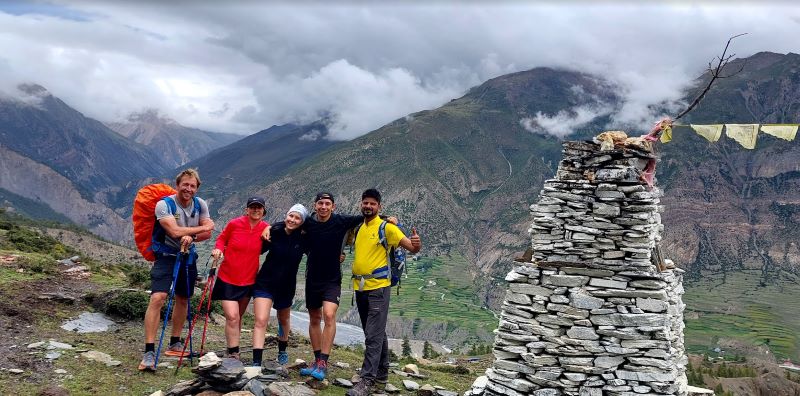
Absolutely. Apart from its importance for acclimatization, Manang is one of the most interesting villages on the Annapurna Circuit.
The surrounding mountains create an impressive Himalayan setting, while the village itself provides a chance to see traditional architecture and experience life in a high mountain community. After days of trekking through changing landscapes, spending a slower day here can also be refreshing mentally.
You can use the time to organize your backpack, check your clothing for the colder sections ahead, charge electronic devices where available, and prepare for the next stage of the journey.
It is also a good opportunity to speak with your guide about the upcoming trail toward Tilicho Lake, Thorong Phedi, and Thorong-La Pass.
Acclimatizing in Manang is one of the most valuable parts of the Annapurna Circuit Trek. The extra day gives your body time to adapt to the increasing elevation and gives you an opportunity to explore one of the region’s most beautiful mountain settlements.
Do not think of the Manang rest day as a wasted trekking day. It is an important part of preparing for the higher and more challenging sections of the route. A short hike, plenty of fluids, nutritious meals, adequate rest, and careful attention to your health can make a significant difference to your experience.
Most importantly, listen to your body. Altitude affects everyone differently, and even experienced or physically fit trekkers can develop altitude-related problems. If symptoms become serious or worsen, descending is more important than following the original itinerary.
With sensible pacing and proper acclimatization, the journey beyond Manang can become one of the most memorable parts of the Annapurna Circuit Trek, leading through the dramatic landscapes around Tilicho Lake, Thorong-La Pass, and Mustang.
If you are asking how difficult the Everest Three Passes Trek is, the honest answer is this: it is t
Continue Reading
My name is Peng Chang, and I travelled to Nepal from Malaysia with a small group of friends. Before
Continue Reading
In this story Why I Chose Everest Base Camp My name is Chyling, and I come from Malaysia, a country
Continue Reading
Ask anyone who has finished the Annapurna Circuit which day they remember most, and the answer is al
Continue Reading
Introduction Kathmandu doesn’t ease you in. You step out of the airport into a chorus of horns
Continue Reading
Every Everest Base Camp trekking package includes a line item for “guide” and “por
Continue Reading