

22 Oct 2026 10 min to read
Most people walk to Everest Base Camp and then walk back down the same valley. The Three Passes Trek keeps going. It sends you over three Himalayan crossings above 5,300 metres, past Everest Base Camp, and through the quiet Gokyo valley. Then it brings you back to Namche having walked a full circle around the Khumbu.
If the classic trek feels like a postcard, this one feels like the whole album.
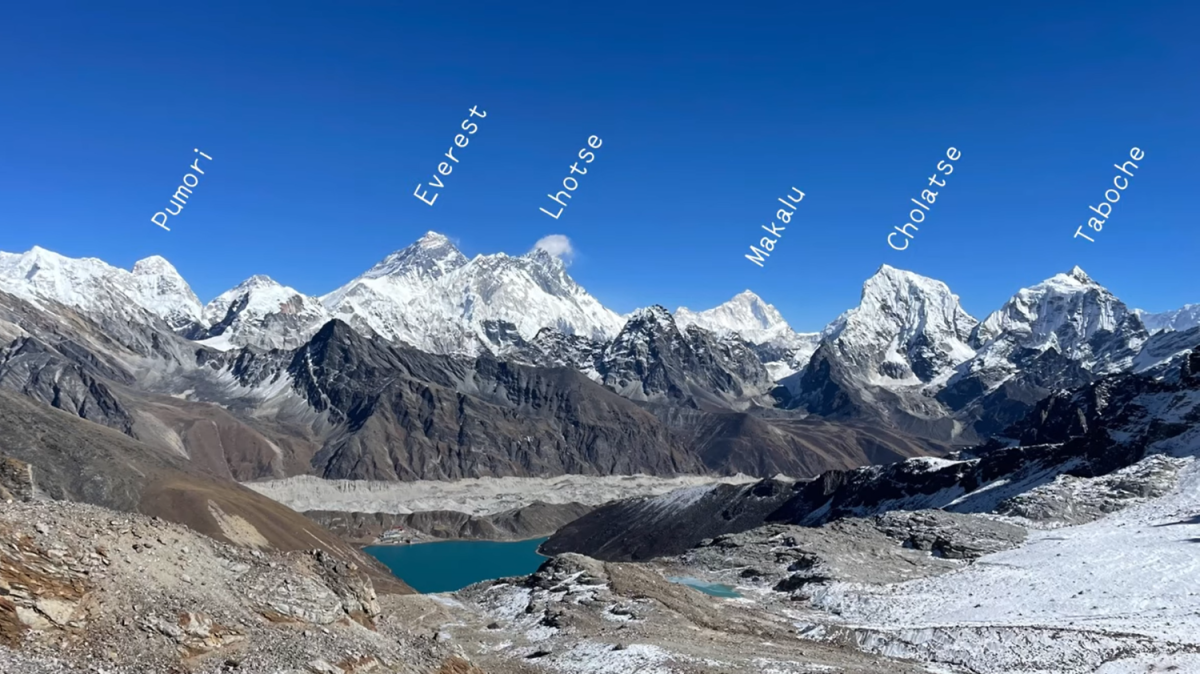
On the standard trail you see Everest from one side and share the path with a steady stream of trekkers. On the Three Passes loop you see the region from three directions. Kongma La looks across to Lhotse and Makalu. Cho La drops you beside the Ngozumpa Glacier. Renjo La gives you a wide-open view of Everest above the Gokyo lakes.
The trek also feels more like a journey. You cross glacier moraine, sleep in villages that tourists rarely reach, and finish on a trail where you might meet more yaks than people. Trekkers who have done both often say the loop was the one that stayed with them.
You fly from Kathmandu to Lukla, and the real walking starts on the trail to Namche Bazaar, the Sherpa trading town built into a hillside bowl. Rest here properly. After a day of acclimatization hikes, you climb to Tengboche monastery with Ama Dablam rising ahead. From there you head up the Imja valley to Dingboche and Chhukung.
Chhukung is where the loop turns serious. The next morning you leave before sunrise for Kongma La, the highest of the three passes at about 5,535 metres. The climb is long and rocky, and the top is windy and prayer-flag bright. On the far side you drop onto the Khumbu Glacier and walk into Lobuche.
The following day brings the famous moment. You walk through Gorak Shep and on to Everest Base Camp at about 5,364 metres, among the colourful tents and the frozen jumble of the Khumbu Icefall. Everest itself is hidden from here, but the atmosphere makes up for it. Back at Gorak Shep, many trekkers climb Kala Patthar (about 5,545 metres) the next dawn, because that is where the summit actually appears, glowing orange in the first light.
Then you head for Dzongla and prepare for Cho La, the pass people talk about most. The approach is a steep rock scramble, followed by a stretch of glacier at the top, and then a long descent to Thagnak. If conditions are icy, your guide will fit traction spikes. Every step is worth it when the Ngozumpa Glacier, the longest in Nepal, opens up below you.
Gokyo is the reward. The village sits beside a chain of glacial lakes the colour of sea glass. A rest day here lets you climb Gokyo Ri (about 5,357 metres) for one of the best views in Nepal. Everest, Lhotse, Makalu and Cho Oyu all line up at once.
Renjo La is the last crossing, at about 5,360 metres, and many trekkers call it the most beautiful. Looking back from the top, you see the lakes below and the whole Himalayan wall behind them. You descend to Marlung or Lungde, walk down through Thame and Namche, and finish with a final stretch to Lukla.
Itineraries vary by company, and good ones add buffer days. A balanced version looks like this:
Day 1: Lukla to Phakding Distance: 8 km | Trekking time: 3–4 hours
Day 2: Phakding to Namche Bazaar Distance: 10 km | Trekking time: 5–6 hours
Day 3: Acclimatization Day in Namche Bazaar Distance: 4–5 km | Hiking time: 2–3 hours
Day 4: Namche Bazaar to Tengboche Distance: 9 km | Trekking time: 5–6 hours
Day 5: Tengboche to Dingboche Distance: 11 km | Trekking time: 5–6 hours
Day 6: Acclimatization Day in Dingboche Distance: 4–6 km | Hiking time: 3–4 hours
Day 7: Dingboche to Chhukung Distance: 5 km | Trekking time: 3–4 hours
Day 8: Cross Kongma La Pass (5,535 m) to Lobuche Distance: 10–12 km | Trekking time: 7–9 hours
Day 9: Lobuche to Everest Base Camp (5,364 m), via Gorak Shep Distance: 12–14 km | Trekking time: 6–8 hours
Day 10: Gorak Shep to Kala Patthar (5,545 m), then Dzongla Distance: 8–10 km | Trekking time: 6–8 hours
Day 11: Cross Cho La Pass (approximately 5,420 m) to Thagnak Distance: 8–10 km | Trekking time: 6–8 hours
Day 12: Thagnak to Gokyo Lakes Distance: 4–5 km | Trekking time: 2–3 hours
Day 13: Explore Gokyo Lakes and Hike Gokyo Ri (5,357 m) Distance: 5–7 km | Trekking time: 4–5 hours
Day 14: Cross Renjo La Pass (5,360 m) to Lungden Distance: 10–12 km | Trekking time: 6–8 hours
Day 15: Lungden to Thame Distance: 9–11 km | Trekking time: 4–6 hours
Day 16: Thame to Namche Bazaar Distance: 9–11 km | Trekking time: 4–5 hours
Day 17: Namche Bazaar to Lukla Distance: 18–20 km | Trekking time: 6–8 hours
Day 18: Fly from Lukla to Kathmandu Flight time: Approximately 30–40 minutes.
Many operators run it in 16 to 20 days. Choose the longer end if you want weather buffers and gentler days.
The honest answer is that it is a demanding trek. It is not technical climbing, but it is long and the altitude is serious. You spend many days above 4,000 metres, and three days feature passes above 5,300 metres. Pass days run seven to nine hours, often starting in the dark and cold.
Altitude is the main challenge, more than fitness alone. Healthy, fit people get sick because they climb too fast. The itinerary’s acclimatization days exist for a reason, so do not skip them. Your body adapts best when you walk high and sleep a little lower.
You do not need mountaineering skills, but you should be comfortable walking for long days on rough ground. Some trekkers train for two to three months with hills, stairs and loaded-pack hikes. If you can comfortably hike six to eight hours with a daypack, you have a solid base.
Most trekkers walk the loop counterclockwise, starting with Kongma La, visiting Everest Base Camp, then crossing Cho La and finishing with Renjo La. The main advantage is acclimatization. You spend nights in Dingboche and Chhukung before the first pass, so your body is well prepared when you cross Kongma La. The finale also feels special, because Renjo La gives you a sweeping view of Everest above the Gokyo lakes.
The clockwise route starts with Renjo La and ends with Kongma La. It suits trekkers who want a quieter start through Thame and the Nangpa La valley. Renjo La is also the lowest of the three passes, so it can feel like a gentler opener. The trade-off is that you reach high altitude quickly after Namche, so you need to add rest days and pace yourself carefully. The last pass, Kongma La, then arrives when you’re tired, though by then you are well acclimatized.
Both directions work well, and neither is “easier” for everyone. Weather, snow on Cho La, your acclimatization, and your group’s pace matter more than the direction. Before you choose, ask your trekking agency about current trail conditions, and let your guide make the final call on the day.
The best seasons are autumn (late September to November) and spring (March to May). Autumn brings crisp air, stable weather and the clearest views of Everest, Lhotse and Ama Dablam, though trails are busiest.
Spring is warmer, with blooming rhododendrons in the lower valleys and slightly fewer trekkers. Afternoon clouds can roll in, but mornings on the passes are usually bright.
Winter is cold and the passes can close under heavy snow. Monsoon, from June to August, brings cloud, rain and slippery trails, so avoid it. Always keep a spare day for weather delays.
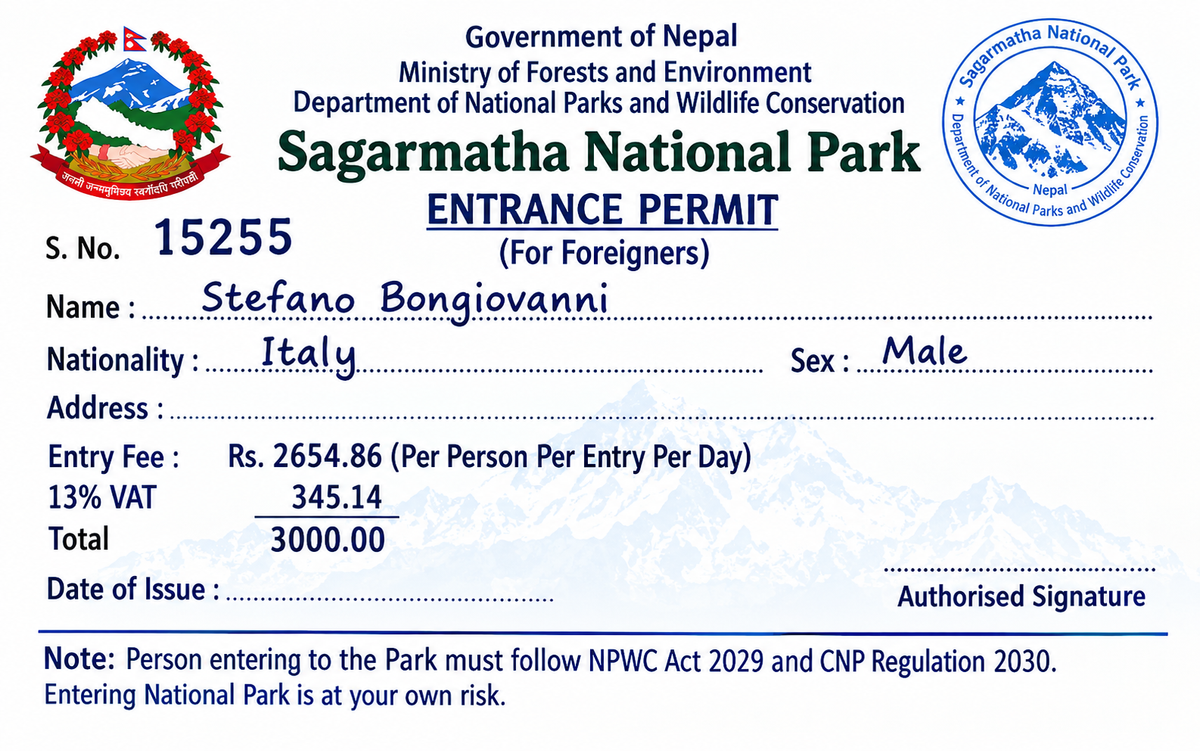
You will need a Sagarmatha National Park entry permit and a local municipality permit for the Khumbu region. Your trekking company can arrange both, along with your domestic flights. Carry your passport and a few passport photos, and keep spare copies in a separate bag.
Travel insurance is not optional on this trek. Choose a policy that covers trekking up to 6,000 metres and includes emergency helicopter evacuation.
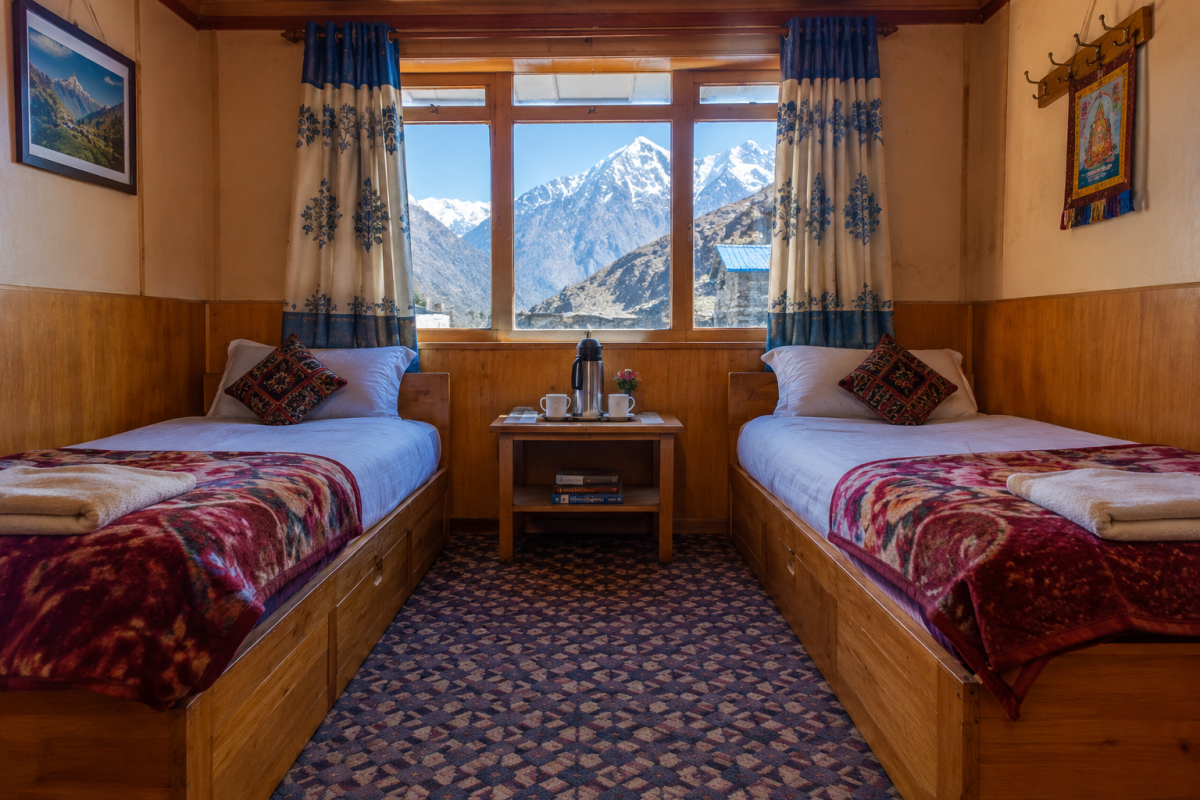
Along the route you sleep in simple teahouses. Expect twin rooms with basic beds, a shared dining room with a stove, and shared toilets. Rooms are unheated, so a good sleeping bag matters.
Menus are filled with trekker favourites such as dal bhat (the Nepali lentil-and-rice meal, which often comes with free refills), noodles, momos, soups and pasta. Prices climb with altitude because everything is carried up by porters or yaks. Carry some cash in Nepali rupees, since there are no reliable ATMs beyond Namche.
Drink plenty of water. Aim for three to four litres a day, using a purification tablet or filter rather than buying plastic bottles. It saves money and keeps the trail cleaner.
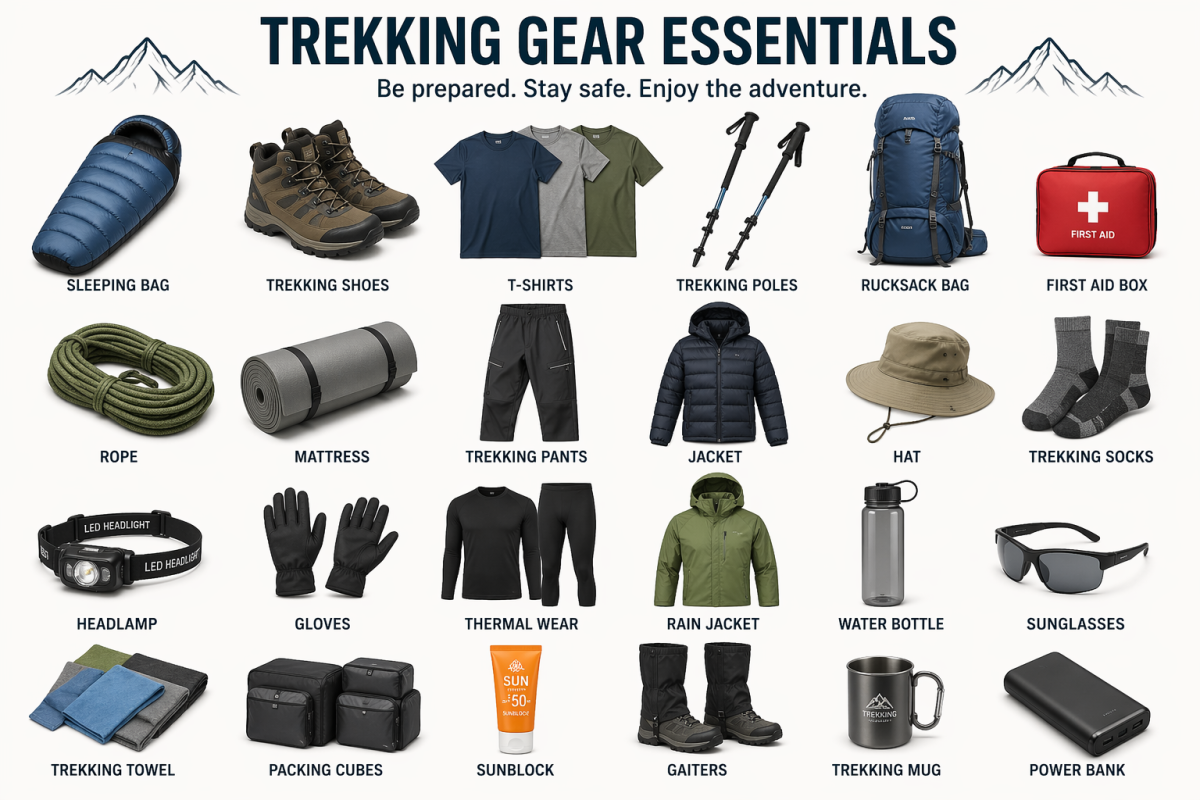
Layers are everything. A warm down jacket, thermal base layers, a waterproof shell, insulated gloves, a warm hat and sturdy, well-worn boots are the essentials. Add sunglasses with good UV protection, strong sunscreen, a headlamp, trekking poles, and a sleeping bag rated to about minus 15°C.
Pack light, because your porter’s load is limited. Bring lightweight micro-spikes for icy sections on Cho La, or confirm with your guide that your agency supplies them. Add blister care, rehydration salts and any personal medicines.
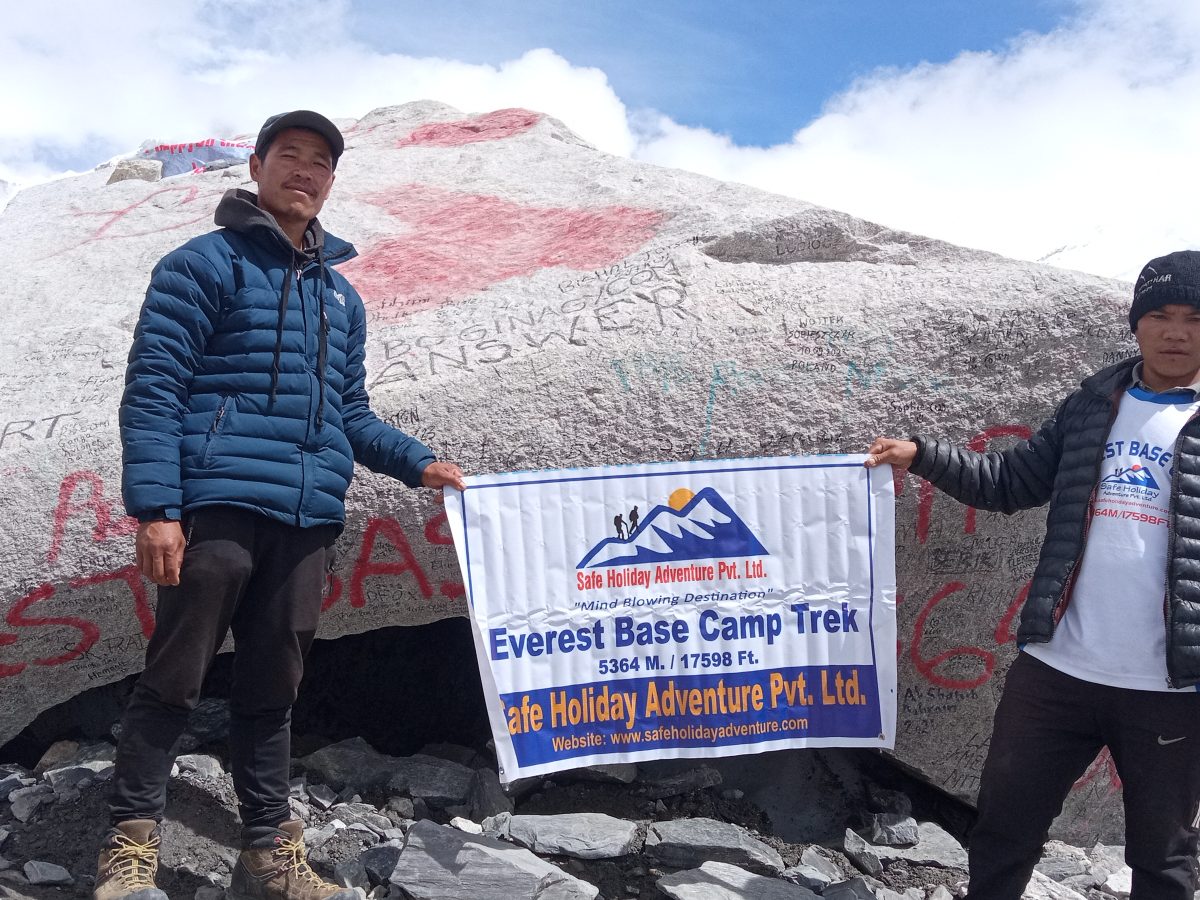
Rules about independent trekking in the Khumbu have changed in recent years, so check the latest regulations before you book. Even where it is allowed, a guide is strongly recommended for the Three Passes. The route is remote and the weather turns fast. Glacier crossings require judgment, and a guide who knows the trail can recognise early signs of altitude sickness before you can.
A good guide adds more than safety. They bring local stories, mountain names and the Sherpa culture of the region. A porter lets you walk with a light daypack and enjoy the scenery instead of fighting your bag.
Headache, nausea, dizziness and poor sleep are early warnings. Tell your guide at once. The rule is simple: do not go higher with symptoms, and descend if they worsen. Pace yourself and walk slowly, which the Sherpa call bistari, bistari. Avoid alcohol, and keep eating even if your appetite fades.
Build flexibility into the plan. Weather windows matter on pass days, and a spare day can be the difference between a safe crossing and a risky one.
The Three Passes Trek asks for time, effort, and respect for the mountains. In return, it gives you the Himalayas from every direction. You walk through Sherpa villages, stand at Everest Base Camp, cross three high passes, and watch the sun rise over lakes at Gokyo.
If you have the time and the determination, this is the trek that turns a Nepal holiday into a lifelong memory.
There is a moment on every Everest trek when your legs have an opinion. For most people, it arrives
Continue Reading
If you are asking how difficult the Everest Three Passes Trek is, the honest answer is this: it is t
Continue Reading
My name is Peng Chang, and I travelled to Nepal from Malaysia with a small group of friends. Before
Continue Reading
In this story Why I Chose Everest Base Camp My name is Chyling, and I come from Malaysia, a country
Continue Reading
Ask anyone who has finished the Annapurna Circuit which day they remember most, and the answer is al
Continue Reading
Introduction Kathmandu doesn’t ease you in. You step out of the airport into a chorus of horns
Continue Reading