
6 Oct 2026 12 min to read
My name is Peng Chang, and I travelled to Nepal from Malaysia with a small group of friends. Before we left, my phone was full of worried messages. Family members sent me news clips about floods and heavy rain in Nepal. A few friends asked me directly, “Are you sure you want to go now?”
I will be honest. I had the same question in my mind. But we had planned this trip for months, so we decided to talk to our trekking team, follow their advice and see the situation with our own eyes.
Now I am home, my legs are tired, my camera is full, and I want to tell you what I actually saw. This is not a news report. This is one trekker’s real experience of the Poon Hill trek after the flood and heavy rain.
Our journey began in Kathmandu. After we collected our bags and walked out of the airport, a smiling man was waiting with our group name on a sign. That was Santosh, our guide.
He greeted each of us warmly, helped with our luggage and drove us to the hotel. On the way, he did something that made me relax. Without being asked, he spoke about the weather and the trail. He told us he had been checking conditions with local lodge owners and other guides, and that the Poon Hill route was open and running normally.
That first evening, Santosh sat with us and explained the plan clearly. He told us the pace, the daily walking hours and what to expect on each day. He also reminded us to listen to our bodies and tell him if anyone felt unwell. I have travelled with different tour operators before, and a good briefing like this makes a big difference. By the time we went to bed, my worries had become excitement.
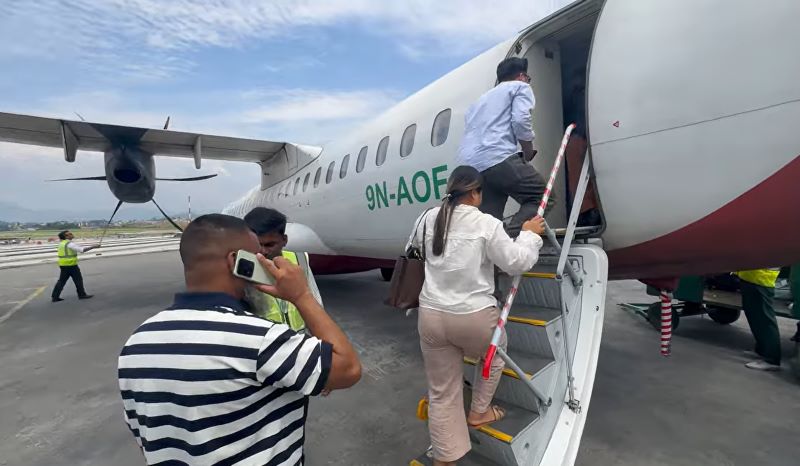
The next morning we flew from Kathmandu to Pokhara. The flight takes only about thirty minutes, which is a wonderful gift compared with a long bus ride. Through the window we saw green hills, winding rivers and, as we came closer to Pokhara, the first hints of white mountains in the distance.
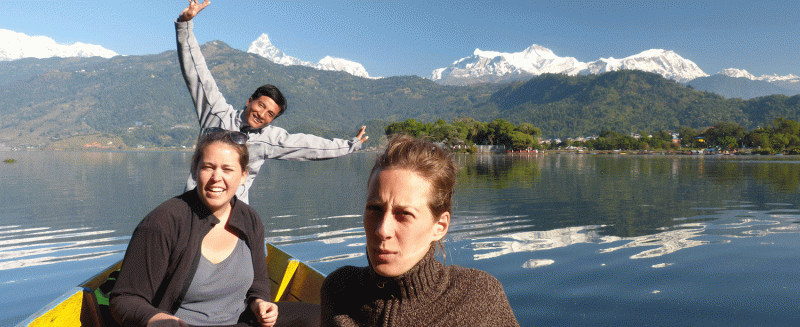
Pokhara welcomed us with fresh air and a calm lakeside mood. The city looked normal and peaceful. Cafés were open, boats were out on Phewa Lake, and visitors were walking along the shore taking photographs. There was nothing in the atmosphere that suggested trouble.
We spent the rest of the day relaxing and checking our gear. Santosh helped us sort out what to carry and what to leave at the hotel, since a lighter bag makes any trek more enjoyable. We ate a hearty dinner, went to sleep early and set our alarms.
After breakfast the next morning, we drove for about one and a half hours from Pokhara to Nayapul, the starting point of the trek. The road was in good condition, and the scenery changed quickly from city to river valley to rural hills.
At Nayapul, the trek began. We tightened our boots, adjusted our backpacks and set off with Santosh leading the way.
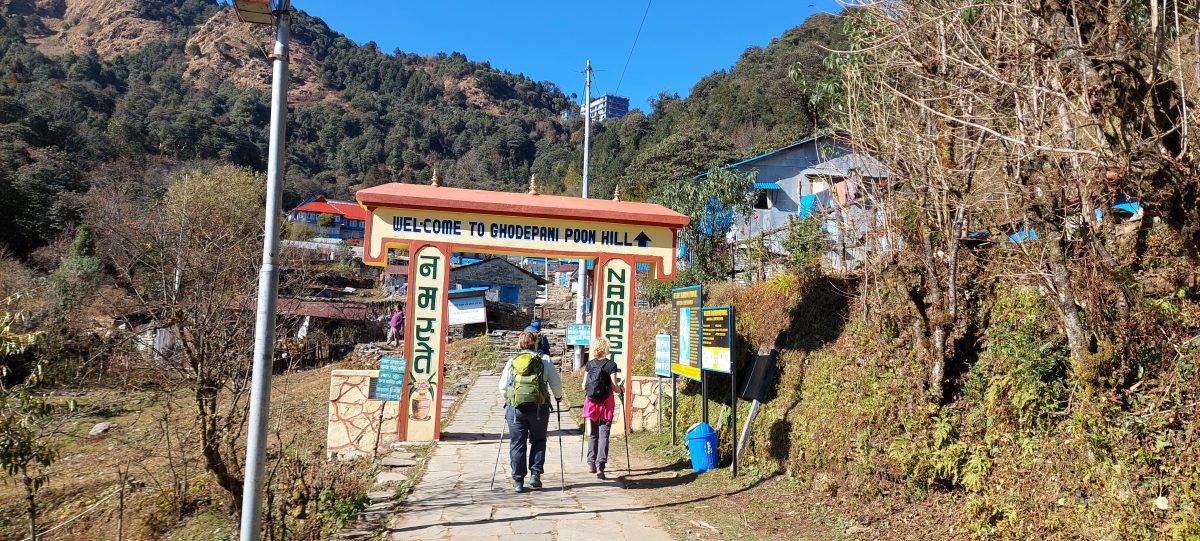
The first part of the trail followed the valley and passed through small local villages. Children waved and called out “Namaste” as we walked by. Farmers were working in their fields, and women carried baskets along the path. Shops sold water, snacks and simple supplies. Everything felt calm, ordinary and welcoming.
This was the moment I realised that the news I had been reading did not describe what I was seeing. The trail was dry, the ground was firm and the people were going about their daily lives.
Later in the day the path began to climb toward Ulleri. This section is famous for its long stone staircase, and yes, it is tiring. But because the steps were dry, we could climb at a steady rhythm without worrying about slipping. We stopped often, drank water, took photos and laughed about how many steps were still left. Santosh encouraged us to go slowly, and that advice saved our energy.
We reached Ulleri in the afternoon, a hillside village with simple lodges and lovely views over the valley. Our lodge was clean and comfortable, with warm blankets and a friendly family running it. We ate dal bhat, the classic Nepali meal of rice, lentil soup and vegetables, and I understood immediately why trekkers love it. It was hot, filling and refillable.
That night I slept deeply. The first day was done, and it had been safe, friendly and beautiful.
The next morning started early. We had tea and breakfast, packed our bags and continued uphill from Ulleri.
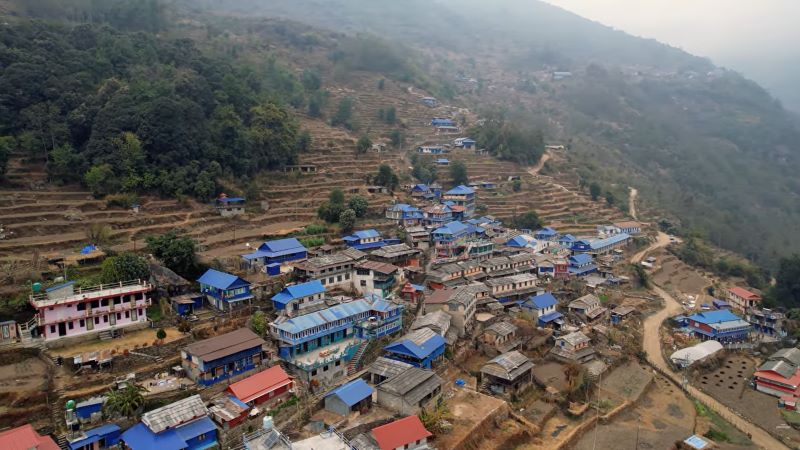
This day was one of my favourites. The trail passed through Banthanti and several smaller settlements, with terraced fields stepping down the hillside like green staircases. We walked past stone monuments, prayer walls and small shrines that added a feeling of history and spirituality to the journey. Santosh explained the meaning of some of them, and these little stories made the walk feel richer than just a hike.
After Banthanti, we entered a dense forest. Tall trees, moss-covered trunks and soft light filtering through the leaves made it feel almost magical. I had imagined a forest trail might be narrow and uncertain, especially after heavy rain. But the path was wide, clear and safe. Birds sang overhead, and the air smelled fresh and clean. At times it was so quiet that we simply stopped talking and listened.
The walking was steady uphill, but never frightening. We took regular breaks, enjoyed tea at small lodges and kept a comfortable pace. In the late afternoon, we finally reached Ghorepani.
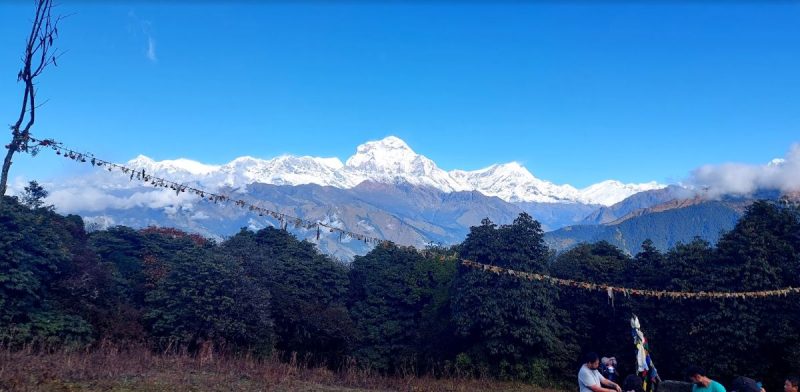
Ghorepani is a large village built on top of a mountain ridge, and it surprised me with its size. There were many lodges, shops and cafés, with trekkers from different countries sharing stories and warming up after the day’s walk. From the village, we could already see Dhaulagiri and many other mountain peaks glowing in the evening light. I stood there with a cup of hot ginger tea, completely speechless.
That night, the lodge was lively and cheerful. Trekkers from around the world sat together, comparing plans and laughing. Nobody looked worried. Everyone was enjoying the mountains.
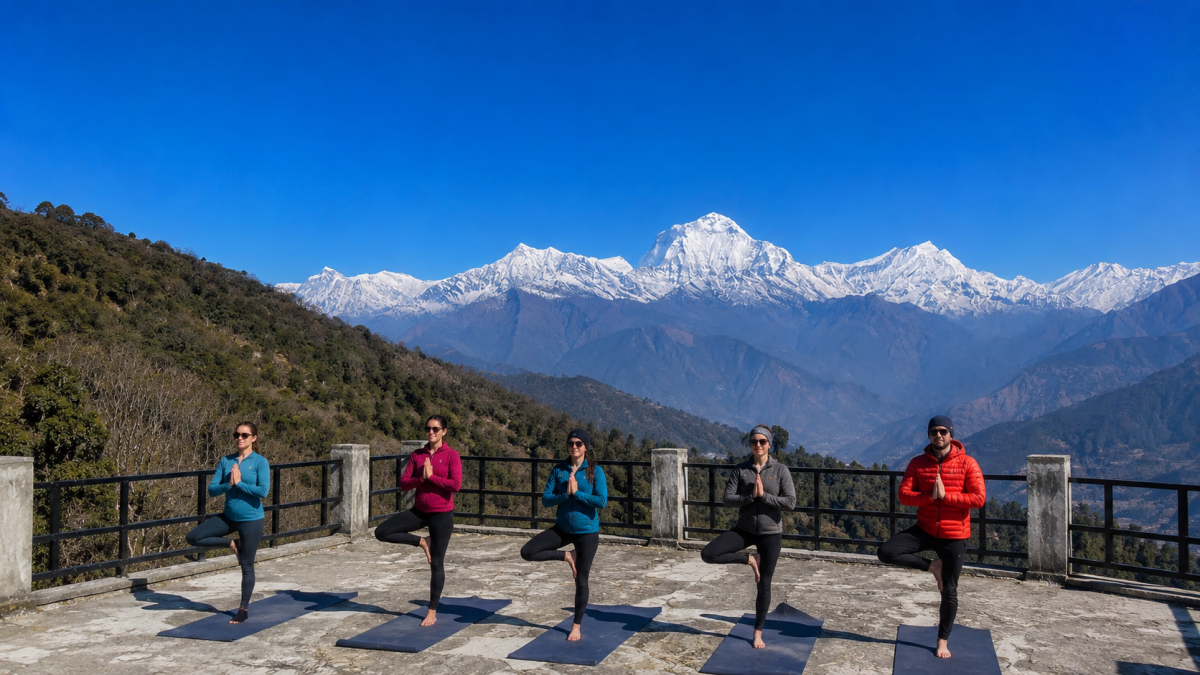
The third morning began in the dark. Santosh woke us very early, and with headlamps on and warm layers wrapped around us, we began the climb to Poon Hill. It takes around an hour, and the cold morning air makes you wide awake.
Dozens of trekkers were already climbing the same trail, a thin line of lights moving up the hillside. When we arrived at the top, we found a good place to stand and waited.
Then the sky began to change. A faint glow appeared behind the mountains, and slowly the first golden light touched the tallest peaks. Dhaulagiri turned bright orange. Then came the Annapurna range, one summit after another, glowing like lamps. The sky was clear, with no rain and no heavy clouds. It was one of the most beautiful moments of my life.
I thought about all the worried messages I had received before the trip. Standing there, I felt grateful that we had not cancelled. The mountains were not damaged or closed. They were just as majestic as ever, and the people around me were simply happy.
We stayed for a long time, taking photos and enjoying hot drinks from the small stalls at the top. Then we walked back down to Ghorepani for breakfast, collected our bags and began the next part of the journey.
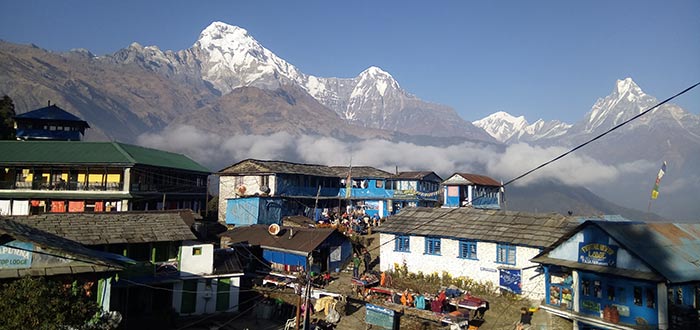
After breakfast, we started the trek toward Tadapani. This part of the walk was relaxed and pleasant, mostly downhill. The trail wound through forests and open hillsides, and on the left side we had wonderful views of Annapurna and Dhaulagiri for much of the way.
It was a very different mood from the previous day. Instead of a hard climb, we could walk comfortably, enjoy the scenery and talk about the sunrise we had just seen. The trail was dry and easy to follow, and we met a few other groups along the way, all smiling and exchanging greetings.
In the afternoon, we reached Tadapani, a quiet village set in the forest with mountain views nearby. Our lodge was warm and cozy, and the family served us a delicious dinner. After the busy atmosphere of Ghorepani, the peaceful mood here felt perfect. We sat outside for a while, watching the clouds drift and the mountains slowly turn pink at sunset.
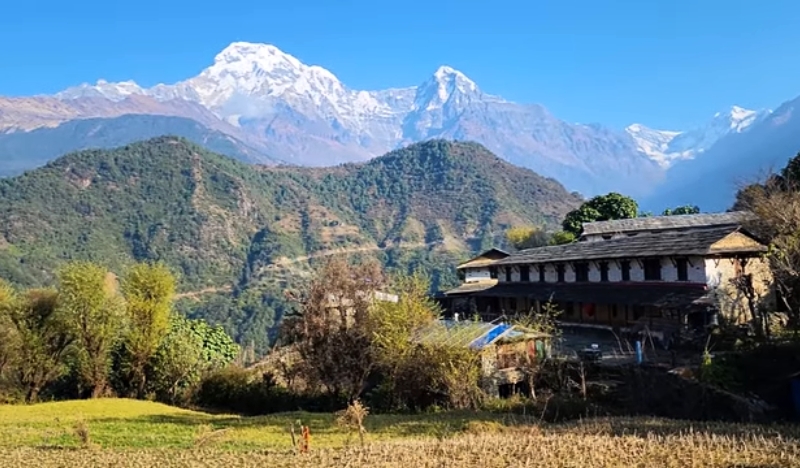
On our final trekking morning, we left Tadapani and began the walk down to Ghandruk. The trail was an easy descent of around three hours, passing through forest and then opening into views of terraced fields and stone houses.
Ghandruk is a beautiful Gurung village with traditional stone architecture, neat paths and a proud cultural heritage. We walked slowly through the lanes, greeting villagers and admiring the mountain backdrop. It was a gentle, joyful ending to the trek.
From Ghandruk, we took a jeep back to Pokhara. The drive took about three hours along a winding road with views of rivers and hills. We were tired, but in the best possible way. In the jeep, we looked through photos, laughed about the staircase at Ulleri and shared our favourite moments.
When we arrived in Pokhara, we felt a mix of satisfaction and sadness that the trek was over. We had spent three nights and four days on the trail, and we had not faced a single problem. No blocked paths, no frightening moments, no surprises. Just good food, kind people and spectacular views.
Before my trip, I read many alarming news stories. After my trip, I want to share what I personally experienced.
There was heavy rain and flooding in Nepal, and it affected some parts of the country. I do not want to ignore that or pretend it did not happen. But in the areas where we trekked, the situation was calm and normal. The rain had stopped, the weather was clear, and the trails were dry. Lodges were open, villages were running as usual, and the people were as warm and welcoming as ever.
Some of the stories online make it seem as though the whole country is unsafe. That was not what we found on the Poon Hill route. Everything I describe in this article is based only on my own experience, but I felt completely safe from the first day to the last.
Of course, conditions in the mountains can change, so I would never say you should ignore the weather. Please check the latest updates before you travel. But if you have been hesitating because of the news, I hope my story gives you a clearer picture.
If there is one piece of advice I would give every traveller, it is this: hire a guide or trek through an authorised travel agency.
Santosh made our trip smoother in so many ways. He arranged permits, booked lodges, kept us on the right trail and set a comfortable pace. He also kept an eye on weather and trail conditions every day. When we had questions about culture, food or the mountains, he answered with patience and humour. For a group of first-time Himalayan trekkers, that kind of support made us feel secure.
An authorised agency also gives you peace of mind. Your guide knows the area, understands local conditions and can make quick decisions if the situation changes. If you are travelling after heavy rain or during uncertain periods, this local knowledge is especially valuable. Your trip is also supporting local guides, porters and lodge owners, which helps the mountain communities that depend on tourism.
Here are a few simple lessons I learned along the way.
When I first read the news about floods and heavy rain, I almost let fear decide for me. I am very glad I did not. The Poon Hill trek gave me clear skies, warm people, comfortable lodges and a sunrise that I will remember for the rest of my life.
From Kathmandu to Pokhara, from Nayapul to Ulleri, through the quiet forests to Ghorepani, up to the sunrise at Poon Hill, and down through Tadapani to Ghandruk, every day felt safe, welcoming and rewarding. Right now, there is no rain on the trail, the paths are dry, and Nepal is ready to welcome visitors.
If you are dreaming of the Himalayas, do not give up on your plan because of headlines alone. Speak with a trusted local team, check the latest conditions, and make your decision with real information. And if you decide to go, take the same advice that served me well: walk slowly, travel with a guide or authorized agency, and enjoy every step.
Nepal gave me an unforgettable trek, and I hope it gives you one too.
Peng Chang, Malaysia

In this story Why I Chose Everest Base Camp My name is Chyling, and I come from Malaysia, a country
Continue Reading
Ask anyone who has finished the Annapurna Circuit which day they remember most, and the answer is al
Continue Reading
Introduction Kathmandu doesn’t ease you in. You step out of the airport into a chorus of horns
Continue Reading
Every Everest Base Camp trekking package includes a line item for “guide” and “por
Continue Reading
Understanding Everest Base Camp Trek Permits Cost is one of the first things every Everest Region tr
Continue Reading
Introduction Namche Bazaar is the beating heart of the Khumbu region and the first major stop for ev
Continue Reading