
3 Jun 2026 10 min to read
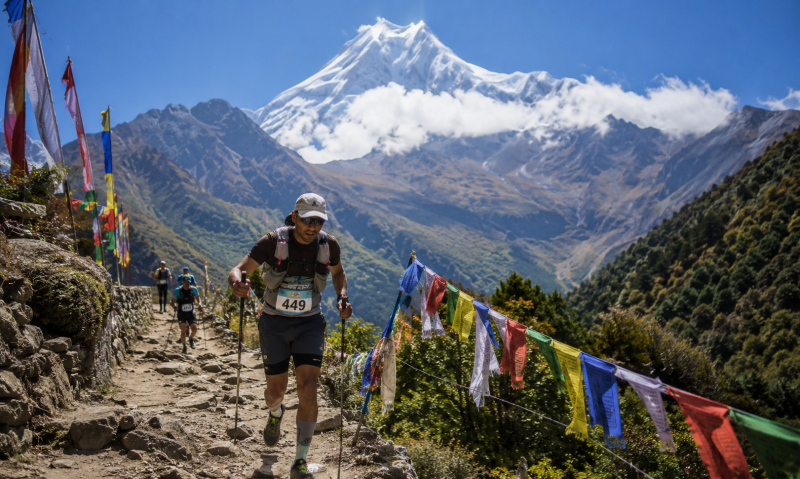
The Manaslu Trail Race is a world-class Himalayan trail running event that takes runners deep into the remote and spectacular Manaslu region of Nepal. Set beneath the towering slopes of Mount Manaslu (8,163m), the world’s eighth-highest mountain, this challenging race combines high-altitude adventure, breathtaking landscapes, and rich mountain culture. It is an ideal event for trail runners seeking an authentic off-the-beaten-path experience in the Himalayas.
Following sections of the renowned Manaslu Circuit Trek, the race passes through traditional villages, lush forests, suspension bridges, glacial rivers, and rugged mountain trails within the Manaslu Conservation Area. Along the route, participants enjoy panoramic views of snow-covered peaks while experiencing the unique traditions and hospitality of local Gurung and Tibetan communities. Every kilometer offers a new blend of natural beauty and cultural discovery.
More than just a competition, the Manaslu Trail Race in Nepal is a true test of endurance, determination, and adventure. The combination of challenging terrain, high mountain passes, and stunning Himalayan scenery makes it one of the most rewarding trail running events in Asia. Whether you are an experienced mountain runner or an adventure traveler looking for your next challenge, the Manaslu Trail Race promises an unforgettable journey through one of Nepal’s most pristine and inspiring mountain regions.
The Manaslu Trail Race has gained worldwide recognition among mountain runners because it offers something that few races can provide: a combination of extreme altitude, authentic Himalayan culture, and a multi-day adventure through one of Nepal’s most spectacular landscapes.
The Manaslu Marathon Race is a multi-stage trail running competition held annually in Nepal’s Manaslu region. The event follows much of the famous Manaslu Circuit Trek route and covers approximately 140 kilometers of competitive running over seven race stages.
The race begins in the lower Budhi Gandaki Valley and gradually climbs into high alpine terrain before crossing the challenging Larkya La Pass.
Unlike many self-supported races, participants benefit from organized logistics, accommodation, meals, medical support, and luggage transportation, allowing runners to focus on performance and enjoyment.
The Manaslu region lies in north-central Nepal near the Tibetan border. Protected as part of the Manaslu Conservation Area, this region is known for its incredible biodiversity, dramatic landscapes, and unique cultural heritage.
The area remains significantly less crowded than the Everest and Annapurna regions, making it ideal for runners seeking a more authentic Himalayan experience.
The region features:
Mount Manaslu dominates the skyline throughout much of the race, providing a spectacular backdrop for participants.
The race follows the classic Manaslu Circuit route through remote Himalayan valleys and mountain villages.
Every stage presents different terrain, elevations, and scenery, making the race a constantly changing adventure.

The first stage introduces runners to the Budhi Gandaki Valley.
The route passes terraced fields, waterfalls, traditional villages, and suspension bridges. Although elevations remain relatively low, the constant ups and downs can surprise many runners.
The subtropical climate often creates warm conditions, making hydration especially important.
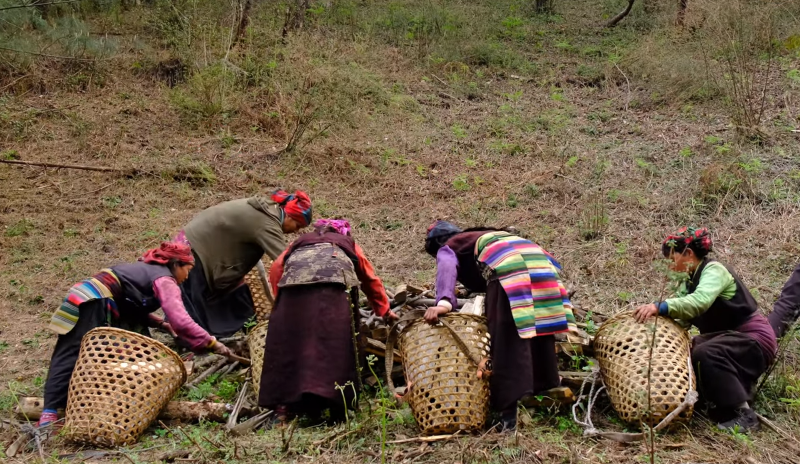
This stage becomes increasingly rugged as runners move deeper into the mountains.
Narrow trails carved into cliffs provide spectacular views of the river below. The route includes numerous ascents and descents that challenge endurance and leg strength.
The cultural atmosphere also begins to change as Tibetan influences become more visible.

This section marks the transition into higher Himalayan terrain.
The trail climbs through forests and small settlements where traditional lifestyles remain largely unchanged. Participants begin gaining significant elevation and must monitor their acclimatization carefully.

Many runners consider this one of the most scenic stages.
The trail passes through beautiful pine forests and picturesque villages while offering the first major mountain views.
Namrung provides spectacular panoramas of snow-capped peaks and traditional Himalayan architecture.
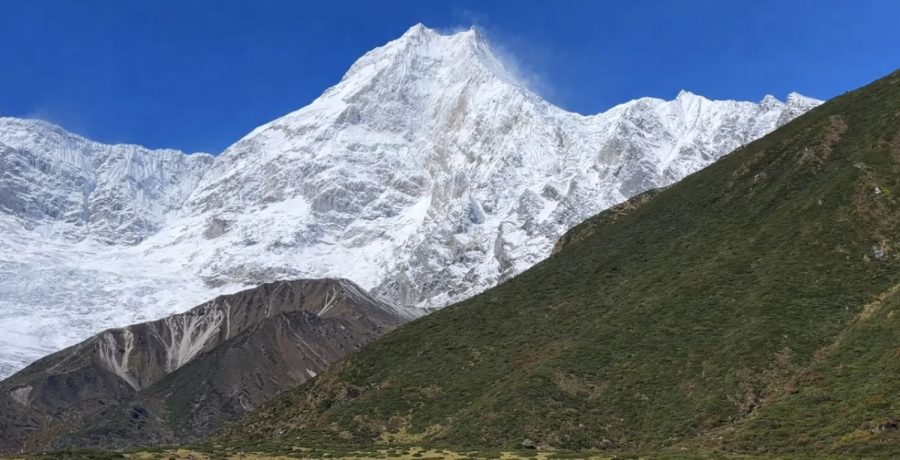
One of the most spectacular sections of the entire race.
The route passes through Lho Village and Shyala Village, both known for stunning views of Mount Manaslu.
The scenery becomes increasingly dramatic as participants enter a high-altitude environment surrounded by towering Himalayan giants.
Proper acclimatization is essential for successful participation in the Manaslu Marathon Race.
Sama Gaun serves as an important resting point before runners continue toward higher elevations.
Participants often explore:
This extra day significantly improves adaptation to altitude.
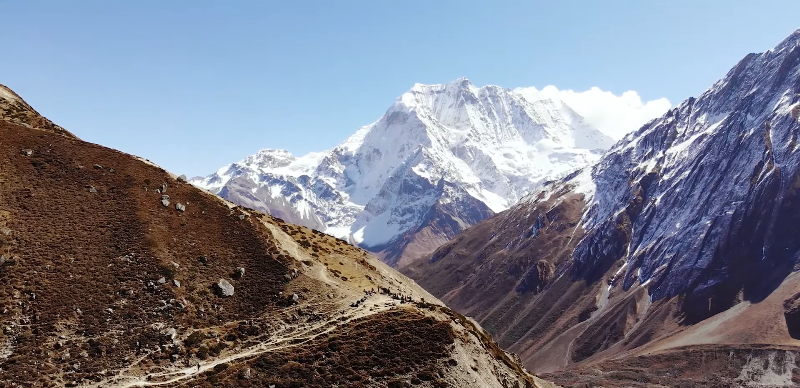
The landscape changes dramatically.
Trees disappear and alpine terrain dominates the environment. The route climbs steadily through yak grazing areas and glacial valleys.
Participants begin preparing mentally and physically for the upcoming Larkya La Pass crossing.

This is the crown jewel of the race.
The day begins before sunrise. Runners climb gradually through freezing temperatures toward the summit of Larkya La Pass.
At over 5,000 meters, every step becomes challenging due to reduced oxygen levels.
The reward is one of the most spectacular mountain panoramas in Nepal.
After reaching the pass, runners descend toward Bimthang through glacial landscapes and alpine valleys.
Many participants describe this stage as the highlight of their entire running career.
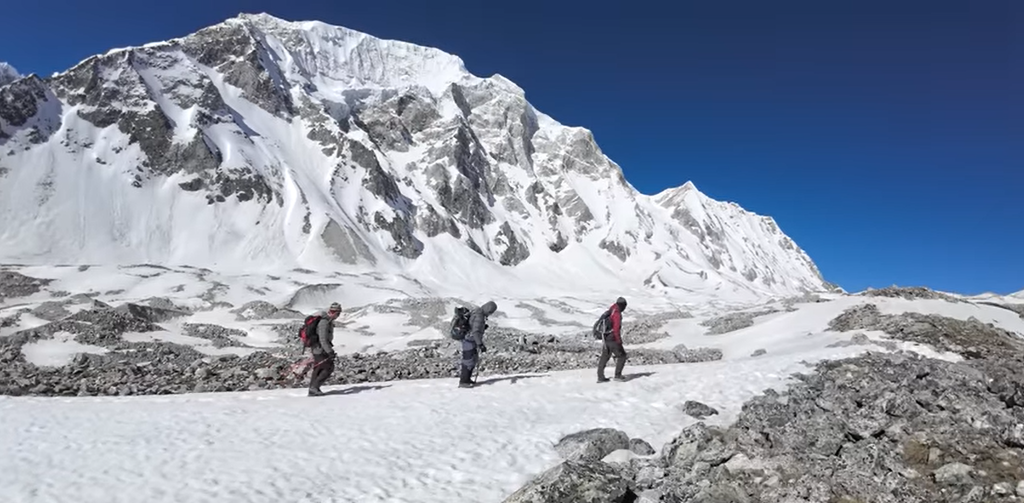
The Manaslu Marathon Race is considered a challenging to extremely challenging trail running event.
Several factors contribute to its difficulty:
The route reaches over 5,100 meters.
Multiple days of continuous running place significant stress on the body.
Many sections involve sustained ascents and descents.
Participants must be self-reliant and mentally prepared.
Temperatures may vary from warm valley conditions to below-freezing alpine environments.
Altitude is one of the most important considerations for participants.
As elevation increases, oxygen levels decrease significantly.
Common symptoms include:
Good acclimatization dramatically improves both safety and performance.
Preparing for the race requires several months of focused training.
Build a strong aerobic base through long-distance running.
Practice on uneven terrain whenever possible.
Incorporate uphill and downhill training.
Focus on:
Perform back-to-back long runs to simulate race conditions.
Mountain hiking with elevation gain is excellent preparation.
The race is best suited for:
Previous high-altitude experience is highly beneficial but not mandatory.
Participants should be comfortable running for several hours on challenging terrain.
The race is generally held during Nepal’s autumn season.
Weather can change rapidly, especially near Larkya La Pass.
Participants stay in local tea houses along the route.
Accommodation typically includes:
Tea houses provide a comfortable and authentic Himalayan experience.
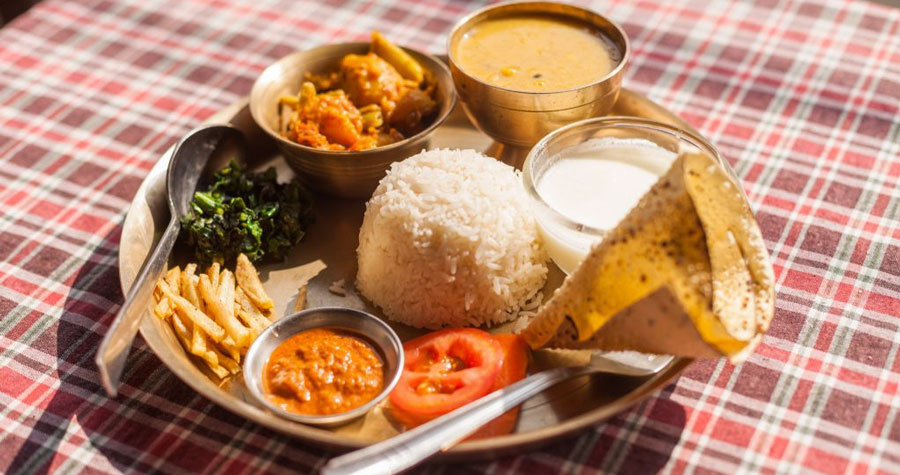
Proper nutrition is essential at altitude.
Common meals include:
Runners should also carry personal energy products.
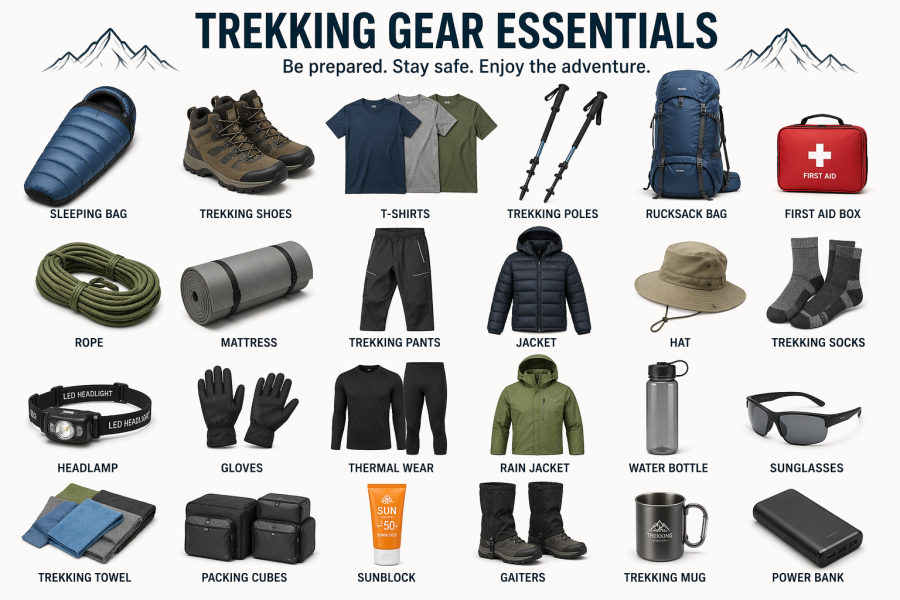
Safety remains a top priority.
Race organizers typically provide:
Participants should obtain travel insurance covering high-altitude activities and helicopter evacuation.

The Manaslu region is a restricted area requiring special permits.
Typically required permits include:
Mandatory for all foreign visitors.
Required for entry into the conservation area.
Required after crossing Larkya La Pass.
Permit requirements may change, so participants should confirm current regulations before travel.
One of the greatest rewards of the Manaslu Marathon Race is cultural immersion.
Participants encounter:
Villages such as Lho, Sama Gaun, and Samdo preserve centuries-old traditions rarely seen elsewhere.
The Manaslu region is a protected conservation area.
Participants are encouraged to:
Responsible tourism helps preserve this extraordinary region.
The Manaslu Marathon Race stands apart from other trail races because it combines:
Few races in the world offer such a complete mountain-running experience.
The race covers approximately 140 kilometers over multiple stages.
Larkya La Pass at approximately 5,160 meters.
Yes. Trail-running experience is highly recommended.
Yes. Proper acclimatization is essential.
The race is best suited for experienced runners and trekkers.
Traditional mountain tea houses.
Usually during Nepal’s autumn season.
Yes. High-altitude insurance with helicopter evacuation coverage is strongly recommended.
The Manaslu Marathon Race is not simply a marathon—it is one of the most extraordinary mountain-running adventures in the world. Combining technical trails, extreme altitude, breathtaking Himalayan scenery, authentic cultural encounters, and world-class endurance challenges, the race offers an experience that few events can match.
Whether your goal is to compete, complete a personal challenge, or explore one of Nepal’s most beautiful regions, the Manaslu Marathon Race delivers an unforgettable journey through the heart of the Himalayas. For trail runners seeking a truly unique adventure, this remarkable event deserves a place at the very top of the bucket list.
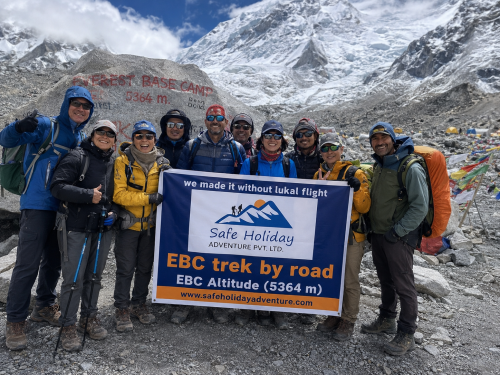
Standing at the foot of the world’s highest mountain is a dream shared by millions of adventure lo
Continue Reading
Introduction Every trekking season, thousands of travelers arrive in Nepal with the dream of reachin
Continue Reading
Introduction Nepal is home to some of the world’s highest mountains, deepest valleys, and most
Continue Reading
Introduction Every successful Everest Base Camp Trek depends on more than physical fitness. One of t
Continue Reading
“Can you drive all the way to Everest Base Camp?” is one of the most common questions asked by t
Continue Reading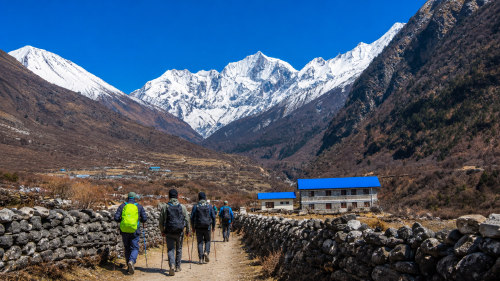
The Langtang Valley Trek is one of Nepal’s most rewarding Himalayan adventures, offering breat
Continue Reading