

16 Jul 2026 6 min to read
“Can you drive all the way to Everest Base Camp?” is one of the most common questions asked by trekkers planning their Himalayan adventure. Many travelers imagine that a road might now reach the base of the world’s highest mountain because of Nepal’s improving transportation network. However, the reality is different.
The answer is no, you cannot drive directly to Everest Base Camp. There is no road connection from Kathmandu or anywhere else to Everest Base Camp. Located at an altitude of 5,364 meters (17,598 ft) inside the Sagarmatha National Park, Everest Base Camp is surrounded by glaciers, high Himalayan peaks, and remote mountain landscapes where vehicles cannot reach.
The final journey to Everest Base Camp must always be completed by walking on the legendary trekking trail. However, trekkers now have an alternative option called the Everest Base Camp Trek by Road, where they can avoid the Lukla flight and travel by jeep from Kathmandu to the lower Everest region before starting the trek.

Although you cannot drive to Everest Base Camp itself, you can travel by jeep from Kathmandu (1,400 m / 4,593 ft) to Surke Village (2,290 m / 7,513 ft), which is currently one of the closest road-accessible points for starting the Everest Base Camp Trek.
The jeep journey from Kathmandu to Surke is a long Himalayan adventure that takes approximately two days, with around 18–20 hours of total driving time depending on road conditions, weather, traffic, and the number of stops.
Unlike a normal highway journey, this route follows winding mountain roads, river valleys, hillside tracks, and remote countryside areas. The changing landscapes make the drive itself an unforgettable part of the Everest experience.
Most trekkers do not try to complete the entire journey in one day because the road is physically demanding and the distance is long. Spending one night at Salleri allows travelers to rest before continuing toward Surke the following day.
The road adventure begins from Kathmandu Valley (1,400 m), the capital city of Nepal. After leaving the busy streets of Kathmandu, the journey gradually enters Nepal’s peaceful countryside.
The drive passes through beautiful hill settlements, terraced farmland, rivers, and forests. Depending on the route conditions, trekkers pass areas such as Dhulikhel, Nepalthok, Khurtibari, and Okhaldhunga before reaching Salleri.
After several hours of driving, you arrive at Salleri (2,390 m / 7,841 ft), the headquarters of the Solukhumbu district. Salleri is an important trading center and gateway to the Everest region.
Many trekkers choose to spend one night here because the drive from Kathmandu is already long. Staying overnight at Salleri helps travelers recover before continuing the more adventurous off-road section toward Surke.
Salleri also provides the first real feeling of entering the Everest region. You can see traditional mountain houses, meet local Sherpa communities, and experience the lifestyle of people living near the Himalayas.
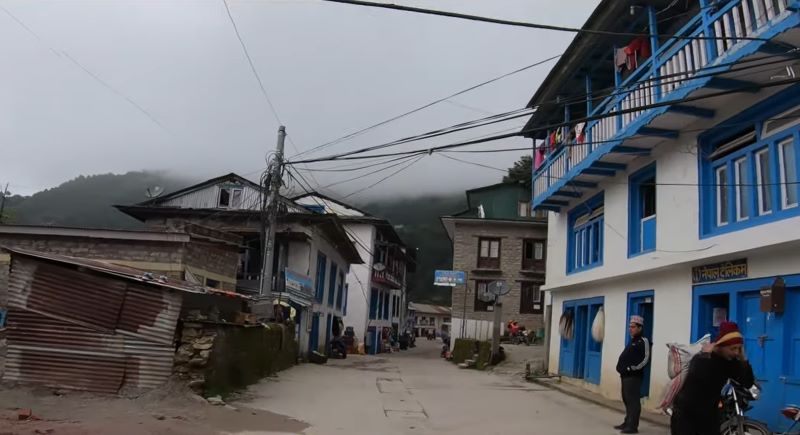
The second day of driving takes you deeper into the Everest region. From Salleri, the road becomes more challenging as it follows mountain terrain toward Surke Village.
This section is mostly an off-road mountain track with narrow sections, rocky surfaces, steep climbs, and dramatic valley views. The journey requires experienced local drivers who understand Himalayan road conditions.
Along the way, the jeep passes through several beautiful villages:
Just near Salleri is Phaplu, one of the most important settlements in the lower Everest region. Phaplu has an airport, health facilities, shops, and accommodation options. Historically, many Everest trekkers used Phaplu as the starting point before road access improved.
The route continues toward Nunthala, a traditional mountain village surrounded by forests and hills. This area offers beautiful views of the countryside and gives travelers a glimpse of authentic rural Nepal.
The road then continues through remote settlements including Bupsa, a peaceful Sherpa village located along the trekking route. The area is surrounded by green hills and provides a strong connection with local mountain culture.
Finally, the jeep reaches Surke Village, located just below Lukla. This is where the road journey ends and the trekking adventure begins.
Surke is a beautiful mountain settlement where trekkers can rest before starting their walking journey toward Everest Base Camp.
Everest Base Camp is located in a protected Himalayan environment inside Sagarmatha National Park, a UNESCO World Heritage Site. The area contains glaciers, fragile ecosystems, and extremely high-altitude landscapes.
Building roads to Everest Base Camp is not practical because of:
The absence of roads is also what makes the Everest Base Camp journey special. The trek allows travelers to experience untouched mountain landscapes, ancient monasteries, and traditional Sherpa villages that cannot be reached by vehicle.
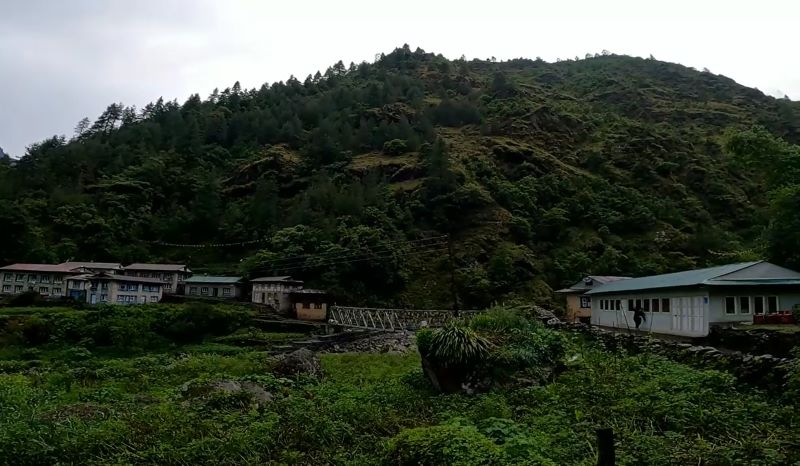
After reaching Surke, trekkers begin walking toward Everest Base Camp through the classic Everest trail.
The route passes through famous Himalayan villages:
Phakding (2,610 m / 8,563 ft) – A beautiful riverside village where many trekkers spend their first night.
Namche Bazaar (3,440 m / 11,286 ft) – The famous Sherpa capital and the main trading center of the Everest region.
Tengboche (3,860 m / 12,664 ft) – Home to the famous Tengboche Monastery with incredible mountain views.
Dingboche (4,410 m / 14,468 ft) – An important acclimatization stop surrounded by Himalayan peaks.
Lobuche (4,910 m / 16,109 ft) – The final settlement before reaching Everest Base Camp.
Finally, after days of trekking through the high Himalayas, you reach Everest Base Camp (5,364 m) with breathtaking views of glaciers and surrounding peaks.
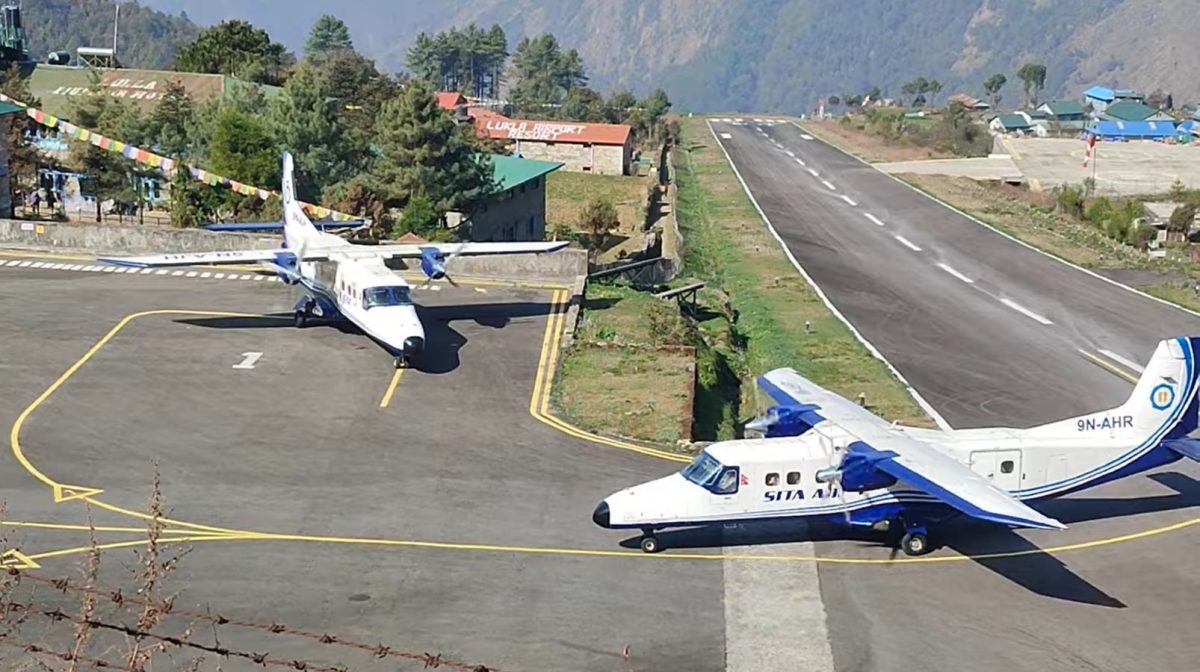
Traditionally, most trekkers start the Everest Base Camp Trek by taking a short flight from Kathmandu to Lukla. However, the Everest Base Camp Trek by Road has become increasingly popular among travelers who prefer a more adventurous and gradual approach.
Although the jeep journey requires extra time, many trekkers feel that the road approach gives them a deeper connection with Nepal’s landscapes and local communities.
No, you cannot drive all the way to Everest Base Camp. The maximum point accessible by jeep from Kathmandu is Surke Village (2,290 m), and from there, the journey continues on foot through the beautiful Everest trekking trail.
The two-day jeep drive from Kathmandu to Surke through Salleri, Phaplu, Nunthala, and Bupsa is not just transportation — it is part of the adventure. It takes you away from busy cities and into the heart of the Himalayas, where breathtaking landscapes, Sherpa culture, and the legendary Everest trail begin.
For travelers looking for a more authentic Himalayan experience, the Everest Base Camp Trek by Road offers a unique way to reach the world’s most famous mountain destination.
A clear and honest update for travelers planning Everest, Annapurna, Manaslu, Mustang and other popu
Continue Reading
Manang is one of the most important stops on the Annapurna Circuit Trek. After several days of walki
Continue Reading
If you are wondering where to see red pandas in Nepal, the Langtang region is one of the most releva
Continue Reading
The Everest Base Camp Trek is one of the world’s most famous Himalayan adventures, but many fi
Continue Reading
When trekkers arrive at Tenzing-Hillary Airport in Lukla, they are entering one of the world’s
Continue Reading
Langtang National Park is one of Nepal’s most accessible Himalayan protected areas, combining spec
Continue Reading