
31 Aug 2026 12 min to read
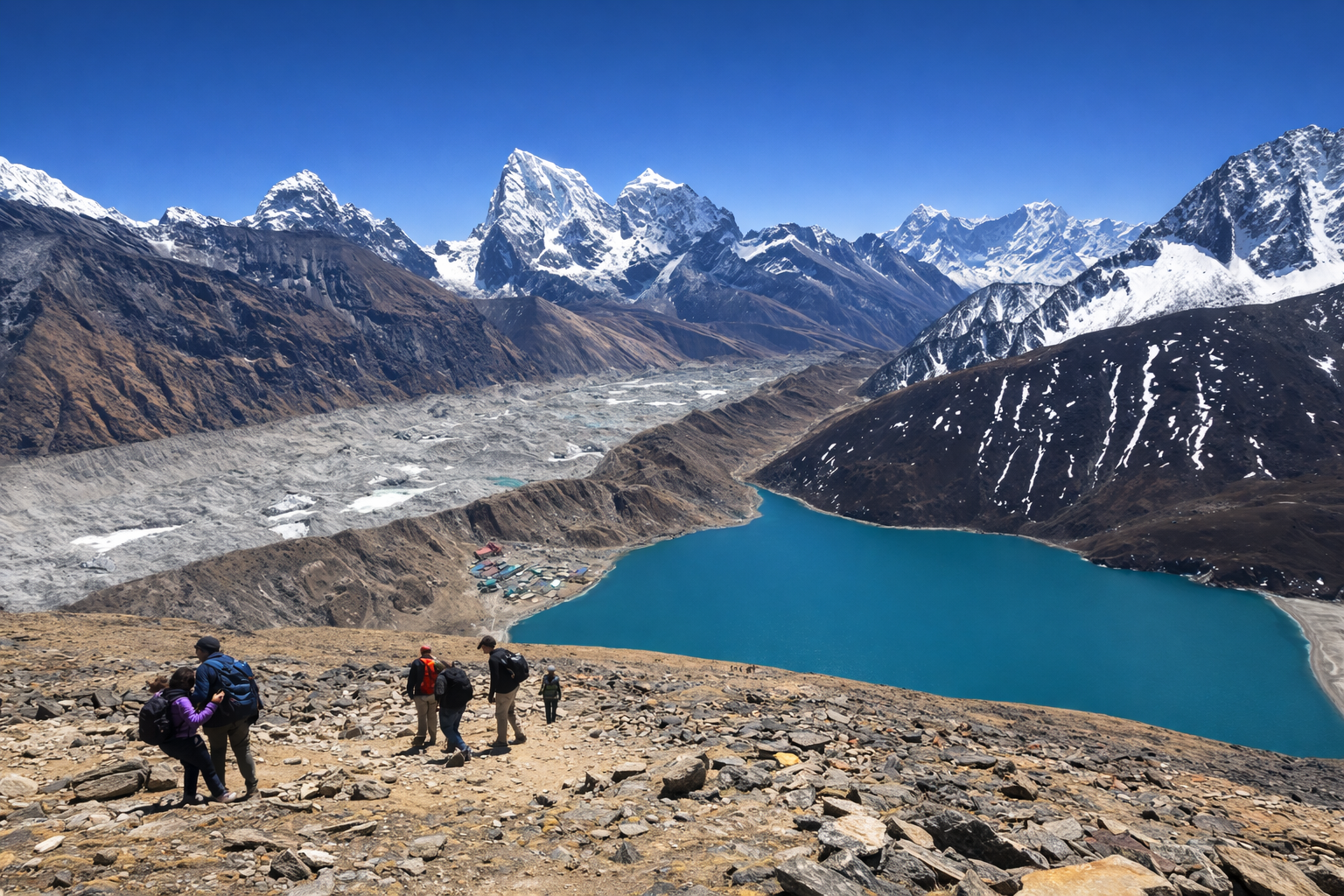
The Gokyo Lakes Trek is one of the most beautiful trekking journeys in Nepal’s Everest region. Famous for its turquoise glacial lakes, peaceful Sherpa villages, enormous Ngozumpa Glacier, and breathtaking views from Gokyo Ri, this trek offers a wonderful alternative to the traditional Everest Base Camp route.
But one of the most common questions trekkers ask before planning the journey is: What is the standard Gokyo Lakes Trek itinerary?
The standard route usually follows the classic Everest trail from Lukla to Namche Bazaar before turning toward the quieter Gokyo Valley. From Namche, trekkers travel through Dole and Machhermo before reaching Gokyo Village beside the beautiful lakes. After spending time acclimatizing and climbing Gokyo Ri, most standard itineraries return to Lukla by following the same valley.
Depending on whether Kathmandu travel days, acclimatization, weather contingency, and the return journey are included, the trek usually takes around 10 to 14 days. A well-paced itinerary is important because the journey reaches Gokyo Ri at 5,357 meters, where altitude becomes a serious consideration.
The classic Gokyo route is:
Kathmandu → Lukla → Phakding → Namche Bazaar → Acclimatization → Dole → Machhermo → Gokyo Village → Gokyo Ri → Dole/Machhermo → Namche Bazaar → Lukla → Kathmandu
The exact overnight stops may vary between trekking companies and individual itineraries. Some itineraries divide the return journey differently, while others add an extra day in Gokyo or Machhermo for acclimatization. Safe Holiday Adventure, for example, presents a 10-day version of the route, while longer itineraries commonly allow additional time for acclimatization and weather delays.
The following is a practical standard day-by-day itinerary.
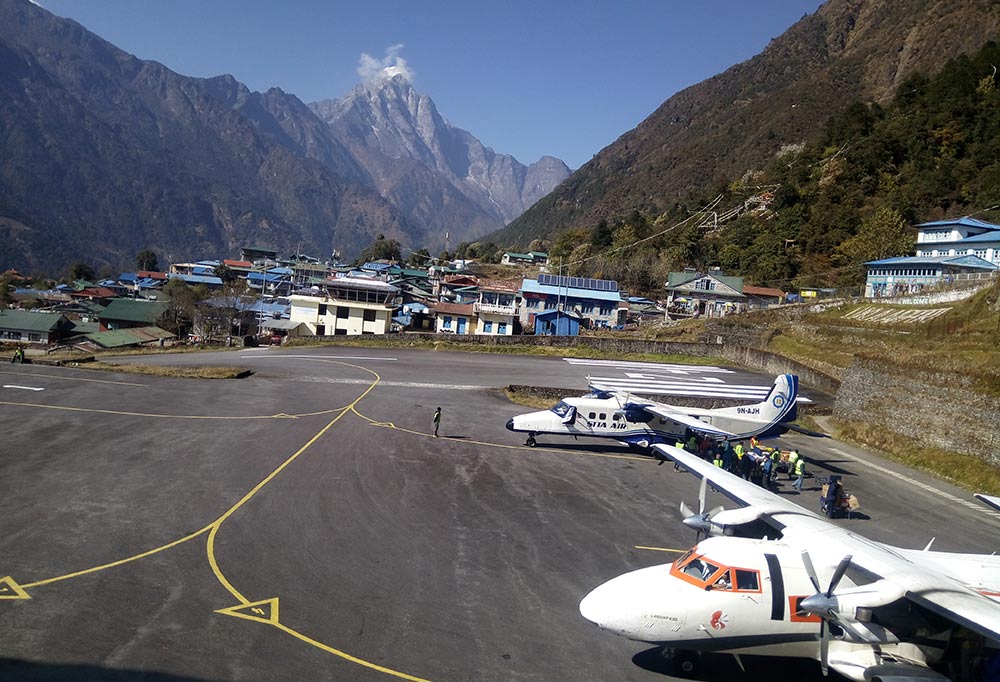
Lukla altitude: approximately 2,860 meters
Phakding altitude: approximately 2,610 meters
Walking time: around 3–4 hours
The Gokyo Lakes Trek traditionally begins with a mountain flight to Lukla, the gateway to many Everest region trekking routes.
After arriving in Lukla, you meet your trekking team and begin walking toward Phakding. The first day is relatively gentle and gives your body time to adjust to the trekking environment.
The trail follows the Dudh Koshi Valley and passes through small settlements, forests, prayer stones, and suspension bridges. Although Lukla is higher than Phakding, the trail includes both ascents and descents.
Phakding is a popular first overnight stop because it allows trekkers to avoid gaining too much altitude on the first day.
Highlights of the day:

Namche Bazaar altitude: approximately 3,440 meters
Walking time: around 5–7 hours
This is one of the most important days of the trek. The trail continues through the Dudh Koshi Valley, crossing several suspension bridges before entering the Sagarmatha National Park area.
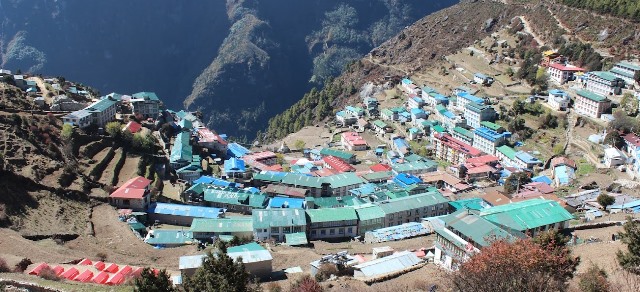
The final approach to Namche Bazaar is challenging because of the long uphill climb. However, reaching Namche is a memorable experience. The town is surrounded by mountains and serves as the main commercial and cultural center of the Khumbu region.
On clear days, trekkers may also enjoy their first distant views of Himalayan peaks during the approach.
Namche has lodges, bakeries, restaurants, shops, and trekking facilities. It is also the last major town before entering the higher and more remote parts of the Gokyo Valley.
Highlights of the day:
Sleeping altitude: approximately 3,440 meters
A standard Gokyo Lakes Trek itinerary should include an acclimatization day in Namche Bazaar.
This does not necessarily mean staying inside the lodge all day. The common approach is to follow the principle of climb high and sleep low. Trekkers can take a day hike to a higher viewpoint or nearby village and then return to Namche for the night.
Popular acclimatization activities include hiking toward the Everest View area or exploring nearby Khumjung and the surrounding villages.
This extra day gives your body more time to adapt before the trek continues toward elevations above 4,000 meters.
Why is this day important?
After Namche, the route climbs steadily toward Dole, Machhermo, and Gokyo. Taking time to acclimatize can reduce the risk associated with ascending too quickly at high altitude.
Highlights of the day:
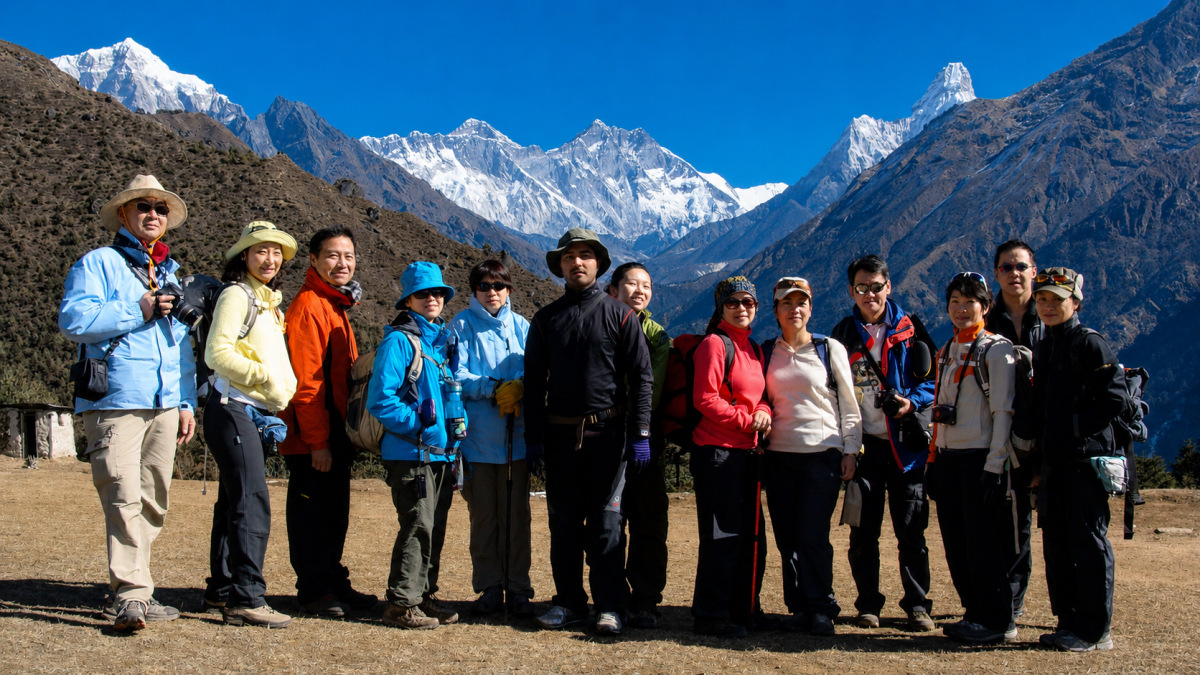
Dole altitude: approximately 4,000–4,200 meters
Walking time: around 5–6 hours
This is where the Gokyo route separates from the main Everest Base Camp trail.
After leaving Namche, the trek follows a scenic route toward the Gokyo Valley. The trail passes through beautiful mountain landscapes and eventually reaches Dole, a small settlement with teahouses used by trekkers and local yak herders.
The Nepal Tourism Board describes the Gokyo route as branching away from the main Everest trail and continuing through the quieter valley toward Dole, passing forests and waterfalls along the way.
The scenery gradually becomes more open as you gain altitude, while the air becomes noticeably thinner.
Highlights of the day:
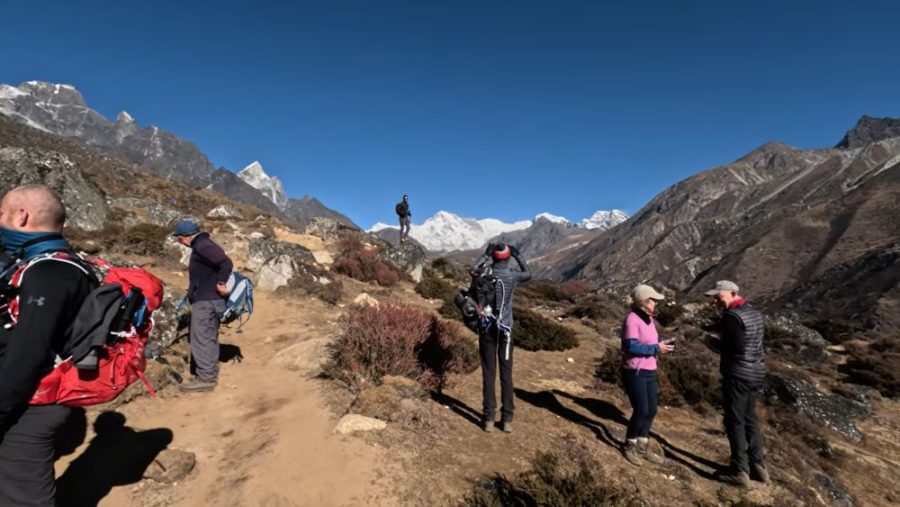
Machhermo altitude: approximately 4,470 meters
Walking time: around 4–5 hours
The trek continues higher through the Gokyo Valley toward Machhermo.
This is usually a shorter walking day than the journey to Namche, but altitude makes it physically demanding. The landscape becomes increasingly alpine, with fewer trees and wider views of mountains and valleys.
Machhermo is an important overnight stop because trekkers are now approaching the highest section of the journey. The gradual ascent helps prepare the body for Gokyo Village and the climb to Gokyo Ri.
The standard route from Dole to Machhermo generally takes about four hours, according to the Nepal Tourism Board, although actual walking time varies depending on fitness and trail conditions.
Highlights of the day:
Gokyo altitude: approximately 4,750–4,800 meters
Walking time: around 4–5 hours
This is one of the most exciting days of the standard Gokyo Lakes Trek itinerary.
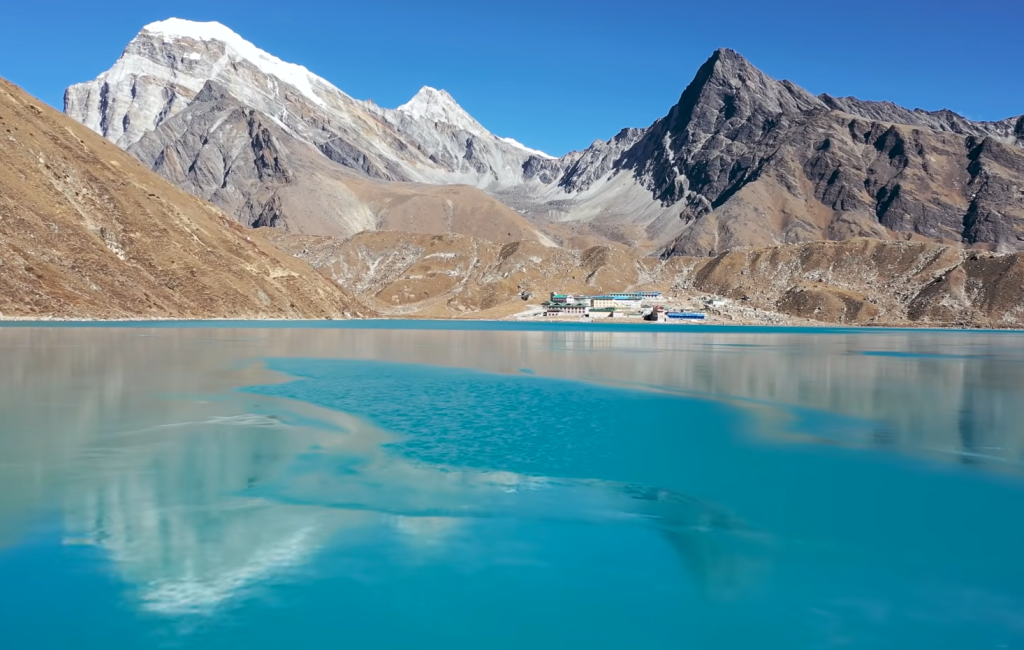
The route continues through the high valley toward the spectacular Gokyo Lakes. Trekkers pass the first and second lakes before reaching the famous third lake, beside which Gokyo Village is located.
The final section travels near the massive Ngozumpa Glacier. The Nepal Tourism Board identifies this glacier as the largest in Nepal and describes the approach to Gokyo as passing Pangkha and climbing the terminal moraine toward the village.
When you arrive in Gokyo, the combination of turquoise water, glaciers, snow-covered mountains, and the peaceful high-altitude environment makes it easy to understand why this trek is so popular.
Highlights of the day:
Gokyo Ri altitude: 5,357 meters
Walking time: approximately 5–7 hours, depending on exploration
For many trekkers, this is the most memorable day of the entire journey.
The hike to Gokyo Ri usually begins early in the morning, often before sunrise. The climb is steep and challenging because of the altitude, but it does not require technical mountaineering skills.
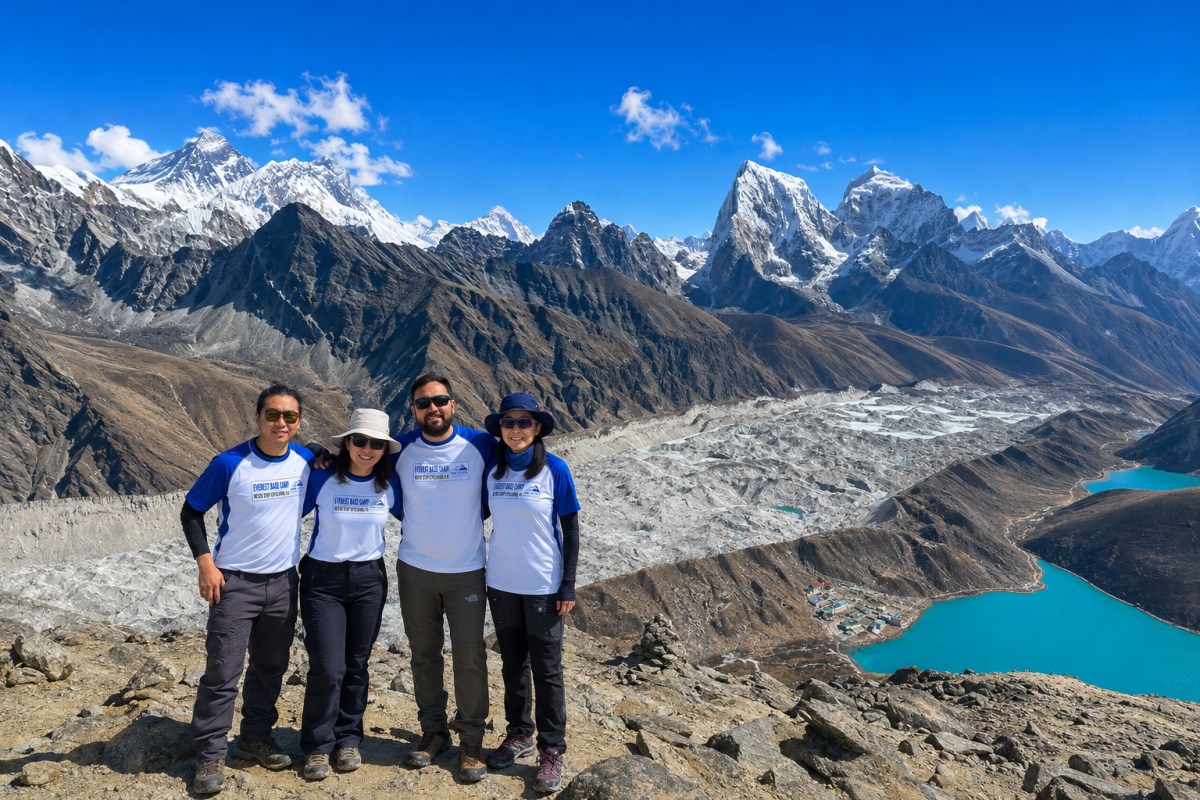
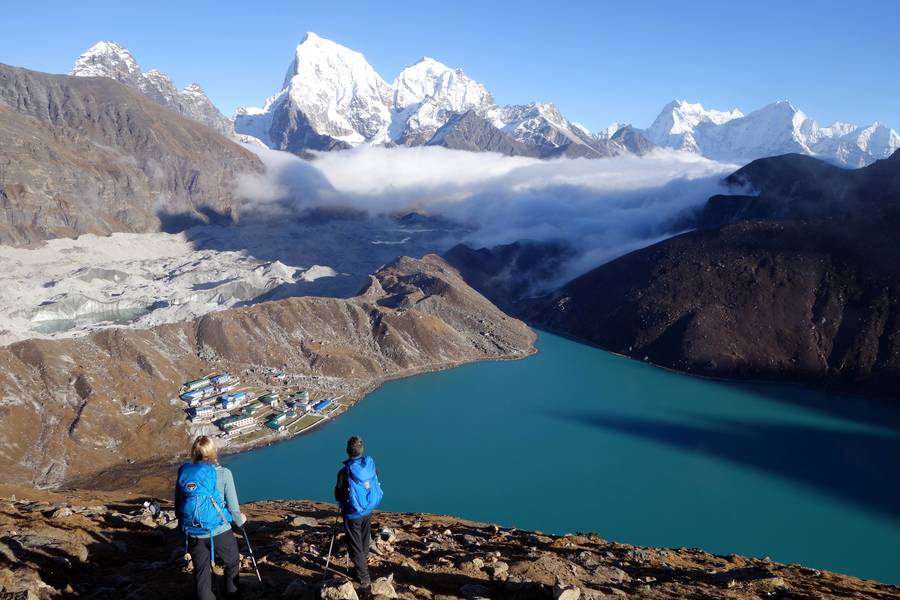
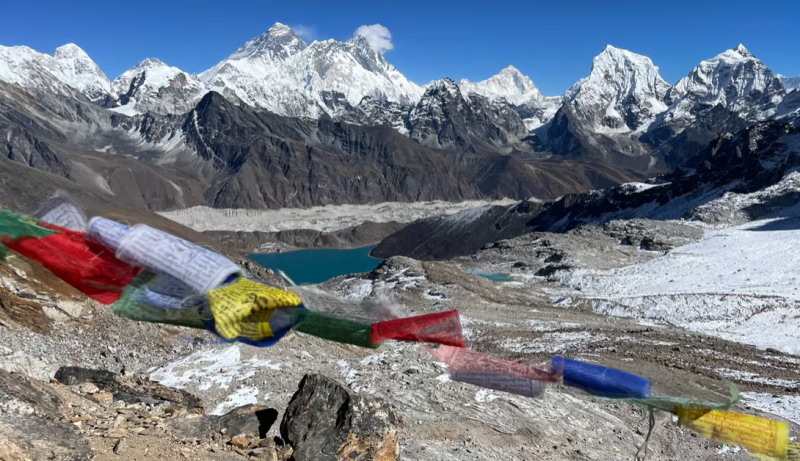
From the summit, trekkers can enjoy one of the most impressive Himalayan panoramas in Nepal. On clear days, the viewpoint offers views toward Everest, Lhotse, Makalu, Cho Oyu, the Gokyo Lakes, and the enormous glacier valley below. Gokyo Ri reaches 5,357 meters and is the highest point on the standard route.
After descending to Gokyo Village, trekkers can rest or explore farther into the valley. Depending on the itinerary, some visitors walk toward the fourth and fifth lakes.
For many travelers, spending a second night in Gokyo is a sensible option because it provides additional time at altitude and avoids rushing the experience.
Highlights of the day:
After completing the Gokyo Ri climb, the standard out-and-back route begins its descent.
Depending on the pace and itinerary, trekkers may walk from Gokyo to Machhermo or continue farther toward Dole. Safe Holiday Adventure’s 10-day itinerary uses Gokyo to Dole as a return stage, while other standard itineraries split the descent into shorter sections.
Descending feels easier for many trekkers because oxygen levels gradually increase, but the knees and legs can still become tired after several days of trekking.
This is a good day to enjoy the Gokyo Valley scenery from a different perspective.
The descent continues through the Gokyo Valley toward Namche Bazaar.
Depending on the previous night’s stop, the route may pass through Machhermo and Dole before joining the trail back toward Namche.
As you lose altitude, the vegetation gradually changes. The return journey provides another opportunity to enjoy the villages, forests, ridges, and mountain views that may have passed quickly during the uphill trek.
Returning to Namche also feels like a major milestone because the highest and most challenging section of the Gokyo Lakes Trek is now complete.
Lukla altitude: approximately 2,860 meters
Walking time: around 6–7 hours
The final trekking day takes you back along the Dudh Koshi Valley toward Lukla.
The route includes descents, river crossings, suspension bridges, and some final uphill sections. Although you are descending overall, this can still be a long and tiring day.
After arriving in Lukla, trekkers usually celebrate the completion of their Himalayan journey and prepare for the flight back to Kathmandu.
The final day involves flying back from Lukla, subject to weather and flight conditions.
Mountain flights can be affected by changing weather, so it is always wise to allow extra time in your Nepal travel plans rather than booking an important international connection immediately after the scheduled return from Lukla.
Once back in Kathmandu, you can relax and reflect on a journey that has taken you from green river valleys to one of the world’s most spectacular high-altitude lake systems.
The biggest mistake when planning the Gokyo Lakes Trek is focusing only on the number of days needed to reach Gokyo.
A good itinerary should also consider how quickly you gain altitude.
The route rises from Lukla at around 2,860 meters to Namche at approximately 3,440 meters, then continues toward Dole, Machhermo, and Gokyo at roughly 4,790 meters. Finally, the Gokyo Ri hike reaches 5,357 meters. Because of this significant elevation gain, acclimatization should be an important part of the plan.
For many trekkers, the Namche acclimatization day is essential. Some longer itineraries also allow an additional day in Gokyo or Machhermo.
Yes. One of the advantages of the Gokyo route is that it can be adapted according to your available time, fitness, and trekking experience.
A faster itinerary may take around 10 days, although it provides less flexibility for acclimatization and delays.
A more comfortable itinerary generally allows approximately 11–14 days, including acclimatization and travel days.
Trekkers can extend the route by crossing Renjo La rather than returning directly through the same valley.
For a much bigger Everest adventure, Gokyo can be combined with Cho La Pass and Everest Base Camp. This is a longer and more physically demanding route.
For most trekkers, a comfortable Gokyo Lakes itinerary should not rush the ascent.
The route should include:
Lukla → Phakding → Namche Bazaar → Acclimatization → Dole → Machhermo → Gokyo → Gokyo Ri → Return via the Gokyo Valley → Namche → Lukla
Adding an extra acclimatization day or a weather buffer is particularly useful for trekkers with limited high-altitude experience.
The goal should not simply be to complete the trek as quickly as possible. A slower, well-planned journey gives you more time to adjust to altitude, enjoy the scenery, and experience the Gokyo Valley properly.
The standard Gokyo Lakes Trek itinerary is a remarkable journey through some of the most beautiful landscapes in the Everest region.
Beginning with the famous flight to Lukla, the route takes you through Phakding and Namche Bazaar before entering the quieter Gokyo Valley. From there, the trek gradually climbs through Dole and Machhermo to the extraordinary turquoise Gokyo Lakes.
The journey reaches its highest point at Gokyo Ri, where a successful climb rewards trekkers with unforgettable views of Everest, Cho Oyu, Lhotse, Makalu, the Gokyo Lakes, and the Ngozumpa Glacier.
Although itineraries can vary, the best standard plan is one that allows enough time for acclimatization and does not rush the high-altitude section of the journey. With good preparation, a suitable itinerary, and attention to altitude, the Gokyo Lakes Trek can be one of the most rewarding adventures in the Himalayas.
Gokyo Trek: Essential Information & Top Tips
Standing at the foot of the world’s highest mountain is a moment that stays with you forever.
Continue Reading
The Everest Base Camp trek is moderate to hard. There is no climbing, no ropes and no technical skil
Continue Reading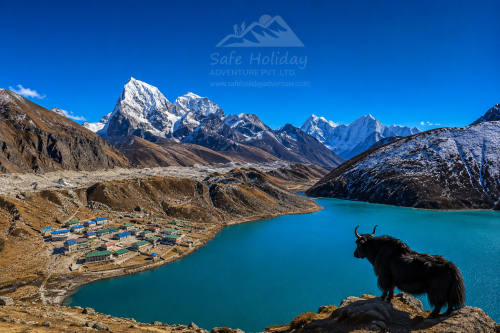
The Gokyo Lakes and Gokyo Ri Trek is one of the most rewarding ways to explore the Everest region wi
Continue Reading
Manaslu Circuit Trek weather is more complicated than simply checking the forecast before leaving Ka
Continue Reading
A clear and honest update for travelers planning Everest, Annapurna, Manaslu, Mustang and other popu
Continue Reading
Manang is one of the most important stops on the Annapurna Circuit Trek. After several days of walki
Continue Reading