
Everest Marathon – Key Highlights Highlights
Everest Marathon Trip Overview: Overview
The Everest Marathon is known as the world’s highest altitude running competition. It is not just a race. It is a complete Himalayan adventure that combines trekking, endurance, culture, and extreme altitude running in one journey. The experience begins in Kathmandu, the capital city of Nepal, where participants prepare for the expedition and meet the trekking team. From here, a short and scenic 30-minute mountain flight takes you to Lukla, one of the most famous and dramatic airports in the world.
At Lukla, the atmosphere immediately changes. The air becomes fresh and cool, and the Himalayan environment surrounds you. Our guide team from Safe Holiday Adventure flies with you and ensures full safety and coordination. After landing, you are welcomed by the support staff and porters. Luggage is organized carefully, introductions are made, and the journey officially begins on foot. The first steps of the trail are peaceful, passing through small forest sections, Buddhist mani walls, and cultural entry points of the Everest region. You also pass important permit checkpoints, including the Sagarmatha National Park, which marks the gateway to the Khumbu Himalaya.
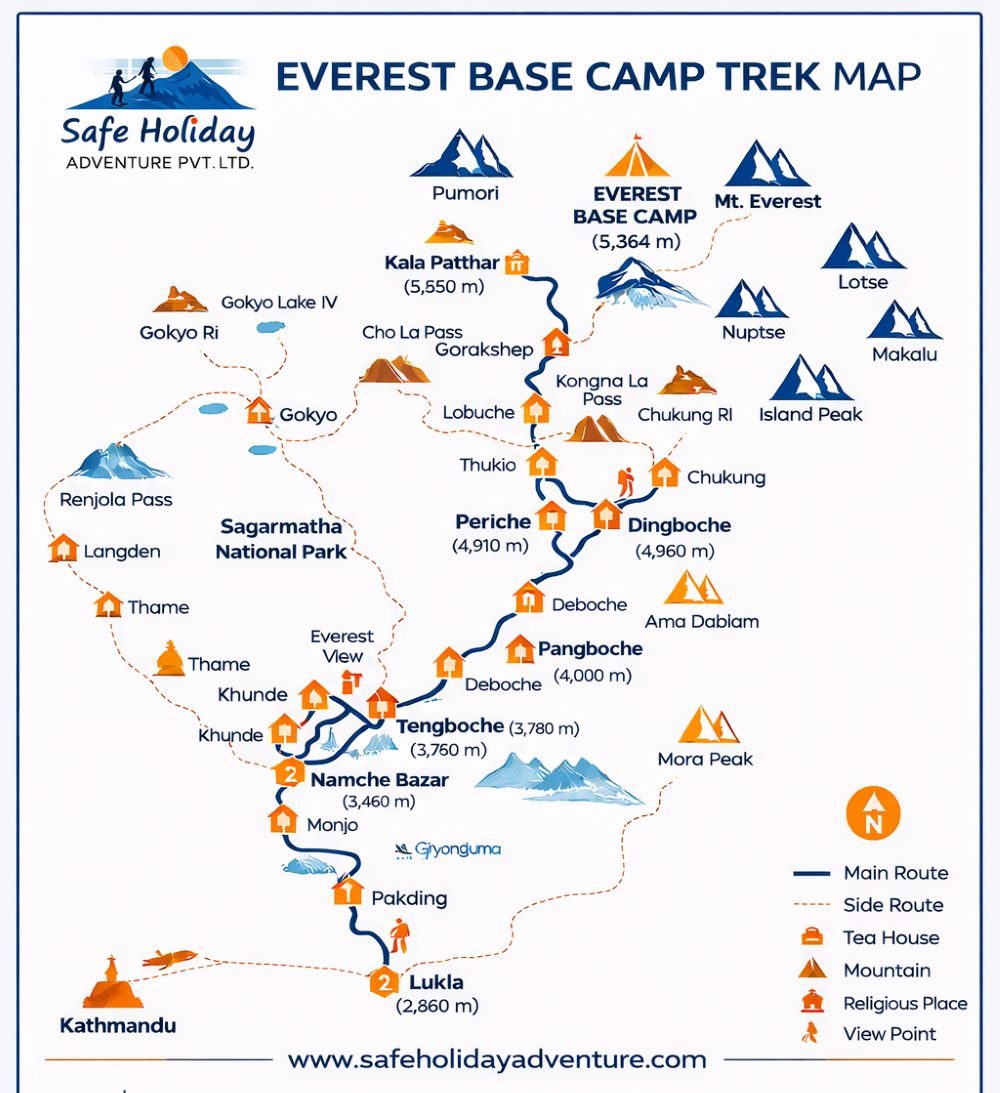
The trail from Lukla starts with a gentle descent. It passes through Chheplung village and follows a wider path alongside the beautiful Dudh Koshi River. The walking experience is calm, with views of waterfalls, suspension bridges, and small Sherpa villages like Ghat and Thado Koshi. After around three hours of trekking covering approximately eight kilometers, you reach Phakding village ( 2,660m). This riverside settlement is a common resting point with many tea houses offering basic but comfortable accommodation, where trekkers spend their first night.
The next day begins with an easy walk along flat trails and suspension bridges. The path slowly becomes more challenging as you move toward Toktok and Banker villages. Here, you experience a mix of uphill and downhill terrain, waterfalls, alpine trees, and river valley scenery. The journey continues through Manjo village, a larger Sherpa settlement with many lodges and hotels. Shortly after, you enter the Sagarmatha National Park checkpoint, where permits are verified and checked by authorities. From here, the trail descends slightly to Jorsalle, a common lunch stop area with tea houses, because beyond this point, there are no food facilities for several hours.
After Jorsalle, the trail follows the riverbank and forest paths before beginning a steady ascent toward Namche Bazaar. The highlight of this section is the famous Hillary Suspension Bridge, which is high, long, and exciting to cross. After crossing, the climb becomes steep with stone steps that test endurance and strength. After about two hours of continuous uphill trekking, you finally reach Namche Bazaar, the main hub of the Khumbu region and a key acclimatization point for all Everest Region Travellers.
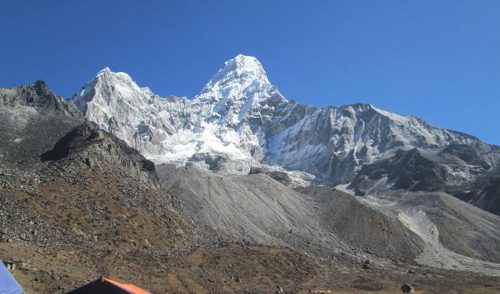
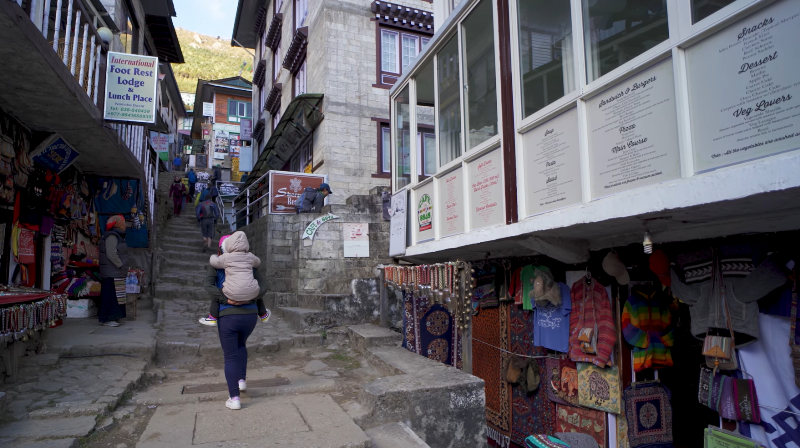
Namche Bazaar is an important stop where trekkers usually stay for one or two nights to adjust to the altitude. This rest period is essential for safety and performance. The town is lively and well developed, with bakeries, shops, cafes, and lodges. From Namche, a short acclimatization hike takes you to Syangboche and Everest View Hotel, where you can witness breathtaking views of Mount Everest and surrounding peaks such as Ama Dablam, Lhotse, Nuptse, Thamserku, and Kusum Kanguru. This is one of the most memorable viewpoints of the entire journey.
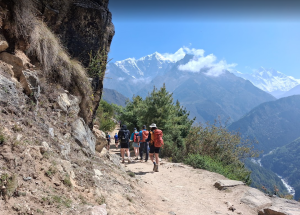
From Namche, the trail continues along mountain cliffs with wide and scenic paths. After about one and a half hours, you reach Kyanjuma village, which offers incredible views of Ama Dablam. From here, the route divides toward different trekking destinations. The Everest Marathon route cofntinues toward Tengboche. The trail descends through Sanasa and Phunki Thanga, passing alpine forests and small villages. Phunki Thanga is a common lunch stop and permit checkpoint area where trekkers rest before the final climb.
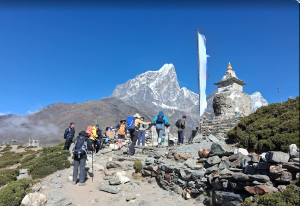
After lunch, the trail ascends steeply through dense forest for about two hours until reaching the iconic Tengboche Monastery. This monastery is one of the most spiritual and sacred places in the Everest region. It offers stunning panoramic views of Mount Everest and nearby peaks. The peaceful atmosphere and Buddhist prayer chants make it a deeply meaningful stop on the journey.
From Tengboche, the trail continues to Pangboche village. This area marks the end of the tree line, and the landscape becomes more open and rugged. The air becomes thinner, and altitude increases noticeably. Some trekkers choose to visit Ama Dablam Base Camp from here, while others continue toward the Classic Everest Base Camp route. The journey then leads to Dingboche (4,360m), a wide valley surrounded by high mountains and stone-walled fields. Dingboche is an important acclimatization stop, and trekkers usually stay here for two nights to adapt to the altitude.
From Dingboche, an acclimatization hike to Nangkartshang Hill is highly recommended. This steep climb takes around three to four hours round trip and provides incredible views of Ama Dablam, Lhotse, Nuptse, and Island Peak. It also helps the body adjust to high altitude conditions, reducing the risk of altitude sickness in the days ahead.
The trail then continues to Lobuche, a small but busy settlement located at a high altitude. This area connects multiple trekking routes, including those coming from Gokyo Valley and Chhukung Valley. From Lobuche, the path becomes rocky and more challenging as you walk alongside the massive Khumbu Glacier. The views of surrounding peaks like Pumori, Nuptse, and Changtse become extremely close and dramatic.
After a long and demanding trek, you finally reach Gorakshep (5180 m), the last settlement before Everest Base Camp ( 5,364m). The altitude here is very high, and walking becomes slower and more difficult due to the thin air. From Gorakshep, the final push leads to the legendary Everest Base Camp, where climbers prepare for Everest summit attempts, and the Everest Marathon base tents are set up. The terrain is rocky, cold, and challenging, but reaching this point is a powerful achievement.
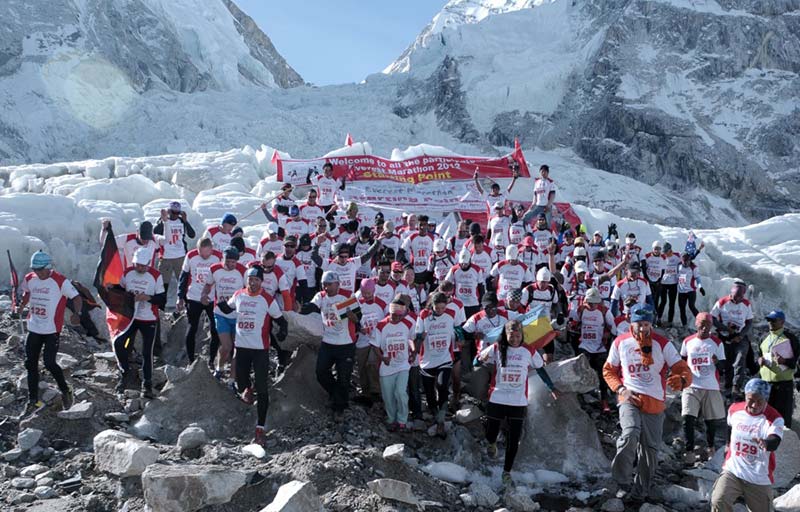
At Everest Base Camp, the Everest Marathon runners stay for preparation and final training days. Our guide and porter team support the group until this point and then return to Namche. On the scheduled date, the marathon begins from base camp. Runners descend approximately 42 kilometers down to Namche Bazaar, making it one of the most extreme and high-altitude marathon routes in the world. The combination of steep descents, rocky paths, altitude, and long distance makes it physically demanding but incredibly rewarding.
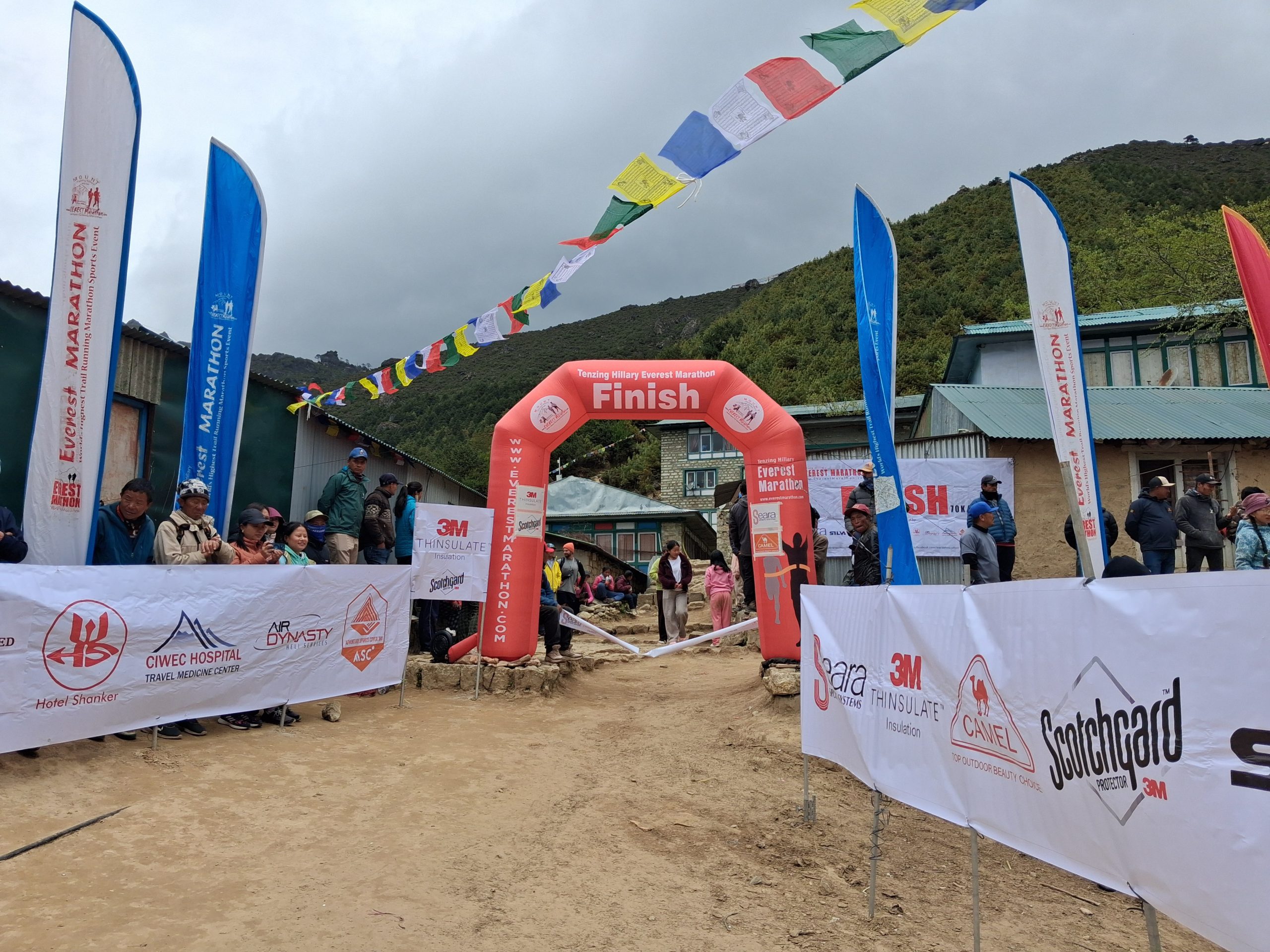
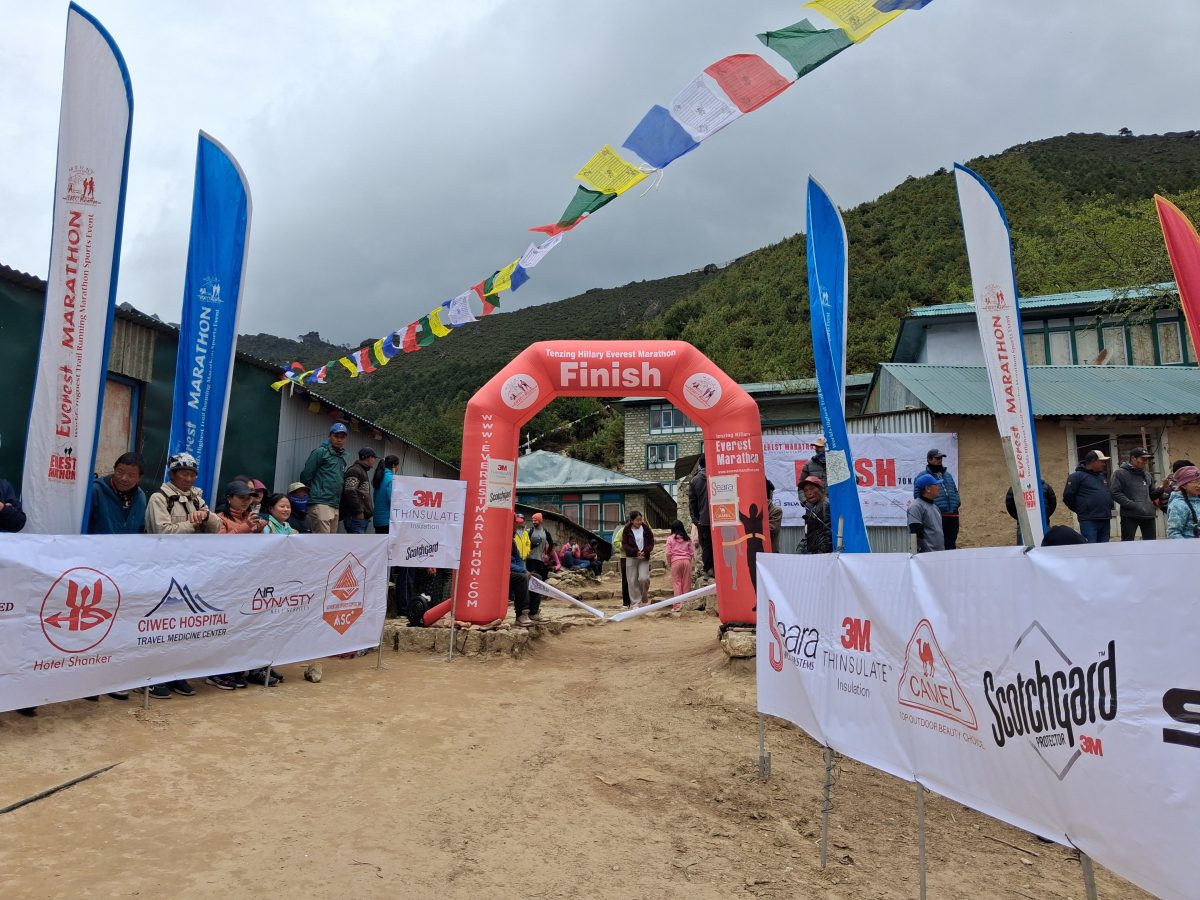
When runners arrive at Namche Bazaar, they are warmly welcomed by the team with celebration and congratulations. Completing the Everest Marathon is considered a lifetime achievement, not only in sports but also in personal endurance and adventure. After the event, participants return to Kathmandu by helicopter, enjoying aerial views of the Himalayas one last time. A farewell dinner is organized in Kathmandu, where the entire team celebrates the successful completion of the journey together.
The Everest Marathon is more than a running event. It is a powerful combination of Himalayan trekking, cultural discovery, high-altitude endurance, and personal transformation. It brings together people from around the world to experience Nepal in its most extreme and beautiful form. It is truly a once-in-a-lifetime journey in the heart of the Himalayas.
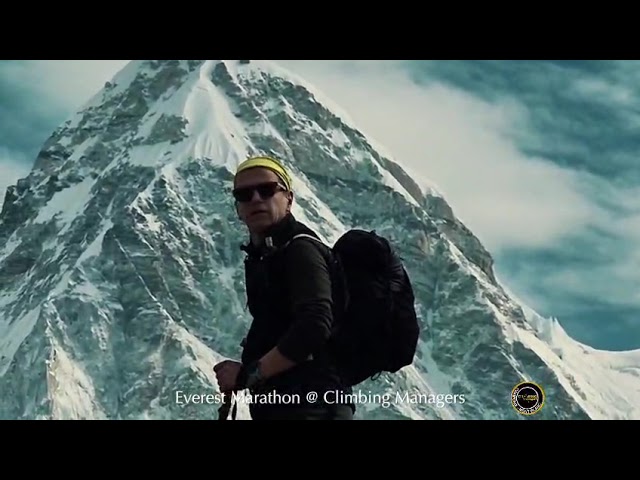
Everest Marathon Trip Packages Options:
The Everest Marathon is one of the world’s highest and most challenging marathons, starting from Everest Base Camp (5,364m) and descending through the beautiful Khumbu Valley to Namche Bazaar. To suit different budgets and comfort levels, Safe Holiday Adventure offers three different Everest Marathon package options.
1. Budget Everest Marathon Package
This package is ideal for trekkers and runners looking for an affordable Everest Marathon experience.
Your journey begins with a scenic flight from Kathmandu to Lukla. From Lukla, you will trek through Phakding, Namche Bazaar, Tengboche, Dingboche, Lobuche, and Gorakshep before reaching Everest Base Camp. Along the route, you will stay in standard mountain teahouses with basic but comfortable facilities.
On Marathon Day, runners start from Everest Base Camp and run downhill to Namche Bazaar. After spending the night in Namche, you will trek back to Lukla the following day and fly to Kathmandu.
Package Highlights
- Kathmandu–Lukla–Kathmandu domestic flights
- Standard teahouse accommodation
- Everest Base Camp trek
- Official Everest Marathon participation
- Budget-friendly option for adventure lovers
2. Standard Everest Marathon Package
The Standard Package offers greater comfort and a faster return journey after the marathon.
The trip starts with a regular flight from Kathmandu to Lukla, followed by the classic Everest Base Camp trekking route. Accommodation is provided in quality teahouses and lodges throughout the trek.
After completing the Everest Marathon from Base Camp to Namche Bazaar on 29 May, participants stay overnight in Namche. On 30 May, instead of trekking back to Lukla, a shared helicopter flight takes you directly from Namche to Kathmandu, saving time and reducing trekking days.
Package Highlights
- Kathmandu–Lukla flight
- Everest Base Camp Trek
- Better-quality lodge accommodations
- Official marathon participation
- Shared helicopter flight from Namche to Kathmandu
- Less walking after the marathon
3. Luxury Everest Marathon Package
The Luxury Everest Marathon Package is designed for travelers seeking maximum comfort, convenience, and exclusive services in the Himalayas.
Your adventure begins with a private helicopter flight from Kathmandu to Lukla, avoiding airport queues and delays. Throughout the trek, you will stay in the best available luxury lodges and premium mountain hotels wherever possible. Most accommodations provide private rooms, attached bathrooms, hot showers, charging facilities, Wi-Fi, comfortable beds, and electric blankets.
Following acclimatization and exploration of Everest Base Camp, you will participate in the Everest Marathon from Base Camp to Namche Bazaar. After the race, you will enjoy a comfortable helicopter transfer back to Kathmandu, offering breathtaking aerial views of Everest, Ama Dablam, Lhotse, and the Khumbu Glacier.
Package Highlights
- Private helicopter from Kathmandu to Lukla
- Premium luxury lodges and hotels
- Private room accommodation
- Hot shower, charging facilities, Wi-Fi, and electric blankets
- Everest Base Camp trek with maximum comfort
- Official Everest Marathon participation
- Helicopter return to Kathmandu after the marathon
- Exclusive and hassle-free Himalayan experience
Flexible Pricing Options
At Safe Holiday Adventure Pvt. Ltd., we understand that every traveler has different preferences and budgets. Therefore, we offer Budget, Standard, and Luxury Everest Marathon packages with flexible pricing and customized services. Whether you are looking for an economical adventure, a balanced trekking experience, or a premium luxury journey to Everest Base Camp, we can tailor the package according to your requirements.
Contact us to receive a detailed itinerary and cost breakdown for your preferred Everest Marathon package.
For the Everest Marathon, we can provide customized quotations for solo travelers, groups, running clubs, and charity teams.
Tenzing Hillary Everest Marathon Race Categories
The Everest Marathon offers three exciting race categories to suit a variety of runners, from ultra-endurance athletes to beginners seeking adventure at high altitude. Each category provides a unique experience through the breathtaking Everest region with challenging terrain and stunning views.
1. Extreme Ultra-Marathon (70 km)
The Extreme Ultra-Marathon covers a grueling 70 kilometers, designed specifically for seasoned ultra-runners who crave the ultimate endurance test. This category demands peak physical fitness, mental strength, and experience running long distances at high altitude. If you are an adventurous athlete looking to push your limits in the world’s highest marathon, this is the perfect challenge for you.
2. Full Marathon (42.195 km)
The Full Marathon follows the classic marathon distance of 42.195 kilometers. It is ideal for experienced marathon runners who are ready to tackle the added challenge of high elevation and rugged Himalayan trails. This race offers a perfect balance between tradition and adventure, letting runners experience the thrill of the Everest region in a demanding but achievable way.
3. Half Marathon (21 km)
The Half Marathon covers a shorter distance of 21 kilometers, making it a great option for those who want to experience the Everest Marathon atmosphere with a less intense physical demand. This category is suitable for moderately experienced runners and those new to high-altitude running. The route still offers beautiful scenery and challenging terrain, but at a pace that is more accessible for many participants.
Each race features diverse landscapes, including rocky trails, steep climbs, and fast descents. The changing terrain tests balance, strength, and concentration, while the breathtaking views of snow-capped peaks and Sherpa villages make every kilometer memorable. Whether you choose the Extreme Ultra, Full, or Half Marathon, the Tenzing Hillary Everest Marathon promises an unforgettable adventure.
Everest Marathon Registration – Reserve Your Place Today
The Tenzing Hillary Everest Marathon is one of the most thrilling and unique races in the world, held every year at the base of Mount Everest. It’s more than just a race – it’s an adventure in the heart of the Himalayas.
With Safe Holiday Adventure, joining this event is quick and easy. We handle the process for you so your spot is secured without stress.
Because only a limited number of runners can participate, early reservations are very important. Booking early guarantees your place and gives you enough time to prepare for the high-altitude challenge.
To reserve your place, you need to fill out four forms – Registration, KYC, Medical, and Payment. The medical form must include a doctor’s note confirming you are fit for high altitude.
Once you are ready, simply contact us. Our professional team will help complete the forms and confirm your booking.
All forms must be sent to Safeholidayadventure@gmail.com before 30th April 2026. Reservations are accepted on a first-come, first-served basis.
A non-refundable booking fee of USD 500 is required to secure your participation. The balance can be paid before you arrive in Nepal or during your first meeting in Kathmandu.
Secure your spot today and be part of this unforgettable Everest adventure.
The Everest Marathon Race Day
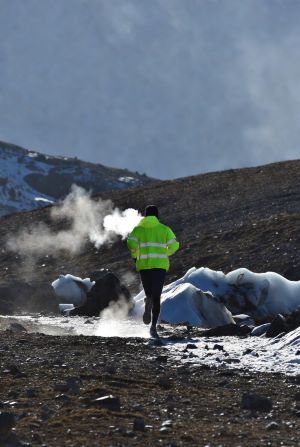
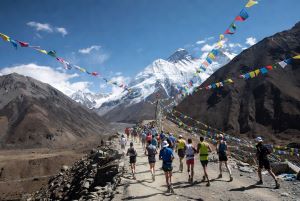
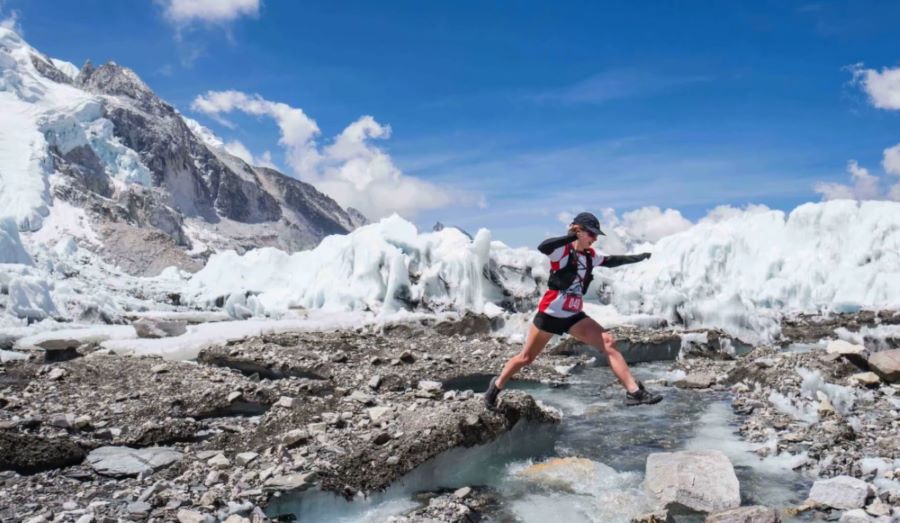
On race day, the excitement is palpable at Everest Base Camp, where the starting line sits beneath towering glaciers and icefalls. As dawn breaks, runners set off on a thrilling descent towards Namche Bazaar, covering roughly 42 kilometers through ever-changing terrain. The course offers an astonishing mix of snow-covered paths, rocky trails, narrow ridgelines, and steep declines. Additionally, runners cross several suspension bridges, their hearts pounding as they sway above deep river gorges, adding to the adrenaline rush.
Stunning Mountain Views
Throughout the race, panoramic views of Everest, Lhotse, Ama Dablam, and Thamserku accompany the runners, serving as constant motivation. Although the thin air makes breathing difficult, the breathtaking scenery fuels every step. Moreover, volunteers and locals cheer along the route, creating a spirited environment that encourages participants to push forward. As runners approach Namche Bazaar, the sound of cheers grows louder, guiding them toward a festive finish line. Completing this marathon not only marks an athletic victory but also symbolizes conquering one of the world’s most challenging courses.
What to Expect: Accommodation & Meals on Everest Trek
The accommodation and food during the trek will be good, fresh, and healthy.
However, on May 27th and 28th, when you stay at the Everest Base Camp for the marathon, there will be many runners. So, you will need to eat together in a large shared tent. The food will be clean but limited in choice because of the big group.
For the 8 days from Lukla to Gorakshep-5,180m, you will stay in tea houses. Here, you can choose from many types of food—Western, Chinese, Indian, or Nepali. The tea houses are clean, with big dining halls and a dry yak dung-burning chimney that keeps the room warm while you eat.
Rooms are well insulated, usually with two beds in one room, shared bathrooms, hot showers, Wi-Fi, and good coffee.
Only the 2 nights at Everest Base Camp will have simple accommodation and food. For the rest of the trek, the food and rooms will be better than you expect.
Unmatched Expert Support for Your Everest Marathon Journey
Choosing the right trekking agency can define your entire experience. With Safe Holiday Adventure, you’re not just booking a tour—you’re securing trusted, professional support from start to finish. Their highly experienced guides walk beside you, offering real-time help with altitude acclimatization and terrain navigation. This isn’t just about guidance—it’s about ensuring your safety every step of the way while helping you stay focused on your goal: completing one of the world’s most iconic races.
Moreover, the agency delivers a complete, stress-free package so you can concentrate on your performance. All essentials—permits, domestic flights, accommodations, meals, and more—are handled with precision. Should any altitude-related health concerns arise, the trained team reacts swiftly with care and professionalism. Thanks to this comprehensive service, you’re free to immerse yourself in the adventure without worrying about logistics. It’s not just efficient; it’s a foundation for peace of mind on every trail.
But this journey is more than just logistics and race prep. The Everest Marathon is a once-in-a-lifetime test of endurance, spirit, and cultural immersion. By partnering with Safe Holiday Adventure Pvt. Ltd., you gain access to an experience that blends Himalayan beauty with Sherpa hospitality. As you cross the finish line in Namche Bazaar, you’ll not only celebrate a successful race—but reflect on the unforgettable journey that got you there, supported every moment by a team that truly cares.
Recommendation for Everest Marathon Attendees
After finishing the marathon and arriving in Namche on May 29th, your legs will be very tired. We strongly recommend taking a shared helicopter flight from Namche to Kathmandu on May 30th. This way, you can rest well, enjoy some days in the city, and relax with a spa or massage.
If you choose to trek 20 km down from Namche to Lukla right after the marathon, it can be hard on your legs. Also, flights from Lukla are often delayed or canceled because of weather.
Flying by helicopter from Namche to Kathmandu is the safest and easiest option. Many of our previous clients at Safe Holiday Adventure have shared positive feedback about this choice.
Mount Everest Marathon itinerary:Outline Itinerary
Day 1: May 16 – Arrival in Kathmandu (4,600 ft, 1,400 m)
Day 2: May 17 – Trek Briefing and Kathmandu Sightseeing (4,600 ft, 1,400 m)
Day 3: May 18 – Flight to Lukla (9,383 ft, 2,860 m) and Trek to Phakding (8,563 ft, 2,615 m), Approx. 3.7 miles (6 km)
Day 4: May 19 – Trek to Namche Bazaar (11,286 ft, 3,440 m), Approx. 6.2 miles (10 km)
Day 5: May 20 – Acclimatization Day at Namche Bazaar (11,286 ft, 3,440 m)
Day 6: May 21 – Trek to Khumjung (12,487 ft, 3,800 m), Approx. 5.6 miles (9 km)
Day 7: May 22 – Trek to Deboche (11,800 ft, 3,600 m) via Tengboche (12,663 ft, 3,860 m), Approx. 7.5 miles (12 km)
Day 8: May 23 – Trek to Dingboche (14,467 ft, 4,410 m), Approx. 6.8 miles (11 km)
Day 9: May 24 – Acclimatization Day at Dingboche (14,467 ft, 4,410 m)
Day 10: May 25 – Trek to Lobuche (16,200 ft, 4,930 m), Approx. 5.6 miles (9 km)
Day 11: May 26 – Trek to Gorakshep (16,942 ft, 5,170 m), Approx. 3.7 miles (6 km)
Day 12: May 27 – Hike to Kalapatthar (18,192 ft, 5,550 m) and Trek to Everest Base Camp (17,598 ft, 5,364 m)
Day 13: May 28 – Rest Day at Everest Base Camp (17,598 ft, 5,364 m)
Day 14: May 29 – Everest Marathon Day (17,598 ft, 5,364 m)
Day 15: May 30 – Rest and Trek to Monjo (9,334 ft, 2,850 m), Approx. 8.7 miles (14 km)
Day 16: May 31 – Trek Back to Lukla (9,383 ft, 2,860 m), Approx. 7.5 miles (12 km)
Day 17: June 01 – Return to Kathmandu (4,600 ft, 1,400 m)
Day 18: June 03 – International Departure (4,600 ft, 1,400 m)
Luxury and Short Itinerary:
Day 01: Fly from Kathmandu to Lukla (2,860m / 9,383ft) and trek to Phakding (2,615m / 8,563ft)
Day 02: Trek from Phakding to Namche Bazaar (3,440m / 11,286ft)
Day 03: Trek from Namche Bazaar to Pangboche (3,985m / 13,074ft)
Day 04: Trek from Pangboche to Dingboche (4,410m / 14,467ft)
Day 05: Acclimatization Day at Dingboche with a hike to a higher elevation and return for an overnight stay.
Day 06: Trek from Dingboche to Lobuche (4,930m / 16,175ft)
Day 07: Trek from Lobuche to Gorakshep (5,170m / 16,962ft)
Day 08: Early morning hike to Kala Patthar (5,550m / 18,209ft) for sunrise views. Return to Gorakshep for breakfast, then trek to Everest Base Camp (5,364m / 17,598ft). Overnight at the tented camp.
Day 09: Everest Marathon – Run from Everest Base Camp to Namche Bazaar (3,440m / 11,286ft)
Day 10: Helicopter Flight from Namche Bazaar to Kathmandu (1,400m / 4,600ft)
Whats Included?
- Airport Transfers: Enjoy seamless airport transfers with private vehicle services, ensuring a smooth journey to and from the airport.
- Kathmandu Accommodation: Relax with a 3-night stay in a 3-star hotel in Kathmandu, including breakfast and a comfortable twin-sharing arrangement.
- Kathmandu Valley Tour: Discover Kathmandu’s cultural and historical gems with a private vehicle tour, guided by a knowledgeable local expert.
- Flights to Lukla: Round-trip flights from Kathmandu to Lukla, the gateway to the Everest region, are included in your package.
- National Park & Village Fees: Your package covers entrance fees for Sagarmatha National Park and Pasang Lhamu Village.
- Experienced Guide: Benefit from the expertise of a seasoned English-speaking guide, with all associated costs and insurance covered.
- Porter Services: We provide a porter for every two trekkers, with all their expenses and insurance included.
- Full-Board Meals & Trek Accommodation: Savor 18 breakfasts, 15 lunches, and 16 dinners with three complimentary teas daily, plus comfortable teahouse stays during the trek.
- Everest Base Camp Tented Camp: Experience the adventure of camping in a tented setup at Everest Base Camp.
- Marathon Registration: Entrance fees for the Everest Marathon are included.
- Medal & Certificates: Celebrate your marathon achievement with a medal and certificate.
- Complimentary Gear: Receive complimentary sleeping bags and down jackets for added comfort during your trek.
- Trekking Route Map: Get a detailed map to guide your trekking journey.
- First Aid Kit: A first aid kit is provided for minor health issues.
- Government Taxes & Service Charges: All applicable taxes and service charges are included in your package.
- International Flights: International airfare is not covered in the package.
- Travel Insurance: Travel insurance is not included and must be arranged separately by the traveler.
- Nepal Visa Fees: Visa fees for entry into Nepal are not part of the package.
- Personal Expenses: Personal costs such as Wi-Fi, bar bills, laundry, hot showers during the trek, gadget charging fees (US$ 1- US$ 5 per gadget), and mobile recharges are not included.
- Additional Nights in Kathmandu: Accommodation for any extra nights in Kathmandu, should you arrive early or stay longer due to unforeseen circumstances, is not covered.
- Extra Luggage Charges: The package includes a 15 kg luggage limit (10 kg + 5 kg). Extra baggage will incur a charge of US$ 2 per kilogram.
- Emergency Evacuation: Costs for emergency evacuation are not included, but we will assist in making arrangements if necessary.
- Tipping: Tips for guides and porters are not included and should be given at the traveler’s discretion.
- Unlisted Services: Any additional services or items not mentioned in the inclusion list are not covered by the package.
Dates and Availability Departures
All our published dates are guaranteed departures. We also provide customized departures tailored to your travel plans.
Travellers Reviews
Michael Brown
United Kingdom | May,2024
Everest Marathon in Nepal – The Ultimate Adventure Experience
James Wilson
Australia | may, 2025
Running the Everest Marathon: An Unforgettable Experience in the Himalayas
I recently completed the Everest Marathon with Safe Holiday Adventure Pvt. Ltd., and it was truly an unforgettable experience.
Our group of runners came together with a shared dream of running in the Himalayas near Mount Everest. From start to finish, everything was extremely well organized, safe, and professionally managed.
Our guides, Santosh and Dharma, were exceptional. Their experience, motivation, and constant care made a huge difference throughout the journey. We always felt supported and safe, even in the challenging high-altitude conditions.
The Everest Marathon route was both demanding and incredibly beautiful. The Himalayan views were beyond imagination, and every step felt meaningful and rewarding. Finishing this journey with fellow runners created memories and friendships I will always cherish.
I sincerely thank Safe Holiday Adventure Pvt. Ltd. for making this dream possible. I highly recommend them to anyone planning a trekking or running adventure in Nepal.
James Wilson
– Australia
David
Australia | 29 may,2025
A Dream Come True: Everest Marathon Journey in Nepal
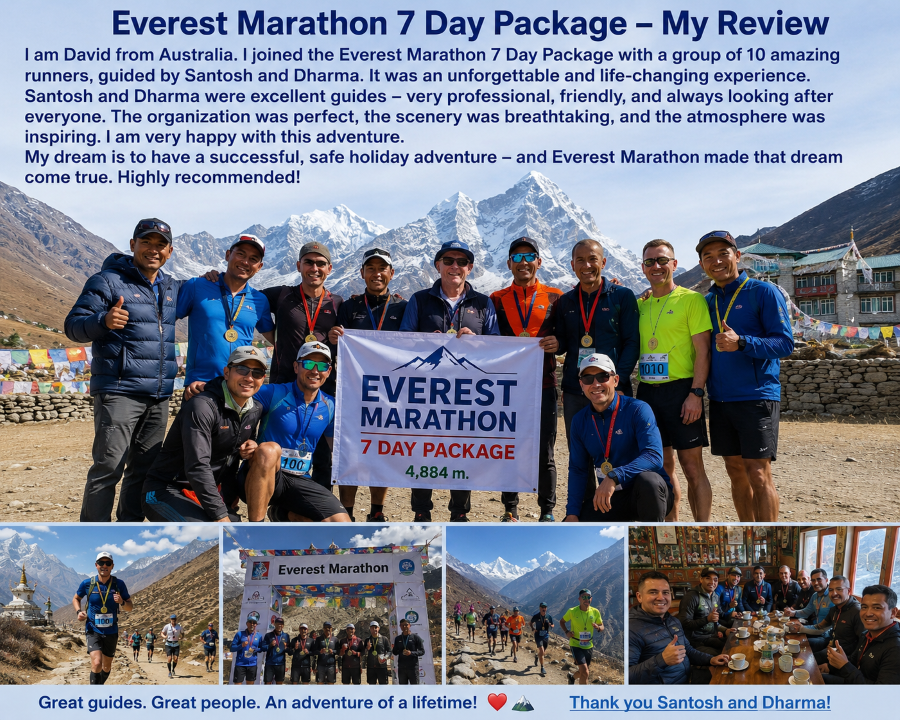
I am David from Australia, and I recently completed the Everest Marathon 7-Day Package with Safe Holiday Adventure Pvt. Ltd. It was truly one of the most unforgettable experiences of my life.
Our group of 10 runners came together from different backgrounds, united by one dream — to run in the Himalayas near Mount Everest. From the very beginning, everything was well organized, safe, and professionally managed.
Our guides, Santosh and Dharma, were outstanding throughout the entire journey. Their experience, encouragement, and care made us feel confident and supported even in the challenging mountain conditions. They ensured our safety at every step while also making the journey enjoyable and inspiring.
Running the Everest Marathon route was both challenging and breathtaking. The views of the Himalayas were beyond words, and every step felt meaningful. Completing the journey with my fellow runners created a strong bond among us that I will always remember.
I am very happy and proud to have achieved this dream. I would like to sincerely thank Safe Holiday Adventure Pvt. Ltd. for making this adventure possible. Everything from logistics to guidance was handled perfectly, and I would highly recommend this company to anyone dreaming of trekking or running in Nepal.
This was not just a marathon experience — it was a life-changing journey in the heart of the Himalayas.
Mathieu Janssens
Belgium | may, 2025
Everest Marathon – 14 Days Adventure with Safe Holiday Adventure
We have just completed the 14-day Everest Marathon adventure with Safe Holiday Adventure, and it was an unforgettable experience in the Everest region.
Our group of 9 friends enjoyed a well-organized journey with excellent support from our guide Santosh, whose leadership, care, and local expertise made the trek safe, smooth, and enjoyable throughout.
From Lukla to the high Himalayas, every day offered breathtaking mountain views, challenging trails, and incredible memories. The adventure perfectly combined endurance, teamwork, and the natural beauty of the Everest region.
We highly recommend this Everest Marathon experience with Safe Holiday Adventure for anyone seeking a unique and inspiring trekking adventure in Nepal.


Genaral Trip InfoInfos
History of the Tenzing-Hillary Everest Marathon
The Everest Marathon is one of the world’s highest and most challenging endurance races, held in Nepal’s Everest region. The idea of the race first developed in the mid-1980s when explorers began imagining a marathon in the extreme conditions of the Himalayas.
The first early versions of the event were organized in 1987 and 1989. These were experimental races that tested human endurance at very high altitude and proved that long-distance running was possible in such conditions.
The modern form of the Everest Marathon began in 2003 as part of the 50th anniversary celebration of the first ascent of Mount Everest by Tenzing Norgay and Edmund Hillary. This marked the official start of the organized event as it is known today.
From 2004, the race was named the Tenzing-Hillary Everest Marathon in honor of the two climbers. It became an annual event, usually held on May 29, attracting international runners.
Today, the marathon starts near Everest Base Camp and finishes in Namche Bazaar. It is known for its extreme altitude, difficult trails, and strong connection to Himalayan mountaineering history.
Everest Marathon Permit Requirements
To participate in the Everest Marathon, runners must obtain official permits from the Government of Nepal. A trekking permit for the Khumbu region is required because the race route passes through the protected area of Sagarmatha National Park. Participants also need a TIMS card for tracking and safety purposes during the journey.
International runners must register through an authorized trekking or expedition company in Nepal. Medical fitness approval is often required due to the extreme altitude and physical demands of the race. All participants must also complete the official race registration and arrive in Nepal in time for the mandatory acclimatization schedule before the event begins.
Helicopter Option for Everest Marathon Start
Everest Marathon Race Day
Everest Marathon Accommodation: Base Camp to Namche Stay Plan
Altitude Challenges in Everest Marathon
The Everest Marathon is extremely challenging due to its high altitude. The race starts at Everest Base Camp (5,364m), where oxygen levels are much lower than at sea level. This makes breathing difficult and quickly reduces stamina and energy.
Many runners face altitude sickness, which can cause headaches, dizziness, and fatigue. Even fit athletes struggle because the body cannot perform normally in low-oxygen conditions.
Cold weather, strong winds, and rough mountain trails add more difficulty. Each step requires extra effort, and recovery is slower at high elevation.
Overall, success in the Everest Marathon depends on good acclimatization, strong endurance, and careful pacing in extreme Himalayan conditions.
Safe drinking water on the Everest trail
Everest Marathon official route
Registration and Costs for Everest Marathon
The Everest Marathon requires an official registration fee of around USD 500, which covers participation in the race itself. However, the total trip cost depends on the travel agency you choose, as most runners book a full support package.
On average, the overall package ranges from USD 1,300 to 1,700, depending on services included such as permits, accommodation, meals, domestic flights or helicopter transfer to Lukla, guide support, and logistics during the journey.
Prices may vary slightly based on group size, comfort level, and additional services, but this range is commonly expected for most standard Everest Marathon packages in Nepal.
Detailed ItineraryItinerary
May 18 – Arrival in Kathmandu (1,400 m / 4,593 ft)
- Trip Facts: No trekking. Arrival day.
- Day Highlight: Welcome to Nepal and explore Kathmandu’s vibrant Thamel district.
Upon arrival at Tribhuvan International Airport, a Safe Holiday Adventure representative will greet you and escort you to your hotel in Thamel, Kathmandu’s bustling tourist hub. After check-in and freshening up, take some time to relax or explore the colorful streets filled with shops, cafés, and local handicrafts. This is your first chance to soak in Nepali culture and atmosphere. In the evening, join a welcome dinner with your guide and fellow trekkers. This is a great opportunity to ask questions about the journey ahead and meet your team. After dinner, rest well to prepare for the adventure starting tomorrow.
Accommodation : Hotel
May 19 – Trek Briefing and Kathmandu Sightseeing (1,400 m / 4,593 ft)
- Trip Facts: No trekking. Cultural day.
- Day Highlight: Trek preparation and visit to UNESCO World Heritage sites.
Begin your day with a comprehensive trek and marathon briefing where your guide explains the route, safety protocols, altitude sickness prevention, and essential gear. Afterwards, take a guided tour of Kathmandu’s iconic landmarks. Visit Swayambhunath Stupa (Monkey Temple), perched atop a hill offering panoramic views of the city and home to playful monkeys and fluttering prayer flags. Next, explore Kathmandu Durbar Square, rich with ancient temples, palaces, and vibrant markets. Enjoy lunch at a local restaurant serving Nepali cuisine. The afternoon is free for you to pack, shop, or rest. Return to your hotel for dinner and a good night’s sleep.
Accommodation : Hotel
May 20 – Flight to Lukla and Trek to Phakding (2,610 m / 8,579 ft)
- Trip Facts: Flight 35 min; Trek 8 km / 5 miles; Ascend 60 m, descend 310 m; Trek time 3–4 hrs.
- Day Highlight: Scenic mountain flight and first trek through Sherpa villages.
Start early with a spectacular 35-minute flight from Kathmandu to Lukla, where the airport is perched on a cliff with stunning Himalayan views. After meeting your trekking crew and porters, begin your trek along the Dudh Koshi River. The trail passes through dense pine and rhododendron forests, crossing several wooden and suspension bridges. You’ll walk through the Sherpa village of Chaurikharka before reaching Phakding, a peaceful village beside the river. The walk is gentle and a perfect way to start adjusting to altitude. Check into a teahouse, relax, and enjoy dinner while soaking in the Himalayan atmosphere.
Accommodation : Tea House
May 21 – Trek to Namche Bazaar (3,440 m / 11,286 ft)
- Trip Facts: Trek 10–11 km / 6.2–6.8 miles; Ascend 830 m, descend 100 m; Trek time 6–7 hrs.
- Day Highlight: Entering Sagarmatha National Park and first views of Mount Everest.
Step into the heart of the Everest region today as you trek from Phakding village to the bustling Sherpa town of Namche Bazaar. The trail follows the scenic Dudh Koshi River, winding through rhododendron and pine forests filled with the songs of Himalayan birds. Early in the trek, cross the famous Hillary Suspension Bridge, an iconic structure named after Sir Edmund Hillary, offering spectacular views of the river below.
Soon, you enter Sagarmatha National Park, Nepal’s first national park and a UNESCO World Heritage Site, known for its diverse wildlife and stunning mountain landscapes. At the park entrance in Monjo village, permits will be checked by the park authorities to ensure conservation efforts.
The trek then takes you on a steady, steep climb through forested paths and terraced fields to reach Namche Bazaar. Known as the Sherpa capital, Namche is lively with vibrant markets, cafes, and shops selling local handicrafts and trekking gear. On a clear day, the town offers stunning panoramic views of towering peaks such as Mount Everest (8,848 m), Ama Dablam (6,812 m), and Thamserku (6,623 m).
You can visit the Sherpa Culture Museum here to learn about the rich traditions and history of the Sherpa people. After settling into your lodge, take time to explore the charming town and enjoy the crisp mountain air as you prepare for the next day’s adventure.
Accommodation : Tea House
May 22 – Acclimatization Day at Namche Bazaar (3,440 m / 11,286 ft)
- Trip Facts: Short hikes, 3–4 hrs for acclimatization.
- Day Highlight: Panoramic mountain views from the Everest View Hotel.
Today is dedicated to acclimatization. After breakfast, hike gently to the Everest View Hotel (3,880 m), where you will enjoy panoramic views of Everest, Lhotse, and Ama Dablam. On the way, pass through Sherpa villages and terraced fields. Back in Namche, visit the Sherpa Culture Museum to understand local life and mountaineering history. Spend the afternoon at leisure, exploring the town’s markets or relaxing in a tea house. Hydrate well and rest, preparing your body for the higher altitudes to come.
Accommodation : Tea House
May 23 – Trek to Pangboche (3,985 m / 13,074 ft)
- Trip Facts: Trek 7 km / 4.3 miles; Ascend 545 m; Trek time 4–5 hrs.
- Day Highlight: Visit the ancient Pangboche Monastery and stunning mountain views.
Experience the heart of the Everest region today as you trek from Namche Bazaar to the peaceful village of Pangboche. The trail takes you alongside the flowing Dudh Koshi River, through beautiful Sherpa villages like Kyanjuma and Sanasa. Along the way, cross several suspension bridges spanning crystal-clear mountain streams, adding an adventurous touch to your journey.
You will pass through dense forests filled with tall pine and vibrant rhododendron trees, which bloom with bright colors in spring. The path steadily climbs as you approach Pangboche, a traditional Sherpa village known for its ancient monastery. This monastery is believed to house a sacred relic linked to the legendary Yeti, adding a mystical charm to your visit.
Pangboche lies in the shadow of the majestic Ama Dablam (6,812 m), one of the most beautiful and iconic peaks in the Himalayas. Take time to explore the monastery, meet local Sherpa people, and immerse yourself in their rich culture and traditions. The village’s serene atmosphere makes it an ideal place to rest and prepare for the higher-altitude trekking that lies ahead.
Today’s trek offers not only stunning scenery but also a unique cultural experience that will deepen your connection with the Everest region.
Accommodation : Tea House
May 24 – Trek to Dingboche (4,410 m / 14,468 ft) and Acclimatization Hike
- Trip Facts: Trek 5 km / 3.1 miles; Ascend 425 m; Trek time 2–3 hrs + afternoon hike.
- Day Highlight: Scenic trek along Imja Khola River and acclimatization hike to Nagarjun Hill.
Today’s journey starts from Pangboche, where the trail follows the gentle flow of the Imja Khola River. The path winds through beautiful alpine meadows and stands of pine trees, creating a peaceful and scenic trek. Along the way, you will see small villages and yak grazing fields, giving a glimpse of life in the high Himalayas.
The mountains around you are breathtaking. Look up to the east and north to see Lhotse (8,516 m) and Makalu (8,463 m), two of the world’s highest peaks, standing tall with snow-covered summits.
After about 2 to 3 hours of steady climbing, you will arrive at Dingboche, a cozy village at 4,410 meters altitude. Here you can enjoy a warm lunch and take some rest to prepare your body for the higher elevations ahead.
In the afternoon, we take a short but important acclimatization hike. This hike goes up to Nagarjun Hill, which rises to about 5,100 meters. The climb is a bit steep but manageable, and it helps your body get used to the thinner air at higher altitudes.
From the top of Nagarjun Hill, you will be rewarded with stunning panoramic views of the surrounding mountains and the valley below. It’s a perfect spot for photos and a peaceful moment in nature.
After descending back to Dingboche, you will have time to relax, enjoy dinner, and rest well to get ready for the next day’s trek.
Accommodation : Tea House
May 25 – Trek to Lobuche (4,940 m / 16,207 ft)
- Trip Facts: Trek 8 km / 5 miles; Ascend 530 m; Trek time 4–5 hrs.
- Day Highlight: Cross Thukla Pass Memorial and views of Khumbu Glacier.
Today, we begin our trek from Dingboche and walk about 8 kilometers (5 miles) towards Lobuche. The trek takes approximately 4 to 5 hours and involves climbing about 530 meters. The trail is rugged and rocky, running alongside the Khumbu Glacier, giving us spectacular views of the icy landscape.
The path leads us through moraine, which is a rough mix of rocks and gravel left by glaciers, so the footing is uneven and requires careful walking. Along the way, we will pass the Thukla Pass Memorial, a quiet and moving site dedicated to climbers who lost their lives in the Everest region. It’s a place for reflection and respect.
As we continue, towering peaks surround us. To the west, we see Mount Pumori (7,161 m) standing tall and majestic. To the north, you can spot Cho Oyu (8,188 m), the sixth highest mountain in the world, with its snowy peak glistening in the sunlight.
Arriving in Lobuche, a small village with several traditional teahouses, we will check into our lodge and rest. The air here is cold and dry, and the high altitude begins to feel stronger. This is a good time to relax, hydrate, and let your body adjust to the thin mountain air.
The stunning mountain scenery, the quiet of the glacier valley, and the sense of being close to some of the world’s highest peaks make this day truly memorable.
Accommodation : Lodge
May 26 –Trek from Lobuche to Gorakshep(5,164 m / 16,942 ft) and Evening Hike to Kalapatthar
- Trip Facts: Trek 5 km / 3.1 miles; Ascend 220 m; Trek time 3 hrs.
- Day Highlight: Final village before Everest Base Camp with panoramic views.
Today, we will start our trek a little later in the morning, around 8 or 9 am, because today’s walk is shorter and less tiring. From Lobuche, the trek to Gorakshep will take about 2.5 to 3 hours.
The first part of the trek is easy and mostly flat, as we walk through a wide valley. This easy trail lasts for about one hour. After that, we will begin a short but steep climb of about 15 minutes to reach the rocky moraine area. The moraine is a collection of rocks and gravel left by glaciers.
From there, the trail continues on a rocky path with small ups and downs, as we slowly go up and down a bit. After walking carefully on this rocky terrain, we will finally arrive at Gorakshep, a small settlement located in the middle of a glacier.
Gorakshep is a wide open area where you can see many magnificent mountains all around, including Mount Pumori (7,161 m), Nupse (7,861 m), Khumbutse (6,624 m), Lingtren (6,749 m), and Changtse (7,543 m).
After arriving, we will check into our lodge to rest. You can eat some light food and relax for a while.
In the late afternoon, around 4 or 5 pm, we will take a hike from Gorakshep to Kalapatthar, a famous viewpoint. This hike will help our bodies acclimate to the high altitude and prepare us for the next day’s activities.
The hike to Kalapatthar takes about 1.5 to 2 hours and is mostly steep going up. From the top, you will have beautiful views looking northeast from Gorakshep, including a close view of Mount Everest and surrounding peaks.
After enjoying the sunset and the stunning scenery, we will return to Gorakshep. The way down from Kalapatthar to Gorakshep is shorter and easier, taking about 40 minutes downhill.
We will spend the night at Gorakshep, resting well for the big day ahead.
Accommodation : Tea House
May 27 – Hike to Kalapatthar (5,545 m) and Trek to Everest Base Camp (5,364 m)
- Trip Facts: Total hike approx. 10 km / 6.2 miles; Ascend 380 m; Trek time 6–7 hrs.
- Day Highlight: Sunrise views from Kalapatthar and a visit to Everest Base Camp.
Wake early for the climb to Kalapatthar, the best viewpoint for sunrise over Mount Everest (8,848 m), Lhotse, and Nuptse. The steep hike takes about 1.5–2 hours. After enjoying breathtaking panoramic views, descend to Gorakshep for breakfast. Next, trek to Everest Base Camp, walking along the Khumbu Glacier and past climbers’ tents and gear. Spend time at base camp soaking in the atmosphere, taking photos, and celebrating your achievement. Return to Gorakshep for dinner and rest.
Accommodation : Tea House
May 28 – Rest Day at Everest Base Camp
- Trip Facts: No major trekking. Acclimatization and rest.
- Day Highlight: Recover and prepare for the marathon.
Use this day to rest, acclimatize, and prepare physically and mentally for the Everest Marathon. Explore nearby glacier views or chat with other trekkers and runners. Stay hydrated and consume nutritious meals to keep your energy high. Take the time to organize and check your running gear. This rest day is crucial to ensure your body is ready for the demanding marathon ahead.
May 29 – Everest Marathon Day (42.195 km / 26.2 miles)
- Trip Facts: Marathon distance; mostly downhill; rocky, forest, and trail paths.
- Day Highlight: Running the world’s highest marathon with spectacular scenery.
After an early breakfast, start the Everest Marathon from Base Camp. The course descends through Gorakshep, Lobuche, Thukla Pass, Dingboche, Pangboche, Tengboche, and finishes in Namche Bazaar. The route covers 42.195 kilometers and features a mix of rocky terrain, forest trails, and suspension bridges, all surrounded by majestic Himalayan peaks such as Everest, Ama Dablam, and Lhotse. The marathon tests your endurance and offers an unforgettable experience running on one of the world’s most stunning high-altitude trails. Celebrate your incredible achievement with your team and fellow runners in Namche Bazaar
Accommodation : Tea House
Flight from Namche Bazaar to Kathmandu
- Trip Facts: Helicopter flight approx. 45 minutes, includes refueling stop at Lukla.
- Day Highlight: Scenic helicopter flight over the Himalayas and arrival in Kathmandu.
After breakfast, board a shared helicopter for a thrilling flight from Namche Bazaar to Lukla, where the helicopter will refuel before continuing to Kathmandu. Enjoy breathtaking aerial views of snow-capped peaks, terraced hillsides, and traditional villages scattered across the landscape. Upon arrival in Kathmandu, transfer to your comfortable hotel for a hot shower and rest. The evening is free to celebrate your successful marathon and trek or explore Kathmandu’s lively streets.
Accommodation : Hotel
June 1 – Final Departure
- Trip Facts: No trekking. Departure day.
- Day Highlight: Farewell to Nepal with lasting memories.
Enjoy your last breakfast in Kathmandu. Depending on your flight schedule, you may have some free time for last-minute shopping or sightseeing in the city. Later, you will be transferred to Tribhuvan International Airport for your onward journey home or to your next destination. Carry with you unforgettable memories of your Everest Marathon adventure and Nepal’s stunning mountains.
Dear Trekkers,
If you want to join the Tenzing Hillary Everest Marathon competition but have only 10 days, we can make it happen.
Instead of the classic 15-day Everest Base Camp trek, we offer a faster 9-day program designed for fit and experienced runners. This plan skips acclimatization days in Namche and Dingboche but still takes you to Everest Base Camp for the World’s Highest Marathon Competition and back to Kathmandu in time. We’ll customize your itinerary to suit your schedule, budget, and fitness level, so you can experience both the world’s highest marathon ( Tenzing Hillary Everest Marathon) and the beauty of the Everest region.
📩 Email us your travel dates, and we’ll arrange everything.
Everest Marathon 10 Day Package FAQs
The Everest Marathon is a challenging race that takes place annually in Nepal, starting from the Everest Base Camp at an altitude of 5,364 meters (17,598 feet) and finishing in the town of Namche Bazaar. It’s one of the highest marathons in the world.
The marathon is typically held in May. The exact date can vary each year, so it’s best to check with the organizers or your travel agency for the specific date.
Participants should be in good physical condition and have prior marathon or long-distance running experience. It’s also important to acclimatize to the high altitude before the marathon.
The marathon course is approximately 42.195 kilometers (26.2 miles) long.
The course includes a mix of rugged trails, rocky paths, and steep ascents and descents. The altitude can also present additional challenges.
Participants typically trek to Everest Base Camp from Lukla. This trek can take around 10-12 days, including acclimatization days.
Training should include long-distance running, high-altitude training, and strength conditioning. Acclimatization to high altitude is crucial, so training at higher elevations or using a hypoxic chamber is beneficial.
Essential items include trekking gear, running shoes suitable for rugged terrain, warm clothing, and a good supply of high-energy snacks. Don’t forget essentials like a water bottle, sunscreen, and a first-aid kit.
Yes, there are several aid stations along the route providing water, snacks, and medical assistance. However, it’s advisable to carry some of your supplies.
Acclimatization is key to preventing altitude sickness. Make sure to follow the recommended itinerary for acclimatization and listen to your body. If you experience severe symptoms, seek medical help immediately.
Accommodation is typically in tea houses or lodges along the trek route. The comfort and amenities can vary, so be prepared for basic facilities.
The cost includes trek fees, permits, accommodation, and other expenses. It’s best to get a detailed quote from a local travel agency, such as Safe Holiday Adventure, for an accurate estimate.
Yes, travel insurance that covers high-altitude trekking and medical emergencies is highly recommended.
Yes, many participants choose to join organized tours or groups. This can include support for acclimatization, guiding, and logistics. Safe Holiday Adventure offers comprehensive packages for such events.
The best time is during the spring (March to May) when the weather is more stable, and the views are clear. This period is also ideal for trekking and marathon events.
Registration details are typically provided by the event organizers. You can also contact a local travel agency like Safe Holiday Adventure for assistance with registration and travel arrangements.
Yes, the trek to Everest Base Camp offers breathtaking views of the Himalayas, as well as opportunities to visit traditional Sherpa villages, and monasteries, and experience local culture.
Refund & Cancellation Policy
- Booking requires 20% non-refundable deposit (Nepal) or 100% upfront (Tibet/Bhutan).
- Remaining payment due before the trip or on arrival (trip-dependent).
Cancellation charges:
- 31+ days: 20%
- 16–30 days: 45%
- 8–15 days: 75%
- 7 days or less: 90%
- Prices may change due to flights, taxes, or exchange rates.
- Trip changes are allowed, but extra costs apply.
- If the company cancels, a full refund, except for unavoidable events (some costs deducted).
- Good health and travel insurance are mandatory.
- No refund if removed for unsafe or illegal behavior.
- Travel involves personal risk, which the client accepts.