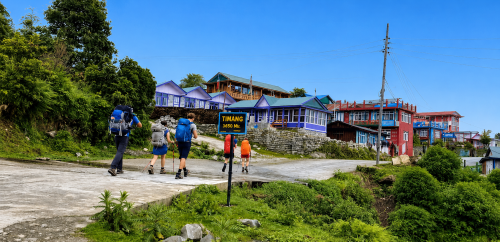

Annapurna Base Camp Trek via Ghorepani · Key Highlights: Highlights
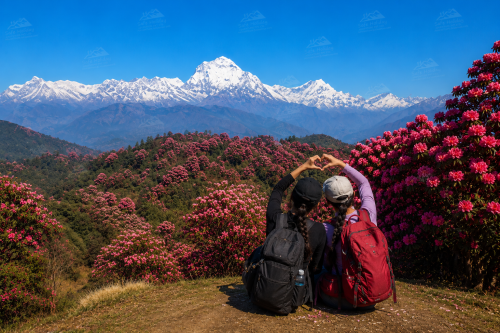
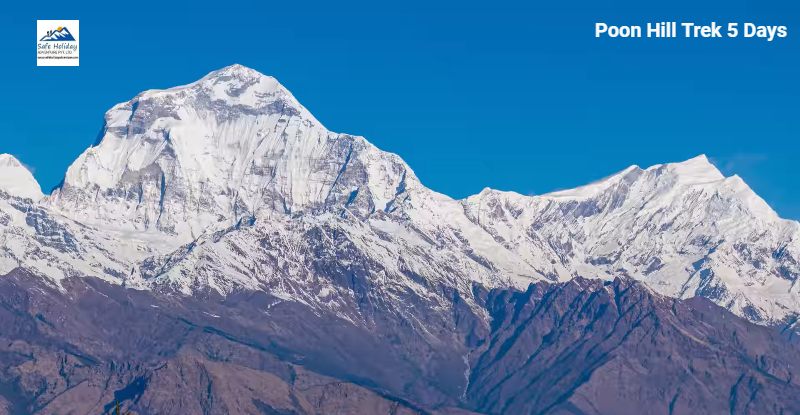
- Spectacular sunrise at Poon Hill (3,210m) with panoramic Annapurna and Dhaulagiri mountain views
- Classic Ghorepani Poon Hill trekking route, one of Nepal’s most popular treks
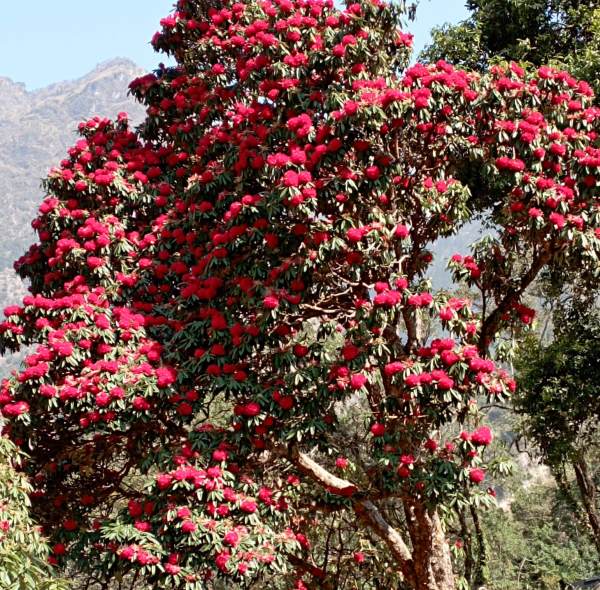
- Colorful rhododendron forests, especially stunning during the spring trekking season
- Authentic Gurung and Magar villages, including Ghandruk and Chhomrong
- Breathtaking views of Machapuchare (Fishtail Mountain) throughout the trek
- Relaxing in natural hot springs at Jhinu Danda after days of hiking
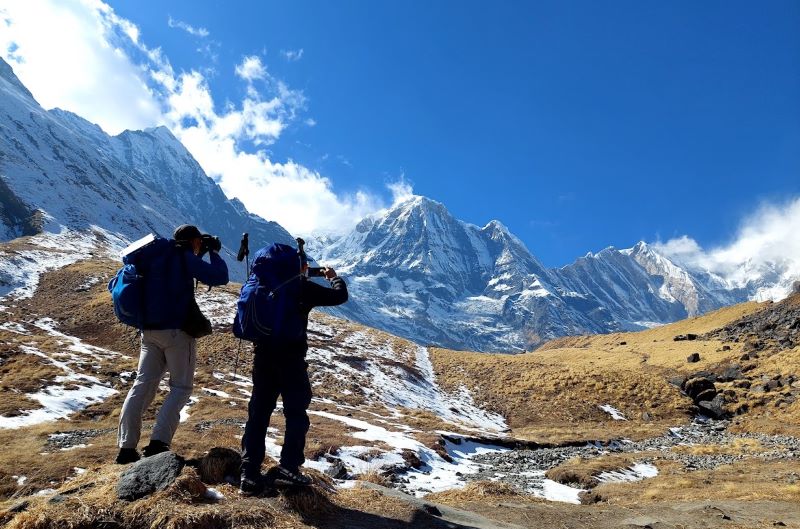
- Annapurna Sanctuary trekking experience surrounded by giant Himalayan peaks
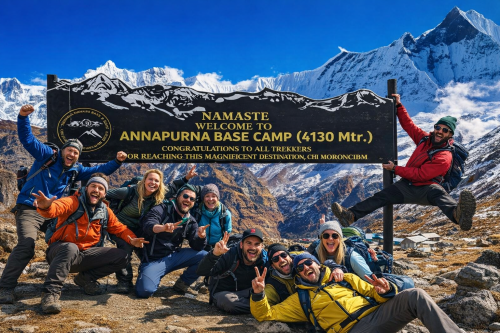
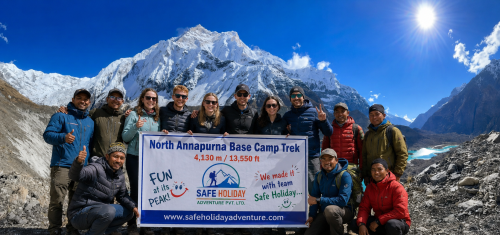
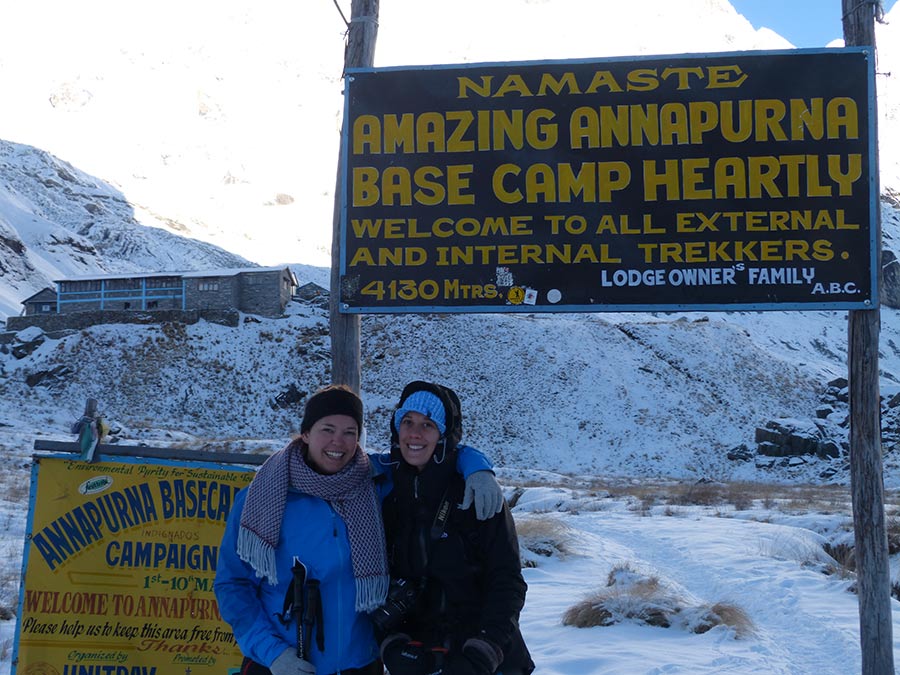
- Annapurna Base Camp (4,130m) with a dramatic 360-degree mountain amphitheater
- Diverse Himalayan landscapes from terraced farmlands to alpine scenery
- Well-maintained teahouse trekking trail with excellent food and accommodation
Introduction to Annapurna Base Camp Trek via Ghorepani Overview
Imagine a journey where every step unveils a new layer of the Himalayas, where culture, nature, and adventure come together in a seamless experience. The Annapurna Base Camp Trek via Ghorepani is thoughtfully designed by Safe Holiday Adventure for travelers who want to combine two incredible experiences in one journey—the famous sunrise from Poon Hill and the majestic Himalayan sanctuary at Annapurna Base Camp. This trek is not just about walking trails; it is about passing through traditional Gurung villages, terraced farmlands, dense forests, and breathtaking mountain landscapes that reflect the true essence of Nepal.
Your adventure begins upon arrival in Kathmandu, where our team warmly welcomes you with a private airport pickup service and transfers you comfortably to your hotel. A short briefing is provided to explain the full itinerary, safety guidelines, and what to expect during the trek. The next morning, you board a luxury tourist bus from Sorakhutte toward Pokhara, a scenic journey of around 6 hours along the Trishuli Highway, following rivers, hills, and rural settlements. Upon reaching Pokhara, you will stay in a comfortable lakeside hotel with a bed and breakfast plan, giving you time to relax and enjoy the peaceful atmosphere before the trek begins.
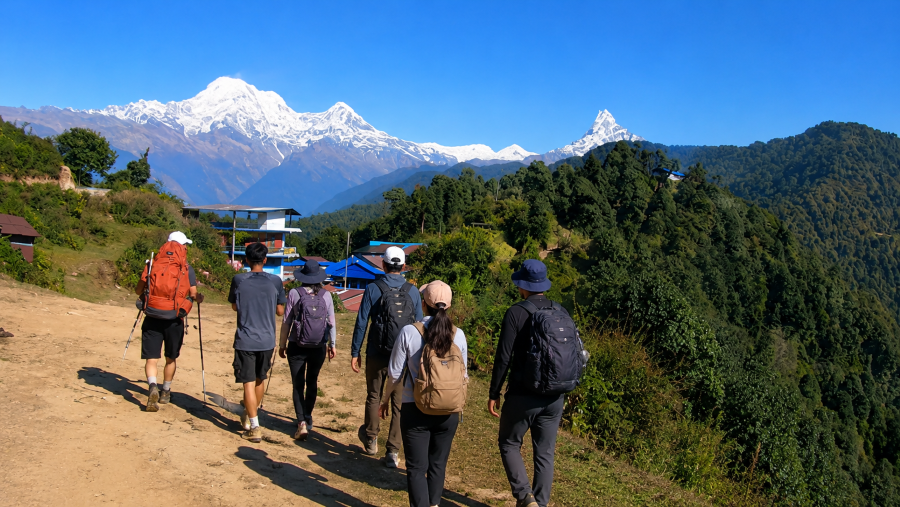
The next day, a short drive from Pokhara Lakeside takes you through Nayapul to Birethanti, where the trek officially starts. From here, the trail follows a wide, well-defined path surrounded by greenery, local houses, and farmlands. Walking at a gradual pace for about 4–5 hours, you pass through Ramgai, Sudame, Hille, and Tikhedhunga before reaching Ulleri, a beautiful Magar village situated at around 1900 meters. The final section involves a steep stone staircase, but most of the trail is a gentle uphill. From Ulleri, you are rewarded with your first clear views of Annapurna South and Hiunchuli, creating a magical introduction to the Himalayas.
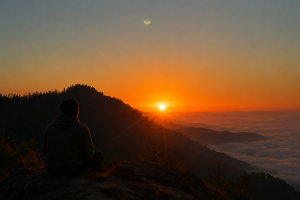
Continuing onward, the trail passes through Banthanti and Nangethanti before reaching Ghorepani at an elevation of 2820 meters. This section of the trek is especially scenic, with dense Rhododendron forests and refreshing mountain air. Early the next morning, a short hike leads to Poon Hill, one of the most famous viewpoints in Nepal. Watching the sunrise over Dhaulagiri and the Annapurna ranges is an unforgettable highlight of the journey. After returning to Ghorepani, the trail continues toward Tadapani via Deurali, passing through peaceful forests and ridgelines. From Tadapani, the descent leads to Chhomrong through Gurjung village. Chhomrong is a well-established Gurung settlement known for its spectacular panoramic views of Annapurna South, Hiunchuli, and Machapuchare (Fishtail Mountain), making it a perfect place to rest and experience local hospitality.
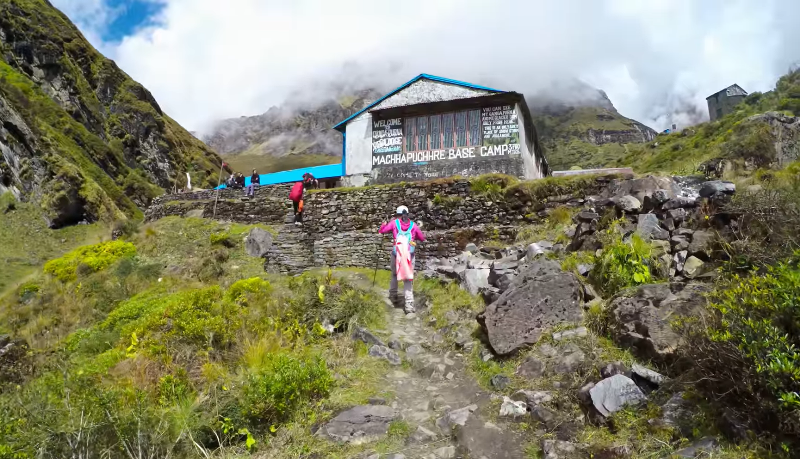
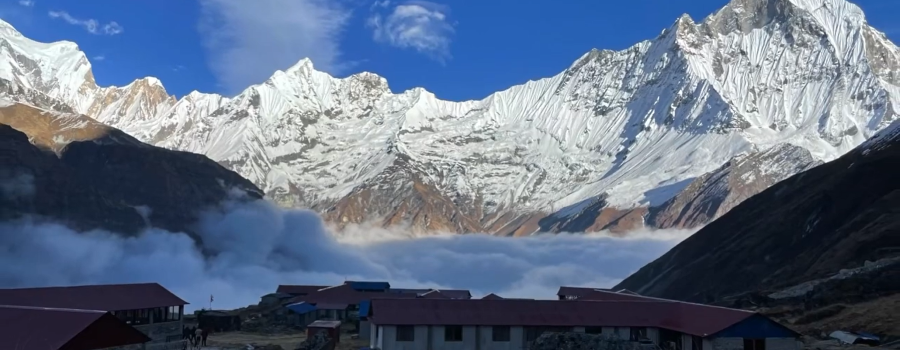
From Chhomrong, the trail descends to Kimrung Khola and then climbs steadily toward Lower Sinuwa and Upper Sinuwa through stone steps and forested paths. Beyond Sinuwa, the landscape transitions into dense bamboo and Rhododendron forests, leading to Bamboo, a small settlement with several lodges ideal for lunch and rest. The journey continues gradually toward Dovan and then Himalaya, where the surroundings become more alpine with fewer trees and more dramatic mountain scenery. As you approach Deurali at around 3,200 meters, the environment becomes quieter and more rugged. From here, a scenic 2–3 hour walk along the river leads to Machapuchare Base Camp, followed by an easy and gradual ascent to Annapurna Base Camp at approximately 4130 meters. Spending a night here is a truly special experience, surrounded by a 360-degree amphitheater of snow-capped peaks, where both sunset and sunrise paint the mountains in golden light.
After enjoying the incredible views at Annapurna Base Camp, the return journey begins by descending along the same trail back to Bamboo or Dovan for an overnight stay. The following day, you continue trekking down to Chhomrong and then make a steep descent to Jhinu Danda( 1,750m), a place famous for its natural hot springs, where you can relax and rejuvenate after days of trekking. After lunch and relaxation, a jeep drive of approximately 3 hours, combining both off-road and paved roads, takes you back to Pokhara. From here, your Annapurna Base Camp Trek via Ghorepani officially concludes. This journey is more than just a trek—it is a complete Himalayan experience blending adventure, culture, comfort, and unforgettable natural beauty, carefully crafted to leave every traveler with lifelong memories.

Why Choose the Annapurna Base Camp Trek via Ghorepani and Poon Hill?
- Panoramic Mountain Views: Enjoy stunning views of Annapurna South, Machhapuchhre, and Hiunchuli throughout the trek.
- Authentic Cultural Villages: Explore traditional villages like Ghorepani, Tadapani, and Chomrong, and experience Gurung and Magar culture.
- Diverse Natural Landscapes: Walk through forests of rhododendron, oak, and bamboo, filled with wildlife and vibrant flora.
- Spectacular Sunrise from Poon Hill: Witness an unforgettable sunrise over Annapurna and Dhaulagiri ranges from 3,210m.
- Scenic Modi Khola River Valley: Trek along the Modi Khola River, past waterfalls, terraced hillsides, and lush valleys.
- Warm Hospitality in Local Tea Houses: Stay in cozy mountain lodges with delicious meals and friendly local hosts.
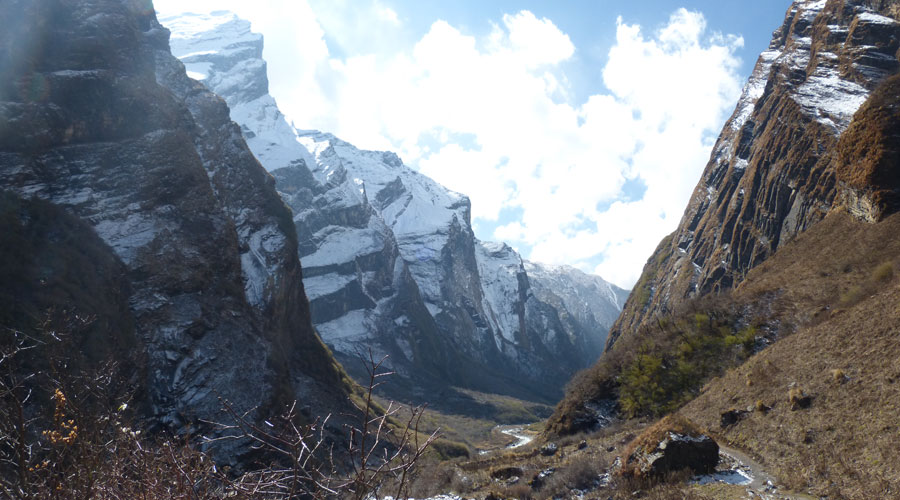
- Trekking Through the Modi Khola Gorge: Experience the thrill of cliffs, river crossings, and dramatic gorge scenery.
- Reaching Annapurna Base Camp: Stand among towering peaks at 4,130m with 360-degree panoramic mountain views.
- Relaxation at Jhinu Danda Hot Springs: Unwind in natural hot springs after your trek for a soothing experience.
- A Complete Himalayan Experience: Combine culture, nature, and high-altitude adventure for a full Himalayan journey.
Why Choose Safe Holiday Adventure?
- Local Experts – Guides who know every trail and hidden gem.
- 24/7 Support – Our Kathmandu team is always there for you.
- All Gear Provided – Sleeping bags, jackets, and walking poles included.
- Custom Treks – Designed for your pace, style & adventure level.
- Safe & Responsible – Altitude safety, trained guides, eco-friendly practices.
- Hassle-Free Logistics – Permits, transport, meals, and accommodation sorted.
- Stunning Views & Culture – Majestic mountains, remote villages, and authentic experiences.
- Trusted by Thousands – Recommended by trekkers worldwide.
- Affordable Options – From budget to luxury, we have you covered.
- More Than a Trek – Create unforgettable memories with every step.
Annapurna Base Camp Trek Weather & Temperature Guide
| Season / Month | Weather Condition | Day Temperature | Night Temperature | Remarks / Suitability |
|---|---|---|---|---|
| March – May (Spring) | Clear skies, blooming rhododendrons, stable weather | 10°C – 20°C | 0°C – 10°C | Best trekking season, ideal visibility |
| June – August (Monsoon) | Heavy rainfall, cloudy, slippery trails | 15°C – 25°C | 10°C – 15°C | Not recommended (leeches, landslides possible) |
| September – November (Autumn) | Clear skies, dry weather, excellent visibility | 10°C – 18°C | 0°C – 8°C | Best season for trekking & photography |
| December – February (Winter) | Cold, clear skies, occasional snowfall | 5°C – 12°C | -5°C – 5°C | Possible but cold; fewer trekkers |
Is the Annapurna Base Camp Trek via Ghorepani Worth It in 2026?
Yes, the Annapurna Base Camp Trek via Ghorepani is absolutely worth it if you have a few extra days. This scenic route combines the iconic Poon Hill sunrise with the spectacular Annapurna Base Camp (4,130 m), creating one of Nepal’s most rewarding trekking experiences.
- Witness the breathtaking sunrise from Poon Hill (3,210 m).
- Enjoy panoramic views of Annapurna I, Dhaulagiri, Machhapuchhre, Hiunchuli, and Annapurna South.
- Walk through vibrant rhododendron forests, especially beautiful during the spring bloom.
- Experience the culture and hospitality of traditional Gurung and Magar villages, including Ghorepani, Tadapani, and Ghandruk.
- Capture diverse landscapes, from lush forests and waterfalls to alpine valleys and towering Himalayan peaks.
- Benefit from a more gradual ascent, which can make the trek more comfortable for many hikers.
Verdict: If you have 10–12 days, the Ghorepani route offers a richer mix of mountain scenery, local culture, and natural beauty than the direct ABC trail, making it a worthwhile choice for most trekkers.
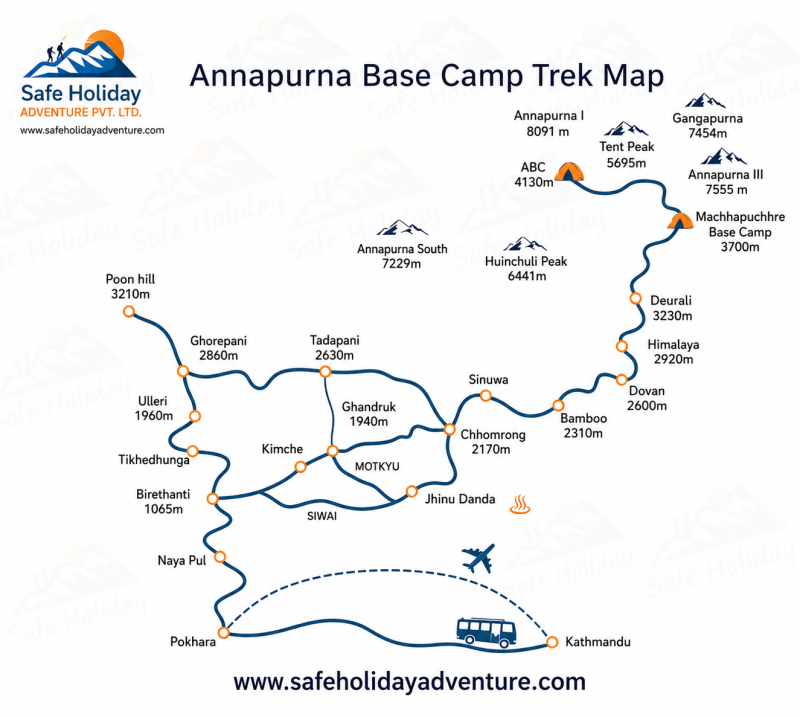
Annapurna Base Camp Trek via Ghorepani Itinerary:Outline Itinerary
Day 01: Arrival in Kathmandu – 1,400m
Day 02: Kathmandu to Pokhara – 1,400m → 820m | Drive: 6–8 hrs
Day 03: Pokhara to Tikhedhunga – 1,570m | Trek: 3–4 hrs
Day 04: Tikhedhunga to Ghorepani via Ulleri & Banthanti – 2,820m | 12 km | 6–7 hrs | Ascent: 1,250m
Day 05: Ghorepani to Poon Hill to Tadapani – 2,630m | 10–12 km | 6–7 hrs | Ascent: 500m | Descent: 750m
Day 06: Tadapani to Chhomrong – 2,170m | 7 km | 5–6 hrs | Ascent: 300m | Descent: 750m
Day 07: Chhomrong to Bamboo via Sinuwa – 2,310m | 7 km | 5–6 hrs | Ascent: 300m | Descent: 200m
Day 08: Bamboo to Deurali – 3,230m | 6 km | 5–6 hrs | Ascent: 920m
Day 09: Deurali to Annapurna Base Camp – 4,130m | 4 km | 4–5 hrs | Ascent: 900m
Day 10: Annapurna Base Camp to Sinuwa – 2,450m | 14 km | 7–8 hrs | Descent: 1,680m
Day 11: Sinuwa to Jhinu Danda – 1,750m | 6 km | 4–5 hrs | Descent: 700m
Day 12: Jhinu Danda to Pokhara – 850m | Drive: 3–4 hrs
Day 13: Pokhara to Kathmandu – 1,350m | Drive: 6–8 hrs
Day 14: Departure from Nepal – Airport transfer & onward journey
You will get Following Services
- Guide & Trek Crew: Experienced, local Annapurna Base Camp trekking guide throughout the trek.
- Accommodation: Twin-sharing rooms in tea houses along the trekking route.
- Meals During the Trek: Daily breakfast, lunch, and dinner during trekking days.
- Seasonal Fruit: Served once daily after dinner.
- Company Items: Safe Holiday Adventure company T-shirt.
- Shared jeep from Pokhara (Hari Chok) to the trek starting point at Jhinu Danda.
- Shared jeep from the trek endpoint back to Pokhara.
- Tourist-class bus transfers between Kathmandu and Pokhara (both ways).
- Permits & Official Fees: Annapurna Conservation Area Permit (ACAP), & All required government and local taxes
- Travel & Flights: International airfare to and from Nepal and Airport departure taxes.
- Meals Outside the Trek: Lunch and dinner in Kathmandu and Pokhara.
- Beverages: All drinks, including bottled or boiled water, tea, coffee, soft drinks, and alcoholic beverages.
- Insurance: Personal travel insurance, which must cover high-altitude trekking, rescue, and helicopter evacuation.
- Gear & Equipment: All personal trekking equipment, such as trekking boots, warm clothing, jackets, sleeping bags, and other personal gear.
- Tips & Personal Expenses: Tips for guides, porters, and drivers.
- Personal expenses include phone calls, laundry, Wi-Fi, charging, and souvenirs.
- Nepal Visa Fees: Visa on arrival fees for Nepal.
Important Trek Notes:
A licensed trekking guide is mandatory for the Annapurna Base Camp trek as per Nepal government regulations.
The Annapurna Conservation Area Permit (ACAP) is compulsory and arranged by the trekking agency.
Travel insurance is required and must include high-altitude rescue and helicopter evacuation coverage.
Meals during the trek are served at local teahouses and are simple and traditional, including dal bhat, noodles, soups, bread, and seasonal local dishes.
Dates and Availability Departures
All our published dates are guaranteed departures. We also provide customized departures tailored to your travel plans.
October 2026
November 2026
Travellers Reviews
Charlotte
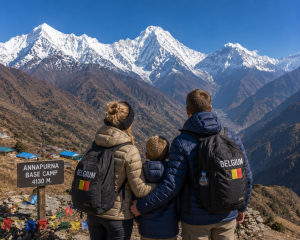
Belgium | march, 2026
An Unforgettable Family Adventure in Nepal
Our trip to Nepal was an incredible experience for our family. Traveling with our son and enjoying the beautiful mountains, local culture, and warm hospitality made this journey truly special.
A special thank you to our wonderful guide, Dharma, who was very friendly, helpful, professional, and caring throughout our trip. He made us feel safe and comfortable and helped us enjoy every moment of our adventure.
The trekking experience was amazing, with breathtaking Himalayan views and unforgettable memories that we will cherish as a family for many years.
We highly recommend Guide Dharma and this wonderful Nepal experience to anyone looking for an authentic, memorable, and enjoyable family adventure.
— A Happy Family from Belgium
Jerzy Wosik
Australia | Oct, 2025
Safety and Comfort Throughout the Journey
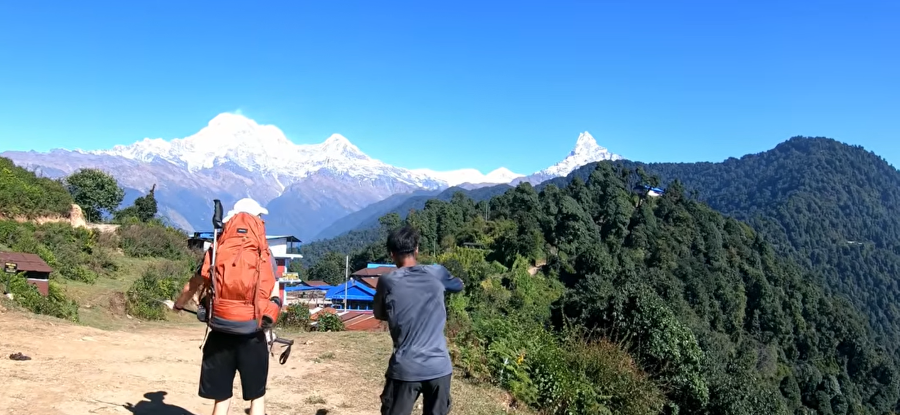
We, Miguel O. and family from Australia, would like to sincerely express our appreciation for the wonderful trekking experience to Annapurna Base Camp via Ghorepani organized by Safe Holiday Adventure Pvt. Ltd.
The entire journey was exceptionally well managed from beginning to end. We felt safe, comfortable, and well supported throughout the trek, even in the more remote and challenging sections of the trail.
We are especially grateful to our guides, Rupesh and Prem, whose professionalism, kindness, and in-depth knowledge greatly enhanced our experience. They were always attentive to our needs, ensured our safety at all times, and shared valuable insights about the local culture, nature, and mountains.
One of the most memorable highlights was the breathtaking sunrise from Poon Hill, followed by the incredible experience of reaching Annapurna Base Camp surrounded by magnificent Himalayan peaks. It was truly a once-in-a-lifetime journey for our family.
We would highly recommend Safe Holiday Adventure Pvt. Ltd. to anyone planning a trek in Nepal. Their excellent organization, warm hospitality, and highly capable guiding team made this an unforgettable adventure for us.
Jeanna
England | December 2025
A Dream Trip to Nepal with Safe Holiday Adventure
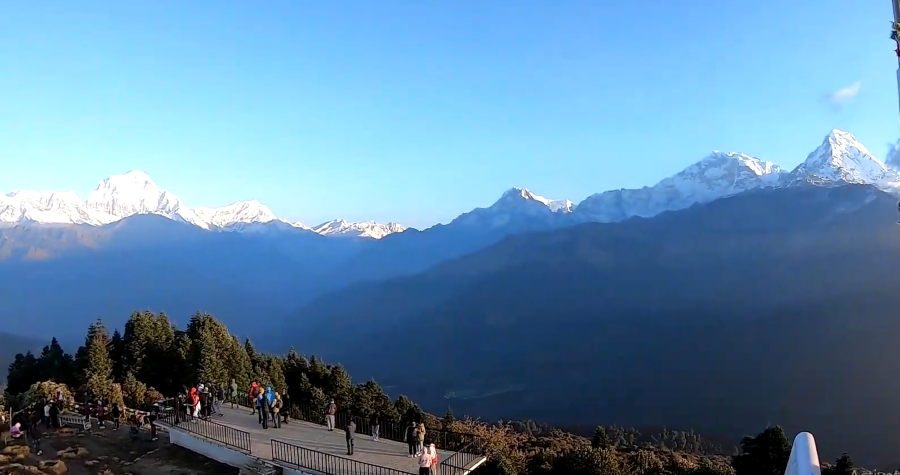
When I first heard about Nepal, I immediately thought of mountains, peace, and adventure. But it wasn’t until I met my friend Rosna, who had already been to Nepal, that this dream truly started. She shared her experiences with such passion that soon we decided to go together — me, one Lukadu, and a group of four people — and choose Safe Holiday Adventure for our trek.
We did the Annapurna Base Camp Trek via Ghorepani, and it turned out to be one of the most beautiful journeys of my life.
From the moment we arrived, Safe Holiday Adventure took care of everything — permits, transport, comfortable tea houses, and delicious food throughout the trek. Every day brought new scenery: green rice terraces, rhododendron forests, charming villages, and finally the incredible snow-covered peaks of the Annapurna range. Watching the sunrise from Poon Hill and standing at Machapuchare Base Camp and Annapurna Base Camp were moments I will never forget.
Our guide and porter were absolutely wonderful — kind, professional, patient, and always caring. The guide constantly checked if we were feeling okay and made sure everyone felt safe and comfortable. We never felt rushed, and the whole trek felt relaxed and joyful.
One moment that truly touched my heart was when the team surprised me with a birthday cake during the trek. Celebrating my birthday in the mountains, surrounded by nature and such caring people, is something I will cherish forever.
I also really appreciated how Safe Holiday Adventure respects local culture and supports local tea houses, which made the experience feel authentic and meaningful.
Overall, this trek was perfectly organized, inspiring, and full of beautiful memories. I highly recommend Safe Holiday Adventure to anyone planning a trek in Nepal. I would absolutely choose them again and will gladly recommend them to my friends and family.
Thank you for making my Nepal dream come true


Vittorio Calz
Australia | 2024-08-12
Best hiking trails in Asia
I had an incredible experience with Safe Holiday Adventure Pvt. Ltd. during my Annapurna Base Camp trek via Ghorepani. From start to finish, the team’s professionalism and expertise were outstanding. Special thanks to our guide Ramu for his knowledge, support, and ensuring our safety throughout the journey. Highly recommended!
NAMASTE!!!!!

Maria Hidal
Germany | 2025-7-15
Guided Trekking Made Easy: A Stress-Free Annapurna Base Camp Experience
I recently completed the Annapurna Base Camp Trek via Ghorepani with Safe Holiday Adventure Pvt. Ltd., and it was an experience I will cherish forever. From start to finish, the team meticulously managed every detail, ensuring the journey was seamless and thoroughly enjoyable.
Our guide, Muskan, was outstanding – exceptionally knowledgeable, friendly, and always willing to help. She provided fascinating insights into the region’s culture, flora, and fauna, enriching the entire trek. Her encouragement and expertise made even the most challenging sections of the trail feel achievable.
The itinerary was thoughtfully planned, with adequate time for acclimatization and plenty of opportunities to savor the awe-inspiring views. The tea houses we stayed in were cozy and comfortable, and the food was both delicious and satisfying – a testament to the team’s careful organization.
I wholeheartedly recommend Safe Holiday Adventure Pvt. Ltd. to anyone eager to explore the Himalayas. Their professionalism, warmth, and dedication to creating unforgettable adventures truly set them apart. A special thank you to Muskan and the entire team for making this trek one of the most memorable experiences of my life!
Genaral Trip InfoInfos
Teahouse Accommodation on the Annapurna Base Camp Trek via Ghorepani:
During the Annapurna Base Camp Trek via Ghorepani, staying in traditional teahouses is one of the best ways to experience the local culture, warm hospitality, and natural beauty of the Annapurna region. These charming mountain lodges provide trekkers with a comfortable place to rest, enjoy delicious local meals, and connect with fellow travelers after an exciting day on the trail.
Comfortable and Cozy Rooms
The teahouse rooms are generally simple, clean, and cozy, usually featuring two single beds with a mattress, pillow, and blanket. As temperatures can drop significantly at higher elevations, we strongly recommend carrying a good-quality sleeping bag for additional warmth and comfort.
Most rooms have wooden walls and limited insulation. Electricity and charging facilities are available in many teahouses, although charging your phone or power bank may involve a small additional fee. Heating inside bedrooms is generally unavailable, so staying warm at night is especially important at higher elevations.
Shared Toilets and Hot Showers
Teahouses along the Annapurna Base Camp Trek generally provide shared bathroom facilities. Many toilets are squat-style, while some teahouses at lower elevations may offer Western-style toilets. At higher altitudes, toilets may be located outside the main building.
Hot showers are available at many teahouses for an additional charge, although availability can be limited in colder, higher-altitude areas. Trekkers should carry toilet paper and hand sanitizer, as these essentials may not always be provided.
Experience the Best of Annapurna Hospitality
Although teahouse accommodation is basic, it offers a truly memorable and authentic trekking experience. The friendly atmosphere, warm local hospitality, tasty mountain food, and breathtaking surroundings make staying in teahouses an essential part of the Annapurna Base Camp Trek via Ghorepani.
Choose the Annapurna Base Camp Trek via Ghorepani for an unforgettable Himalayan adventure where every night brings you closer to local culture, mountain life, and the spectacular Annapurna landscape.
Annapurna Base Camp Trek via Ghorepani Duration & Difficulty:
The Annapurna Base Camp Trek via Ghorepani typically takes 10–12 days, including the famous Poon Hill sunrise hike. It is a moderate trek with daily walks of 5–7 hours through forests, stone staircases, traditional villages, and alpine landscapes.
No technical climbing experience is required, but a good level of fitness is recommended. With proper acclimatization, a steady pace, and basic preparation, most healthy beginners can comfortably complete this rewarding Himalayan adventure.
Annapurna Base Camp Trek via Ghorepani Permits & Documentation:
Before starting the Annapurna Base Camp Trek via Ghorepani, every trekker must obtain the required trekking permits. The main permits include the Annapurna Conservation Area Permit (ACAP) and the TIMS (Trekkers’ Information Management System) Card, both of which are mandatory for trekking in the Annapurna region.
Make sure to carry your passport, permit documents, and passport-sized photographs if required. Having all necessary documents prepared in advance will help ensure a smooth and hassle-free trekking experience.
Throughout the ABC Trek via Ghorepani, your permits may be checked at several official checkpoints along the trail. Keep your permits and identification documents safe and easily accessible so you can complete the trek without unnecessary delays.
When Should You Go to the Annapurna Base Camp Trek via Ghorepani?
The best time for the Annapurna Base Camp Trek via Ghorepani is during spring (March to May) and autumn (September to November). These seasons offer stable weather, clear mountain views, blooming rhododendron forests in spring, and comfortable temperatures for trekking. The trails are lively, making it an ideal time for both first-time and experienced trekkers.
Winter (December to February) is suitable for trekkers seeking quieter trails, although snowfall can affect higher sections of the route. The monsoon season (June to August) brings frequent rain, slippery paths, and limited mountain views, making trekking more challenging.
For the safest trekking conditions and the best Himalayan scenery, spring and autumn remain the most recommended seasons for the trek.
Eating on the Annapurna Base Camp Trek via Ghorepani: What to Expect at Teahouses
On the Annapurna Base Camp Trek via Ghorepani, teahouses serve delicious, energy-rich meals, including Dal Bhat, momos, Noodles, Pasta, fried rice, Thukpa, Potatoes, seasonal vegetables, eggs, and soups. Breakfast options include porridge, pancakes, Tibetan bread, toast, eggs, and cereals.
You can also enjoy pizza, macaroni, sandwiches, chapati, spring rolls, and local snacks, depending on the teahouse and altitude. Freshly prepared meals provide the energy needed for long trekking days.
Warm drinks such as ginger tea, lemon tea, milk tea, black tea, coffee, and hot chocolate are widely available. Enjoying these meals with spectacular mountain views makes teahouse dining a memorable part of the ABC trek.
Altitude Acclimatization and Health Considerations:
Altitude acclimatization is essential for a safe and enjoyable Annapurna Base Camp Trek via Ghorepani, as the trail reaches elevations above 4,000 meters. A gradual ascent helps your body adapt to the thinner air and reduces the risk of altitude sickness.
During the trek, stay well-hydrated, maintain a steady walking pace, and pay close attention to your body’s signals. Taking regular breaks and eating nutritious meals will help maintain your energy and support proper acclimatization.
Before starting the trek, it is advisable to consult a medical professional, especially if you have any pre-existing health conditions. Proper preparation and following your guide’s recommendations will help ensure a safer and more comfortable Himalayan adventure.
Meeting the Safe Holiday Adventure Team
Before your trek, meet the Safe Holiday Adventure team to get fully prepared. We cover your daily itinerary, weather, accommodation, meals, and terrain, along with essential health, altitude, and safety tips.
We check your trekking gear and help with any last-minute rentals or shopping. You’ll also meet your guide, porter, and fellow trekkers, giving you a chance to get familiar with your trekking team.
Finally, we confirm your transportation and pickup details. Most meetings take place at our Thamel office, making it easy to ask questions, finalize preparations, and begin your Annapurna Base Camp Trek via Ghorepani with confidence.
Read MoreAnnapurna Base Camp Trek via Ghorepani Packing List:
Clothing
Moisture-wicking T-shirts, thermal base layers, fleece jacket, insulated/down jacket, waterproof jacket, waterproof pants, trekking pants, hiking shorts (optional), warm hat, sun hat, buff/neck gaiter, lightweight gloves, insulated gloves, underwear, sports bra (if needed), moisture-wicking socks, warm wool socks, sleepwear.
Footwear
Waterproof trekking boots, camp shoes or sandals, lightweight sneakers (optional), gaiters (winter/monsoon).
Trekking Gear
Backpack (30–40L), duffel bag (if using a porter), rain cover, trekking poles, sleeping bag (-10°C to -15°C recommended), headlamp, extra batteries, dry bags or packing cubes.
Personal Essentials
Passport, trekking permits (TIMS and ACAP), travel insurance, cash (Nepalese Rupees), reusable water bottles, hydration bladder, water purification tablets or filter, sunglasses (UV protection), sunscreen (SPF 50+), lip balm with SPF, quick-dry towel, toiletries, wet wipes, hand sanitizer, toilet paper, nail clipper.
First Aid & Medications
Personal medications, altitude sickness medication (consult your doctor), pain relievers, blister treatment, adhesive bandages, antiseptic cream, rehydration salts, anti-diarrheal medicine, insect repellent.
Electronics
Mobile phone, camera, power bank, charging cables, universal travel adapter, spare memory card, extra camera battery.
Snacks
Energy bars, trail mix, nuts, dried fruits, electrolyte powder, chocolate, energy gels (optional).
Optional Items
Notebook, pen, lightweight book or Kindle, playing cards, binoculars, camera tripod, reusable shopping bag, earplugs.
Fitness & Training:
Annapurna Base Camp Trek via Ghorepani Poon Hill Cost:
The local currency in Nepal is the Nepalese Rupee (NPR), but USD is also accepted in tourist areas, teahouses, and lodges. It’s best to carry small bills. ATMs are available in Pokhara, but not along the trekking route.
Teahouse Accommodation:
Rooms are basic and cost $5–$10 per night (NPR 700–1,500). Most rooms have two single beds, a pillow, a blanket, and a thin mattress. A sleeping bag is recommended for extra warmth.
Food and Drinks:
Meals cost $4–$10, depending on the dish. Common options include Dal Bhat (rice and lentils), noodles, soup, and momo (dumplings). Bottled water costs $1–$2, and tea or coffee is $1–$2 per cup. Boiled water from teahouses is cheaper.
Permits and Fees: ACAP Permit (Annapurna Conservation Area Project): ~$30
Guide and Porter (Optional):
- Guide: ~$25–$50 per day
- Porter: ~$18–$22 per day
Other Expenses:
Souvenirs, snacks, and hot showers cost $1–$3, and internet/Wi-Fi at some teahouses costs $2–$5.
Money Tips:
Carry some cash in dollars for backup and small NPR bills for teahouses and shops. Avoid exchanging too much money in small villages as rates may be lower.
With careful planning, you can trek to Annapurna Base Camp via Ghorepani for about $30–$40 per day for food, lodging, and small expenses. Bring both dollars and NPR, and budget extra for a guide or porter if needed.
Extra Money to Carry on the Trek
It’s a good idea to bring around $15-$20 per day in Nepali Rupees for extra expenses such as snacks, drinks, hot showers, and small donations along the trail.
Hiring a Porter on the Annapurna Base Camp Trek: Pros, Cons & Tips
Trekking to Annapurna Base Camp (ABC) via Ghorepani is a thrilling adventure, but carrying heavy backpacks on long, steep trails can be challenging. Hiring a porter is a popular option for many trekkers, but is it worth it? Here’s a breakdown of the pros and cons.
Pros of Hiring a Porter
1. Reduces Physical Strain
A porter can carry 20–25 kg of your belongings, which lightens your load and reduces stress on your back, shoulders, and knees. This is especially helpful at high altitudes where every step can feel exhausting.
2. Let’s You Enjoy the Trek
With less weight on your back, you can focus on the scenery, photography, and culture rather than worrying about your pack. It makes the trek more enjoyable, especially for first-time trekkers.
3. Local Knowledge and Guidance
Most porters are experienced locals who know the trails, weather patterns, and teahouse availability. They can help with directions, find accommodation, and even help communicate with villagers.
4. Supports Local Economy
Hiring a porter contributes directly to the local community, providing fair wages and supporting families in the Annapurna region.
Cons of Hiring a Porter
1. Extra Cost
Porters usually cost $20–$25 per day, plus meals and accommodation. For budget trekkers, this can add up over a 10–14-day trek.
2. Ethical Responsibility
Overloading a porter can harm them physically. Trekkers must ensure fair weight, proper equipment, and rest, which requires careful planning.
3. Less Self-Reliance
Some trekkers feel that carrying their own pack adds to the sense of achievement and self-sufficiency. Hiring a porter might make the trek feel less challenging for adventure seekers.
4. Limited Flexibility
Porters have their own pace and needs. If you’re a fast trekker, you may need to adjust your speed, as porters may prefer a steadier pace.
Tip: Always hire ethically, pay fair wages, and never overload a porter. Your decision should balance your physical capability, budget, and adventure preference.
Transportation options and tips for starting the Annapurna Base Camp trek via Ghorepani.
Reaching the starting point of the Annapurna Base Camp (ABC) trek via Ghorepani involves a combination of flights, buses, and local vehicles, depending on where you begin.
1. Arrival in Nepal: Most trekkers fly into Tribhuvan International Airport in Kathmandu, the capital city. From here, you’ll need to travel to the Pokhara region, which is the gateway to Ghorepani.
2. Kathmandu to Pokhara:
- By Bus: Tourist buses run daily and take around 6–8 hours. VIP buses are more comfortable and less crowded.
- By Air: A short 25-minute flight connects Kathmandu to Pokhara, saving time but costing more.
3. Pokhara to Nayapul or Tikhedhunga (trail starting points):
- From Pokhara, you can take a local jeep or bus to Nayapul (about 1.5–2 hours), which is the most common starting point for the Ghorepani route.
- Some trekkers opt for private taxis, which are faster and more flexible but more expensive.
4. Local Trekking Segments:
- The trek from Nayapul to Ghorepani takes about 5–7 hours on foot and passes through villages like Tikhedhunga and Ulleri.
- Ghorepani is famous for the Poon Hill sunrise viewpoint, a popular detour before continuing toward Annapurna Base Camp.
Tips:
- Roads in rural areas can be rough; jeeps may take longer than expected.
- Always confirm bus or jeep schedules in advance, especially during peak trekking season (March–May, September–November).
- Carry local cash, as small villages don’t always accept cards
Annapurna Base Camp Trek via Poon Hill vs Direct ABC Trek:
The Annapurna Base Camp Trek via Poon Hill and the Direct Annapurna Base Camp Trek both offer breathtaking Himalayan scenery, but each provides a different trekking experience. The Poon Hill route is perfect for trekkers who want to combine mountain views, cultural experiences, and diverse landscapes, while the direct route is ideal for those who have limited time and want to reach Annapurna Base Camp faster.
Annapurna Base Camp Trek via Poon Hill
The ABC Trek via Poon Hill generally takes around 10–12 days and offers a more complete Himalayan experience. The journey can begin from Nayapul, Ulleri, or Ghandruk, depending on the itinerary.
One of the biggest highlights is the spectacular Poon Hill sunrise at 3,210 meters, followed by the incredible journey toward Annapurna Base Camp at 4,130 meters. Along the way, you pass through rhododendron forests, traditional villages, lush hills, and dramatic mountain landscapes.
The route provides wonderful opportunities to experience Gurung and Magar culture, local village life, and authentic mountain hospitality. Its more gradual altitude gain can also make acclimatization more comfortable. Although the trek involves longer walking days, the journey is generally considered moderate and is especially rewarding for first-time trekkers, photographers, nature lovers, and cultural explorers.
Direct Annapurna Base Camp Trek
The Direct ABC Trek is a shorter option, usually completed in around 7–9 days. Depending on the itinerary, the trek may begin from Jhinu Danda, Siwai, or the Chhomrong area, allowing trekkers to reach the higher sections of the Annapurna Sanctuary more quickly.
The main advantage is time efficiency. You spend fewer days on the trail and reach Annapurna Base Camp at 4,130 meters without adding the Poon Hill section. The scenery focuses more on mountain valleys, forests, waterfalls, and high-altitude Himalayan landscapes.
However, the quicker elevation gain requires good physical fitness and careful pacing. Compared with the Poon Hill route, there are also fewer opportunities for extended village stays and cultural interactions.
Which Annapurna Trek Is Better?
Choose the Annapurna Base Camp Trek via Poon Hill if you want a richer and more diverse adventure featuring Poon Hill sunrise, rhododendron forests, traditional villages, local culture, stunning landscapes, and gradual altitude gain.
Choose the Direct ABC Trek if you have limited time, prefer a shorter itinerary, and want to focus primarily on reaching Annapurna Base Camp.
For trekkers who have enough time, the Annapurna Base Camp Trek via Poon Hill is an excellent choice because it combines Himalayan scenery, cultural discovery, memorable sunrise views, and a rewarding trekking experience in one journey.
Detailed ItineraryItinerary
Arrival in Kathmandu
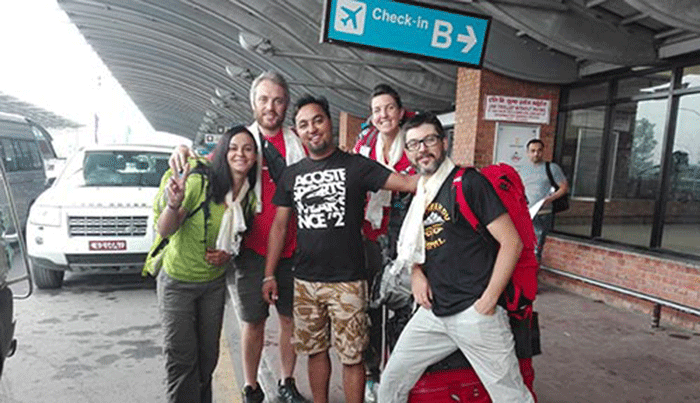
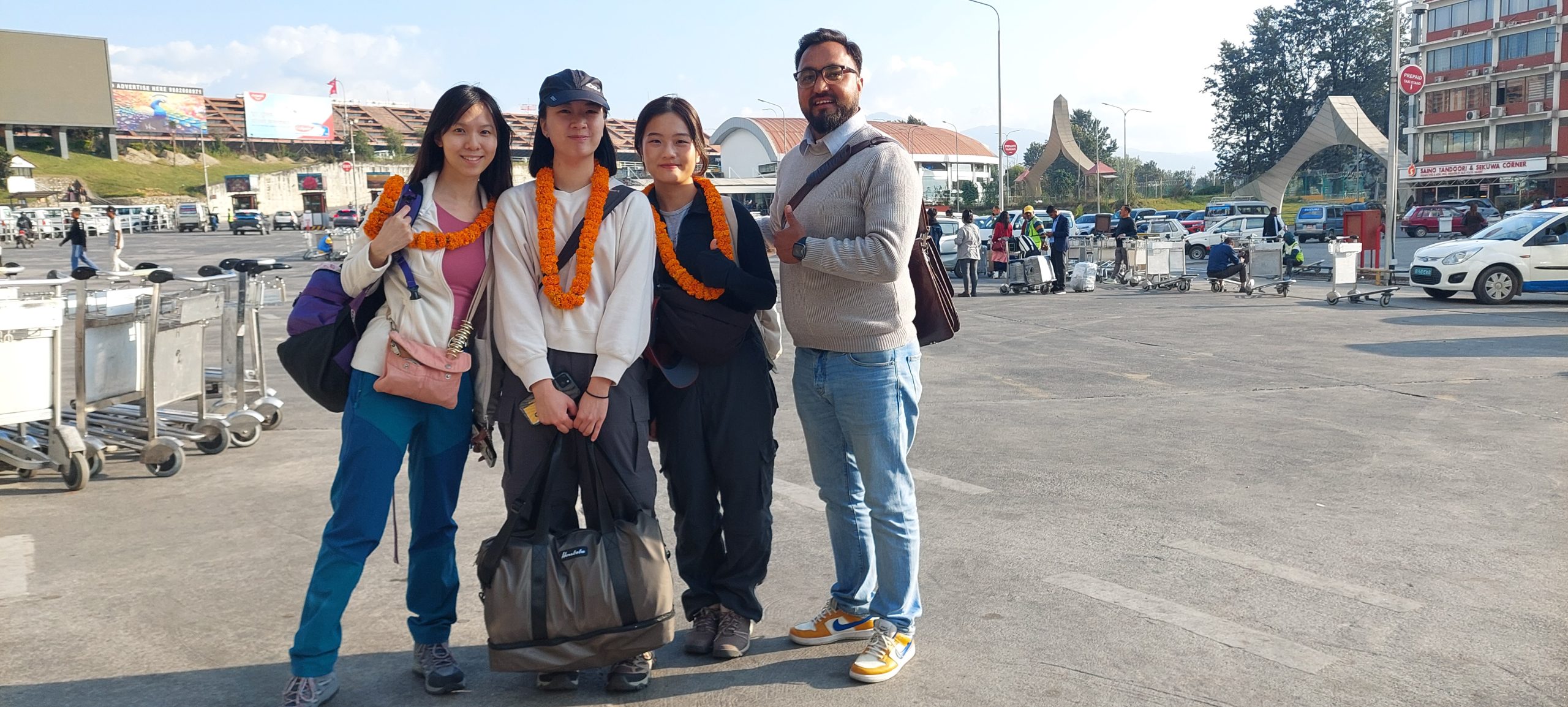
upon arrival at Kathmandu Tribhuvan International Airport (TIA), our representative will greet you with a placard bearing your name and our company logo. We will assist you with your luggage and provide a welcome package containing your itinerary and a traditional Nepali gift.
You will be escorted to an air-conditioned vehicle for transfer to your hotel, where we’ll assist with the check-in process and provide an orientation meeting to review your itinerary and answer any questions. Our team is available 24/7 for your support throughout your stay.

Accommodation : Hotel
Kathmandu (1,400m) to Pokhara (820m) to go to ABC trek-100 words
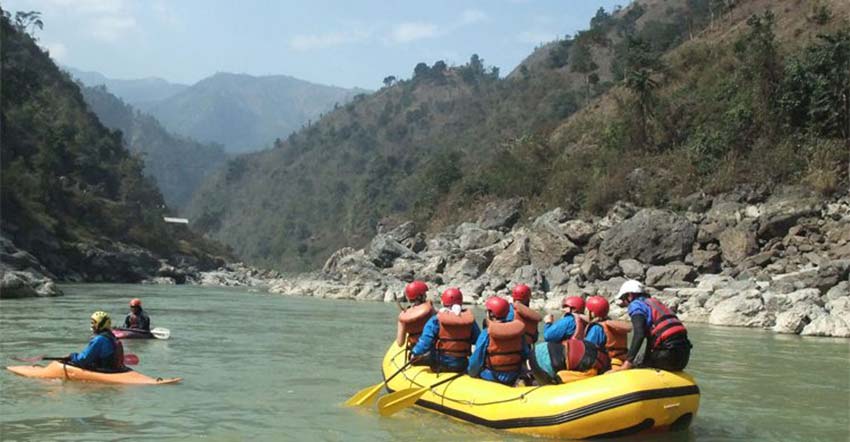
The journey from Kathmandu (1,400m) to Pokhara (820m) is a scenic route that leads trekkers to the Annapurna Base Camp (ABC) trek. Starting in the bustling capital city of Nepal, Kathmandu, trekkers will make their way westward, descending through lush valleys and terraced fields to reach Pokhara. With its stunning views of the Annapurna mountain range and tranquil Phewa Lake, Pokhara serves as the gateway to the ABC trek. From here, adventurers will continue their ascent through picturesque villages, dense forests, and towering cliffs, finally reaching the majestic Annapurna Base Camp at an altitude of 4,130m.

Accommodation : Hotel Meals : Breakfast
Pokhara to Tikhedhunga (1,570m), via Nayapul and Birethanti
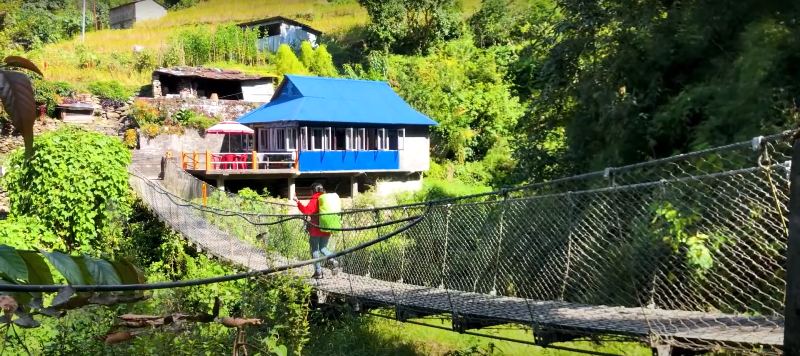
On day 3 of the ABC trek, the journey continues from Pokhara to Tikhedhunga, with a route that passes through Nayapul and Birethanti. Starting from Pokhara, trekkers typically take a scenic drive to Nayapul, which serves as the starting point for many treks in the Annapurna region. From Nayapul, the trail winds through charming villages and terraced fields, offering breathtaking views of the surrounding mountains and lush landscapes. Along the way, trekkers will pass through Birethanti, a small settlement situated at the confluence of the Modi and Bhurung rivers. After crossing a suspension bridge, the trail gradually ascends, eventually reaching Tikhedhunga at an elevation of 1,570m, where trekkers can rest and prepare for the next day’s adventure.
Accommodation : Tea house Meals : Breakfast, Lunch & Dinner
Thikhedunga to Ghorepani(2,820m)via Ulleri(1,900m) & Banthanti(2200m)
Starting from Tikhedhunga, the trek to Ghorepani (2,840m) is an exciting and rewarding journey. After a hearty breakfast, trekkers begin by crossing a suspension bridge over the Bhurungdi River, continuing along a steep trail that gradually ascends through lush forests filled with rhododendron trees. The path is adorned with colorful prayer flags, creating a serene atmosphere.
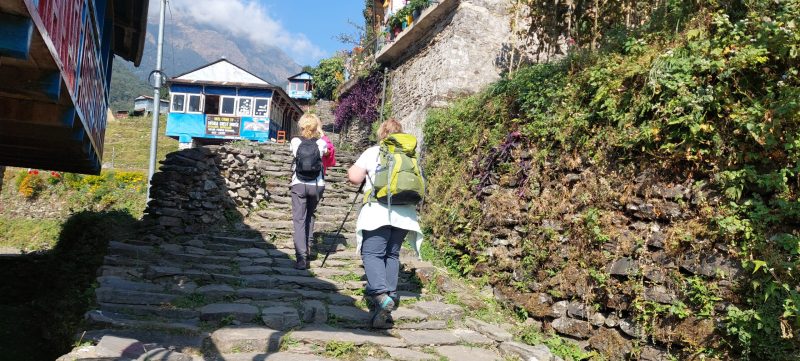
As the day progresses, trekkers will encounter stone steps known as “Ulleri Stairs,” which provide a challenging but exhilarating ascent. The views of the surrounding valleys and terraced fields become more captivating with each step. Taking short breaks to rest and admire the scenery is highly recommended.
Upon reaching Ulleri, a picturesque Magar village, trekkers can take a well-deserved break and enjoy a delicious lunch. Energized, they continue their journey, traversing through enchanting forests and passing through Nangethanti, a small settlement that offers a perfect spot for a tea break.
As the afternoon unfolds, the trail becomes more gradual, surrounded by lush greenery and occasional glimpses of the Annapurna and Dhaulagiri mountain ranges. Trekkers may encounter local villagers and fellow trekkers, fostering a sense of camaraderie.
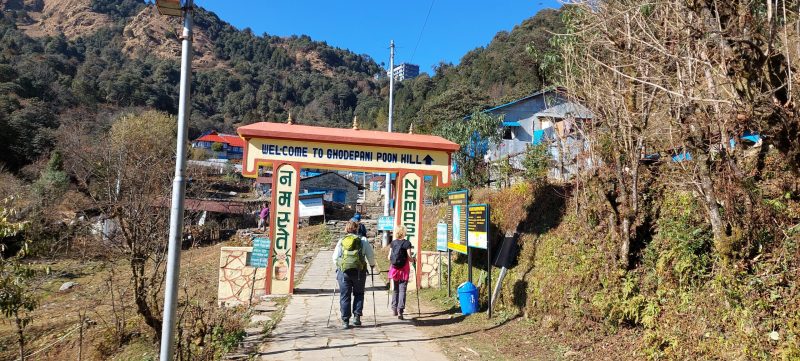
As evening approaches, trekkers finally arrive in Ghorepani, a charming village nestled amidst rhododendron forests. The village offers various teahouses and lodges for accommodation. After settling in, trekkers can enjoy a warm meal, relishing the satisfaction of the day’s trek. The evening can be spent relaxing, interacting with fellow trekkers, and enjoying the cozy ambiance of the mountainous surroundings.
Accommodation : Tea house Meals : Breakfast, Lunch & Dinner
Ghorepani (2,840m) to Poon Hill (3,210m) to Tadapani (2,630m)
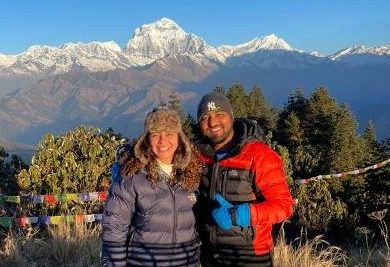
Wake up before dawn and leave your main backpack safely at the teahouse, carrying only a small daypack with a warm jacket, water, and your camera. A one-hour uphill hike leads to Poon Hill (3,210 m), Nepal’s most famous sunrise viewpoint. As the first golden rays illuminate Annapurna I, Dhaulagiri, Machhapuchhre (Fishtail), Hiunchuli, and Nilgiri, the breathtaking Himalayan panorama creates one of the most unforgettable moments of the entire Annapurna Base Camp Trek.
After enjoying the sunrise and taking plenty of photographs, descend back to Ghorepani (2,874 m) in about 45 minutes. A freshly prepared breakfast awaits at your teahouse, giving you time to relax and refuel before continuing the journey. Once your meal is finished, collect your main backpack and begin trekking toward Tadapani, following a scenic trail through peaceful forests and rolling ridges surrounded by the natural beauty of the Annapurna Conservation Area.
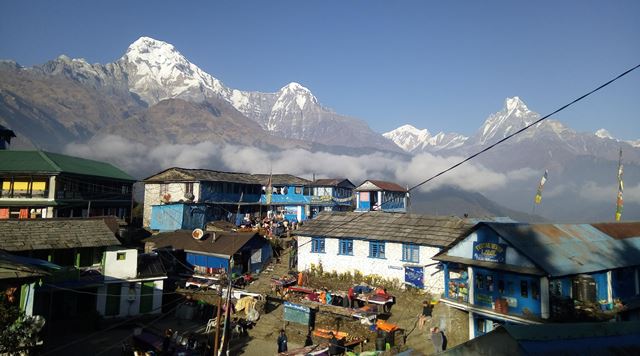
The trail climbs gently through dense rhododendron, oak, and magnolia forests before descending gradually toward Tadapani. During spring, colorful rhododendron blossoms transform the forest into a vibrant landscape, while birds and Himalayan wildlife add to the peaceful atmosphere. Occasional openings in the trees reveal spectacular views of Annapurna South, Hiunchuli, and the iconic Machhapuchhre, making this section one of the most scenic walks of the entire trek.
After approximately 5–6 hours of trekking from Ghorepani, you arrive at Tadapani (2,630 m), a quiet mountain settlement surrounded by lush forests and magnificent Himalayan scenery. Check into a comfortable teahouse, enjoy a warm cup of tea, and relax while admiring the close-up mountain views. As evening falls, savor a delicious dinner and prepare for another exciting day toward Chhomrong and ultimately Annapurna Base Camp.

Accommodation : Tea house Meals : Breakfast, Lunch & Dinner
Tadapani (2,630m) to Chhomrong (2,170m)
The trail from Tadapani to Chhomrong on the way to Annapurna Base Camp offers a diverse and captivating experience. As you descend from Tadapani (2,630m) to Chhomrong (2,170m), you’ll pass through dense forests of Rhododendrons and oak trees. The trail meanders along stone steps, occasionally steep, providing glimpses of the surrounding valleys and distant peaks.
En route, you’ll encounter several charming villages, such as Gurjung and Baisi Kharka, where you can observe the local culture and hospitality. The path also crosses several suspension bridges over the gushing Modi Khola River, adding an adventurous element to the trek. These bridges sway gently as you cross, offering thrilling views of the rushing river below.
As you approach Chhomrong, the landscape transforms into terraced fields and quaint settlements. Chhomrong itself is a picturesque Gurung village nestled on a hillside, offering splendid views of the Annapurna and Machhapuchhre (Fishtail) mountains.


Accommodation : Tea house Meals : Breakfast, Lunch & Dinner
Chhomrong (2,170m) to Bamboo (2,310m) via sinuwa,
After breakfast in Chhomrong, today’s trek begins with a steep descent on a long stone staircase to cross the Chhomrong Khola on a suspension bridge. From the bridge, the trail climbs uphill through beautiful forests to Sinuwa (2,360 m), a small village with excellent views of the surrounding hills and mountains. This uphill section is one of the most challenging parts of the day, but the peaceful scenery makes the effort worthwhile.
From Sinuwa, the trail becomes easier as it passes through dense forests of bamboo, oak, and rhododendron. The path gently descends alongside the Modi Khola, offering a cool and refreshing walk beneath the forest canopy. Along the way, you may spot colorful birds, monkeys, and other wildlife living in the Annapurna Conservation Area. The peaceful atmosphere and fresh mountain air make this section enjoyable for nature lovers.
After walking for about 4–5 hours, you reach Bamboo (2,310 m), a quiet settlement surrounded by thick bamboo forests. The village is a popular overnight stop for trekkers heading to Annapurna Base Camp. After checking into your teahouse, you can relax, enjoy a warm meal, and listen to the soothing sound of the nearby river while preparing for the next day.


Accommodation : Tea house Meals : Breakfast, Lunch & Dinner
Trek from Bamboo (2,310m) to Deurali (3,230m),
After breakfast in Bamboo, the trail follows the Modi Khola through peaceful bamboo, oak, and rhododendron forests. The cool mountain air and the sound of the rushing river make this section enjoyable. As you gain altitude, the forest becomes thinner, and beautiful waterfalls and steep cliffs appear along the route.
Continuing uphill, you pass the small settlements of Dovan and Himalaya, where many trekkers stop for tea or lunch. The trail offers stunning views of rocky cliffs, cascading streams, and dense forests. With every step, the scenery becomes more alpine, and the fresh mountain atmosphere reminds you that you are approaching the heart of the Annapurna Sanctuary.
The final climb to Deurali (3,230 m) is gradual but rewarding. The landscape changes dramatically as trees give way to open valleys surrounded by towering Himalayan peaks. After 5–6 hours of trekking, you arrive in Deurali, a small teahouse settlement with spectacular mountain views. Rest, enjoy a warm dinner, and prepare for tomorrow’s exciting trek to Annapurna Base Camp.


Accommodation : Tea house Meals : Breakfast, Lunch & Dinner
Deurali (3,230m) to Annapurna Base Camp (4,130m)
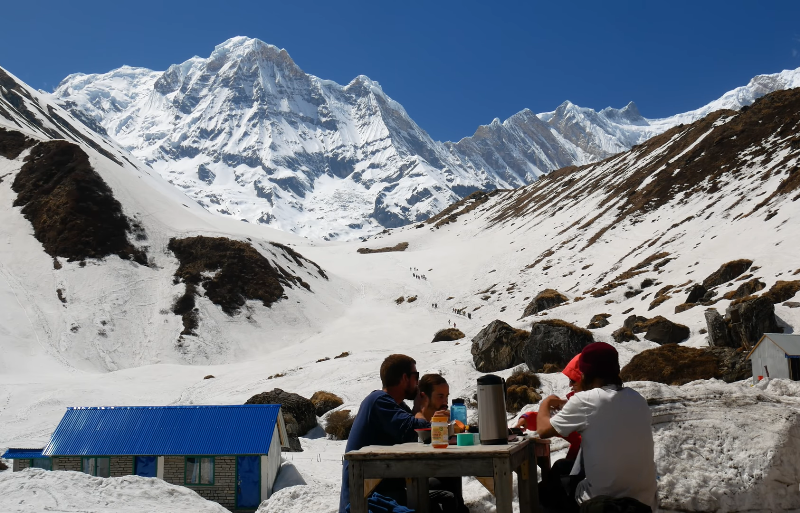
After leaving Deurali, the trail climbs gently through a rugged alpine valley toward the Annapurna Sanctuary. You pass Machhapuchhre Base Camp (3,700 m), where the forests disappear and the landscape opens into a wide glacial basin. Towering snow-covered peaks surround the trail, creating one of the most spectacular sections of the trek.
From Machhapuchhre Base Camp, the path continues gradually uphill across glacial moraines and rocky terrain. Every step brings you closer to the heart of the Annapurna Sanctuary. The breathtaking views of Machhapuchhre, Annapurna South, Hiunchuli, Gangapurna, and other Himalayan giants become even more impressive as you gain altitude.
After 5–6 hours of trekking, you arrive at Annapurna Base Camp (4,130 m). Surrounded by a magnificent 360-degree panorama, you’ll witness the towering Annapurna I (8,091 m) and neighboring peaks rising above the sanctuary. Relax at the teahouse, capture unforgettable photographs, and enjoy one of Nepal’s most iconic mountain landscapes before spending the night at base camp.
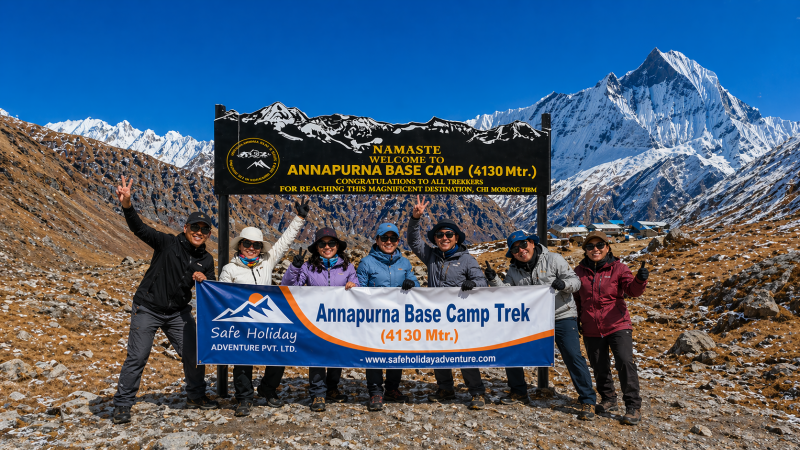
Accommodation : Tea house Meals : Breakfast, Lunch & Dinner
Annapurna Base Camp To Sinuwan(2450m)
The trek from Annapurna Base Camp to Sinuwan is a captivating journey through the breathtaking landscapes of the Annapurna region in Nepal. Covering a distance of approximately 25 kilometers, this trek typically takes around 2 to 3 days to complete, depending on your pace.
The trail offers mesmerizing views of towering snow-capped peaks, lush green valleys, and charming villages. You’ll pass through diverse terrain, including rhododendron forests, terraced farmlands, and rocky paths. The route gradually descends from the higher altitude of Annapurna Base Camp (4,130 meters) to Sinuwan (2,450 meters), providing a unique experience of changing landscapes.
Along the way, trekkers can enjoy local delicacies such as dal bhat (rice and lentils), momo (dumplings), and Tibetan bread. Teahouses and lodges dot the route, offering warm meals, snacks, and accommodation options for weary trekkers.
The trek from Annapurna Base Camp to Sinuwan is an unforgettable adventure that combines natural beauty, cultural immersion, and the thrill of exploring the Himalayas.

Accommodation : Tea house Meals : Breakfast, Lunch & Dinner
Sinuwa to Jhinu Danda(1750m)
The trek from Sinuwa to Jhinu Danda is a scenic and relatively shorter journey in the Annapurna region of Nepal. Spanning around 8 kilometers, this trek can be completed in approximately 4 to 5 hours, depending on your pace and rest stops.
The trail descends through lush forests and terraced fields, offering beautiful views of the surrounding mountains and valleys. Jhinu Danda, located at an altitude of 1,750 meters, is famous for its natural hot springs, providing a perfect opportunity for trekkers to relax and rejuvenate.
Along the way, you can find small tea houses and lodges that offer basic food and accommodation facilities, allowing you to refuel and rest before continuing your journey. The trek from Sinuwa to Jhinu Danda combines natural beauty, cultural encounters, and the chance to unwind in soothing hot springs.
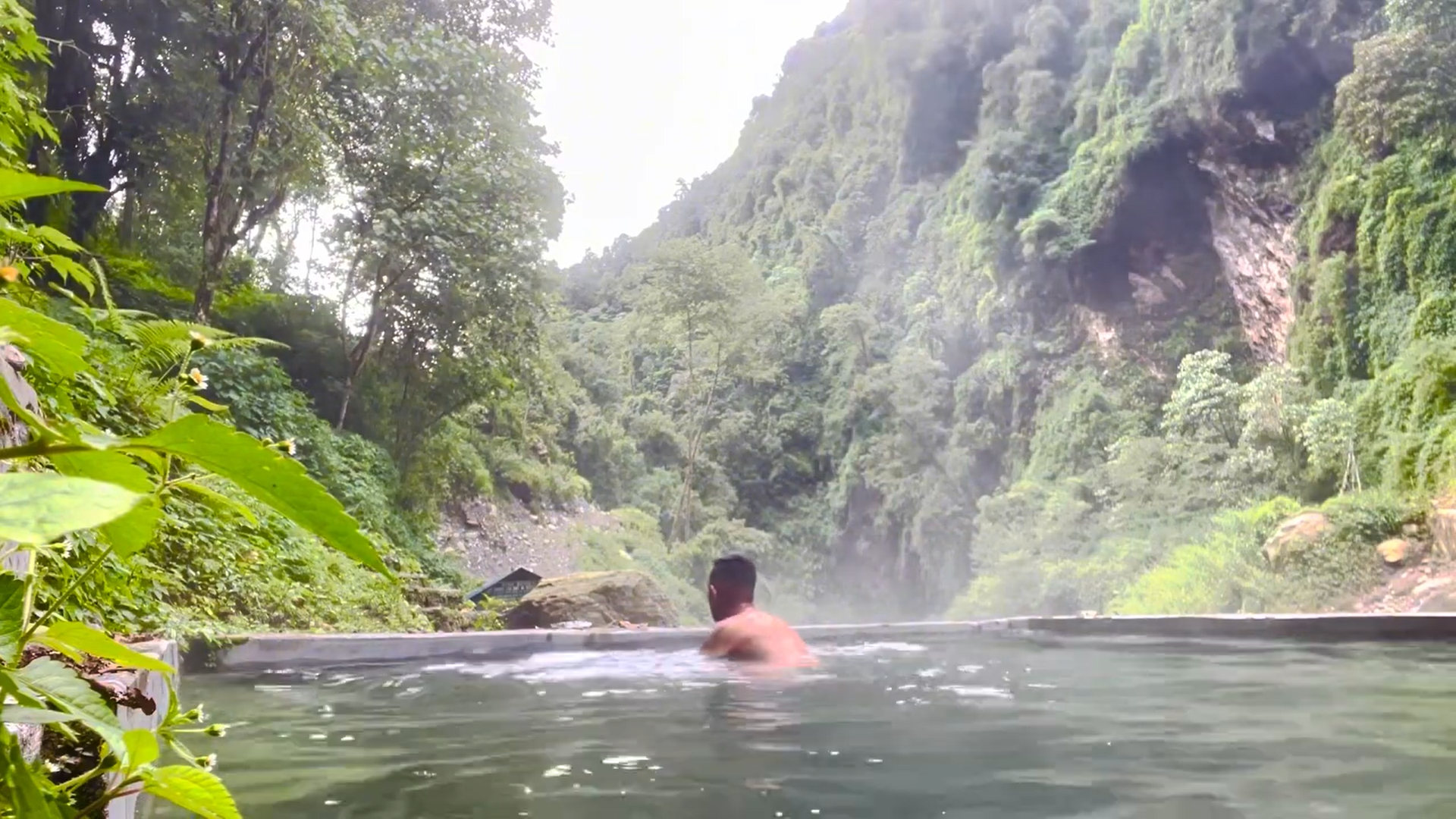

Accommodation : Tea house Meals : Breakfast, Lunch & Dinner
Drive from Jhinu Danda to Pokhara(850m)
After breakfast at Jhinu Danda, begin your short walk to the roadhead, where a private jeep awaits. The scenic drive follows mountain roads through Siwai, Birethanti, and Nayapul, passing traditional villages, terraced fields, rivers, and lush green hills. The journey offers a final glimpse of the beautiful Annapurna region.
After approximately 3 hours of driving, you arrive in Pokhara, Nepal’s beautiful lakeside city. Check into your hotel and enjoy a well-deserved rest after completing the Annapurna Base Camp Trek. Spend the afternoon exploring Lakeside Pokhara, relaxing by Phewa Lake, or celebrating your unforgettable Himalayan adventure with a delicious meal at one of the city’s many restaurants.
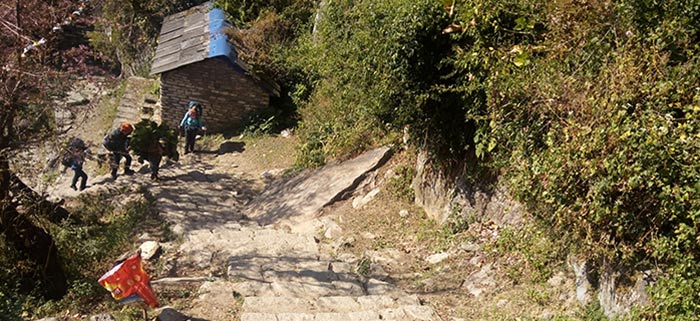

Accommodation : Hotel Meals : Breakfast
Drive from Pokhara to Kathmandu(1350m)
The drive from Pokhara to Kathmandu on a tourist standard bus takes around 7-8 hours. The route follows scenic rivers, offering picturesque views of the countryside. Restrooms and meal stops are available along the way, providing a comfortable journey. Enjoy the natural beauty of Nepal as you travel towards the bustling capital city.
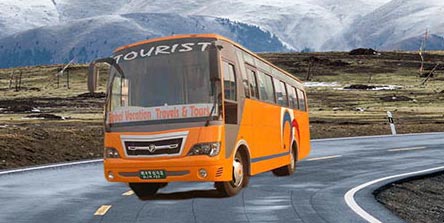
Accommodation : Hotel
Departure day after all your Nepal trip
On your departure day, after enjoying a safe and adventurous holiday in Nepal, Safe Holiday Adventure will provide you with private transport to ensure a smooth journey to the airport. We aim to drop you off at least 3 hours before your flight, allowing you ample time for check-in and security procedures. We sincerely thank you for choosing us for your trip and hope to welcome you back to Nepal shortly. Your recommendations are greatly appreciated as we strive to provide exceptional experiences to all our travelers.
Annapurna Base Camp Trek via Ghorepani FAQs
The duration of the trek typically ranges from 10 to 14 days, depending on the itinerary and the pace of the trekker.
The Annapurna Base Camp trek via Ghorepani Poon Hill is considered a moderate-level trek. It involves both uphill and downhill sections, with some steep ascents and descents. Prior trekking experience and a good level of fitness are recommended.
The best time for the Annapurna Base Camp trek via Ghorepani Poon Hill is during the spring (March to May) and autumn (September to November) seasons. These months offer stable weather, clear skies, and favorable trekking conditions.
Trekkers need to obtain two permits: the Annapurna Conservation Area Permit (ACAP) and the TIMS (Trekkers’ Information Management System) card. These permits can be obtained in Kathmandu or Pokhara.
The maximum altitude reached on the Annapurna Base Camp trek is approximately 4,130 meters (13,550 feet) at the Annapurna Base Camp itself.
The trek offers stunning panoramic views of the Annapurna and Dhaulagiri mountain ranges, as well as close-up encounters with diverse landscapes, lush forests, terraced fields, traditional villages, and unique flora and fauna.
Along the trail, some teahouses and guesthouses provide basic accommodation and meals. These are a convenient and popular choice for trekkers, offering a chance to experience local hospitality and connect with fellow hikers.
Hiring a guide or porter is not mandatory, but it is recommended, especially for inexperienced trekkers or those who prefer additional support. Guides are familiar with the trail, provide information about the region, and ensure your safety, while porters can help carry your backpack.
Altitude sickness is a potential risk during the trek, especially at higher elevations. It is essential to acclimatize properly, stay hydrated, and be aware of symptoms such as headache, dizziness, and nausea. It’s advisable to consult a doctor before undertaking the trek.
Some essential items to pack include sturdy trekking boots, comfortable clothing in layers, a warm jacket, a hat, gloves, sunscreen, sunglasses, a water bottle, a first aid kit, and a good-quality backpack. It’s important to pack light and carry only necessary items.
The starting point of the trek is usually Nayapul, which can be reached by a private vehicle or a public bus from Pokhara. Alternatively, you can also arrange for a private transfer or hire a taxi.
Yes, there are a few alternative routes and side trips you can consider. One popular option is to take a detour to Tadapani and Ghandruk villages, which offer beautiful views and cultural experiences. Another option is to extend the trek to Machhapuchhre Base Camp (MBC) before reaching Annapurna Base Camp (ABC).
Along the trekking route, teahouses and guesthouses offer a variety of food options, including Nepali dishes (dal bhat, momo), international cuisine (pasta, pizza), and basic snacks. It’s advisable to stick to hygienic and freshly prepared meals to avoid any health issues.
It is possible to trek independently without a guide or porter. However, it’s recommended for inexperienced trekkers or those unfamiliar with the region to hire a guide or join a guided tour for safety and convenience.
Yes, you can easily rent trekking equipment in Kathmandu or Pokhara. Items such as sleeping bags, down jackets, trekking poles, and backpacks can be rented from various gear shops.
Yes, it’s important to respect the local culture and traditions. Dress modestly, be mindful of local customs, and ask for permission before taking photographs of people. Additionally, it’s crucial to practice responsible trekking and follow guidelines to minimize environmental impact.
Most teahouses and guesthouses have basic communication facilities, such as landline phones or satellite phones, which can be used for an additional fee. Some places also offer limited internet access, but it’s advisable to expect intermittent or slow connections.
After completing the trek, you can either trek back to Nayapul and take a bus or private vehicle to Pokhara, or you can arrange for a private transfer directly from the trek endpoint to Pokhara.
Absolutely! Pokhara is a beautiful city with many attractions and activities to offer. You can extend your stay to relax, explore the city, enjoy boating on Phewa Lake, or indulge in adventure sports like paragliding or zip-lining.
There are basic medical facilities available in some villages along the trek, but they may be limited. It’s advisable to carry a personal first aid kit with essential medications and consult a travel doctor for any specific medical advice before the trek.
Refund & Cancellation Policy
- Booking requires 20% non-refundable deposit (Nepal) or 100% upfront (Tibet/Bhutan).
- Remaining payment due before the trip or on arrival (trip-dependent).
Cancellation charges:
- 31+ days: 20%
- 16–30 days: 45%
- 8–15 days: 75%
- 7 days or less: 90%
- Prices may change due to flights, taxes, or exchange rates.
- Trip changes are allowed, but extra costs apply.
- If the company cancels, a full refund, except for unavoidable events (some costs deducted).
- Good health and travel insurance are mandatory.
- No refund if removed for unsafe or illegal behavior.
- Travel involves personal risk, which the client accepts.