

7 Dec 2025 18 min to read
Nepal is a beautiful country in South Asia, famous for the Himalayas, ancient culture, and friendly people. It is home to Mount Everest, peaceful villages, colorful festivals, and historic cities. Travelers visiting Nepal can enjoy nature, adventure, and culture all in one place. From snow mountains to green hills and rivers, Nepal offers a wide range of landscapes to explore.
This Nepal Travel Guide is created to help you plan your trip easily and confidently. Whether you want to hike in the Everest or Annapurna regions, explore temples in Kathmandu, relax in Pokhara, or enjoy jungle safaris in Chitwan, this guide will point you in the right direction. It includes useful travel tips, destination ideas, and basic planning advice.
With good preparation, traveling in Nepal is safe, enjoyable, and rewarding. Local people are kind and welcoming, and visitors quickly feel at home. This guide will help you make the most of your journey and create unforgettable memories in Nepal.
Most first-time visitors are curious about visa requirements, and the good news is that Nepal makes travel very convenient for tourists.
Tips:
Suggested Image: Tourists at the visa counter in Kathmandu airport.
Nepal’s climate varies depending on altitude, so timing your trip is key.

Tribhuvan International Airport (KTM) in Kathmandu is the main gateway for international travelers. Domestic flights connect Kathmandu to Pokhara, Lukla, Jomsom, and other regions.
Travel Tips:
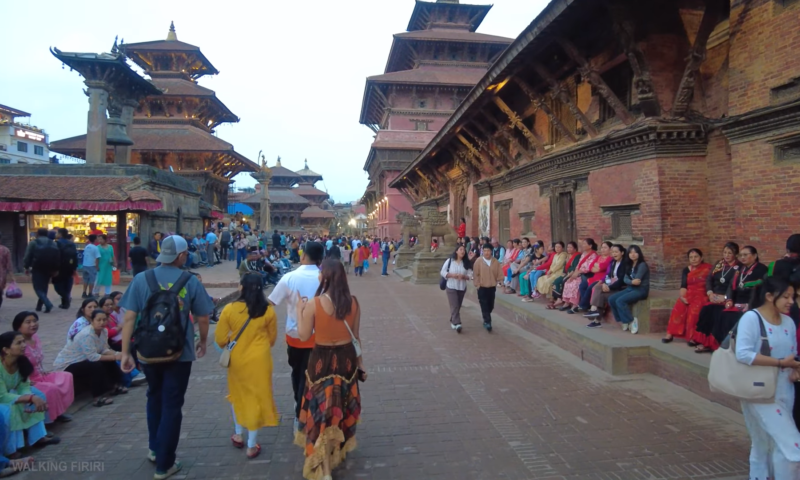
Travel insurance is essential for all visitors, particularly if you plan to trek or participate in adventure sports.
Nepal is generally safe for first-time travelers and welcomes thousands of visitors every year. Local people are friendly and helpful, and serious crime against tourists is rare. In cities like Kathmandu and Pokhara, travelers should take normal precautions such as protecting valuables and avoiding quiet areas at night. Food in tourist areas is usually safe, but drinking bottled or filtered water is recommended. For trekking, popular routes are well managed, and hiring a licensed guide improves safety. Weather can change quickly in the mountains, so proper planning is important. With simple care and respect for local culture, Nepal offers a safe and enjoylaable travel experience.
Safety Tips:
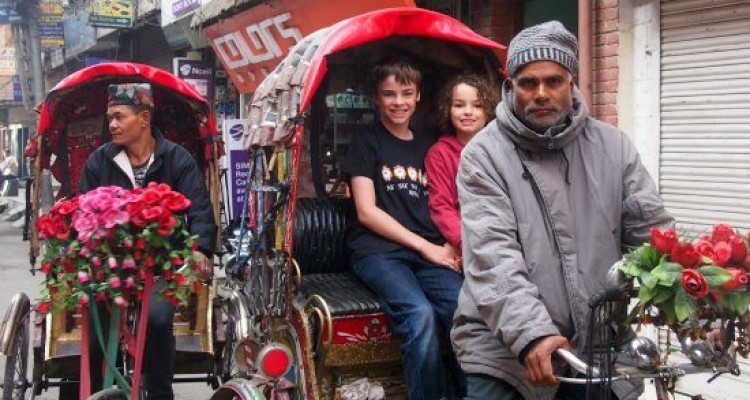
Nepal has limited healthcare facilities outside major cities. High-altitude treks may pose additional health risks.
Recommended Vaccines:
Altitude Sickness Tips:

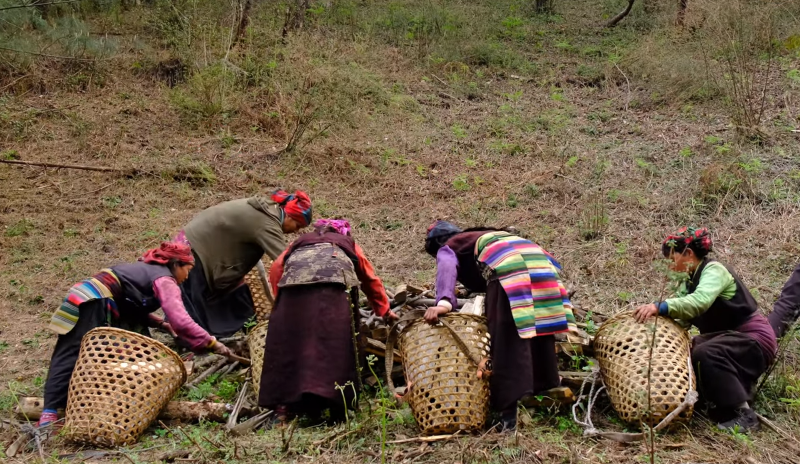
Nepalese people are known for their warmth and friendliness. Respecting local traditions ensures a pleasant experience.
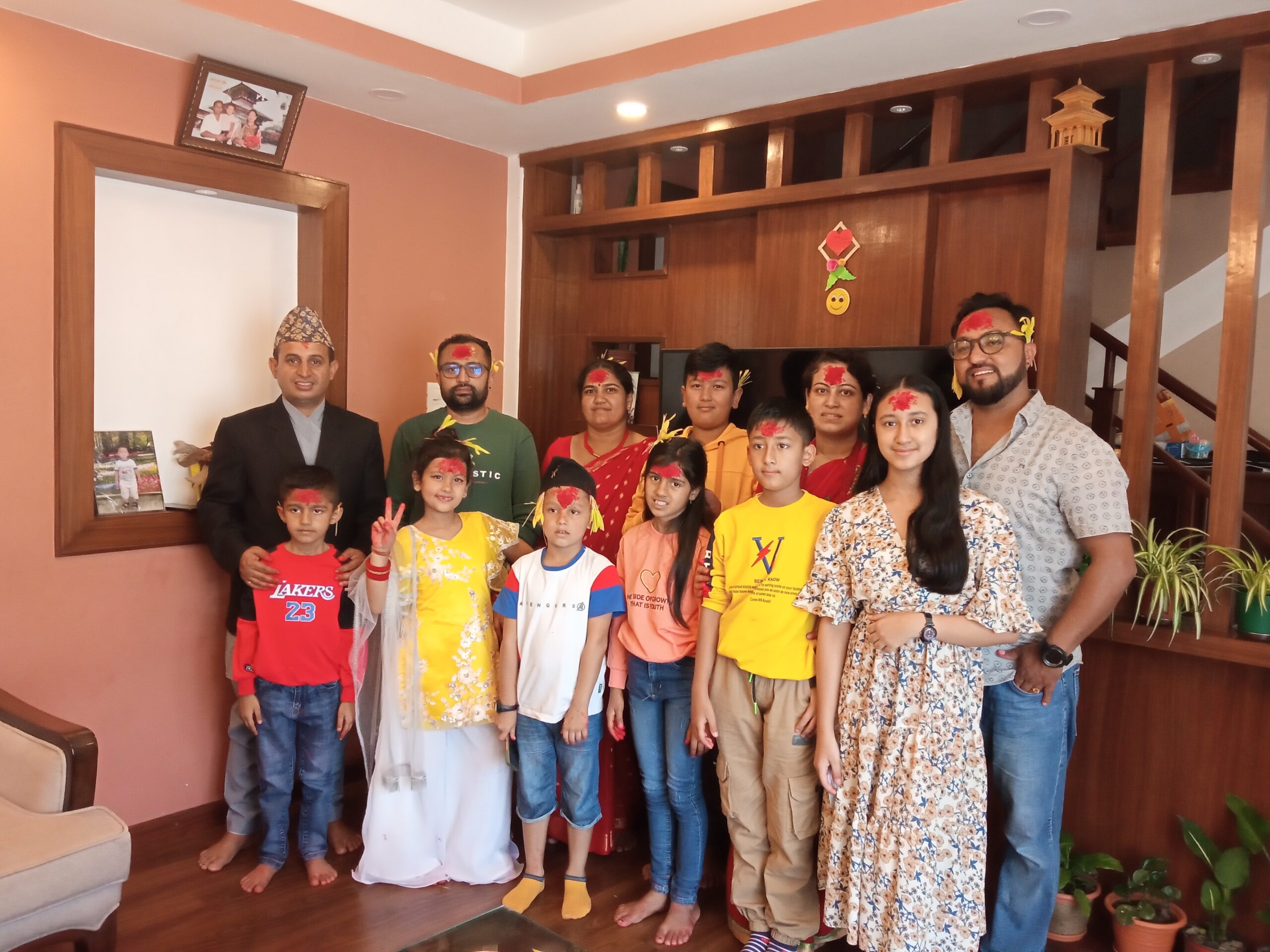
Nepal celebrates numerous colorful festivals, reflecting its diverse culture.
Nepal offers a range of accommodations:
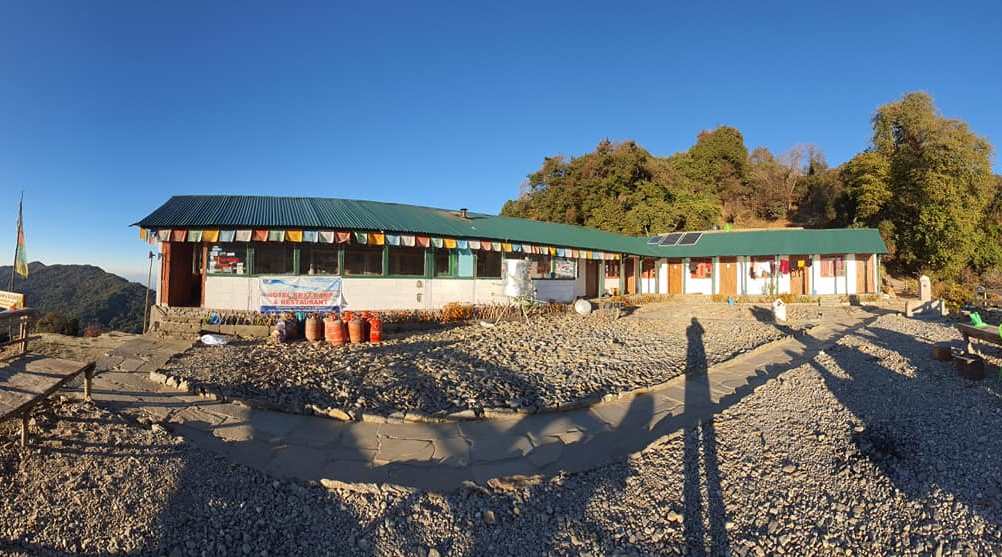
Teahouses are small lodges along trekking routes that provide meals and simple lodging.
Tips:
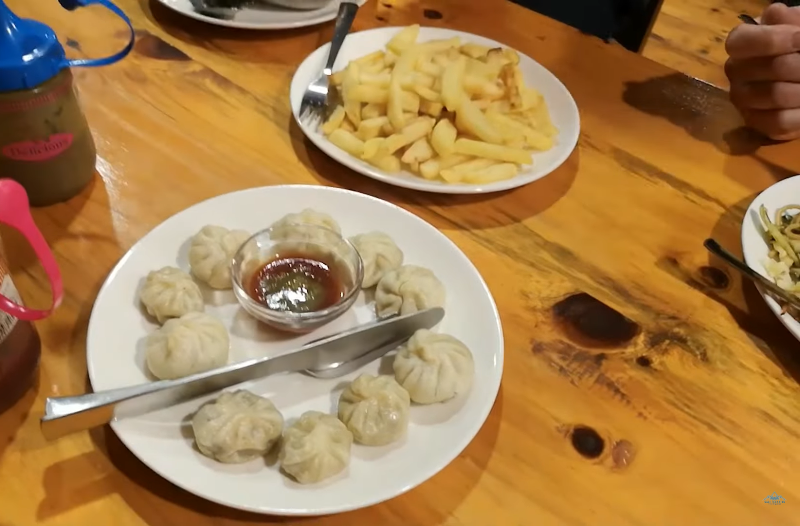
Nepalese cuisine is flavorful and diverse:

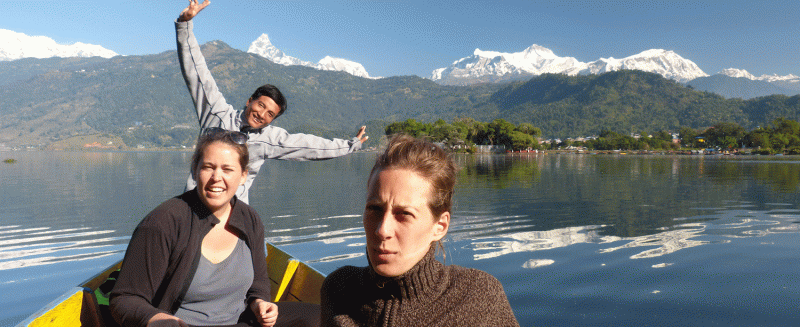
Pokhara, often called the “City of Lakes,” is Nepal’s second-largest city and a favorite destination for first-time visitors. Nestled about 200 km west of Kathmandu, Pokhara offers a perfect mix of natural beauty, adventure activities, and serene landscapes. Surrounded by the majestic Annapurna mountain range, the city is a gateway for trekking, sightseeing, and relaxation.
Phewa Lake is Pokhara’s most iconic attraction. This serene freshwater lake, spanning about 4.43 square kilometers, is surrounded by lush forests and the snow-capped peaks of the Annapurna and Machapuchare mountains. Visitors can enjoy:
Boating: Rent a rowboat or paddleboat to explore the lake at your own pace.
Reflections: On calm mornings, the surrounding mountains are mirrored perfectly on the lake’s surface, offering spectacular photography opportunities.
Tal Barahi Temple: Located on a small island in the middle of the lake, this two-story pagoda temple is dedicated to the Hindu goddess Barahi.
Tip: Early morning or late afternoon provides the best lighting for lake reflections and photographs.
Sarangkot, a hilltop viewpoint about 1,600 meters above sea level, is world-famous for its sunrise views over the Annapurna range. Watching the sun rise here is a magical experience that first-time visitors must witness:
The Experience: Just before dawn, the first rays of sunlight touch the snow-capped peaks, turning them into shades of gold, pink, and orange. The surrounding Pokhara Valley and Phewa Lake slowly awaken with soft morning light.
Photography: Bring a tripod to capture panoramic shots of Annapurna, Machapuchare (Fishtail Mountain), and the valley below.
Hiking or Driving: Sarangkot can be reached by a short drive or a moderate uphill hike from Pokhara. The trail is scenic, passing through small villages and forests.
Tip: Arrive at least 30–40 minutes before sunrise to secure a good viewpoint and enjoy the full transition of colors.

Pokhara is also home to some fascinating natural wonders:
Devi’s Fall (Patale Chhango):
A powerful waterfall where the Pardi Khola river suddenly plunges into an underground tunnel.
Named “Devi’s Fall” after a tourist tragically fell into the waterfall decades ago.
Best viewed during the monsoon season when the water flow is strongest.
Gupteshwor Cave:
Located near Devi’s Fall, this cave is one of the largest in Nepal.
A sacred site dedicated to Lord Shiva, with a shrine inside.
Explore its winding passages and underground streams.
Tip: Wear comfortable shoes and bring a flashlight for exploring Gupteshwor Cave.

Pokhara is the ideal destination for first-time visitors because it offers:
Stunning natural beauty with lakes, waterfalls, caves, and mountain views.
Adventure sports such as paragliding, zip-lining, and mountain biking.
Relaxed city vibes with lakeside cafés and markets.
A gateway to trekking routes like the Annapurna Circuit and Ghorepani Poon Hill.
Whether you are seeking peace on the tranquil Phewa Lake, adrenaline from adventure sports, or breathtaking views from Sarangkot, Pokhara has something for everyone.

Chitwan National Park, Nepal’s first national park and a UNESCO World Heritage Site, is located in the Terai lowlands. It is famous for its rich biodiversity, including Bengal tigers, one-horned rhinoceroses, elephants, sloth bears, and over 500 species of birds.
Tourists can enjoy a variety of activities:
Jungle Safari: Explore the park on elephant or jeep safaris to spot wildlife.
Canoeing: Paddle along the Rapti River, observing aquatic birds and crocodiles.
Tharu Village Visits: Experience the culture and lifestyle of the indigenous Tharu people.
Birdwatching: Ideal for spotting exotic and migratory bird species.
Nature Walks: Guided treks through lush forests for a closer wildlife encounter.

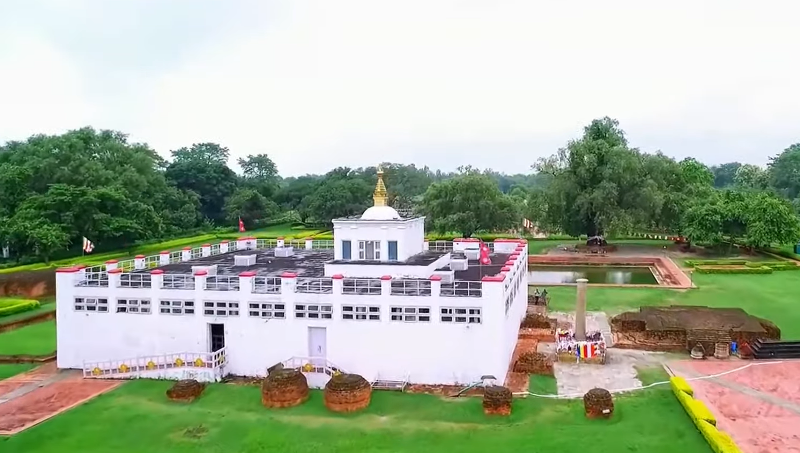
Lumbini, located in the Rupandehi district of Nepal, is one of the most sacred and historically significant Buddhist pilgrimage sites in the world. It is famously known as the birthplace of Siddhartha Gautama, who later became Lord Buddha, around 563 BCE. Recognized as a UNESCO World Heritage Site, Lumbini attracts thousands of pilgrims and tourists every year.
Maya Devi Temple
This is the most important site in Lumbini. The temple marks the exact birthplace of Lord Buddha.
The sacred nativity marker and a pond where Queen Maya Devi took a ritual bath are located here.
Visitors can also see archaeological ruins dating back to the 3rd century BCE.
Ashokan Pillar
Erected by Emperor Ashoka of India in 249 BCE, this pillar signifies Ashoka’s visit to Lumbini.
It has inscriptions confirming Lumbini as Buddha’s birthplace.
Sacred Garden
Surrounding the Maya Devi Temple, this garden offers a peaceful space for meditation and reflection.
Many monks and visitors sit here to meditate in serene surroundings.
Monastic Zone
Lumbini is home to monasteries built by Buddhist communities from various countries, including Thailand, Myanmar, China, Japan, and Sri Lanka.
These monasteries showcase unique architecture and cultural art from their respective countries.
Lumbini Museum
The museum houses ancient Buddhist artifacts, sculptures, and inscriptions.
Visitors can learn about the life of Lord Buddha and the history of Buddhism in Nepal.
Puskarini (Holy Pond)
A sacred pond where Queen Maya Devi is said to have bathed before giving birth to Siddhartha.
Pilgrims often perform rituals here.
Pilgrimage and Worship: Devotees can offer prayers at Maya Devi Temple and other monasteries.
Meditation and Spiritual Retreats: Many monasteries and gardens provide peaceful spots for meditation.
Cultural Tours: Explore the monastic zone and learn about Buddhist art, architecture, and customs.
Photography: The monasteries, gardens, and sacred sites provide excellent photography opportunities.
Walking and Cycling: Lumbini is flat and well-planned, making it easy to explore on foot or by bicycle.
Local Shopping: Small shops sell handicrafts, prayer beads, souvenirs, and Buddhist literature.
October to March: The weather is mild and pleasant, ideal for sightseeing.
Avoid Monsoon (June to August): Heavy rainfall may affect outdoor activities.
By Air:
Bhairahawa Airport (also known as Gautam Buddha Airport) is the nearest airport.
Direct flights are available from Kathmandu, Pokhara, and other major cities.
By Road:
Lumbini is around 300 km from Kathmandu, approximately 7–8 hours by car or bus.
Private cars, tourist buses, and taxis are available.
Lumbini offers a range of accommodations from budget guesthouses to luxury hotels.
Many monasteries also offer guest rooms for pilgrims, providing a serene and spiritual stay.
Respect the religious sites and follow local customs.
Dress modestly, especially when visiting temples and monasteries.
Carry water, hats, and sunscreen if visiting during sunny days.
Hiring a local guide can enhance your experience with historical and cultural insights.
Summary:
Lumbini is not just a tourist destination but a spiritual journey into the life of Lord Buddha. From the sacred Maya Devi Temple to the diverse international monasteries, Lumbini offers a unique blend of history, culture, and spirituality, making it a must-visit destination in Nepal.
The Everest Base Camp (EBC) Trek is one of the most famous treks in the world. It takes you close to the world’s highest mountain, Mount Everest (8,848 m), and offers spectacular views of Himalayan peaks, glaciers, rivers, and Sherpa villages. The trek passes through Sagarmatha National Park, a UNESCO World Heritage Site, with unique wildlife, monasteries, and rich culture.
This trek is perfect for adventure lovers who want to experience the Himalayas without climbing a technical mountain. You will also visit Tengboche Monastery, enjoy the view of Ama Dablam, Lhotse, Nuptse, and reach the famous Everest Base Camp, where climbers start their journey to the summit.
Autumn (Sept–Nov): Clear skies and perfect weather.
Spring (Mar–May): Rhododendron blooms and good visibility.
Winter is very cold, and the monsoon season (June–Aug) brings heavy rain and slippery trails.
Flight or scenic drive to Lukla (or 4WD to Salleri/Thap Danda if avoiding Lukla flight).
Picturesque Sherpa villages: Namche Bazaar, Dingboche, Pangboche.
Breathtaking views of Everest, Lhotse, Nuptse, Ama Dablam.
Visit Tengboche Monastery, the spiritual heart of Khumbu.
Optional Kala Patthar climb for the best sunrise view over Everest.
Experience local Sherpa culture and traditional Himalayan cuisine.
The Annapurna Circuit Trek is one of the most popular trekking routes in Nepal, offering stunning views of the Annapurna and Dhaulagiri ranges. The trek combines diverse landscapes, from lush green subtropical forests and terraced fields to high mountain deserts. Trekkers also pass through charming villages inhabited by Gurung, Thakali, and Tibetan communities, experiencing local culture, traditions, and hospitality.
This trek is suitable for moderately fit hikers and is often done in 10–18 days, depending on the pace. The highlight of the trek is crossing Thorong La Pass (5,416 m), offering breathtaking panoramic mountain views. Other attractions include Manang Valley, Muktinath Temple, and natural features like hot springs and waterfalls.
The trek is well-supported by teahouses and lodges, making it comfortable for independent trekking. The best time to visit is spring (March–May) and autumn (September–November) for clear skies and moderate temperatures.
Day 1: Kathmandu to Besisahar – drive to the start of the trek
Drive from Kathmandu to Besisahar (approx. 6–7 hours).
Overnight in Besisahar.
Day 2: Besishahar to Bhulbhule
Trek distance: 8–10 km
Trek hours: 4–5 hours
Pass through terraced fields and small villages.
Overnight in Bhulbhule.
Day 3: Bhulbhule to Jagat
Trek distance: 9–11 km
Trek hours: 5–6 hours
Scenic river valleys and suspension bridges along the way.
Overnight in Jagat.
Day 4: Jagat to Dharapani
Trek distance: 11–13 km
Trek hours: 6–7 hours
Dense forests, traditional villages, and small streams.
Overnight in Dharapani.
Day 5: Dharapani to Chame
Trek distance: 8–10 km
Trek hours: 5 hours
Gradual ascent with beautiful views of Annapurna II and Lamjung Himal.
Overnight in Chame (2,670 m).
Day 6: Chame to Upper Pisang
Trek distance: 10–12 km
Trek hours: 6 hours
Hike through forests, rhododendron trees, and small settlements.
Overnight in Upper Pisang (3,300 m).
Day 7: Upper Pisang to Manang
Trek distance: 12–14 km
Trek hours: 6–7 hours
Crossing a high valley, excellent views of Annapurna and Gangapurna.
Overnight in Manang (3,500 m).
Day 8: Acclimatization day in Manang
Short hikes to nearby viewpoints or the Gangapurna Glacier.
Helps to adjust to high altitude before crossing Thorong La Pass.
Overnight in Manang.
Day 9: Manang to Thorong Phedi / High Camp
Trek distance: 12–15 km
Trek hours: 6–7 hours
Steep ascent with views of Tilicho Lake and surrounding peaks.
Overnight at Thorong Phedi (4,540 m) or High Camp.
Day 10: Thorong La Pass to Muktinath
Early morning trek to Thorong La Pass (5,416 m).
Descend to Muktinath (3,800 m), a sacred pilgrimage site.
Trek distance: 20 km approx.
Trek hours: 10–12 hours
Overnight in Muktinath.
Highlights of the 10-day trek:
Crossing Thorong La Pass
Stunning mountain views: Annapurna I, Dhaulagiri, Gangapurna
Cultural villages: Gurung, Thakali, and Tibetan communities
Natural beauty: Rivers, waterfalls, forests, and hot springs


The Langtang Valley Trek is a popular trekking route in Nepal, located north of Kathmandu near the Tibetan border. It is known for its beautiful landscapes, rhododendron forests, alpine meadows, and snow-capped peaks like Langtang Lirung (7,227 m). Trekkers also experience local Tamang and Sherpa culture, traditional villages, and Buddhist monasteries.
This trek is ideal for moderately fit trekkers and offers a shorter alternative to longer Himalayan treks like the Annapurna Circuit or Everest Base Camp. The trail passes through forests, rivers, waterfalls, and high-altitude valleys, with plenty of opportunities for photography and cultural experiences.
The best time to trek is spring (March–May) for rhododendron blooms and autumn (September–November) for clear mountain views.
Day 1: Kathmandu to Syabrubesi
Drive from Kathmandu to Syabrubesi (approx. 7–8 hours).
Overnight in Syabrubesi.
Day 2: Syabrubesi to Lama Hotel
Trek distance: 7–8 km
Trek hours: 4–5 hours
Pass through small villages, terraced fields, and forests.
Overnight in Lama Hotel.
Day 3: Lama Hotel to Langtang Village
Trek distance: 10–12 km
Trek hours: 5–6 hours
Walk along Langtang River, cross suspension bridges, and enter alpine forests.
Overnight in Langtang Village.
Day 4: Langtang Village to Kyanjin Gompa
Trek distance: 6–8 km
Trek hours: 3–4 hours
Steep trail with amazing views of Langtang Lirung.
Visit Kyanjin Gompa Monastery and cheese factory.
Overnight in Kyanjin Gompa (3,870 m).
Day 5: Kyanjin Gompa – Hike to Tserko Ri
Trek distance: 6 km
Trek hours: 3–4 hours
Short hike to Tserko Ri viewpoint (4,984 m) for panoramic Himalayan views.
Return to Kyanjin Gompa.
Overnight in Kyanjin Gompa.
Day 6: Kyanjin Gompa to Lama Hotel
Trek distance: 16–18 km
Trek hours: 6–7 hours
Descend through Langtang Valley, enjoy river views and forests.
Overnight in Lama Hotel.
Day 7: Lama Hotel to Thulo Syabru
Trek distance: 10 km
Trek hours: 5 hours
Hike through small villages, farm fields, and suspension bridges.
Overnight in Thulo Syabru.
Day 8: Thulo Syabru to Syabrubesi
Trek distance: 12–14 km
Trek hours: 6 hours
Walk along the Bhote Koshi River and re-enter the lower forested valley.
Overnight in Syabrubesi.
Day 9: Syabrubesi to Kathmandu
Drive back to Kathmandu (7–8 hours).
Overnight in Kathmandu.
Day 10: Kathmandu – Sightseeing / Departure
Explore Kathmandu (optional) or prepare for departure.
Suggested Image: Group of trekkers crossing a suspension bridge.


Essentials:
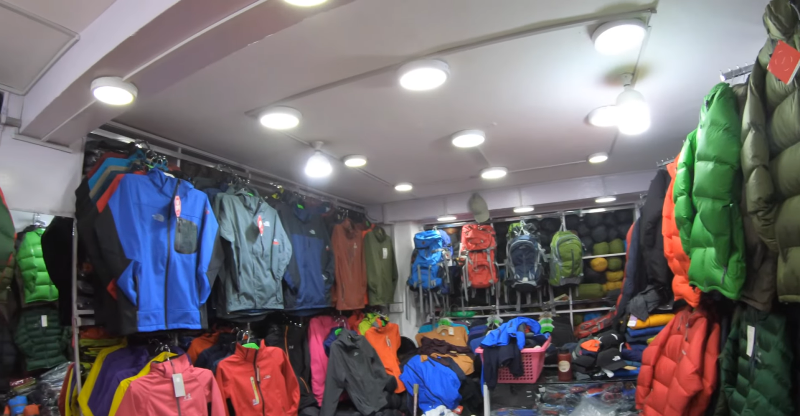
Nepal is a land of adventure, culture, spirituality, and natural beauty. With careful preparation and respect for local customs, first-time visitors can experience everything from ancient temples to high-altitude treks. Whether exploring Kathmandu, sailing on Phewa Lake, trekking to Everest Base Camp, or enjoying adventure sports, Nepal promises unforgettable memories.
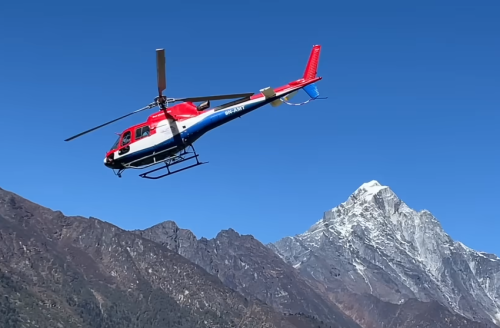
There is a moment on every Everest trek when your legs have an opinion. For most people, it arrives
Continue Reading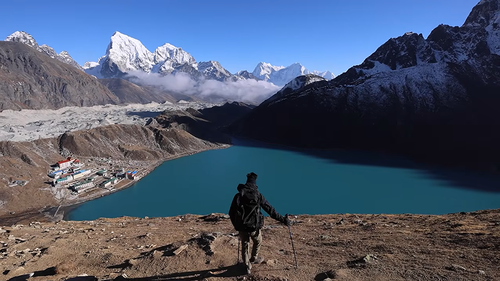
If you are asking how difficult the Everest Three Passes Trek is, the honest answer is this: it is t
Continue Reading
My name is Peng Chang, and I travelled to Nepal from Malaysia with a small group of friends. Before
Continue Reading
In this story Why I Chose Everest Base Camp My name is Chyling, and I come from Malaysia, a country
Continue Reading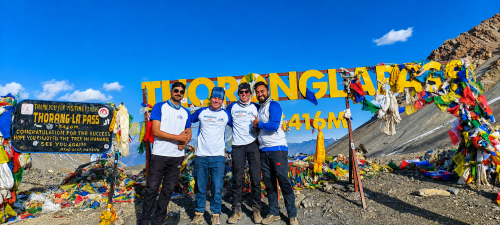
Ask anyone who has finished the Annapurna Circuit which day they remember most, and the answer is al
Continue Reading
Introduction Kathmandu doesn’t ease you in. You step out of the airport into a chorus of horns
Continue Reading