

29 Jul 2019 19 min to read
The Mardi Himal Trek is a short and scenic trekking route in Nepal’s Annapurna region. It is known for mountain views, peaceful forest trails, traditional villages, and the impressive ridge leading toward Mardi Himal Base Camp.
Unlike longer Himalayan treks, Mardi Himal can be completed in about 5 to 7 trekking days from Pokhara, depending on the starting and ending points. The trail passes through rhododendron forests, alpine landscapes, mountain ridges, and small mountain settlements before reaching the high camp and Mardi Himal Base Camp area.
One of the main attractions is the close view of Machhapuchhre (Fishtail), Annapurna South, Hiunchuli and Mardi Himal. The route also provides an opportunity to experience the quieter side of the Annapurna region.
| Mardi Himal Trek Facts | Details |
|---|---|
| Trek Region | Annapurna Region, Nepal |
| Starting Point | Kande, Phedi or Landruk |
| Ending Point | Siding/Lumre or another selected route |
| Highest Point | Mardi Himal Base Camp, around 4,500 m |
| Trek Duration | About 5–7 days |
| Trek Difficulty | Moderate |
| Accommodation | Tea houses and lodges |
| Best Seasons | March–May and September–November |
| Main Mountains | Mardi Himal, Machhapuchhre, Annapurna South, Hiunchuli |
| Required Documents | ACAP entry permit and TIMS |
| Starting City | Pokhara |

The Mardi Himal Trek is a good option for trekkers who want a Himalayan experience without committing to a long expedition-style itinerary.
The trail begins in the lower hills and gradually moves through forests before reaching open mountain ridges. As you gain altitude, the landscape changes from dense vegetation to alpine terrain, with increasingly clear views of the Annapurna mountains.
The route is also attractive because it combines several experiences in one trek:

A popular Mardi Himal route starts from Kande and follows the trail toward Deurali, Forest Camp, Low Camp and High Camp. From High Camp, trekkers usually make an early morning excursion toward Mardi Himal Base Camp before descending toward Siding or another lower trailhead.
The exact route can be adjusted according to available time, weather, road conditions and the trekker’s fitness level.
A common route is:
Pokhara → Kande → Australian Camp/Deurali → Forest Camp → Low Camp → High Camp → Mardi Himal Base Camp → High Camp → Siding → Lumre → Pokhara
For a shorter itinerary, trekkers can also start from Landruk and reduce the number of trekking days.
Drive from Pokhara to Kande and begin the trek through forest trails and hillside settlements.
The trail gradually climbs toward Australian Camp and continues to Deurali. The area provides early views of the Annapurna range and Machhapuchhre.
Walking: About 3–4 hours
Overnight: Deurali
After breakfast, continue through rhododendron and oak forests.
The trail is peaceful and shaded in many sections. As you climb higher, the vegetation becomes different and the mountain atmosphere becomes more noticeable.
Walking: About 5–6 hours
Overnight: Forest Camp
The trail continues uphill through forest before reaching more open sections of the route.
From Low Camp, mountain views begin to become much more prominent, particularly toward Machhapuchhre and the Annapurna range.
Walking: About 4–5 hours
Overnight: Low Camp
This is one of the most scenic sections of the trek.
The trail gradually leaves the dense forest and follows a ridge toward High Camp. Open mountain scenery becomes more impressive as you gain elevation.
Walking: About 4–5 hours
Overnight: High Camp
Start early for the hike toward Mardi Himal Base Camp.
The higher trail offers expansive views of Machhapuchhre, Annapurna South, Hiunchuli and the surrounding Himalayan landscape. After spending time at the viewpoint or base camp area, return to High Camp.
Walking: About 6–8 hours round trip
Overnight: High Camp
Descend through the forest toward Siding.
The landscape changes quickly as you lose elevation, with greener hills and warmer temperatures appearing along the way.
Walking: About 5–6 hours
Overnight: Siding
Continue downhill toward Lumre. From there, take a road transfer back to Pokhara.
The trek ends in Pokhara, where you can relax beside Phewa Lake or continue with another Nepal travel experience.
For travelers with limited time, the trek can be shortened by starting from Landruk or using road transportation to reduce walking days.
A sample short itinerary is:
Day 1: Pokhara – Landruk – Forest Camp
Day 2: Forest Camp – Low Camp – High Camp
Day 3: High Camp – Mardi Himal Base Camp – High Camp
Day 4: High Camp – Low Camp – Siding
Day 5: Siding – Lumre – Pokhara
The exact walking hours can change depending on trail conditions, weather and the selected overnight stops.

Mardi Himal Base Camp is the highest point commonly visited on the trek, at around 4,500 meters.
The base camp section is usually completed as a day excursion from High Camp. The trail becomes more exposed as it climbs above the tree line, and the landscape changes into alpine terrain.
The main attraction is the close mountain panorama. On a clear day, trekkers can see Machhapuchhre, Annapurna South, Hiunchuli and other surrounding peaks.
Because the trail reaches a high elevation, trekkers should ascend carefully and pay attention to weather and altitude-related symptoms.
High Camp is one of the most memorable overnight stops on the route.
Located above the forest zone, High Camp provides wide views across the surrounding mountains. Many trekkers wake early for sunrise because the morning light can create impressive views of Machhapuchhre and the Annapurna range.
The elevation and exposed location mean that temperatures can become very cold, particularly during winter and early morning.

Kande is a common starting point for the Mardi Himal Trek. It can be reached by road from Pokhara and provides access to the first section of the trail.
Deurali is located along the ridge route and offers views toward the surrounding hills and mountains. It is also an important overnight stop on several Mardi Himal itineraries.
Forest Camp is surrounded by dense Himalayan woodland. The area is peaceful and provides a natural transition between the lower villages and higher mountain terrain.
Low Camp marks the beginning of more open mountain scenery. From here, views of Machhapuchhre and the Annapurna range become increasingly visible.
High Camp is the final major overnight stop before the Mardi Himal Base Camp excursion. Its open location provides impressive mountain views.
Siding is a traditional village used on the descending section of several Mardi Himal routes. It provides a very different environment from the high mountain ridge.

Tea houses are the main form of accommodation along the Mardi Himal route.
Most provide simple rooms with beds, blankets and shared bathroom facilities. Facilities vary from one lodge to another, particularly at higher elevations.
During busy trekking periods, rooms can become limited. Booking accommodation through a guide or trekking company can make the process easier, especially during the autumn and spring seasons.
Common facilities may include:
Facilities become more basic as you travel higher into the mountains.

Tea houses serve a mixture of Nepali and international-style meals.
A typical menu may include:
Dal bhat is one of the most common trekking meals because it provides carbohydrates, vegetables and protein and is generally filling after a long day of walking.
Food prices normally increase with elevation because supplies have to be transported farther from the road-accessible areas. Carrying a small supply of personal snacks can therefore be useful.
Staying hydrated is important throughout the trek.
Water may be available from lodges, local sources or bottled and filtered supplies depending on the location. Trekkers should treat natural water before drinking it unless its safety has been confirmed.
Useful options include:
Avoid relying on untreated natural water sources. Water availability can also change according to season and location, so it is sensible to carry enough for each walking section.
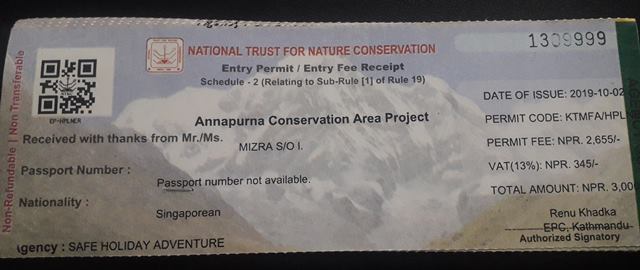
The Mardi Himal Trek lies within the Annapurna region and requires the appropriate trekking documents.
The Nepal Tourism Board currently lists Mardi Himal among the Annapurna routes requiring a licensed trekking guide and agency-issued TIMS card. Current TIMS charges listed by the Nepal Tourism Board are NPR 1,000 for SAARC nationals and NPR 2,000 for other foreign trekkers.
The trek also requires entry into the Annapurna Conservation Area. Current Nepal Tourism Board information lists the Annapurna Conservation Area entry fee at NPR 1,000 for SAARC nationals and NPR 3,000 for other foreign visitors.
Permit requirements and fees can change, so it is important to check the latest official information before departure.
The Mardi Himal Trek is generally considered a moderate trek.
You do not need advanced mountaineering skills, but you should be prepared for several hours of walking each day. Some sections are steep, and the higher trail can be exposed and physically demanding.
The biggest challenge is the increase in elevation toward High Camp and Mardi Himal Base Camp.
Your experience will depend on:
Regular walking, hiking and cardiovascular exercise before the trek can help prepare your body for the journey.
The Mardi Himal route reaches around 4,500 meters, so altitude should be taken seriously.
Altitude sickness can develop when the body does not adjust properly to increasing elevation. Symptoms can include headache, nausea, dizziness, unusual tiredness, loss of appetite and difficulty sleeping.
The Nepal Tourism Board advises trekkers to learn about altitude sickness, avoid alcohol at high altitude, trek with appropriate precautions and seek help if serious symptoms develop.
Useful precautions include:
Altitude sickness should never be ignored.

The main trekking seasons are spring and autumn.
March marks the beginning of the spring trekking season.
Lower elevations become warmer, while higher areas can still be cold. Rhododendrons begin to bloom, making the forest sections particularly attractive.
April is one of the popular spring trekking months.
The weather is generally favorable, and rhododendron forests can display colorful blooms. Mountain views are often excellent during clear mornings.
May is still a good month for trekking before the monsoon becomes more established.
Temperatures are warmer at lower elevations, although afternoon clouds or occasional rain can occur.
September marks the transition from the monsoon period toward the autumn trekking season.
Conditions can vary during the early part of the month, so trekkers should be prepared for possible rain. Weather generally becomes more stable later in September.
October is one of the busiest trekking months in Nepal.
Stable weather, clearer skies and excellent mountain visibility make it a popular time for Mardi Himal.
November is another strong month for trekking.
The weather is generally dry, although temperatures become colder, especially at High Camp and during early morning hours.
December, January and February can bring cold temperatures and snowfall to the higher sections.
Snow can make the trail more difficult and may affect access to High Camp and the Base Camp area. Winter trekking is possible under suitable conditions, but trekkers should check current weather and trail conditions before departure.
Proper winter equipment is important if you plan to trek during this period.
June, July and August are affected by the Nepal monsoon.
Rain can make forest trails muddy and slippery, while clouds can reduce mountain visibility. Leeches may also be present on wet lower-elevation trails.
If you trek during the monsoon, waterproof clothing, suitable footwear and flexible planning are particularly important.
There is no single fixed distance for the Mardi Himal Trek because the total walking distance changes according to the starting point, ending point and side trips.
Routes beginning from Kande generally involve more walking than shorter itineraries beginning from Landruk.
Instead of focusing only on total kilometers, trekkers should consider:
Your trekking company or guide can provide the expected daily walking distance for your selected itinerary.
For a 5-day Mardi Himal Trek, the total cost is around USD 400–700 per person, depending on group size, season, transportation, and services included. The price normally covers a licensed guide, permits, teahouse accommodation, meals, and ground transportation from Pokhara.
The main permit cost is about NPR 5,000 (around USD 32) for foreign visitors, including the Annapurna Conservation Area permit and TIMS. Food and accommodation together generally cost around NPR 2,000–4,000 per day, while guide service and transportation make up a larger part of the package price.
A porter costs about USD 20–30 per day if required. Personal expenses such as drinks, snacks, hot showers, Wi-Fi, gear rental, insurance, and tips are usually extra.
Common expenses include:
A package trek can be easier to budget because transportation, permits, accommodation and guide services can be arranged together.
Independent trekkers should calculate each expense separately and keep additional Nepali rupees available for unexpected costs.

Pack according to the season and your itinerary. A practical list includes:
Avoid carrying unnecessary items. A lighter backpack makes steep sections much more comfortable.

Mardi Himal can be reached by several trailheads around the Annapurna region. The best starting point depends on your available time, preferred walking distance, and transportation. Kande, Phedi, and Landruk are the main access points used for different Mardi Himal itineraries.
Kande is one of the most popular starting points for Mardi Himal Trek. The trail passes through Australian Camp and Deurali before entering peaceful rhododendron forests. It offers a gradual trekking experience with beautiful views of the Annapurna range and Mardi Himal.
Phedi provides another approach to the Mardi Himal trail, usually connecting with the route toward Deurali. It can be suitable for trekkers who want to customize their walking days or combine Mardi Himal with other nearby trails.
Landruk is a practical option for a shorter Mardi Himal itinerary. Starting here reduces the approach distance and allows trekkers to reach Forest Camp, Low Camp, High Camp, and Mardi Himal Base Camp in fewer days. This route is particularly useful for travelers with limited time.
Both treks are located in the Annapurna region, but the experience is different.
| Feature | Mardi Himal Trek | Annapurna Base Camp Trek |
|---|---|---|
| Main attraction | Mountain ridge and Mardi Himal views | Annapurna Sanctuary and ABC |
| Highest point | Around 4,500 m | Around 4,130 m |
| Typical duration | About 5–7 trekking days | Usually longer |
| Landscape | Forest, ridge and alpine terrain | Villages, forests and mountain sanctuary |
| Starting options | Kande, Phedi, Landruk | Several route options |
| Mountain views | Machhapuchhre, Annapurna South, Hiunchuli, Mardi Himal | Annapurna massif, Machhapuchhre and surrounding peaks |
| Trail experience | Ridge walking and quieter sections | More established and varied trekking route |
The two routes should be selected according to available time, preferred scenery, walking ability and the type of trekking experience you want.
Mardi Himal can be suitable for beginners who are reasonably fit and properly prepared.
However, “short” does not mean effortless. The trail contains steep sections, and the elevation becomes significant near High Camp and Mardi Himal Base Camp.
Beginners should prepare with regular walking or hiking before the trip and choose an itinerary that allows enough time for comfortable walking and proper adjustment to altitude.
A licensed guide can also provide assistance with route navigation, accommodation, weather decisions and altitude-related concerns.
Mardi Himal passes through natural landscapes and local communities, so responsible trekking is important.
Trekkers can help protect the area by:
Responsible trekking helps preserve the trail for local communities and future visitors.
A standard Mardi Himal Trek takes around 5 to 7 trekking days, although the total trip length depends on transportation and the selected route.
Mardi Himal Base Camp is generally described at around 4,500 meters above sea level.
It is generally considered a moderate trek. The higher sections involve steep climbs and significant elevation, so good fitness and preparation are recommended.
October, November, April and March are popular trekking months because of generally favorable conditions. September and May can also be suitable depending on weather.
Yes. Beginners with reasonable fitness can undertake the trek with proper preparation, a suitable itinerary and appropriate guidance.
Yes. Current Nepal Tourism Board guidance lists Mardi Himal among the routes where trekkers need a licensed trekking guide and agency-issued TIMS card.
Trekkers need the applicable TIMS card and Annapurna Conservation Area entry permit. Current requirements and fees should be checked before departure.
Common starting points include Kande, Phedi and Landruk, depending on the itinerary.
Many itineraries descend to Siding or Lumre and then continue by road to Pokhara.
Yes, but winter can bring cold temperatures and snow at higher elevations. Trail conditions should be checked before starting.
Snow can occur at higher elevations during winter. The amount varies according to the season and weather conditions.
Yes. Tea houses and small lodges provide accommodation and meals along the main trekking route.
Common meals include dal bhat, momo, noodles, fried rice, pasta, soup, porridge, eggs, tea and coffee.
Yes, but availability varies by location. Trekkers should use treated, filtered or boiled water rather than drinking untreated natural water.
Yes, provided you are physically prepared and choose an appropriate itinerary. The higher sections still require care because of elevation and changing weather.
The Mardi Himal Trek combines mountain scenery, forest trails, traditional villages and high-altitude landscapes in a relatively short Himalayan adventure.From the green hills around Pokhara to the open ridge above High Camp, the scenery changes throughout the journey. The excursion toward Mardi Himal Base Camp provides the high point of the trek, while the descent through Siding brings the journey back toward the warmer lower hills.With suitable preparation, a well-planned itinerary, proper trekking documents and attention to weather and altitude, Mardi Himal offers a memorable way to explore the Annapurna region of Nepal.
For the latest permit requirements and fees, trekkers should confirm the information with the Nepal Tourism Board or their registered trekking agency before departure.

Nepal is famous for Mount Everest, the Annapurna Himalayas, ancient temples, traditional villages, a
Continue Reading
There is a moment at Annapurna Base Camp when the sun touches the rim of the sanctuary and every pea
Continue Reading
There is a moment on the Annapurna Circuit that every trekker thinks about for days. It happens in t
Continue Reading
Most people walk to Everest Base Camp and then walk back down the same valley. The Three Passes Trek
Continue Reading
There is a moment on every Everest trek when your legs have an opinion. For most people, it arrives
Continue Reading
If you are asking how difficult the Everest Three Passes Trek is, the honest answer is this: it is t
Continue Reading