

3 Jul 2018 8 min to read
Not everyone has two weeks to spend trekking through the Khumbu. If you want to see Everest up close without the twelve days of walking, blisters, and altitude acclimatization, the Everest Base Camp helicopter tour is the fastest way to do it — most trips are done and back in Kathmandu before lunch.
This guide walks through the actual route, what a seat costs in 2026, where the helicopter lands, and whether it’s worth choosing over the trek.
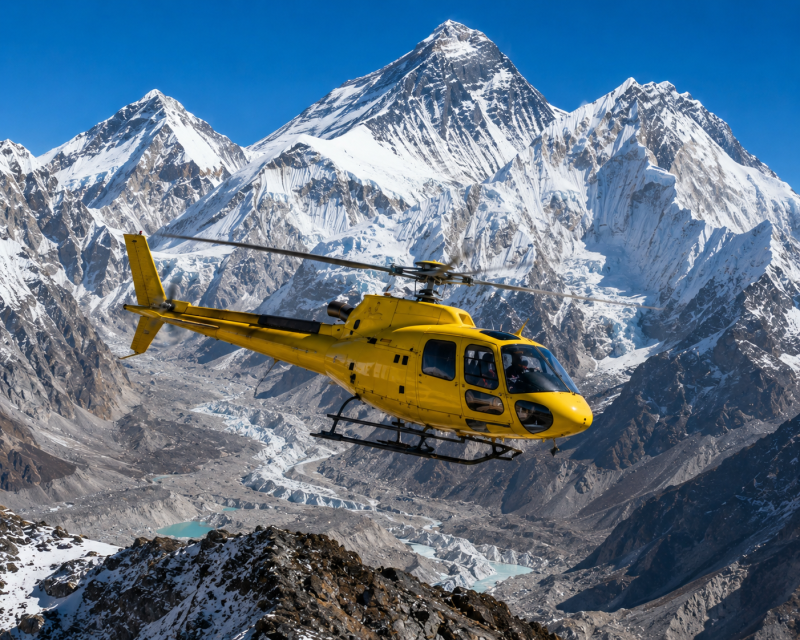
It’s a one-day scenic flight from Kathmandu into the Khumbu region, flying over the same villages trekkers spend days walking through — Namche Bazaar, Tengboche, Dingboche — before reaching the high-altitude viewpoints near Everest itself. Instead of two weeks on the trail, you get roughly three to four hours of flying and around an hour on the ground at altitude.
Most operators run it as a shared helicopter (five passengers plus the pilot) or as a private charter if you’re willing to pay for the whole aircraft.
A typical itinerary looks like this:
One thing worth knowing before you book: landing rules at Kala Patthar have changed more than once in recent years. Some operators land briefly right at the viewpoint; others fly close over it and land instead at Syangboche or Everest View Hotel for the ground stop, depending on current civil aviation regulations. If landing directly at Kala Patthar matters to you, ask the operator to confirm this in writing before paying — don’t assume it from their marketing photos.
Pricing swings a lot depending on group size and how the trip is structured:
What’s usually included: the helicopter tour itself, ground transport, and hotel-to-airport transfers both ways.
What’s usually not included, and worth budgeting for separately:
Always ask for an itemized quote. “All-inclusive” pricing between operators can mean very different things.

Visibility is everything on this trip — there’s no point flying if cloud cover hides the mountains. The clearest windows are:
Winter (December–February) can offer crisp, clear mornings too, but extreme cold and high winds cause more last-minute cancellations. Monsoon season (June–September) is the riskiest time to book — cloud cover regularly grounds flights.
Flights almost always depart early morning, before winds pick up over the mountains later in the day.
| Helicopter Tour | Classic Trek | |
|---|---|---|
| Duration | 1 day | 12–14 days |
| Physical demand | Minimal | High |
| Altitude sickness risk | Lower, but still present | Moderate to high |
| Cost | $1,250–$3,900+ | $1,200–$2,500 (full package) |
| Experience | Aerial views, brief ground time | Immersive, village life, personal achievement |
Neither option is objectively “better” — it depends on what you’re after. The helicopter tour suits travelers short on time, older travelers, or anyone who wants the view without the physical toll. The trek suits people who want the full cultural experience and the sense of having earned the foot view.
Some travelers do both in one trip: trek partway and fly out, or trek in and fly back — worth asking operators about if you want a hybrid.
Because you’re gaining altitude in minutes rather than days, there’s no time for your body to acclimatize the way it would on a trek. Mild symptoms — headache, light-headedness, shortness of breath — are common even on a short ground stop at 5,000+ meters. Operators keep ground time brief specifically for this reason.
If you have any heart or respiratory condition, or you’re pregnant, check with a doctor before booking. Reputable operators will ask about this during booking, and if they don’t, that’s a red flag.
You can take a helicopter tour from Kathmandu to enjoy the Everest region without completing a long hiking itinerary.
The complete journey generally takes several hours, depending on the flight route, stops, and weather conditions.
You can enjoy views of snow-covered peaks, deep valleys, Sherpa settlements, glaciers, and the spectacular Everest landscape.
Yes, a suitable helicopter itinerary can take you to the Everest region and return you to Kathmandu on the same day.
Spring and autumn are popular choices because they often provide favorable mountain visibility, although flights depend on weather.
Yes, September flights may be possible, but early autumn can still experience cloudy skies and occasional rain.
October is a popular month for Himalayan sightseeing, with generally favorable conditions, though flight schedules remain weather-dependent.
Yes, you may see Mount Everest and surrounding peaks when the skies are clear. The pilot determines the flight route and safe viewing arrangements.
A trek involves several days of walking through mountain villages, while a helicopter tour offers an aerial experience with significantly less travel time.
It can suit travelers with limited time, families, and people who prefer sightseeing by air instead of completing a demanding trek.
It may be suitable for some older travelers, but individual health, mobility, and the effects of high-altitude stops should be considered beforehand.
The departure may be postponed or the route changed when weather conditions are unsuitable. Keep your schedule flexible.
Carry warm clothing, sunglasses, sunscreen, water, personal medication, and a camera for the mountain scenery.
Winter tours may operate when conditions permit, but freezing temperatures, snow, and limited visibility can affect the journey.
Breakfast depends on the package you choose. Ask your tour operator to confirm whether meals and landing stops are included.
The cost depends on the helicopter arrangement, group size, itinerary, and services included. Request a current quotation from your operator.
Yes, shared flights may be available, depending on the operator and passenger arrangements. Confirm the seating and pricing details before booking.
The required permissions and applicable fees depend on the flight and landing arrangements. Your operator should explain the current requirements.
Some itineraries offer a landing near Kala Patthar, subject to aviation rules, weather, aircraft limitations, and operational approval.
A local operator can help coordinate airport transfers, flight arrangements, itinerary details, and communication before your Himalayan sightseeing experience.
An Everest Base Camp helicopter tour won’t replace the experience of trekking through the Khumbu for two weeks — but it’s not trying to. It’s for travelers who want to stand close to the world’s highest mountain without the time, training, or physical demands the trek requires. If your schedule or fitness rules out the trek, this is the closest you’ll get to that view in a single morning.
There is a moment at Annapurna Base Camp when the sun touches the rim of the sanctuary and every pea
Continue Reading
There is a moment on the Annapurna Circuit that every trekker thinks about for days. It happens in t
Continue Reading
Most people walk to Everest Base Camp and then walk back down the same valley. The Three Passes Trek
Continue Reading
There is a moment on every Everest trek when your legs have an opinion. For most people, it arrives
Continue Reading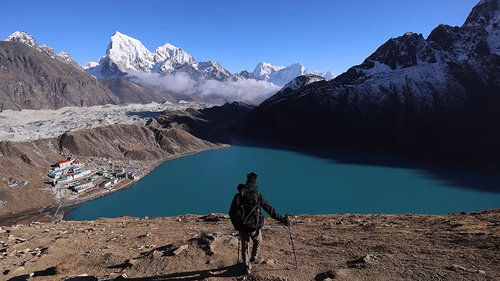
If you are asking how difficult the Everest Three Passes Trek is, the honest answer is this: it is t
Continue Reading
My name is Peng Chang, and I travelled to Nepal from Malaysia with a small group of friends. Before
Continue Reading