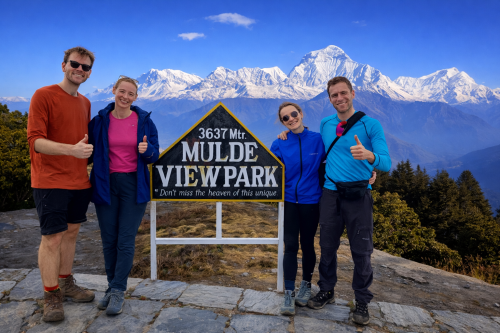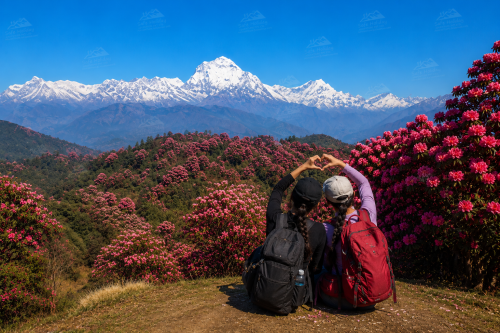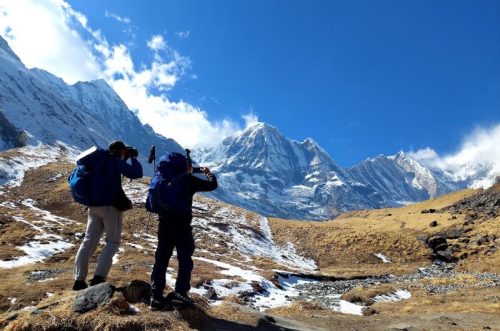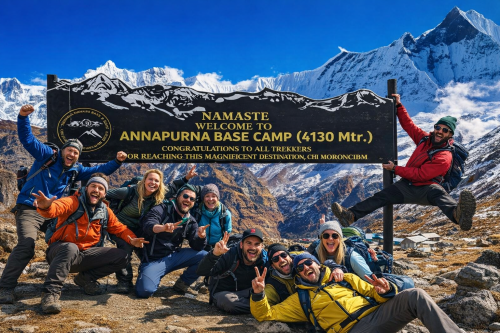

Yes, many trekking agencies and organizations offer charity treks, and you can choose to do the Khopra Trek as part of a fundraising event for a charitable cause. It’s a great way to combine adventure with philanthropy.
Khopra Trek Highlights: Highlights
- Khopra Ridge Sunrise & Sunset Views
Witness jaw-dropping panoramas of Dhaulagiri (8,167m), Annapurna South, Nilgiri, Fang, Hiunchuli, and Machhapuchhre right from the ridge. - Less Crowded Alternative to Poon Hill & ABC
Want Himalayan beauty without busy trails? Khopra offers a quieter, more peaceful trekking experience. - Close-Up View of Dhaulagiri Massif
One of Nepal’s best trekking routes for dramatic, near-range views of the mighty Dhaulagiri range. - Optional Hike to Sacred Khayer Lake (4,660m)
A challenging side trip to a remote high-altitude lake revered by Hindu pilgrims. - Authentic Community Lodge Experience
Stay in community-run teahouses that directly support local villages and sustainable tourism. - Traditional Gurung & Magar Villages
Experience local mountain culture, warm hospitality, stone houses, and traditional lifestyles. - Rhododendron Forests & Diverse Landscapes
Walk through colorful forests, alpine meadows, terraced farms, ridgelines, and high Himalayan terrain. - Natural Hot Springs at Tatopani (Optional Route)
Relax tired muscles in Nepal’s famous natural hot springs after days of trekking. - Off-the-Beaten-Path Himalayan Adventure
Ideal for trekkers looking for a hidden gem in the Annapurna region. - Stunning Photography Opportunities
Dramatic ridgelines, cloud inversions, starry skies, village life, and giant Himalayan backdrops. - Balanced Trek Difficulty
Moderate adventure with high rewards — suitable for trekkers wanting altitude and views without extremely technical climbing. - Eco & Responsible Travel Experience
Trekking here contributes to local livelihoods and community development.
Khopra Trek Introduction: Overview
If you are looking for a less crowded trekking trail in Nepal with magical snow-capped mountain views, peaceful walking paths, and authentic local experiences, then the Khopra Trek is the perfect choice for you. Also known as the Khopra Khayar Lake Trek, Khopra Danda Trek, or Khopra Ridge Community Trek, this beautiful route offers a quieter alternative to the popular Ghorepani Poon Hill Trek, Mardi Himal Trek, and Annapurna Base Camp (ABC) Trek.
Many trekkers love the Poon Hill Trek, ABC Trek, and Mardi Himal Trail for their stunning mountain scenery. However, these routes are often very crowded during peak seasons. Tea houses become busy. Dining halls fill quickly. Food choices can be limited because of high tourist numbers. Some lodges may offer slightly better facilities, but the overall experience can feel overcrowded.
The Khopra Trek route gives you something different. Fewer people. More peaceful tea houses. Better interaction with local families. A relaxed trekking atmosphere. Open mountain landscapes. Quiet Himalayan mornings.
With Safe Holiday Adventure, we officially start the Khopra Trek from Pokhara with our expert local guides and professional trekking team. From Pokhara, we take a scenic drive to Nayapul (1,075m). The drive takes around 1.5 hours. From Nayapul, we begin our trek toward the beautiful Gurung village of Ghandruk (2,100m).
Some trekkers now prefer a direct jeep option closer to Ghandruk. This choice depends on personal time, trekking preference, and budget. We provide flexible options according to your travel plan.
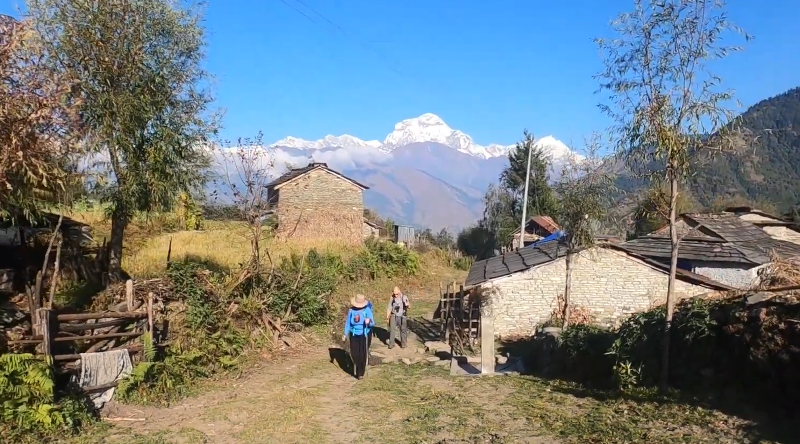
From Ghandruk ( 1,850 m), the trail climbs through beautiful forest sections toward Tadapani (2,600m). The ascent takes around 3 hours. The route passes through dense oak and Rhododendron forests. Fresh mountain air. Bird sounds. Excellent views of Annapurna South, Machhapuchhre, and surrounding peaks.
From Tadapani, the trail gradually ascends toward Bayeli Kharka (3,420m). The landscape begins to open. Dense forest slowly changes into alpine terrain and open grazing land. The mountain panorama becomes wider and more dramatic.
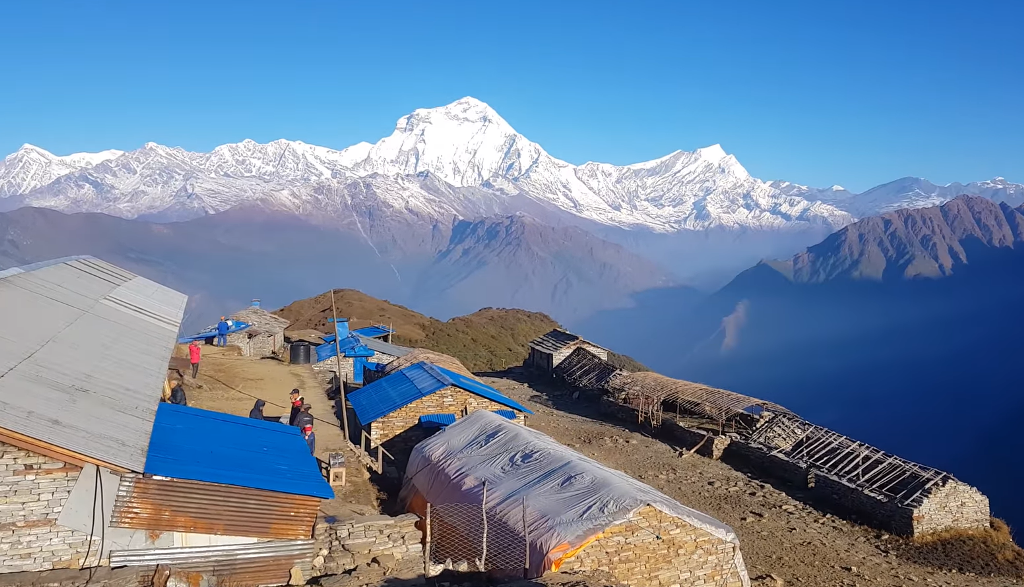
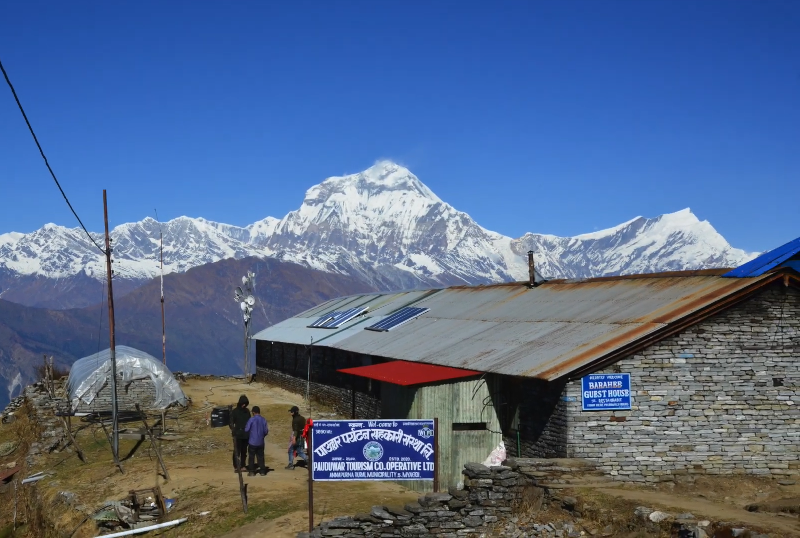
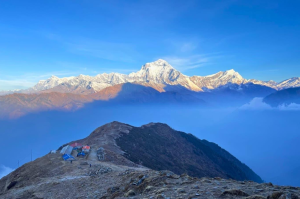
The trek then continues along the spectacular Khopra Ridge Trail through beautiful rhododendron forests, high alpine meadows, and remote Himalayan ridges. Reaching Khopra Danda (3,660m) is one of the greatest highlights of the journey. From here, trekkers enjoy breathtaking close-up views of Dhaulagiri (8,167 m), Nilgiri (7,061 m), Annapurna South (7,219 m), Machhapuchhre (6,993 m), and Hiunchuli (6,441 m), and Hiunchuli. Sunrise and sunset from Khopra Ridge are simply unforgettable.
An exciting side trip takes you to the sacred Khayar Lake (4,500m). This high-altitude alpine lake is an important pilgrimage site for Hindu devotees. The trail is challenging but highly rewarding. Massive Himalayan scenery. Remote mountain wilderness. Deep spiritual atmosphere.
The return journey descends toward Swanta Village and continues to Ghorepani. Trekkers also enjoy the famous sunrise viewpoint at Poon Hill before descending to Nayapul and driving back to Pokhara.
The Khopra Khayar Lake Trek combines the mountain beauty of the ABC Trek, the viewpoint charm of the Poon Hill Trek, and the ridge experience of the Mardi Himal Trek. Yet it remains quieter, more authentic, and more connected to local community life. A perfect Himalayan journey for trekkers who want scenery, culture, comfort, and peace on the trail.
How Difficult is the Khopra Lake Trek?
The Khopra Trek is considered moderate to challenging, with steep ascents and descents. The highest sleeping altitude is around 3,660m, and you’ll walk several hours each day, usually 5–7 hours.
This trek is not ideal for first-time trekkers. You’ll need to be in good shape and comfortable walking long distances on consecutive days. Altitude sickness is a possibility, so take necessary precautions, stay hydrated, and follow your guide’s instructions.
Reasons to Choose the Khopra Ridge Trek:
- Stunning close-up views of the Annapurna and Dhaulagiri mountain ranges
- Peaceful trekking route with fewer crowds than other popular treks
- Perfect balance of adventure, nature, and cultural experience
- Opportunity to stay in traditional mountain tea houses
- Beautiful sunrise and sunset views from Khopra Ridge
- Chance to explore local Gurung and Magar villages
- Suitable for trekkers looking for a moderate trekking challenge
- Less commercialized trail with a more natural atmosphere
- Rich forests filled with rhododendron trees, especially beautiful in spring
- Optional visit to the sacred Khayer Lake for adventurous trekkers
- Great trekking option for photographers and nature lovers
- Friendly local hospitality and authentic Nepali food experience
- Safer and quieter alternative to heavily crowded trekking routes
- Excellent short trek option for travelers with limited time in Nepal
- Supports community-based tourism and local livelihoods
- Ideal for travelers seeking a unique and off-the-beaten-path Himalayan trek
How Fit Should You Be for the Trek?
To enjoy this trek, you should:
- Walk long distances regularly.
- Do aerobic exercises like swimming, running, or cycling.
- Be comfortable using stair climbers or running uphill.
- Carry a rucksack of about 12–15kg.
- Walk 10–12 km per day without strain.
- Get a physical check-up before your trek.
- Be mentally prepared for changing conditions.
- Have prior trekking experience.
- Wear strong trekking boots.
- Be open to local food, culture, and lifestyle.
- Prepare well with research and gear.
Why choose the Khopra Trek with us?
- 90+ 5-star reviews from happy trekkers
- 15+ years experienced trekking guides
- A-grade trained local guides from remote Himalayan villages
- Our guides know the real local culture, mountains, trails, and hidden information
- 1 strong porter for every 2 trekkers included in the package
- Daily health check-up after dinner (heart rate, oxygen level, health condition)
- Free trekking duffel bag provided
- Guaranteed group departure with trekking experts
- Stay at the best available tea houses/lodges during the trek
- Breakfast, lunch, and dinner included plus daily dessert after dinner
- Daily evening briefing about the next day’s trail, weather, altitude, and walking hours
- Fast emergency evacuation support if needed in the mountains
- Guides carry a first aid medical kit throughout the trek
- Trek completion certificate signed by your guide and company operator
- 15% discount for repeat clients
- Farewell dinner at a local restaurant after the trek
- Small groups and personalized service
- Transparent pricing with no hidden costs
- Friendly, caring, and professional local team
- Strong focus on safety, acclimatization, and responsible trekking
- 24/7 customer support before and during your trip
- Flexible and supportive service when adjustments are needed
- Deep knowledge of the Annapurna and Khopra Danda region
- Safe, comfortable, informative, and memorable Himalayan trekking experience with local experts.
Khopra Trek Itinerary (Day-by-Day)Outline Itinerary
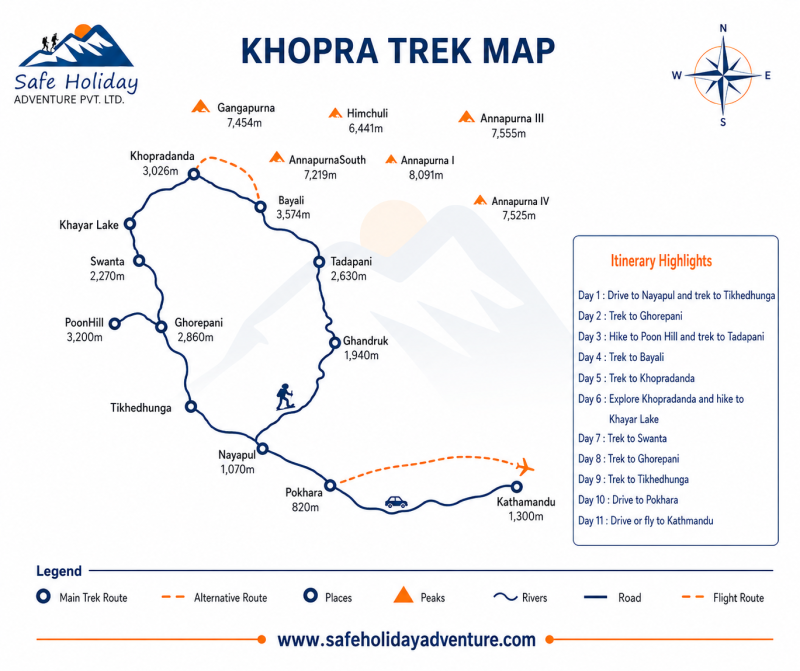
Day 1: Drive from Pokhara to Nayapul (1,075m), then trek to Ghandruk (2,100m)
5–6 hrs trek | ↑ Approx. 1,000m ascent
Day 2: Trek from Ghandruk to Tadapani (2,610m)
4–5 hrs trek | ↑ 500m ascent
Day 3: Trek from Tadapani to Bayeli Kharka (3,420m)
6 hrs trek | ↑ 800m ascent
Day 4: Trek from Bayeli to Khopra Danda (3,660m)
5–6 hrs trek | ↑ 240m ascent
Day 5: Day hike to Khayer Lake (4,500m) and return to Khopra Danda
8–9 hrs round-trip | ↑↓ 840m
Day 6: Trek from Khopra Danda to Swanta (2,200m)
5 hrs trek | ↓ 1,460m descent
Day 7: Trek to Ghorepani (2,860m)
4–5 hrs trek | ↑ 660m ascent
Day 8: Early morning hike to Poon Hill (3,210m), then descend to Nayapul and drive back to Pokhara
6–7 hrs trek + 2-hr drive
Whats Included?
- Airport pickups and drops(Airport to Hotel and Hotel to Airport)
- Breakfast, Lunch, Dinner, and Accommodation during the trek,
- Hotel in Kathmandu for 2Nights,
- Experienced licensed holder Guide,
- 2 Nights Hotel in Pokhara,
- Food, Salary, Transportation, and Accommodation of trekking Guide,
- Transportation (Tourist bus),(Kathmandu to Pokhara and Back)
- Annapurna Conservation Area Permit (ACAP) & TIMS (Trekkers Information Management System)card,
- Seasonal Available fruits after dinner every day during the trek,
- Emergency Helicopter services management
- Nepal entry visa fee and necessary documents
- Flight fare domestic and international.
- Food in Kathmandu or other cities.
- Airport Tax in Domestic & International Airport & other taxes.
- Personal insurance, equipment, medical and travel insurance during the trek Entrance fees for sightseeing/Monument /donation and some personal expenses.
- Helicopter rescue charge in case of Emergency.
- Staff tips and other personal expenses.
Dates and Availability Departures
All our published dates are guaranteed departures. We also provide customized departures tailored to your travel plans.
There are no group joining dates available at the moment. Please contact us for a private trip.
Travellers Reviews
Ashley Wilson
USA | May,2025
Best Khopra Ridge Trek Experience in Nepal
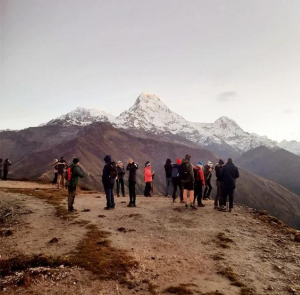
My friend and I traveled from the USA and recently completed the Khopra Ridge Trek with Safe Holiday Adventure. It was one of the most beautiful trekking experiences we’ve ever had. The mountain views of Dhaulagiri, Annapurna, and Nilgiri were absolutely breathtaking, and the peaceful trails made the journey even more special.
A huge thank you to our guide, Rupesh, who was professional, knowledgeable, friendly, and always made sure we were safe and comfortable throughout the trek. His local knowledge and positive attitude made the experience unforgettable.
We highly recommend the Khopra Ridge Trek to anyone looking for a less crowded adventure in Nepal, and we highly recommend trekking with Safe Holiday Adventure and Guide Rupesh. Thank you for an amazing journey—we hope to return!
Genaral Trip InfoInfos
How to train for the Khopra Trek?
Preparing for the Khopra Trek requires physical fitness and endurance due to the challenging terrain and high altitude. Training should start several months before the trek to build strength and stamina.
Aerobic exercises such as hiking, running, cycling, and swimming can help to build cardiovascular endurance. Strength training with exercises such as lunges, squats, and step-ups can help to build leg and core muscles, which are essential for the trek’s uphill and downhill sections. Additionally, practicing yoga can improve flexibility and balance, which can help prevent injuries during the trek.
It is also important to acclimate to the high altitude gradually, which can be done by spending a few days in Kathmandu or other low-altitude locations before starting the trek. It is recommended to consult a doctor before beginning any training regimen and to listen to your body during the trek, taking breaks and adjusting your pace as needed.
How much does the Khopra Trek cost?
The cost of the Khopra Trek varies depending on the type of package and services chosen. The cost can range from around $290 to $650 per person for a package that includes trekking permits, accommodation, meals, transportation, and guide services.
The Bronze package, which typically costs around $290 per person, includes basic services such as accommodation in tea houses, meals, and trekking permits. The Silver package, which costs around $490 per person, includes additional services such as private transportation, a guide, and a porter.
The Gold package, which is the most comprehensive and luxurious option, includes services such as deluxe accommodation, private transportation, a guide, a porter, and additional amenities. The Gold package can cost around $650 per person.
It is important to note that the cost may vary depending on the season, group size, and other factors. It is recommended to research and compare different trekking companies and packages to find the best option that suits your budget and needs.
Trekking options for the Khopra trek:
There are several options for trekking the Khopra trail, depending on your preferences and schedule. Some of the options include:
Independent trekking: You can plan and organize your trek, including arranging transportation, accommodations, and permits. This option allows for flexibility and the freedom to set your own pace, but it also requires a lot of planning and research.
Guided trekking: You can join a guided trek, which includes a professional guide, porter, and all necessary arrangements such as transportation, accommodations, and permits. This option is ideal for those who want a more structured and organized experience, and also for those who want to learn more about the culture and history of the region.
Teahouse trekking: You can opt for teahouse trekking, which includes staying in local tea houses along the trail. This option allows you to experience local culture and cuisine, and it’s also a budget-friendly option.
Camping trekking: You can go for camping trekking, which is best suitable for those who want to explore the remote places and off the beaten path. Camping trekking allows you to be more flexible with your itinerary and explore more of the surrounding area, but it requires more planning, equipment, and support staff.
Ultimately, the best option for you will depend on your preferences, budget, and physical condition. It’s important to consider the challenges and requirements of each option before making a decision.
Khopra Trek vs. Poon Hill Trek: A comparison
The Khopra Trek and Poon Hill Trek are two popular hiking routes in the Annapurna region of Nepal. The Poon Hill Trek is a shorter and less strenuous trek that can be completed in 4-5 days, while the Khopra Trek is a more challenging trek that takes around 10-12 days to complete.
One of the main differences between the two treks is the level of difficulty. The Khopra Trek involves more uphill and downhill walking, as well as steeper climbs, making it a more physically demanding trek. The Poon Hill Trek, on the other hand, is a relatively easy trek that is suitable for beginner hikers or those with limited time.
Another major difference is the scenery. While both treks offer stunning views of the Annapurna mountains, the Khopra Trek takes you off the beaten path and allows you to explore more remote areas. The Khopra Trek also includes a visit to the sacred Khayer Lake, which is not part of the Poon Hill Trek.
Overall, the Khopra Trek is a more challenging and rewarding trek that offers a unique and authentic experience of the Annapurna region, while the Poon Hill Trek is a great option for those looking for a shorter, easier trek with stunning mountain views.
What are the physical challenges of the Khopra Trek?
The Khopra Trek is a physically demanding trek that requires a good level of fitness and endurance. Some of the main physical challenges of the trek include:
- High altitude: The Khopra Trek reaches an altitude of over 4,500 meters, which can cause altitude sickness. It is important to acclimatize gradually and take necessary precautions to prevent altitude sickness.
- Uphill and downhill sections: The trek includes steep uphill and downhill sections, which can be challenging for the legs and knees. It is important to train and prepare the legs for the trek.
- Long walking hours: The trek involves walking for 6-8 hours per day, sometimes in challenging terrain. This can be physically tiring and exhausting.
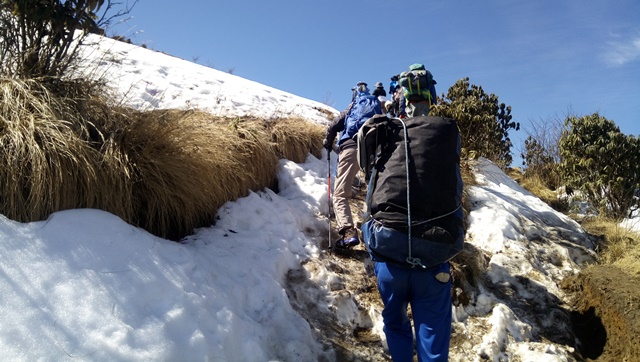
- Weather conditions: The weather can be unpredictable in the Annapurna region, and the trek may involve walking in rain or snow. This can make the trek more challenging and slippery.
- Remote location: The Khopra Trek is a remote trek that may involve staying in basic tea houses with limited amenities. This can be challenging for some trekkers.
It is recommended to train and prepare for the physical challenges of the trek before embarking on the Khopra Trek. Consulting a doctor and a professional trekking company can also help to prepare for the trek and ensure a safe and enjoyable experience.
Khopra trek Cost and Permit:
The cost of the Khopra trek can vary depending on the duration of the trek, the level of accommodation, and the services included. A typical 8-day trek can cost around $800- $1000 per person, which includes the cost of accommodation, meals, guide, and porter service. However, if you choose to trek without a guide, the cost can be significantly lower.
You will need a TIMS (Trekkers’ Information Management System) card and an Annapurna Conservation Area Permit (ACAP) to trek in the Annapurna region, including the Khopra trek. The TIMS card costs around $20 and the ACAP costs around $30. These permits can be obtained in Kathmandu or Pokhara, and it is recommended to get it in advance.
Khopra Trek in monsoon season: Yay or nay?
The monsoon season in Nepal typically runs from June to September, and during this time, the Khopra Trek can be more challenging due to the heavy rainfall and slippery trail conditions. Therefore, it is generally not recommended to trek the Khopra Trek during the monsoon season.
The heavy rain can cause landslides and flooding, which can make the trek more dangerous and difficult. The trail may also be muddy and slippery, which can increase the risk of slipping and falling. The clouds and rain may also obscure the views of the mountains, which is one of the highlights of the Khopra Trek.
However, some trekkers do choose to trek the Khopra Trek during the monsoon season as the mountains and landscapes can be lush and green. Additionally, the trail may be less crowded during this time, and prices for accommodations may be lower.
If you do decide to trek the Khopra Trek during the monsoon season, it is important to take extra precautions and be prepared for the challenging conditions. It is recommended to bring waterproof gear, trekking poles, and sturdy hiking boots with good traction. It is also important to check the weather forecast regularly and be flexible with your itinerary in case of unexpected weather conditions.
Best Time for Trekking in Khopra Trek:
The best time to go on the Khopra Trek is during the Spring (March to May) and Autumn (September to November) seasons. Here’s why:
♦ Spring Season (March to May):
This is the best time to trek the Khopra trail as the weather is mild with clear skies and warm temperatures. The trail is covered in blooming rhododendron flowers, making it a spectacular sight. The temperature at night can be chilly, but overall, this is an excellent time to trek.
♦ Autumn Season (September to November):
This is another ideal time to trek the Khopra trail as the weather is dry and stable with clear blue skies, and the temperature is comfortable. The trails are not too crowded, making it easier to enjoy the serene surroundings. This is also the time when the festival season begins in Nepal, and you can witness various cultural events and ceremonies.
♦ Winter Season (December to February):
Although trekking during the winter season in Nepal can be challenging, the Khopra trail is still accessible. The weather can be cold and snowy, especially at higher altitudes, making it a bit more challenging to trek. However, the views are stunning, and the crowds are minimal.
♦ Monsoon Season (June to August):
Trekking during the monsoon season is not recommended as the trails are slippery and muddy, making it difficult to trek. The weather can be unpredictable, and landslides and floods are common, making it dangerous to trek. However, if you want to experience the lush greenery and fewer crowds, you can consider trekking during this time.
Khopra Trek in winter season: Yay or nay?
While the Khopra Trek is accessible throughout the year, winter can be a challenging time to trek in the region. Trekking in winter can be rewarding in terms of scenic beauty, but it’s crucial to be well-prepared for the harsh weather conditions. Here are some pros and cons of trekking in Khopra during winter:
Pros:
- The trail is less crowded, and you’ll have more opportunities for solitude and peace.
- The snow-capped mountains and landscapes look even more beautiful during winter, offering a unique and stunning view.
- Accommodation and food are more readily available and less expensive during the winter season.
- You’ll get to experience the culture and traditions of the locals during the winter festivals.
Cons:
- The weather conditions can be harsh and unpredictable, with heavy snowfall and sub-zero temperatures.
- The trail can be icy and slippery, making it more challenging to trek, especially for beginners.
- The days are shorter, and it gets dark early, which limits your trekking time.
- Some tea houses and lodges may be closed, limiting the availability of accommodation and food.
In conclusion, trekking in Khopra during winter can be a unique and rewarding experience, but it’s essential to be well-prepared and take necessary precautions. It’s recommended to have prior trekking experience and to hire a licensed guide to ensure safety and security along the trail.
Khopra Trek vs. Annapurna Base Camp Trek: Which is better?
Both the Khopra Trek and the Annapurna Base Camp Trek offer unique and breathtaking views of the Annapurna mountain range, and which trek is better depends on personal preferences and priorities.
The Annapurna Base Camp Trek is a more popular and well-established trek, with a well-defined trail and more established infrastructure. The trek takes about 7-10 days and takes you to the base of Annapurna I, the 10th highest mountain in the world. The trek offers stunning views of the Annapurna massif, as well as opportunities to experience local culture and visit traditional villages.
The Khopra Trek, on the other hand, is a less-crowded and off-the-beaten-path trek that takes you to the less-explored Khopra Ridge. The trek takes about 10-12 days and offers unique views of the Dhaulagiri and Annapurna mountain ranges. The trek also offers opportunities to visit traditional villages and experience local culture, but with fewer crowds.
In terms of physical difficulty, both treks are moderate to challenging and require a good level of fitness and endurance. The Khopra Trek may be slightly more challenging due to its higher altitude and longer duration.
Ultimately, which trek is better for you depends on your personal preferences and priorities. If you prefer a more popular and well-established trek with easier logistics, then the Annapurna Base Camp Trek may be the better option. If you prefer a more off-the-beaten-path trek with unique views and fewer crowds, then the Khopra Trek may be the better option.
What to pack for the Khopra Trek?
Here are some essential items that you should pack for the Khopra Trek:
- Trekking boots: A good pair of trekking boots with sturdy ankle support is essential for the rugged terrain.
- Warm clothing: The weather can be cold in the mornings and evenings, so warm clothing is necessary. Pack a warm jacket, thermals, fleece jackets, and a woolen hat.
- Rain gear: The monsoon season can bring heavy rainfall, so it is important to pack waterproof gear such as a rain jacket, pants, and a waterproof backpack cover.
- Sleeping bag: Bring a warm sleeping bag rated for cold temperatures.
- First-aid kit: Pack a basic first-aid kit with essentials such as bandages, painkillers, and any necessary medications.
- Trekking poles: Trekking poles can help reduce strain on your knees and provide extra stability on the trek.
- Sun protection: Pack sunglasses, sunscreen, and a hat to protect yourself from the strong UV rays at high altitudes.
- Water bottle and water purification tablets: Bring a refillable water bottle and water purification tablets to ensure that you have access to safe drinking water.
- Snacks: Pack energy bars, nuts, and other lightweight snacks to keep your energy levels up during the trek.
- Camera: Don’t forget to pack a camera to capture the stunning views of the mountains and landscapes.
Remember to pack light and bring only the essentials, as you will be carrying your backpack during the trek. Additionally, you can also purchase or rent some of the necessary equipment in Kathmandu or Pokhara before starting the trek.
The cultural highlights of the Khopra Trek?
The Khopra Trek offers several cultural highlights, providing trekkers with an opportunity to experience the local culture of the region. The trek takes you through traditional villages and offers insights into the lifestyle and customs of the local people.
One of the highlights of the trek is the visit to the Gurung village of Ghandruk, which is famous for its traditional houses, cultural museum, and handicraft shops. Here, you can experience the unique Gurung culture and sample the local cuisine.
Another cultural highlight of the trek is the Khayer Lake, a sacred site for both Hindu and Buddhist pilgrims. The lake is surrounded by prayer flags, and trekkers can experience the religious practices and rituals of the locals.
Overall, the Khopra Trek offers a unique opportunity to experience the local culture and customs of the region, providing trekkers with a deeper understanding of the people and their way of life.
Khopra Trek vs. Mardi Himal Trek: A comparison
The Khopra Trek and the Mardi Himal Trek are two popular trekking destinations in the Annapurna region of Nepal. The Khopra Trek is longer and more challenging, taking around 11-14 days to complete, while the Mardi Himal Trek is shorter and less challenging, taking around 5-7 days to complete. The Khopra Trek offers stunning panoramic views of the Annapurna and Dhaulagiri mountain ranges, as well as a chance to experience the unique Gurung culture and visit the Khayer Lake. The Mardi Himal Trek takes you through pristine forests, charming villages, and offers stunning views of the Machhapuchhre and Annapurna mountain ranges. Ultimately, the choice depends on your preferences and abilities.
Is it possible to complete the Khopra trek within 6 days from Pokhara?
It is technically possible to complete the Khopra Trek in 6 days from Pokhara, but it would be very challenging and not recommended for most trekkers. The trek involves significant altitude gain, and it’s important to take time to acclimatize properly to avoid altitude sickness. Additionally, the trek includes long and strenuous hiking days, which can be physically demanding. It’s recommended to allow at least 8-10 days for the Khopra Trek to fully enjoy the experience and reduce the risk of altitude sickness.
Detailed ItineraryItinerary
Day 01
Drive from Pokhara (820m) to Nayapul (1,070m) and Trek to Ghandruk (2,000m)
Duration : 1.5–2 hours Elevation : Pokhara (820m) to Nayapul (1,070m),Ghandruk (2,000m)
- Drive: 1.5–2 hours (approx. 42 km)
- Trek Duration: 4–5 hours
- Distance: ~8 km
- ⬆️ Ascent: +930m | ⬇️ Descent: minimal
After breakfast in Pokhara, we drive along a scenic road toward Nayapul, where your trek officially begins. The trail follows the Modi Khola river and passes through charming villages like Birethanti and Kimche. After crossing several suspension bridges and walking past rice terraces and cardamom farms, the trail starts ascending gradually through stone steps to the traditional Gurung village of Ghandruk.
Ghandruk is one of the largest Gurung settlements in the region. You can explore the old village, visit the Gurung Museum, and enjoy panoramic views of Annapurna South, Hiunchuli, and Machhapuchhre (Fishtail).
🍽️ Lunch: Typically in Kimche or Syauli Bazaar.
🏠 Overnight: Teahouse in Ghandruk.
Accommodation : Tea House
Day 02
Trek from Ghandruk to Tadapani (2,610m)
Duration : 4–5 hours Elevation : Tadapani (2,610m)
- Trek Duration: 4–5 hours
- Distance: ~8 km
- ⬆️ Ascent: +610m | ⬇️ Descent: ~100m
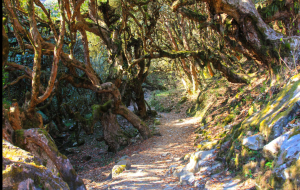
Today’s trek begins with a steep ascent through dense rhododendron and oak forests. You’ll walk through peaceful jungle trails filled with bird songs and occasional monkey sightings. The climb is gradual but consistent, and there are occasional clearings offering breathtaking mountain views. During spring, this section becomes a colorful paradise with blooming rhododendrons.
Tadapani is located at a forest clearing with magnificent views of Annapurna South, Machhapuchhre, and Hiunchuli. It’s a small settlement with limited lodges but is known for its sunrise and peaceful surroundings.
🍽️ Lunch: Near Bhaisi Kharka (cow pasture area).
🏠 Overnight: Teahouse in Tadapani.
Accommodation : Tea House
Day 03
Trek from Tadapani to Bayeli Kharka (3,420m)
Duration : 6–7 hours Elevation : Bayeli Kharka (3,420m)
- Trek Duration: 6–7 hours
- Distance: ~11 km
- ⬆️ Ascent: +810m | ⬇️ Descent: ~100m
Today, you leave the main Annapurna trail and enter a less crowded and more remote route. The trail climbs through beautiful old-growth rhododendron forest, often misty and mystical, then slowly opens up to alpine meadows and pasturelands. This is a more peaceful route where you might see Himalayan wildlife such as langurs or pheasants.
As you gain altitude, the vegetation changes, and views of Dhaulagiri and Annapurna peaks begin to appear. Bayeli Kharka is an open ridge with a couple of teahouses and excellent sunset views over Dhaulagiri. The area is quiet and serene, perfect for acclimatization and nature lovers.
🍽️ Lunch: In Dobato (en route).
🏠 Overnight: Teahouse in Bayeli Kharka.
Accommodation : Tea House
Day 04
Trek from Bayeli Kharka to Khopra Danda (3,660m)
Duration : 4–5 hours Elevation : Khopra Danda (3,660m)
- Trek Duration: 4–5 hours
- Distance: ~7 km
- ⬆️ Ascent: +240m | ⬇️ Descent: ~100m
Today’s trail continues along a scenic ridgeline offering wide-angle views of the Himalayas. The route is mostly open with alpine grasslands and occasional shrubs. You’ll pass herders’ huts and isolated yak pastures. As you climb gradually toward Khopra Danda, the views of Annapurna South become more and more impressive.
Once you reach Khopra Ridge (Danda), you’ll be rewarded with some of the best panoramic mountain views in Nepal. From here, you can see Dhaulagiri (8,167m), Nilgiri, Annapurna South (7,219m), Baraha Shikhar, and more. The sunset and sunrise from Khopra Danda are truly unforgettable.
🍽️ Lunch: En route near Chhistibang or a trail rest stop.
🏠 Overnight: Community lodge or teahouse at Khopra Danda.
Accommodation : Tea House
Day 05
Day Hike to Khayer Lake (4,660m) – Return to Khopra Danda
Duration : 8–9 hours Elevation : Khayer Lake (4,660m)
- Hiking Duration: 8–9 hours round trip
- Distance: ~16 km round trip
- ⬆️ Ascent: +1,000m | ⬇️ Descent: -1,000m
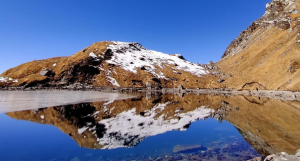
This is a challenging but rewarding side trip. You begin early in the morning and ascend gradually along a rugged, high-altitude trail toward Khayer Lake, a sacred alpine lake at the foot of Annapurna South. The trail is long and tiring due to the altitude, but you’ll be accompanied by incredible mountain views, and in clear weather, you’ll see both Dhaulagiri and Annapurna ranges mirrored in the still waters of the lake.
Khayer Lake is considered a holy site for both Hindus and Buddhists. Many local pilgrims hike here during Janai Purnima. After spending some peaceful time near the lake, you return to Khopra Danda the same way.
🍽️ Packed lunch carried from Khopra.
🏠 Overnight: Teahouse in Khopra Danda.
Accommodation : Tea House
Day 06
Trek from Khopra Danda to Swanta (2,200m)
Duration : 5–6 hours Elevation : Swanta (2,200m)
- Trek Duration: 5–6 hours
- Distance: ~10 km
- ⬆️ Ascent: ~100m | ⬇️ Descent: -1,460m
You begin your descent today through alpine slopes and into thick forests. The trail winds down steeply at times, passing through rhododendron trees and small water streams. Swanta is a picturesque Magar village where you can experience authentic rural life in Nepal. The village is surrounded by terraced fields and offers views of Dhaulagiri and the Myagdi valley.
Swanta is less touristy and very peaceful, making it a great cultural stop. You can explore the village or visit the local cheese factory if time permits.
🍽️ Lunch: En route or at Swanta upon arrival.
🏠 Overnight: Teahouse in Swanta.
Accommodation : Tea House
Day 07
Trek from Swanta to Ulleri (2,050m) – Drive to Pokhara
Duration : 5–6 hours Elevation : Ulleri (2,050m)
- Trek Duration: 5–6 hours
- Drive Duration: 3–4 hours
- Distance: ~9 km walk
- ⬆️ Ascent: +150m | ⬇️ Descent: -300m
Today’s trail descends through more terraced farms and forest paths toward Chitre. After joining the main Ghorepani trail, you pass through the village of Ulleri. From Ulleri, you take a private jeep back to Pokhara. If you’re not tired, you can explore the peaceful lakeside area or enjoy a warm shower and good food back in the city.
🍽️ Lunch: At Ulleri before the drive.
🏠 Overnight: Hotel in Pokhara (not included in trek).
Accommodation : Hotel
Khopra Trek 7 Day FAQs
The best months to avoid crowds on the Khopra Trek are typically during the monsoon season (June to September) and winter (December to February). These months see fewer trekkers on the trail compared to the peak seasons of spring and autumn.
Yes, it is possible to extend the Khopra Trek and combine it with other trekking routes in the Annapurna region. For example, you can extend the trek to include the Muldai Viewpoint or Poon Hill for even more stunning mountain vistas.
Depending on the timing of your trek, you might have the opportunity to witness local cultural festivals in villages along the trail. Festivals like Dashain and Tihar are celebrated with great enthusiasm by the locals and can provide a unique cultural experience.
It is generally not recommended to drink water directly from natural sources like streams and rivers along the Khopra Trek. It’s safer to use water purification tablets or carry a water filter to ensure the water is safe for consumption.
The starting point of the Khopra Trek is usually Nayapul or Ghandruk. Both of these places can be reached from Pokhara by public bus or private taxi. The journey takes a few hours, depending on the starting point.
Yes, there are hot springs at Tatopani, which is not too far from the end point of the Khopra Trek. Trekkers can take a detour to Tatopani to relax in the natural hot springs and soothe their muscles after the trek.
Yes, it is possible to trek the Khopra route in reverse, starting from Tatopani and ending in Nayapul or Ghandruk. However, this route involves a steeper ascent, so it may be more physically demanding.
Yes, the Annapurna Conservation Area Project (ACAP) works to preserve the biodiversity and cultural heritage of the Annapurna region, including the Khopra Trek route. The funds from permits go towards conservation and community development projects.
There are no specific age limits for obtaining the TIMS card and ACAP. However, minors may need to be accompanied by an adult or have consent from their parents or guardians.
Refund & Cancellation Policy
- Booking requires 20% non-refundable deposit (Nepal) or 100% upfront (Tibet/Bhutan).
- Remaining payment due before the trip or on arrival (trip-dependent).
Cancellation charges:
- 31+ days: 20%
- 16–30 days: 45%
- 8–15 days: 75%
- 7 days or less: 90%
- Prices may change due to flights, taxes, or exchange rates.
- Trip changes are allowed, but extra costs apply.
- If the company cancels, a full refund, except for unavoidable events (some costs deducted).
- Good health and travel insurance are mandatory.
- No refund if removed for unsafe or illegal behavior.
- Travel involves personal risk, which the client accepts.