Kanchenjunga Base Camp Trek – Key Highlights: Highlights
- Trek to both North Base Camp (Pangpema) and South Base Camp (Oktang)
- Remote and less-visited trekking route in eastern Nepal
- Close views of Kanchenjunga, the world’s third-highest mountain
- Panoramic Himalayan scenery, including Jannu, Kabru, and surrounding peaks
- Diverse landscapes from forests and valleys to glaciers and alpine terrain
- Rich biodiversity inside the Kanchenjunga Conservation Area
- Opportunity to see rare wildlife such as the Red Panda and snow leopard habitat
- Experience authentic Rai, Limbu, and Tibetan-Buddhist culture
- Traditional villages, monasteries, and local mountain lifestyles
- Peaceful trails with far fewer trekkers than the Everest and Annapurna regions
- Challenging high-altitude adventure ideal for experienced trekkers
- Unique wilderness trekking experience in one of Nepal’s most remote regions
Kanchenjunga Circuit Trek: Explore the Wild East of Nepal Overview
The Kanchenjunga Circuit Trek is a true off-the-beaten-path adventure in the far eastern region of Nepal. This incredible trek takes you close to Mount Kanchenjunga (8,586 meters)—the third-highest mountain in the world. It is one of Nepal’s most remote and less-explored trekking routes, ideal for those who want to enjoy nature, silence, and adventure without the crowds.
Unlike more famous trekking routes such as Everest Base Camp, Annapurna Circuit, Manaslu Trek, or Langtang, the Kanchenjunga region remains untouched by mass tourism. The trails are peaceful and quiet, offering stunning views of snow-capped mountains, deep valleys, glaciers, and dense rhododendron and bamboo forests. You will also pass through charming local villages where you can experience the authentic lifestyle and culture of Rai, Limbu, Sherpa, and Tibetan communities.
This trek is physically demanding and takes around 21 to 24 days to complete. The route circles both the North and South Base Camps of Kanchenjunga, giving trekkers a chance to view the mighty Himalayan peaks from different sides. The journey includes high mountain passes, remote valleys, and scenic river crossings. Because it is a restricted area, you need a special permit and must trek with a registered guide and at least two trekkers in your group.
The Kanchenjunga Circuit Trek is perfect for experienced trekkers who want a long and wild Himalayan experience far from the busy trekking routes. If you are looking for solitude, raw nature, and unforgettable mountain views, this trek is one of the best choices in Nepal.
Kanchenjunga Circuit Trek Difficulty:
The Kanchenjunga Circuit Trek is considered one of Nepal’s most challenging trekking routes. It involves long walking days, steep ascents and descents, remote trails, and basic accommodation facilities. Trekkers need good physical fitness and prior hiking experience.
High altitude adds to the difficulty, as the trail reaches over 5,000 meters at passes like Sele La. The risk of altitude sickness makes proper acclimatization, preparation, and a steady pace essential during the journey.
The trek’s remote location means limited access to medical help, transport, and supplies. However, with strong endurance, careful planning, and experienced guides, the Kanchenjunga Circuit Trek is achievable and highly rewarding.
Permits Required for the Kanchenjunga Circuit Trek:
The Kanchenjunga Circuit Trek requires special permits because it is a restricted trekking area in Nepal. Trekkers need a Restricted Area Permit (RAP) for certain sections of the trail. They also need the Kanchenjunga Conservation Area Permit (KCAP) to enter the protected region. These permits help protect local culture, wildlife, and nature. Trekkers must travel with a registered guide and usually in a group of at least two people.
Accommodation: Tea Houses or Tented Camps
There are two main options for staying along the trail:
Tea House Lodging
Tea houses are small guesthouses run by locals. They provide a bed, blanket, simple meals, and hot drinks. This is the most popular option for trekkers.
Tented Camping
In very remote areas, camping is necessary. Your trekking team will carry tents, food, and gear. This gives you a deeper connection with nature but requires more preparation. In some villages, tea houses may not be available. Be flexible and ready to camp when needed.
Best Time to Do the Kanchenjunga Trek
The ideal time to trek Kanchenjunga is in autumn (late September to November) and spring (March to May).
In autumn, the skies are clear, temperatures are mild, and views are sharp. After the monsoon, forests look lush and green. In spring, the rhododendrons bloom, and the air is fresh and pleasant.
Avoid trekking in winter (December–February) due to snow and cold, or monsoon (June–August) because of slippery trails and landslides.
OutlineOutline Itinerary
Day 01: Arrival in Kathmandu (1,350m) – Airport transfer & hotel check-in | No activity
Day 02: Kathmandu Sightseeing & Trek Preparation (1,350m) – UNESCO tour, permits & briefing | 5–6 hrs sightseeing
Day 03: Fly Kathmandu–Bhadrapur (93m), drive to Ilam (1,200m) | Flight 45 min, drive 4–5 hrs / ~90 km
Day 04: Drive Ilam–Taplejung–Suketar, trek to Phurumbu (1,550m) | Drive 7–8 hrs / ~170 km, trek 2–3 hrs / ~6 km
Day 05: Trek Phurumbu to Chirwa (1,270m) | 5–6 hrs / ~12 km
Day 06: Trek Chirwa to Sekathum (1,660m) | 5–6 hrs / ~11 km
Day 07: Trek Sekathum to Amjilossa (2,510m) | 6–7 hrs / ~9 km
Day 08: Trek Amjilossa to Gyabla (2,730m) | 5–6 hrs / ~8 km
Day 09: Trek Gyabla to Ghunsa (3,595m) | 5–6 hrs / ~10 km
Day 10: Acclimatization Day in Ghunsa (3,595m) – Short acclimatization hikes | 3–4 hrs optional walk
Day 11: Trek Ghunsa to Kambachen (4,050m) | 5–6 hrs / ~11 km
Day 12: Acclimatization Day at Kambachen (4,050m) – Glacier/viewpoint excursion | 4–5 hrs optional hike
Day 13: Trek Kambachen to Lhonak (4,780m) | 5–6 hrs / ~10 km
Day 14: Trek Lhonak to Pangpema / Kanchenjunga North Base Camp (5,388m) | 6–7 hrs / ~12 km round trip
Day 15: Trek Pangpema to Kambachen (4,050m) | 6–7 hrs / ~16 km
Day 16: Trek Kambachen to Ghunsa (3,595m) | 5–6 hrs / ~11 km
Day 17: Trek Ghunsa to Sele La (4,290m) | 6–7 hrs / ~12 km
Day 18: Trek Sele La to Cheram (3,870m) via Sele La Passes | 6–7 hrs / ~11 km
Day 19: Trek Cheram to Ramche (4,580m) / Oktang viewpoint & back to Cheram (3,870m) | 6–7 hrs / ~12 km round trip
Day 20: Trek Cheram to Tortong (2,995m) | 5–6 hrs / ~10 km
Day 21: Trek Tortong to Yamphudin (2,080m) | 6–7 hrs / ~14 km
Day 22: Trek Yamphudin to Mamanke (1,800m) | 5–6 hrs / ~11 km
Day 23: Trek Mamanke to Lali Kharka (2,265m) | 5–6 hrs / ~9 km
Day 24: Trek Lali Kharka to Suketar (1,500m) | 4–5 hrs / ~8 km
Day 25: Fly Suketar to Kathmandu (1,350m) | Flight 35–45 min
Day 26: Buffer / Contingency Day in Kathmandu (1,350m) & Farewell Dinner | Free day / reserve for delays
Day 27: Departure from Kathmandu (1,350m) – Airport transfer | Trip concludes
Whats Included?
- Airport/Hotel/Airport pickups & drops,
- 3 Star Category hotel in Kathmandu with breakfast,
- Tea House Accommodation during the trek,
- All meals (Breakfast, Lunch, and Dinner) during the trek,
- All ground transportation as per the Itinerary,
- City tour in Kathmandu by private vehicle,
- Domestic flights (Kathmandu- Suketar -Kathmandu) Ticket,
- An experienced licensed Guide,
- Porter service (2 trekkers: 1 porter),
- All trekking staff costs, including their salary, Insurance, Equipment, Domestic Airfare, food, & Accommodation,
- Duffel bag, a T-shirt with Safe Holiday Adventure & That’s all yours to take,
- Trekking permits (National Park Permit, TIMS) & all Essential Documentation,
- Basic Medical kit box,
- All government and local taxes.
- Nepali visa fees,
- Lunch & Dinner in Kathmandu & also in the case of an earlier return from the mountain than the scheduled itinerary,
- International flight Tickets,
- Extra baggage Charge,
- Mountain rescue Insurance,
- Due to the weather and flight, you might arrive early or late in Kathmandu, so your extra night Hotel,
- Personal expenses such as phone calls, Laundry, bar bills, battery recharge, extra Porters, bottled or boiled water, shower, etc..
- Tips for Guide(s), Porter(s) & Driver(s).
Dates and Availability Departures
All our published dates are guaranteed departures. We also provide customized departures tailored to your travel plans.
There are no group joining dates available at the moment. Please contact us for a private trip.
Travellers Reviews
Genaral Trip InfoInfos
Kanchenjunga Circuit Trek Budget and Cost Guide:
The cost of the Kanchenjunga Circuit Trek depends on the trek duration, guide services, permits, food, and accommodation. On average, the trek can cost between $1,500 and $2,500 per person. Main expenses include permits, transportation, guide and porter fees, meals, and teahouse stays. The trek is in a remote area, so transport and supplies can be more expensive than other trekking routes in Nepal. Careful planning helps trekkers manage their budget and avoid unexpected costs.
Permits and Fees Required for Kanchenjunga Trek
To trek Kanchenjunga Circuit, you need special permits because it is a restricted area. These include the Kanchenjunga Restricted Area Permit and the Kanchenjunga Conservation Area Permit (KCAP). Trekkers must be part of a group with a licensed guide. Permit fees vary depending on nationality and duration of stay. A trekking agency usually helps arrange all permits.
How Difficult Is the Kanchenjunga Circuit Trek?
The Kanchenjunga Circuit is a challenging trek suitable for experienced trekkers. It involves long walking days, steep ascents, and crossing high mountain passes above 5,000 meters. Trails can be rough and remote with limited facilities. Good physical fitness and altitude experience are important to complete this trek safely.
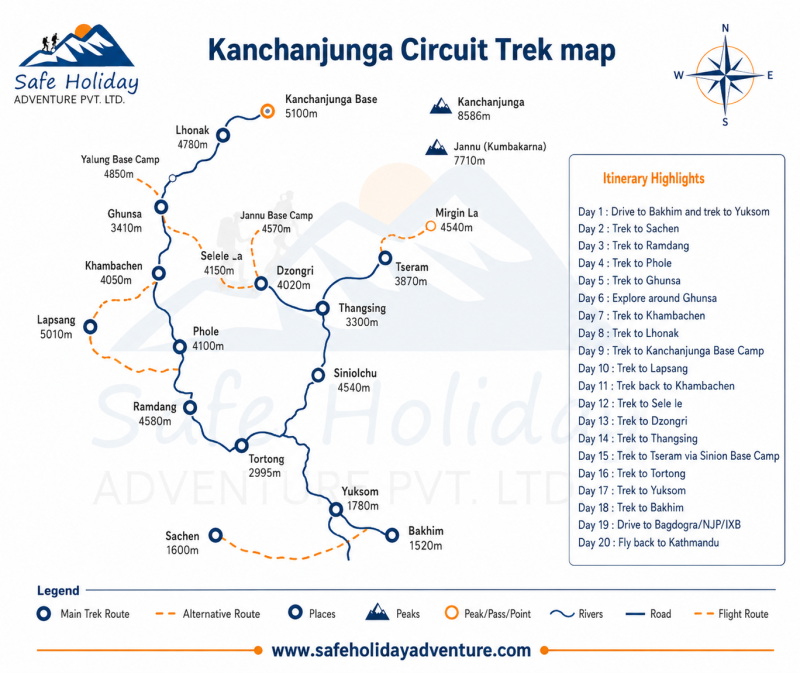
Trekking Distance and Duration of Kanchenjunga Circuit:
Guide and Porter Requirements for Kanchenjunga:
A licensed trekking guide is mandatory for the Kanchenjunga Circuit due to its restricted status. Hiring a porter is recommended to carry heavy loads and ease your trek. Guides provide valuable local knowledge, ensure safety, and help with permits and logistics.
Accommodation and Food Options on the Route
Accommodation mainly consists of basic tea houses and lodges offering simple rooms and meals. Food options include Nepali staples like dal bhat (rice and lentils), noodles, soups, and occasional Western dishes. Facilities may be limited in remote areas, so carrying some snacks and essentials is advisable.
Altitude Challenges and Acclimatization Tips
Trekking above 4,000 meters exposes trekkers to the risk of altitude sickness. Proper acclimatization is essential by taking rest days, ascending slowly, and staying hydrated. Recognize symptoms like headache, nausea, or dizziness and descend if they worsen. Using medication like Diamox may help, but consult a doctor before use.
Safety Precautions and Health Advice
Always trek with a guide, carry a first aid kit, and check weather conditions daily. Stay hydrated and avoid alcohol. Keep warm clothing for cold nights. Use sun protection for strong mountain UV rays. Inform your guide of any health issues and know emergency evacuation procedures.
Essential Packing List for Kanchenjunga Trek:
Clothing
- Warm down jacket
- Waterproof jacket and pants
- Thermal base layers
- Fleece or warm sweater
- Trekking shirts and pants
- Warm hat, sun hat, and gloves
- Good trekking socks and underwear
Footwear
- Waterproof trekking boots
- Camp shoes or sandals
- Gaiters (optional for snow or mud)
Gear
- Backpack and daypacka
- Sleeping bag (cold-weather rated)
- Trekking poles
- Water bottles or hydration bladder
- Headlamp with extra batteries
Personal Items
- Sunscreen and lip balm
- Sunglasses with UV protection
- Toiletries and quick-dry towel
- Personal medicines and first-aid kit
- Wet wipes and hand sanitizer
Documents & Extras
- Passport and permits
- Cash (ATMs are unavailable on the trail)
- Power bank and charging cable
- Snacks or energy bars
- Camera or phone for photos
Kanchenjunga Circuit Trek: Weather Conditions and What to Expect
The weather conditions on the Kanchenjunga Circuit Trek vary greatly depending on the season and altitude. Spring (March–May) and autumn (September–November) are considered the best trekking seasons, offering clear skies, moderate temperatures, and stunning mountain views. Lower regions remain relatively mild, while higher elevations can be cold, windy, and unpredictable, especially during mornings and nights. Rainfall is common during the monsoon season, and winter brings heavy snowfall in high passes.
Trekkers should expect changing weather patterns, challenging mountain climates, and significant temperature differences throughout the journey. Warm daytime conditions may quickly turn into freezing nights at higher camps. Proper clothing, layered gear, and weather preparedness are essential for a safe and comfortable trekking experience. Despite the demanding climate, the breathtaking landscapes and remote Himalayan environment make the Kanchenjunga Circuit Trek highly rewarding.
Transportation and Access Points to the Trek Start
The trek usually starts from Taplejung district, accessible by a short flight from Biratnagar or a long jeep ride from Kathmandu or Biratnagar. The approach involves road travel to the village of Suketar, the common trekking starting point.
What Is It Really Like Crossing Sele La Pass on the Kanchenjunga Trek?
Crossing Sele La Pass is one of the most talked-about experiences on the Kanchenjunga Trek. Trekkers often ask about the difficulty, weather, and views while navigating this high-altitude mountain pass surrounded by dramatic Himalayan landscapes.
Trekkers should expect steep climbs, cold temperatures, and changing trail conditions during the crossing. However, the breathtaking scenery, peaceful surroundings, and sense of achievement make Sele La Pass a memorable and rewarding challenge for adventure seekers.
Acclimatization Tips for Kanchenjunga Circuit Trek:
- Ascend Gradually – Gain altitude slowly to help your body adjust naturally.
- Stay Hydrated – Drink plenty of water throughout the trek to reduce altitude-related risks.
- Take Acclimatization Days – Use planned rest days to adapt before moving to higher elevations.
- Climb High, Sleep Low – Hike to higher points during the day and sleep at a lower altitude when possible.
- Eat Nutritious Meals – Consume energy-rich foods to maintain strength and support recovery.
- Avoid Alcohol and Smoking – These can worsen dehydration and slow acclimatization.
- Recognize Altitude Sickness Symptoms – Watch for headaches, nausea, dizziness, or unusual fatigue.
- Maintain a Steady Pace – Walk slowly and avoid overexertion, especially at higher elevations.
- Dress in Layers – Proper clothing helps your body manage changing mountain temperatures.
- Listen to Your Body – If symptoms worsen, rest or descend immediately.
Detailed ItineraryItinerary
Arrival in Kathmandu (1,350m)
Upon arrival at Tribhuvan International Airport, a representative from Safe Holiday Adventure will greet you and transfer you to your hotel in Thamel, Kathmandu’s tourist hub. After check-in, relax or take a short walk around the bustling streets filled with shops, cafes, and trekking gear stores. In the evening, your trekking guide will brief you about the Kanchenjunga Circuit Trek. This session is important for preparation and allows you to ask any last-minute questions. Dinner can be enjoyed at a traditional Nepali restaurant nearby.
Accommodation : Hotel
Kathmandu Sightseeing & Trek Preparation
Today is a cultural and preparation day. After breakfast, a city tour takes you to major UNESCO World Heritage Sites including:
- Pashupatinath Temple (a sacred Hindu temple by the Bagmati River)
- Boudhanath Stupa (one of the largest Buddhist stupas in the world)
- Kathmandu Durbar Square (ancient royal palace)
Your guide will assist you in checking your gear and help with any last-minute shopping for your trek. You’ll also finalize permits and logistics with the agency.
Accommodation : Hotel
Fly to Bhadrapur (93m), Drive to Ilam (1,200m)
Take a scenic flight to Bhadrapur in eastern Nepal. Upon landing, you’ll be driven to Ilam, a beautiful hill town known for tea gardens, cool weather, and fresh air. The drive winds through terraced hills and traditional villages. Once in Ilam, check into a guesthouse and enjoy the sunset over the rolling green hills.
Accommodation : Guesthouse
Drive to Taplejung & Suketar, then trek to Phurumbu (1,550m)
After breakfast in Ilam, drive toward Taplejung via Phidim. Enjoy changing scenery from subtropical lowlands to the cooler highlands. Upon reaching Suketar, start your trek with a gradual walk through cardamom fields and terraced farms. You’ll pass scattered houses and see glimpses of distant hills. After 2 hours, reach the small village of Phurumbu for your first night in a local teahouse.
Accommodation : Teahouse
Phurumbu to Chirwa (1,270m)
Begin your trek with a combination of ups and downs. You’ll walk through traditional Limbu settlements, dense subtropical forests, and across suspension bridges. The trail descends to the village of Tawa, where you may stop for lunch. Continue along the Tamor River and pass fields of rice, millet, and cardamom. Reach Chirwa, a compact Limbu village with local shops and a few teahouses, where you’ll spend the night.
Accommodation : Teahouse
Chirwa to Sekathum (1,660m)
The day begins with a forested trail along the Tamor River. You’ll walk through cardamom plantations and bamboo groves, cross several small streams, and enjoy bird sounds in the jungle. After reaching Tapethok, register at the Kanchenjunga Conservation Area checkpoint. Continue trekking alongside the Ghunsa River, passing small waterfalls and ridges until you reach Sekathum—a small settlement nestled between steep hills, where two rivers meet. Overnight at a teahouse.
Accommodation : Teahouse
Sekathum to Amjilossa (2,510m)
A challenging but beautiful day. Cross a suspension bridge and begin climbing through dense pine and rhododendron forest. The trail goes through narrow gorges, slippery stone paths, and past the village of Solima. The path often climbs steeply on narrow trails. After several up-and-down segments, arrive at Amjilossa—a quiet mountain hamlet with basic teahouses and open views of forested hills.
Accommodation : Teahouse
Amjilossa to Gyabla (2,730m)
Follow the Ghunsa Khola upstream through thick bamboo and rhododendron forests. The trail climbs steadily with occasional steep sections and suspension bridges. Cross small rivers and pass scenic waterfalls. You’ll come across herders’ huts and reach Gyabla (Kyapra), a beautiful Tibetan-style village surrounded by pine-covered hills. The village is known for its stone houses and peaceful atmosphere.
Accommodation : Teahouse
Gyabla to Ghunsa (3,595m)
Descend to the Ghunsa River, then begin climbing steadily through a forest of larches and junipers. Stop at Phale, a Tibetan refugee settlement, where you can see handmade carpets and Buddhist shrines. Continue through the valley until the trail opens up, revealing stunning alpine views. Arrive in Ghunsa, the largest village on the trek with well-established teahouses, a hydroelectric plant, and a monastery. The Sherpa culture is strong here, and it’s a great place to rest and explore.
Accommodation : Teahouse
Acclimatization Day in Ghunsa (3,595m)
Today is a rest and acclimatization day to help your body adjust to higher altitude. Instead of staying idle, we take a half-day hike to Laspsan La Monastery or a ridge nearby that offers excellent mountain views, including glimpses of Jannu Himal (7,710m). Along the way, you’ll pass mani walls, prayer flags, and small herding settlements. Return to Ghunsa for lunch and spend the afternoon exploring the village or relaxing by the river.
Accommodation : Teahouse
Ghunsa (3,595m) to Kambachen (4,050m)
Today, you leave the large Sherpa village of Ghunsa, heading north along the Ghunsa River. The trail first descends slightly to cross the river via a suspension bridge before starting a steady uphill through alpine forests of pine and juniper. You will pass through small yak pastures and occasional herders’ tents. The trail narrows and ascends more steeply as you approach Kambachen, a peaceful hamlet situated below dramatic mountain faces. On clear days, enjoy panoramic views of Mount Jannu (Kumbhakarna). The evening offers crisp mountain air and clear starry skies in this remote settlement.
Accommodation : Teahouse
Acclimatization Day at Kambachen (4,050m)
To help your body adjust to a higher altitude, today is a rest day with a moderate acclimatization hike. You can hike to Nupchu Khola valley or nearby ridges for spectacular views of the Kanchenjunga massif and surrounding peaks. The terrain consists of rocky paths with patches of alpine meadow. Return to Kambachen for the night and enjoy the tranquility of the Himalayan wilderness. This day is essential to prevent altitude sickness.
Accommodation : Teahouse
Kambachen to Lhonak (4,780m)
Today’s trek is demanding but rewarding, as you climb steadily through rugged terrain. The trail passes moraines, glacial streams, and rocky slopes. You will cross a small bridge over a cascading stream before reaching Ramtang Monastery, a remote Buddhist hermitage perched on a rocky outcrop. From here, the path follows a steady ascent crossing avalanche-prone slopes and rocky moraine fields before arriving at Lhonak, a high alpine settlement known for its yak herders and breathtaking views of Kanchenjunga’s north face.
Accommodation : Teahouse
Lhonak to Pangpema / Kanchenjunga North Base Camp (5,388m)
Prepare for an early start as you trek along the lateral moraine of the Kanchenjunga Glacier. The trail is rocky and can be slippery due to glacial melt. You will pass through boulder fields and patches of snow. This area is known for its delicate alpine flora and occasional sightings of Himalayan wildlife like blue sheep and snow leopard tracks. Arrive at Pangpema, the North Base Camp of Kanchenjunga, a vast flat meadow surrounded by towering peaks. Take in the awe-inspiring views of Kanchenjunga’s summit and its glaciers before camping overnight.
Accommodation : Tented Camp
Pangpema to Kambachen (4,050m)
Today, you retrace your steps down from Pangpema to Kambachen. The descent is steady but can be rocky and requires careful footing. Enjoy the views you missed on the ascent and observe the changing vegetation as you lose altitude. Arrive in Kambachen for a restful evening after the high camp experience.
Accommodation : Tented Camp
Kambachen to Ghunsa (3,595m)
Retrace the previous path back down to Ghunsa. The trail is mostly downhill with occasional flat stretches. Take time to appreciate the forested slopes and distant views of the Himalayan range. Upon arrival in Ghunsa, relax in the teahouses and explore the local Sherpa culture. Ghunsa’s monastery and traditional houses offer a glimpse into mountain life.
Accommodation : Teahouse
Ghunsa to Sele La (4,290m)
A challenging day that starts with a steep ascent through dense rhododendron forests and alpine scrub. The trail becomes rocky and sometimes slippery, requiring good balance and stamina. As you climb higher, the trees thin out and the panoramic views expand to include Kanchenjunga and surrounding peaks. The pass at Sele La is a highlight, often adorned with colorful prayer flags. Camp or stay in teahouses in the Sele La area, experiencing solitude amidst the high Himalayas.
Accommodation : Tented Camp/Teahouse
Sele La to Cheram (3,870m)
The trail today descends steeply through alpine meadows and rocky terrain. En route, cross several small passes including Sinon La and Mirgin La. The landscape is marked by scattered yak herder tents and wildflowers. On clear days, you can see the majestic Makalu (8,463m), the world’s fifth-highest peak. Arrive in Cheram, a small settlement where you can rest and enjoy simple mountain hospitality.
Accommodation : Teahouse
Cheram to Ramche (4,580m) and back to Cheram
Today involves a strenuous day hike. Begin with a steep climb past Yalung Glacier’s edge and alongside Simbuwa Khola. Reach Ramche, a ridge offering exceptional views of Kanchenjunga’s south face and valleys below. This area is also known for sightings of blue sheep (bharal). After spending time admiring the landscape, descend back to Cheram for the night.
Accommodation : Teahouse
Cheram to Tortong (2,995m.)
A longer descent through rhododendron forests and terraced farmland awaits. The trail sometimes splits, and you’ll avoid the higher route taken earlier. Walk alongside Simbuwa Khola, enjoying peaceful forest sounds and mountain air. Reach Tortong, a quiet village known for its natural beauty and welcoming locals.
Accommodation : Teahouse
Tortong to Yamphudin (2,080m)
You descend further through mixed forest and agricultural terraces, passing through Lasiya Bhanjyang—a high ridge offering views of valleys and hills. The trail crosses avalanche-prone areas that stabilize by October. Reach Yamphudin, a multiethnic village inhabited by Sherpa, Limbu, and Rai communities. Experience local culture and traditional village life here.
Accommodation : Teahouse
Yamphudin to Mamanke (1,800m)
The trail gently descends into sub-tropical forest, passing through several small villages with stone houses and terraced fields. Mamanke offers a peaceful setting and teahouses to rest overnight after today’s long walk.
Accommodation : Teahouse
Mamanke to Lali Kharka (2,265m)
Today, you climb gradually through lush forest and open pastures to reach Lali Kharka, a yak pasture used by local herders in the summer months. The higher elevation means cooler temperatures and breathtaking views of the eastern Himalayan ranges.
Accommodation : Teahouse
Lali Kharka to Suketar (1,500m)
You continue descending through rhododendron forests and terraced hillsides until reaching Suketar airstrip. This small settlement marks the end of the trekking trail. Take time to enjoy a celebratory meal with your trekking team.
Accommodation : Teahouse
Fly Suketar to Kathmandu (1,350m)
Early morning flight from Suketar back to Kathmandu. On arrival, transfer to your hotel for rest. Evening is free for shopping or relaxing.
Accommodation : Hotel
Buffer / Contingency Day & Farewell Dinner
Reserved for any flight delays or unforeseen circumstances. In the evening, enjoy a farewell dinner with your team at a traditional Nepali restaurant featuring cultural dance performances to celebrate your successful trek.
Accommodation : Hotel
Departure Day
After breakfast, transfer to Tribhuvan International Airport for your onward flight. Your Safe Holiday Adventure representative will assist with airport formalities. Depart with unforgettable memories of the Kanchenjunga Circuit Trek.
Kanchenjunga Circuit Trek – A Remote Himalayan Experience FAQs
The trek usually costs USD 1,500–2,500 per person, including permits, guide, transport, food, and accommodation.
The trek takes about 18–24 days and covers 220–250 km.
Yes, a licensed guide is mandatory for this restricted trekking region.
Higher areas can have freezing temperatures, especially at night.
The trek commonly starts from Taplejung or Suketar.
Sele La Pass is steep, cold, and demanding, but offers amazing views.
Climb slowly, stay hydrated, and take rest days.
Refund & Cancellation Policy
- Booking requires 20% non-refundable deposit (Nepal) or 100% upfront (Tibet/Bhutan).
- Remaining payment due before the trip or on arrival (trip-dependent).
Cancellation charges:
- 31+ days: 20%
- 16–30 days: 45%
- 8–15 days: 75%
- 7 days or less: 90%
- Prices may change due to flights, taxes, or exchange rates.
- Trip changes are allowed, but extra costs apply.
- If the company cancels, a full refund, except for unavoidable events (some costs deducted).
- Good health and travel insurance are mandatory.
- No refund if removed for unsafe or illegal behavior.
- Travel involves personal risk, which the client accepts.