
27 Jul 2019 6 min to read
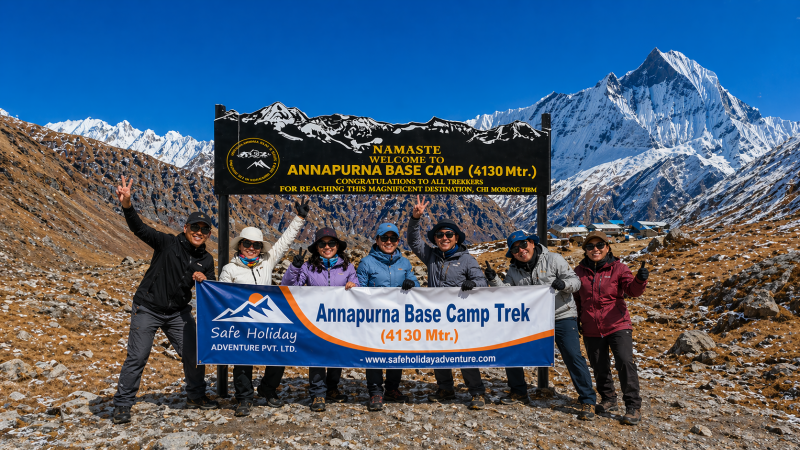
The Annapurna Base Camp trek takes you deep into the Annapurna Sanctuary, a natural amphitheatre ringed by giant Himalayan peaks. At 4,130 meters, base camp sits right beneath Annapurna I (8,091 m) and Machhapuchhre, so the mountains feel close enough to touch.
So why do so many trekkers choose this route over other trails in Nepal? The answer is a rare mix of scenery, culture, and comfort. You walk through rhododendron forests, terraced farmland, and Gurung villages, then finish on a glacier-carved basin of ice and rock.
In this guide, we share the top 5 reasons to visit Annapurna Base Camp, from its mountain views to its easy access and flexible budgets. Whether you want a short 7-day trip or a relaxed 12-day journey, you will see why this trek is a favorite for first-time and experienced trekkers alike.
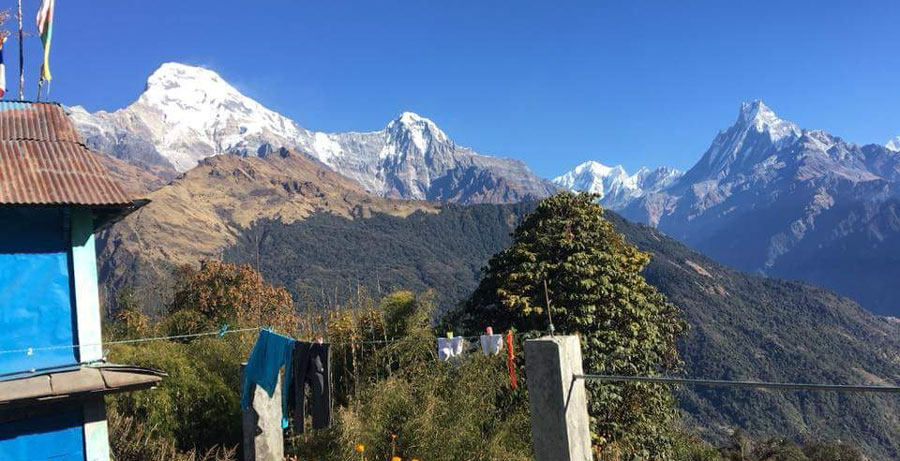
Nepal is home to some of the tallest mountains on Earth, and few treks showcase them as closely as the Annapurna Base Camp trek. The route sits in the heart of the Annapurna region, where snow-capped giants rise above terraced hills and rhododendron forests.
The Annapurna Base Camp trek takes about 7 days by the shortcut route, while the classic itinerary via Ghorepani Poon Hill usually takes 10 days. Your journey begins with a short drive from Pokhara. From there, the trail climbs through Ghorepani, Poon Hill, Tadapani, Chhomrong, Sinuwa, and Machhapuchhre Base Camp (MBC) before reaching Annapurna Base Camp.
The mountain views begin early. By the second day, near Ulleri, the Himalayan panorama opens up, and it stays with you almost every day of the trek. Annapurna and Dhaulagiri dominate the skyline, including Annapurna I, the 10th highest mountain in the world at 8,091 meters.
Trekkers regularly rank this route among Nepal’s best for getting close to the high Himalayas. If you want dramatic mountain scenery, rich local culture, and a trek that suits most fitness levels, the Annapurna Base Camp trek is hard to beat.
The Annapurna Base Camp (ABC) trek is a moderate trek, which makes it a great choice for first-time Himalayan hikers as well as experienced trekkers. You don’t need technical climbing skills or previous high-altitude experience. A reasonable level of fitness and a steady pace are enough to complete it.
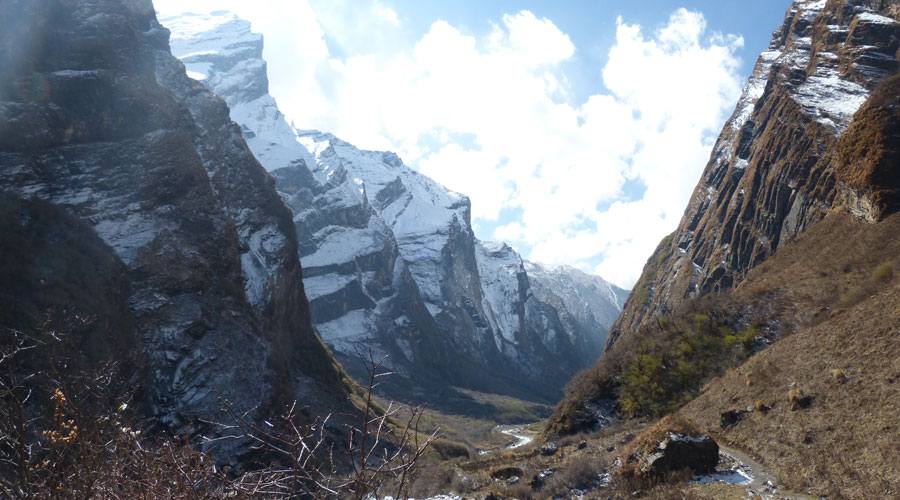
Most days involve 5 to 7 hours of walking on well-marked trails with stone steps, suspension bridges, and plenty of teahouses for rest stops. The toughest part is the long staircase sections, such as the climb to Ghorepani and the stretch from Chhomrong, which can be tiring on the knees. The altitude gain is gradual, and the trek reaches 4,130 meters at Annapurna Base Camp, so taking rest days and drinking plenty of water helps you adjust.
Access is simple too. Pokhara, the gateway to the Annapurna region, is just a 25-minute flight or a 6 to 7 hour drive from Kathmandu. From Pokhara, the trailhead at Nayapul or Phedi is only a 1.5 to 2 hour drive away. Because the route is lined with teahouses and villages, you can walk without carrying camping gear and still find food and a bed each night.
If you are looking for a trek that balances scenery, comfort, and challenge, the Annapurna Base Camp trek is one of the most accessible options in Nepal.

The Annapurna Base Camp (ABC) trek is more than a mountain walk. It also takes you through the homeland of the Gurung and Magar communities, whose traditions have shaped life in the Annapurna region for generations.
Villages such as Ghandruk, Chhomrong, and Tadapani are the best places to experience this culture. Stone houses with slate roofs line the hillside, and terraced fields of millet and barley step down the valley. In Ghandruk, a visit to the Gurung Museum gives you a closer look at local clothing, tools, and customs. Many families run teahouses, so you often eat and sleep in their homes.
Faith is part of daily life here. You will pass prayer flags, mani walls, and small Buddhist and Hindu shrines along the trail. Machhapuchhre, the fishtail-shaped peak above the route, is considered sacred by local communities and has never been climbed. Out of respect, climbing it is not permitted.
Food and hospitality complete the experience. A plate of dal bhat, a cup of local tea, and a warm greeting of “Namaste” from your hosts will make the trek feel personal. Staying in local teahouses also supports the mountain communities directly.
If you want a trek that combines Himalayan scenery with real cultural encounters, the Annapurna Base Camp trek is an excellent choice.

The Annapurna Base Camp trek is as much a forest walk as a mountain trek. In the first few days, the trail climbs through quiet pine and rhododendron forests near Ghorepani and Tadapani, with small villages tucked between the trees.
Spring is the best time to see them. In March and April, rhododendrons, Nepal’s national flower, bloom in shades of red, pink, and white across the hillsides. Mornings are often clear, so you can photograph blossoms with snow-capped peaks behind them.
Beyond Chhomrong and Sinuwa, the scenery changes. Dense bamboo forest wraps around the trail down to Bamboo, Dovan, and Himalaya, and the air feels cool, green, and still. Local families use bamboo to build animal sheds, make baskets, and store goods, and bamboo shoots are a common part of local meals.
For peaceful forest scenery along with mountain views, the Annapurna Base Camp trek in spring is hard to beat.

After days of climbing stone steps, few things feel better than a soak in a natural hot spring. On the Annapurna Base Camp trek, the springs at Jhinu Danda are a favorite stop for tired trekkers.
The pools sit beside the Modi Khola River, about a 30-minute walk downhill from Jhinu Danda village. Mineral-rich warm water helps relax sore legs and tight shoulders, and the river and forested hills around you make the setting peaceful.Most trekkers visit on the way back from Annapurna Base Camp, when their muscles need rest the most. Bring a towel, swimwear, and a little cash for the small entry fee. It is a simple reward at the end of a great trek.
The Annapurna Base Camp trek offers more than a walk to the foot of a giant mountain. You get close-up views of Annapurna I and Machhapuchhre, a moderate route that suits most fitness levels, warm encounters with Gurung and Magar communities, quiet rhododendron and bamboo forests, and a soak in the Jhinu Danda hot springs to finish.
Whether you choose the short 7-day route or a relaxed 12-day journey, this trek delivers a complete Himalayan experience without technical climbing or heavy gear. Plan your trip for spring or autumn, pack well, and let the trail set the pace. Start planning your Annapurna Base Camp trek today, and you will come home with memories that last a lifetime.


Namche Bazaar is where the Everest trail makes its biggest decision. Most trekkers turn right toward
Continue Reading
Nepal is famous for Mount Everest, the Annapurna Himalayas, ancient temples, traditional villages, a
Continue Reading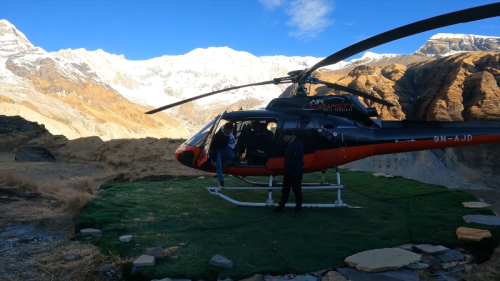
There is a moment at Annapurna Base Camp when the sun touches the rim of the sanctuary and every pea
Continue Reading
There is a moment on the Annapurna Circuit that every trekker thinks about for days. It happens in t
Continue Reading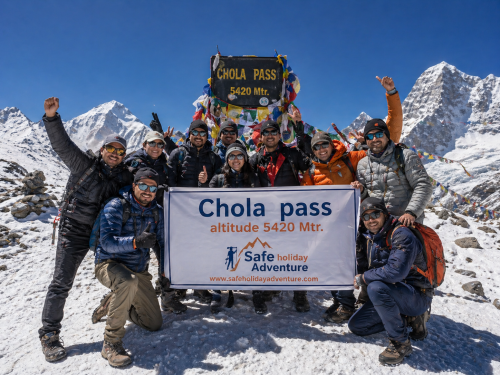
Most people walk to Everest Base Camp and then walk back down the same valley. The Three Passes Trek
Continue Reading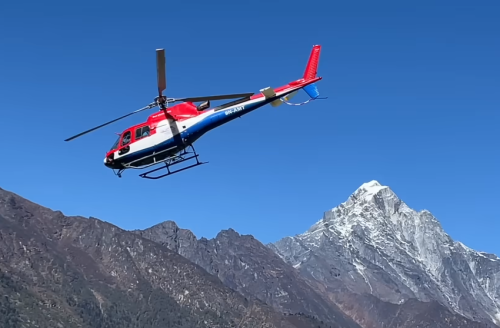
There is a moment on every Everest trek when your legs have an opinion. For most people, it arrives
Continue Reading