STAY CONNECTED


Government Licence No.: 131483/071/072
STAY CONNECTED
October 16, 2024

Trekking in Nepal requires special permits to ensure that trekkers follow the guidelines set by the government for safety, conservation, and support to local communities. Whether you are exploring popular routes or heading into more remote regions, permits are mandatory for all trekkers. These permits help maintain the environment, protect wildlife, and support the communities living in the trekking areas.
For those trekking in the Annapurna or Everest regions, you’ll need an Annapurna Conservation Area Permit (ACAP) or Sagarmatha National Park Entry Permit. If you plan to trek in other areas like Manaslu, you will need the Manaslu Conservation Area Permit (MCAP). This permit is necessary for the stunning Manaslu Circuit Trek, which passes through protected areas requiring special conservation attention.
Similarly, for trekkers exploring the Langtang region, a Langtang National Park Entry Permit is required. Langtang offers beautiful views and diverse landscapes, and the permit helps to preserve the natural environment there.
You can easily get these permits in Kathmandu or Pokhara, either through a trekking agency or directly from the permit offices. The fees you pay go towards environmental conservation, trail improvements, and support for local communities. Knowing which permits are required for your trek is important, so you can enjoy your adventure without any issues. With the right Permits, you’re all set to explore Nepal’s breathtaking trails and experience the culture and beauty of the Himalayas!
If you are only looking to obtain trekking permits from an agency and do not require a guide or porter, that is fine. For a small service fee, Safe Holiday Adventure Pvt. Ltd. can handle the entire process of securing your trekking permits. All you need to provide are two passport-sized photographs and a photocopy of your passport for each traveler.
Safe Holiday Adventure Pvt. Ltd. offers permit services for all trekking regions in Nepal. In addition, they provide experienced guides, porters, and porter guides, should you decide you need support during your trek. For those seeking more budget-friendly options for guides or porters, you can contact the agency directly by emailing them at safeholidayadventure@gmail.com.
The service charge for obtaining your permit will vary based on the size of your group and the region you plan to trek. However, we are happy to customize the fee according to your budget and trip plans. Feel free to reach out to discuss your needs, and we will assist you accordingly. Thank you!
Obtaining trekking permits through a trekking agency offers several benefits, especially for those unfamiliar with the process or traveling to a new region. Here are some key advantages:
Expert Guidance: Trekking agencies have extensive knowledge of the required permits for various trekking routes. They ensure you get the correct permits without any hassles.
Time-Saving: Handling permit applications can be time-consuming. Agencies take care of all paperwork and formalities, allowing you to focus on your trek.
Local Connections: Trekking agencies often have established relationships with local authorities, which can help expedite the permit process and resolve any issues that may arise.
Safety and Compliance: Agencies ensure that all necessary regulations are followed, keeping you compliant with local laws and enhancing your safety while trekking.
Convenience: Many trekking agencies bundle permits with other services, such as transportation, accommodation, and guiding, making it easier for you to plan your trip.
Support During the Trek: In case of any changes or emergencies, trekking agencies provide support and assistance, ensuring a smoother experience.
Cost-Effectiveness: While there might be a fee for the agency’s services, they often have competitive rates and can sometimes secure permits at a lower price than individuals would pay.
Peace of Mind: Knowing that a professional agency is handling your permits allows you to relax and enjoy the trek without worrying about logistics.
Using a trekking agency for permits can greatly enhance your trekking experience, providing convenience, safety, and support.
For trekking in the Everest region, especially for the famous Everest Base Camp Trek, two permits are required:
Sagarmatha National Park Entry Permit:
This permit is mandatory for anyone entering the Everest region. It helps with the conservation of the national park and the protection of its wildlife
Fee: NPR 3,000 (approx. $22) per person for foreign nationals; NPR 1,500 for SAARC nationals.
Khumbu Pasang Lhamu Rural Municipality Permit:
The Manaslu Circuit Trek is in a restricted area, so you’ll need special permits for both the Manaslu Conservation Area and the restricted area itself.
Manaslu Conservation Area Permit (MCAP):
– This is required for all trekkers to enter the conservation area.
– Fee: NPR 3,000 (approx. $22) per person.
Manaslu Restricted Area Permit:
– Because Manaslu lies in a restricted area near the Tibetan border, you need this special permit. The price varies depending on the season.
– Fees:
– September to November: USD 100 for the first 7 days, then USD 15 per additional day.
– December to August: USD 75 for the first 7 days, then USD 10 per additional day.
Note: You must trek with a licensed guide and be part of at least two trekkers to get this permit.
For the Langtang Valley Trek, which lies in a national park, you’ll need the following permits:
Langtang National Park Entry Permit:
– This permit is required for anyone trekking inside the national park.
Fee:
– TIMS Card (Trekkers Information Management System):
– This is required for safety tracking, especially in non-restricted areas like Langtang.
Fee:
USD 20 (for individual trekkers), USD 10 (for group trekkers).
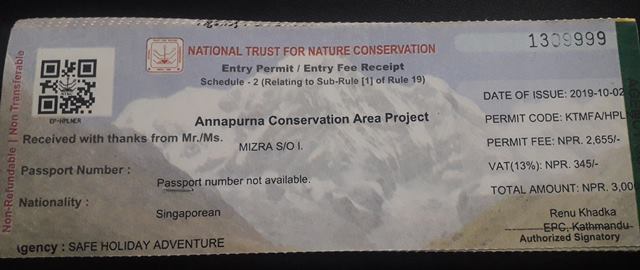
For trekking in the Annapurna region, such as the Annapurna Base Camp Trek or Annapurna Circuit Trek, the following permits are required:
– Annapurna Conservation Area Permit (ACAP):
– ACAP is mandatory for anyone trekking inside the Annapurna Conservation Area, which covers many popular routes.
Fee:
NPR 3,000 (approx. $22) for foreign nationals, NPR 1,000 for SAARC nationals.
For trekking in restricted areas like Upper Mustang, Dolpo, and Manaslu Restricted Area, special permits are required. These regions have unique cultural and environmental significance, and the restricted permits help preserve them.
Upper Mustang Restricted Area Permit:
– Mustang is a culturally rich region located near the Tibetan plateau. To trek in Upper Mustang, you must obtain a restricted area permit.
Fee:
USD 500 for the first 10 days, then USD 50 per day for each additional day.
– You must be part of a guided group with a licensed trekking agency to enter Upper Mustang.
Dolpo Region Restricted Area Permit
– Lower Dolpo: USD 20 per person per week.
– Upper Dolpo: USD 500 for the first 10 days, then USD 50 per day for each additional day.
– Upper Dolpo is one of the most remote and unspoiled areas in Nepal, and like Mustang, you must trek with a guide and be part of a group.
Manaslu Restricted Area Permit(as detailed above):
This permit is required for trekking through the restricted area near the Tibetan border, including the Manaslu Circuit.
General Information:
Where to Obtain Permits: Most trekking permits can be obtained at the Nepal Tourism Board office in Kathmandu, the Department of Immigration, or directly from local conservation and national park offices. Trekking agencies can also assist in securing these permits.
These permits are essential for ensuring a safe and enjoyable trekking experience in Nepal while supporting the conservation and local communities in these beautiful regions.
Safe Holiday Adventure Pvt. Ltd.
P.O.Box: 20065 Tarkeshwor-6, Kathmandu, Nepal
Cell: 00977 9849116284
Email: info@safeholidayadventure.com,
safeholidayadventure@gmail.com
Europe Contact
Mark Brosius
mark.brosius@hotmail.com
Oude baan, 41, 3060 Bertem, Belgium


We are associated with


We accept