STAY CONNECTED


Government Licence No.: 131483/071/072
STAY CONNECTED
August 15, 2025

The road journey from Kathmandu to Pokhara is far more than a simple transfer between Nepal’s two most popular cities—it is a scenic adventure and cultural experience in itself. Stretching approximately 200 kilometers, this drive is a fascinating window into Nepal’s diverse landscapes and lifestyles. While the distance may seem short, the terrain of the Himalayan foothills ensures that the trip usually takes 6–8 hours, with time varying based on road conditions, weather, and traffic.
The route follows the historic Prithvi Highway, one of Nepal’s lifelines, connecting the bustling capital with the tranquil lakeside city of Pokhara. Along the way, travelers witness a constant transformation of scenery: the dense traffic of Kathmandu easing into green rolling hills, winding mountain roads hugging steep slopes, rushing rivers cutting through deep gorges, and peaceful rural settlements where traditional lifestyles still thrive. Every twist of the road reveals something new—terraced rice fields, pine-covered ridges, suspension bridges, colorful markets, and occasional glimpses of the Himalayan peaks in the distance.
This journey is not only about landscapes but also about culture and everyday life. The roadside towns and villages present authentic snapshots of Nepalese living: children walking to school, farmers tending to their fields, women carrying baskets of vegetables, and shopkeepers selling tea, snacks, and fresh river fish to passing travelers.
For many visitors, this road trip becomes a highlight of their Nepal experience because it blends natural beauty, cultural authenticity, and travel adventure in equal measure. Below is a detailed breakdown of the route, showcasing the important towns, scenic attractions, food stops, detour opportunities, and practical travel tips to make the most out of the drive from Kathmandu to Pokhara.

The drive begins in Kathmandu, weaving through the chaotic streets of Kalanki, one of the busiest junctions in the valley. Soon, the urban clutter fades as the road climbs towards Satungal and then ascends through pine-covered slopes to Thankot. A few bends ahead, you reach Nagdhunga, the western gateway of Kathmandu Valley. After the check post, the road plunges into steep zigzag curves, descending dramatically towards 0 Kilo, the edge of the valley.
The scenery quickly changes from urban sprawl to terraced fields, small farming villages, and green hillsides. Farmers can often be seen plowing the fields, water buffalo grazing, and children waving as vehicles pass. After 0 Kilo, the road straightens out and heads to Naubise, where travelers often stop for tea or breakfast. Here, local teashops serve simple but hearty Nepali meals.
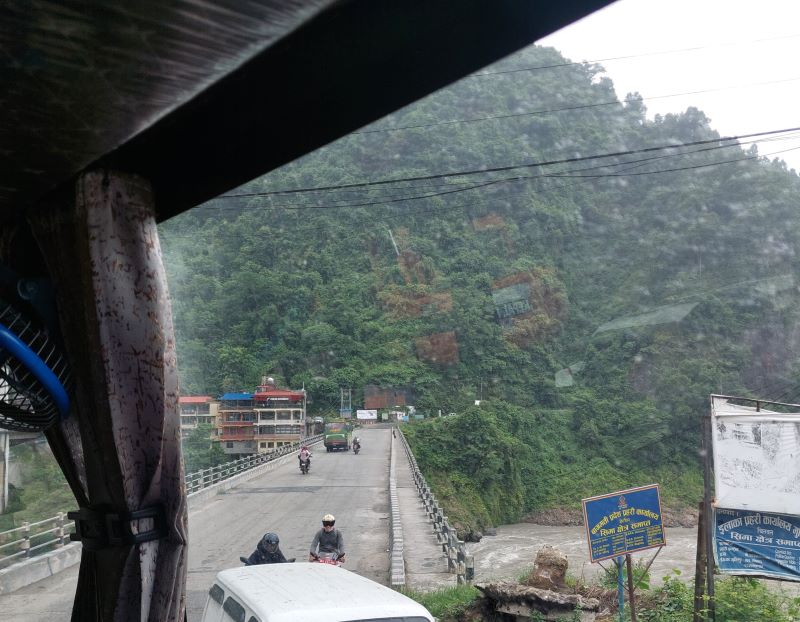
From Naubise, the road officially joins the Prithvi Highway, following the roaring Trishuli River downstream. The scenery is spectacular, with forested hills on one side and the turquoise river rushing below on the other. This section of the drive is both thrilling and soothing.
Finally, you arrive at Mugling, a busy highway town at the confluence of the Trishuli and Marsyangdi rivers. This is a crucial junction where the highway splits—southward towards Chitwan and westward towards Pokhara.

Begnas Lake
From Mugling, the road bends westward, following the Marsyangdi River through lush valleys and quiet rural landscapes. Compared to the earlier part, this section feels more relaxed and less crowded.
Finally, you reach Pokhara, the serene lakeside city. Here, the drive concludes with stunning views of Phewa Lake, the Annapurna Massif, and the iconic Machhapuchhre (Fishtail Mountain).
The Kathmandu–Pokhara road is full of changing landscapes:
The Kathmandu to Pokhara road drive is more than just a journey—it is a cultural and scenic experience. Every bend in the road reveals new views: roaring rivers, green hills, terraced farms, roadside bazaars, sacred temples, serene lakes, and distant Himalayan peaks. With its lively stops and optional detours, this drive is a perfect introduction to the diverse beauty of Nepal. For travelers, it is not only a means of reaching Pokhara but also an unforgettable part of the adventure itself.
Safe Holiday Adventure Pvt. Ltd.
P.O.Box: 20065 Tarkeshwor-6, Kathmandu, Nepal
Cell: 00977 9849116284
Email: info@safeholidayadventure.com,
safeholidayadventure@gmail.com
Europe Contact
Mark Brosius
mark.brosius@hotmail.com
Oude baan, 41, 3060 Bertem, Belgium


We are associated with


We accept