STAY CONNECTED


Government Licence No.: 131483/071/072
STAY CONNECTED
July 8, 2025

The Annapurna Base Camp (ABC) Trek is one of the most popular, scenic, and rewarding treks in Nepal. It attracts thousands of travelers every year due to its accessible route, moderate difficulty level, and breathtaking Himalayan views. But the big question for many first-time trekkers is:
👉 “Is the Annapurna Base Camp Trek suitable for beginners?”
The short answer is: Yes, it is!
But let’s explore in detail to help you decide if this trek is the right choice for you as a beginner.
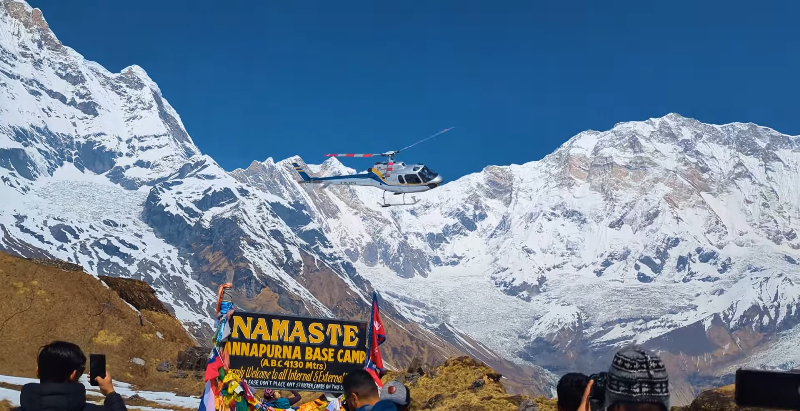
Start of the Winter Trek at Annapurna Base Camp.
One of the reasons the Annapurna Base Camp Trek is ideal for beginners is due to the gradual increase in altitude. Unlike other high-altitude treks such as Everest Base Camp (5,364m) or Annapurna Circuit’s Thorong La Pass (5,416m), ABC’s altitude maxes out at 4,130m — a relatively safe height for those with little or no trekking experience.
This means your body has a better chance to adapt, lowering the risk of high-altitude sickness.
You don’t need to bring tents or cooking gear. The entire route is filled with teahouses, offering:
This makes it very beginner-friendly, especially if you’re nervous about rough conditions.
As a beginner, walking with a licensed guide gives you peace of mind. They:
Many trekkers also hire a porter to carry their bags, making the trek easier and more enjoyable.
At Safe Holiday Adventure Pvt. Ltd., we provide highly experienced guides and insured porters to support our guests throughout the journey.
There are many route options for ABC Trek. You can make it:
This flexibility allows beginners to choose the route that matches their fitness and interests.
ABC Trek starts just a 1.5-hour drive from Pokhara — Nepal’s popular tourist city. No domestic flights are needed, unlike Everest Base Camp which requires a flight to Lukla.
This makes the ABC Trek easy to access and budget-friendly.
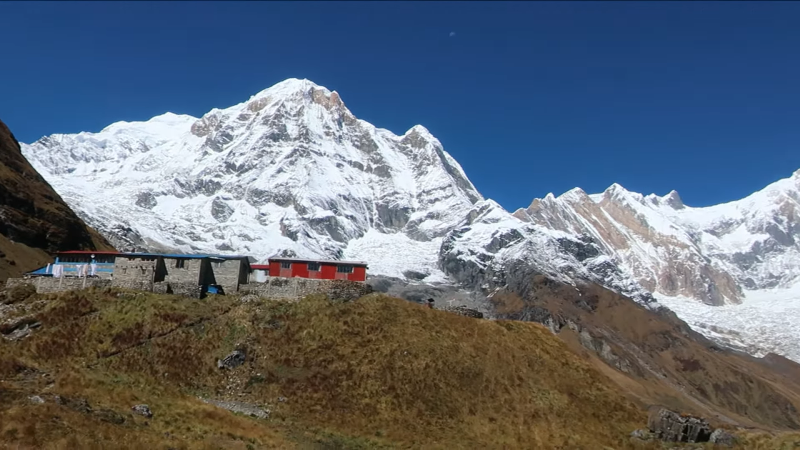
Stunning Annapurna South View from Annapurna Base Camp
Your adventure begins with a scenic drive from Pokhara to Nayapul, which takes around 1.5 hours. From Nayapul, the trek starts with a gentle walk along the Modi Khola river, passing through Birethanti — a small village where your trekking permits are checked.
You’ll gradually ascend on a stone-paved trail, crossing suspension bridges and walking through lush terraced fields. The trail then climbs to Ghandruk, a beautiful Gurung village at 1,940 meters.
Highlights:
Overnight at the teahouse in Ghandruk
After breakfast, you leave Ghandruk and walk through rhododendron forests and farmland. The trail descends to Kimrong Khola and then climbs up to Chhomrong, one of the largest villages on this route, located at 2,170 meters.
Chhomrong sits on a hillside with panoramic views of Machhapuchhre and Annapurna South. It’s a lively village and the last major stop before entering the deeper part of the Annapurna Sanctuary.
Highlights:
Overnight at the teahouse in Chhomrong
From Chhomrong, the trail descends on stone steps to Chhomrong Khola, then ascends again through thick bamboo and rhododendron forests to reach Sinuwa and eventually Bamboo at 2,310 meters.
The trail gets quieter and more serene as you move deeper into the forested valley. The air feels cooler, and you may even spot langurs (mountain monkeys) in the trees.
Highlights:
Overnight at the teahouse in Bamboo
Today’s trek is shorter but involves a steady climb. From Bamboo, you pass Dovan and the Himalaya Hotel, then continue through misty forests and high-altitude landscapes to reach Deurali at 3,200 meters.
The scenery becomes more dramatic with cliffs, waterfalls, and rocky riverbeds. Take your time and enjoy the peaceful surroundings — this is also a good day to adjust to the higher altitude.
Highlights:
Overnight at the teahouse in Deurali
Today is the most exciting and rewarding day of the trek. The trail rises slowly to Machhapuchhre Base Camp (MBC) at 3,700 meters, offering incredible views of Mount Fishtail. After a short rest, continue trekking toward Annapurna Base Camp (ABC) at 4,130 meters.
As you reach ABC, you’ll find yourself surrounded by a circle of Himalayan giants — including Annapurna I (8,091m), Hiunchuli, Annapurna South, and Tent Peak. It’s a magical place, especially during sunrise or sunset.
Highlights:
Overnight at the teahouse in Annapurna Base Camp
After enjoying the sunrise at ABC, begin your descent. You retrace your steps through MBC, Deurali, and Dovan, then back to Bamboo. Descending is faster, but still requires care on stone paths.
Highlights:
Overnight at the teahouse in Bamboo
From Bamboo, walk back toward Sinuwa, then descend to Chhomrong Khola and climb again to Chhomrong. After lunch, descend steeply to Jhinu Danda — a beautiful village famous for its natural hot springs near the Modi River.
After checking into your teahouse, take a short walk down to the hot spring pools to soak your tired legs — a perfect reward after days of trekking!
Highlights:
Overnight at the teahouse in Jhinu Danda
On your final day, enjoy a relaxed downhill walk through forests and farmlands to reach Siwai, the nearest road point. From Siwai, take a private vehicle or shared jeep back to Pokhara, which takes about 2–3 hours.
Upon arrival in Pokhara, you can check into your hotel and enjoy a hot shower and a celebration dinner by the lakeside!
Highlights:
Trek ends – Overnight in Pokhara
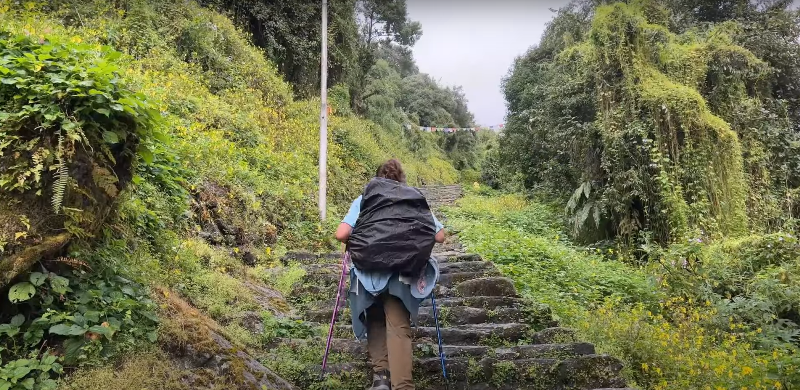
Stone made steep up to Upper Sinuwa
The Annapurna Base Camp (ABC) Trek is considered a moderate trek, which means it is very doable for beginners with basic preparation. However, like any multi-day mountain trek, there are some physical and mental challenges that you should be aware of.
One of the common concerns for beginners is altitude. Since the trek reaches up to 4,130 meters, some trekkers may experience mild symptoms like a headache or fatigue. To prevent this, it’s important to walk slowly, take regular breaks, and stay well-hydrated throughout the trek. The gradual altitude gain of the ABC trail also helps your body adjust naturally.
Another challenge is the daily walking hours. On average, you’ll walk 5 to 6 hours per day, sometimes uphill on stone steps. While this is manageable, it’s a good idea to prepare in advance by doing regular walking, hiking, or stair climbing for a few weeks before your trek.
Cold weather can also be a factor, especially during early mornings and nights above 3,000 meters. The temperature at base camp can drop below zero, even in the spring and autumn seasons. To stay warm and comfortable, you should bring a good-quality down jacket, warm thermal layers, gloves, and a hat.
Lastly, the food on the trail is simple but nourishing. Most teahouses serve meals like Dal Bhat (rice with lentils and vegetables), noodles, pasta, eggs, and soup. While the meals are filling, beginners might want to carry some energy bars, dry fruits, or snacks for extra variety and quick energy during the trek.
In short, with the right gear, mindset, and preparation, the ABC Trek is a fantastic and achievable adventure for first-time trekkers.
❌ Starting too fast — Take your time, rest when needed
❌ Not drinking enough water — Stay hydrated to avoid AMS
❌ Skipping warm layers — Temperatures at ABC can fall to -5°C to -10°C
❌ Not hiring a guide — Especially helpful in bad weather or tricky routes

Packing List
Must-Haves:
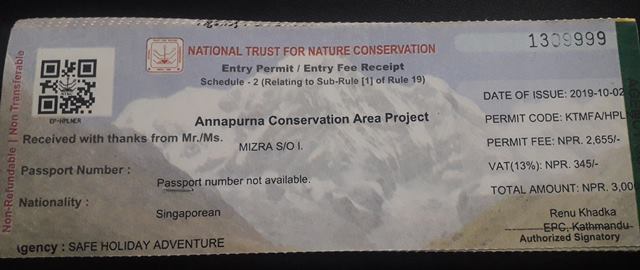
To trek to Annapurna Base Camp, all trekkers — including beginners — are required to obtain the Annapurna Conservation Area Permit (ACAP). This permit is mandatory and costs NPR 3,000 per person for foreign nationals. The ACAP is essential for entering and trekking within the protected Annapurna region, helping support local conservation efforts and trail maintenance.
Previously, trekkers were also required to obtain the TIMS Card (Trekkers’ Information Management System). However, as of recent updates, the TIMS card is no longer compulsory for trekking to Annapurna Base Camp. This makes the permit process simpler and more cost-effective for travelers.
You can easily get the ACAP permit at the Nepal Tourism Board offices in Kathmandu or Pokhara before starting your trek. At Safe Holiday Adventure Pvt. Ltd., we assist our clients in arranging all necessary permits to ensure a smooth and hassle-free trekking experience.
Prices vary based on services and group size. On average:
At Safe Holiday Adventure Pvt. Ltd., we offer a 6-day ABC Trek for just $550 per person, including guide, permits, food, accommodation, and transport.
Spring (March to May) is one of the most popular times to trek to Annapurna Base Camp. During this season, the skies are usually clear, the temperature is pleasant, and the famous rhododendron forests bloom in vibrant colors, especially around Ghorepani and Chhomrong. The stable weather conditions make it an excellent time for beginners.
Autumn (September to November) is considered the best time for trekking in Nepal. The monsoon has just ended, so the air is clean, the views are sharp, and the mountains look crystal clear. Cool temperatures during this time make trekking more comfortable, and since the trails are dry, there are fewer leeches compared to the summer.
Winter (December to February) is a good choice for those who prefer quieter trails and snow-covered scenery. The days can be sunny and beautiful, but the nights are very cold, especially above 3,000 meters. Some higher lodges might be closed due to snow, but the route is still possible with proper gear.
Monsoon (June to August) is the least recommended season due to frequent rain, slippery trails, and the presence of leeches in the forested sections. However, this season also sees fewer trekkers, and if you’re well-prepared with rain gear and don’t mind occasional showers, it can still be an option.

Crystal clear waterfall
1. Do I need previous trekking experience to do the ABC Trek?
No, you don’t need any trekking experience. The Annapurna Base Camp trek is suitable for beginners with basic fitness and determination.
2. How many days does the ABC trek take?
It usually takes 6 to 10 days, depending on the route and your walking pace. Some people do it faster with jeep transport partway.
3. What is the maximum altitude on this trek?
The highest point is Annapurna Base Camp at 4,130 meters (13,550 ft).
4. Is altitude sickness a problem?
Most people do not get serious altitude sickness on this trek. But some feel mild symptoms. Walking slowly, staying hydrated, and taking rest days can help.
5. Can I do this trek alone?
Yes, solo trekking is allowed on the ABC route. But hiring a guide is highly recommended for your safety, navigation, and local knowledge.
6. Do I need a permit for this trek?
Yes, two permits are required:
ACAP (Annapurna Conservation Area Permit)
TIMS Card (Trekkers’ Information Management System)
We at Safe Holiday Adventure help arrange both.
7. How fit should I be for the trek?
You should be able to walk 5 to 6 hours per day with a backpack. Regular walking, jogging, or hiking practice before the trip is helpful.
8. What kind of accommodation is available on the trek?
You will stay in teahouses (small lodges) with basic but clean rooms, shared bathrooms, and hot meals.
9. What kind of food can I get?
You can enjoy Dal Bhat (rice and lentils), noodles, soups, pasta, pancakes, eggs, and tea. It’s simple food, but enough for trekking.
10. Is drinking water available?
Yes, bottled water and boiled water are available for purchase. But we recommend bringing a water purification tablet or filter to save money and protect the environment.
11. Can I charge my phone or use Wi-Fi?
Yes, many teahouses offer phone charging and Wi-Fi for an extra cost (usually NPR 200–500). Bring a power bank as backup.
12. Will I get a mobile signal on the trek?
Yes, mobile networks like NTC and Ncell work in many places, but not everywhere. It’s best to inform your family that you might be out of contact sometimes.
13. What should I pack for this trek?
Essentials include:
Warm clothes (down jacket, thermals)
Good trekking shoes
Headlamp
Rain jacket
Hat and gloves
Sleeping bag
Water bottle
We’ll send you a full packing list when you book with us.
14. Are hot showers available during the trek?
Yes, most teahouses offer hot gas showers for NPR 200–400.
15. How much does the trek cost?
The cost depends on group size and services. On average:
Budget trek (without guide): USD 400–500
Full package with guide, porter, meals, permits, and accommodation: around USD 550–600
Our 6-day ABC Trek package at Safe Holiday Adventure costs just USD 550 with everything included!
YES! The Annapurna Base Camp Trek is one of the best introductory high-altitude treks in the world. It combines:
If you want your first trek to be a safe, scenic, and memorable adventure, the ABC Trek is the perfect choice.
👉 Contact Safe Holiday Adventure Pvt. Ltd.
📧 Email: safeholidayadventure@gmail.com
📱 WhatsApp: +977-9849116284
We’ll help you plan a safe and budget-friendly Annapurna adventure.
Safe Holiday Adventure Pvt. Ltd.
P.O.Box: 20065 Tarkeshwor-6, Kathmandu, Nepal
Cell: 00977 9849116284
Email: info@safeholidayadventure.com,
safeholidayadventure@gmail.com
Europe Contact
Mark Brosius
mark.brosius@hotmail.com
Oude baan, 41, 3060 Bertem, Belgium


We are associated with


We accept