STAY CONNECTED


Government Licence No.: 131483/071/072
STAY CONNECTED
July 3, 2025

The Everest Three Pass Trek is widely considered one of the most challenging and adventurous trekking routes in Nepal. It is a high-altitude journey that not only takes you to the iconic Everest Base Camp but also leads you across three breathtaking mountain passes over 5,000 meters—Kongma La, Cho La, and Renjo La. This trek is perfect for experienced trekkers who are looking for a tough but unforgettable Himalayan experience. In this detailed blog, we’ll explore how difficult the Everest Three Pass Trek truly is and what you should know before deciding to take it on.
The Everest Three Pass Trek is a circular trekking route in the Everest region. Unlike the classic Everest Base Camp trek, this route links three high-altitude passes—Kongma La (5,535m), Cho La (5,420m), and Renjo La (5,360m)—creating a loop that passes through Namche Bazaar, Everest Base Camp, Gokyo Lakes, and many Sherpa villages. You’ll walk through valleys, cross glaciers, and stand at viewpoints offering jaw-dropping Himalayan panoramas. It’s not just a trek—it’s a full Himalayan expedition without the need for climbing gear.
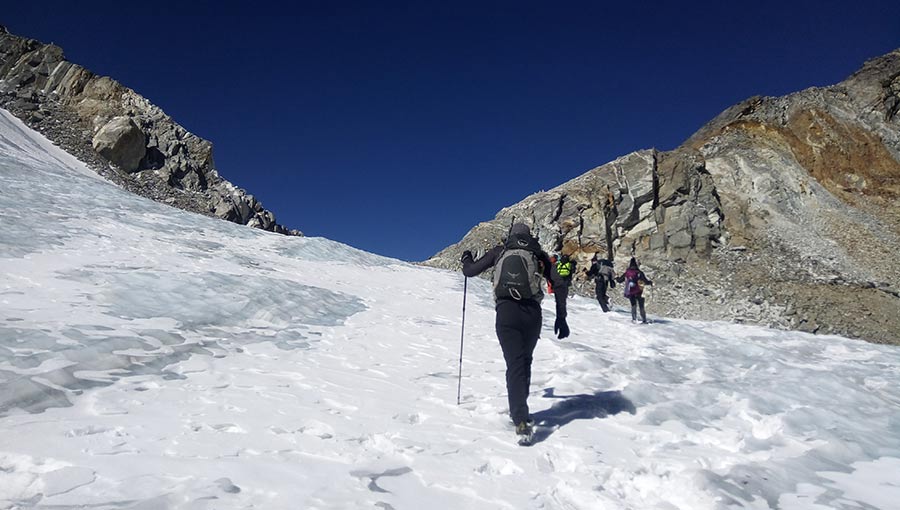
Crossing Chola pass(5416 m) in the Everest region
This trek attracts adventurers from all around the world because it offers an unmatched variety of experiences in the Everest region. You’ll get close-up views of Mount Everest, Lhotse, Makalu, and Cho Oyu—all over 8,000 meters high. The route takes you off the main trail and into quieter, more remote areas. Highlights include standing at the Gokyo Ri viewpoint, exploring turquoise lakes, crossing glaciers, and feeling the thrill of standing at the top of each high pass.
Understanding the three major passes is important before taking on this journey:

Everest High Pass Trekking
The Everest Three Pass Trek is one of the most adventurous and scenic trekking routes in the Everest region of Nepal. It typically takes 17 to 21 days to complete, depending on the pace of the trekker, acclimatization days, and optional side trips like Everest Base Camp, Kala Patthar, or Gokyo Ri. This trek is a full circuit that connects the three major high mountain passes of the Khumbu: Kongma La Pass (5,535 meters), Cho La Pass (5,420 meters), and Renjo La Pass (5,360 meters).
The total trekking distance of the Everest Three Pass Trek is about 160 to 170 kilometers (roughly 100 to 106 miles). This includes the main trail through the three passes as well as the detours to popular viewpoints and lakes. Starting from Lukla, the trail first goes to Namche Bazaar and then follows the route toward Chhukung for the first pass, Kongma La. After crossing Kongma La, trekkers reach Lobuche and then make their way to Everest Base Camp and Kala Patthar, some of the highest highlights of the trek.
From there, the route continues over the second pass, Cho La, into the beautiful Gokyo Valley. Trekkers can explore Gokyo Lakes and even hike up to Gokyo Ri for spectacular views of Everest, Cho Oyu, and other peaks. The final section involves crossing the Renjo La Pass, which offers a quieter trail and ends in the village of Thame before looping back to Namche and Lukla.
Because of the high altitude and demanding terrain, proper acclimatization is essential, and the trek is recommended for experienced trekkers. Despite its difficulty, the trek was rewarded with unmatched mountain views, cultural experiences, and the thrill of crossing three challenging Himalayan passes.
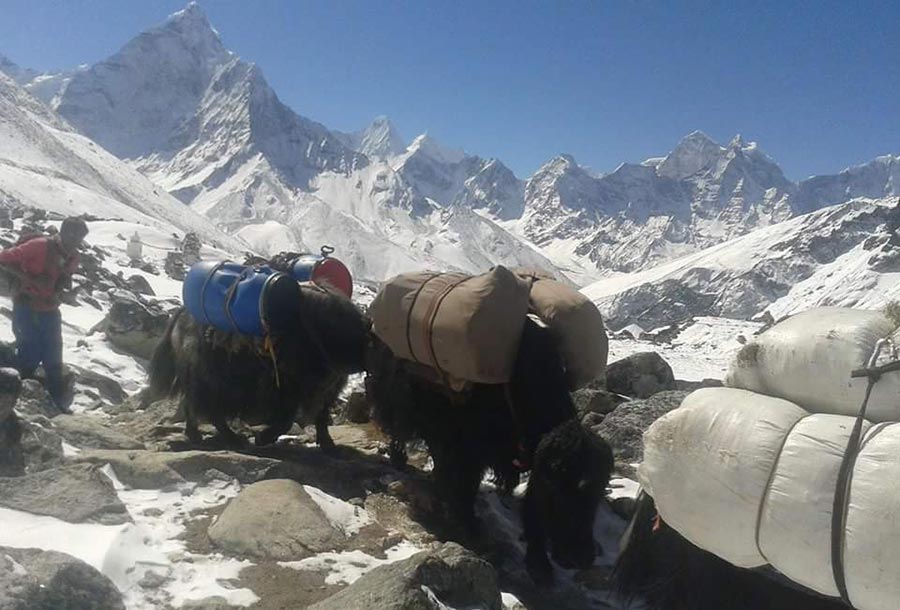
Yaks carrying luggage in Everest region
The maximum altitude you will reach on the Everest Three Passes Trek is at Kongma La Pass, which stands at an elevation of 5,535 meters (18,159 feet) above sea level. This is the highest point of the three passes.
In addition to Kongma La, you will also reach other very high points during the trek:
Although Kala Patthar (5,545 m) is technically the highest elevation you may stand on, it’s not a mountain pass. Among the three official passes, Kongma La is the highest.
Due to these extreme altitudes, proper acclimatization and physical fitness are very important to complete the trek safely and successfully.
This trek is not recommended for first-time trekkers. It requires strong physical fitness, previous experience at high altitude, and mental strength. If you are a beginner, it’s better to try a shorter trek like the Gokyo Valley Trek or the classic Everest Base Camp trek before attempting the Three Passes route.
Excellent fitness is essential. You should be able to walk for 6–8 hours per day, often on steep, uneven terrain. Cardiovascular fitness is crucial. Regular training, including hiking, jogging, and strength workouts, should begin at least two to three months before your trip. Trekking with a backpack is also a good practice.
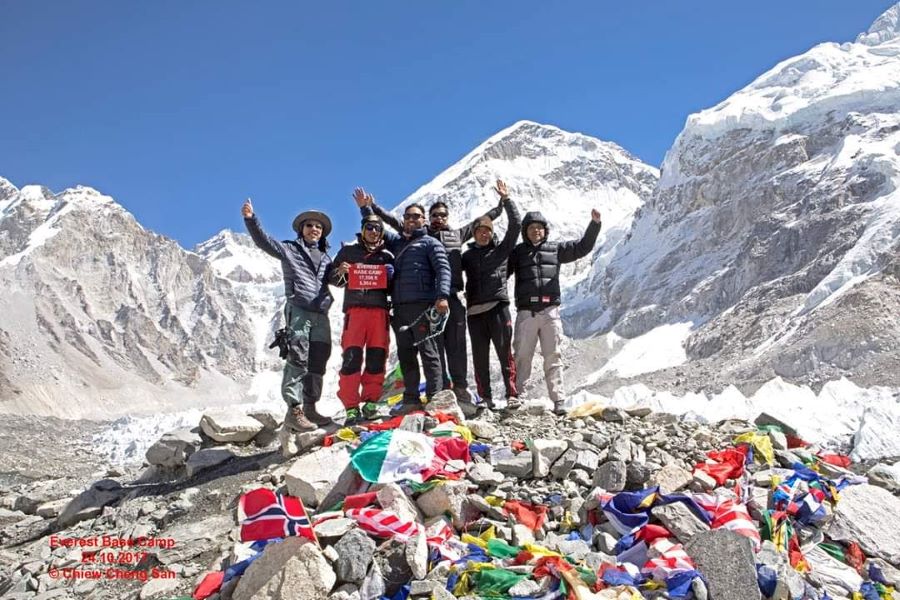
Everest base camp group picture – Singaporeans group
Preparing for the Everest Three Passes Trek requires both physical and mental training. Physically, start exercising at least two to three months before your trek. Focus on cardio workouts like running, cycling, or hiking to build endurance. Strengthen your legs and core with exercises such as squats and lunges. Practice hiking on rough terrain with a backpack to get used to carrying weight over long distances.
Mentally, stay positive and flexible. Trekking can be tough and tiring, so it’s important to keep a calm and focused mindset. Practice deep breathing or meditation to manage stress. Visualize yourself completing the trek and enjoying the amazing views. Proper preparation will help you feel confident and ready to face the challenges of the high mountain passes safely and successfully.
The risk of altitude sickness on the Everest Three Pass Trek is real and should not be underestimated. This trek takes you to very high elevations, with the highest pass, Kongma La, reaching about 5,535 meters (18,159 feet). At these heights, your body may struggle to get enough oxygen, which can cause altitude sickness.
Symptoms can include headaches, dizziness, nausea, shortness of breath, and fatigue. In severe cases, it can lead to life-threatening conditions like High Altitude Pulmonary Edema (HAPE) or High Altitude Cerebral Edema (HACE).
However, with proper acclimatization, careful pacing, and awareness of symptoms, most trekkers can avoid serious problems. It’s important to listen to your body, drink plenty of water, and not rush the ascent. Guides and agencies organizing the trek, like Safe Holiday Adventure Pvt. Ltd., always prioritize safety by planning rest days and monitoring trekkers’ health closely.
In short, altitude sickness risk is real but manageable with good preparation and caution.
The weather in the Everest region can be unpredictable. Spring (March–May) and Autumn (September–November) offer the best conditions—clear skies, mild temperatures, and stable trails. Winter (December–February) brings heavy snow and freezing temperatures. Monsoon (June–August) makes trails muddy and dangerous. Weather can make or break your trek experience.

Crossing Cholapass- 5420m
The Everest Three Pass Trek is best done during spring (March to May) and autumn (late September to early November). These two seasons offer the most stable weather and clear mountain views, which are important when crossing high mountain passes over 5,000 meters.
Spring is a great time to trek as the weather starts warming up after winter. The skies are usually clear in the mornings, and the trails are lined with colorful rhododendron flowers. The mountain views are excellent, and there’s less snow on the passes, making crossings safer and easier. This season also offers longer daylight hours, which is helpful for long trekking days.
Autumn is considered the best season overall. After the summer monsoon rains, the air becomes clean and the visibility improves. The skies are often crystal clear, and the temperatures are cool but manageable. The mountain trails are dry, and the high passes are generally free from heavy snow, making it ideal for a high-altitude trek like this.
On the other hand, the monsoon season (June to August) brings frequent rain, slippery trails, and poor visibility. Landslides and flight cancellations are also common during this time. Similarly, winter (December to February) is not recommended unless you are a very experienced trekker. The weather is extremely cold, and the high passes can be blocked by deep snow, making the trek dangerous.
Technically, yes, but it’s not recommended. The summer monsoon brings frequent rain, slippery trails, poor visibility, and risk of landslides. Cloudy skies may block mountain views. Flight delays and cancellations to Lukla are also common. Only well-prepared trekkers with a flexible schedule should consider this season.
Winter is very harsh in the Everest region. Temperatures can drop below -20°C at night. The high passes are often blocked by snow, making crossings dangerous or impossible. Unless you are highly experienced and well-equipped, winter is not ideal for this trek.
Spring (March to May) offers colorful rhododendron forests and warming temperatures. Autumn (late September to early November) is the most popular season, with clear skies and excellent views. Trails are dry, teahouses are open, and all three passes are usually safe to cross.
The Everest Three Pass Trek is not a technical climb, meaning you don’t need ropes, ice axes, or mountaineering experience. However, it is very physically demanding due to the high altitude, steep ascents and descents, and long walking days. Trekkers often walk for 6 to 9 hours daily, sometimes starting before sunrise to cross the passes safely. The terrain includes rocky paths, loose scree, glacial moraines, and sometimes snow or ice, especially on the Cho La and Kongma La passes.
Although the route does not involve technical climbing, parts of the trail—especially Cho La Pass—can become risky when covered with snow or ice. In these cases, using microspikes or light crampons can help with grip. Trekking poles and good boots are essential for balance and safety.
You will walk on a mix of trails: dirt paths, rocky sections, glacial moraines, and snowy slopes. Some trails are narrow and exposed. Cho La often involves walking over a glacier, while Kongma La has a steep, loose descent. Renjo La, though scenic, can be icy in the early morning. Using trekking poles, wearing proper footwear, and having guidance from experienced guides is important.
Guides and porters not only make your trek easier but also much safer. Local guides from Safe Holiday Adventure are experienced and well-trained in altitude sickness handling, first aid, and navigation. A porter helps reduce the physical burden so you can focus on enjoying the trail. Hiring a guide also supports local employment.
Packing the right gear is very important for completing the Everest Three Pass Trek safely and comfortably. Since the trek goes above 5,000 meters and covers remote, rugged terrain, you must be well-prepared for cold, wind, and changing weather. You’ll need both warm and waterproof clothing, sturdy footwear, and essential safety gear.
Start with layered clothing: a moisture-wicking base layer, warm mid-layers (like fleece or down), and a windproof and waterproof outer layer. Bring a down jacket, thermal tops and bottoms, warm gloves, a woolen hat, and a neck gaiter or buff to protect against cold winds. For your legs, wear trekking pants, and pack waterproof over-pants for snowy or rainy days.
Footwear is crucial. Bring well-broken-in, high-ankle waterproof trekking boots, along with warm socks. In icy sections (especially on Cho La or Kongma La), microspikes or crampons may be needed. Walking poles also help with balance and reduce knee strain on steep trails.
Other essential items include a warm sleeping bag (rated to -15°C or lower), headlamp with extra batteries, water bottles or hydration bladder, water purification tablets or Steripen, sunblock, lip balm, sunglasses, and basic first aid kit. Don’t forget snacks, extra batteries, and a power bank for charging devices.
Water and Food Along the Way
Teahouses are available throughout the trek, offering meals like Dal Bhat, noodles, soups, and basic snacks. You can refill water at each teahouse, but you must use purification tablets or a Steripen. Drink plenty of water to stay hydrated and avoid altitude issues.

Everest Base Camp trek Accommodation
Accommodation during the high pass trekking section of the Everest Three Pass Trek—such as around Chhukung, Lobuche, Dzongla, Thangnak, and Gokyo—is much more basic than in lower villages like Namche or Tengboche. These high-altitude villages are remote and cold, and the teahouses here focus more on providing shelter and food than comfort.
Most teahouses offer small, twin-sharing rooms with wooden or stone walls. Inside, you’ll find simple beds with thin mattresses, pillows, and a few blankets. However, rooms are not heated, and temperatures can drop well below freezing at night, so a warm sleeping bag (rated at least -15°C) is essential. There is no luxury in these places, but they serve the purpose of giving trekkers a place to sleep and eat.
Toilets are mostly shared and often located outside the main building. At higher elevations, water pipes may freeze, so bucket washing and dry toilets are common. Hot showers may not be available, or if they are, they often come at an extra cost and may be solar-powered, meaning they depend on sunlight.
Electricity is limited, and power for charging devices often costs extra. There is usually no Wi-Fi or mobile signal at these high points, especially near Kongma La and Cho La Pass areas. So, it’s best to keep your devices charged beforehand and carry a power bank.
Despite the simplicity, these teahouses offer a cozy dining hall with a wood-fired stove in the center where trekkers gather in the evening. Food is basic but filling, like dal bhat, fried rice, noodles, boiled potatoes, and tea. Fresh vegetables are rare at high altitude, and prices for meals rise due to the difficulty of transporting supplies by yak or porter.
Safe Holiday Adventure Pvt. Ltd.
P.O.Box: 20065 Tarkeshwor-6, Kathmandu, Nepal
Cell: 00977 9849116284
Email: info@safeholidayadventure.com,
safeholidayadventure@gmail.com
Europe Contact
Mark Brosius
mark.brosius@hotmail.com
Oude baan, 41, 3060 Bertem, Belgium


We are associated with


We accept