STAY CONNECTED


Government Licence No.: 131483/071/072
STAY CONNECTED
December 15, 2025

The Gokyo Lake Trek is one of the most beautiful and peaceful trekking journeys in Nepal. It takes you deep into the Everest region, but away from the busy Everest Base Camp trail. Instead of crowds, you walk through quiet villages, wide valleys, ancient glaciers, and a chain of turquoise alpine lakes that look unreal.
This trek is not only about mountains. It is about silence, slow walking, friendly Sherpa villages, prayer flags moving with the wind, and mornings when the lakes shine like mirrors under the high Himalayan sky. Many trekkers say the Gokyo Lake Trek is even more beautiful than the Everest Base Camp Trek, and in many ways, that is true.
In this long and fresh article, I will share everything about the Gokyo Lake Trek—from history, route details, daily experiences, villages, lakes, glaciers, viewpoints, culture, food, difficulty, best season, packing tips, safety, and responsible travel. This article is written from the heart, in simple English, and based on real trekking knowledge, not copied content.
If you are looking for a deep, honest, and complete guide to the Gokyo Lake Trek, this article is for you.

Beautiful Gokyo Lake
Gokyo Valley lies inside Sagarmatha National Park in the Solukhumbu region of Nepal. This is the same region where Mount Everest is located. However, Gokyo Valley is on the western side of the Khumbu region, while Everest Base Camp lies more to the east.
Sagarmatha National Park is a UNESCO World Heritage Site, known for its high mountains, rare wildlife, glaciers, and traditional Sherpa culture. You can learn more about the park from the official UNESCO page.
The Gokyo Valley is home to the famous Gokyo Lakes, the Ngozumpa Glacier (the longest glacier in Nepal), and the Gokyo Ri viewpoint, which offers one of the best panoramic mountain views in the entire Himalayas.
The Gokyo region has been used by local Sherpa people for centuries. Long before trekking became popular, Sherpas used this valley for grazing yaks during the summer. The high pastures around Gokyo are still used today for yak herding.
The lakes themselves are sacred to both Hindus and Buddhists. During the Janai Purnima festival, Hindu pilgrims visit the lakes for holy baths. For Buddhists, the lakes are protected spiritual places, and harming wildlife here is strictly avoided.
Compared to the Everest Base Camp route, the Gokyo Valley opened later to international trekkers. This is one reason why it still feels peaceful and less crowded.
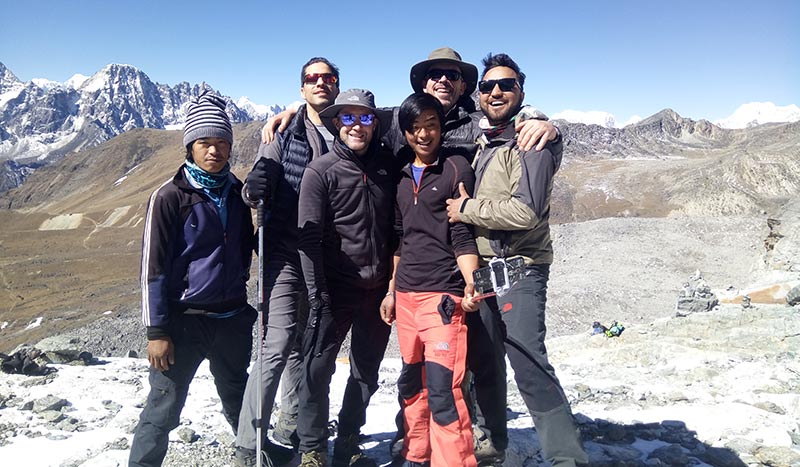
At Cholapass(5,416 m)
Many treks in Nepal are beautiful, but the Gokyo Lake Trek stands out for several strong reasons:
From Gokyo Ri, you can see Mount Everest, Lhotse, Makalu, and Cho Oyu—all above 8,000 meters. Very few places in the world offer this kind of view.
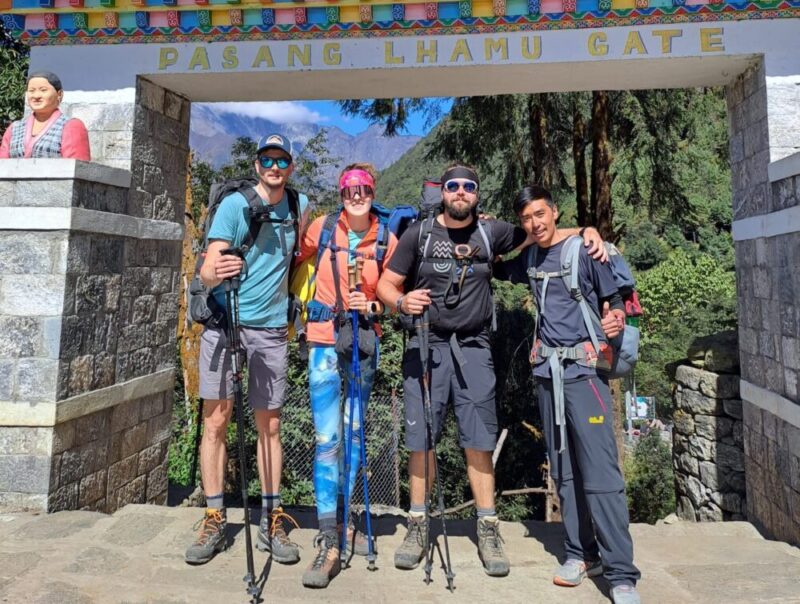
At Lukla Gate- Ready for Everest 3 passes Trek
Most Gokyo Lake Treks begin with a short but breathtaking flight from Kathmandu to Lukla (or from Manthali to Lukla during peak season to avoid congestion). Lukla airport itself is a famous mountain runway, surrounded by towering peaks and offering the first taste of the Himalayan adventure.
From Lukla, trekkers follow the Dudh Koshi River through small villages and farmlands, passing suspension bridges and prayer flags, reaching Phakding. The trail is gentle on this first day, allowing your body to start adjusting to the altitude.
The next major stop is Namche Bazaar (3,440m), the bustling Sherpa town that serves as the gateway to the high Khumbu region. Here, trekkers usually spend an acclimatization day, walking to the Everest View Hotel or nearby villages to adapt to the higher elevation.
After Namche, the Gokyo route diverges from the Everest Base Camp trail. Instead of heading east toward Tengboche and Dingboche, the trail turns left, climbing gently through rhododendron forests and high-altitude valleys toward Dole (4,110m) and Machhermo (4,470m). Along this path, trekkers experience dramatic mountain views of Ama Dablam, Thamserku, and other towering peaks.
Finally, you reach Gokyo village (4,790m) beside the third Gokyo Lake. The lakes themselves—six in total—are a series of turquoise high-altitude gems, each with unique charm. The nearby Gokyo Ri viewpoint (5,357m) offers one of the most spectacular panoramas in Nepal, with four 8,000-meter peaks visible at once: Everest, Lhotse, Makalu, and Cho Oyu. From here, trekkers often explore the 4th and 5th lakes for more solitude and glacier views.
The return journey generally follows the same route back through Machhermo, Dole, Namche Bazaar, and Lukla. However, adventurous trekkers may opt to cross Cho La Pass (5,420m), which connects the Gokyo Valley to the Everest Base Camp trail. This extension allows for a complete loop experience, including views of Khumbu Glacier, additional high passes, and a combination of both the serene lakes and the iconic EBC landscape.
Along the entire route, trekkers move through a mix of Sherpa villages, yak pastures, suspension bridges, alpine valleys, and glacier-fed streams. Each stage offers a combination of moderate trekking difficulty, breathtaking scenery, and cultural experiences, making the Gokyo Lake Trek a unique alternative or complement to the classic Everest Base Camp journey.

stepping Namche Bazaar-3450m
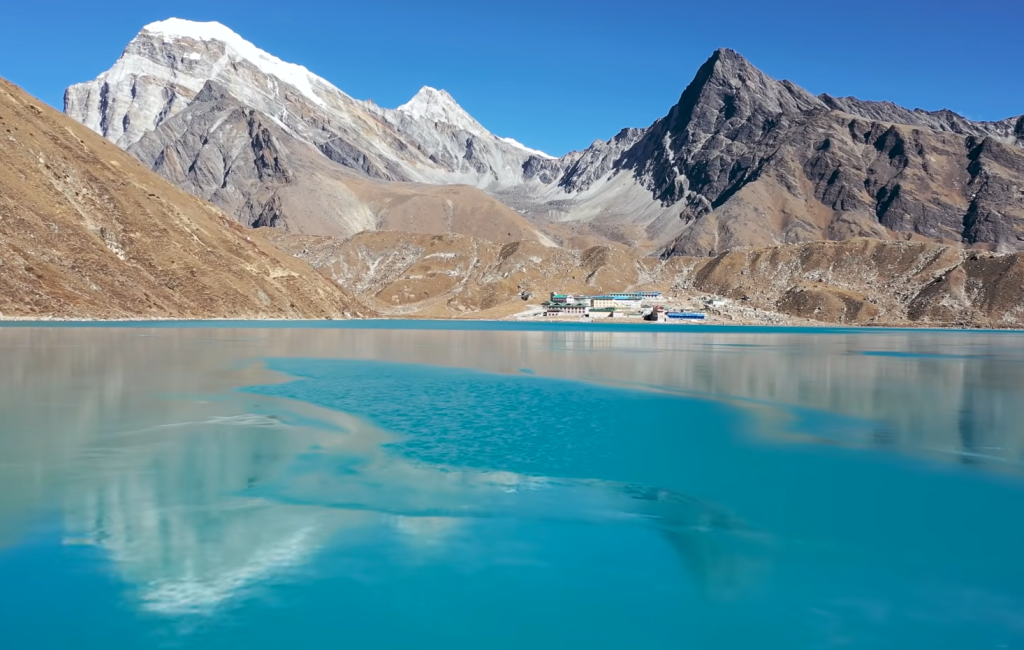
Gokyo lake
The Gokyo Lakes are a series of high-altitude glacial lakes in the Khumbu region of Nepal, sitting between 4,700 m and 5,000 m above sea level. They are considered sacred by both Hindus and Buddhists and are part of the Sagarmatha National Park, offering some of the most stunning alpine scenery in the Himalayas. There are six main lakes, each unique in its charm:
First Lake (Dudh Pokhari / Thonak Tso)
The first lake is usually the smallest and calmest of the series. Its waters are often icy in winter, giving it a glassy surface that beautifully reflects the surrounding snow-capped peaks. This lake is usually the first stop for trekkers, making it a great place to acclimatize and enjoy a quiet moment.
Second Lake (Gyazumpa Tso)
The second lake is slightly larger and is famous for its clear reflections of the surrounding mountains. In the morning, when the air is still, the lake mirrors peaks like Cho Oyu and Gokyo Ri, making it a photographer’s delight. The trails around it are gentle and surrounded by moraine and alpine meadows.
Third Lake (Gokyo Lake / Main Lake)
The third lake is the most famous, lying right next to Gokyo village. It is the hub for trekkers and offers spectacular views of the Himalayas. The lake is a deep turquoise in color and is considered highly sacred. Pilgrims often stop here to perform rituals, and the surrounding village has lodges and tea houses for overnight stays.
Fourth Lake
This lake is quieter and less visited than the first three. It has a peaceful, almost untouched feel, with crystal-clear waters and rugged moraine walls. The trek to this lake can feel more isolated, giving a sense of walking into pristine wilderness.
Fifth Lake
The fifth lake is remote and wild, lying close to the Ngozumpa Glacier — the largest glacier in Nepal. Its waters are fed directly by glacial melt, giving it a striking blue-green color. The trek here can be challenging, with rocky paths and higher altitude, but it rewards visitors with solitude and raw Himalayan beauty.
The lakes change color during the day—from deep blue to green to silver.
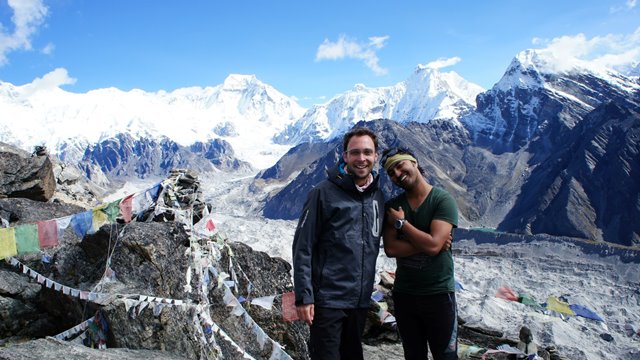
Gokyo Ri viewpoint in Everest
Gokyo Ri is not a technical climb, but it is steep. The hike takes 2–3 hours up and 1.5 hours down.
From the top, you can see:
This is one of the few places where you can see four 8,000-meter peaks at once.
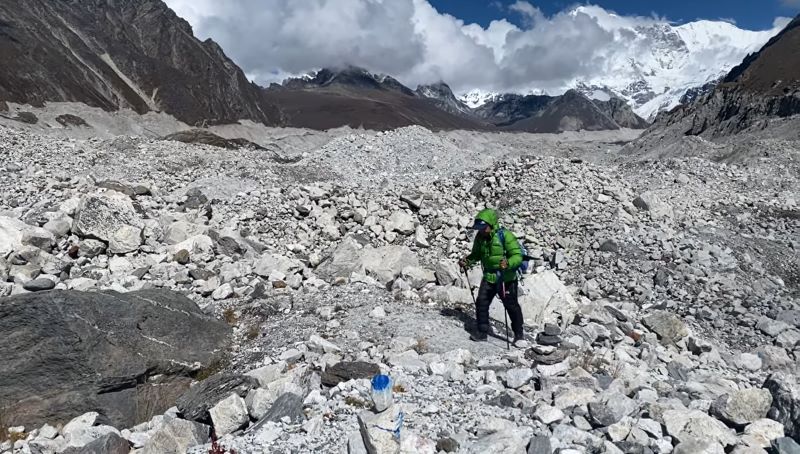
Ngozumpa Glacier
Ngozumpa Glacier is the largest glacier in Nepal and one of the longest in the Himalayas, stretching over 36 km from Cho Oyu to the Gokyo Valley. Its icy surface is marked by deep crevasses, icefalls, and moraine ridges, creating a dramatic landscape that showcases the raw power of glacial movement.
This glacier feeds many of the Gokyo Lakes, especially the fifth and sixth lakes, providing them with glacial meltwater. The surrounding area is rugged and remote, giving trekkers an unforgettable sense of high-altitude wilderness. Walking along the edge of Ngozumpa offers breathtaking views of towering peaks like Cho Oyu and the Ngozumpa icefall.
The glacier is slowly retreating due to climate change, a reminder of the fragility of high Himalayan ecosystems. Visiting it offers both adventure and a close encounter with nature’s grandeur.

Monks are praying in Everest
The Sherpas are an ethnic group living primarily in the Khumbu region of Nepal. They are renowned worldwide for their skill in mountaineering and for guiding climbers up Mount Everest and other Himalayan peaks. Their name, “Sherpa,” comes from “Sharpa,” meaning “people from the east” in the Tibetan language. Sherpas migrated from eastern Tibet centuries ago and have adapted to life in high-altitude, harsh mountain environments.
Village Life: Sherpa villages are small, close-knit communities built on steep hillsides. Typical houses are made of stone with flat roofs and wooden beams, often painted white with colorful prayer flags fluttering outside. Villages such as Namche Bazaar, Pangboche, and Dingboche serve as cultural and trade centers, with monasteries, schools, and small markets. Life revolves around farming, yak herding, and trade, alongside trekking and mountaineering work for extra income.
Culture and Traditions: Sherpas follow Tibetan Buddhism, which deeply influences their daily life. Monasteries play a central role in spiritual and social life, and festivals like Losar (Tibetan New Year) are celebrated with dances, rituals, and communal feasts. Hospitality is an important part of Sherpa culture; visitors are welcomed warmly into homes and teahouses, often sharing food, tea, and stories about the mountains.
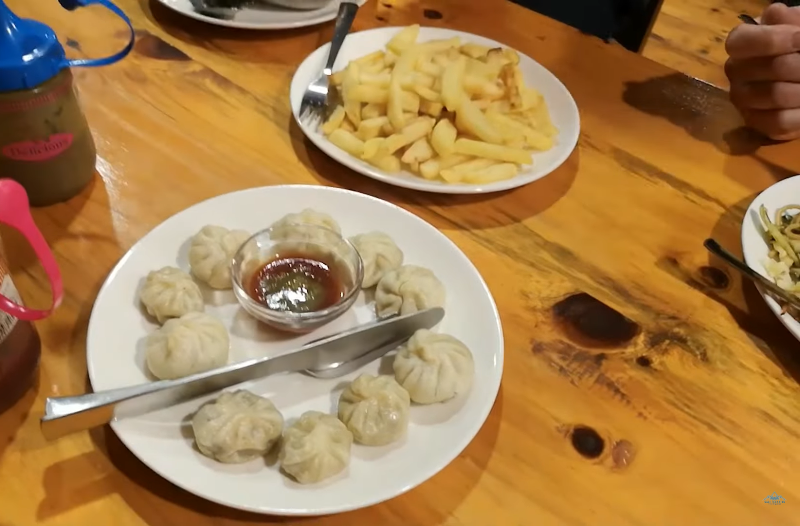
Popular Nepali dish- Momo
On the Gokyo Trek, most trekkers stay in tea houses and lodges along the trail. These are small, family-run guesthouses offering basic rooms with shared or private bathrooms. Rooms are simple, with beds, blankets, and sometimes a heater, especially in higher-altitude villages like Gokyo, Machhermo, and Thagnak. Electricity is limited, and Wi-Fi may be available in larger villages, but it can be slow. Hot showers are sometimes offered for a small extra fee. Staying in tea houses allows trekkers to experience local Sherpa hospitality and meet other trekkers from around the world.
Food on the trek is usually hearty and filling, designed to provide energy for long days of walking. Meals are a mix of Nepali, Tibetan, and simple Western dishes, often made with local ingredients. Breakfast, lunch, and dinner are available in tea houses, with prices increasing slightly at higher altitudes.
Common Foods on the Gokyo Trek:
Trekkers are advised to eat well, drink plenty of water, and try to keep meals light but nutritious at higher altitudes. Tea houses provide the perfect opportunity to enjoy local flavors while resting for the next day’s adventure.
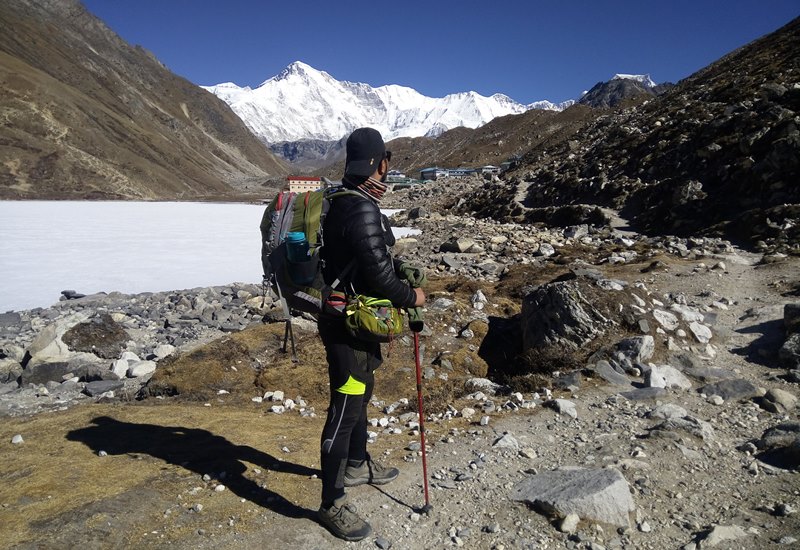
At Gokyo -Everest Region
The Gokyo Lake Trek is considered moderate to challenging, depending on your route and pace. The trek involves long walking days with significant elevation gain, especially when ascending to Gokyo Ri (5,357 m) and crossing high passes like Cho La Pass (5,420 m) if included. The trail includes stone steps, rocky paths, and occasional steep sections, requiring careful footwork. Although the paths are well-trodden, high altitudes make the trek more physically demanding.
Trekking the Gokyo Lakes requires good physical fitness. A trekker should be comfortable walking 5–7 hours a day at a moderate pace and be prepared for sudden altitude changes. Previous trekking experience helps but is not mandatory. Cardiovascular endurance, leg strength, and stamina are essential for managing long ascents and descents.
Regular exercise: Include hiking, jogging, or stair climbing in your routine.
Altitude acclimatization: Take gradual steps and allow time for your body to adjust.
Light backpacking: Train by carrying a small daypack to get used to trekking weight.
Mental readiness: Be prepared for cold temperatures, windy conditions, and remote locations.
The Gokyo Lake Trek is ideal for trekkers who are reasonably fit and ready for high-altitude challenges. While it’s manageable for beginners with preparation, a moderate level of fitness significantly enhances safety and enjoyment.

Breathtaking clear view of Gokyo lake and Gokyo from Gokyo -ri view Point(5380mtr)
For safety, comfort, and the best mountain views, autumn (Sep–Nov) and spring (Mar–May) are ideal for the Gokyo Lake Trek. These seasons balance good weather, clear skies, and beautiful scenery, making your trek more enjoyable and memorable.
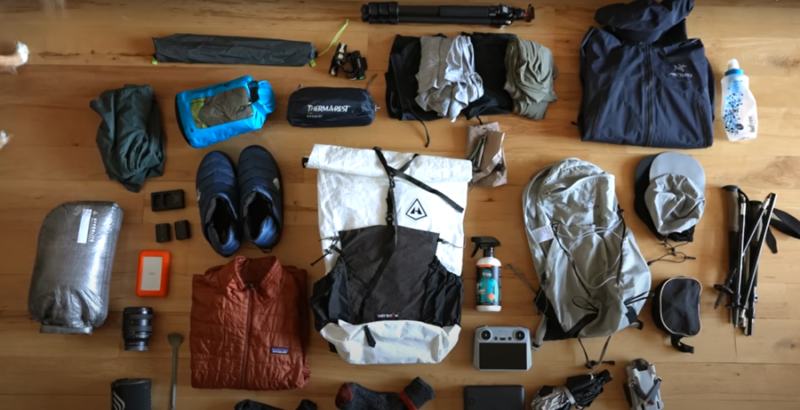
Trekking gear list for ABC trekking in nepal
Tip: Pack light but warm, as you will carry your daypack during the trek. Most tea houses provide food and basic lodging, so heavy luggage is unnecessary.
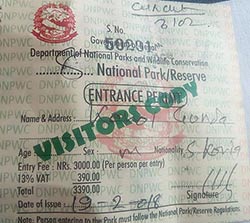
Everest entry permit
You need:
Please:
Responsible trekking helps protect Gokyo Valley for future generations.
The Gokyo Lakes and Everest Base Camp combination trek is considered one of the most spectacular trekking experiences in Nepal. This trek offers the rare opportunity to explore both the serene turquoise Gokyo Lakes and the iconic Everest Base Camp within a single journey. Unlike the standard EBC trek, this combined route allows trekkers to experience less crowded trails, stunning glacier views, and panoramic vistas of Everest, Lhotse, Cho Oyu, and Makalu from multiple viewpoints.
Route Overview:
Trekkers usually start from Lukla, passing through Phakding and Namche Bazaar, which is the hub of the Khumbu region. From Namche, the trail splits: one path leads to Gokyo Valley, while the other continues toward Everest Base Camp via Tengboche, Dingboche, and Lobuche. A highlight of this combined trek is the Gokyo Ri viewpoint, offering one of the best panoramic views of the Himalayas, including the Ngozumpa Glacier — the largest glacier in Nepal. Trekkers can then either descend to Dingboche to join the traditional EBC route or continue a loop that crosses the Cho La Pass (5,420 m), connecting Gokyo to the EBC trail.
Unique Experiences:
Multiple Scenic Viewpoints: Gokyo Ri, Cho La Pass, Kala Patthar.
Glacial Exploration: Hike near Ngozumpa Glacier.
Everest Views: Direct views of Mt. Everest, Lhotse, Makalu, and Cho Oyu from different angles.
Cultural Immersion: Pass through Sherpa villages like Namche Bazaar, Pangboche, and Khumjung, experiencing local monasteries and lifestyle.
Duration and Difficulty:
The combined trek usually takes 14–16 days due to the extra distance and altitude. It is strenuous, requiring good physical fitness, proper acclimatization, and trekking experience. Trekkers face high altitudes up to 5,420 m at Cho La Pass, making acclimatization days essential.
Best Time to Trek:
The ideal seasons are autumn (September–November) and spring (March–May), when the skies are clear, and views of the mountains are unobstructed. Winter treks are possible but colder, while monsoon treks (June–August) are risky due to landslides and slippery trails.
Accommodation and Food:
Lodging is mostly in tea houses, offering simple rooms with shared bathrooms. Meals include local Nepali food like dal bhat, momo, noodles, and soups. Hot showers and Wi-Fi are available in larger villages such as Namche and Dingboche.
Why Choose This Trek:
Combining Gokyo Lakes with EBC is ideal for trekkers who want a comprehensive Everest experience, including tranquil lakes, glacier walks, cultural encounters, and the thrill of high-altitude trekking. It is less crowded than the standard EBC route and provides once-in-a-lifetime photo opportunities at multiple iconic Himalayan spots.
Yes—100%.
If you want a quieter, more natural, and deeply beautiful trekking experience in the Everest region, the Gokyo Lake Trek is perfect. It offers lakes, glaciers, giant mountains, and peaceful villages—all in one journey.
At Safe Holiday Adventure Pvt. Ltd., we believe Gokyo Lake Trek is one of the finest treks Nepal can offer, especially for travelers who want beauty without crowds.
Thank you for reading this complete guide. May your journey to Gokyo be safe, slow, and unforgettable.
Safe Holiday Adventure Pvt. Ltd.
P.O.Box: 20065 Tarkeshwor-6, Kathmandu, Nepal
Cell: 00977 9849116284
Email: info@safeholidayadventure.com,
safeholidayadventure@gmail.com
Europe Contact
Mark Brosius
mark.brosius@hotmail.com
Oude baan, 41, 3060 Bertem, Belgium


We are associated with


We accept