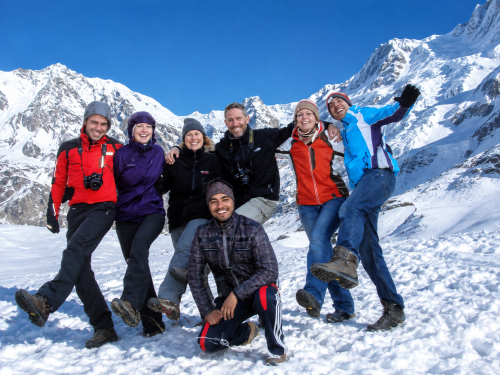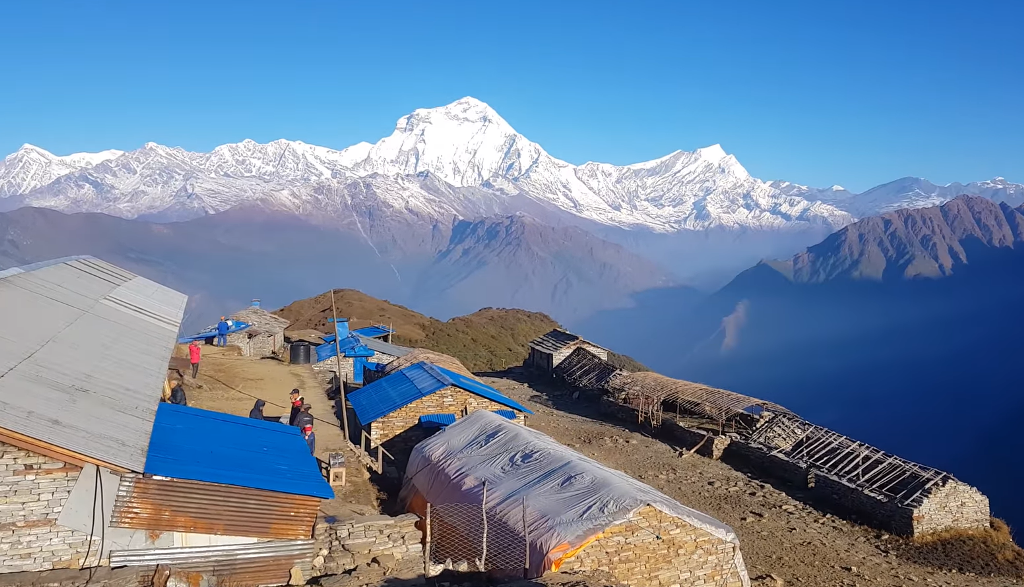
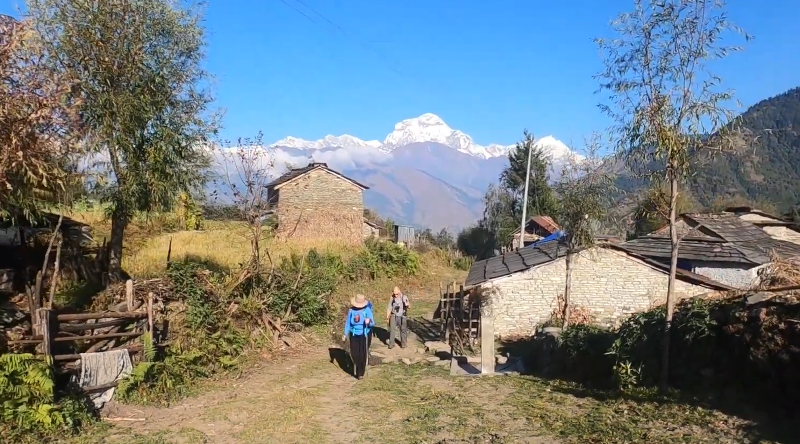
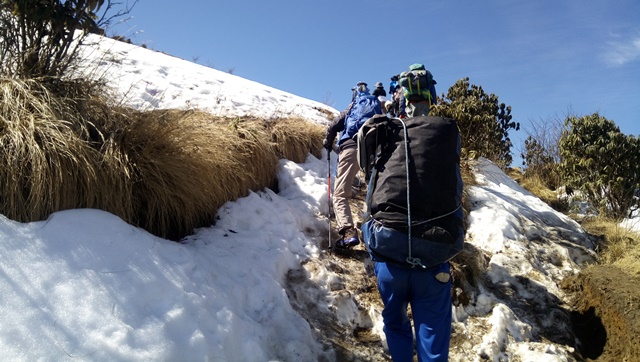
Short Khopra Ridge Trek Highlights: Highlights
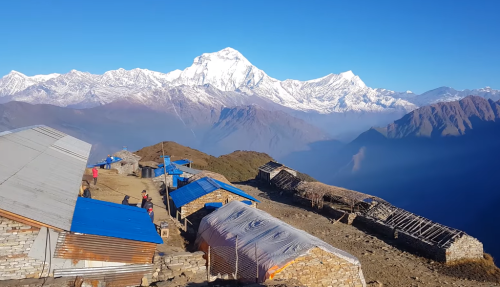
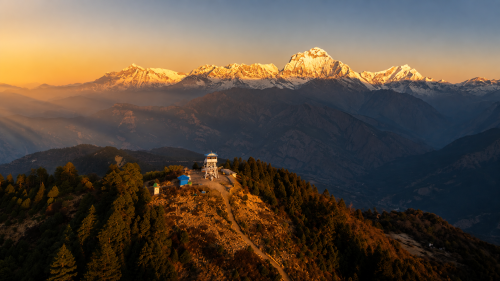
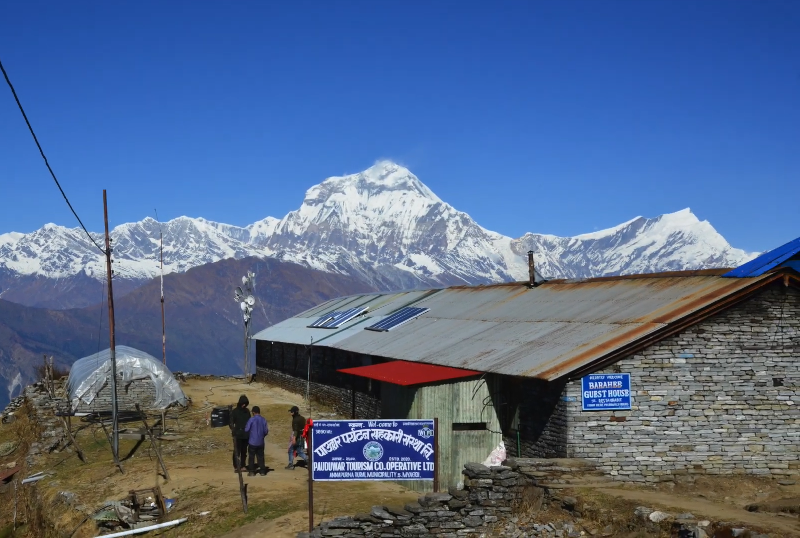
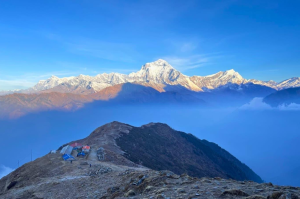
- Panoramic views: of the Annapurna and Dhaulagiri mountain ranges.
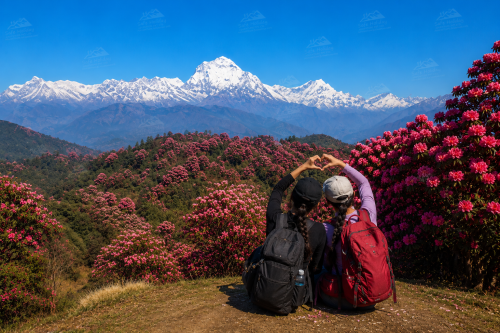
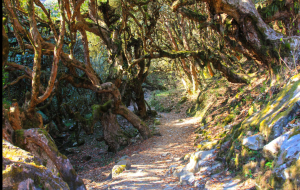
- Rhododendron forests: trek through beautiful blooming forest trails.
- Ghandruk village: visit the traditional Gurung village and experience local culture.
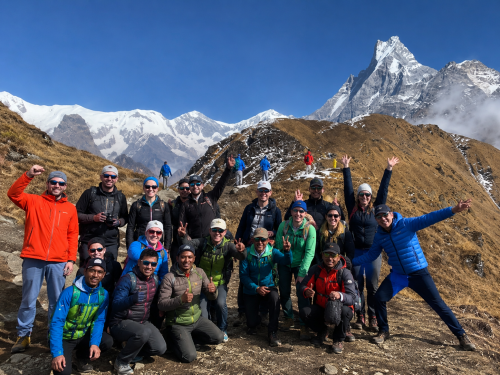
- Khopra Ridge hike: enjoy serene trails with stunning Himalayan views.
- Community lodges: stay in cozy lodges and experience warm Nepali hospitality.
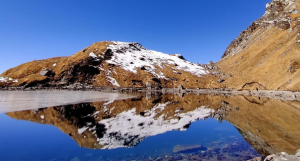
- Khayer Lake trek: explore pristine alpine landscapes with rich flora and fauna.
- Poon Hill sunrise: witness a breathtaking sunrise over majestic Himalayan peaks.
- Pokhara city: explore the vibrant gateway to the Himalayas.
- Off-the-beaten trails: trek remote paths and discover hidden villages.
- Nepali culture: experience unique traditions and authentic mountain lifestyles.
Short Khopra Ridge Trek Introduction: Overview
Are you looking for an affordable trekking option in Nepal’s Annapurna region? Consider the Khopra Ridge trek, a 7-day journey that offers breathtaking views of the Himalayas, including Annapurna South, Dhaulagiri, and Nilgiri.
This budget-friendly Khopra trek starts and ends in the city of Pokhara, and includes accommodations in local teahouses along the way. You’ll hike through beautiful forests, past waterfalls and streams, and through traditional Nepalese villages.
Highlights of the Khopra Ridge trek include a visit to the sacred Khayer Lake and stunning panoramic views from the top of Khopra Ridge. Along the way, you’ll have the opportunity to meet local people and learn about their way of life, as well as sample traditional Nepalese cuisine.
While the Short Khopra Ridge Trek is suitable for beginner and intermediate hikers, it does involve some steep ascents and descents, so a reasonable level of fitness is required. However, the rewards are well worth the effort, with unforgettable views and a true taste of Nepalese culture.
Overall, the 7-day Khopra Ridge trek is an excellent choice for budget-conscious travelers who want to experience the beauty of the Annapurna region without breaking the bank. So why not book your adventure today?
Is the Khopra Ridge Trek Really Difficult?
What Does a Typical Day on the Short Khopra Ridge Trek Look Like?
A typical day on the Khopra Ridge Trek starts early in the morning with a warm drink and a simple breakfast at a teahouse, often surrounded by quiet mountain air and soft misty views. After packing up, trekkers begin walking at a steady, comfortable pace through a mix of rhododendron forests, stone staircases, and traditional villages, with short breaks to rest and enjoy glimpses of the Annapurna range when the clouds clear.
By midday, you usually stop for a relaxed lunch at a local lodge before continuing the trek for a few more hours toward your overnight stop. The afternoon walk is often calmer and more scenic, with changing landscapes and fewer crowds. Once you reach the teahouse, the evening is all about rest, warm meals, and sunset views over the Himalayas, followed by an early night in preparation for the next day’s adventure.
Why the Khopra Ridge Trek is One of the Best Off-the-Beaten-Path Treks:
Why Choose Us for Short Khopra Ridge Trek?
- Expert Local Guides Who Go Beyond Navigation: Our licensed Himalayan guides don’t just lead the trail—they share deep insights into local culture, mountain traditions, flora, fauna, and hidden viewpoints that most trekkers miss.
- Specialists in Quiet, Off-the-Beaten-Path Routes: We are not a mass trekking company. Khopra Ridge is one of our signature routes, carefully designed for travelers seeking peaceful trails away from crowded trekking highways.
- Fully Customized Trekking Experiences: Every trek is tailored to you—your walking pace, fitness level, acclimatization needs, and interests. Whether you prefer a relaxed journey or a challenging adventure, we adjust accordingly.
- Strong Commitment to Responsible & Ethical Tourism: We actively support local communities through fair wages, local hiring, and eco-conscious trekking practices that help preserve the Khopra region for future generations.
- Complete Hassle-Free Arrangements: From permits and route planning to accommodation and meal coordination, we handle all logistics so you can focus entirely on the experience, not the stress.
- Trusted by Hundreds of Happy Trekkers Worldwide: Our reputation is built on consistent 5-star reviews, repeat clients, and word-of-mouth recommendations from trekkers who value honesty, care, and professionalism.
- Safety-First Approach with Real-Time Monitoring: We closely track weather conditions, trail updates, and altitude-related risks, ensuring timely decisions and strong emergency support whenever needed.
- Well-Planned Acclimatization & Health Focus: We design itineraries that prioritize gradual altitude gain, proper rest days, and overall well-being to reduce risk and improve trekking comfort.
- Small Groups for a Better Experience: We keep group sizes limited to ensure personal attention, better guide interaction, and a more immersive experience in nature.
- Transparent Pricing with No Hidden Costs: What you see is what you get—clear inclusions, honest pricing, and no surprise expenses during your trek.
- Authentic Cultural Connection: We encourage meaningful interactions with local communities, traditional villages, and Himalayan lifestyles—making your journey more than just a trek.
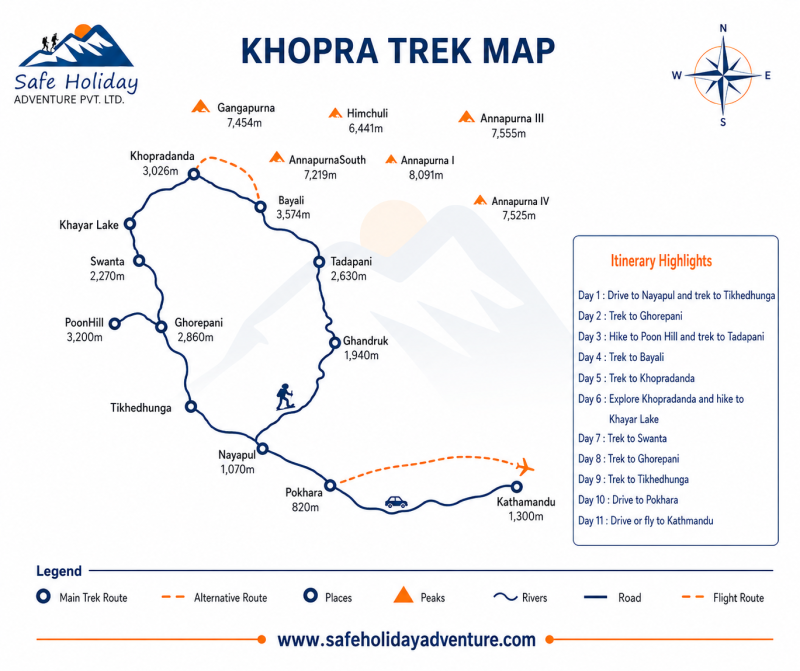
Short Khopra Ridge Trek OutlineOutline Itinerary
Day 01: Drive Pokhara (822 m) → Nayapul (1,050 m), then trek to Ghandruk Village (1,940 m) – approx. 5 hrs
Day 02: Trek Ghandruk (1,940 m) → Tadapani (2,765 m)
Day 03: Trek Tadapani (2,765 m) → Dobato (3,250 m)
Day 04: Trek Dobato (3,250 m) → Khopra Ridge (3,660 m)
Day 05: Trek Khopra Ridge (3,660 m) → Khayer Lake (4,660 m), then descend to Shirshibang (2,450 m)
Day 06: Trek Shirshibang (2,450 m) → Ghorepani (2,860 m) (Poon Hill viewpoint: 3,210 m optional)
Day 07: Trek Ghorepani (2,860 m) → Tikhedhunga (1,540 m), then drive back to Pokhara (822 m)
Short Khopra Ridge Trek Package Services:
- Accommodation During the Trek – Comfortable stays in local teahouses and mountain lodges throughout the Khopra Ridge Trek.
- Three Meals a Day – Daily breakfast, lunch, and dinner during the trek to keep you energized.
- Private Transportation – Transportation by private car or jeep to and from Pokhara and the trek starting/ending points.
- Experienced Trekking Guide – Services of a licensed and professional guide for navigation, safety, and local insights.
- Porter Service – 1 porter for every 2 trekkers, with a maximum luggage allowance of 20 kg per porter.
- All Required Permits – Includes the Annapurna Conservation Area Permit (ACAP) and TIMS Card.
- Guide and Porter Insurance – Insurance coverage for all trekking staff during the trip.
- Mountain Lodge Accommodation – Overnight stays in traditional teahouses along the trekking route.
- Basic First Aid Kit – Standard first aid supplies for minor injuries and common trekking needs.
- International Airfare and Visa Fees – Costs related to flights to/from Nepal and all Nepal visa charges are not included.
- Accommodation and Meals in Pokhara – Hotel stays and meals in Pokhara before and after the trek are excluded.
- Personal Expenses During the Trek – Any personal costs such as snacks, beverages, hot showers, WiFi, charging devices, and laundry are not included.
- Extra Accommodation Beyond Itinerary – Additional hotel or lodge stays due to delays, early arrival, or changes in plan are not covered.
- All Types of Drinks – Both alcoholic and non-alcoholic beverages are excluded from the package.
- Travel Insurance (Recommended) – Personal travel insurance covering medical, accidents, and high-altitude emergencies is strongly recommended but not included.
- Internet and Charging Services – WiFi access, hot showers, battery charging, and similar services are payable locally during the trek.
- Tips and Donations – Gratuities for guides and porters are not included but are highly appreciated.
Dates and Availability Departures
All our published dates are guaranteed departures. We also provide customized departures tailored to your travel plans.
There are no group joining dates available at the moment. Please contact us for a private trip.
Travellers Reviews
Sarah Mitchell
USA | Feb, 2026
𝗔𝗻𝗻𝗮𝗽𝘂𝗿𝗻𝗮 𝗧𝗿𝗲𝗸𝗸𝗶𝗻𝗴 𝗺𝗲𝗲𝘁𝘀 𝗩𝗼𝗹𝘂𝗻𝘁𝗲𝗲𝗿𝗶𝗻𝗴: 𝗔 𝗝𝗼𝘂𝗿𝗻𝗲𝘆 𝘄𝗶𝘁𝗵 𝗣𝘂𝗿𝗽𝗼𝘀𝗲
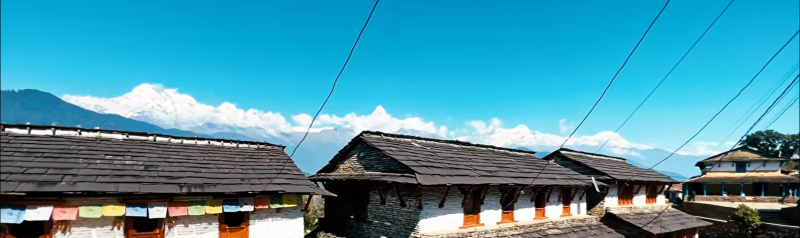
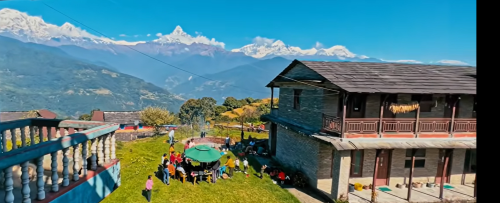
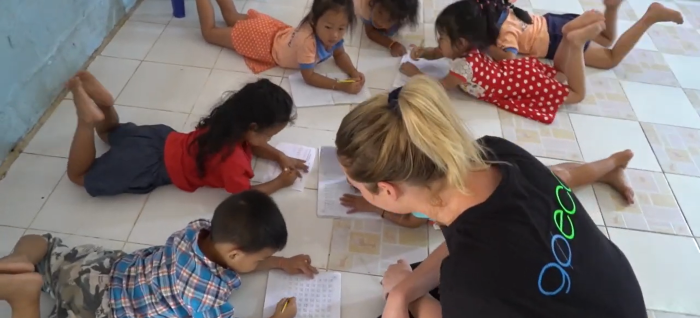
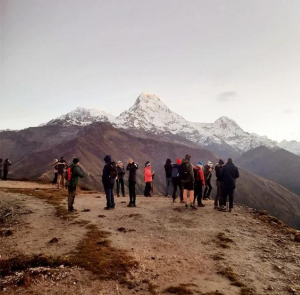
My name is Sarah Mitchell, and I’m from Colorado, USA. My Annapurna trekking and volunteering experience with this team was unlike anything I’ve done before, combining breathtaking mountain trails with the chance to genuinely give back to local communities. From trekking through beautiful rhododendron forests and terraced villages to spending meaningful time volunteering in a local school, every day offered something new and rewarding. My guide, Rupesh, was knowledgeable, warm, and made sure I felt safe on the trails while also helping me connect authentically with the people and culture of the Annapurna region.
The balance between adventure and purpose is what made this trip so special. Trekking through the stunning Annapurna foothills, with views of the Himalayas at every turn, was incredible on its own, but knowing I was also contributing my time and energy to a local community made the experience so much more fulfilling. Rupesh took great care in explaining local customs and made sure the volunteering placement felt genuine and welcoming, not just a tourist add-on.
I would highly recommend this trek and volunteering program to anyone looking for more than just a typical trekking holiday. It’s a chance to explore the natural beauty of Nepal while making a real difference, and I left with memories, friendships, and a sense of purpose that will stay with me for a long time. Thank you, Rupesh and team, for such a meaningful experience!
— Sarah Mitchell, Colorado, USA
Ashley Wilson
USA | May,2025
Best Khopra Ridge Trek Experience in Nepal
My friend and I traveled from the USA and recently completed the Khopra Ridge Trek with Safe Holiday Adventure. It was one of the most beautiful trekking experiences we’ve ever had. The mountain views of Dhaulagiri, Annapurna, and Nilgiri were absolutely breathtaking, and the peaceful trails made the journey even more special.
A huge thank you to our guide, Rupesh, who was professional, knowledgeable, friendly, and always made sure we were safe and comfortable throughout the trek. His local knowledge and positive attitude made the experience unforgettable.
We highly recommend the Khopra Ridge Trek to anyone looking for a less crowded adventure in Nepal, and we highly recommend trekking with Safe Holiday Adventure and Guide Rupesh. Thank you for an amazing journey—we hope to return!
Genaral Trip InfoInfos
Best Time for Khopra Ridge Trek:
The best time for the Khopra Ridge Trek is during spring (March–May) and autumn (September–November). These seasons offer clear mountain views, stable weather, and comfortable trekking temperatures, making the trail especially enjoyable. Spring also brings blooming rhododendrons, while autumn provides crisp skies and excellent visibility of the Annapurna range.
Winter (December–February) is cold but possible with proper gear, while the monsoon season (June–August) is less ideal due to rain, slippery trails, and limited mountain views.
Is Khopra Ridge Trek Good for Beginners?
What is the route of Khopra Ridge Trek?
The route of the Khopra Ridge Trek starts from Nayapul or Ghandruk in the Annapurna region, passing traditional villages, dense forests, and scenic ridgelines toward Khopra Danda viewpoint, offering gradual ascent and cultural immersion along the way.
The trail continues via Dobato and Swanta through forest paths and alpine meadows, reaching Khayer Lake extension, then descends through traditional settlements back to Pokhara, completing the scenic trekking journey in Nepal’s Annapurna region.
What Food Can You Expect During the Khopra Ridge Trek?
During the Short Khopra Ridge Trek, trekkers can enjoy a wide variety of delicious and hearty meals served at local villages and teahouses along the trail. The menu is a mix of traditional Nepali dishes and popular international options, ensuring enough energy for long trekking days. Breakfast usually includes items such as eggs, toast, porridge, and pancakes, providing a strong start before heading out on the trail.
For lunch and dinner, meals typically consist of rice, dal (lentil soup), and curry with vegetables or meat, which are filling and nutritious after hours of walking. Trekkers can also find light snacks like biscuits, noodles, and chocolate bars along the route. In some teahouses, you may even get to taste local specialties such as momos (steamed dumplings), thukpa (noodle soup), and chow mein (stir-fried noodles). Both vegetarian and non-vegetarian options are widely available throughout the trek.
Are Khopra Ridge Community Lodges Comfortable to Stay In?
The Khopra Ridge Trek features community lodges run by local villagers, offering a simple and authentic mountain experience. These lodges help support local livelihoods and sustainable tourism, while providing basic comforts such as clean bedding, blankets, and shared bathrooms for trekkers after a long day on the trail.
Staying in these lodges also gives a chance to experience genuine Nepali hospitality and local culture. Meals are cooked with fresh local ingredients, and the warm atmosphere allows close interaction with villagers, making your stay both comfortable and culturally enriching.
Useful Tips for Short Khopra Ridge Trek:
- Make sure to acclimatize properly to prevent altitude sickness.
- Wear comfortable and sturdy trekking shoes with good grip,
- Pack warm clothing as temperatures can drop significantly at higher altitudes.
- Carry enough cash as ATMs are not available on the trek.
- Hire a guide and porter for a safe and comfortable trekking experience.
- Stay hydrated and drink plenty of water,
- Carry a first aid kit with essential medications,
- Respect local culture and customs,
- Pack light and only carry essential items,
- Prepare yourself physically and mentally for the trek.
What Should You Pack for the Khopra Ridge Trek?
Packing for the Khopra Ridge Trek should be simple, lightweight, and focused on layering for changing mountain weather.
- Clothing Essentials: Down jacket, thermal base layers, fleece jacket or warm sweater, waterproof jacket and pants, trekking pants, moisture-wicking t-shirts, warm hat, gloves, neck gaiter
- Footwear Essentials: Trekking boots (waterproof), wool socks, camp sandals or lightweight slippers
- Trekking Gear: Backpack (40–60L), daypack, cold-rated sleeping bag, trekking poles, headlamp, water bottles or hydration bladder
- Personal Care Items: Sunscreen, lip balm, wet wipes, hand sanitizer, quick-dry towel, basic toiletries
- Health and Safety Items: Personal medications, altitude sickness tablets (if required), painkillers, bandages, water purification tablets or filter
- Electronics and Extras: Power bank, mobile phone or camera, charging cables, universal adapter, energy snacks (nuts, bars, chocolates)
Permits Required for the Khopra Ridge Trek:
Weather and Temperature on the Short Khopra Ridge Trek:
The weather on the Short Khopra Ridge Trek varies with the season and altitude. During spring (March–May) and autumn (September–November), days are generally clear and pleasant, with temperatures ranging from 10°C to 20°C in lower areas and cooler conditions at higher elevations.
Mornings and nights can be quite cold, especially around Khopra Danda, where temperatures may drop below 0°C in winter and early spring. Trekkers should be prepared for changing mountain weather by carrying warm layers, a waterproof jacket, and proper trekking gear.
Accommodation and Food on the Short Khopra Ridge Trek
Is Altitude Sickness a Risk on Khopra Ridge Trek?
Khopra Ridge Trek vs Poon Hill Trek comparison:
The Khopra Ridge Trek and Poon Hill Trek are both excellent trekking routes in Nepal’s Annapurna region, but they offer different experiences. Khopra Ridge Trek Khopra Danda trek) is a quieter and less crowded trail, providing stunning views of Dhaulagiri, Annapurna South, and the sacred Khopra Ridge viewpoint. It is ideal for trekkers seeking solitude and a more authentic mountain experience.
In contrast, the Poon Hill Trek is shorter, easier, and one of Nepal’s most popular treks. It is famous for the breathtaking sunrise from Poon Hill, with panoramic views of the Annapurna and Dhaulagiri ranges. Poon Hill is perfect for beginners and travelers with limited time, while Khopra Ridge is better suited for those wanting a longer, more off-the-beaten-path adventure.
Can you do the Khopra Trek solo?
Yes, the Khopra Ridge Trek can be done solo, as the trail is generally clear and has teahouses along the route. However, hiring a guide is recommended for better safety, navigation, and local knowledge. The trek is more remote and less crowded than Poon Hill, making extra preparation important.
How Long Is Each Day on the Khopra Ridge Trek:
The Khopra Ridge Trek typically involves 4–7 hours of walking per day, depending on the itinerary, trail conditions, and your pace. Some sections are relatively short and gradual, while others include steeper ascents through forests, villages, and alpine landscapes.
The longest day is often the hike to Khopra Danda, which can take around 6–7 hours. If you choose the side trip to Khayer Lake, expect a demanding day of 8–10 hours round trip. Regular breaks and overnight stays help keep the trek comfortable and enjoyable.
Detailed ItineraryItinerary
Drive from Pokhara to Nayapul (1050m), then Trek to Ghandruk Village(1940m) – 5 hrs
Accommodation : Hotel Meals : Lunch & Dinner
Trek to Tadapani from Ghandruk 1,800 meters
On the second day of the Khopra Ridge trek, you’ll start your journey from Ghandruk, a beautiful village nestled in the foothills of the Annapurna range. The trail begins with a steep ascent through rhododendron forests and offers stunning views of the surrounding mountains. After a few hours of hiking, you’ll arrive at the village of Tadapani, which is situated at an altitude of 2765 meters.
Tadapani is a small village with basic lodges and tea houses. It offers panoramic views of the Annapurna and Machhapuchhre ranges and is a great place to rest and acclimatize before continuing on the trek. You’ll spend the night in one of the lodges and enjoy a traditional Nepali meal before retiring to your room for the night.
The trek from Ghandruk to Tadapani takes approximately 5-6 hours, depending on your pace and level of fitness. The trail is well-maintained and offers some of the best views of the Himalayan range in the Annapurna region. Along the way, you’ll pass through small villages and hamlets, where you can interact with the friendly locals and learn about their way of life.
Accommodation : Tea House Meals : Breakfast, Lunch & Dinner
Trek from Tadapani 3250 meters to Dobato.
On the third day of the Khopra Ridge trek, you’ll leave Tadapani and begin your journey to Dobato, which is situated at an altitude of 3250 meters. The trail is steep and challenging, with many uphill climbs and rocky terrain, but the stunning views of the surrounding mountains make it all worth it.
As you make your way up the trail, you’ll pass through beautiful forests of oak and rhododendron, and have the opportunity to spot local wildlife, such as Himalayan Thar and Musk Deer. As you near Dobato, you’ll be rewarded with panoramic views of the Dhaulagiri and Annapurna mountain ranges, as well as the surrounding valleys and hills.
Dobato is a small village with basic lodges and tea houses, and is a great place to rest and acclimatize before continuing on the trek. You’ll spend the night in one of the lodges and enjoy a warm meal before retiring to your room for the night. Overall, the trek from Tadapani to Dobato is a challenging but incredibly rewarding experience that offers some of the best views of the Himalayas in the Annapurna region.
Accommodation : Tea House Meals : Breakfast, Lunch & Dinner
Trek From Dobato to Khopra Ridge 3560 Meter
Accommodation : Tea House Meals : Breakfast, Lunch & Dinner
Trek to Khayer lake, then trek down to Shristhibang ( Upper Chistibung)
On the sixth day of the Khopra Ridge trek, you’ll embark on a side trip to Khayer Lake, a glacial lake located at an altitude of 4,660 meters. The trek to Khayer Lake is challenging, with steep uphill climbs and rocky terrain, but the stunning views of the Himalayan range and the tranquil lake make it all worth it.
In the morning, you’ll set out from Khopra Ridge and make your way towards Khayer Lake. The trail begins with a steep ascent through dense forests and opens up to rocky terrain as you near the lake. The lake itself is a serene and peaceful spot, offering breathtaking views of surrounding mountains and valleys.
After spending time at the lake, you’ll begin your descent towards Shristhibang, a small village located at an altitude of 1,750 meters. The trail is steep and demanding, with many uphill and downhill sections, but the beautiful forests and waterfalls along the way make it rewarding. Upon arrival, you’ll be welcomed by friendly locals and experience authentic village life, spending the night in a lodge with a warm meal before rest.
Accommodation : Tea House Meals : Breakfast, Lunch & Dinner
Trek to Ghorepani 3200 meters
On the seventh day of the Khopra Ridge trek, you’ll trek from Shristhibang to Ghorepani, a popular stop along the Annapurna Circuit trail. The trek begins with a steep ascent through forests and small villages, with stunning views of the surrounding valleys and hills. As you climb higher, you’ll reach the village of Chitre, where you can take a break and enjoy some tea or snacks.
From Chitre, the trail continues through rhododendron forests and uphill climbs until you reach the village of Ghorepani. The village is located at an altitude of 3200 meters and offers stunning views of the surrounding mountains, including Dhaulagiri and Annapurna South.
Upon reaching Ghorepani, you can relax and enjoy the peaceful atmosphere of the village. In the evening, you can climb up to Poon Hill, a popular vantage point offering stunning panoramic views of the sunrise over the Himalayas. You can spend the night in one of the lodges and enjoy a warm meal before retiring to your room for the night. Overall, the trek from Shristhibang to Ghorepani is a challenging but rewarding experience that offers stunning views of the Annapurna region.
Accommodation : Lodge Meals : Breakfast, Lunch & Dinner
Trek from Ghorepani to Thikhedunga and Drive to Pokhara
On the eighth and final day of the Khopra Ridge trek, you’ll trek from Ghorepani to Thikhedunga and then take a drive back to Pokhara. The trek begins with a steep descent through forests and small villages, with stunning views of the surrounding valleys and hills.
As you descend further, you’ll reach the village of Ulleri, where you can take a break and enjoy some tea or snacks. From Ulleri, the trail continues downhill until you reach the village of Thikhedunga, where your trek will end.
Once you reach Thikhedunga, you’ll take a drive back to Pokhara, where you can rest and reflect on your journey. You can explore the city and visit some of its famous attractions, such as Phewa Lake and the World Peace Pagoda.
Overall, the trek from Ghorepani to Thikhedunga and the drive back to Pokhara is a great way to conclude your Khopra Ridge trek, with stunning views and a chance to explore one of Nepal’s most beautiful cities.
Accommodation : Hotel Meals : Breakfast and Lunch
Short Khopra Ridge Trek FAQs
The Short Khopra Ridge Trek can be completed in 7-10 days.
The maximum altitude of the trek is 3,660 meters at Khopra Ridge.
While it is not mandatory to hire a guide, it is highly recommended for safety and convenience.
The best time to do the trek is from March to May and from September to November.
The trek is considered to be of moderate difficulty, suitable for experienced and beginner trekkers.
Community lodges and tea houses are available for accommodation along the trail.
The major highlights of the trek include stunning views of the Himalayas, the Khopra Ridge, and the Khayer Lake.
The tea houses and lodges along the trail offer basic meals, including local Nepali cuisine and Western dishes.
It is recommended to pack warm clothing, comfortable trekking shoes, a water bottle, a first aid kit, and other essential items.
There are no ATMs available on the trek, so it is important to carry enough cash.
Yes, it is possible to do the trek solo, but it is recommended to hire a guide for safety and convenience.
The cost of the trek varies depending on the trekking agency and the services included in the package.
The starting point of the trek is Nayapul, which can be reached by a private car or public bus from Pokhara.
While it is not mandatory, it is recommended to have travel insurance for emergencies.
Altitude sickness is a common risk associated with the trek, so it is important to acclimatize properly.
The trek is home to various wildlife species, including monkeys, birds, and Himalayan Thar.
Alternative routes include the Khopra Danda Trek and the Poon Hill Trek.
Yes, the trek can be extended to include additional days and destinations.
The maximum group size is usually 12-15 people.
Yes, it is possible to do the trek with children, but it is recommended to consult with a doctor beforehand and prepare accordingly.
Refund & Cancellation Policy
- Booking requires 20% non-refundable deposit (Nepal) or 100% upfront (Tibet/Bhutan).
- Remaining payment due before the trip or on arrival (trip-dependent).
Cancellation charges:
- 31+ days: 20%
- 16–30 days: 45%
- 8–15 days: 75%
- 7 days or less: 90%
- Prices may change due to flights, taxes, or exchange rates.
- Trip changes are allowed, but extra costs apply.
- If the company cancels, a full refund, except for unavoidable events (some costs deducted).
- Good health and travel insurance are mandatory.
- No refund if removed for unsafe or illegal behavior.
- Travel involves personal risk, which the client accepts.