STAY CONNECTED


Government Licence No.: 131483/071/072
STAY CONNECTED
Are you an adventure lover? Larke Peak Climbing in Nepal offers a thrilling high-altitude challenge at 6,119 meters. This trek involves snow slopes, glaciers, and steep sections, perfect for those who love mountain adventure. With an experienced guide, proper gear, and good fitness, climbers can enjoy breathtaking views of the Annapurna and Manaslu ranges. Experience the ultimate Himalayan adventure and create memories that last a lifetime.
” Larke Peak Climbing – Where adventure meets the Himalayas.”
➡️ Spectacular panoramic views of the Annapurna and Dhaulagiri ranges
➡️ Challenging yet rewarding high-altitude climb to 6,119 m
➡️ Breathtaking sunrise and sunset views over the Himalayas
➡️ Crossing the iconic Larke La Pass at 5,106 m
➡️ Incredible photography opportunities of glaciers, rivers, and alpine landscapes
➡️ Authentic stays in traditional tea houses and local villages
➡️ Adventure for mountaineers and trekkers seeking less crowded trails
➡️ Rich Himalayan flora and fauna along the route
➡️ Trekking through scenic valleys, rivers, and high mountain terrain
➡️ Unforgettable sense of achievement reaching the summit with expert guidance
Larke Peak is one of the most exciting climbing peaks in Nepal. It rises to 6,249 meters in the Manaslu region. The trek covers landscapes from tropical lowlands to high alpine zones. Travelers walk through green valleys, terraced farmland, and dense rhododendron forests. Small Gurung and Tibetan villages appear along the trail. The Budhi Gandaki River flows beside the path. Waterfalls and streams sparkle under the sunlight.
The lower regions reveal villages like Soti Khola (710m) and Jagat (1,340m). Traditional stone houses sit beside the river. Footbridges cross gorges. Forested slopes rise sharply. Birds and small wildlife are visible in the trees. Machha Khola (930m) shows terraced farms and local markets. Travelers experience local culture in every village. Views of Himalchuli (7,893m) begin to appear on distant horizons.
Higher elevations include Dharapani (1,860m) and Namrung (2,630m). Forests thin and alpine meadows appear. The Dudh Khola River cuts through narrow valleys. Waterfalls tumble from cliffs. Villagers maintain mani walls and prayer flags. Monasteries overlook the trail. Peaks like Cheo Himal (6,820m) and Ngadi Chuli (7,871m) dominate the skyline. Yaks graze in high pastures. Trekkers sense the remoteness of the region.
Samagaon (3,530m) sits under the face of Manaslu (8,163m). Glaciers begin to appear along the trail. Moraines and ice streams create rugged terrain. Villagers practice traditional Tibetan customs. Small streams and waterfalls cross the paths. The environment becomes stark and dramatic. Surrounding peaks include Himalchuli, Cheo Himal, and Bhimthang peaks. Alpine flowers bloom in the short summer months. The air becomes thin, crisp, and cold.
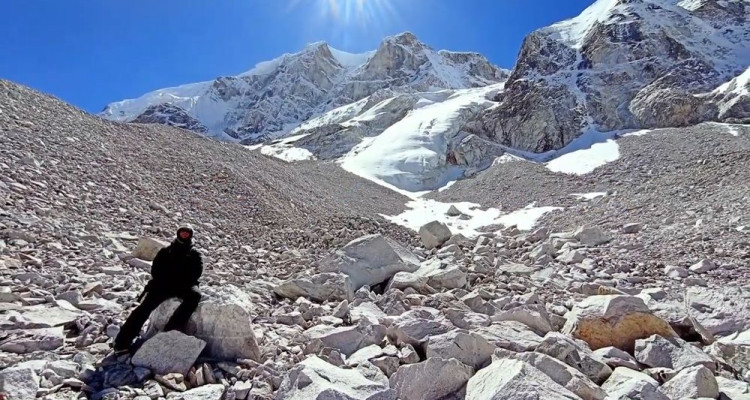
Larke La Pass (5,160m) is a major highlight. Snow and ice cover the pass. Panoramic views of the Himalayas surround trekkers. Mountains tower in every direction. Climbers face a physical challenge and breathtaking scenery. The base camp for Larke Peak lies near glacial moraines. Tent camps provide shelter. Snowfields stretch toward the summit. Climbers use crampons, ice axes, and ropes. The environment is remote and untouched.
The Larke Peak summit (6,249m) offers a lifetime reward. Manaslu, Himalchuli, Cheo Himal, and other peaks are visible from the top. Climbers feel accomplishment and pride. The experience combines trekking, climbing, alpine landscapes, and cultural immersion. High-altitude streams, glaciers, and waterfalls enrich the journey. Villages along the trail highlight local life. Wildlife appears occasionally. Every step is a memory in the Himalayan wilderness.
The trek allows exploration of diverse regions in the Manaslu area. Tropical valleys, alpine meadows, glaciers, streams, and villages provide variety. Trekkers experience climbing and trekking in one journey. Culture, nature, and adventure coexist along the route. Larke Peak Climbing offers a unique Himalayan experience in Nepal. The journey is challenging, remote, and unforgettable.
Climbing Larke Peak with Safe Holiday Adventure is a life-changing Himalayan experience. This high-altitude trek challenges your physical strength, mental focus, and endurance, yet rewards every step with breathtaking views of snow-capped mountains, glacial valleys, and pristine landscapes. Along the journey, climbers gain resilience, confidence, and unforgettable memories.
Moreover, trekking with our experienced guides ensures safety, personalized support, and a smooth adventure from base camp to summit. Sharing the journey with fellow adventurers adds camaraderie and lasting friendships. Ultimately, reaching the top of Larke Peak is more than a climb—it’s a triumph of courage, perseverance, and the extraordinary beauty of the Himalayas.
Climbing Larke Peak is not for beginners. The trek involves steep snow slopes, ice crossings, and high-altitude challenges. Climbers need physical strength, mental focus, and proper mountaineering skills. Acclimatization is essential to avoid altitude sickness, as the summit reaches over 6,100 meters, making it a serious adventure.
The route includes glaciers, rocky ridges, and technical sections requiring ropes, crampons, and ice axes. The weather can change fast, adding risk and difficulty. Despite this, summiting Larke Peak offers unforgettable views of the Annapurna range and a thrilling sense of achievement that rewards every bit of effort.
| Group Size | All-Inclusive Package Cost (USD) |
|---|---|
| Solo | $3,390 |
| 2–4 Pax | $3,250 |
| 4–8 Pax | $3,150 |
| 8–12 Pax | $3,050 |
| More than 12 | $2,899 |
Note: Dear Travelers, The cost of the Larke Peak Climb and Manaslu Circuit Trek varies by season. Send us your preferred time and budget, and we will customize a package for you. For agents or mediators who contact us first and bring clients, if the group is over 10 people, they get 70% of the package free as a reward.
How to Book the Larke Peak Climbing
Booking your Larke Peak climbing adventure is easy and hassle-free. You can directly contact us via email to get detailed information, availability, and a personalized trekking package. Our team will guide you through all the necessary permits, equipment, and itinerary to ensure a safe and enjoyable climb.
📧 Email us at: safeholidayadventure@gmail.com
📱 WhatsApp: +977 9849116284
Description:
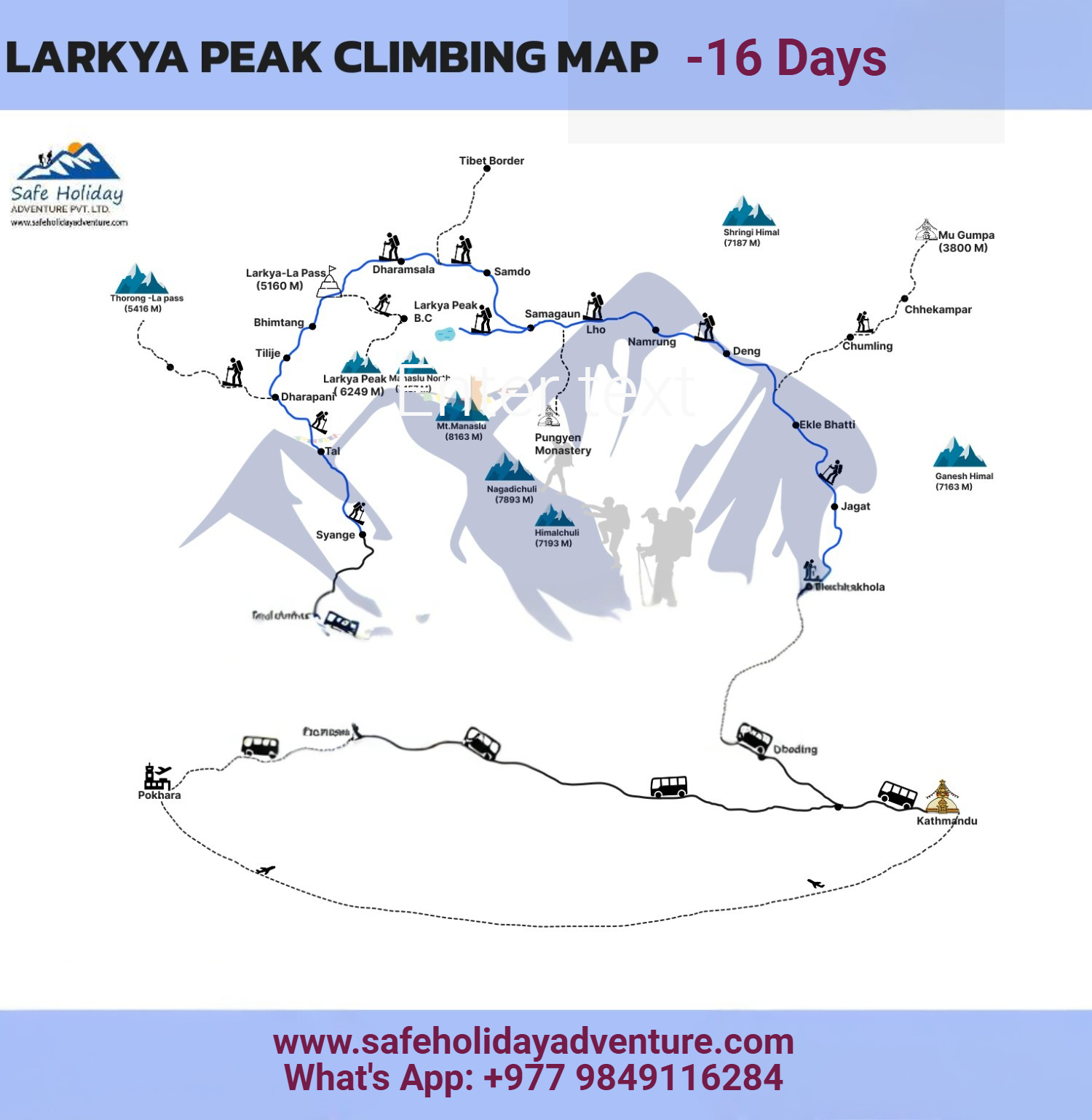
Upon arrival at Tribhuvan International Airport in Kathmandu, our team will welcome you and transfer you to your hotel in Thamel, the popular tourist hub. After some rest, you will meet your trekking and climbing guide for a detailed briefing about the Manaslu Circuit trek and the Larke Peak climb. This includes route information, gear check, and safety guidelines. Kathmandu offers a vibrant mix of culture, history, and modern comforts. You can take a short evening walk through the colorful streets, lined with shops, cafes, and trekking gear outlets. Overnight in the hotel.
Description:
Early in the morning, you set off on a scenic drive from Kathmandu toward the western hills of Nepal. The road first follows the busy Prithvi Highway, then branches off towards Dhading and Gorkha. You pass through small towns, green hills, and rice terraces. The final part of the journey is bumpy and dusty but very scenic, following the Budhi Gandaki River valley. After about 8–9 hours of travel, you reach Soti Khola, a small riverside settlement surrounded by hills and forests. This is the starting point of your trek. Overnight at a local lodge.
Description:
Your first trekking day begins with a walk along a narrow trail beside the Budhi Gandaki River. The route takes you through thick sal forests, rocky trails, and across suspension bridges. Small Gurung and Magar villages appear along the way, where you can see locals farming on terraced fields. The trail undulates, with many short ascents and descents. You may encounter mule caravans carrying goods to higher villages. After crossing several streams and climbing stone steps, you finally reach Machha Khola, a small village named after “Fish River.” Overnight at a teahouse.
Description:
Today’s trek continues along the Budhi Gandaki River, gradually climbing up narrow gorges. You pass Khorlabesi, a small village with hot springs nearby, and then climb stone steps to reach Tatopani, where trekkers often dip their feet in warm water. The trail continues through forests and landslide-prone sections before crossing the river on a suspension bridge. Finally, you ascend through stone stairways to Jagat, a beautiful village with flagstone streets, traditional houses, and a police checkpoint for permits. This village marks the official entry into the restricted Manaslu Conservation Area. Overnight stay in Jagat.
Description:
From Jagat, the trail descends to the river before climbing through stone-paved paths. You pass Salleri village, which offers great views of Sringi Himal. The path continues along the riverbank and through small settlements like Sirdibas, where you start noticing Buddhist prayer flags and Mani walls. Crossing a suspension bridge, you climb up to Philim, a large Gurung village with a school built by Japanese aid. From here, the trail gets quieter as you head deeper into the valley, passing waterfalls and lush forests. After a few more hours of walking, you arrive at Deng, a small settlement that marks the start of the upper region of the Budhi Gandaki valley. Overnight in a teahouse.
Description:
The trail from Deng heads into a more alpine environment with beautiful pine and bamboo forests. After crossing a suspension bridge, you gradually ascend through the valley, passing small villages such as Rana and Bihi. The route then follows forested ridges, where you may see monkeys and Himalayan birds. On clear days, Ganesh Himal appears in the distance. The climb is steady as you pass Buddhist chortens and prayer flags, reminding you that Tibetan influence is strong here. After several hours of uphill trekking, you reach Namrung, a lovely village with traditional houses, tea gardens, and beautiful mountain views. Overnight stay in Namrung.
Description:
Today’s walk is one of the most scenic of the trek. From Namrung, you ascend through forests and past barley fields with views of Himal Chuli and Ganesh Himal. Passing through Lihi village, decorated with prayer flags and chortens, you climb towards Sho and then Lho, a larger village where the majestic Manaslu (8,163 m) dominates the skyline. Lho has a beautiful monastery worth visiting. From here, the trail continues with a gentle climb across plateau-like terrain until you reach Samagaun, the biggest settlement in the upper valley. The village has stone houses, yak pastures, and panoramic views of Manaslu. Overnight stay at Samagaun.
Description:
This is an important day for acclimatization. Instead of resting the whole day, you can take short hikes to adjust to the altitude. A popular option is a hike to Birendra Lake, a turquoise glacial lake beneath the Manaslu Glacier. Stronger trekkers can hike up to Manaslu Base Camp (4,800 m), which provides breathtaking views of glaciers and the mighty Manaslu peak. Returning to Samagaun, you can explore the village and visit the old monastery. The rest day also gives you time to prepare your gear for the climb ahead. Overnight at Samagaun.
Description:
Today’s trek is short and easy, giving your body more time to adapt to the higher altitude. The trail climbs gradually above the river, with wide views of snowy peaks. You pass Mani walls, prayer wheels, and stone huts where locals keep yaks. The valley opens wider as you approach Samdo, a Tibetan refugee village located just a day’s walk from the Tibetan border. The village offers fantastic views of Manaslu, Samdo peak, and the surrounding ridges. In the afternoon, you may explore nearby hillsides for short hikes. Overnight at Samdo.
Description:
From Samdo, the trail descends briefly to cross a wooden bridge over the Budhi Gandaki River. Then you begin climbing steadily through barren landscapes with fewer trees. The scenery is dramatic, with wide glacial valleys and snow-capped mountains all around. You may spot blue sheep grazing on the rocky slopes. After a few hours of trekking, you arrive at Dharamsala (also called Larke Phedi), a small stone hut settlement that serves as the base for crossing the Larke La Pass. Here, you prepare for your upcoming climb to Larke Peak. Overnight in a basic lodge or tent.
Description:
Today is a short but important day. Leaving Dharamsala, you ascend gradually along a rocky trail with spectacular views of the Larke Glacier and surrounding peaks. The air becomes thinner, and you will feel the altitude. Walking slowly with steady steps is essential. After a few hours, you reach Larke Peak Base Camp (5,200 m), located on a snowy plateau beneath the peak. The climbing crew will set up tents and prepare meals. The afternoon is spent resting, checking climbing gear, and preparing for the summit push. Guides will give you instructions about using ropes, harnesses, and crampons. Overnight camping at base camp.
Description:
This is the most challenging and rewarding day of the expedition. You start climbing very early in the morning, usually around 2–3 a.m., using headlamps. The climb involves steep snow slopes, ridges, and rope sections where your climbing guide assists. Reaching the summit of Larke Peak (6,249 m) is an unforgettable moment, with breathtaking views of Manaslu (8,163 m), Annapurna II, Himlung Himal, Kang Guru, and Ganesh Himal. After enjoying the summit, you carefully descend back to base camp. The long day requires good stamina and determination, but the experience is truly once-in-a-lifetime. Overnight camping at base camp.
Description:
After the climb, you pack up and head towards the famous Larke La Pass. The trail begins with a steady ascent across rocky and snowy terrain. Prayer flags mark the top of the pass, and from here the views are jaw-dropping—peaks like Himlung Himal, Cheo Himal, Annapurna II, and Kang Guru rise high above the horizon. After spending some time enjoying the scenery, you begin a long descent on a steep, rocky trail. Eventually, the terrain becomes gentler, with forests and meadows appearing as you approach Bimthang. This large settlement offers stunning views of Mount Manaslu and is perfect for resting after a long and challenging day. Overnight at a teahouse.
Description:
From Bimthang, the trail descends through pine and rhododendron forests, with constant views of the south face of Manaslu. The path crosses a glacial stream before entering dense forest. You may see wildflowers, monkeys, and Himalayan birds along the way. The trail continues down to Karche, a small Gurung village surrounded by farmland, before making the final descent to Tilje. This charming village has stone-paved streets, traditional houses, and is surrounded by terraced fields. Overnight in a lodge at Tilje.
Description:
After breakfast, you descend from Tilje along forested trails and terraced fields. Crossing the Marsyangdi River, you soon arrive at Dharapani, a major junction where the Manaslu Circuit meets the Annapurna Circuit. From here, you take a Jeep ride down the rough mountain road, passing waterfalls, cliffs, and charming villages like Tal and Chamje. After about 4–5 hours of bumpy driving, you reach Besisahar, the district headquarters of Lamjung. Overnight in a lodge or guesthouse in Besisahar.
Description:
You leave Besisahar after breakfast and drive along a rough road until Dumre, where you join the Prithvi Highway. The drive becomes smoother as you pass rivers, small towns, and green hills. The road follows the Trishuli River valley, offering beautiful scenery and glimpses of villages along the way. After 6–7 hours, you reach Kathmandu and transfer to your hotel in Thamel. Evening free for relaxation, shopping, or enjoying a celebration dinner. Overnight at the hotel.
Description:
After breakfast, depending on your flight schedule, you will be transferred to Tribhuvan International Airport for your departure. Our team will assist with your luggage and see you off with warm wishes. As you fly out, you can look back on the unforgettable memories of the Manaslu region and your achievement of climbing Larke Peak.
Farewell dinner in a traditional Nepali restaurant with a cultural program.
| Start Date | End Date | Price In US Dollar($) | AVAILABILITY | Booking |
|---|
⭐⭐⭐⭐⭐
𝐀 𝐭𝐫𝐮𝐥𝐲 𝐮𝐧𝐟𝐨𝐫𝐠𝐞𝐭𝐭𝐚𝐛𝐥𝐞 𝐇𝐢𝐦𝐚𝐥𝐚𝐲𝐚𝐧 𝐚𝐝𝐯𝐞𝐧𝐭𝐮𝐫𝐞 𝐰𝐢𝐭𝐡 𝐒𝐚𝐟𝐞 𝐇𝐨𝐥𝐢𝐝𝐚𝐲 𝐀𝐝𝐯𝐞𝐧𝐭𝐮𝐫𝐞!
Sep 2 – Sep 18, 2025
I googled the Larke Peak Climbing 16 Days trip for my Nepal plan, and I found Safe Holiday Adventure. They responded very quickly, and Mr. Gauli Santosh did wonderful arrangements for me. The package was very reasonable compared to others, and their services were excellent from start to finish.
During the trek, my guide Santosh was outstanding. He always explained the route clearly, checked on my comfort, and made sure I was safe at higher altitudes. He also knew so much about the local culture, people, and history, which made the journey even more meaningful.
Our porter Dharma was amazing as well. He carried the load with great strength and a cheerful spirit, always ready to help with anything. Without him, the trek would have been much harder.
The Manaslu region itself is stunning—wild rivers, green valleys, friendly villages, and incredible mountain views. Climbing Larke Peak was the highlight; standing at the top and looking across the Himalayas is something I will never forget.
I feel very lucky I chose Safe Holiday Adventure. With Santosh as guide and Dharma as porter, everything was perfect. I highly recommend this team for anyone planning a trek or climb in Nepal.
— 𝐀𝐧𝐧𝐞 𝐊𝐞𝐚𝐥𝐲
Larke Peak is located in the Manaslu region of Nepal, in the Annapurna Himalayan range. It is one of the most popular high-altitude climbing peaks in Nepal. The area is known for its beautiful landscapes, including forests, rivers, glaciers, and snow-covered mountains. Climbers usually approach the peak via the Manaslu Circuit Trek, which is a well-known trekking route. The region is remote, so climbers experience peaceful nature and less crowded trails. Villages along the route give insight into local culture and traditions, making the journey both an adventure and a cultural experience.
Larke Peak is 6,119 meters (20,075 feet) high, which makes it a challenging high-altitude climb. The thin air at this altitude can make breathing difficult, so climbers must take time to acclimatize properly. High altitude can cause headache, nausea, or fatigue if ignored. The peak is higher than most trekking peaks but lower than big Himalayan giants like Everest. The summit gives climbers a sense of achievement and amazing panoramic views of the Annapurna and Manaslu ranges. Proper preparation, fitness, and a careful approach to climbing at this altitude are essential for safety.
Climbing Larke Peak is challenging but possible for trained trekkers. The climb involves steep snow slopes, ice sections, and glacier crossings. You need basic mountaineering skills and experience with ice axes, crampons, and ropes. Physical fitness is very important because the trek to base camp and the climb are long and exhausting. Weather can change quickly, adding more risk. The climb is not for beginners, but with an experienced guide and proper training, it is achievable. Summiting Larke Peak is rewarding, as it gives climbers a sense of accomplishment and stunning views of the Himalayas.
The best time to climb Larke Peak is in spring (March to May) and autumn (September to November). During these seasons, the weather is stable, dry, and clear, making climbing safer. In spring, you can enjoy beautiful flowers and greenery along the trail. Autumn offers crisp air and clear views of snow-covered peaks. Avoid climbing in monsoon (June–August) due to heavy rain, slippery trails, and high risk of landslides. Winter can be very cold and dangerous, with heavy snow. Planning your climb during the best season increases safety and gives a more enjoyable experience.
Climbers usually reach Larke Peak via the Manaslu Circuit Trek. This route passes through beautiful villages, forests, rivers, and suspension bridges. You will see local culture, traditional houses, and small tea-houses along the trail. The trek allows you to acclimatize gradually, which is important for high-altitude climbing. The route is well-marked but remote, so hiring a guide is recommended. From the base camp, climbers prepare for the technical ascent of Larke Peak. The combination of trekking and climbing gives a complete Himalayan adventure, mixing natural beauty, culture, and a challenging high-altitude climb.
Acclimatization is very important when climbing Larke Peak because the altitude is high. Spending extra days at higher villages helps your body adjust to less oxygen. Without proper acclimatization, climbers may experience headaches, nausea, dizziness, or altitude sickness. Guides usually plan rest days at key points on the trail to allow your body to adjust. Drinking plenty of water, eating well, and avoiding alcohol also helps. Proper acclimatization increases your chances of reaching the summit safely and enjoying the climb. Never rush the climb, as safety is more important than speed.
Hiring an experienced guide and porter is strongly recommended for Larke Peak. Guides help with route navigation, safety, and technical climbing sections. Porters carry your heavy luggage, so you can focus on climbing. Experienced guides can recognize weather changes and altitude problems quickly. They also provide motivation and local knowledge, making the trek safer and more enjoyable. Choosing a licensed and trained guide ensures proper support during emergencies. The combination of a guide and porter makes climbing less stressful, safer, and more comfortable for both trekking and the technical ascent.
For Larke Peak, essential equipment includes ice axe, crampons, ropes, helmet, harness, down jacket, sleeping bag, duffel bag, and walking poles. Trekking boots suitable for snow and ice are required. Sunglasses, gloves, and warm layers are also needed. Some items can be rented locally, but bringing personal gear is recommended. Proper gear ensures safety, warmth, and comfort at high altitude. Guides usually help with technical climbing equipment, but climbers must be familiar with its use. Being fully prepared with correct clothing and climbing tools is essential for a successful and safe summit.
During the trek to Larke Peak, climbers stay in tea-houses, which are small lodges offering basic rooms and meals. Near the climbing area, tent camps are set up for safety and convenience. Tea-houses provide a chance to interact with locals and experience Nepali culture. Tents are essential for high-altitude nights, as conditions are too cold for lodges. Accommodation along the route is simple but sufficient for climbers. Planning your sleeping arrangements in advance ensures comfort and safety. Staying in tea-houses and tents is part of the authentic Himalayan climbing experience.
The summit of Larke Peak offers stunning panoramic views of the Annapurna and Manaslu ranges. From the top, climbers can see glaciers, snow-covered peaks, deep valleys, and Himalayan landscapes. Sunrise and sunset from the peak are breathtaking and memorable. Along the trekking route, you also see rivers, forests, waterfalls, and traditional villages. Every step of the climb rewards you with amazing natural beauty. The combination of adventure, high-altitude challenge, and spectacular scenery makes Larke Peak one of the most rewarding climbs in Nepal for trekkers and mountaineers alike.
Safe Holiday Adventure Pvt. Ltd.
P.O.Box: 20065 Tarkeshwor-6, Kathmandu, Nepal
Cell: 00977 9849116284
Email: info@safeholidayadventure.com,
safeholidayadventure@gmail.com
Europe Contact
Mark Brosius
mark.brosius@hotmail.com
Oude baan, 41, 3060 Bertem, Belgium
We are associated with


We accept