Introduction:
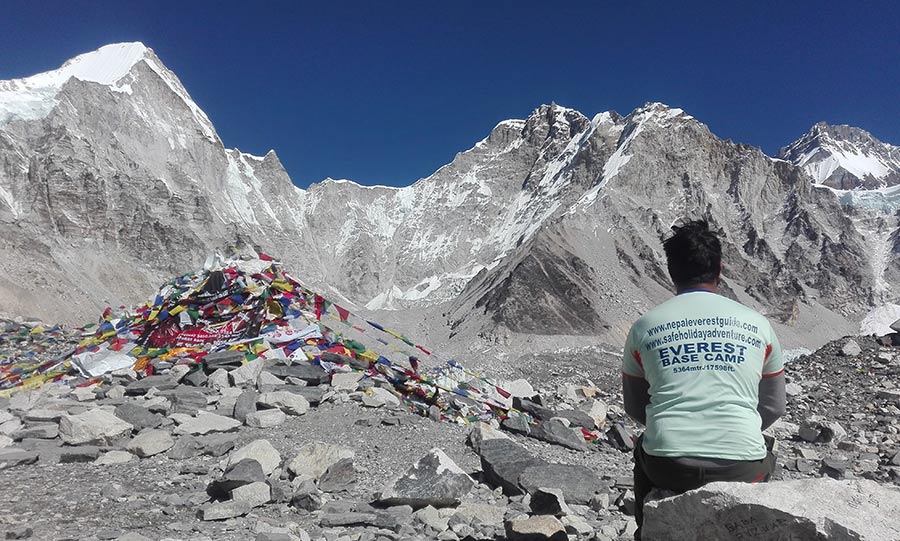
November is when the Khumbu looks its sharpest. The monsoon haze is long gone, the sky turns a hard, deep blue, and Everest, Lhotse, Nuptse, and Pumori stand out with almost no cloud in front of them. The Everest Base Camp Kalapathar trek in November is a trek of cold dawns, warm afternoons, and some of the clearest mountain views on Earth.
It is also not a trek to take lightly. Nights above 4,000 m are properly freezing, and the final climb to Kala Patthar (5,545 m) comes after days of slow altitude gain. This guide covers what November really feels like, how to plan it, and how to avoid the common mistakes.
Quick Facts
Trek: Everest Base Camp (5,364 m) + Kala Patthar (5,545 m)
Duration: 12 days (Kathmandu to Kathmandu)
Difficulty: Moderate to challenging
Walking time: 5–8 hours daily
Best for: Clear views, stable weather, Sherpa culture
Booking window: 3–4 months ahead
Why November Works So Well
1. Crystal-clear skies. Dry air means long-range visibility from Namche onward. Sunrise from Kala Patthar, when first light turns Everest’s summit pink, is most reliable in this window.
2. Stable, dry trails. Rain and mud are rare, and snow on the main route is usually light and short-lived before December.
3. Walkable daytime temperatures. Sun-warmed afternoons let you trek in a light layer at lower altitudes.
4. Mani Rimdu at Tengboche. This Sherpa festival of masked dances and blessings happens in the autumn season, and the dates follow the Tibetan lunar calendar. Check the exact dates before booking if you want to be there.
5. The air is cleaner, the crowds slightly thinner late in the month. Early November still sees busy trails, but the final two weeks are calmer.
A reality check: Lukla flights can be delayed by morning cloud even in November. Keep one or two buffer days at the end of your trip.
November Weather on the Trail

Do not rely on one average number. Temperatures change sharply with altitude and time of day.
| Area | Altitude | Daytime | Night |
|---|---|---|---|
| Lukla–Phakding | 2,600–2,860 m | 12–18°C | 3–8°C |
| Namche Bazaar | 3,440 m | 8–12°C | −3 to 0°C |
| Tengboche–Dingboche | 3,860–4,410 m | 3–8°C | −8 to −4°C |
| Lobuche–Gorakshep | 4,910–5,164 m | −2 to 4°C | −15 to −10°C |
Mornings are the coldest and calmest part of the day. Afternoon winds pick up, especially above Lobuche, so keep a windproof shell within reach.
How Hard Is the Everest Base Camp and Kala Patthar Trek in November?
The trek is moderate to challenging. November brings dry trails and clear skies, so weather is not the problem. The real difficulty is altitude, long walking days and freezing nights.
| Challenge | What to expect in November |
|---|---|
| Altitude | You climb from Lukla (2,860 m) to Kala Patthar (5,545 m) in about 9 days. Altitude sickness is the biggest risk, so never skip the rest days at Namche Bazaar and Dingboche. |
| Daily walking | 5-8 hours a day on rocky trails with steady uphill sections. The longest days are Dingboche to Lobuche and the Base Camp day. |
| Cold | Nights above 4,000 m drop to between -10°C and -15°C. Teahouse rooms are not heated, so a warm sleeping bag matters more than anything else you pack. |
| Fitness | No climbing experience is needed, but good stamina is. Start cardio and hill walking 8-10 weeks before you leave. |
Bottom line: If you are reasonably fit, walk slowly, drink plenty of water and follow the acclimatization plan, November is one of the easiest months to complete this trek.

12-Day Itinerary
| Day | Route | Altitude | Walking |
|---|---|---|---|
| 1 | Fly Kathmandu to Lukla, trek to Phakding | 2,610 m | 3 hrs |
| 2 | Phakding to Namche Bazaar | 3,440 m | 6 hrs |
| 3 | Acclimatization in Namche (Everest View Hotel hike) | 3,440 m | 3–4 hrs |
| 4 | Namche to Tengboche | 3,860 m | 5–6 hrs |
| 5 | Tengboche to Dingboche | 4,410 m | 5–6 hrs |
| 6 | Acclimatization in Dingboche (Nangkartshang Hill) | 4,410 m | 3–4 hrs |
| 7 | Dingboche to Lobuche | 4,910 m | 5–6 hrs |
| 8 | Lobuche to Gorakshep, then Everest Base Camp | 5,364 m | 7–8 hrs |
| 9 | Kala Patthar at sunrise, then descend to Pheriche | 5,545 m | 6–7 hrs |
| 10 | Pheriche to Namche Bazaar | 3,440 m | 6–7 hrs |
| 11 | Namche to Lukla | 2,860 m | 6–7 hrs |
| 12 | Fly Lukla to Kathmandu | 1,350 m | 30 min flight |
Smart tip for Day 8: If Gorakshep skies are clear in the afternoon, many guides go to Kala Patthar for sunset and Base Camp the next morning. Your guide will judge the weather on the day.
Everest Base Camp vs Kala Patthar: What You Get from Each
Everest Base Camp (5,364 m) is the emotional goal. You stand beside the Khumbu Glacier, with the Icefall above, but Everest’s summit is hidden behind Nuptse.
Kala Patthar (5,545 m) is the visual reward. It gives the famous front-facing view of Everest, Lhotse, Nuptse and Pumori, plus the Khumbu Glacier below. Most trekkers call it the best view of the whole trek.
Food & Accommodation in November
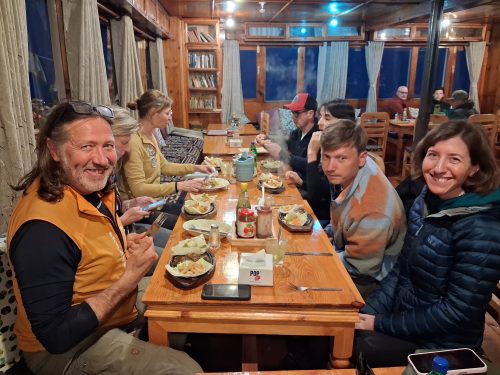
Where you stay. Teahouses line the route. Rooms are simple twin beds with mattresses, and shared bathrooms are the norm above Namche. November is high season, so lodges at Lobuche and Gorakshep fill early. Booking through an agency secures your beds.
What you eat. Menus are long, but keep it light and carb-heavy.
- Dal bhat (rice, lentils, vegetables), which usually comes with refills
- Momos, thukpa and Sherpa stew
- Tibetan bread, pancakes and porridge for breakfast
- Garlic soup, a local favorite at altitude
- Apple pie and hot chocolate for the cold evenings
Food tip: Avoid meat above Namche, since it is carried up on foot for days. Vegetarian meals are fresher and safer.
Guide and Porter: Needed or Not?
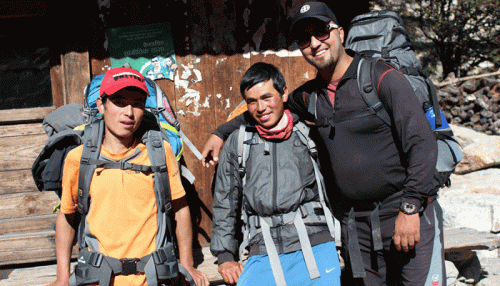
A guide is not legally required on this route, but hiring one is smart, especially for a first Himalayan trek. A good guide manages your pace, reads altitude symptoms, handles lodge bookings, and organizes evacuation if needed. A porter carries up to 20 kg of your gear so you can walk with a light daypack. Typical rates are around USD 30–40 per day for a guide and USD 20–25 per day for a porter, often covered in a package.
Essential Trekking Gear for the Everest Base Camp Trek in November
November is the start of the cold, dry season. Days are clear and sunny, but nights above Dingboche can drop to −15°C or lower. Pack in layers.
Clothing
- Base layers: 2 thermal tops and 1-2 thermal bottoms (merino or synthetic, no cotton)
- Mid layer: 1 fleece jacket or light insulated pullover
- Down jacket: warm, hooded, rated to −15°C or below
- Waterproof shell: breathable jacket and pants for wind, snow, and drizzle
- Trekking trousers: 2 quick-dry pairs
- T-shirts: 2-3 moisture-wicking tops for lower altitudes
- Underwear: 4-5 quick-dry pairs
Footwear
- Trekking boots: waterproof, ankle-supporting, and well broken-in
- Socks: 4-5 pairs of warm wool-blend socks, plus 2 thin liner pairs
- Camp shoes: light sandals or sneakers for teahouse evenings
- Gaiters: optional, useful on snowy days near Gorak Shep
Head, Hands & Sun Protection
- Warm beanie and a sun hat or cap
- Neck gaiter or buff for wind and dust
- Gloves: thin liner gloves plus insulated or waterproof outer gloves
- Sunglasses: UV category 4 with side protection
- Sun cream (SPF 50+) and SPF lip balm
Sleeping
- Four-season sleeping bag with a comfort rating of −15°C to −20°C (you can rent one in Kathmandu)
- Sleeping bag liner for extra warmth and hygiene
Backpack & Carry
- Daypack (25-35L) with a rain cover for water, snacks, camera, and a spare layer
- Duffel bag (60-70L) for your porter, ideally waterproof
- Trekking poles to ease the strain on your knees on long descents
- Dry bags or zip pouches to organize and protect your gear
Hydration & Safety
- Water bottles: 2 × 1L, or one bottle plus a hydration bladder
- Purification tablets or a filter
- Headlamp with spare batteries (cold drains them quickly)
- Power bank and a charging cable, since charging costs extra in the higher teahouses
Medicines & Personal Care
- Altitude medication (such as Diamox), only after consulting your doctor
- Stomach and diarrhea tablets, plus rehydration salts
- Painkillers, blister plasters, and an antiseptic cream
- Toiletries: toothbrush, biodegradable soap, quick-dry towel, wet wipes, hand sanitizer, toilet paper
- Moisturizer for dry, cold air
Documents & Extras
- Passport, copies, and passport photos
- Travel insurance that covers high-altitude trekking and helicopter evacuation
- Cash in Nepali rupees, since there are no ATMs above Namche
- Snacks and a journal or camera (optional)
Pro Tip
You can rent a down jacket, sleeping bag, and trekking poles in Thamel, Kathmandu, at a fraction of the purchase cost. Buy only what you’ll use again: boots, socks, and base layers.
12 Smart Tips Before You Go
- Book 3–4 months ahead, since November is the peak season.
- Reserve Kathmandu–Lukla flights early, and keep a buffer day.
- Walk slowly. Altitude punishes speed.
- Drink 3–4 liters of water daily.
- Never skip acclimatization days.
- Keep your phone and power bank warm at night, inside your sleeping bag.
- Carry enough Nepali rupees. ATMs end above Namche, so budget around NPR 3,500 per day for extras.
- Tell your guide at once about headaches, nausea or breathlessness.
- Do not trek at night or alone above 4,000 m.
- Ask before photographing locals.
- Walk clockwise around Buddhist stupas and mani walls, keeping them on your right.
- Eat well, even without appetite. Your body needs the fuel.
FAQs
1. Is November a good time for the EBC trek?
Yes. November is one of the best months, with stable weather, clear skies, and sharp mountain views. It’s the end of the autumn peak, so trails are a bit quieter than in October.
2. How cold does it get in November?
Daytime temperatures are around 5-12°C at lower altitudes. Nights drop to −10°C to −20°C at Dingboche, Lobuche, and Gorak Shep.
3. How many days does the trek take?
Most itineraries take 12-14 days from Kathmandu, including acclimatization days at Namche Bazaar and Dingboche.
4. How hard is the trek?
It’s moderate to challenging. You’ll walk 5-7 hours a day on rough trails, and the main challenge is altitude, not technical climbing. Good fitness and a steady pace are enough, and no previous trekking experience is required.
5. How high are Everest Base Camp and Kala Patthar?
Everest Base Camp is at 5,364 m (17,598 ft). Kala Patthar is at 5,545 m (18,192 ft).
6. Why do people climb Kala Patthar?
It gives the best close-up view of Mount Everest, plus Nuptse, Lhotse, and Pumori. Base Camp itself doesn’t show the summit.
7. Is Kala Patthar done on the same day as Base Camp?
Usually not. Most trekkers visit Base Camp from Gorak Shep, return to sleep there, and climb Kala Patthar for sunrise or sunset the next day.
8. Can I see Everest from Base Camp?
No. Nuptse and the surrounding ridges block the summit. Kala Patthar is the best viewpoint.
9. What permits do I need?
You need a Sagarmatha National Park entry permit and a Khumbu Pasang Lhamu Rural Municipality permit. Your trekking company usually arranges both. Fees change, so confirm the current rates before you travel.
10. How much does the trek cost?
Guided packages typically range from about USD 1,300 to 2,000, depending on group size, flights, and services. Independent trekkers should budget roughly USD 1,000 to 1,500, plus extra for gear and tips.
11. How do I get to Lukla?
You fly from Kathmandu or, during peak season, sometimes from Ramechhap (Manthali). The flight takes about 30-40 minutes. Weather delays are possible, so keep a spare day in your schedule.
12. What are the teahouses like?
They’re simple twin rooms with basic beds, shared bathrooms, and a heated dining room. Rooms are unheated, so a warm sleeping bag matters. Hot showers and charging cost extra, and the higher you go, the more they cost.
13. Is altitude sickness a risk?
Yes, for everyone. To reduce the risk, go slowly, drink 3-4 litres of water daily, avoid alcohol, and take the planned rest days. Tell your guide at once if you have headache, nausea, or dizziness.
14. Will I have Wi-Fi and phone signal?
Yes, but it’s patchy. Most teahouses sell Wi-Fi, and an Ncell or Nepal Telecom SIM works at many stops. Expect slow speeds above Namche.
15. Do I need a guide or porter?
A guide isn’t legally required for this route, but it’s strongly recommended for safety, navigation, and altitude monitoring. A porter makes the trek easier and supports local jobs.
16. Do I need travel insurance?
Yes. Choose a policy that covers trekking up to 6,000 m and helicopter evacuation.
17. How much should I tip?
A common guideline is about USD 10-15 per day for a guide and USD 5-8 per day for a porter, shared across the group.
Conclusion:
November gives you the Everest trek at its clearest and most photogenic. Plan early, pack for real cold, and respect the altitude. The reward is a sunrise over the world’s highest peak that you will remember for life.
Ready to go? Safe Holiday Adventure Pvt. Ltd. arranges permits, flights, guides, porters, and teahouse bookings for your Everest Base Camp Kalapathar trek in November.