
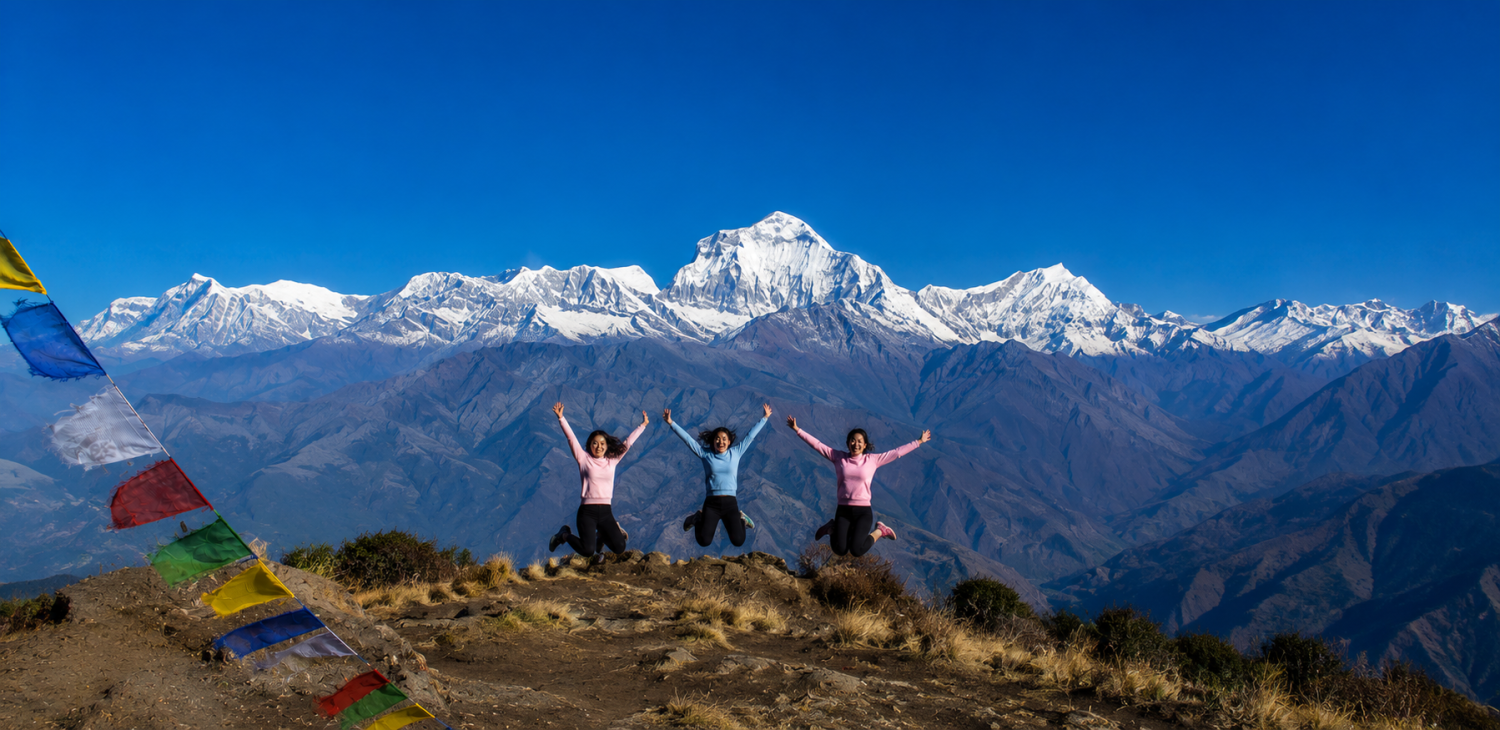
26 Aug 2018 25 min to read
Ghorepani Poon hill trekking is a Short, Easy, and Low spending plan trekking route. It is a standout among the most visited trekking courses in the Annapurna Region. This short Poon hill trek is reasonable for practically a wide range of trekkers from experience to simple trekkers, for example, the family trek, understudies visit, and trek they can make all-around effectively. Ghorepani Poon Hill trek 5 Days joins heaven Natural strolling way, Rhododendron timberland, Oak trees, and Massif Annapurna Himalayan Vistas.
The Ghorepani Poon hill trekking is a 3-7 days trek that begins from Kathmandu and Pokhara both yet for the most part from Kathmandu as it is the capital city where a huge number of trekkers handles each day. We take transport from Kathmandu to Pokhara or fly to Pokhara we then another drive to Nayapul then after formally we will begin our 5 days strolling venture through the Terrace field, Modi Khola, valley, and stone made normal trekking ways. There are such huge numbers of Guest houses and Lodges where we can stop for nourishment or settlement.
The trail experiences Birethanti, over the extensions, Ramgain, Sudame, and Hille Thikhedunga at first day comparably the second-day experiences Ulleri, Banthati, Nange Thanti and Ghorepani where we will rest a near, be that as it may, amid this short and simple trek you will stroll into the common region and social zone. The staggering white snow pinnacles will be seen when we reach Ulleri Village. The trekking way will be a bit smoother after Ulleri Village(2,050m) where we need to stroll on a stone Staircase we then a stroll through the Rhododendron Forest. The significant features of this trek are the Poon Hill and Ghorepani where we will visit on days second and third.
Ghorepani is a very huge Poon Magar town arranged in the Hilly Junction underneath Poon hill perspective. Poon hill itself is an enchanted peak that offers you an incredible otherworldly view over Dhaulagiri(8,167 m) and Annapurna scope of the Himalaya. the trekking course got some elective alternative for trekkers from Ghorepani it is possible that they can go down to Tatopani where we can have a regular hot shower or We go to Tadapani(2,600m) then trek proceed with a drop to Popular Ghandruk(1,850M) and Nayapul(1,075m) and we drive back to Pokhara(950m) on the off chance that you have over 5 days strolling time than you can broaden your trekking agenda towards Landruk from Ghandruk than treks end at Phedi than drive to Pokhara.
Ghorepani Poon Hill trekking through Ghandruk is a broadly prominent trekking goal in Nepal for a very close perspective on massif mountains including the world’s seventh most astounding pinnacle Mount Dhaulagiri(8,167m). Spring season( March to May and Autumn season ( Sep to Nov) are the best seasons to trek in this district to get a reasonable sky and dodge cold temperatures, and Monsoon season. There are such a large number of travelers who have the arrangement to visit Poon Hill and see the heaven-brilliant dawn see they need to leave very ahead of schedule from Ghorepani Poon Magar Village to reach on time at Poon Hill for dawn. It is trusted that each season the occasions opportunities to go to Poon Hill tad so you better ask your guide or neighborhood what time is the best to leave from Ghorepani and something else you need to convey your water bottle, little cash to purchase extra charge on route and to yet hot tea at Poon Hill view tower.
The Ghandruk Gurung Village is the following fascination of this trek where you visit Gurung exhibition hall, Farming, cast individuals’ locale and the shocking perspective on Mt. Annapurna south(7,219m), Hiunchuli(6,441m) & Machhapuchhre(Fishtail)(9,993M). Ghandruk town is a prevalent massif Gurung Village, where the greater part of the general population fill in as Gorkha troopers, a few people running inn/Lodges, some functioning as the ranchers so then we get the opportunity to see every one of those things at Ghandruk Village. The Gurung people groups are exceptionally affable and supportive in this way if you are intrigued to find out about the neighborhood life they will be cheerful to share their day by day life and if you are additionally intrigued to think about the way of life they will demonstrate you social Gurung move and sing together at night it is altogether Managed that town. After the social program, you can give some cash as a gift for the Local mother club which is normal and the cash goes for fixing the trekking ways, and for network costs.
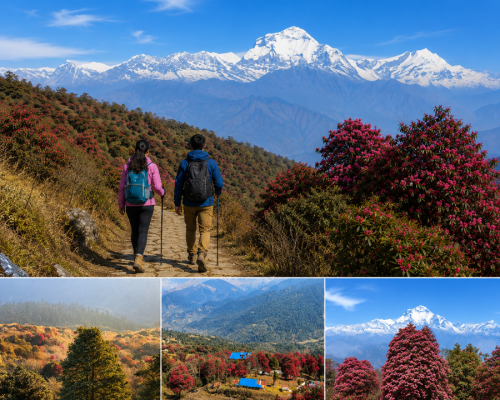
The trekking way of this trek invites guests with for the most part timberland of Rhododendron, oak, and transcending Pine trees notwithstanding in the event that you are making a trip to Ghorepani poon Hill and Ghandruk trek by means of Ghandruk Village in Spring then you can get such a brilliant opportunity to investigate various shades of Rhododendron blooms, numerous vivid butterflies, and clear sky each day however on the off chance that you can deal with your time in spring, at that point we very prescribe you to visit in Autumn which is Sep to Nov. this short trek is adaptable trek it is possible that you can influence it inside 3 days or 7 days you to can modify the agenda according to your advantage and time.
There are numerous normal inquiries regarding Ghorepani Poon Hill trek that to what extent do we need to walk or about nitty gritty schedule so here is an example point by point agenda for intrigued trekkers who might want to know more before starting the trek

Trekking to Ghorepani Poon Hill from Kathmandu or Pokhara is a short and easy adventure. The trek begins at Nayapul, just a 90-minute drive from Pokhara.
Kathmandu and Pokhara are home to many trekking and tour agencies, each offering different prices and services. Budget trekkers with strong hiking experience can trek independently without an agency. However, if you’re not on an extremely tight budget, it’s better to hire a freelance guide or book through a reputable travel agency. A good guide takes care of your entire trip and also supports local communities and guides who depend on this income.
Pre-booking your trek is the easiest option. A package typically includes pickup and drop-off services, meals, accommodation, and permits — all fully managed. This significantly reduces stress and problems along the way, making a packaged Ghorepani trek a smart choice for most travelers.
The Ghorepani Poon Hill Trek is short, but the terrain isn’t easy. Basic fitness is essential to complete it comfortably. If you’re reasonably fit and have the right trekking equipment, you can complete the trek in 4 nights and 5 days. If you have more time, you can extend your journey to Annapurna Base Camp, which takes about 12 days round-trip from Pokhara.

The Ghorepani Poon Hill and Ghandruk Trek is one of the most popular trekking routes in Nepal’s Annapurna region. It combines stunning Himalayan scenery with the rich culture and warm hospitality of the Gurung people. Here are the major highlights that make this trek a must-do experience:
routeStunning Sunrise from Poon Hill
Watching the sunrise from Poon Hill is a once-in-a-lifetime experience. As the sun rises over the Himalayas, the mountains transform from gray to brilliant shades of pink and orange, creating a breathtaking spectacle.
Panoramic Himalayan Views
Trekkers enjoy stunning views of the Annapurna and Dhaulagiri ranges, along with other peaks like Machhapuchhre (Fishtail), throughout the journey.
Authentic Gurung Culture and Hospitality
The route passes through several villages, including Ghandruk, where you can experience the traditional culture and genuine hospitality of the Gurung people.
Blooming Rhododendron Forests
Lush rhododendron forests line the trail, bursting into full bloom during the spring season and adding vibrant color to the landscape.
Rewarding Climb to Ghorepani
The ascent to Ghorepani is challenging but well worth the effort, rewarding trekkers with spectacular mountain panoramas.
Traditional Villages Along the Way
This trek offers a close-up look at traditional Gurung villages, giving trekkers insight into a unique way of life and centuries-old customs.
Scenic Drive from Pokhara to Nayapul
The adventure begins with a scenic drive from Pokhara to Nayapul, showcasing the beautiful landscape of the Annapurna region right from the start.
Easy-to-Moderate Difficulty
Rated easy to moderate, this trek is accessible to most fitness levels, making it ideal for beginners and experienced trekkers alike.
Delicious Local Cuisine
Along the trail, you can sample authentic Nepali dishes such as momos and dal bhat, offering a true taste of local flavors.
Picturesque Terraced Fields
Beautiful terraced fields line the route, reflecting the skill and hard work of local farmers cultivating the hillsides.
Cozy Teahouses
Charming teahouses along the way provide comfortable lodging, giving trekkers a warm place to rest and recharge each night.
A Rewarding Sense of Accomplishment
Completing this trek is a personal achievement — trekkers return home with unforgettable views, cultural experiences, and the pride of overcoming a real physical challenge.
Choosing the right season can make or break your Ghorepani Poon Hill and Ghandruk Trek experience. While the trek is possible almost year-round, two seasons stand out as the best times to visit: spring and autumn.
Spring is one of the most popular seasons for this trek. The weather stays mild and stable, with clear mountain views most days. This is also when the region’s famous rhododendron forests burst into full bloom, painting the trails in shades of red, pink, and white. Daytime temperatures are comfortable for walking, while nights remain cool at higher elevations like Ghorepani and Poon Hill.
Autumn is widely considered the ideal season for trekking in the Annapurna region. Skies are usually crystal clear after the monsoon rains, offering the best possible views of the Annapurna and Dhaulagiri ranges from Poon Hill. The weather is dry, temperatures are pleasant, and trails are in excellent condition — making this the peak trekking season in Nepal.
Winter offers a quieter, more peaceful trekking experience with fewer crowds on the trail. Days are usually sunny with clear skies, though temperatures drop significantly at night, especially around Ghorepani. Trekkers should pack warm layers, as light snowfall is possible at higher elevations.
The monsoon season brings heavy rainfall, leech-infested trails, and limited mountain visibility due to clouds and fog. While the hills turn lush and green, this season is generally not recommended for trekkers seeking clear Himalayan views.
| Season | Months | Highlights |
|---|---|---|
| Spring | March–May | Rhododendron blooms, mild weather |
| Autumn | Sept–Nov | Clearest views, peak season |
| Winter | Dec–Feb | Quiet trails, cold nights |
| Monsoon | Jun–Aug | Not recommended, poor visibility |
The Ghorepani Poon Hill and Ghandruk Trek passes through the Annapurna Conservation Area (ACA), Nepal’s largest protected area and one of the most biodiverse regions in the Himalayas. The conservation area is home to over 1,200 plant species, 102 mammals, 474 birds, 39 reptiles, and 22 amphibians, making this trek as much a wildlife experience as a scenic one.
As you pass through subtropical forests and rhododendron groves, keep an eye out for the Himalayan tahr, a wild mountain goat often seen grazing on steep rocky slopes near the trail. Langur monkeys and various deer species are also commonly spotted swinging through the forest canopy or foraging near lower-altitude villages. Lucky trekkers may occasionally catch a glimpse of the shy musk deer in quieter forest patches.
While rare, the Annapurna Conservation Area is also known to host more elusive species such as the red panda, found in dense bamboo forests at higher elevations, and even the snow leopard, though sightings on this particular route are extremely uncommon given the trek’s relatively lower altitude.
The region is a haven for birdwatchers, with hundreds of recorded species. Trekkers commonly hear or spot colorful Impeyan pheasants (Nepal’s national bird, locally known as danphe) darting through the underbrush. Overhead, Himalayan griffons and other raptors can often be seen soaring above the ridgelines, while smaller forest birds flit between the rhododendron blossoms in spring.
Though less commonly encountered, the forested lower sections of the trail are also home to reptiles such as the Himalayan pit viper. Trekkers rarely encounter snakes directly, but it’s a good reminder to stay on marked trails and wear proper trekking boots.
Wildlife sightings are more likely during the quieter shoulder seasons (early spring and late autumn) and in the early morning or late afternoon, when animals are most active and trekker traffic is lower. Moving quietly through forested sections between Tikhedhunga and Ghorepani, or around Ghandruk, often gives you the best chance of an encounter.

Finally, during the winter months, yaks may be seen grazing along the trail. These massive, shaggy creatures are well-adapted to the harsh mountain environment and are a beloved sight for many trekkers.

The Ghorepani Ghandruk Trek is widely regarded as one of the most beginner-friendly treks in the Annapurna region, making it a popular choice for first-time trekkers, families, and casual hikers. However, “easy” doesn’t mean “effortless” — the trail still demands a reasonable level of fitness and mental preparation.
Overall Difficulty Rating: Easy to Moderate
The trek involves walking for 5 to 7 hours daily on well-maintained stone-paved trails through rhododendron forests, terraced farmland, and traditional Gurung and Magar villages. Unlike high-altitude treks such as Everest Base Camp or Annapurna Base Camp, Ghorepani Ghandruk stays below 3,210 meters (Poon Hill), significantly reducing the risk of altitude sickness.
What Makes It Challenging
What Makes It Manageable
Who Can Do This Trek?
This trek suits:
Preparation Tips
To handle the trek comfortably, begin light cardio and stair-climbing exercises a few weeks in advance, break in your hiking boots beforehand, and pace yourself rather than rushing the ascents. Staying hydrated and taking short breaks on steep sections also makes a noticeable difference.
During the Ghorepani Poon Hill and Ghandruk Trek, there are various accommodation options available to suit different preferences and budgets. At Ghorepani and Ghandruk, there are some luxury hotels with panoramic views of the Himalayas. These hotels offer comfortable and well-furnished rooms, along with amenities such as private bathrooms, hot showers, and Wi-Fi services.
For those looking for more budget-friendly options, there are lodges available at Thikhedunga, Ulleri, and Tadapani. While these lodges may be more basic in terms of amenities, they still provide clean rooms with comfortable bedding and shared bathrooms with hot shower facilities.
If you have extra time, it’s recommended to spend an additional night at either Ghandruk or Ghorepani. These two places are particularly noteworthy for their stunning views and less-crowded accommodations. The luxury hotels in these areas offer comfortable rooms with private hot shower and bathroom facilities, making it a great option for couples on their honeymoon.
Hunger and thirst are the least of your worries on the Ghorepani Poon Hill and Ghandruk trek. Cozy tea houses line nearly every stretch of the trail, serving generous plates of dal bhat, noodles, momos, and steaming beverages that restore energy after long climbs.
Clean water is equally accessible — bottled water is sold throughout, while eco-conscious trekkers often carry refillable bottles with purification tablets or filters. Light snacks, chocolate, and coffee are also easy to find en route.
Being a well-established, tea-house-style trek, comfort and convenience come standard — making this route a perfect gateway into Himalayan trekking.
Got it — here’s the cost breakdown for the Ghorepani Poon Hill trek instead:
The Ghorepani Poon Hill trek typically costs between $250 and $800 per person, depending on group size, teahouse standard, and number of trek days. Being a shorter, lower-altitude trek, it generally sits toward the lower end of this range compared to longer treks like EBC or Annapurna Circuit.
Cost Breakdown Per Person
| Component | Estimated Cost (USD) |
|---|---|
| Permits (ACAP + TIMS card) | $30 – $40 |
| Teahouse accommodation (4–6 nights) | $20 – $60 |
| Meals (breakfast, lunch, dinner daily) | $60 – $100 |
| Guide fee (per day, shared across group) | $20 – $30/day |
| Porter fee (per day, shared across group) | $15 – $20/day |
| Transport (Pokhara–Nayapul round trip) | $20 – $40 |
| Miscellaneous (hot showers, charging, snacks, tips) | $30 – $60 |
What Affects the Final Price

A short, scenic trek through the Annapurna region, famous for its sunrise views over the Annapurna and Dhaulagiri ranges from Poon Hill.
Duration: ~5 hours | Distance: 13 km | Altitude: 1,960 m
After breakfast in Pokhara, drive about 90 minutes to Nayapul, the starting point for the trek. The trail begins gently, passing through local villages, along the riverside, and across a few suspension bridges before climbing gradually on stone-paved paths. Stop for lunch at Ramghai or Sudame, where a plate of traditional Dal Bhat (rice, lentil soup, curry, and pickles) makes for a hearty midday meal. After lunch, continue uphill through Magar villages to reach Ulleri, where the first clear views of snow-capped peaks come into sight. Overnight in a teahouse in Ulleri.
Duration: 4–5 hours | Distance: 8 km | Altitude: 2,874 m
The day starts with a steep stone staircase climbing through rhododendron and oak forest, gradually easing after Banthanti. Stop for lunch at Nangethanti, a small cluster of teahouses along the trail, before continuing through the forest to Ghorepani. Perched on a ridge, Ghorepani offers sweeping views of more than ten Himalayan peaks and has a few small shops for last-minute trekking essentials. Overnight in Ghorepani.
Duration: 5–6 hours | Distance: 12 km | Highest point: Poon Hill (3,210 m)
An early 4:30 AM start leads to the highlight of the trek: sunrise from Poon Hill, with unobstructed views of Dhaulagiri (8,167 m) and Annapurna (8,091 m) glowing gold in the morning light. After returning to Ghorepani for breakfast, the trail climbs to Gurung Hill (3,060 m) before following a ridge through forest to Deurali, then descending to Banthanti for lunch. A short final climb brings you to Tadapani for the night.
Duration: ~5 hours | Distance: 13.5 km | Altitude: 1,200 m
Today’s trail is mostly downhill through forest to Ghandruk, a large traditional Gurung village, where lunch is served. From here, continue descending through terraced fields and local settlements to Syauli Bazaar, a quiet riverside stop along the Modi River — a peaceful alternative to pushing straight through to Pokhara.
Duration: ~1.5 hours | Distance: 5 km
A short, easy walk along the river leads back to Nayapul, followed by a drive back to Pokhara (42 km). The trek wraps up with time to relax by Phewa Lake before optionally extending the trip with a visit to Chitwan National Park.
The Ghorepani poon hill trekking is categorized under short, easy, and budget trek but we would say it is not that easy trek and very short or budget it is a Moderate trekking trail in Annapurna and it can be extended from 5 days up to 10 days, therefore, it is also not so short trek & lastly The Accommodation during this trek differ your expenses of the trek because if you prefer to stay at luxury hotels there are some along the way and them relatively expensive compared to Tea Houses so it is moderate and popular trekking route in Nepal.
There are so many adventure trekking regions such as Everest region, Manaslu region, Kanchenjunga trek, round Annapurna trek, high passes so compare with those trekking paths then BIG YES, Ghorepani poon hill trek is easier but for some travelers who come from below sea level or does not have exercise, fitness then this trek can be also difficult however it is moderate trekking route in Nepal.
This trekking with local guide or porters will be the best option for your comfort that you feel safe, locals help your bag to carry, to get accommodation, transport, etc therefor if you want to make it easier then hire guide/porter or book your trek with Government Authorized Trekking agency for your safety and will be much easier. in fact, if you are simply fit and some exercise before you trek to the poon hill area then you can complete this trek.
All three treks lie in the Annapurna region and offer stunning mountain views without needing technical climbing experience, but each has a different character, difficulty level, and highlight. Here’s how they compare.
| Feature | Ghorepani Poon Hill | Ghandruk Trek | Mardi Himal Trek |
|---|---|---|---|
| Duration | 4–5 days | 3–4 days | 5–6 days |
| Max Altitude | 3,210 m (Poon Hill) | 1,940 m (Ghandruk village) | 4,500 m (Mardi Himal Base Camp / High Camp) |
| Difficulty | Easy to Moderate | Easy | Moderate |
| Crowd Level | Busy (very popular) | Moderate | Quiet, less crowded |
| Main Highlight | Sunrise over Annapurna & Dhaulagiri from Poon Hill | Authentic Gurung village culture and easy scenery | Off-the-beaten-path ridge walk with close-up Machhapuchhre (Fishtail) views |
| Accommodation | Teahouses (basic to standard) | Teahouses/homestays (comfortable) | Basic teahouses (fewer options at higher camps) |
| Best For | First-time trekkers wanting classic mountain views in a short time | Cultural travelers and families wanting an easy, scenic trek | Trekkers wanting solitude, higher altitude, and a more adventurous trail |
| Trail Type | Well-established stone stairways and forest trails | Gentle village trails | Steeper, narrower ridge trail, less developed |
| Cost Range (per person) | $250 – $800 | $200 – $600 | $300 – $900 |
Best suited for trekkers with limited time who still want a dramatic Himalayan sunrise. The trail is well-trodden, teahouses are frequent, and the famous Poon Hill viewpoint delivers one of the most rewarding panoramas in the Annapurna region without requiring high-altitude acclimatization.
The easiest and shortest of the three, ideal for families, older trekkers, or anyone short on time. Ghandruk itself is one of the largest and most picturesque Gurung villages in Nepal, offering rich cultural immersion alongside views of Annapurna South and Machhapuchhre.
The most adventurous option, climbing much higher and venturing into a quieter, less-developed trail. It rewards trekkers with close, dramatic views of Machhapuchhre and a genuine off-the-beaten-path experience, but demands better fitness and tolerance for higher altitude and basic accommodation.
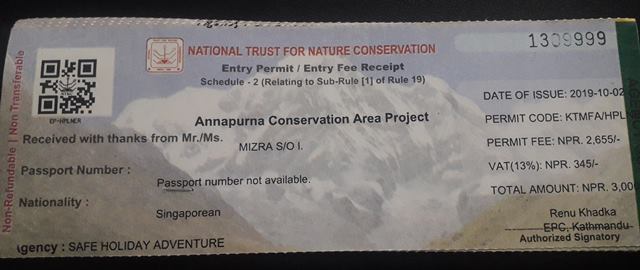
The Ghorepani Poon Hill trek requires two permits: the Annapurna Conservation Area Permit (ACAP) and the Trekkers’ Information Management System (TIMS) card. Both are mandatory for entry into the trekking region and are checked at multiple checkpoints along the trail.
The ACAP costs around $30 per person and helps fund conservation efforts within the Annapurna Conservation Area. The TIMS card costs approximately $10 to $20, depending on whether you’re trekking independently or with a registered agency.
Both permits can be obtained in Kathmandu or Pokhara through the Nepal Tourism Board office, or arranged directly by your trekking agency before departure.
Pack light and only bring what you’ll actually use, since you’ll carry your own bag for most of the trek. You can easily buy or rent missing gear in Kathmandu or Pokhara before you start.

The Ghorepani Poon Hill trek is a popular, affordable, and short trekking route in Nepal, offering magical views of the Annapurna and Dhaulagiri ranges. With an easy-to-moderate difficulty level, it’s well-suited for beginners and typically takes 4–5 days to complete. Along the way, trekkers also get to experience the rich culture and traditions of local Gurung and Magar communities. Overall, it’s a must-visit trek for nature lovers and adventure seekers looking for stunning mountain views without a long or technical commitment.
An unforgettable multi-adventure holiday in Nepal | 10 Days / 9 Nights Are you looking for more than
Continue Reading
Most travellers plan Nepal for spring or autumn and never think of winter. That is a missed chance.
Continue Reading
The higher you walk toward Annapurna Base Camp, the smaller your world becomes. Rooms shrink, lights
Continue Reading
Most people plan the Annapurna Circuit around one single moment: standing under the prayer flags at
Continue Reading
Travelling to Nepal and exploring the Himalayas had been one of our biggest travel dreams. When nine
Continue Reading
Imagine this. You are standing in Namche Bazaar, the horseshoe-shaped Sherpa town at 3,440 metres, w
Continue Reading