
3 Nov 2026 13 min to read
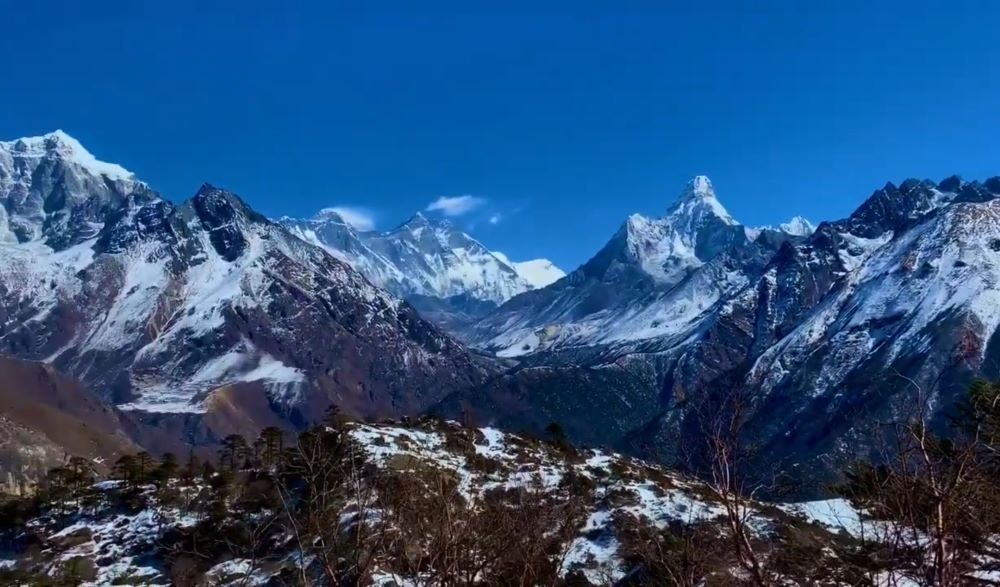
Imagine this. You are standing in Namche Bazaar, the horseshoe-shaped Sherpa town at 3,440 metres, with a mug of ginger tea warming your hands. The prayer flags are snapping in the wind, Thamserku glows in the late light, and your knee has just started to complain about the long climb up from Phakding. Ahead lie days of walking. Behind you lies the long trail back to Lukla, and a flight that may or may not take off tomorrow.
This is the exact moment many trekkers start typing the same question into their phones: how much does a helicopter from Namche Bazaar to Kathmandu cost?
It is one of the most searched questions around the Everest region, and also one of the most confusingly answered. So let us talk about it honestly, the way a guide would explain it over dinner at a teahouse.
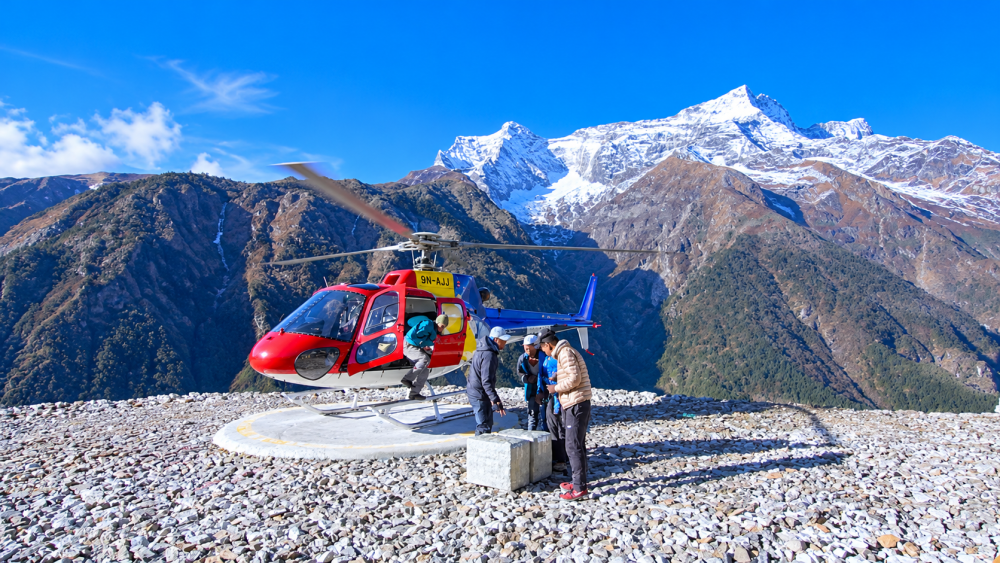
For 2026 and 2027, a private helicopter charter from Namche Bazaar to Kathmandu typically falls somewhere between USD 3,200 and USD 3,800 for the whole aircraft, which usually carries up to five passengers. If you can join a shared flight, the price per person often lands around USD 700 to USD 800, depending on the season, the operator, and how many seats are filled.
Those figures are realistic planning ranges, not fixed tariffs. Helicopter prices in Nepal move with fuel, demand and weather, so always ask your operator for a written, current quote before you commit. Now let us look at why the number moves, because understanding that is how you avoid overpaying.
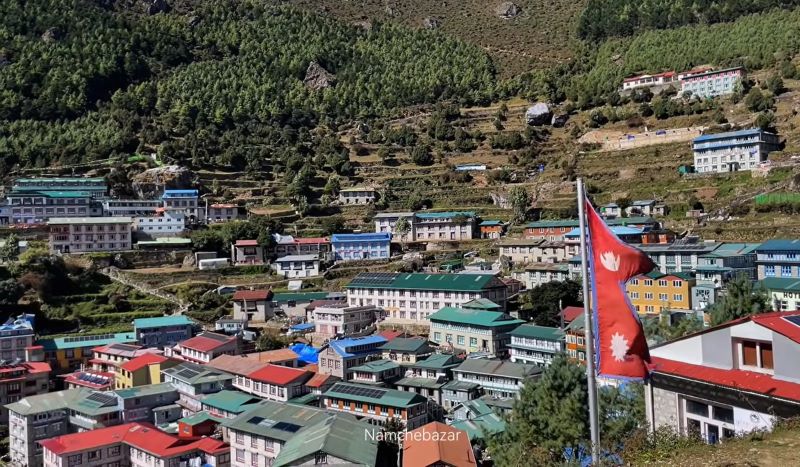
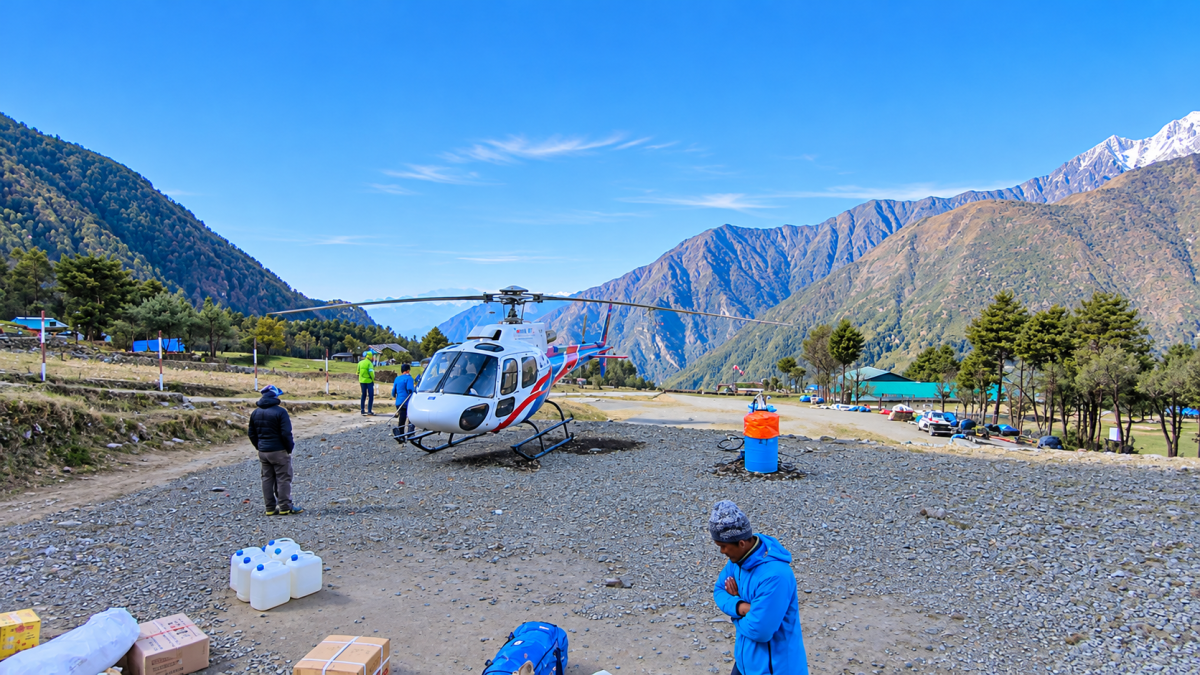
Here is a detail most blogs skip. The village of Namche Bazaar itself is built on a steep hillside with very little flat ground. Most helicopter pick-ups for the area happen from the nearby Syangboche airstrip, a short, high-altitude strip roughly a steep walk or a short ride above the town, or from other safe landing spots arranged by the pilot on the day.
So when someone says “Namche to Kathmandu,” they usually mean a pick-up in the Namche and Syangboche area, a flight of around 45 to 60 minutes depending on routing and weather, and a landing at Kathmandu’s Tribhuvan International Airport or a nearby helipad. In some cases the pilot stops at Lukla or Ramechhap to refuel or to drop other passengers. Those stops can affect timing but should not surprise you on the invoice if everything is agreed up front.
Think of the helicopter fare as a recipe with several ingredients. Change one, and the total changes with it.
Private charter or shared seat. This is the biggest lever. A private charter means the whole helicopter is yours, so you pay for the aircraft, not the seat. A shared flight splits that cost across several trekkers heading the same way. Shared seats are cheaper per head but depend on other people’s plans and on enough passengers being ready at the same time.
The season. October and November, then March to May, are the busiest trekking months. Everyone wants to leave the mountains when the weather turns, and demand pushes prices up. In the quieter winter and monsoon months you may find more flexibility, though monsoon cloud brings its own flying problems.
Fuel and altitude. A helicopter working at 3,500 metres and above burns more fuel and carries a lighter load than it would at sea level. This is why mountain flights cost far more than the same distance in the lowlands.
Number of passengers and luggage. Most helicopters used for Everest region flights carry about five people including baggage limits, which are tighter than on a normal flight. Heavy duffel bags can mean a second trip or an extra charge.
Route and extra landings. A straight run to Kathmandu is the simplest. Adding a stop at Lukla, a side trip, or a different Kathmandu landing point can add to the price.
Booking style. Booking through a trusted local operator, rather than through several middlemen, usually keeps the quote honest. Every extra hand in the chain takes a small cut.
This is the part that matters most for your wallet and your safety.
A planned charter is when you decide to fly out, perhaps because of bad weather grounding the Lukla flights, a blister that has turned into a real problem, or simply because you have a tight schedule and want to be back in Kathmandu by evening. You choose the date and the operator, and you pay a known price.
A rescue or emergency evacuation is different. This happens when someone is seriously ill, often with altitude sickness, or injured. The flight is ordered because of a medical need, often through your guide, the nearest health post or your insurance company. The cost is usually billed through the operator and then claimed back from your insurer.
The big lesson is this: never head to the Everest region without travel insurance that explicitly covers helicopter evacuation up to at least 5,000 meters. Many policies exclude trekking at altitude or cap the payout. Read the small print, and keep your policy number somewhere your guide can reach it. In a genuine emergency, operators and insurers need to confirm coverage quickly, and a well-prepared trekker saves valuable hours.
If you want an independent view on local safety and logistics, the team at Nepal Everest Guide shares practical advice from guides who work the Everest trails every season.
Let us be fair. Walking down is the traditional way, and for most healthy trekkers it is a beautiful part of the journey. But there are good reasons to fly.
The first is weather delays at Lukla. Flights between Lukla and Kathmandu, or Ramechhap, are famously unreliable. A few days of cloud can leave a whole group stuck, and international flights home do not wait. A helicopter often flies when small planes cannot, because it can use different routes and wait for short clear windows.
The second is health and comfort. Knees, ankles, colds and chest infections can turn the walk down into a slow struggle. Choosing a flight early is far better than pushing on until a problem becomes dangerous.
The third is time. Not everyone has two spare weeks. Some trekkers walk up to Namche, enjoy the Sherpa culture and the views toward Everest, and then fly back to continue a business trip or family holiday.
The fourth is a simple desire for a different experience. A scenic flight over the Khumbu Valley, with Ama Dablam and the Dudh Koshi River below, is something many people remember for life.
On the morning of your flight, your guide or operator confirms the pilot’s go-ahead. Mountain weather decides everything, and the clearest air is usually early, so pick-ups are often scheduled soon after sunrise.
You transfer to the pick-up point, where the crew weighs passengers and bags for safe balance. After a short safety briefing, you climb aboard, buckle up and lift off. The first ten minutes are unforgettable, because the valley drops away in a rush of green terraces, silver river and white peaks.
About an hour later, the capital’s brown haze and spread of rooftops appear. You land in Kathmandu, often before most trekkers who started walking at dawn would have finished their first long day. By lunchtime you can be showered, fed and checking into a hotel. For anyone who has spent days in cold teahouses, that contrast feels almost surreal.
You do not have to accept the first figure you hear. These habits keep the final bill fair.
Start by asking for a written quote that clearly states what is included: landing fees, fuel, taxes, number of seats, baggage allowance and the drop-off point. Vague quotes cause arguments later.
Next, be flexible if you can. A shared flight on a day that suits several groups is always cheaper than forcing a private charter for two.
Then, book through a licensed operator. Check that the operator and the helicopter company are registered in Nepal. A trusted trekking company such as Safe Holiday Adventure can arrange this alongside your trek, so there is one point of contact when plans change.
Also, travel in a group. Four or five friends splitting a charter pay far less each than a solo traveller.
Finally, carry your insurance details, and agree on payment terms. Know whether the operator expects cash, card or a bank transfer before the flight, so that you are not forced to find money in a remote village.
Trekkers often make the same few errors, and every one is avoidable.
One is assuming the cheapest price is the best. A very low quote can hide poor maintenance or an unlicensed operator. Mountain flying demands skill and experience, so safety must come before savings.
Another is ignoring weight limits. If your bag is too heavy, it may be left behind or charged extra. Pack light, and keep essentials such as medication and your passport in your hand luggage.
A third is waiting too long to decide. If your body is telling you something is wrong, act early. Altitude problems get worse, not better, if you keep climbing or stay high.
And the last is forgetting that flights depend on weather. Even a confirmed booking can be delayed by clouds or wind. Build a spare day into your plan if your international flight is close.
There is no single answer. For a trekker in perfect health with plenty of time, the walk down is cheaper and rewarding in its own way. For someone facing a missed flight, an injury or an urgent return, the cost can feel small compared with the stress it removes.
Think of it as buying certainty and comfort at a high-altitude price. If that fits your plans and your budget, it is a sensible choice. If not, there is no shame in walking.
1. How can I travel from Namche Bazaar to Kathmandu by helicopter?
You can book a helicopter flight directly from Namche Bazaar to Kathmandu. The helicopter usually operates from a suitable landing area near Namche, depending on weather, visibility and operational conditions.
2. How long does a helicopter flight from Namche Bazaar to Kathmandu take?
A direct helicopter flight generally takes around 45–60 minutes, depending on weather conditions, flight routing and operational requirements.
3. How much does a helicopter flight from Namche Bazaar to Kathmandu cost?
The cost depends on whether you book a private charter or share the helicopter with other passengers. Shared flights are generally more affordable, while private charters cost more.
4. Can I book a shared helicopter from Namche Bazaar to Kathmandu?
Yes, shared helicopter flights may be available depending on passenger demand and flight arrangements. You can share the cost with other trekkers travelling in the same direction.
5. Can I book a private helicopter from Namche Bazaar to Kathmandu?
Yes. Private helicopter charters can be arranged for individuals, families and groups. They offer greater flexibility, subject to weather and flight permissions.
6. Is a helicopter available from Namche Bazaar to Kathmandu every day?
Helicopter services are available depending on weather, visibility, passenger demand and operational conditions. Flights are not guaranteed every day.
7. Can I take a helicopter from Namche Bazaar to Kathmandu in an emergency?
Yes. Helicopter evacuation can be arranged for trekkers experiencing serious illness, altitude sickness or injuries. Availability depends on weather, landing conditions and necessary flight clearances.
8. Can I use my travel insurance for a helicopter evacuation from Namche Bazaar?
Yes, if your travel insurance covers helicopter evacuation and high-altitude trekking. Contact your insurance provider for approval and follow its emergency assistance procedures.
9. What is the best time to take a helicopter from Namche Bazaar to Kathmandu?
Morning is generally preferable because weather and visibility are often more suitable for mountain flights. However, actual departure times depend on operational conditions.
10. Can bad weather cancel a helicopter flight from Namche Bazaar?
Yes. Heavy rain, snow, strong winds, fog and poor visibility can delay or cancel helicopter flights. Safety always comes first.
11. How many passengers can a helicopter carry from Namche Bazaar?
Passenger capacity depends on the helicopter model, altitude, weather, luggage weight and fuel requirements. At high altitudes, the number of passengers may be limited.
12. Is it possible to fly directly from Namche Bazaar to Kathmandu without stopping?
Yes, direct flights are possible. However, depending on passenger weight, weather, fuel requirements and operational conditions, additional stops or arrangements may sometimes be necessary.
13. Can I book a helicopter from Namche Bazaar to Kathmandu at the last minute?
Yes, last-minute bookings may be possible if a helicopter and suitable flight arrangements are available. However, advance booking is recommended, especially during the busy trekking seasons.
14. Is a helicopter flight from Namche Bazaar to Kathmandu safe?
Helicopter flights are operated by experienced pilots following aviation safety procedures. Flights are conducted only when weather, visibility, aircraft performance and operational conditions are considered suitable.
15. How much luggage can I carry on a helicopter from Namche Bazaar?
Luggage allowance depends on the helicopter, passenger numbers and total weight. Because of the high altitude, baggage allowances may be restricted. Confirm your luggage weight before departure.
16. Can I fly from Namche Bazaar to Kathmandu if I have altitude sickness?
Yes, helicopter evacuation may be arranged if you experience altitude sickness. If symptoms are serious, seek immediate medical attention and descend as quickly as safely possible. Do not wait for symptoms to become severe.
17. Where does the helicopter land in Kathmandu?
Helicopters generally land at Tribhuvan International Airport’s designated helicopter landing area, subject to airport arrangements and operational clearance.
18. Can I book a helicopter from Namche Bazaar to Kathmandu for my entire trekking group?
Yes. Private helicopter arrangements can be made for trekking groups. However, multiple flights may be necessary depending on passenger numbers, luggage and aircraft capacity.
19. What happens if my helicopter flight from Namche Bazaar to Kathmandu is delayed?
If weather or operational conditions prevent departure, you may need to wait until conditions improve. Your helicopter operator or travel agency can provide updates and help arrange alternative plans if necessary.
20. How can I book a helicopter from Namche Bazaar to Kathmandu?
You can book through a registered helicopter operator or a reliable local travel agency in Nepal. Provide your travel date, number of passengers, luggage details and whether you prefer a shared or private flight.
The Namche Bazaar to Kathmandu helicopter flight cost is not one number but a range shaped by season, seats, fuel and weather. Plan ahead, insist on a clear written quote, choose a licensed operator and carry proper insurance. Do that, and the flight becomes a calm, comfortable end to your Everest adventure rather than a stressful scramble.
If you would like help planning your trek, a flexible return option, or a complete Everest itinerary, the team at Safe Holiday Adventure is happy to guide you, and for more local insight, you can also explore nepaleverestguide.com.

Namche Bazaar is where the Everest trail makes its biggest decision. Most trekkers turn right toward
Continue Reading
Nepal is famous for Mount Everest, the Annapurna Himalayas, ancient temples, traditional villages, a
Continue Reading
There is a moment at Annapurna Base Camp when the sun touches the rim of the sanctuary and every pea
Continue Reading
There is a moment on the Annapurna Circuit that every trekker thinks about for days. It happens in t
Continue Reading
Most people walk to Everest Base Camp and then walk back down the same valley. The Three Passes Trek
Continue Reading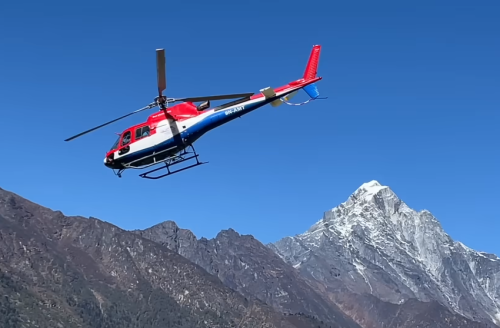
There is a moment on every Everest trek when your legs have an opinion. For most people, it arrives
Continue Reading