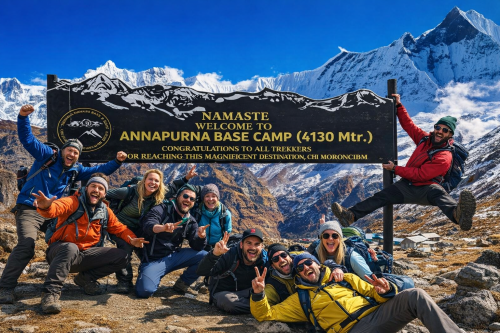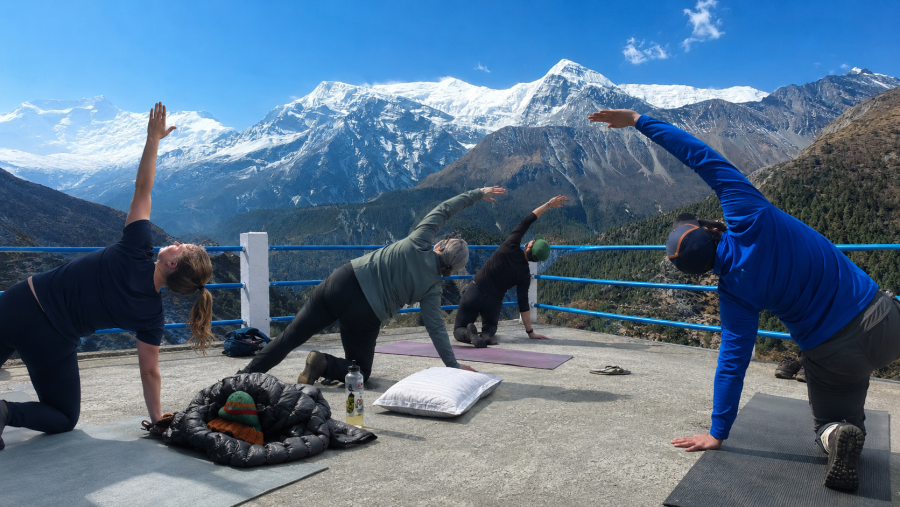
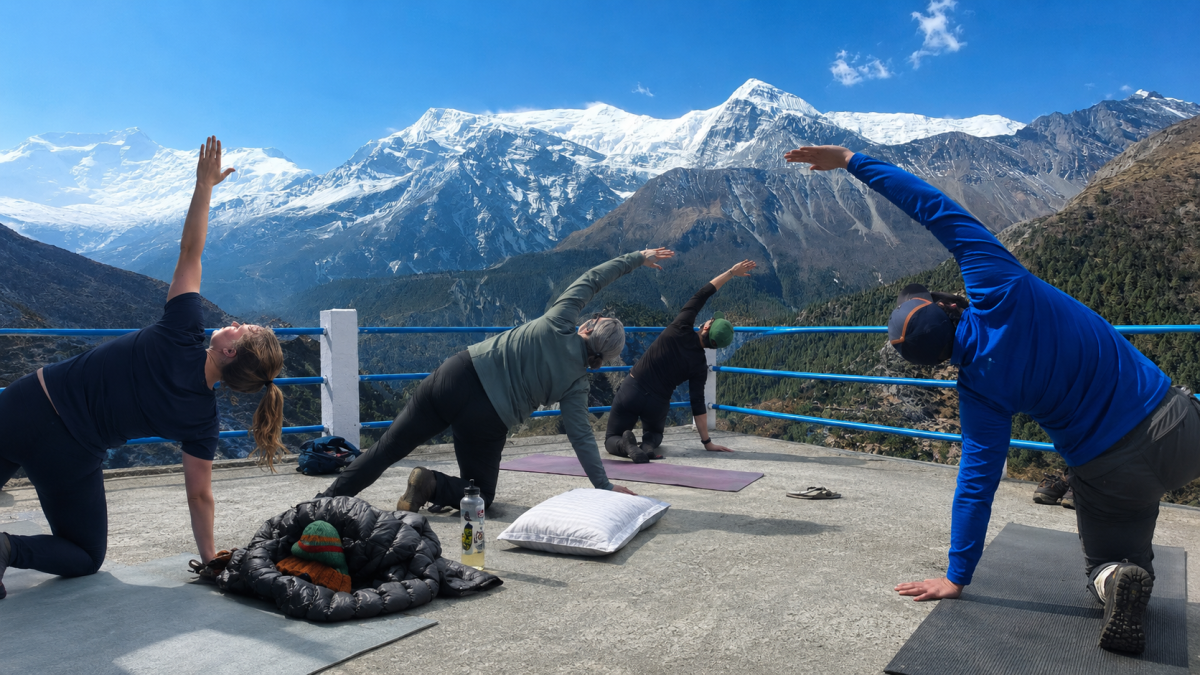

Annapurna Circuit Yoga Trek Highlights: Highlights
- Daily Yoga & Meditation: Rejuvenate your body and mind with guided yoga, breathing exercises, and mindfulness sessions in the Himalayas.
- Classic Annapurna Circuit Experience: Trek one of Nepal’s most iconic routes from Dharapani to the sacred pilgrimage site of Muktinath.
- Spectacular Mountain Views: Enjoy breathtaking panoramas of Annapurna II, III, IV, Gangapurna, Tilicho Peak, Chulu East, Dhaulagiri, and Nilgiri.
- Scenic Upper Trail Route: Follow the beautiful Upper Pisang, Ghyaru, and Ngawal trail, renowned for its dramatic landscapes and cultural charm.
- Authentic Himalayan Culture: Discover traditional Gurung, Manangi, and Tibetan-influenced villages, monasteries, and ancient mountain traditions.
- Acclimatization in Manang: Relax and adapt to altitude in the picturesque village of Manang, surrounded by glaciers, peaks, and alpine scenery.
- Thorong La Pass (5,416m): Conquer one of the world’s highest and most famous trekking passes with unforgettable Himalayan views.
- Spiritual Muktinath Visit: Explore the sacred Muktinath Temple, 108 holy water spouts, monasteries, and eternal flame.
- Natural Hot Springs at Chame: Soothe tired muscles in Chame’s famous hot springs beside the Marshyangdi River.
- Wellness, Adventure & Nature: Experience the perfect combination of trekking, yoga, culture, spirituality, and personal transformation in the Himalayas.
Annapurna Circuit Yoga Trek Introduction: Overview
9 Days Annapurna Circuit Yoga Trek – A Journey of Adventure, Wellness & Himalayan Inspiration
The Annapurna Circuit Yoga Trek is far more than a mountain holiday—it’s a life-changing journey that combines the thrill of trekking with the healing power of yoga, meditation, and mindfulness in the heart of the Nepalese Himalayas. Carefully designed by Safe Holiday Adventure, this 9-day Annapurna Circuit Yoga Trek package is ideal for travelers who wish to experience the legendary Annapurna Circuit while nourishing both body and mind. From the bustling streets of Kathmandu, the adventure begins with a scenic drive to Besisahar, followed by an exciting 4WD jeep ride along rugged mountain roads to Dharapani (1,960 m), where your first night is spent surrounded by pine forests and the soothing sound of the Marshyangdi River. Every morning begins with gentle yoga and breathing exercises, helping you improve flexibility, boost energy, and prepare for each day’s walk. Throughout the journey, you’ll discover charming Himalayan villages, colorful Buddhist monasteries, fluttering prayer flags, dramatic valleys, and breathtaking views of snow-covered giants, creating the perfect balance between adventure, culture, and personal wellness. The Annapurna Circuit Yoga Trek is not simply about reaching a destination—it’s about embracing nature, finding inner peace, and creating unforgettable memories in one of the world’s greatest trekking regions.
Your adventure starts with a picturesque drive from Kathmandu to Besisahar, passing green hills, terraced farms, rivers, and traditional Nepalese villages. From Besisahar, a thrilling 4WD jeep journey continues through Syange, Jagat, Tal, and Chamje before reaching Dharapani, a beautiful village where Tibetan and Gurung cultures blend harmoniously. Surrounded by waterfalls, forests, and towering cliffs, Dharapani offers the perfect environment for your first overnight stay. After an evening yoga session and a nourishing Himalayan meal, you’ll be refreshed and ready to begin trekking into the spectacular Annapurna region.
The trail from Dharapani gradually climbs through Bagarchhap, Danaque, Timang, and Koto before arriving at Chame (2,670 m), the lively headquarters of Manang District. Chame is famous for its relaxing natural hot springs, located beside the beautiful Marshyangdi River, where trekkers often soothe tired muscles after a rewarding day’s hike. From here, magnificent views of Annapurna II (7,937 m), Lamjung Himal (6,983 m), and Pisang Peak (6,091 m) dominate the skyline. Continuing through a dramatic rock canyon, you reach Upper Pisang (3,300 m), one of the most picturesque villages on the circuit, decorated with ancient monasteries, prayer wheels, and traditional stone houses.
The journey then follows the spectacular upper trail through Ghyaru and Ngawal, where panoramic views become even more breathtaking. Snow-covered peaks such as Annapurna III (7,555 m), Annapurna IV (7,525 m), Gangapurna (7,455 m), Tilicho Peak (7,134 m), and Chulu East (6,584 m) rise dramatically above the valley. Passing Humde, with its small mountain airstrip, and the peaceful village of Braga, home to one of the oldest Buddhist monasteries in the region, you finally arrive in Manang (3,540 m). Surrounded by apple orchards, alpine meadows, and crystal-clear streams, Manang is the perfect place for acclimatization, meditation, and yoga practice. Gentle breathing exercises help your body adapt to the higher elevation while reducing the risk of altitude sickness, allowing you to continue safely toward the high Himalayas.
Leaving Manang, your Annapurna Circuit Yoga Trek becomes increasingly adventurous as the trail follows the wide river valley toward Yak Kharka (4,050 m). The path is mostly gradual and easy, winding past grazing yaks, scattered teahouses, alpine shrubs, and peaceful Himalayan landscapes. After lunch at Yak Kharka, the trail continues to Thorong Phedi (4,525 m) or High Camp (4,850 m), depending on weather conditions and your fitness level. This section is steeper and requires a slow, steady pace, making proper acclimatization essential.
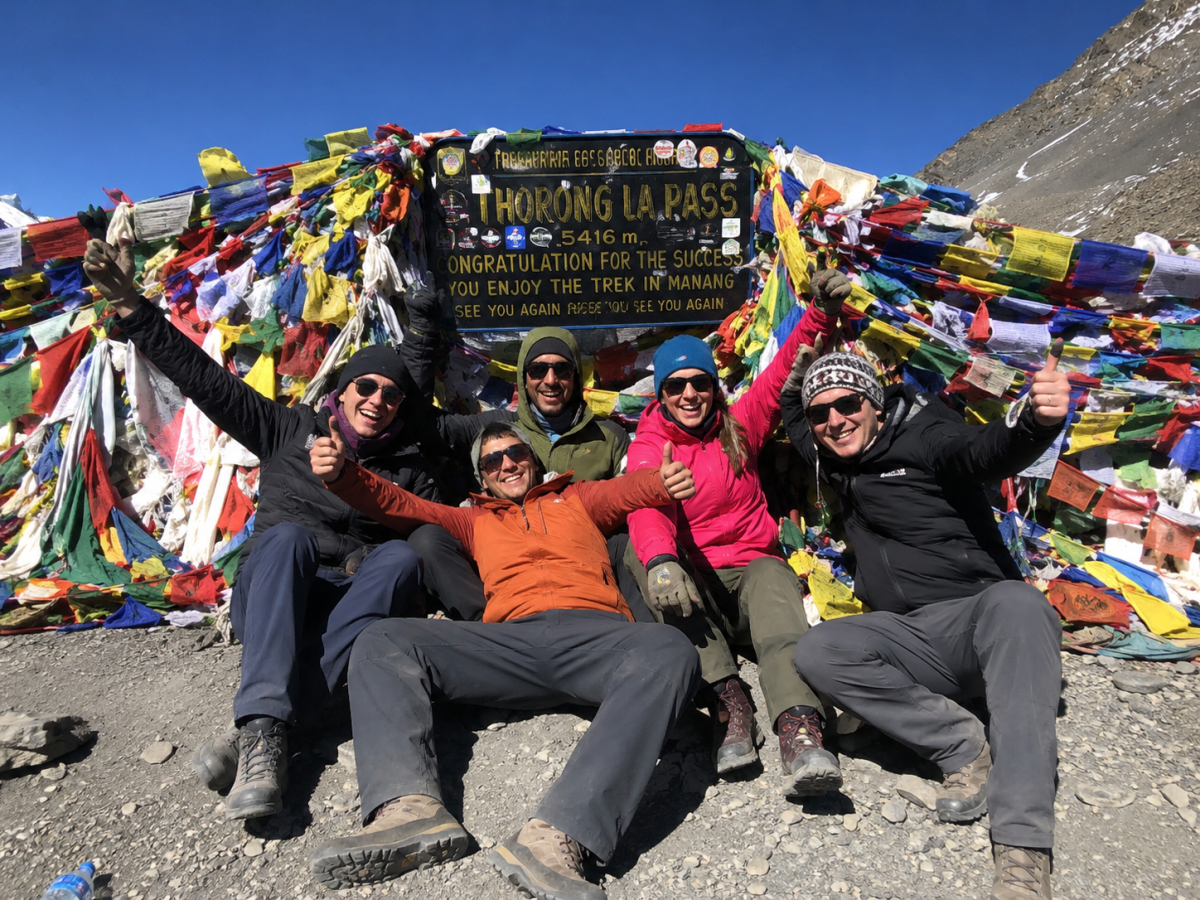
Before dawn, you begin the unforgettable ascent to Thorong La Pass (5,416 m), the highest point of the trek and one of Nepal’s most celebrated mountain crossings. Although the climb is physically demanding because of the altitude and thin air, every step is rewarded with extraordinary panoramic views stretching across the Annapurna, Dhaulagiri, Nilgiri, and Damodar Himal ranges. Standing beneath colorful prayer flags at the summit is an emotional achievement that remains with trekkers for a lifetime. After celebrating this remarkable milestone, the trail descends steadily to the sacred pilgrimage town of Muktinath (3,800 m), where you spend the night surrounded by spiritual tranquility.
Muktinath is one of Nepal’s most sacred destinations, attracting both Hindu and Buddhist pilgrims from around the world. During your stay, visit the famous Muktinath Temple, the 108 holy water spouts, the eternal natural flame, peaceful monasteries, and colorful stupas that make this place deeply spiritual. After a refreshing morning yoga session with magnificent mountain views, your journey continues by vehicle through Jomsom, Marpha, and Tatopani, where you can enjoy the area’s famous natural hot springs. Travelers with a few extra days can extend their Himalayan adventure by trekking to the world-renowned Ghorepani Poon Hill, famous for its spectacular sunrise over Dhaulagiri (8,167 m) and the Annapurna Massif. If time is limited, you’ll continue directly to the beautiful lakeside city of Pokhara, where your unforgettable Annapurna Circuit Yoga Trek comes to a rewarding conclusion.
At Safe Holiday Adventure, we have thoughtfully designed this journey for travelers who seek much more than a traditional trekking holiday. By combining professional local guides, carefully planned acclimatization, daily yoga and meditation, authentic Himalayan hospitality, and one of the world’s most iconic trekking routes, we create an experience that rejuvenates both body and soul. Whether your dream is to stand atop Thorong La Pass (5,416m), meditate beneath the towering peaks of the Annapurna range, explore ancient mountain villages, or simply reconnect with nature, this carefully crafted itinerary delivers an unforgettable adventure. Join Safe Holiday Adventure on the Annapurna Circuit Yoga Trek and discover why the Himalayas are not only a destination for trekking, but also a place for healing, inspiration, and lifelong memories.
Who Can Join a Yoga Trek?
A Yoga Trek is designed for anyone who enjoys nature, walking, and a healthy lifestyle. It is perfect for beginners, experienced trekkers, solo travelers, couples, friends, and wellness seekers. You do not need previous yoga experience, as all sessions are simple, relaxing, and suitable for every level.
If you have a basic level of fitness and a desire to explore the Himalayas while practicing yoga, meditation, and mindfulness, this trek is an ideal choice. It combines scenic mountain trails with daily wellness practices, creating a rewarding journey for both your body and mind.
Why Choose the Annapurna Circuit Yoga Trek?
The Annapurna Circuit Yoga Trek is a perfect blend of mountain adventure, daily yoga, cultural discovery, and mindful wellness. Here are the top reasons to choose this unique Himalayan experience:
- Daily Yoga & Meditation: Improve flexibility, breathing, and mental well-being with guided yoga and meditation in the peaceful Himalayas.
- Legendary Trekking Route: Follow one of Nepal’s most famous trekking trails and cross the spectacular Thorong La Pass (5,416 m).
- Magnificent Mountain Views: Admire stunning peaks including Annapurna II (7,937 m), Annapurna III (7,555 m), Gangapurna (7,455 m), and Tilicho Peak (7,134 m).
- Authentic Himalayan Villages: Explore charming villages like Dharapani, Chame, Upper Pisang, Manang, and Muktinath, each rich in local culture.
- Natural Hot Springs: Relax at the famous Chame Hot Spring after a rewarding day of trekking.
- Rich Buddhist Heritage: Visit ancient monasteries, colorful prayer flags, sacred stupas, and traditional mountain communities.
- Safe Acclimatization: A well-planned itinerary with gradual altitude gain helps reduce the risk of altitude sickness.
- Sacred Muktinath Temple: Discover one of Nepal’s most important pilgrimage sites, renowned for its 108 holy water spouts and eternal flame.
- Comfortable Transportation: Travel by scenic road from Kathmandu to Dharapani and enjoy a comfortable drive from Muktinath to Pokhara.
- Optional Poon Hill Extension: Add the Ghorepani Poon Hill Trek if you have extra time for a spectacular Himalayan sunrise.
- Expert Local Guides: Trek with the experienced team at Safe Holiday Adventure for a safe, enjoyable, and memorable journey.
How to Prepare for the Annapurna Circuit Yoga Trek?
A little preparation goes a long way in making your Annapurna Circuit Yoga Trek safe, enjoyable, and rewarding. Follow these essential tips before starting your Himalayan adventure.
- Build Your Fitness: Train for 4–6 weeks with regular walking, hiking, jogging, or cycling to improve your endurance.
- Practice Yoga: Improve your flexibility, balance, and breathing with yoga sessions 2–3 times a week.
- Prepare for High Altitude: Learn about Altitude Sickness (AMS), stay hydrated, and follow a gradual pace throughout the trek.
- Pack Smart: Carry only the essential trekking gear, including warm clothing, waterproof layers, and comfortable hiking boots.
- Break In Your Boots: Wear your trekking boots before your trip to prevent blisters and improve comfort.
- Stay Hydrated: Drink 3–4 litres of water daily to support acclimatization and maintain your energy.
- Eat Nutritious Food: Choose healthy, energy-rich meals before and during the trek to keep your body strong.
- Carry Important Documents: Bring your passport, travel insurance, trekking permits, and emergency contacts for a hassle-free journey.
- Choose the Right Season: Trek during spring (March–May) or autumn (September–November) for the best weather and mountain views.
- Maintain a Positive Mindset: Enjoy every step, embrace the yoga and meditation experience, and appreciate the beauty of the Himalayas.
With proper preparation, you’ll be ready to enjoy an unforgettable Annapurna Circuit Yoga Trek, where adventure, wellness, and breathtaking Himalayan scenery come together in one incredible journey.
How to Book the Annapurna Circuit Yoga Trek with Us?
Booking your Annapurna Circuit Yoga Trek with Safe Holiday Adventure Pvt. Ltd. is easy and convenient. Simply contact our team with your preferred travel dates, group size, and any special requirements. We will help you choose the best itinerary and take care of all the essential arrangements, including trekking permits, transportation, accommodation, experienced guides, and daily yoga sessions.
At Safe Holiday Adventure Pvt. Ltd., we are dedicated to providing a safe, personalized, and unforgettable trekking experience. From your first inquiry until the end of your journey, our local experts will ensure every detail is professionally managed, allowing you to enjoy the perfect blend of Himalayan adventure, yoga, and wellness with complete peace of mind.
Annapurna Circuit Yoga Trek Itinerary:Outline Itinerary
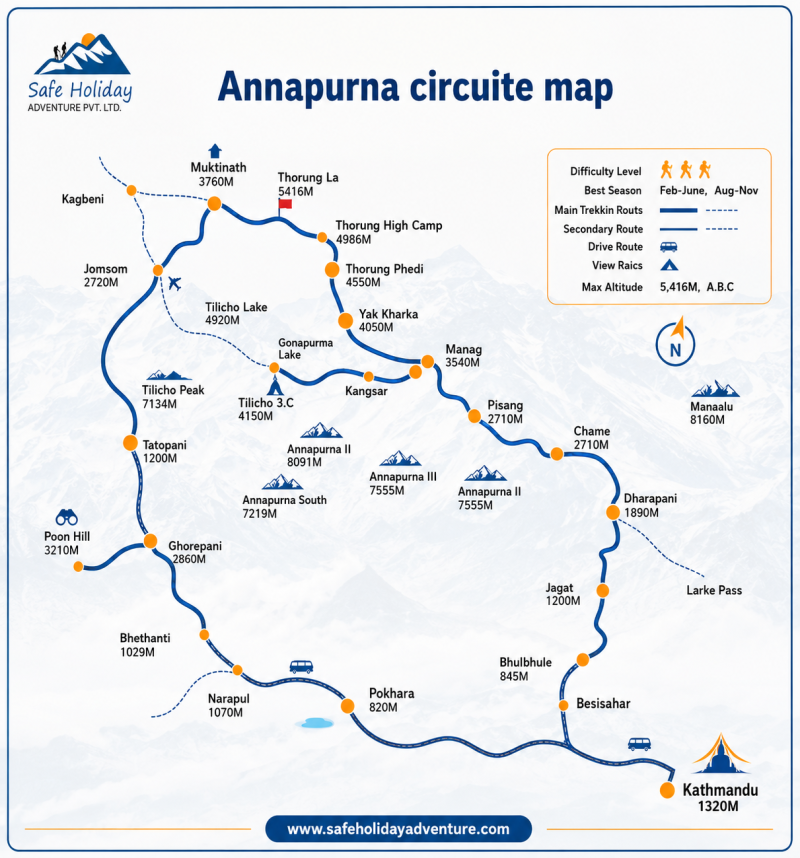
Day 1: Drive from Kathmandu (1,400m) to Dharapani (1,860m) via Besisahar (8–9 hours) and enjoy an evening yoga session.
Day 2: Trek 15.5 km (5–6 hours) from Dharapani (1,860m) to Chame (2,670m) through beautiful forests, waterfalls, and traditional villages.
Day 3: Trek 14 km (5–6 hours) from Chame (2,670m) to Upper Pisang (3,300m) with spectacular views of the Annapurna range.
Day 4: Trek 16 km (5–6 hours) from Upper Pisang (3,300m) to Manang (3,540m) via the scenic upper trail and ancient monasteries.
Day 5: Acclimatization Day at Manang (3,540m) with a short 4–6 km hike to a nearby viewpoint, followed by yoga and meditation.
Day 6: Trek 10 km (4–5 hours) from Manang (3,540m) to Yak Kharka (4,200m) through the alpine landscape.
Day 7: Trek 7 km (3–4 hours) from Yak Kharka (4,050m) to Thorong Phedi (4,525m) or High Camp (4,925m) and prepare for the pass crossing.
Day 8: Trek 16 km (7–9 hours) across Thorong La Pass (5,416m) to Muktinath (3,800m), one of the most rewarding days of the Annapurna Circuit.
Day 9: Drive from Muktinath (3,800m) to Pokhara (822m) (7–9 hours), marking the end of your unforgettable Annapurna Circuit Yoga Trek.
Annapurna Circuit Yoga Trek Service:
- Jeep Transportation: Comfortable jeep transfer as mentioned in the itinerary ( Besisahar to Dharapani).
- Teahouse Accommodation: Overnight stays at local lodges and teahouses throughout the yoga trek.
- Trekking Permits: Annapurna Conservation Area Permit (ACAP) and TIMS Card arrangements.
- Daily Yoga Practice: Guided yoga and meditation sessions with an experienced professional Yoga Instructor.
- Licensed Trekking Guide: Experienced English-speaking guide with insurance, meals, accommodation, and allowances covered.
- Yoga Instructor Support: Instructor’s insurance, meals, and accommodation included.
- Full Board Meals: Three daily meals (Breakfast, Lunch, and Dinner) during the trek.
- Healthy Trekking Drinks: Herbal beverages including green tea, ginger tea, and coffee.
- Fresh Fruits: Seasonal fresh fruits are provided during the trekking journey after Dinner.
- Yoga Equipment: Travel-friendly yoga mat and meditation mat provided.
- Trekking Equipment: Complimentary duffel bag and Company T-shirt.
- First Aid Support: Basic first aid kit including Diamox for altitude-related support.
- Government Taxes: All applicable local and government taxes included as per the itinerary.
Dates and Availability Departures
All our published dates are guaranteed departures. We also provide customized departures tailored to your travel plans.
October 2026
November 2026
December 2026
Travellers Reviews
Emily Carter
Australia | march, 2025
An Unforgettable Annapurna Circuit Yoga Trek Experience
Our 9-Day Annapurna Circuit Yoga Trek was an incredible experience from beginning to end. The combination of breathtaking Himalayan scenery, daily yoga, and peaceful meditation created the perfect balance of adventure and wellness.
Our guide, Santosh, was professional, knowledgeable, and genuinely caring. He made sure everyone was comfortable throughout the trek and shared fascinating insights into Nepalese culture, nature, and the Annapurna region. His calm and positive attitude made every day enjoyable.
The itinerary was well organized, allowing us to enjoy the stunning mountain views while maintaining a comfortable pace. The yoga and meditation sessions each morning and evening helped us relax, recover, and connect with the beauty of the Himalayas.
The accommodations were clean and comfortable, the food was delicious, and the hospitality of the local tea houses was outstanding. Every detail of the trip was thoughtfully planned.
This trek exceeded all of our expectations. If you are looking for a unique Himalayan adventure that combines trekking, yoga, meditation, and authentic cultural experiences, we highly recommend the Annapurna Circuit Yoga Trek – 9 Days with Santosh.
Thank you for an unforgettable journey. We hope to return to Nepal for another adventure soon!
Genaral Trip InfoInfos
When Is the Best Time for Annapurna Circuit Yoga Trek in Nepal?
The best time for the Annapurna Circuit Yoga Trek is during spring (March to May) and autumn (September to November). These seasons offer stable weather, mild temperatures, clear Himalayan views, and dry trekking trails, creating the perfect environment for trekking, yoga, and meditation. The fresh mountain air and peaceful surroundings enhance your overall wellness experience while allowing you to enjoy the spectacular landscapes of the Annapurna region.
Although the trek is possible in winter (December to February) for experienced trekkers seeking solitude, colder temperatures and snowfall around Thorong La Pass (5,416 m) can make the journey more challenging. The monsoon season (June to August) brings frequent rainfall, slippery trails, and limited mountain views, making it the least recommended time for the Annapurna Circuit Yoga Trek. For the most rewarding experience, plan your adventure in spring or autumn, when nature is at its finest and every yoga session is surrounded by the breathtaking beauty of the Himalayas.
How Difficult Is the Annapurna Circuit Yoga Trek?
The Annapurna Circuit Yoga Trek is a moderately challenging Himalayan adventure that balances physical trekking with mindful recovery through daily yoga. While high-altitude sections, especially Thorong La Pass (5,416 m), require good fitness and proper acclimatization, yoga helps improve breathing, flexibility, and mental focus, making the journey feel more balanced, enjoyable, and rewarding rather than simply demanding.
What to Pack for a Annapurna Circuit Yoga Trek?
- Backpack (30–40L) with rain cover
- Duffel bag (if using a porter)
- Comfortable hiking boots
- Lightweight camp shoes or sandals
- Moisture-wicking trekking shirts
- Quick-dry trekking pants
- Thermal base layers
- Warm fleece or insulated jacket
- Waterproof and windproof outer jacket
- Waterproof trekking pants
- Down jacket (for higher altitudes)
- Warm hat and sun hat
- Buff or neck gaiter
- Lightweight gloves and insulated gloves
- Wool or synthetic trekking socks
- Yoga outfit (comfortable stretch clothing)
- Travel yoga mat (optional but recommended)
- Reusable water bottles or hydration bladder (2–3L)
- Water purification tablets or filter
- Trekking poles
- Headlamp with spare batteries
- Sunglasses with UV protection
- High-SPF sunscreen and lip balm
- Personal first-aid kit
- Prescription medications
- Blister treatment kit
- Quick-dry towel
- Toiletries and biodegradable soap
- Wet wipes and hand sanitizer
- Power bank and charging cable
- Camera or smartphone
- Passport, permits, and travel insurance copies
- Cash (Nepalese Rupees)
- Energy bars or trail snacks
Is the Annapurna Circuit Yoga Trek Suitable for Beginners?
Absolutely! No previous yoga experience is required to join the Annapurna Circuit Yoga Trek. The yoga sessions are designed for all levels, with gentle stretches, breathing exercises, and guided meditation that help reduce muscle fatigue, improve flexibility, and support acclimatization after each day’s hike.
Whether you are new to yoga or an experienced practitioner, this trek offers the perfect balance of adventure, wellness, and Himalayan serenity, allowing you to enjoy the journey at your own pace.
How Many Hours Do You Walk Each Day?
The Annapurna Circuit Yoga Trek includes 4–9 hours of walking each day, covering approximately 8–18 km, depending on the route and altitude.
- Shorter days (4–5 hours): Dharapani to Chame and Yak Kharka to Thorong Phedi.
- Moderate days (5–7 hours): Chame to Upper Pisang, Upper Pisang to Manang, and Manang to Yak Kharka.
- Longest day (7–9 hours): Thorong Phedi/High Camp to Muktinath via Thorong La Pass (5,416 m).
The itinerary is designed with a comfortable pace, regular breaks, and daily yoga sessions to help you recover and enjoy the trek safely.
What Food Is Served During the Annapurna Circuit Yoga Trek?
One of the pleasant surprises of the Annapurna Circuit Yoga Trek is the quality and variety of food available in the mountain teahouses. Every meal is freshly prepared after you order, giving you warm, nourishing dishes to fuel both your yoga practice and the day’s hike. While menus become simpler as you climb higher, you’ll always find wholesome meals that provide the energy needed for trekking in the Himalayas.
Healthy Breakfast to Start the Day
Each morning begins with a nutritious breakfast before yoga and trekking. Depending on the village, you can choose from porridge, muesli, Tibetan bread, toast, chapati, pancakes, French toast, or freshly cooked eggs. A hot cup of Nepali tea, ginger honey lemon tea, coffee, or hot chocolate is the perfect way to prepare for another day on the trail.
Fresh and Filling Lunch & Dinner
Lunch and dinner are served at local teahouses along the trekking route. The most popular choice is Dal Bhat, Nepal’s traditional meal of rice, lentil soup, seasonal vegetables, and homemade pickle. It is balanced, satisfying, and ideal for long days in the mountains.
If you prefer variety, many teahouses also prepare fried rice, chow mein, noodle soup, pasta, macaroni, momos, vegetable curries, potatoes, and simple pizzas in larger villages. The exact menu changes from one settlement to another, making each stop a little different.
Vegetarian Meals Are the Best Choice
Most trekkers choose vegetarian food during the trek because vegetables, grains, and dairy products are delivered more regularly than meat in the higher Himalayan villages. Vegetarian meals are fresh, nutritious, and easier to digest, especially at higher elevations where your body needs extra care.
Drinks and Light Snacks
Hot drinks are available throughout the trek and are perfect for staying warm. Popular choices include black tea, milk tea, ginger tea, peppermint tea, lemon honey tea, coffee, and hot chocolate. You can also buy snacks such as biscuits, chocolate, nuts, popcorn, and seasonal fruits whenever they are available.
Food That Supports Your Yoga Trek Experience
The meals served during the Annapurna Circuit Yoga Trek are simple rather than luxurious, but they are fresh, hygienic, and prepared with care by local families. Combined with daily yoga, clean mountain air, and breathtaking Himalayan scenery, these wholesome meals help keep your body energized and your mind refreshed throughout the journey.
WiFi, Hot Showers, Charging & Facilities on the Annapurna Circuit Yoga Trek:
During the Annapurna Circuit Yoga Trek, most teahouses provide WiFi, hot showers, battery charging, and comfortable rooms for an additional fee. These services are widely available in villages, although they become more limited and expensive at higher elevations.
Expect stronger WiFi and reliable facilities in places like Chame, Manang, and Muktinath, while remote areas near Thorong Phedi and High Camp may have slower internet, limited charging, and occasional power interruptions due to the mountain environment.
Annapurna Circuit Yoga Trek Weather by Month:
The Annapurna Circuit Yoga Trek can be enjoyed throughout the year, but each month offers different weather, trail conditions, and mountain views. Choosing the right season helps you enjoy both your trekking experience and daily yoga sessions.
January
January is one of the coldest months on the Annapurna Circuit. Daytime temperatures are pleasant at lower elevations, but nights above 3,500 meters often drop below -15°C. Clear skies provide spectacular Himalayan views, although Thorong La Pass (5,416 m) can receive heavy snowfall.
February
February remains cold but brings longer, sunnier days. Snow may still cover higher sections of the trail, while lower villages begin to warm slightly. It is a peaceful month for trekkers seeking quiet trails and crisp mountain scenery.
March
March marks the beginning of the spring trekking season. Rhododendron forests begin to bloom, temperatures become milder, and skies are generally clear. It is one of the best months for combining trekking with outdoor yoga.
April
April offers warm daytime temperatures, colorful landscapes, and excellent mountain visibility. The weather is stable, making it one of the most popular months for the Annapurna Circuit Yoga Trek.
May
May is warmer, especially below Manang. Mornings usually remain clear, while afternoon clouds become more common. Higher elevations are comfortable, and crossing Thorong La Pass is generally safe before the monsoon begins.
June
June is the start of the summer monsoon. Rainfall increases in the lower Annapurna region, but the Manang Valley lies in a rain shadow, receiving significantly less rain. Trails can become muddy below Chame.
July
July is the wettest month in most parts of Nepal. Lower sections experience frequent rain, while upper valleys remain relatively dry. Expect lush green scenery, fewer trekkers, and occasional cloud-covered mountain views.
August
August continues the monsoon season with warm temperatures and regular rainfall at lower elevations. Higher areas around Manang and Muktinath receive much less rain, making trekking still possible for experienced hikers.
September
September signals the end of the monsoon. Trails gradually dry, skies become clearer, and fresh greenery covers the hills. The second half of the month is an excellent time for the Annapurna Circuit Yoga Trek.
October
October is widely considered the best month for the trek. Stable weather, crystal-clear mountain views, comfortable temperatures, and dry trails create ideal conditions for trekking and yoga practice.
November
November remains dry with excellent visibility. Days are cool and pleasant, while nights become colder, especially above Yak Kharka. It is another peak trekking month with reliable weather.
December
December brings clear skies and fewer trekkers. Temperatures drop quickly at higher elevations, particularly around Thorong Phedi and Thorong La Pass. Despite the cold, it offers peaceful trails and breathtaking winter landscapes.
Best Months for the Annapurna Circuit Yoga Trek
- March–April: Blooming rhododendrons, comfortable temperatures, and excellent trekking conditions.
- October–November: Stable weather, crystal-clear Himalayan views, and ideal temperatures.
- Late September: Fresh landscapes with improving weather after the monsoon.
- December–February: Best for experienced trekkers who don’t mind cold temperatures and possible snow.
- June–August: Suitable if you prefer fewer crowds, although monsoon rain affects the lower sections of the trail.
What Permits Do You Need for the Annapurna Circuit Yoga Trek?
To join the Annapurna Circuit Yoga Trek, every trekker must obtain the Annapurna Conservation Area Permit (ACAP), which is required to enter the protected Annapurna region. This permit supports trail maintenance, environmental conservation, and local community development. Depending on the latest government regulations, a TIMS Card (Trekkers’ Information Management System) may also be required for certain trekkers. Most licensed trekking companies arrange all necessary permits before your journey begins. Always carry your passport, permits, and a few passport-sized photos, as permit checks are conducted at several checkpoints along the trekking route.
Detailed ItineraryItinerary
Drive from Kathmandu (1,400m) to Dharapani (1,860m) via Besisahar
Your Annapurna Circuit Yoga Trek begins with a scenic drive from Kathmandu to Dharapani. The journey follows the Prithvi Highway along the Trishuli and Marshyangdi River valleys, passing through beautiful countryside, terraced fields, waterfalls, and mountain villages. After reaching Besisahar, the road continues by local jeep through Jagat, Tal, and several traditional settlements before arriving at Dharapani, the official gateway of the Annapurna Circuit.
After checking into the local lodge, trekkers can relax and enjoy the peaceful mountain atmosphere. In the evening, a gentle yoga and meditation session helps refresh the body after the long drive and prepares you mentally for the upcoming trekking days.


Accommodation : Tea House at Dharapani Meals : Dinner
Trek from Dharapani (1,860m) to Chame (2,670m) – 15.5 km
After breakfast and a morning yoga session, the trek begins through the beautiful lower Manang region. The trail gradually climbs through dense pine and fir forests, crossing suspension bridges and passing stunning waterfalls. Along the way, trekkers walk through charming villages such as Bagarchhap, Danaque, and Timang, where traditional Tibetan-influenced culture can be observed.
The final section offers beautiful views of Lamjung Himal, Annapurna II, and Manaslu ranges before reaching Chame, the headquarters of Manang District. Chame is a developed mountain town with shops, bakeries, and comfortable lodges, making it a pleasant overnight stop.


Accommodation : Tea House at Chame Meals : Breakfast, Lunch & Dinner
Trek from Chame (2,670m) to Upper Pisang (3,300m) – 14 km
Today’s trail enters a more dramatic Himalayan landscape. After breakfast, trekkers walk through pine forests and narrow valleys alongside the Marshyangdi River. The trail passes through Bhratang, a former Khampa settlement area, where you can see beautiful apple orchards and impressive cliffs.
Continuing uphill, the scenery becomes more alpine, with the first close views of Pisang Peak, Annapurna II, Annapurna III, and Gangapurna. The trek ends at Upper Pisang, a traditional village with ancient monasteries and spectacular mountain views. The peaceful environment makes it an ideal place for evening yoga and relaxation.


Accommodation : Tea House at Upper Pisang Meals : Breakfast, Lunch & Dinner
Trek from Upper Pisang (3,300m) to Manang (3,540m) via Upper Trail – 16 km
Today is one of the most scenic trekking days of the Annapurna Circuit. After morning yoga and breakfast, trekkers follow the famous upper route through Ghyaru and Ngawal villages, offering some of the best panoramic views of the Annapurna mountain range.
The trail passes through ancient Buddhist monasteries, mani walls, and traditional stone villages while gradually gaining altitude. Along the way, trekkers enjoy breathtaking views of Annapurna II, Annapurna IV, Gangapurna, and Tilicho Peak.
The day finishes in Manang, a beautiful Himalayan settlement surrounded by mountains. Manang is the main acclimatization center of the Annapurna Circuit and provides excellent facilities for trekkers.

Accommodation : Guest House at Manang Meals : Breakfast, Lunch & Dinner
Acclimatization Day in Manang (3,540m) – Short Hike & Yoga Meditation
This is an important rest and acclimatization day before moving to higher elevations. Instead of staying completely inactive, trekkers take a short acclimatization hike of around 4–6 km to a nearby viewpoint such as Gangapurna Lake or the surrounding hills.
The short hike helps the body adjust to the increasing altitude while providing incredible views of glaciers, mountains, and the Manang Valley. After returning to the lodge, trekkers enjoy a relaxing yoga and meditation session focused on breathing, flexibility, and mental preparation for the challenging days ahead.
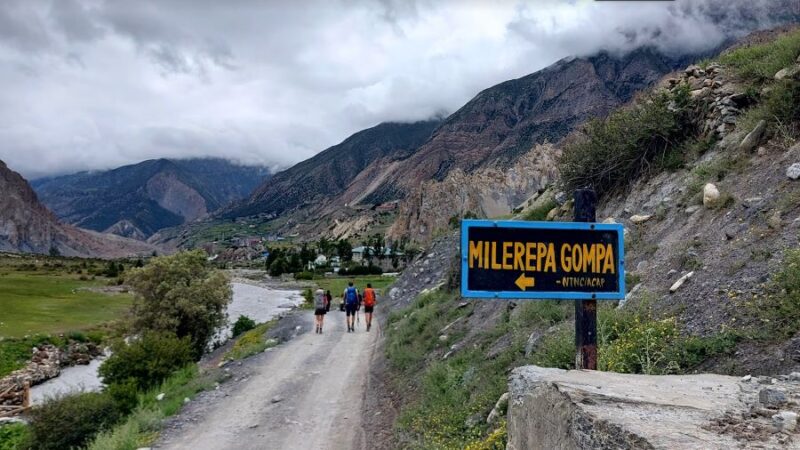
Accommodation : Guest House at Manang Meals : Breakfast, Lunch & Dinner
Trek from Manang (3,540m) to Yak Kharka (4,200m) – 10 km
After breakfast and morning yoga, the trek continues above the tree line into the high Himalayan landscape. The trail gradually climbs through dry alpine terrain, crossing small streams and open valleys with spectacular views of the surrounding peaks.
Trekkers pass through Gunsang and Yak Kharka, where the landscape changes dramatically into a peaceful high-altitude environment. The slow pace allows proper acclimatization while enjoying views of Gangapurna, Annapurna III, and the surrounding Himalayan peaks.
Overnight at Yak Kharka, a small mountain settlement used by trekkers preparing for the Thorong La Pass crossing.


Accommodation : Lodge at Yak Kharka Meals : Breakfast, lunch & Dinner
Trek from Yak Kharka (4,200m) to Thorong Phedi (4,525m) or High Camp (4,925m)
Today is a shorter but important preparation day before crossing Thorong La Pass. After breakfast, trekkers follow a gradual uphill trail through rocky mountain terrain toward Thorong Phedi.
Depending on weather, physical condition, and guide recommendations, the overnight stay will be either at Thorong Phedi or Thorong High Camp. Many trekkers prefer High Camp because it reduces the walking distance on pass-crossing day, while others stay at Thorong Phedi for better rest and acclimatization.
The evening is dedicated to relaxation, light stretching, yoga, and early preparation for the challenging pass crossing the next morning.

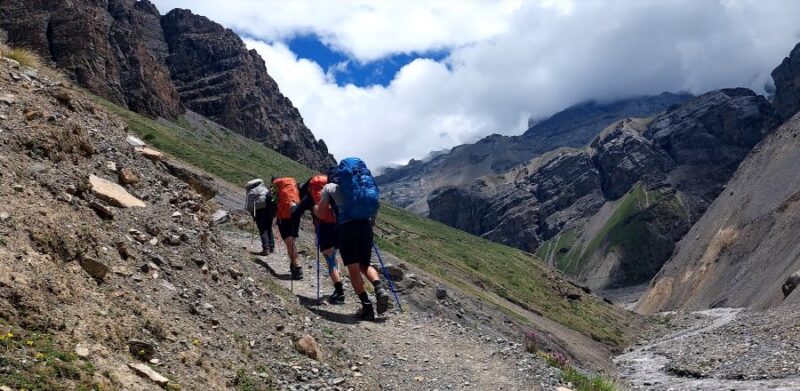
Accommodation : Lodge at Thorong Phedi or high Camp Meals : Breakfast, lunch & Dinner
Cross Thorong La Pass (5,416m) to Muktinath (3,800m) – 16 km
This is the most exciting and rewarding day of the Annapurna Circuit Yoga Trek. Trekkers start early in the morning to cross Thorong La Pass, the highest point of the journey at 5,416 meters.
The climb to the pass is slow and steady, surrounded by breathtaking views of the Annapurna, Dhaulagiri, and Mustang Himalayan ranges. After reaching the top, trekkers celebrate the achievement before beginning the long descent toward Muktinath.
The downhill trail passes through the dramatic landscapes of the Mustang region before reaching Muktinath, a famous sacred site for both Hindus and Buddhists. After this challenging day, a comfortable lodge stay and gentle recovery yoga help relax tired muscles.
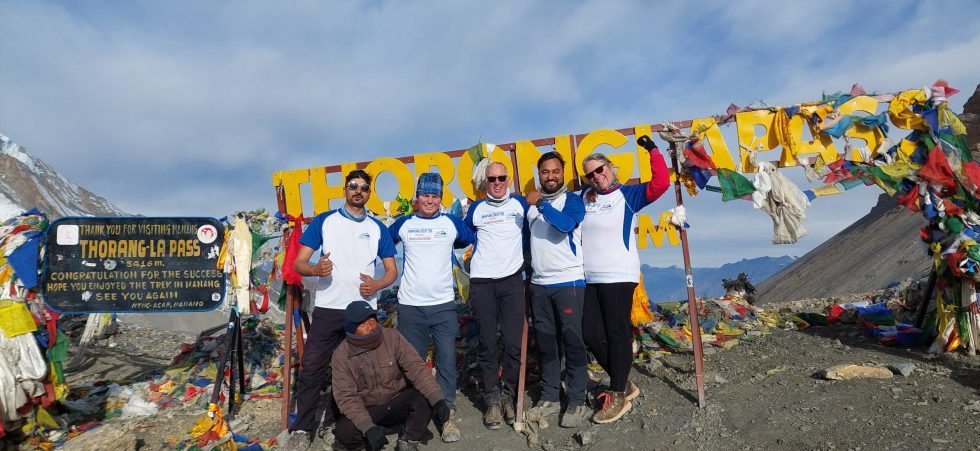
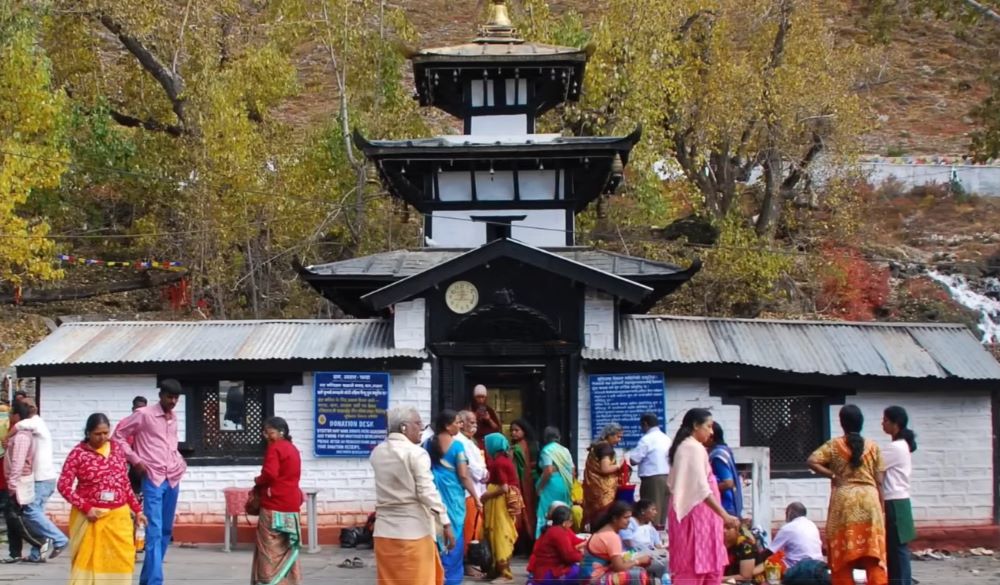
Accommodation : Guest House at Muktinath Meals : Breakfast, Lunch & Dinner
Drive from Muktinath (3,800m) to Pokhara (822m)
After breakfast, the trek officially ends, and trekkers begin a scenic jeep journey from Muktinath to Pokhara. The road follows the Kali Gandaki Valley, passing through Jomsom, Marpha, Tatopani, and beautiful mountain landscapes.
During the drive, trekkers can enjoy views of Dhaulagiri, Nilgiri, Annapurna South, and traditional Mustang villages. Upon arrival in Pokhara, the peaceful lakeside city offers a perfect place to rest and celebrate the completion of the Annapurna Circuit Yoga Trek.
The journey concludes with unforgettable memories of Himalayan adventure, yoga practice, cultural experiences, and personal transformation.


Accommodation : Hotel in Pokhara Meals : Breakfast
Note:
Annapurna Circuit Yoga Trek FAQs:
This journey combines trekking with daily yoga, meditation, and mindfulness practices, creating a holistic Himalayan experience.
It is ideal for travelers seeking adventure, wellness, personal growth, and cultural immersion in the Himalayas.
No, the yoga sessions are suitable for beginners and experienced practitioners alike.
The program primarily focuses on gentle Hatha Yoga, stretching, breathing exercises, and meditation.
Typically once or twice daily, depending on the itinerary and weather conditions.
Yes, participation is optional, although most trekkers find the sessions beneficial.
Yoga improves flexibility, breathing, recovery, balance, and mental focus at high altitude.
No, the trekking distance is similar, but yoga helps support recovery and overall well-being.
Thorong La Pass at 5,416 meters (17,769 feet).
The trekking portion begins in Dharapani.
Yes, the itinerary includes acclimatization and recovery opportunities.
Annapurna II, III, IV, Gangapurna, Tilicho Peak, Chulu East, Dhaulagiri, Nilgiri, and more.
Most groups start before sunrise to avoid strong afternoon winds; however, you can start from Thong Phedi at 3 am and from High Camp at 4 am.
The route provides better scenery, cultural experiences, and acclimatization benefits.
Yes, several ancient Buddhist monasteries can be visited during the trek.
The 108 water spouts, eternal flame, monasteries, and sacred shrines.
Blue sheep, Himalayan birds, eagles, and other alpine wildlife.
Higher sections of the trek, especially around Thorong Phedi (4,525m) and Thorong La Pass (5,416m), can be very cold.
- Morning: -10°C to -5°C (14°F to 23°F)
- Daytime: 0°C to 10°C (32°F to 50°F)
- Night: -15°C to -5°C (5°F to 23°F)
Warm layers, a down jacket, gloves, and a hat are essential for staying comfortable at higher elevations.
Yes, although reusable bottles with purification methods are recommended.
Accommodation is provided in traditional Himalayan teahouses, offering simple, clean, and comfortable twin-sharing rooms. Most teahouses feature cozy dining halls, warm hospitality, and basic facilities, with private rooms available in some villages. As you gain altitude, accommodations become more basic but remain an authentic and enjoyable part of the Himalayan trekking experience.
Refund & Cancellation Policy
- Booking requires 20% non-refundable deposit (Nepal) or 100% upfront (Tibet/Bhutan).
- Remaining payment due before the trip or on arrival (trip-dependent).
Cancellation charges:
- 31+ days: 20%
- 16–30 days: 45%
- 8–15 days: 75%
- 7 days or less: 90%
- Prices may change due to flights, taxes, or exchange rates.
- Trip changes are allowed, but extra costs apply.
- If the company cancels, a full refund, except for unavoidable events (some costs deducted).
- Good health and travel insurance are mandatory.
- No refund if removed for unsafe or illegal behavior.
- Travel involves personal risk, which the client accepts.