Mount Kailash Tour Overview: Overview
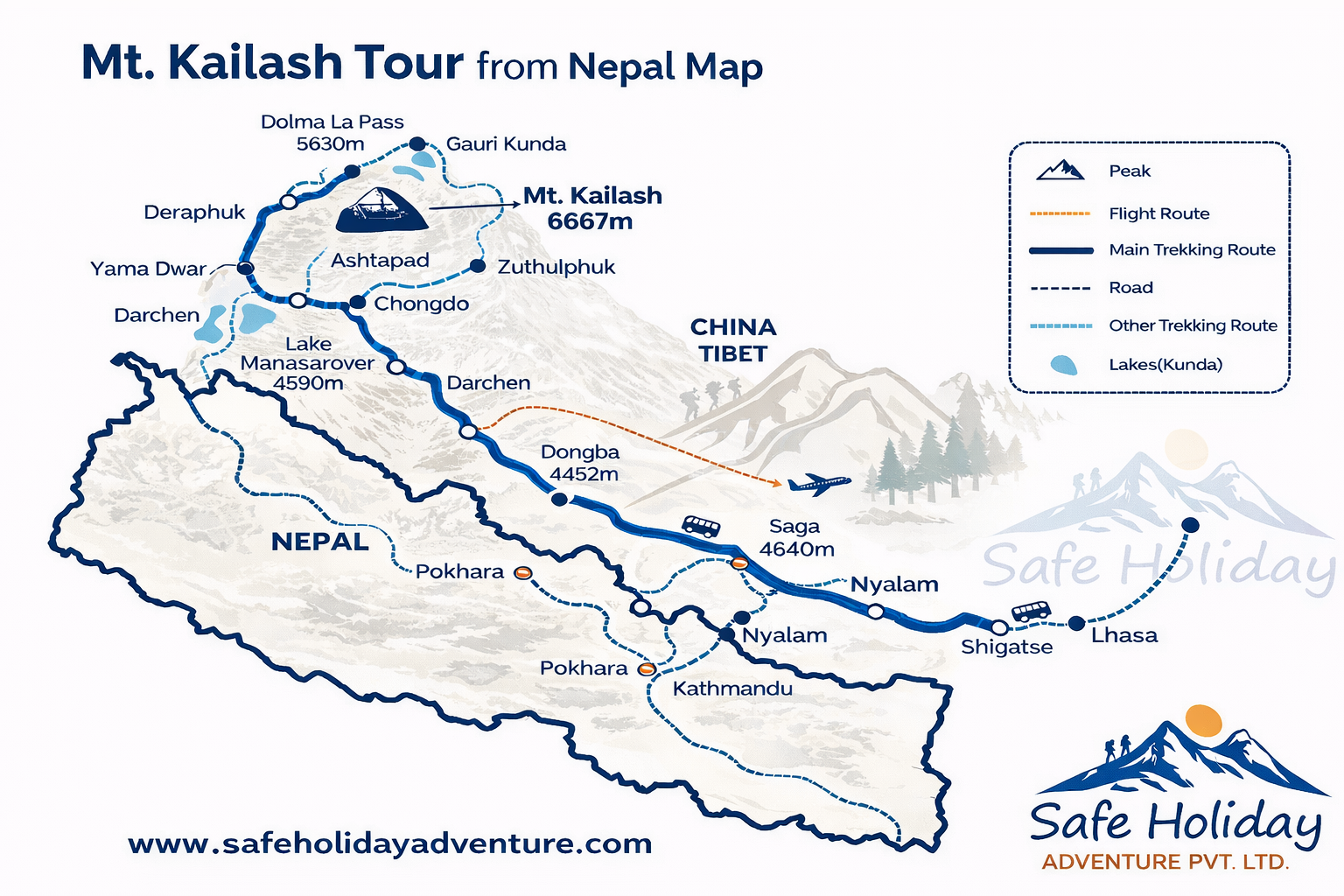
The Mount Kailash Tour begins with a scenic overland drive from Kathmandu (1,400m) to Timure (1,520m), a small border settlement in northern Nepal. The route follows winding mountain roads, beautiful river valleys, and traditional hillside villages. This gradual journey allows travelers to enjoy Nepal’s natural beauty before reaching the gateway to Tibet. Timure serves as the final overnight stop in Nepal before crossing the international border.
After completing immigration formalities at Rasuwagadhi Border, the Mount Kailash Tour enters Tibet and continues to Kerung (2,774m). Surrounded by impressive mountains and wide valleys, Kerung offers a comfortable environment for travelers entering the Tibetan Plateau. The increase in altitude is gradual, helping visitors adapt to the changing environment while enjoying the unique landscapes and culture of Tibet.
The journey then continues from Kerung to Saga (4,400m), one of the most important towns along the route to Mount Kailash. Travelers pass dramatic mountain scenery, high-altitude grasslands, and remote Tibetan settlements. Due to the significant gain in elevation, an additional stay in Saga is essential for proper acclimatization. This important stop helps the body adjust to the thinner air and prepares travelers for the higher elevations ahead.
Leaving Saga behind, the Mount Kailash Tour follows one of the most spectacular drives across western Tibet. The route passes through Paryang (approximately 4,750m), a remote Tibetan settlement surrounded by vast plains and distant snow-covered peaks. Continuing onward, travelers arrive at the sacred Lake Mansarovar (4,600m), one of the holiest lakes in Asia. The crystal-clear waters and stunning backdrop create a peaceful and spiritual atmosphere that leaves a lasting impression on every visitor.
After spending time at Lake Mansarovar, the route continues to Darchen (4,670m), the official base camp and starting point of the sacred Mount Kailash Kora. Darchen sits directly beneath the mighty Mount Kailash and offers breathtaking views of the surrounding landscape. Pilgrims and trekkers make final preparations here before beginning the most important section of the Mount Kailash Tour.
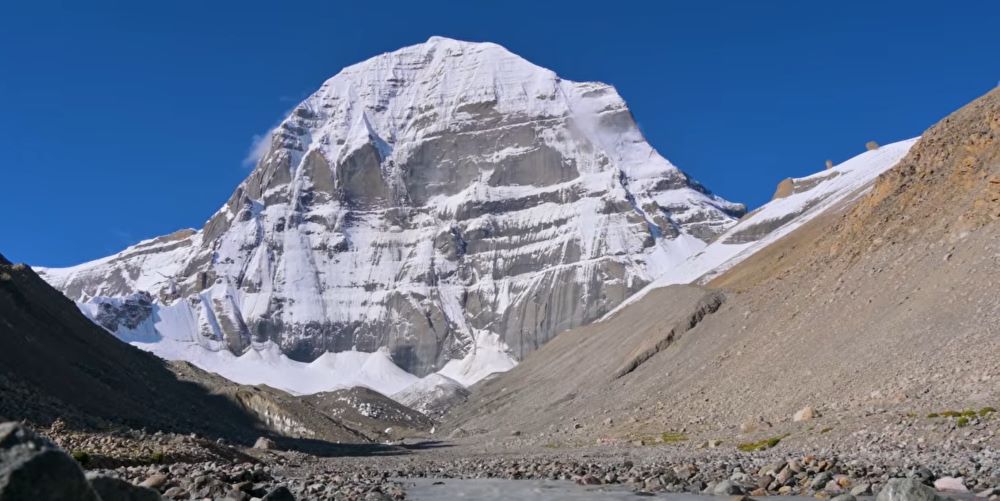
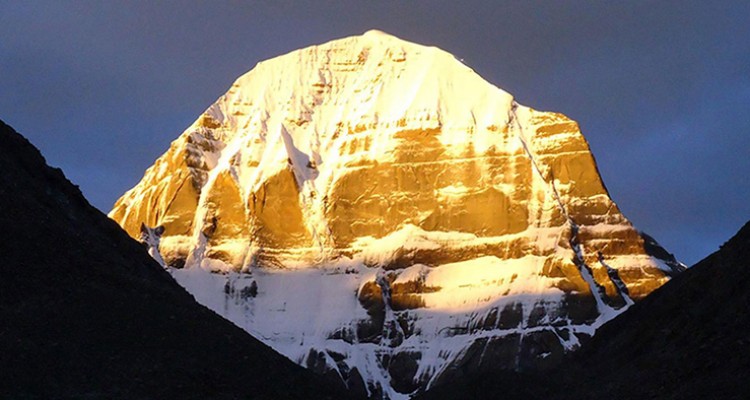
The trekking adventure starts from Yamadwar (4,800m), a sacred gateway believed to symbolize the entrance to the spiritual pilgrimage around Mount Kailash. The trail gradually ascends through wide valleys and rugged terrain before reaching Derapuk (5,000m). This location offers one of the finest views of the magnificent North Face of Mount Kailash, making it a highlight of the entire journey.
The second stage of the pilgrimage is the most demanding yet rewarding. The trail climbs to the sacred Dolma La Pass (5,630m), the highest point of the Mount Kailash Tour. Decorated with colorful prayer flags, the pass is regarded as a place of spiritual significance. After crossing the pass, the trail descends toward Zuthulpuk (4,700m), known for its ancient meditation caves and peaceful surroundings.
After completing the Kailash Kora, travelers trek to Chongdo before driving back through Darchen and returning to Saga (4,400m). The sense of achievement after completing the pilgrimage is immense. This stage offers time to reflect on the spiritual and physical journey while enjoying the vast beauty of the Tibetan Plateau.
The final section of the Mount Kailash Tour follows the scenic route back through Kerung (2,774m) and across the Rasuwagadhi Border into Nepal. The journey concludes in Kathmandu (1,400m), where travelers return with unforgettable memories of Mount Kailash, Lake Mansarovar, and one of the world’s most sacred pilgrimage experiences.
This version is more professional for a tour company website because readers can clearly see the route, villages, and altitude progression while naturally repeating the keyword Mount Kailash Tour.
Who Should Join a Mount Kailash Tour and Why?
A Mount Kailash Tour is ideal for pilgrims, spiritual seekers, adventure travelers, photographers, and nature lovers. The journey offers a rare opportunity to visit one of the world’s most sacred mountains while experiencing the unique culture and landscapes of Tibet.
The tour is especially suitable for travelers seeking spiritual fulfillment, personal challenges, and breathtaking Himalayan scenery. Whether you are drawn by religious significance, the famous Kailash Kora, or the beauty of the Tibetan Plateau, this once-in-a-lifetime journey provides a truly unforgettable experience.
Accommodation, food, & Price During the mount Kailash tour:
Accommodation during the Mount Kailash Tour ranges from simple guesthouses and basic lodges to comfortable hotels in major towns. The quality of facilities varies along the route, with more basic accommodation available in remote areas near Kailash.
Food typically includes a mix of Tibetan, Nepali, and Chinese dishes, with vegetarian options widely available. Most tour packages include meals throughout the journey.
The cost of a Mount Kailash Tour depends on the itinerary, transportation, group size, and service level. Comparing different tour operators and packages is the best way to find an option that matches your budget and travel preferences.
Mount Kailash Tour – One Line ItineraryOutline Itinerary
Day 01: Kathmandu → Timure, 140 km / 7–8 hrs, 1,520 m / 4,987 ft
Day 02: Cross Rasuwagadhi border → Kerung, 30 km / 2 hrs, 2,774 m / 9,100 ft
Day 03: Kerung → Saga, 205 km / 3–4 hrs, 4,400 m / 14,435 ft
Day 04: Acclimatization in Saga, 4,400 m / 14,435 ft
Day 05: Saga → Lake Mansarovar via Paryang, 410 km / 8–9 hrs, 4,600 m / 15,092 ft
Day 06: Morning Puja at Mansarovar → Darchen, 40 km / 1.5 hrs, 4,670 m / 15,331 ft
Day 07: Darchen → Yamadwar → Derapuk (Kora Day 1), trek 7–8 hrs, 5,000 m / 16,404 ft
Day 08: Derapuk → Dolma La Pass → Zuthulpuk (Kora Day 2), trek 9–10 hrs, 5,630 m / 18,468 ft (pass), 4,700 m / 15,420 ft (Zuthulpuk)
Day 09: Zuthulpuk → Chongdo → Saga via Darchen, trek 8 km + drive 440 km / 10–11 hrs, 4,400 m / 14,435 ft
Day 10: Saga → Kerung → Kathmandu, 375 km / 9–10 hrs, 1,400 m / 4,593 ft
Genaral Trip InfoInfos
How to Book Your Mount Kailash Tour from Nepal
To book your Mount Kailash tour safely and professionally, you should go through a reliable Nepal-based travel agency that handles all logistics, permits, and travel details for you. A trusted option is:
Safe Holiday Adventure (P). Ltd — a licensed trekking and tour operator based in Kathmandu offering Himalayan and Tibet tours with a focus on safety, local support, and personalized service.
Safe Holiday Adventure
📌 Booking Steps:
Contact the Agency – Email them with your travel dates, group size, and preferences:
✉️ info@safeholidayadventure.com
/ safeholidayadventure@gmail.com
Share Your Details – Send your passport copy, photos, and tour interests so they can prepare your Tibet Group Visa and permits.
Receive Itinerary & Quote – The agency will send a detailed itinerary with pricing, inclusions, and payment instructions.
Confirm & Pay – Secure your booking with the required deposit; they will manage all documentation, support, and travel arrangements from Kathmandu.
Booking with a reputable operator ensures a safe, organized, and memorable Mount Kailash pilgrimage with expert local guidance.
Food and accommodation during the Mount Kailash tour
Food and Accommodation During the Mount Kailash Tour
Food and accommodation during the Mount Kailash tour are arranged to ensure comfort while traveling in a remote, high-altitude region. Meals are generally vegetarian, freshly prepared, and include simple dishes such as rice, lentils, vegetables, noodles, soup, and tea. Special dietary requirements can usually be accommodated if informed in advance.
Accommodation varies by location, ranging from hotels and guesthouses in Kathmandu and major towns to basic lodges or dormitory-style guesthouses during the Kailash Parikrama. Facilities are simple, with limited heating and shared bathrooms in trekking areas, but they are clean and suitable for pilgrims and trekkers.
Altitude Sickness During the Mount Kailash Tour
Altitude sickness is a common concern during the Mount Kailash tour due to the high elevation, especially above 4,500 meters. Symptoms may include headache, nausea, dizziness, and fatigue. Proper acclimatization, gradual ascent, adequate hydration, and avoiding alcohol help reduce the risk. Tour itineraries are designed with rest days to allow the body to adjust. Experienced guides monitor participants closely and assist when needed, ensuring safety throughout the journey.
Best Time to Go for the Mount Kailash Tour from Nepal
The best time to go for the Mount Kailash tour from Nepal is from May to September, when weather and travel conditions are most favorable. During these months, temperatures are relatively stable, snow has melted from high passes, and road access to Tibet is generally open. May and June offer clear skies and pleasant conditions, making them ideal for trekking and parikrama. July and August are warmer but may experience occasional rainfall, especially on the Nepal side. September provides crisp weather and excellent mountain views. Outside this period, extreme cold and heavy snowfall can make travel difficult and unsafe.
Prior Trekking Experience for the Mount Kailash Tour
Prior trekking experience is not mandatory to join the Mount Kailash tour. Many pilgrims complete the journey without any previous trekking background. However, the Kailash Parikrama involves walking long distances at high altitude in cold and rugged terrain, which can be physically demanding.
While no technical climbing skills are required, participants should have good physical fitness, stamina, and mental readiness. Preparing with regular walking, light hiking, and breathing exercises before the tour is strongly recommended. With proper acclimatization, a steady pace, and support from experienced guides, both beginners and experienced trekkers can complete the journey safely and comfortably.
How to Get a Tibet Visa for the Mount Kailash Tour
To visit Mount Kailash in Tibet, travelers need a Chinese Group Visa and a Tibet Travel Permit. Individual tourist visas are not accepted for Kailash tours. The process is handled by a licensed tour operator in Nepal. After booking the tour, you must submit your original passport, passport-size photos, and personal details to the operator in Kathmandu. The agency applies for the Tibet Travel Permit first, then processes the Group Visa through the Chinese Embassy. The visa is issued as a separate group document, not stamped in your passport. The process usually takes 7–10 working days.
How does the Kailash tour start from Nepal?
The tour usually starts from Kathmandu, Nepal, and continues via Kerung (Gyirong) or by helicopter through Simikot–Hilsa, depending on the itinerary.
Mount Kailash Tour Cost from Nepal (Approximate)
The cost of a Mount Kailash tour from Nepal varies depending on route, duration, group size, and service level. On average, most standard overland packages (Kathmandu → Kerung → Tibet → Kailash → return) range from about USD 2,200 – USD 3,500 per person for a 13–16 day tour, including permits, transportation, meals, guides, accommodation, and Tibet/China group visa.
• Budget/Group join tours: ~USD 2,200 – 2,800 per person
• Standard tours: ~USD 2,800 – 3,500 per person
• Deluxe or private tours (more comfort & services): ~USD 3,500 – 4,500+ per person
Prices can change with seasonal demand, accommodation quality, helicopter options, and additional services like pony/porter for the Kailash Parikrama.
What kind of gear should i bring for Kailash Tour/
When trekking to Mount Kailash, it’s important to bring the appropriate gear to ensure a comfortable and safe journey. Below is a list of recommended items to pack for the trek:
- Backpack: A sturdy and comfortable backpack to carry all of your gear.
- Clothing: Warm and waterproof clothing, including a down jacket, a fleece jacket, thermal layers, a waterproof jacket and pants, and a hat and gloves.
- Footwear: A good pair of hiking boots or trekking shoes, with sturdy soles and good ankle support. Also, you can bring a pair of comfortable walking shoes or sandals for the evening.
- Sleeping gear: A good-quality, warm sleeping bag and a camping mat.
- Headlamp: A headlamp or flashlight with spare batteries.
- First Aid: A basic first aid kit including painkillers, band-aids, and antiseptic cream.
- Water bottles, water purification tablets, or a water filter.
- Sun protection: A wide-brimmed hat, sunglasses, and high-SPF sunscreen.
- Personal hygiene: Toilet paper, wet wipes, and a small towel
- Personal documents: your passport and visa, if required, and your insurance documents.
- Camera and extra batteries ora power bank
- Cash and credit card: Make sure you have enough cash to cover your expenses during the trek, and a credit card as backup.
Please note that you can rent some of the equipment, like sleeping bags and a down jacket, in Kathmandu, but it’s better to check the quality and the condition of the gear before renting. Also, make sure to check the current regulations and restrictions for the tour before your departure.