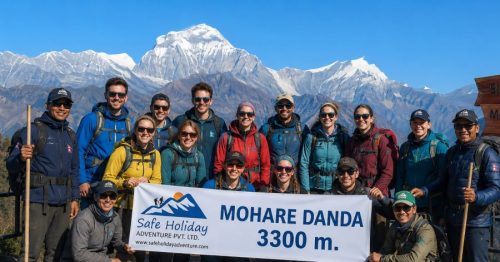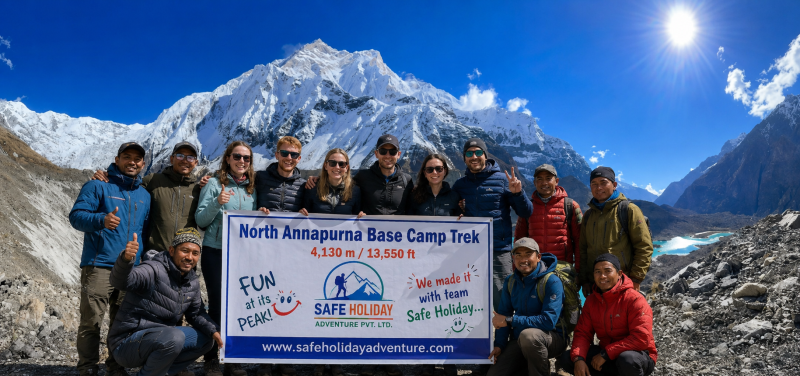
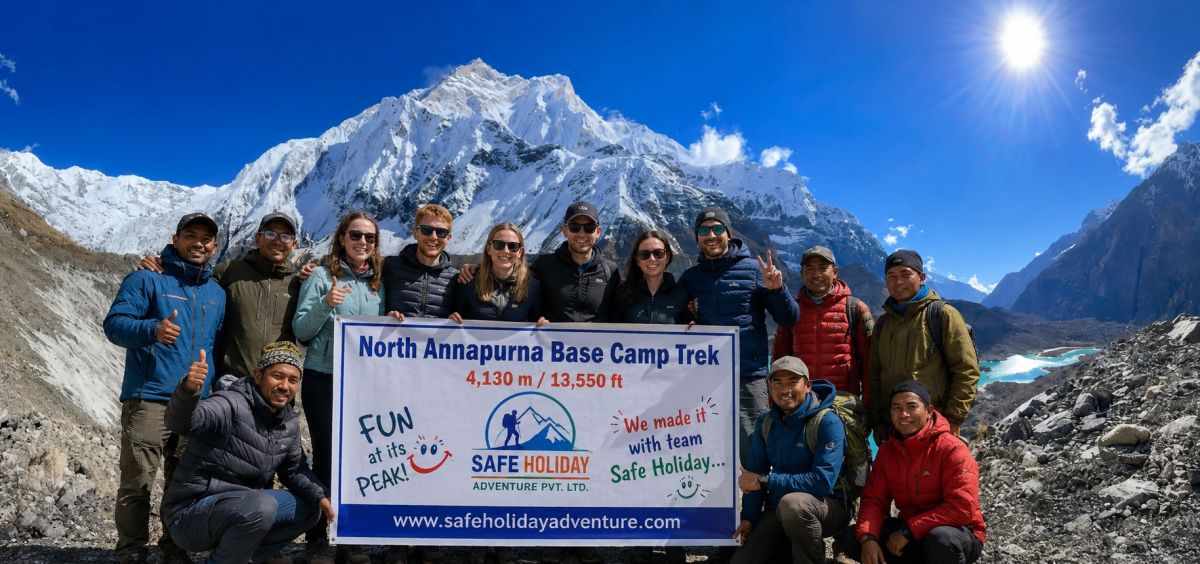
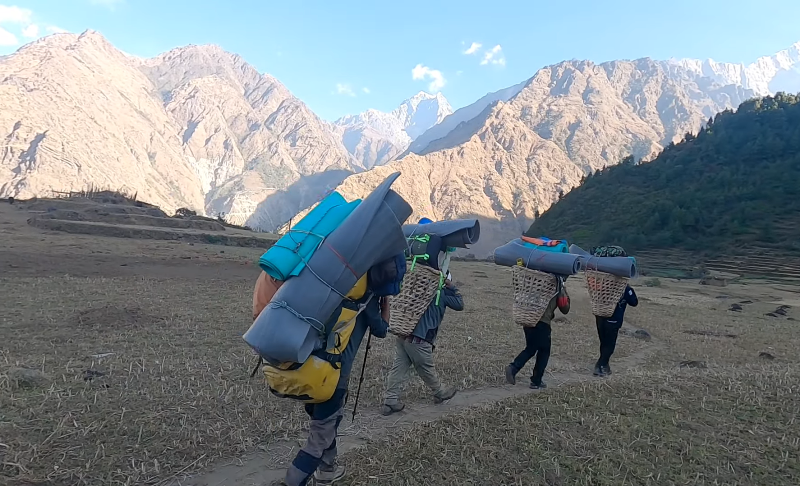

If you want to camp near the base camp, we can provide a light gas stove and simple cooking food for one night. However, this will cost extra compared to our usual teahouse package.
North ABC Trek Overview: Highlights
- Rare Fuche Rhododendron: Encounter the vibrant and rare Fuche Rhododendron, a unique flowering plant native exclusively to Nepal, adding exceptional color to the trail’s natural beauty.
- Short-tailed Himalayan Mouse: Observe the elusive short-tailed Himalayan mouse, a distinctive species that inhabits this region, offering wildlife enthusiasts a special sighting opportunity.
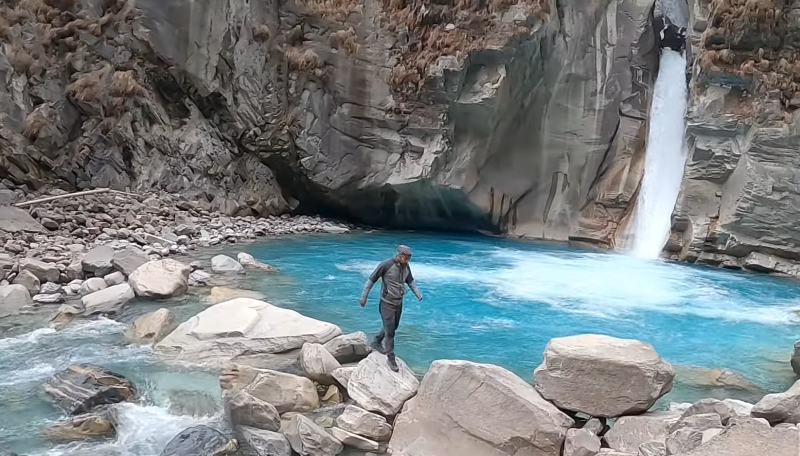
- Scenic Waterfalls: Delight in the spectacular views of pristine waterfalls, including Narchyang, Futu, and Rato, which enrich the trek with soothing sounds and refreshing mist.
- The Fifth Bliss Lakes: Discover the secluded and enchanting Fifth Bliss Lakes, a hidden gem nestled amid the mountains, perfect for peaceful moments and photography.
- Yersa Gompa and Herbal Sanctuary: Visit Yersa Gompa, a sacred monastery renowned for its collection of valuable medicinal herbs, highlighting the region’s traditional knowledge and spirituality.
- Pristine Nature Beyond Humkhola: Experience authentic Himalayan wilderness by staying in local huts beyond Humkhola, surrounded by untouched forests and serene landscapes.
- Magar Community Culture: Immerse yourself in the rich traditions and warm hospitality of the Magar people as you trek through their villages, gaining insight into their unique cultural heritage.
- Interactive Cooking Picnics: Enjoy the engaging experience of preparing your meals outdoors, turning trekking days into delightful picnic-style gatherings that foster camaraderie and fun.
North ABC Trek Route Overview: Overview
The journey begins with a scenic drive from Pokhara to Tatopani via Beni, following the Kali Gandaki River, after which a short uphill walk leads to Narchyang Village, a beautiful Magar settlement known for its traditional lifestyle and mountain views. From here, trekkers begin a remote and rewarding ascent through dense forests and wild terrain, with overnight stops at Sandhikharka and other temporary camps as the trail gains altitude and becomes increasingly alpine.
Continuing further, the route enters the high glacial basin that surrounds North Annapurna Base Camp (4,190 m), where trekkers are rewarded with unforgettable views of towering Himalayan peaks, hanging glaciers, and even sacred glacial lakes like Panchakunda, making it one of Nepal’s most visually dramatic and spiritually moving landscapes. The atmosphere here is remote, sacred, and still relatively untouched, offering a personal and profound connection with the high Himalayas far from the noise of mainstream tourism.
After enjoying an acclimatization and exploration day at base camp, trekkers begin a scenic descent through rugged mountain valleys toward Thulobugin Phedi, then onward to Ghasa or Lete, rejoining the main Annapurna Circuit route. This section offers an incredible transition from alpine wilderness to subtropical forest and local villages, complete with views of Dhaulagiri (8,167 m) and Nilgiri, apple orchards, prayer flags, and traditional stone houses—an ideal ending to this unique trek.
The trek typically spans 7 to 9 days, depending on weather and pace, and requires TIMS and ACAP permits, as well as a licensed guide, in compliance with Nepal’s latest 2026/2027 trekking regulations. Accommodation is mostly in basic community-run shelters or tents, adding to the feeling of remoteness and simplicity. This makes it ideal for trekkers seeking something raw, wild, and culturally rich—an experience of the Himalayas as they used to be.
Why North Annapurna Base Camp Trek is Becoming So Popular?
when is the best time to go on north annapurna base camp trek?
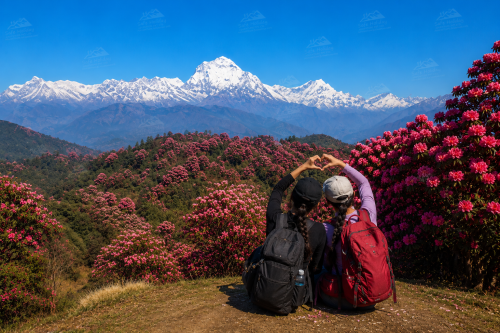
The best time to trek the North Annapurna Base Camp region is during autumn (September to November) and spring (March to May). Autumn offers the clearest mountain views, stable weather, and dry trails, making it the most ideal season. Spring is also excellent, with mild temperatures and beautiful rhododendron blooms across the Annapurna Conservation Area.
Winter (December to February) is very cold with possible snow blocking higher routes, while monsoon (June to August) brings heavy rain, landslides, and poor visibility. These seasons are less suitable for trekking. Overall, autumn remains the best choice, followed by spring for a safer and more scenic trekking experience.
Accommodation on the North Annapurna Base Camp Trek: Teahouses or Tent?
On the North Annapurna Base Camp Trek, teahouses are available in many villages like Narchyang and Sandhikharka. These teahouses offer basic rooms, meals, and a comfortable place to rest.
As you go higher—especially above Sandhikharka and near the North Annapurna Base Camp (around 4,190 meters)—teahouses become rare or sometimes not available because the area is more remote.
At Safe Holiday Adventure, we provide tents and camping gear if you need them. But we try to keep your load light by mostly planning stays in teahouses. Carrying your tent means the cost will be a bit higher than just staying in teahouses.
If you want to enjoy more time at the base camp or prefer camping, bringing a tent is a good choice. Otherwise, the trek can be done comfortably with mostly teahouse stays.
Why North Annapurna Base Camp Trek is the Best Choice for You:
- Peaceful & Less Crowded Trail – Enjoy the Himalayas without busy tourist traffic and noise.
- Pure Nature Experience – Walk through untouched forests, rivers, and alpine landscapes in the Annapurna Conservation Area.
- Authentic Local Culture – Experience traditional Gurung and Magar villages with real Himalayan lifestyle.
- Adventure on a New Route – Explore a less-developed trail that feels fresh, wild, and more exploratory.
- Simple & Homely Accommodation – Stay in local homestays and basic lodges for a real mountain experience.
- Unique Mountain Views – Different and close-up perspectives of the Annapurna Himalayan range.
- Better Wildlife & Nature Connection – More chances to see birds, flora, and untouched ecosystems.
- Less Commercial, More Real Trekking – No over-tourism, just raw trekking experience like old Himalayan journeys.
North Annapurna Base Camp Trek OutlineOutline Itinerary
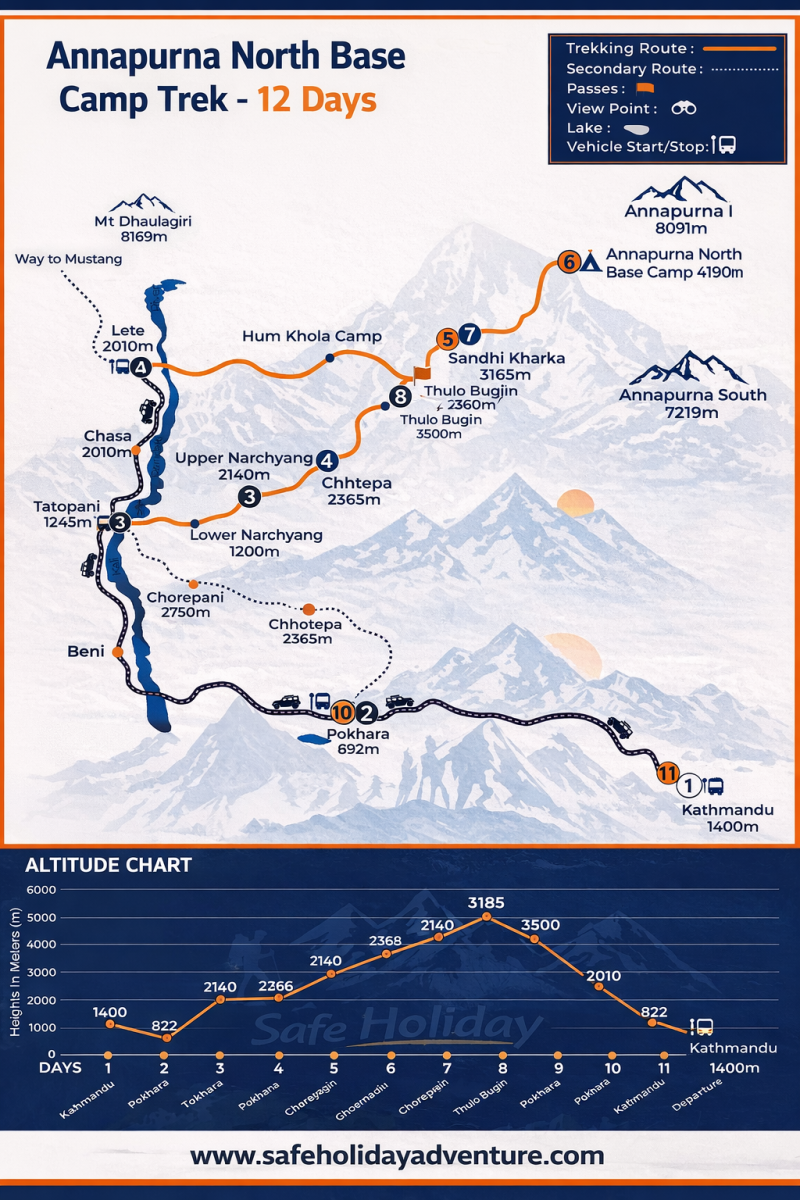
Day 1: Drive from Pokhara to Tatopani (1,190m), then trek to Narchyang Village (1,400m)
Day 2: Trek from Narchyang Village to Sandhikharka (2,960m)
Day 3: Trek from Sandhikharka to North Annapurna Base Camp (4,190m)
Day 4: Explore North Annapurna Base Camp (4,190m)
Day 5: Trek from North ABC to Thulobugin Phedi (3,500m)
Day 6: Trek from Thulobugin Phedi to Ghasa/Lete (2,010m)
Day 7: Drive from Ghasa/Lete to Pokhara
Whats Included?
- Airport and Hotel Pickup & Drop-off: Convenient transfer services between the airport, hotels, and starting/ending points of the trek.All Government Taxes and Permits: Full coverage of required trekking permits, conservation fees, and government taxes.
- Full-Board Meals: Nutritious breakfast, lunch, and dinner with unlimited tea/coffee throughout the trek.
- Experienced English-Speaking Guide: Professional local guide who ensures safety, navigation, and cultural insights.
- Accommodation in Teahouses: Comfortable stays in locally owned teahouses with basic amenities along the route.
- Transportation: Bus or jeep transfers as per itinerary between Pokhara, trailheads, and return.
- Comprehensive Insurance: Trekking and medical insurance coverage for guides and support staff, ensuring their safety.
- Trekking Equipment: Provision of essential trekking gear such as walking poles and sleeping bags (if needed).
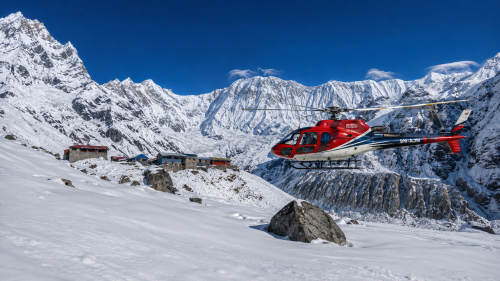
- Emergency Support: Access to a helicopter rescue service or emergency evacuation if necessary.
- Pre-Trek Briefing: Detailed information session before departure covering the itinerary, packing list, and safety tips.
Optional Note:
- Personal Travel Insurance: You must arrange your own comprehensive travel and health insurance.
- Emergency Evacuation and Medical Costs: Any costs related to emergency evacuation, hospital visits, or medical treatment.
- Unforeseen Expenses: Additional costs caused by factors beyond control, such as bad weather, political unrest, or personal health issues.
- Extra Activities: Any activities or tours not included in the itinerary, including sightseeing or adventure options in cities.
- Meals in Cities: Meals taken in Kathmandu, Pokhara, or other cities before or after the trek.
- International and Domestic Flights: Airfare to/from Nepal and any internal flights such as Kathmandu to Pokhara, unless specified.
- Nepal Visa Fees: Fees for obtaining or extending your Nepal entry visa.
- Tips and Gratitudes: Tips or gratuities for guides, porters, drivers, and other support staff are not included but are appreciated.
Dates and Availability Departures
All our published dates are guaranteed departures. We also provide customized departures tailored to your travel plans.
There are no group joining dates available at the moment. Please contact us for a private trip.
Travellers Reviews
Genaral Trip InfoInfos
Trek Difficulty Level and Fitness Requirement for the North Annapurna Base Camp Trek:
Trekking Route from Tatopani to Narchyang Village
The trek begins from Tatopani with a gradual uphill walk to Narchyang Village (1,400 m), taking about 1.5 to 2 hours. This section is ideal for an easy start to the trek, offering views of green hills, local culture, and the tranquil lifestyle of the Magar community.
Best Season for North Annapurna Base Camp Trek:
Packing List for North Annapurna Base Camp Trek
Clothing
- Thermal base layers (top and bottom)
- Fleece jacket or warm sweater
- Waterproof and windproof jacket
- Trekking pants (2–3 pairs)
- Lightweight T-shirts
- Warm hat, gloves, and neck buff
- Wool or trekking socks
Footwear
- Sturdy trekking boots (water-resistant)
- Lightweight camp shoes or sandals
- Extra shoelaces
Trekking Gear
- Backpack (30–50 liters)
- Rain cover for backpack
- Sleeping bag (cold-rated)
- Trekking poles
Personal Items
- Sunscreen and lip balm (SPF)
- Basic toiletries
- Quick-dry towel
- Wet wipes and hand sanitizer
- Toilet paper
Health and Safety
- Basic first aid kit
- Personal medications
- Altitude sickness medicine (if needed)
- Water purification tablets or filter
Electronics and Extras
- Headlamp with extra batteries
- Power bank
- Mobile phone or camera
- Plug adapter (Nepal type C/D/M)
Snacks
- Energy bars and chocolates
- Electrolyte powder
- Dry fruits and nuts
Is the trail fully developed or still partially remote and under construction?
Accommodation Options Along the Route
Food and Meal Options on the North Annapurna Base Camp Trek:
Can I do this trek without a guide legally and safely?
Internet and Phone Connectivity
Mobile network and internet signals are available only in the lower villages like Tatopani and Narchyang. Beyond these points, there is no Wi-Fi or mobile signal, so it’s best to inform loved ones beforehand and use offline GPS tools for navigation.
Guided vs Independent Trekking
While the route can be trekked independently by experienced hikers, hiring a licensed guide and porter is advisable for navigation, safety, and cultural understanding. Guided treks also ensure logistical support, especially for food and accommodation in remote sections.
Detailed ItineraryItinerary
Day 01
Drive from Pokhara to Tatopani (1,190m), then trek to Narchyang Village (1,400m)
Elevation : Tatopani (1,190m), Narchyang Village (1,400m)
- Drive time: 6–7 hours
- Trek time: 1.5–2 hours (gentle uphill)
The day starts early from Pokhara with a scenic drive through lush hills, terraced farms, and traditional villages. The road follows the Kali Gandaki River, known as the deepest gorge in the world. You’ll pass Beni, a busy town where permits are checked, then continue through Tatopani, a popular village with natural hot springs. From Tatopani, a short uphill trek begins through stone-paved trails and small farming settlements. Along the trail, you’ll see orange orchards, rice fields, and prayer flags fluttering in the breeze. After about two hours of easy trekking, you arrive at Narchyang Village, a beautiful Magar settlement surrounded by forested hills. On a clear day, you’ll get your first views of Annapurna South (7,219m) and Nilgiri (7,061m) glowing above the valley.
Accommodation : Tea house
Day 02
Trek from Narchyang Village to Sandhikharka (2,960m)
Elevation : Sandhikharka (2,960m)
- Trek time: 5–6 hours
- Altitude gain: +1,560m
- Overnight: Basic tea house or tented camp
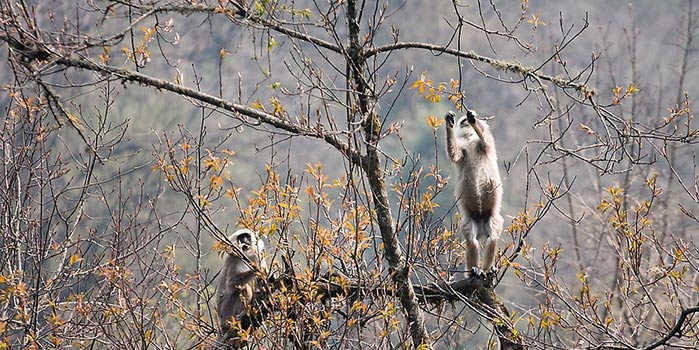
After breakfast in Narchyang, the trek continues with a steady ascent. The trail enters thick rhododendron and pine forests, rich with birdlife and occasional monkeys. As you climb higher, the air becomes fresher, and the sound of nearby waterfalls fills the forest. You’ll cross wooden bridges over glacier-fed streams, and the trail sometimes opens to wide clearings with beautiful mountain views. Midway, you may rest near a small shepherd’s hut and enjoy a packed lunch. The climb is tiring but rewarding as you pass mossy trees and ferns, especially during spring when rhododendrons bloom. Finally, you reach Sandhikharka, a small highland plateau used by locals for grazing cattle. You’ll feel the remoteness here. If weather allows, you can see distant views of Mt. Fang and parts of Annapurna I in the north.
Accommodation : Tea House
Day 03
Trek from Sandhikharka to North Annapurna Base Camp (4,190m)
Elevation : North Annapurna Base Camp (4,190m)
- Trek time: 5–6 hours
- Altitude gain: +1,230m
- Overnight: Tented camp or shelter at North ABC
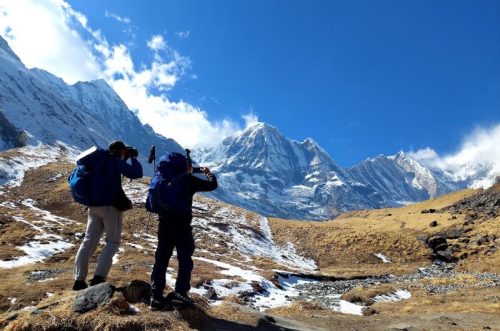
This is a truly thrilling and challenging day. The trail becomes rocky, wild, and more alpine. You’ll leave the forest behind and follow a rugged route over glacial moraines, boulders, and past landslide zones. The terrain can be tricky, and proper trekking boots are essential. You will see the landscape open wide as you enter the glacial basin of the north face of Annapurna. Stunning views surround you – especially Annapurna I (8,091m), Annapurna Fang (7,647m), and Baraha Shikhar. The huge glaciers and icefalls descending from these peaks are breathtaking. You’ll also pass glacial streams and see yaks grazing in high meadows. After about 5–6 hours, you arrive at North Annapurna Base Camp, a secluded and majestic place where you’ll camp near the glacier, right below towering Himalayan giants.
Accommodation : Tented Camp
Day 04
Explore North Annapurna Base Camp (4,190m)
- Activity: Acclimatization and exploration
- Overnight: Tented camp or shelter at North ABC
This day is dedicated to rest, exploration, and enjoying the incredible scenery. Early morning is the best time for photography, with soft light on Annapurna I and the surrounding snow peaks. You can walk to nearby glacial lakes that reflect the mountains like mirrors. There are also small hills and ridges where you can hike to get better views of the entire base camp. It’s a peaceful yet dramatic place, with the sound of glaciers cracking and winds blowing across the vast snowy basin. Look out for blue sheep, Himalayan birds, and even snow leopards’ footprints if you’re lucky. This day helps with acclimatization and offers a once-in-a-lifetime chance to feel truly surrounded by some of the world’s highest peaks in absolute wilderness.
Day 05
Trek from North ABC to Thulobugin Phedi (3,500m)
Elevation : Thulobugin Phedi (3,500m)
- Trek time: 5 hours
- Altitude loss: -690m
- Overnight: Basic shelter or tented camp
After enjoying the last morning at North ABC, you start descending into a lesser-known southern valley. The trail is narrow, slippery at times, and passes through highland meadows and rocky slopes. You’ll notice a big change in scenery as you leave the icy surroundings and re-enter patches of green forest and grasslands. The descent offers a different perspective on the peaks – Hiunchuli (6,441m) and the ridge of Annapurna South appear behind you. The trail includes narrow ridgelines, a few stream crossings, and possibly foggy sections. Thulobugin Phedi is a small open area with a few shelters or tent sites used by shepherds and trekkers. It’s a quiet place ideal for resting and enjoying views of the Kali Gandaki valley far below.
Accommodation : Tented Camp
Day 06
Trek from Thulobugin Phedi to Ghasa/Lete (2,010m)
Elevation : Ghasa/Lete (2,010m)
- Trek time: 5–6 hours
- Overnight: Lodge in Ghasa or Lete
The trail now descends sharply into the Lower Mustang region. You’ll pass through subtropical forests, stone steps, and traditional Gurung villages. As you descend, the temperature becomes warmer and the air thicker. Beautiful views of Dhaulagiri (8,167m) and Nilgiri South (6,839m) dominate the western skyline. The trail finally joins the Annapurna Circuit route, where you’ll see more trekkers, mule caravans, and well-maintained paths. You may spot apple orchards, water-powered prayer wheels, and colorful village houses. Ghasa is a well-known village for trekkers and offers better lodges, while Lete is slightly further and more peaceful. You can choose either depending on your pace. Expect a cozy night in a warmer climate with good food, local hospitality, and mountain views.
Accommodation : Lodge
Day 07
Drive from Ghasa/Lete to Pokhara
Elevation : Pokhara(820m)
- Drive time: 8–9 hours (via Jomsom – Beni – Pokhara)
- Overnight: Hotel in Pokhara (optional)
The final day is a long but scenic drive back to Pokhara. The road follows the Kali Gandaki River through deep gorges, pine forests, and rocky cliffs. You’ll pass villages like Kobang, Marpha, and Jomsom, famous for apple orchards and Tibetan culture. After Jomsom, the road descends through Tukuche, Kalopani, and back to Tatopani. From here, it’s a bumpy but beautiful ride via Beni and then on to Pokhara. Along the way, you can look back at the towering peaks of Dhaulagiri, Nilgiri, and Tukuche Peak. Once in Pokhara, you can relax near Phewa Lake, enjoy a warm shower, and celebrate the successful trek to one of the most remote and stunning base camps in the Annapurna region.
Accommodation : Hotel
North Annapurna Base Camp Trek FAQs
The trek typically takes 7 days, including the drive from Pokhara, hiking, and exploration at the base camp.
Yes, tea houses are available until Narchyang Village. A basic public shelter is available beyond that point. Tents are optional.
Some sections are well-marked, while others require guidance or local knowledge. It’s safer with a guide or GPS backup.
The North Annapurna Base Camp lies at around 4,190 meters above sea level.
You may encounter waterfalls, glacial rivers, dense rhododendron forests, and panoramic views of Annapurna I, Tilicho Peak, and Fang.
It is more suitable for trekkers with some prior hiking experience due to the remote nature and rough terrain.
The weather is generally cold and windy, especially from late afternoon onwards. Mornings are clear with the best mountain views.
Refund & Cancellation Policy
- Booking requires 20% non-refundable deposit (Nepal) or 100% upfront (Tibet/Bhutan).
- Remaining payment due before the trip or on arrival (trip-dependent).
Cancellation charges:
- 31+ days: 20%
- 16–30 days: 45%
- 8–15 days: 75%
- 7 days or less: 90%
- Prices may change due to flights, taxes, or exchange rates.
- Trip changes are allowed, but extra costs apply.
- If the company cancels, a full refund, except for unavoidable events (some costs deducted).
- Good health and travel insurance are mandatory.
- No refund if removed for unsafe or illegal behavior.
- Travel involves personal risk, which the client accepts.