Makalu Base Camp Trek Key Highlights: Highlights
- Reach the stunning Makalu Base Camp (5th highest mountain base camp in the world)
- Explore the untouched and less crowded trekking route in eastern Nepal
- Experience diverse landscapes from low river valleys to high alpine terrain
- Walk through Makalu Barun National Park rich in rare wildlife and flora
- Enjoy panoramic views of Mount Makalu, Everest, Lhotse, and Baruntse
- Pass through traditional Sherpa, Rai, and ethnic mountain villages
- Cross suspension bridges, forests, and remote Himalayan trails
- Experience authentic and peaceful trekking away from mass tourism
- Opportunity for high-altitude adventure and cultural immersion
- One of Nepal’s most remote and adventurous trekking experiences
Makalu base camp trek Introduction: Overview
The Makalu Base Camp Trek is one of Nepal’s most remote and powerful Himalayan journeys, taking you from the low Arun River valley to the base of Mount Makalu (8,463m), the fifth-highest mountain in the world. The trek begins with a short flight from Kathmandu to Tumlingtar (460m), followed by a scenic drive to Chichira (1,980m). From the very beginning, the landscape feels wild and untouched—terraced hills, deep river valleys, and the dramatic geography of eastern Nepal. This is where the journey toward the high Himalaya truly starts, crossing into quieter and less-traveled trekking regions.
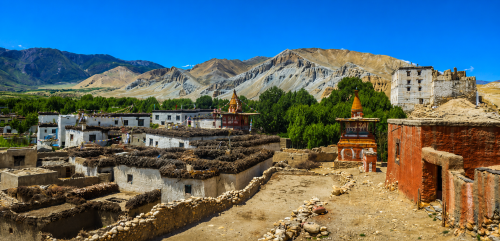
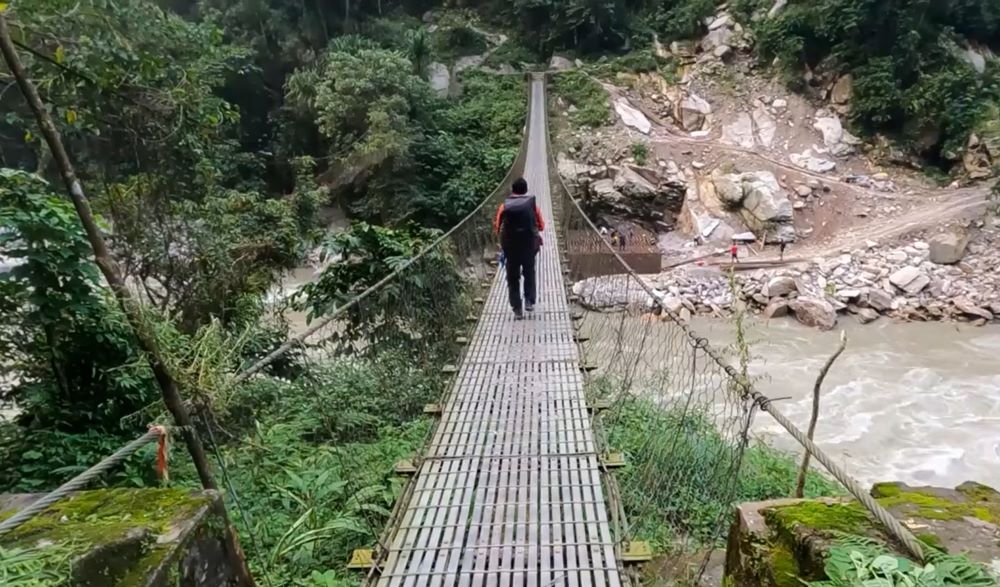
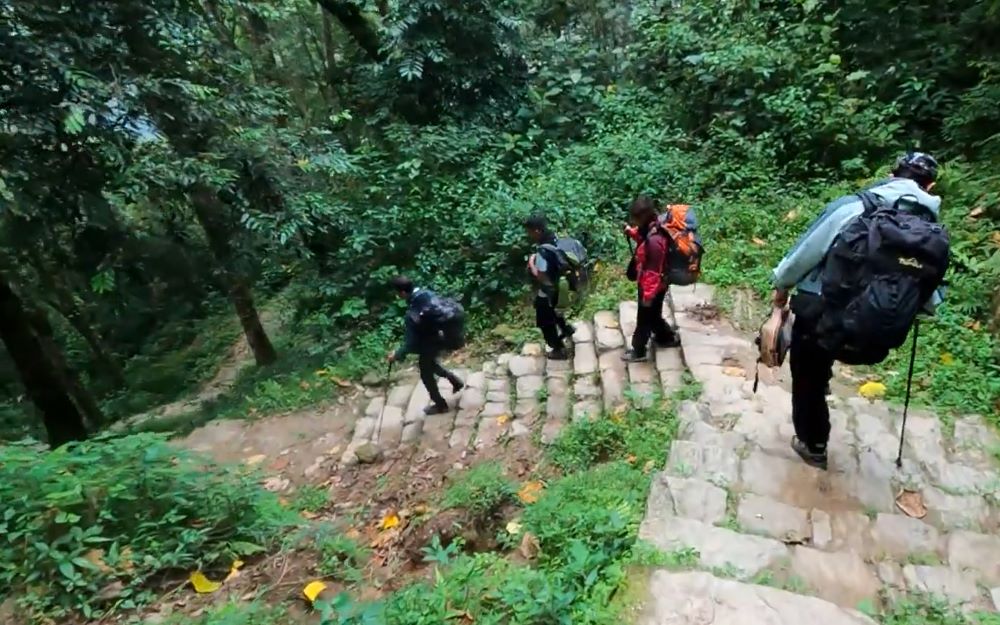
From Chichira, the trail descends and climbs through forested ridges and traditional settlements toward Num (1,560m). This section introduces the deep Arun River valley, one of the world’s deepest gorges, carved between steep mountain walls. Trekkers cross several suspension bridges over fast-flowing tributaries before reaching Seduwa (1,500m), the entry point of Makalu Barun National Park. The environment becomes more enclosed with dense forests, stone trails, and culturally rich villages inhabited mainly by Rai and Limbu communities.
The ascent continues to Tashigaon (2,100m), the last permanent village on the route, known for its Sherpa settlement and traditional mountain lifestyle. Beyond this point, the trek becomes more challenging as the trail climbs steeply toward Khongma Danda (3,500m). This is one of the toughest sections, with long stone staircases, dense Rhododendron forests, and rapidly changing altitude. As you gain height, the views open toward distant snow peaks, marking the transition into true alpine terrain.
From Khongma Danda, the route crosses high ridges and passes before descending slightly toward Dobate (3,500m) and then entering the upper Barun River valley. This section is remote and wild, with limited human settlement and dramatic mountain landscapes. The trail continues through alpine forests and open valleys toward Yangri Kharka (3,557m), a wide grazing area surrounded by cliffs and glacial formations. Peaks such as Baruntse (7,129m) and Peak 6 begin to dominate the skyline.
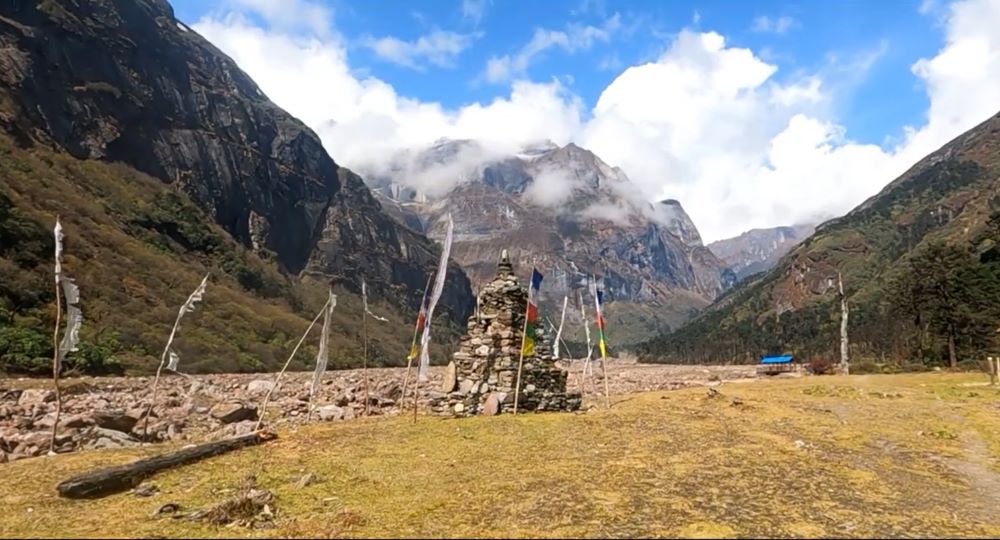
The journey becomes even more dramatic as you climb toward Langmale Kharka (4,410m). The landscape transforms into a high-altitude wilderness of glacial rivers, moraine fields, and yak pastures. The air becomes thinner, and the scenery more extreme, with views of towering giants like Chamlang (7,319m) and Baruntse. The trail follows the Barun River upstream, which originates directly from glaciers high above Makalu Base Camp.
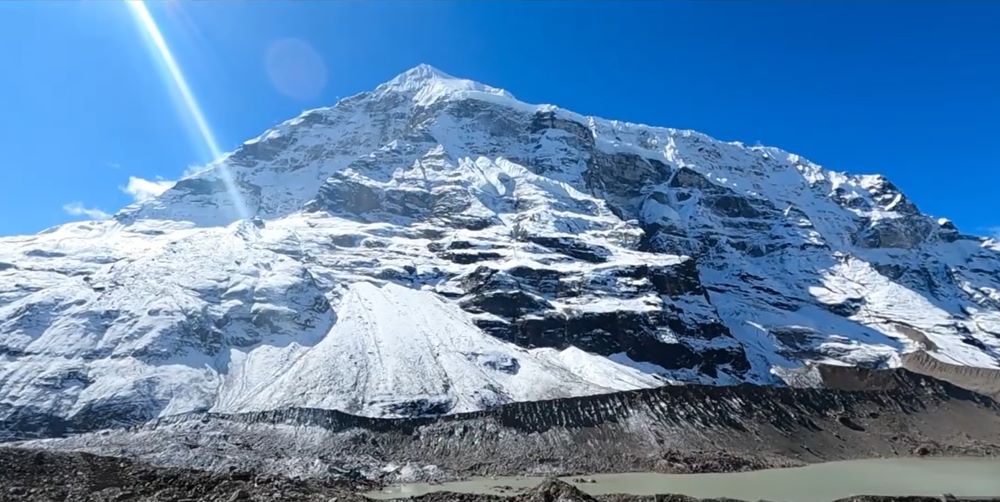
The final push leads to Makalu Base Camp (4,870m), located directly beneath Mount Makalu (8,463m). This is one of the most spectacular high-altitude amphitheaters in Nepal, surrounded by massive icefalls, glaciers, and sharp Himalayan peaks. From base camp, panoramic views include Makalu, Chamlang, Baruntse, and several unnamed ice-covered summits rising above the Barun Glacier. The environment is raw, silent, and completely dominated by nature, making it one of the most rewarding destinations in the Himalaya.
The return journey follows the same route back through Langmale Kharka, Yangri Kharka, Dobate, Khongma Danda, Tashigaon, Seduwa, Num, and Chichira before reaching Tumlingtar. While the descent retraces familiar paths, the changing perspective reveals new layers of valleys, forests, and river systems of the Arun and Barun basins. The trek ends with a flight back to Kathmandu, completing an unforgettable journey from tropical lowlands to the foot of one of the world’s highest and most isolated mountains.
Why Makalu Base Camp Trek is Suitable for You:
- For Remote Adventure Seekers
The Makalu Base Camp Trek is perfect if you want a truly remote and less crowded Himalayan experience, far from busy trekking routes like Everest or Annapurna. - For Experienced or Physically Fit Trekkers
This trek includes long walking days, steep ascents, and high altitude up to Makalu Base Camp (4,870m), making it ideal for trekkers with good fitness and prior trekking experience. - For Nature and Wilderness Lovers
The route passes through Makalu Barun National Park, rich in untouched forests, rare wildlife, alpine meadows, and dramatic river valleys like the Arun River and Barun River. - For Mountain View Enthusiasts
You will see powerful Himalayan peaks including Mount Makalu (8,463m), Baruntse (7,129m), Chamlang (7,319m), and many unnamed glacial peaks. - For Cultural Exploration
The trail passes through traditional Rai, Limbu, and Sherpa villages such as Seduwa, Num, and Tashigaon, offering authentic mountain lifestyle experiences. - For Those Seeking a Challenging Trek
With steep trails, suspension bridges, and high passes like Khongma Danda (3,500m), this trek is physically demanding but highly rewarding. - For Off-the-Beaten-Path Experience in Nepal
If you want to avoid commercial trekking routes and experience raw Himalayan wilderness, this is one of the best choices in Nepal.
Best time to Visit Makalu Base Camp trek
The best time to visit Classic Makalu Base Camp Trek is generally considered to be from late September to November and from March to May. These are the times when the weather is most favorable, with clear skies and mild temperatures. The months of September to November provide an ideal time for trekking in the Makalu region, as the monsoon season has ended, the skies are clear, and the weather is dry and cool. The visibility during this season is usually very clear and the rhododendron forests are in full bloom.
From March to May, the weather is mild and stable, with clear skies and warmer temperatures. There is less chance of snow and ice on the trail during this period, making it an ideal time for those who prefer less strenuous conditions.
Please note that weather patterns and conditions can vary from year to year, so it is always best to check the current forecast before planning your trek.
Why Choose Us for Makalu Base Camp Trek?
- Trusted trekking company in Nepal for Makalu Base Camp Trek
- Highly experienced local guides and porter team
- Strong focus on safety and altitude management
- Well-organized Makalu Base Camp Trek itinerary and logistics
- Affordable and value-for-money trekking packages
- Flexible trekking plans based on traveler needs
- Hassle-free permits, transport, and accommodation arrangement
- Excellent support in remote Himalayan trekking routes
- Positive reviews from international trekkers
- Reliable customer service before and during the trek
OutlineOutline Itinerary
Day 1: Fly from Kathmandu to Tumlingtar (460m) and drive to Chichira (1,980m) – 45-minute flight and 3-4 hours drive.
Day 2: Trek from Chichira to Num (1,560m) – 6-7 hours.
Day 3: Trek from Num to Seduwa (1,500m) – 6-7 hours.
Day 4: Trek from Seduwa to Tashigaon (2,100m) – 4-5 hours.
Day 5: Rest day at Tashigaon for acclimatization.
Day 6: Trek from Tashigaon to Khongma Danda (3,500m) – 6-7 hours.
Day 7: Trek from Khongma Danda to Dobate (3,500m) – 6-7 hours.
Day 8: Trek from Dobate to Yangri Kharka (3,557m) – 6-7 hours.
Day 9: Trek from Yangri Kharka to Langmale Kharka (4,410m) – 5-6 hours.
Day 10: Trek from Langmale Kharka to Makalu Base Camp (4,870m) – 6-7 hours.
Day 11: Rest day at Makalu Base Camp for acclimatization and exploration.
Day 12: Trek from Makalu Base Camp to Yangri Kharka (3,557m) – 6-7 hours.
Day 13: Trek from Yangri Kharka to Dobate (3,500m) – 5-6 hours.
Day 14: Trek from Dobate to Khongma Danda (3,500m) – 6-7 hours.
Day 15: Trek from Khongma Danda to Tashigaon (2,100m) – 5-6 hours.
Day 16: Trek from Tashigaon to Seduwa (1,500m) – 4-5 hours.
Day 17: Trek from Seduwa to Num (1,560m) – 5-6 hours.
Day 18: Trek from Num to Chichira and drive back to Tumlingtar – 7-8 hours.
Day 19: Fly from Tumlingtar to Kathmandu – 45 minutes.
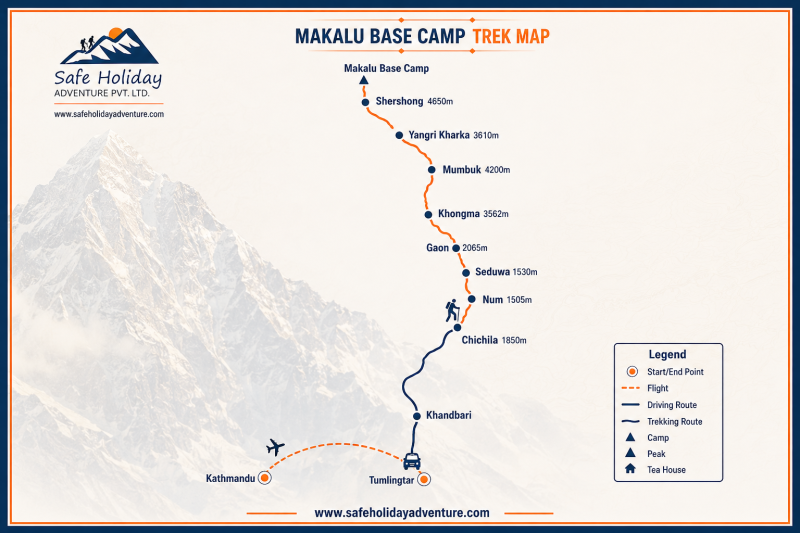
The itinerary is subject to change depending on the weather and the trekker’s fitness level.
Whats Included?
- Pick and drop services as per the itinerary,
- Standard Accommodation for 4-night in Kathmandu inclusive Breakfast,
- 3 times meal during the trek,
- Twin sharing tented accommodation during the trek,
- Experience mountain guide and required porters,
- All staff insurance and all expenses during the trek,
- Camping equipment as per the size of the group,
- Duffel bags,
- Kathmandu to Tumlingtar and Tumlintar to Kathmandu flight ticket,
- First Aid medical kids,
- All needed The Makalu trekking permit and entrance fees,
- Government taxes.
- Your personal and travel insurance,
- Extra meals and extra program during the trek,
- International flight ticket,
- All alcoholic and non-alcoholic drinks,
- Nepal Entry Visa fee,
- Personal expenses such as Phone, Laundry, Bar bills & Tips for staff.
Dates and Availability Departures
All our published dates are guaranteed departures. We also provide customized departures tailored to your travel plans.
There are no group joining dates available at the moment. Please contact us for a private trip.
Travellers Reviews
Genaral Trip InfoInfos
Makalu base camp trek packing list
Clothing:
- Hiking boots
- Hiking socks
- Thermal base layers
- Fleece jacket or pullover
- Insulated jacket or down jacket
- Waterproof jacket and pants
- Sun hat and beanie
- Gloves or mittens
- Trekking pants and shorts
- T-shirts and long-sleeved shirts
Gear:
- Backpack
- Sleeping bag (rated for -10 to -15°C)
- Sleeping pad
- Trekking poles
- Headlamp and spare batteries
- Sunglasses
- Water bottle and water purification tablets or filter
- Personal first aid kit with any necessary medications
- Camera and spare batteries
- Power bank and charging cables
- Map and compass
Miscellaneous:
- Toiletries (toothbrush, toothpaste, wet wipes, hand sanitizer, etc.)
- Sunscreen and lip balm
- Insect repellent
- Trekking towel
- Cash and/or credit card
- Passport and necessary permits
It’s important to pack light and only bring the essentials. A porter can be hired to carry up to 15 kg of gear, and a duffel bag or backpack should be used to pack the gear.
Accommodation options during Makalu Base Camp Trekking
During the Makalu Base Camp Trekking, trekkers have various accommodation options ranging from basic teahouses to camping. Here are some accommodation options available during the trek:
Teahouses/Lodges: Teahouses are the most common accommodation option during the Makalu Base Camp Trekking. These are basic lodges that provide a room with a bed, a shared bathroom, and communal areas for dining and relaxation. Some teahouses also have hot showers and charging facilities for electronic devices.
Camping: For those who prefer a more immersive experience, camping is also an option. Trekkers can bring their own camping equipment or hire from local guides and porters. There are designated camping sites along the trail, and meals are usually prepared by a cook.
Homestays: In some villages, homestays with local families are also available. This is a great way to experience the local culture and lifestyle. Homestays provide a room and basic amenities, and meals are usually shared with the host family.
It is important to note that accommodation options may vary depending on the season and the specific route taken during the Makalu Base Camp Trekking. Trekkers are advised to carry a sleeping bag and to make advanced bookings, especially during peak season.
Cultural and natural attractions during Makalu Base Camp Trekking
- Makalu Barun National Park: The Makalu Barun National Park is a protected area in the eastern Himalayas that covers an area of 1,500 square kilometers. It is home to a wide range of wildlife, including snow leopards, red pandas, and Himalayan black bears.
- Sherpa Villages: The trekking route passes through several Sherpa villages, including Tashigaon, where trekkers can experience the Sherpa culture and lifestyle.
- Rhododendron Forests: The Makalu Base Camp Trekking route passes through beautiful rhododendron forests that bloom with different colors of flowers during the spring season.
- Barun Valley: The Barun Valley is a beautiful valley located in the Makalu Barun National Park, surrounded by snow-capped peaks, glaciers, and waterfalls.
- Makalu Base Camp: The Makalu Base Camp is the main attraction of the trek, where trekkers can enjoy stunning views of Mount Makalu and the surrounding peaks.
- Buddhist Monasteries: The trekking route passes through several Buddhist monasteries, including the monastery at Tashigaon and the monastery at Sibuje.
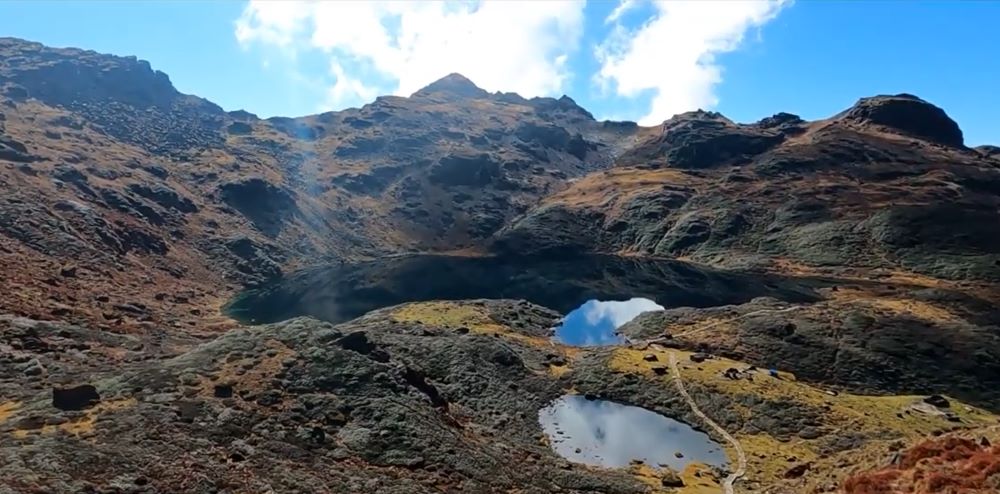
- Salpa Pokhari Lake: Salpa Pokhari is a beautiful high-altitude lake located near the Makalu Base Camp Trekking route, offering beautiful views of the surrounding mountains.
- Arun River Valley: The trekking route follows the Arun River Valley, which offers breathtaking views of the river and the surrounding mountains.
- Sherpani Col Pass: The Sherpani Col Pass is a challenging high-altitude pass located on the Makalu Base Camp Trekking route, offering stunning views of the surrounding peaks.
Overall, the Makalu Base Camp Trekking route offers a unique blend of cultural and natural attractions, making it an ideal trekking destination for adventurers who want to experience the best of both worlds.
gaulisantosh13@gmail.com
Cultural and natural attractions during Makalu Base Camp Trekking
The Makalu Base Camp Trekking route offers a range of cultural and natural attractions for trekkers to experience. Here are some of the top cultural and natural attractions during the Makalu Base Camp Trekking:
Makalu Barun National Park: The Makalu Barun National Park is a protected area in the eastern Himalayas that covers an area of 1,500 square kilometers. It is home to a wide range of wildlife, including snow leopards, red pandas, and Himalayan black bears.
Sherpa Villages: The trekking route passes through several Sherpa villages, including Tashigaon, where trekkers can experience the Sherpa culture and lifestyle.
Rhododendron Forests: The Makalu Base Camp Trekking route passes through beautiful rhododendron forests that bloom with different colors of flowers during the spring season.
Barun Valley: The Barun Valley is a beautiful valley located in the Makalu Barun National Park, surrounded by snow-capped peaks, glaciers, and waterfalls.
Makalu Base Camp: The Makalu Base Camp is the main attraction of the trek, where trekkers can enjoy stunning views of Mount Makalu and the surrounding peaks.
Buddhist Monasteries: The trekking route passes through several Buddhist monasteries, including the monastery at Tashigaon and the monastery at Sibuje.
Salpa Pokhari Lake: Salpa Pokhari is a beautiful high-altitude lake located near the Makalu Base Camp Trekking route, offering beautiful views of the surrounding mountains.
Arun River Valley: The trekking route follows the Arun River Valley, which offers breathtaking views of the river and the surrounding mountains.
Sherpani Col Pass: The Sherpani Col Pass is a challenging high-altitude pass located on the Makalu Base Camp Trekking route, offering stunning views of the surrounding peaks.
Overall, the Makalu Base Camp Trekking route offers a unique blend of cultural and natural attractions, making it an ideal trekking destination for adventurers who want to experience the best of both worlds.
Cost and budget for Makalu Base Camp Trekking
The cost and budget for Makalu Base Camp Trekking can vary depending on various factors such as the trekking season, trek duration, level of service, and the number of trekkers in the group. Here is a breakdown of the estimated cost for the Makalu Base Camp Trekking:
Trekking Permits: The Makalu Barun National Park entry permit costs USD 30 per person, and the Makalu Base Camp trekking permit costs USD 50 per person per week.
Transportation: The cost of transportation to and from the trek starting point (Tumlingtar) will depend on the mode of transportation. A flight from Kathmandu to Tumlingtar costs around USD 120-150 per person one way. Private transportation from Tumlingtar to the trek starting point can cost around USD 80-100 per jeep.
Accommodation: The cost of accommodation during the trek varies depending on the level of service. Basic teahouses along the route cost around USD 5-10 per night, while more comfortable lodges cost around USD 15-20 per night.
Food and Drinks: The cost of food and drinks also varies depending on the level of service. The average cost of a meal is around USD 5-10 per person, and the cost of bottled water or drinks can range from USD 1-5 per bottle.
Guide and Porter: Hiring a licensed guide and porter is highly recommended for the Makalu Base Camp Trekking. The average cost of a licensed guide is around USD 30-40 per day, and the cost of a porter is around USD 20-25 per day.
Based on the above estimates, the total cost for the Makalu Base Camp Trekking for a 19-day itinerary can range from USD 1,500 to USD 2,500 per person, depending on the level of service and group size. It is advisable to plan for some extra cash for unforeseen expenses, such as emergency situations, extra snacks or drinks, or tips for the guide and porter.
Tips for a successful Makalu Base Camp Trekking experience
Here are some tips for a successful Makalu Base Camp Trekking experience:
Train for the Trek: The Makalu Base Camp Trek is a challenging trek, and it is important to be physically and mentally prepared for the trek. It is advisable to start a training program that includes cardio and strength training exercises at least 2-3 months before the trek.
Pack Wisely: Pack light and essential items for the trek. It is advisable to pack warm clothes, waterproof jackets, trekking boots, trekking poles, sunscreen, sunglasses, hats, and a good quality sleeping bag.
Stay Hydrated and Eat Well: Drinking plenty of water and eating a balanced diet during the trek is crucial to keep up your energy levels and prevent altitude sickness.
Take Acclimatization Breaks: The trekking route to the Makalu Base Camp involves trekking to high altitudes, and it is important to take acclimatization breaks to adjust to the altitude and avoid altitude sickness.
Hire a Guide and Porter: Hiring a licensed guide and porter is highly recommended for the Makalu Base Camp Trekking. They can provide guidance, carry your luggage, and ensure your safety during the trek.
Respect the Local Culture: The trekking route passes through several Sherpa villages, and it is important to respect the local culture and customs. Be respectful towards the locals, their culture, and their beliefs.
Carry Cash: It is advisable to carry enough cash for the trek, as ATMs are not available along the trekking route. It is also advisable to carry extra cash for unforeseen expenses or emergencies.
Be Prepared for Unpredictable Weather: The weather in the mountains can be unpredictable, and it is advisable to be prepared for all kinds of weather conditions. Pack clothes that are suitable for different weather conditions and be prepared for rain or snow.
By following these tips, you can have a successful and enjoyable Makalu Base Camp Trekking experience while ensuring your safety and well-being during the trek.
Permit and fees for Makalu base camp trek:
To trek to the Makalu Base Camp, you will need to obtain several permits and pay some fees. Here is an overview of the permits and fees required for the Makalu Base Camp trek:
Makalu Barun National Park Permit: The Makalu Barun National Park permit is required for all trekkers entering the park. The permit costs USD 30 per person for the first week, with an additional USD 10 per person for each additional day. The permit can be obtained from the National Park entrance gate in Num or from the Nepal Tourism Board in Kathmandu.
Makalu Conservation Area Permit: The Makalu Conservation Area Permit is also required for all trekkers entering the conservation area. The permit costs USD 20 per person for the first week, with an additional USD 5 per person for each additional day. The permit can be obtained from the National Park entrance gate in Num or from the Nepal Tourism Board in Kathmandu.
Restricted Area Permit: The Makalu Base Camp trek falls under the restricted area, and a special permit is required to enter the area. The permit costs USD 10 per person per week and USD 20 per person per week for the months of September to November. The permit can be obtained from the Nepal Tourism Board in Kathmandu.
TIMS card: A Trekker’s Information Management System (TIMS) card is required for all trekkers in Nepal. The TIMS card costs USD 10 per person and can be obtained from the Nepal Tourism Board in Kathmandu.
Guide and Porter Fees: You will be required to hire a licensed guide and a porter for the Makalu Base Camp trek. The fees for a guide and porter will vary depending on the season and the length of the trek.
Detailed ItineraryItinerary
Arrival in Kathmandu, transfer to hotel.
On the first day of the Makalu Base Camp trek, trekkers will arrive at the Kathmandu airport. From there, they will be transferred to their hotel. The hotel can be in the heart of Kathmandu, where you can explore the vibrant city, have some rest and relax, or prepare for the next days of the trip. This day can be used to check the gears and to buy last-minute supplies.
Accommodation : Hotel
Sightseeing in Kathmandu,
On the second day of the Makalu Base Camp trek, trekkers will spend the day sightseeing in Kathmandu. The city is home to many UNESCO World Heritage sites, including the historic Durbar Squares of Hanuman Dhoka, Patan, and Bhaktapur, the sacred Hindu temple of Pashupatinath, and the Buddhist Stupa of Swayambhunath, also known as the “Monkey Temple.” These are all very popular among tourists.
Visitors may also choose to visit other cultural and historical sites such as the famous Baudhanath Stupa, the largest stupa in Nepal, and the Royal Palace Museum, which is a former palace of the Nepalese monarchy. There are also many shops, restaurants, and cafes to explore, offering a wide variety of local and international cuisine.
Sightseeing in Kathmandu is an excellent opportunity to experience the culture and history of Nepal, and also to take a moment to adjust to the new environment before starting the trek.
Accommodation : Hotel
Drive to Tumlingtar (9-10 hours),
On the third day of the Makalu Base Camp trek, trekkers will depart Kathmandu and drive to Tumlingtar, which is the starting point of the trek. The drive takes around 9-10 hours, and it passes through picturesque villages, terraced fields, and lush forests. The road is mostly unpaved and can be bumpy, but the scenery along the way more than compensates for the discomfort.
Tumlingtar is a small town located in the Arun valley, which is one of the most remote and least explored regions in Nepal. Trekkers will spend the night in Tumlingtar, preparing for the start of the trek the following day. The Tumlingtar is the last big town and the last opportunity for buying supplies before the trekking starts.
Accommodation : Guesthouse
Trek to Chichila (1,990 meters)
On the fourth day of the Makalu Base Camp trek, trekkers will begin their journey by trekking from Tumlingtar to Chichila. This is the first day of actual trekking and the trail is relatively easy. The trek will take you through small villages and beautiful rhododendron forests, passing the terraced fields. The trail follows the Arun river, and the scenery along the way is breathtaking.
The destination of the day, Chichila, is a small village located at an elevation of 1,990 meters. The village is home to the ethnic Rai people, known for their distinctive culture and customs. Trekkers will spend the night in Chichila and get a chance to interact with the local community, getting a glimpse of rural life in Nepal.
Chichila is the starting point of the Makalu Barun National Park and one of the most remote parts of the trek, a good chance to see the local people, culture, and lifestyle.
Accommodation : Guesthouse
Trek to Num (1,470 meters)
On the fifth day of the Makalu Base Camp trek, trekkers will leave Chichila and trek to Num. The trail continues along the Arun River, passing through lush subtropical forests, and small villages.
The trail follows the river and it is a good opportunity to observe the local fauna and flora, with the chance to spot some birds and animals such as langur monkeys, civets, and musk deer. The destination of the day, Num, is a small village located at an elevation of 1,470 meters. The village is home to the ethnic Sherpa people, known for their distinctive culture and customs. This is a good opportunity to experience the local lifestyle and interact with the local community. Num also serves as a major trailhead for the trekkers heading to Makalu Base Camp and other surrounding peaks.
The trek today is relatively easy and considered one of the easiest days of the trek. The overnight stay in Num can be a good opportunity to rest, recharge and prepare for the upcoming days of the trek.
Accommodation : Guesthouse
Trek to Sedua (1,470 meters)
On Day 6 of the Makalu Base Camp trek, the trail leads from Num to Sedua. The trek from Num to Sedua is a moderate climb of about 6-7 hours and covers about 14km. Sedua is a small village located in a beautiful setting surrounded by lush forests, rice terraces, and impressive mountain views.
The trail from Num to Sedua is a mix of well-defined paths, stone steps, and rough tracks. It goes through beautiful rhododendron and bamboo forests and also passes several small streams, which provide a great opportunity to refill water bottles. During this trek you will cross suspension bridges, and also enjoy the view of many waterfalls.
On reaching Sedua, you’ll have time to explore the village, interact with the locals and have a good rest. Sedua has basic lodges and tea houses, where you can have a meal and overnight stay.
It’s recommended to carry enough water and food with you, as well as to take precautions to avoid altitude sickness, as you will be at an elevation of 1,470 meters. Also, it is recommended to trek with a guide and a reliable trekking agency.
Accommodation : Guesthouse
Trek to Tashi Gaon (2,050 meters)
On Day 7 of the Makalu Base Camp trek, the trail leads from Sedua to Tashi Gaon. The trek from Sedua to Tashi Gaon is a moderate climb of about 6-7 hours and covers about 8km. Tashi Gaon is a small Sherpa village located at an elevation of 2,050 meters.
The trail from Sedua to Tashi Gaon is a mix of well-defined paths, stone steps, and rough tracks. It goes through beautiful rhododendron and bamboo forests and also passes several small streams, which provide a great opportunity to refill water bottles. Along the way, you will pass traditional villages and get to observe the lifestyle of the local people. You will also have a great view of the Makalu (8,485m) and Baruntse (7,129m) peaks.
Tashi Gaon is a traditional village that offers panoramic views of the surrounding peaks. It has some small tea houses and basic lodges, where you can have a meal and overnight stay. Tashi Gaon is also a good place to rest and acclimatize before continuing on to higher elevations.
It’s recommended to carry enough water and food with you, as well as to take precautions to avoid altitude sickness. Also, it is recommended to trek with a guide and a reliable trekking agency. They will be able to provide information about trail conditions and any necessary permits for this area.
Accommodation : Teahouse/Lodge
Rest day in Tashi Gaon
On Day 8 of the Makalu Base Camp trek, you will take a rest day in Tashi Gaon. This is a great opportunity to acclimatize and prepare for the higher elevations ahead. At an elevation of 2,050 meters, Tashi Gaon is a great place to rest and adjust to the thinner air before continuing on to higher elevations.
There are a few options for activities on your rest day in Tashi Gaon:
You can explore the village and interact with the local Sherpa people, who have a unique culture and way of life.
You can take a short hike around the village to get a better view of the surrounding peaks and valleys.
You can also take a day trip to nearby places like Chukung or Panch Pokhari, which offer great opportunities for more mountain views and cultural experiences.
You can also take it easy, rest, and relax to recover from the previous days of trekking.
It’s also a good idea to use the rest day to check your gear, clean your clothes and equipment, and re-organize your backpack for the next leg of the trek. Also, it is a good idea to drink plenty of water and take it easy to avoid altitude sickness.
It is important to note that, as always, if you have any symptoms of altitude sickness, it’s important to take it easy, stay hydrated and inform your guide.
Accommodation : Teahouse/Lodge
Trek to Kauma (3,600 meters)
On Day 9 of the Makalu Base Camp trek, the trail leads from Tashi Gaon to Kauma. The trek from Tashi Gaon to Kauma is a moderate to challenging climb and can take around 6-8 hours covering around 12km. Kauma is a small village located at an elevation of 3,600 meters.
The trail from Tashi Gaon to Kauma is a mix of well-defined paths, stone steps, and rough tracks. It goes through beautiful rhododendron and bamboo forests and also passes several small streams, which provide a great opportunity to refill water bottles. Along the way, you will pass traditional villages and get to observe the lifestyle of the local people. The trail also offers great views of Makalu and other peaks in the Himalayas.
As the trail goes through a relatively higher altitude, the air becomes thinner and oxygen-less, it is important to take enough time to acclimatize and to take precautions to avoid altitude sickness. On the way to Kauma you will also cross some small passes and bridges, it’s important to be careful as it can be slippery when it’s wet.
Upon reaching Kauma, you will find basic lodges or tea houses where you can have a meal and overnight stay. The village is usually less crowded than other trekking villages, which makes it an ideal place to rest and enjoy the tranquil environment.
It’s recommended to carry enough water and food with you, as well as to take precautions to avoid altitude sickness. Also, it is recommended to trek with a guide and a reliable trekking agency. They will be able to provide information about trail conditions and any necessary permits for this area.
Accommodation : Teahouse/Lodge
Trek to Makalu Base Camp (5,000 meters)
On Day 10 of the Makalu Base Camp trek, the trail leads from Kauma to Makalu Base Camp. The trek from Kauma to Makalu Base Camp is a challenging climb and can take around 5-7 hours covering around 8km. Makalu Base Camp is located at an elevation of 5,000 meters and is the starting point for the climbing expedition to the summit of Mt. Makalu (8,485m)
The trail from Kauma to Makalu Base Camp is a steep climb over rocky terrain. Along the way, you will pass through glaciers and moraines, and get to see the stunning views of Makalu and other peaks in the Himalayas.
As the trail goes through a relatively higher altitude, the air becomes thinner and the oxygen-less, it is important to take enough time to acclimatize and to take precautions to avoid altitude sickness. Once you reach the base camp you may experience the altitude sickness symptoms like headache, nausea, and breathing difficulties.
Upon reaching Makalu Base Camp, you will have time to explore the area and take in the stunning views of the surrounding peaks. You will also have the opportunity to see the camps set up by the climbing expeditions. You can also observe the climbers as they prepare for their summit attempt, If you’re lucky you may also see them climbing the mountain.
It’s recommended to carry enough water and food with you, as well as to take precautions to avoid altitude sickness. Also, it is recommended to trek with a guide and a reliable trekking agency. They will be able to provide information about trail conditions and any necessary permits for this area. And they will also be able to assist you with the proper acclimatization and necessary equipment and gear for high-altitude trekking.
Accommodation : Teahouse
Rest day at Makalu Base Camp
On Day 11 of the Makalu Base Camp trek, you will take a rest day at Makalu Base Camp. At an elevation of 5,000 meters, Makalu Base Camp is a great place to rest and adjust to the thinner air before continuing on to higher elevations, if that’s part of your plan.
A rest day at Makalu Base Camp allows you to explore the area, take in the stunning views of the surrounding peaks, and see the camps set up by climbing expeditions. You can also observe the climbers as they prepare for their summit attempt and if you’re lucky you might even see them climbing the mountain.
It’s a good idea to spend the day relaxing, recuperating and preparing for the next leg of your trek, since this is the final stop of the Makalu Base Camp Trek. You should take the opportunity to take lots of photos and savor the moment,
It is important to note that, as always, if you have any symptoms of altitude sickness, it’s important to take it easy, stay hydrated and inform your guide. Even though it’s a rest day, you should still drink plenty of water and avoid alcohol and caffeine, as it can dehydrate you and make symptoms of altitude sickness worse.
Accommodation : Teahouse
Trek to Nehe Kharka (3,600 meters)
On Day 12 of the Makalu Base Camp trek, the trail leads from Makalu Base Camp to Nehe Kharka. The trek from Makalu Base Camp to Nehe Kharka is a moderate to challenging descent and can take around 6-8 hours, covering around 8km. Nehe Kharka is a small, remote village located at an elevation of 3,600 meters.
The trail from Makalu Base Camp to Nehe Kharka is a mix of well-defined paths, rocky terrain, and steep descents. Along the way, you will pass through glaciers and moraines, and get to see the stunning views of Makalu and other peaks in the Himalayas. The trail can be challenging, especially for the knees, and it’s important to take it slow and steady.
As you are descending in elevation, the air becomes thicker, and the oxygen ampler. It’s important to take it easy and don’t rush the descent. You might still experience some altitude sickness symptoms, so it’s important to take the necessary precautions to avoid it.
Upon reaching Nehe Kharka, you will find basic lodges or tea houses where you can have a meal and overnight stay. The village is usually less crowded than other trekking villages, which makes it an ideal place to rest and enjoy the tranquil environment.
It’s recommended to carry enough water and food with you, as well as to take precautions to avoid altitude sickness. Also, it is recommended to trek with a guide and a reliable trekking agency. They will be able to provide information about trail conditions and any necessary permits for this area.
Accommodation : Teahouse/Lodge
Trek to Shershon (2,600 meters)
Trek from Nehe Kharka to Shershon (4,720m). Maximum Altitude: 4,720m. Trekking hours: 6-7 hours. The trek for the day continues from Nehe Kharka to Shershon, a small village near Lower Barun Glacier. The trail is steep and you will gain a lot of altitude, The trek is tough as you will have to climb rocky terrain and reach the Shershon village after 6-7 hours. The village offers great views of the glacier.
Accommodation : Teahouse/Lodge
Shershon to Makalu Base Camp (4853m)
Trek from Shershon to Makalu Base Camp (4,853m). Maximum Altitude: 4,853m. Trekking hours: X hours.
The trek continues from Shershon, a small village, to the Makalu Base Camp, the ultimate destination of the trek. The trail from Shershon to Makalu Base Camp is likely to be steep and challenging as the altitude increases. It will take several hours of trekking, depending on the trail and pace of the group. The Makalu Base Camp sits at an altitude of 4,853 meters and provides breathtaking views of the Makalu mountain and other peaks in the area. This is the final stop of the trek and from here, hikers will have the chance to enjoy the stunning views of the surrounding peaks before retracing their steps back to Tumlingtar.
Explore Makalu base camp
After reaching the Makalu Base Camp, the ultimate destination of the trek, you will have time to explore and take in the breathtaking views of the Makalu mountain and the surrounding peaks. The base camp sits at an altitude of 4,853 meters and offers a panoramic view of the peaks. Depending on the itinerary, you might have a full day or several hours to explore the base camp and take photographs, hike to nearby viewpoints, or rest after the challenging trek. It’s also a great opportunity to interact with other trekkers and share experiences.
Makalu Base Camp- Nehe Kharka – Shipton-La Camp then to Dobete
On this day, you will start the trek from Makalu Base Camp, which you reached on the last day, and retrace your steps back to Nehe Kharka. The trail follows a different route than the one you took on the way to Base Camp, and you will pass through Shipton-La Camp which is known for the views of Makalu and Baruntse peaks. Shipton La Camp is a high pass that is 4127 meters above sea level and will be a challenging part of the trek but with good views. From the Shipton-La Camp, you will descend to the village of Dobete. After a long day on the trail, you will make camp in Nehe Kharka.
Accommodation : Tented camp
Trek to Sedua (1,470 meters)
The route, you will continue from Shipton-La Camp or Dobate, Depending on the itinerary and pace of the group. This day’s trail will be steep and challenging as you will have to descend to Sedua, which is situated at a lower elevation. The trail is likely to be a mix of rocky and steep terrain, with breathtaking views of the mountains and valleys. You will pass through the beautiful alpine forests, and possibly cross small streams and rivers. After several hours of trekking, you will arrive at Sedua, where you will spend the night and rest for the next day’s hike.
Trek from Seudo to Mure
On day 16, you will continue your journey from Sedua to Mure. This day’s trek is likely to be a mix of ups and downs, but with a gradual descent overall. The trail can be rocky and might cross small streams and rivers. You will pass through different landscapes, including dense forests, small villages, and terraced fields. The scenery along the way is likely to be spectacular, with views of the surrounding mountains and valleys. After 6-7 hours of trekking, you will arrive at Mure, where you will spend the night and prepare for the next day’s trek.
Trek from Mure to Tumlintar.
On the final day of your trek, you will leave Mure and head towards Tumlingtar, where your journey began. The trail is likely to be easygoing, as you will be mostly descending on a well-trodden path. As you near Tumlingtar, the landscape will transition to lush subtropical vegetation. You will pass through small villages, enjoy the views of the terraced fields, and possibly encounter local people going about their daily lives. After around 5-6 hours of trekking, you will arrive at Tumlingtar where your trek ends and you can rest, reflect on your journey and return to Kathmandu.
Trekking hours: 6-7 hours
Makalu Base Camp Trek FAQs
The best time to go on the Makalu Base Camp trek is generally considered to be from late September to November and from March to May when the weather is most favorable and clear skies are common.
The Makalu Base Camp trek typically takes around 12-15 days to complete, depending on the itinerary and trekkers’ pace.
The Makalu Base Camp trek is considered to be a challenging and strenuous trek. It includes long days of hiking on steep and rocky terrain and reaching high altitudes up to 4870m which can cause altitude sickness.
Accommodation during the Makalu Base Camp trek can range from basic teahouses and lodges, to camping. It’s best to check with your trekking agency for the details of the accommodation included in your itinerary.
During the Makalu Base Camp trek, trekkers can expect to eat simple Nepali meals such as dal bhat (lentils and rice) and momos (dumplings) at teahouses and lodges. Some places may offer more options, but it’s best to check with your trekking agency and be prepared to bring some snacks as well.
The necessary equipment for the Makalu Base Camp trek includes warm clothing and layers, a good-quality sleeping bag, hiking boots, and a waterproof jacket and pants. A detailed list of equipment is usually provided by the trekking agency.
It is not necessary to hire a guide and porter for the Makalu Base Camp trek, as the trail is well-marked and most trekkers are able to complete the trek independently. However, hiring a guide and/or porter can be beneficial as they can provide local knowledge and help with navigation, as well as carry some of your equipment. It also helps the local economy. It’s ultimately up to personal preference and the level of comfort and support that you want during your trek. It’s important to check with your trekking agency regarding the availability of guides and porters and their cost.
The cost of a flight from Tumlingtar to Kathmandu and back can vary depending on several factors, such as the time of year, the airline, and whether or not you are able to find a discounted fare. Typically, a one-way flight from Tumlingtar to Kathmandu can cost around $150 – $250 per person. The return flight would be the same price. However, I would recommend you to check with different airlines, as well as travel agencies, to compare prices and find the best deal. It’s always good to be informed about the prices so that you can budget accordingly and you don’t get overcharged.
It is possible to trek to Mount Makalu solo, but it is not recommended. Makalu Base Camp Trek is considered a strenuous trek that includes crossing high passes, rugged terrain, and remoteness. It is always best to be in a group or with a guide who is familiar with the area and can provide support and assistance in case of an emergency. Additionally, having a guide with you will also allow you to better navigate the trail and have a more meaningful cultural experience. It is also advised to have all the necessary equipment and proper experience for this kind of adventure.
During the Makalu Base Camp trek, it is possible to stay at tea houses along the route. Tea houses are small lodges that provide basic accommodation and meals for trekkers. They can be found at various points along the trek, and they provide a more comfortable and convenient option than camping. However, it is important to note that the facilities at tea houses in remote areas may be very basic and may not have running water or electricity. You should be prepared for this and bring your own sleeping bag and other necessary gear.
However, During peak season and holidays, the tea houses might be fully booked, In that case, you have to carry camping equipment for safety and backup.
Refund & Cancellation Policy
- Booking requires 20% non-refundable deposit (Nepal) or 100% upfront (Tibet/Bhutan).
- Remaining payment due before the trip or on arrival (trip-dependent).
Cancellation charges:
- 31+ days: 20%
- 16–30 days: 45%
- 8–15 days: 75%
- 7 days or less: 90%
- Prices may change due to flights, taxes, or exchange rates.
- Trip changes are allowed, but extra costs apply.
- If the company cancels, a full refund, except for unavoidable events (some costs deducted).
- Good health and travel insurance are mandatory.
- No refund if removed for unsafe or illegal behavior.
- Travel involves personal risk, which the client accepts.