

Key Highlights of Jomolhari Trekking Bhutan: Highlights
Jumolhari Trekking Bhutan Introduction: Overview
When is best time to go to Jumolhari Trekking Bhutan:
The best time to go on the Jumolhari Trekking Bhutan is typically between September and November, and March to May. These months offer the most favorable weather conditions with clear skies and mild temperatures, making it the ideal time for trekking. The September to November period is also known for the best views of the Himalayan peaks, as well as the blooming of the wildflowers.
The trek can also be done in winter between December and February, but the cold and snowy conditions can make it difficult, and the views of the mountain might not be as good as in other seasons.
Why You Should Visit the Jomolhari Trek Route in Bhutan:
- Amazing mountain views
You can see the beautiful peak of Jomolhari up close, which is one of the most stunning mountains in the Himalayas. - Beautiful natural scenery
The route has forests, rivers, valleys, and snowy landscapes all in one trek. - Adventure experience
It is a real Himalayan trekking adventure with high passes, camping, and long hiking days. - Wildlife and nature
You may see rare animals like blue sheep, yaks, and many Himalayan birds. - Peaceful camping experience
Campsites are quiet and surrounded by mountains, far from city noise. - Good for nature and peace lovers
The trek gives a calm and spiritual feeling because of its natural beauty and silence. - Cultural experience
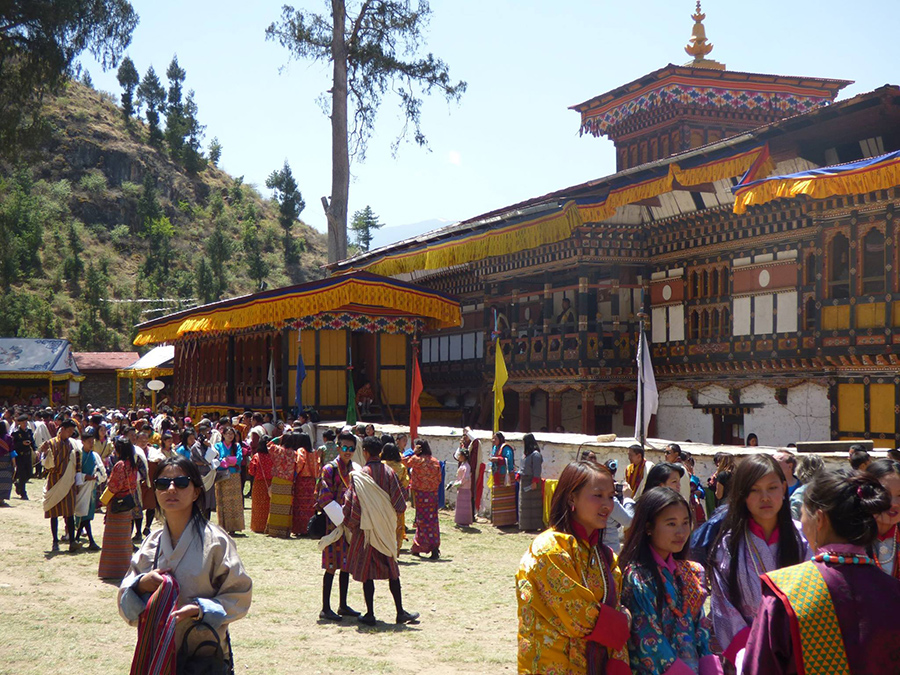
You pass through remote Bhutanese villages and see traditional mountain lifestyle.
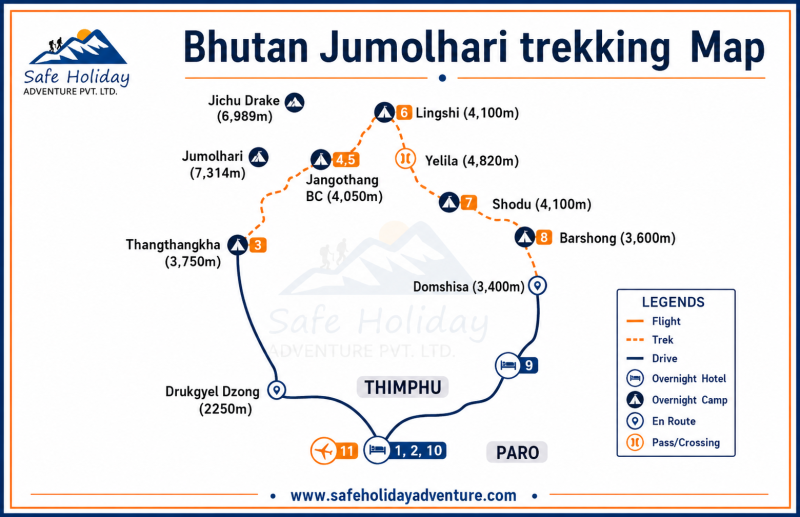
Bhutan Jumolhari Trip Itinerary:Outline Itinerary
Day 01: Arrival at Paro (2,235m/7,331ft)
Day 02: Sightseeing and Acclimatization Hike to Tiger’s Nest Monastery (3,180m/10,433ft) – 5 to 6 hours hike
Day 03: Trek from Drukgyal Dzong (Paro) to Shana (2,850m/9,350ft) – 5 to 6 hours (17km) trek
Day 04: Trek from Shana to Sio Thangthangkha (3,750m/12,303ft) – 7 to 8 hours (21km) trek
Day 05: Sio Thangthangkha to Jangothang (4,050m/13,287ft) – 5 to 6 hours (19km) trek
Day 06: Acclimatize at Jangothang
Day 07: Trek from Jangothang to Lingshi (4,100m/13,451ft) – 6 to 7 hours (19km) trek
Day 08: Trek from Lingshi to Shodu (4,100m/13,451ft) – 8 to 9 hours (22km) trek
Day 09: Trek Shodu to Domshisa via Barshong (3,400m/11,155ft) – 7 to 8 hours (23km) trek
Day 10: Trek Domshisa to Thimphu – 4 to 5 hours (17km) trek
Day 11: Thimphu to Paro and Depart
Jumolhari Trekking Package Inclusions:
- Airport picks up & drops by private vehicle as you require.
- Standard accommodation for the duration of the tour.
- Local licensed English-speaking Bhutan Tour Guides.
- All sightseeing tours, Monument /Museum Entrance Fees as per itinerary.
- All meals fixed breakfast, lunch & dinner with Tea and Coffee for the whole duration of your stay in Bhutan.
- Country Presentation & Tour Briefing on arrival evening.
- Mineral water supply for the trek.
- Government tax goes to the country’s health & education projects.
- Private Transport & Driver within Bhutan.
- Bhutan Visa Fees and Visa Processing assistance
- Tented accommodation and equipment during the camping trek.
- The required number of trekking staff.
- All trekking access, route permits logistics & fees.
- Luggage will be hauled by horses, mules, or yaks at higher elevations.
- Official expense.
- Your Travel Insurance.
- Bottled/Alcoholic/Cold drinks Room Service.
- International Airfares and Airport departure Tax.
- Personal Equipment.
- A Tip to Staffs-Tipping is expected.
Dates and Availability Departures
All our published dates are guaranteed departures. We also provide customized departures tailored to your travel plans.
There are no group joining dates available at the moment. Please contact us for a private trip.
Travellers Reviews
Bhutan Tour Essential InformationInfos
Jomolhari trek difficulty level:
The Jomolhari Trek in Bhutan is considered moderately to highly difficult. It involves long hiking days, often 5–8 hours, with steep ascents and descents across rugged Himalayan terrain.
The trek reaches high altitudes above 4,000 meters, where thin air can cause altitude sickness. Proper acclimatization and good physical fitness are essential for a safe journey.
Weather conditions can change quickly, adding to the challenge. Cold nights, strong winds, and remote trails require trekkers to be well-prepared with proper gear and stamina.
Jomolhari trekking permits in Bhutan:
To go on the Jomolhari Trek in Bhutan, you need special trekking permits issued by the government. All foreign travelers must book the trek through a licensed Bhutanese tour operator, who will arrange the permits for you.
The permit process usually includes a Bhutan visa, trekking permit, and protected area permit, as the route passes through restricted regions near the Himalayas.
These permits are included in your trekking package, so you don’t need to apply separately. Early booking is recommended to ensure smooth approval and proper travel planning.
High altitude challenges on the Jomolhari trek:
The Jomolhari Trek in Bhutan reaches high altitudes, often going above 4,000 meters. At this height, the air becomes thin, and trekkers may experience altitude sickness with symptoms like headache, dizziness, and shortness of breath.
Another major challenge is reduced physical performance. Simple tasks like walking uphill or carrying a backpack can feel much harder due to low oxygen levels. Proper acclimatization days are important for gradually adjusting your body.
Cold temperatures and strong winds at higher camps also make trekking more difficult. Nights can be freezing, so warm clothing, hydration, and a slow, steady pace are essential for a safe and successful trek.
Jomolhari Trek Packing List:
How is Paro to Jomolhari trekking route:
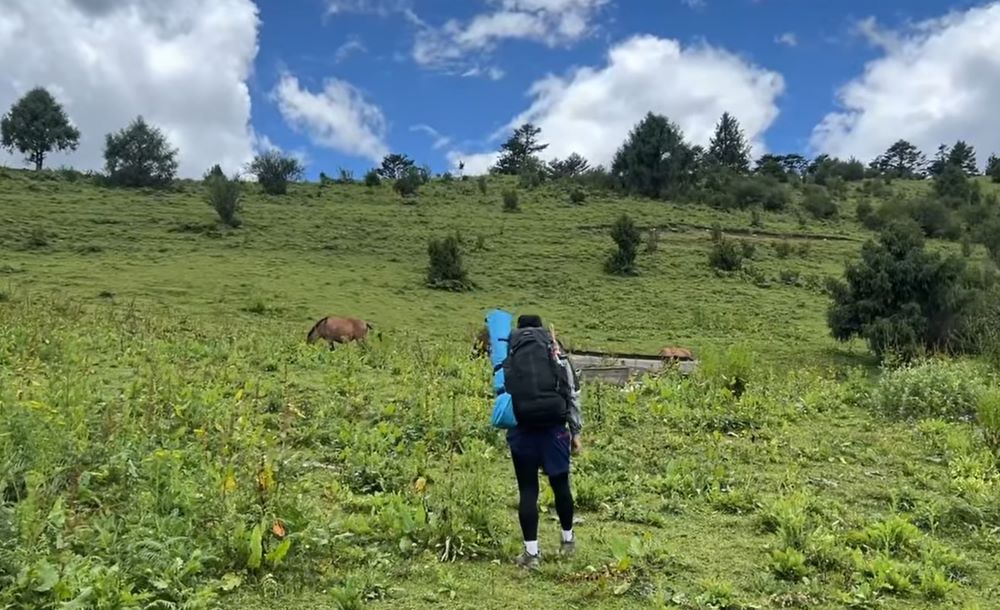
The Paro to Jomolhari trekking route in Bhutan is one of the most beautiful and popular trekking paths in the Himalayas. It starts from the Paro Valley, a green and peaceful area with traditional villages, rice fields, and monasteries. From here, the trail slowly climbs through forests, rivers, and small settlements, giving trekkers a mix of natural beauty and cultural experiences.
As you move higher, the landscape changes from dense forests to alpine meadows and rocky mountain paths. The views of snow-covered peaks, including Mount Jomolhari, become more impressive each day. The trek is challenging in some sections because of high altitude and steep climbs, but it is also very rewarding.
Overall, the Paro to Jomolhari trekking route is perfect for people who love adventure and nature. It offers a great combination of scenic mountain views, wildlife, and Bhutanese culture. The journey ends near the base of the sacred Jomolhari mountain, making it a memorable Himalayan experience
Jomolhari trek Accommodation:
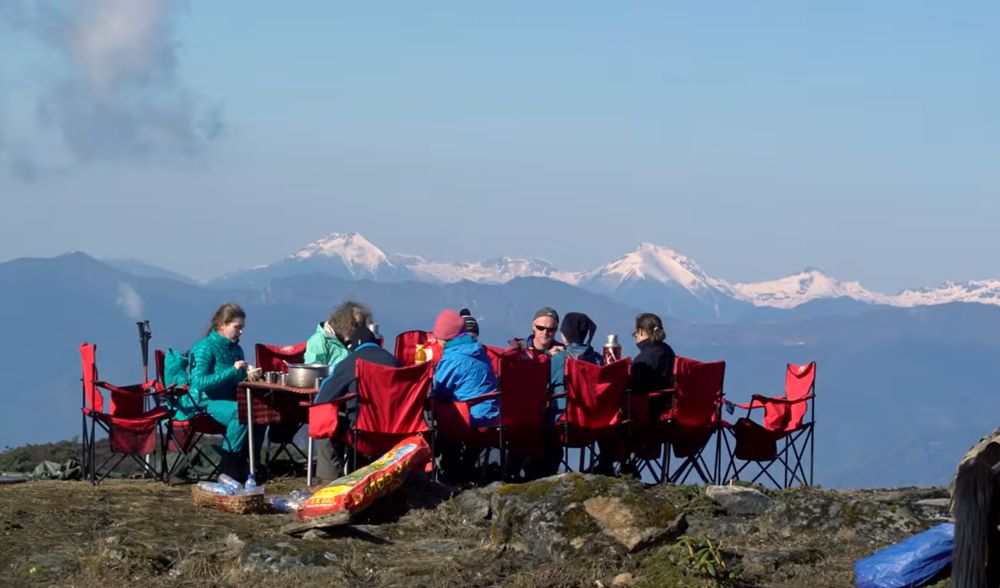
Accommodation on the Jomolhari trek is basic but comfortable. Trekkers usually stay in tented camps set up by trekking teams along the route. These camps are placed near rivers or open valleys with beautiful mountain views.
There are no permanent hotels on the trail. All accommodation is organized by trekking agencies, including sleeping tents, dining tents, and kitchen setups. Simple mattresses and sleeping bags are provided for warmth and rest.
Facilities are very limited due to the remote location. Hot meals are prepared by the support crew, and camps are moved each day depending on the trekking route and altitude gained.
Flora and fauna on Jomolhari Trek:
Jomolhari trek has rich and diverse flora. Lower trails pass through thick forests of pine, oak, rhododendron, and juniper. In spring, rhododendrons bloom in many colors, making the valleys very beautiful.
As altitude increases, vegetation becomes thinner. You can see alpine shrubs, moss, and hardy grasses that survive cold weather and strong winds. The landscape becomes more open and rocky.
The fauna is equally impressive. Trekkers may spot blue sheep, marmots, yaks, and musk deer. Rare animals like snow leopards also live in higher regions, though they are very hard to see. Birdlife includes the Himalayan monal and other mountain species.
Jomolhari trek weather conditions:
The weather on the Jomolhari trek is highly variable due to altitude changes. Lower regions are generally mild and pleasant, while higher elevations become cold and windy throughout the year.
Spring and autumn offer the best conditions with clear skies, good visibility, and moderate temperatures. These seasons are ideal for trekking and mountain views.
In winter, temperatures drop sharply with heavy snowfall at high camps, while summer brings rain, mist, and slippery trails due to the monsoon.
Acclimatization days on Jomolhari trek:
On the Jomolhari trek, acclimatization days are very important to adjust to high altitude. Trekkers usually take a rest day at Jangothang (Jomolhari Base Camp), where the elevation is around 4,000 meters. This helps the body adapt to thinner air and reduces the risk of altitude sickness.
During acclimatization, trekkers often take short hikes to nearby ridges or lakes. These easy walks improve oxygen adjustment while offering stunning views of Jomolhari mountain and surrounding peaks.
The rest day also allows proper hydration, recovery, and preparation for higher sections of the trek. Guides closely monitor trekkers’ health before continuing onward.
Jomolhari trek cost Estimation:
The Jomolhari trek cost usually ranges between USD 2,700 and USD 5,000 per person, depending on group size, season, and service level. It includes permits, guide, meals, camping equipment, transport, and Bhutan’s daily sustainable development fee.
Smaller groups or luxury packages cost more, while larger groups get lower per-person rates. Peak season (spring and autumn) is slightly more expensive due to high demand and better weather conditions.
Extra costs include international flights, travel insurance, personal gear, drinks, tips, and personal expenses not covered in the trekking package.
Jomolhari trek fitness preparation:
Fitness preparation for the Jomolhari trek should start at least 2–3 months before the journey. Regular cardio exercises like running, cycling, and hiking help build stamina for long walking days.
Strength training for legs, core, and back is also important to carry a backpack comfortably. Practice walking on uphill and uneven terrain whenever possible.
Good fitness reduces fatigue, improves acclimatization, and helps prevent altitude sickness during the trek.
Detailed ItineraryItinerary
Arrival at Paro (2,235m/7,331ft)
Upon arrival at Paro International Airport, you will be greeted by your guide and transferred to your hotel. You will have the rest of the day to rest and acclimatize to the altitude.
Accommodation : Hotel
Sightseeing and Acclimatization Hike to Tiger’s Nest Monastery (3,180m/10,433ft) – 5 to 6 hours hike
Today, you will visit the iconic Tiger’s Nest Monastery, also known as Paro Taktsang. The hike is steep and challenging, but the views of the monastery and the surrounding landscape are well worth the effort. The monastery is believed to have been built in the 8th century and is considered one of the most sacred sites in Bhutan.
Accommodation : Tea house
Trek from Drukgyal Dzong (Paro) to Shana (2,850m/9,350ft) – 5 to 6 hours (17km) trek
The trek begins at Drukgyal Dzong and follows the ancient caravan route, heading towards the base camp of Mount Chomolhari. The trail passes through scattered hamlets and farmland, into deep and richly forested valleys. The trail is relatively easy, and you will get to see the beautiful Paro Valley.
Accommodation : Tea house
Trek from Shana to Sio Thangthangkha (3,750m/12,303ft) – 7 to 8 hours (21km) trek
Today, the trail becomes more challenging as you gain altitude. You will pass through beautiful rhododendron and juniper forests, and get to see beautiful views of Mount Chomolhari.
Accommodation : Tea house
Sio Thangthangkha to Jangothang (4,050m/13,287ft) – 5 to 6 hours (19km) trek
Today, you will reach the base camp of Mount Chomolhari and the trail becomes more strenuous. The trail passes through alpine meadows and offers beautiful views of the mountain and its surrounding peaks.
Accommodation : Tea house
Acclimatize at Jangothang
Today, you will take a rest day to acclimatize to the altitude before continuing on your trek. You can explore the surrounding area and take in the beautiful views.
Trek from Jangothang to Lingshi (4,100m/13, 451ft) – 6 to 7 hours (19km) trek
Today, you will trek through high alpine pastureland where yak herders graze their animals. You will also get to see beautiful Himalayan poppies, premolars, gentians, and the spectacular rheum nubile in the mountainside.
Accommodation : Tea house
Trek from Lingshi to Shodu (4,100m/13, 451ft) – 8 to 9 hours (22km) trek
Today, you will trek through the remote highlands of the Lingshi, witnessing the nomadic lifestyles of these high-altitude gypsies. You will also get to see yaks and wild blue sheep in the mountains.
Accommodation : Tea house
Trek Shodu to Domshisa via Barshong (3,400m/11,155ft) – 7 to 8 hours (23km) trek
Today, you will trek through the rhododendron and pine forests and the ruins of Barshong Fortress. You will also pass along the Wanchu River before reaching the upper Thimbu valley at Dodena.
Accommodation : Tea house
Trek from Dolam Kencho (3,800m/12,467ft) to Thimphu (2,320m/7,610ft) – 4 to 5 hours (17km) trek
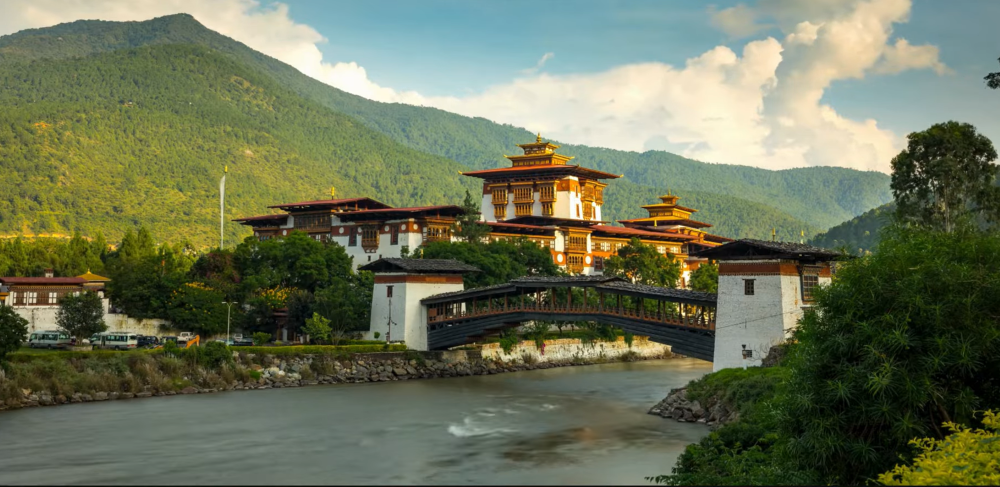
Today you will begin your descent from the high altitude of Dolam Kencho, trekking through the beautiful forested areas and passing small villages along the way. The trail will take you through the beautiful Punakha Dzong, the former capital of Bhutan. After a long day of trekking, you will finally reach the vibrant city of Thimphu, where you can rest and recover before your final day of the trek.
Accommodation : Tea house
Thimphu to Paro and Departure
Today you will be transferred back to Paro, where you can spend your last day in Bhutan exploring the town or visiting any remaining sights before your departure. Your guide will assist you with your transfers and any final preparations before your departure. Your Jumolhari Trek will end today.
Jumolhari Trekking Bhutan FAQs:
It usually takes 7 to 12 days depending on the route and itinerary.
The trek goes above 4,000 meters, with passes reaching around 4,800 meters.
The Jumolhari Trek is considered to be a moderate to strenuous trek and requires a good level of fitness. It is important to have a good level of cardiovascular fitness and to be able to walk for several hours a day on uneven terrain.
You will need good hiking boots, a warm sleeping bag, a waterproof jacket and trousers, a hat, sunglasses, sunscreen, and a good quality backpack. You will also need to bring appropriate clothing for the trek, including warm layers, a fleece, and a waterproof jacket.
The cost of the Jumolhari Trek varies depending on the tour operator, but it generally ranges from $2,500 to $5,000 per person. The cost typically includes accommodation, meals, transportation, and a guide.
It is highly recommended to have a guide for the Jumolhari Trek as the trail can be difficult to navigate and a guide will have knowledge of the local area, culture, and language.
It is not ideal for beginners; moderate to experienced fitness is recommended.
Yes, the Jumolhari Trek is only open to a limited number of trekkers each year and the number of trekkers is restricted to protect the environment and the local culture.
No, independent trekking is not allowed in Bhutan.
Simple meals like rice, noodles, vegetables, soups, and tea are served.
Network is very limited or not available in most areas.
Refund & Cancellation Policy
- Booking requires 20% non-refundable deposit (Nepal) or 100% upfront (Tibet/Bhutan).
- Remaining payment due before the trip or on arrival (trip-dependent).
Cancellation charges:
- 31+ days: 20%
- 16–30 days: 45%
- 8–15 days: 75%
- 7 days or less: 90%
- Prices may change due to flights, taxes, or exchange rates.
- Trip changes are allowed, but extra costs apply.
- If the company cancels, a full refund, except for unavoidable events (some costs deducted).
- Good health and travel insurance are mandatory.
- No refund if removed for unsafe or illegal behavior.
- Travel involves personal risk, which the client accepts.


