Major Highlights of Jugal Himal Base Camp Trek: Highlights
- Trek to the remote Jugal Himal Base Camp (4,700 m), one of Nepal’s least-visited Himalayan base camps.
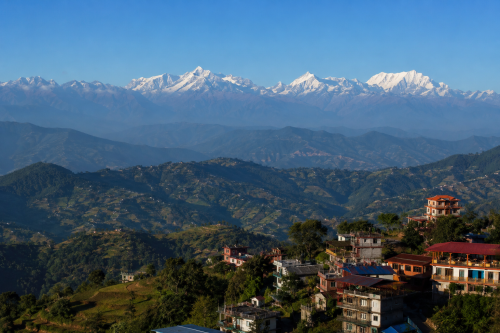
- Enjoy spectacular panoramic views of Dorje Lakpa (6,966 m), Phurbi Chhyachu (6,637 m), Madiya Himal, and the surrounding Jugal Himal range.
- Experience one of the closest Himalayan base camp treks from Kathmandu, ideal for trekkers with limited time.
- Explore authentic Sherpa and Tamang villages, preserving rich Himalayan culture and traditional lifestyles.
- Walk through pristine forests, alpine meadows, glacial valleys, and untouched high-altitude landscapes.
- Visit the sacred Ne Pemasal, a revered Buddhist pilgrimage site associated with Guru Rinpoche (Padmasambhava).
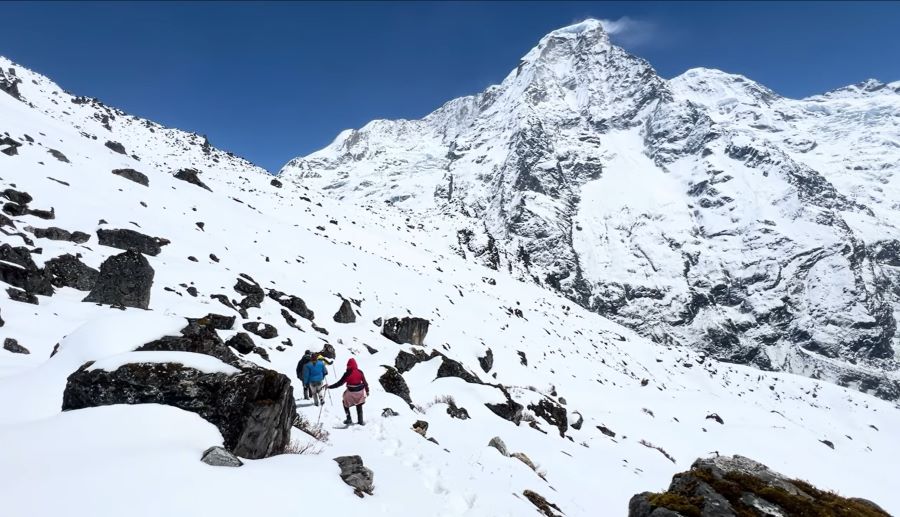
- Witness dramatic glaciers, moraines, and pristine mountain scenery with very few trekkers on the trail.
- Enjoy a peaceful off-the-beaten-path trekking experience away from Nepal’s crowded trekking routes.
- Encounter diverse Himalayan flora and fauna, including rhododendron forests, Himalayan birds, and wildlife.
- Experience genuine local hospitality through village homestays and remote mountain communities.
- Ideal for adventure seekers looking for a newly opened and unexplored trekking destination in the Nepal Himalayas.
Jugal Everest View Point Trek Introduction: Overview
The Jugal Himal Base Camp Trek is an extraordinary journey into one of Nepal’s newest and least-explored Himalayan regions, where untouched nature, authentic mountain culture, and breathtaking landscapes come together to create a truly rewarding Trekking experience. Situated in the remote hills of Sindhupalchok District, this hidden trail lies just a few hours’ drive from Kathmandu, making it an excellent choice for trekkers seeking an off-the-beaten-path adventure without committing to the longer, busier trekking routes of Everest, Manaslu, Langtang or Annapurna.
Your adventure begins in Kathmandu (1,400 m), then continues with a scenic drive through the rolling hills and river valleys of central Nepal to Chautara (1,470 m), the administrative center of Sindhupalchok. As the gateway to the Jugal Himal region, Chautara offers the first glimpse into a landscape where traditional village life, terraced farms, and forested hills have remained largely unchanged for generations.
Leaving the road behind, the trekking trail gradually ascends through peaceful countryside toward Tembathang (2,330 m), a picturesque Tamang village surrounded by cultivated fields, traditional stone houses, and colorful prayer flags fluttering in the mountain breeze. Here, trekkers experience the warm hospitality of the local community while enjoying impressive views of the surrounding valleys.
The journey continues to Chhendang (2,630 m), where cultivated farmland slowly gives way to dense forests of rhododendron, oak, pine, and bamboo. The trail becomes quieter, the air cooler, and the scenery increasingly dramatic as snow-capped peaks begin to emerge beyond the forested ridges. Chhendang serves as the final permanent settlement before entering the higher alpine landscape of the Jugal Himal.
Climbing above the tree line, the Jugal Himal Base Camp Trek reaches Nepemacchal (3,470 m), a vast alpine meadow that serves as a seasonal grazing ground for yaks and livestock. Surrounded by rugged mountain ridges, colorful wildflowers during spring, and endless open skies, Nepemacchal provides a peaceful setting where trekkers can truly appreciate the untouched wilderness of the region.
From Nepemacchal, the trail steadily ascends toward Bomba Sherpu (4,130 m), crossing high mountain pastures and rocky ridgelines with ever-expanding Himalayan panoramas. Every step reveals wider views of the surrounding mountain ranges, while the peaceful atmosphere and absence of crowds make this section one of the most memorable parts of the trek.
The final ascent leads to Jugal Himal Base Camp (4,500 m), home to the spectacular Jugal Everest View Point. This remarkable viewpoint rewards trekkers with a breathtaking 360-degree panorama of some of Nepal’s most beautiful mountains. Towering above the landscape are the majestic peaks of Dorje Lakpa (6,966 m), Madiya Peak, Phurbi Chhyachu (6,637 m), Gaurishankar (7,134 m), the rugged Jugal Himal, the Langtang Himal Range, and the dramatic Rolwaling Himal. On exceptionally clear mornings, the iconic summit of Mount Everest (8,848.86 m) can also be seen rising on the distant eastern horizon, making the viewpoint worthy of its name. As the first rays of sunlight illuminate the snow-covered peaks, the mountains transform into brilliant shades of gold, creating one of the most unforgettable sunrise experiences in the Himalayas.
The return journey retraces the same scenic trail through Bomba Sherpu, Nepemacchal, Chhendang, and Tembathang, allowing trekkers to enjoy the changing perspectives of the valleys and forests before driving back to Kathmandu. Although the trek is relatively short, it offers an incredible diversity of landscapes—from fertile mid-hills and traditional villages to dense forests, alpine meadows, and high Himalayan viewpoints—all within a single adventure.
What truly sets the Jugal Himal Base Camp Trek apart is its sense of discovery. Unlike Nepal’s famous trekking routes, where thousands of trekkers follow the same paths each season, the Jugal region remains refreshingly peaceful and remarkably authentic. Here, you’ll walk through villages where local traditions are still a part of daily life, traverse pristine forests rich in biodiversity, and stand before Himalayan panoramas without the distractions of large crowds. For travelers seeking genuine mountain experiences, cultural encounters, and spectacular scenery close to Kathmandu, the Jugal Everest View Point Trek offers one of Nepal’s most promising new trekking adventures—an unforgettable journey into the heart of an undiscovered Himalaya.
Route Options for the Jugal Everest View Point Trek
Option 1: Kathmandu – Chautara – Tembathang – Chhendang – Jugal Everest View Point
This is the most popular route to the Jugal Himal and is ideal for first-time visitors. The journey starts with a scenic drive from Kathmandu to Chautara, followed by a gradual trek through traditional Tamang villages, terraced farmland, and lush rhododendron forests. Passing through Tembathang and Chhendang, the trail climbs into the alpine landscape of Nepemacchal before reaching Jugal Himal Base Camp and the spectacular Jugal Everest View Point. This route perfectly combines local culture, peaceful mountain trails, and breathtaking Himalayan scenery.
Option 2: Kathmandu – Chhitmti – Toppi Danda – Nosyampati
If you prefer remote trails and fewer trekkers, this route is an excellent choice. Beginning with a drive to Chhitmti, the trail follows quiet forests, open ridges, and traditional mountain settlements toward Toppi Danda and Nosyampati. Along the way, you’ll enjoy beautiful views of rolling hills, deep valleys, and the surrounding Himalayan peaks. It is a rewarding option for trekkers looking to experience the untouched beauty of the Jugal region.
Option 3: Panch Pokhari with Jugal Everest View Point
This itinerary combines one of Nepal’s most sacred pilgrimage sites with the stunning scenery of the Jugal Himal. The trail leads to the famous Panch Pokhari (Five Sacred Lakes), surrounded by peaceful alpine landscapes and snow-capped mountains. After exploring the holy lakes, the journey continues toward the Jugal Himal, offering a unique blend of natural beauty, local culture, and spiritual significance. It is an ideal option for trekkers seeking more than just mountain views.
Option 4: Nepemacchal – Bomba Sherpu – Jugal Himal Base Camp
This section is the highlight of every Jugal Everest View Point Trek. Starting from the beautiful alpine meadow of Nepemacchal, the trail climbs through yak pastures and rugged mountain terrain to Bomba Sherpu before reaching Jugal Himal Base Camp (4,500 m). From the viewpoint, you’ll be rewarded with breathtaking views of Jugal Himal, Dorje Lakpa, Gaurishankar, Langtang, Rolwaling, and even Mount Everest on clear days. It is the perfect route for trekkers who want to experience the best mountain scenery in the region.
Best Time for Jugal Himal Base Camp Trek:
The best time for the Jugal Himal Base Camp Trek is during the spring (March to May) and autumn (September to November) seasons. These months offer the most stable weather, clear mountain views, comfortable trekking temperatures, and the safest trail conditions.
Spring (March to May) – Best Season
Spring is one of the most popular times for the Jugal Himal Base Camp Trek. The forests are filled with blooming rhododendrons and wildflowers, temperatures are pleasant, and the skies are generally clear, providing excellent views of the Jugal Himal range and surrounding snow-capped peaks.
Autumn (September to November) – Ideal Season
Autumn is considered the finest season for trekking in Nepal. After the monsoon, the air becomes crisp and visibility is exceptional. Dry trails, stable weather, and panoramic mountain scenery make this the ideal time to reach Jugal Himal Base Camp.
Winter (December to February)
Winter trekking is possible for experienced trekkers, but heavy snowfall and freezing temperatures above 4,000 meters can make the trail more challenging. Proper winter gear and careful planning are essential.
Monsoon (June to August)
The monsoon season is generally not recommended due to frequent rainfall, slippery trails, leeches at lower elevations, and an increased risk of landslides. Mountain views are often obscured by clouds.
Recommended Months
- March
- April
- May
- Late September
- October (Best Month)
- November
Among all months, October is widely regarded as the best month for the Jugal Himal Base Camp Trek, thanks to its stable weather, crystal-clear mountain views, comfortable temperatures, and ideal trekking conditions.
How Difficult is the Jugal Himal Base Camp Trek?
The Jugal Himal Base Camp Trek is considered a moderately difficult trek, making it ideal for adventurous hikers who enjoy remote mountain trails and a physical challenge. The route features steep climbs, rocky sections, forest paths, and several river crossings, requiring good balance, stamina, and confidence on uneven terrain.
Although no technical climbing is required, trekking to an altitude of around 4,600 meters can make the journey more demanding. With proper acclimatization, a reasonable level of physical fitness, and some preparation before the trek, most determined trekkers can complete the adventure safely while enjoying the untouched beauty of the Jugal Himal region.
Why is the Jugal Himal Base Camp Trek Suitable for You?
OutlineOutline Itinerary
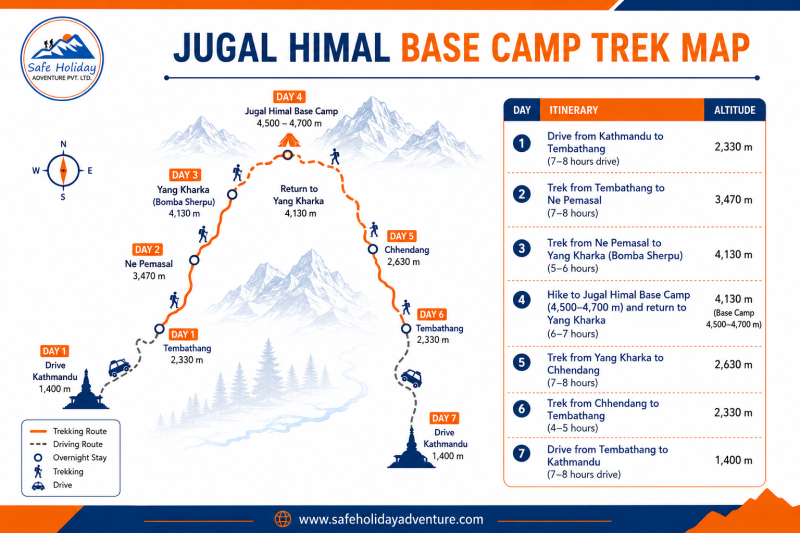
Day 1: Drive from Kathmandu to Tembathang (2,330 m) – 7–8 hours drive.
Day 2: Trek from Tembathang to Ne Pemasal (3,470 m) – 7–8 hours.
Day 3: Trek from Ne Pemasal to Yang Kharka (Bomba Sherpu) (4,130 m) – 5–6 hours.
Day 4: Hike to Jugal Himal Base Camp (4,500–4,700 m) and return to Yang Kharka (4,130 m) – 6–7 hours.
Day 5: Trek from Yang Kharka to Chhendang (2,630 m) – 7–8 hours.
Day 6: Trek from Chhendang to Tembathang (2,330 m) – 4–5 hours.
Day 7: Drive from Tembathang to Kathmandu – 7–8 hours drive.
Services Included (What we Provide)
1. Pre-Trek Services
- Airport pickup and drop in Kathmandu
- Trek briefing and itinerary explanation
- Permit arrangements (TIMS + local permits where required)
- Trekking map and basic orientation
2. Transportation
- Private or shared jeep/bus from Kathmandu to trailhead (e.g., Chautara / Melamchi area)
- Return transport from end point back to Kathmandu
3. Guide & Support Team
- Licensed, English-speaking trekking guide
- Porter service (usually 1 porter for 2 trekkers, depending on package)
- Guide’s salary, insurance, food, and accommodation
4. Accommodation
- Hotels/guesthouses in lower villages (where available)
- Tea houses or homestays during the trek
- Camping setup in higher regions (tents, sleeping arrangements)
5. Meals During Trek
- Full-board meals (breakfast, lunch, dinner)
- Tea/coffee during meals
- Basic hygienic food prepared by local lodges or trekking cook (if camping)
6. Camping Equipment (if needed)
- Tents and sleeping mats
- Kitchen tent and dining tent
- Cooking equipment and support staff
7. Safety & Essentials
- First aid kit carried by guide
- Emergency coordination support
- Route planning and local assistance
- International airfare to/from Nepal
- Nepal visa fees
- Travel insurance (mandatory but not provided)
- Personal trekking gear (boots, jackets, sleeping bag, etc.)
- Snacks, chocolates, energy drinks, and extra beverages
- Hot showers, Wi-Fi, and device charging fees (if available)
- Alcoholic drinks and soft drinks
- Tips for guide and porter
- Emergency evacuation (helicopter rescue if needed)
- Personal expenses like laundry, souvenirs, phone calls
We can provide these services upon request at an additional cost.
- Sleeping bag and down jacket rental
- Private jeep upgrade
- Extra porter
- Kathmandu hotel upgrade (3-star / 4-star)
- One-night cultural tour in Kathmandu
- Helicopter return from Panch Pokhari or nearby exit point (luxury option)
Dates and Availability Departures
All our published dates are guaranteed departures. We also provide customized departures tailored to your travel plans.
There are no group joining dates available at the moment. Please contact us for a private trip.
Travellers Reviews
Genaral Trip InfoInfos
Tea Houses and Lodges During the Jugal Himal Trek:
The Jugal Himal Trek follows one of Nepal’s quieter and less-developed trekking routes, so accommodation is much simpler than on popular trails. In the lower villages, you’ll find family-run tea houses, small lodges, and homestays that provide a comfortable place to rest. As you climb into the higher alpine region, permanent accommodation becomes limited, and camping is often necessary.
What to Expect
Tea houses along the trail offer clean but basic rooms, usually with twin beds, shared bathrooms, and communal dining spaces. Electricity, mobile network, and internet access can be unreliable in remote villages, so it’s best to carry a power bank and a warm sleeping bag for added comfort.
Food During the Trek
Meals are freshly prepared using locally available ingredients. Dal bhat is the most popular choice, while noodles, fried rice, Tibetan bread, eggs, potato dishes, soups, tea, and coffee are also commonly available. Food options become fewer at higher elevations, but they remain nutritious and ideal for long trekking days.
Accommodation Along the Route
| Location | Accommodation |
|---|---|
| Chautara / Melamchi | Hotels and guesthouses |
| Yangri and nearby villages | Tea houses, homestays, and local lodges |
| Panch Pokhari | Basic lodges (seasonal) and camping |
| Jugal Himal Base Camp | Camping only |
Useful Tips
- Carry enough cash, as there are no ATMs on the trail.
- Bring a sleeping bag and a water purification method.
- Charging facilities may be available in some villages but are limited.
- If trekking beyond Panch Pokhari, plan for a fully supported camping trek.
The simple tea houses, home-cooked meals, and warm hospitality of local communities are part of what makes the Jugal Himal Trek so rewarding. While the facilities are modest, the peaceful surroundings and authentic mountain culture offer an experience that is difficult to find on Nepal’s more crowded trekking routes.
Jugal Himal Base Camp Trek Cost:
The cost of the Jugal Himal Base Camp Trek is not fixed because it depends on several factors. One of the biggest is the length of your itinerary. A longer trek requires more nights of accommodation, additional meals, guide and porter services, and daily expenses, so the overall price naturally increases. Group size also plays an important role, as transportation and guide costs can be shared among more people, reducing the cost per trekker.
Another factor that affects the total price is your choice of Kathmandu hotel and transportation. Staying in a budget hotel before and after the trek is much cheaper than booking a luxury property. Likewise, traveling by private jeep to and from the trailhead is faster, more comfortable, and flexible, but it costs significantly more than using public transportation or shared local vehicles.
The type of package you book also makes a noticeable difference. A full package usually includes permits, transportation, accommodation, meals during the trek, an experienced guide, porter services, and other essential logistics, making it the most convenient choice. On the other hand, a bed and breakfast package covers only your accommodation and breakfast, while the remaining expenses are paid separately. Before booking, it is worth comparing what is included in each package so you can choose the option that best matches your budget, comfort level, and travel preferences.
Required Permits and Fees for Jugal himal Base Camp Trek:
The Jugal Himal Base Camp Trek requires a Langtang National Park Entry Permit, as parts of the trail pass through the park’s buffer zone. Trekkers should also obtain a TIMS (Trekkers’ Information Management System) Card if required under the latest trekking regulations.
Permit fees may change over time, so it is best to confirm the current rates before your trek. If you book through a local trekking company, they usually arrange all necessary permits, making the process simple and hassle-free.
Jugal Himal Base Camp Trek Transport information:
The journey to the Jugal Himal Base Camp Trek begins in Kathmandu. Most trekkers travel by road to Barhabise, a town along the Arniko Highway, and then continue to Gumba Danda (Golche) or the designated trailhead, depending on the trekking itinerary and current road conditions. Public buses and shared jeeps are available from Koteshwor Bus Park in Kathmandu, while private jeeps offer a faster and more comfortable option, especially for groups.
After completing the trek, you return to the road-access point, usually Gumba Danda (Golche) or the same village where the trek started. From there, local jeeps travel back to Barhabise, where you can catch a bus or jeep to Kathmandu. If you hire a private vehicle, it can pick you up directly from the trek’s ending point, making the return journey more convenient and reducing travel time.
Jugal Himal Base Camp Trek Route Map:
Packing List for Jugal Himal Trek:
Clothing:
Trekking jacket (waterproof), down jacket, fleece layers, thermal base layers, trekking pants, warm hat, sun hat, gloves, extra socks.
Footwear:
Trekking boots (broken-in), camp sandals/slippers.
Backpack & Sleeping Gear:
30–50L backpack, rain cover, -10°C to -15°C sleeping bag (essential for camping), trekking poles.
Camping Essentials (Important):
Headlamp with batteries, personal tent liner (if required), dry bags/plastic protection for clothes, lightweight camp towel.
Personal Care:
Sunscreen, lip balm, basic first aid kit, wet wipes, hand sanitizer, toiletries (minimal).
Hydration & Food:
Water bottles/hydration bladder, purification tablets or filter, energy bars, snacks.
Extras:
Power bank, charger, passport & permits (waterproof pouch), sunglasses (UV protection).
Key Note (Very Important)
Accommodation Options on the Jugal Himal Trek: Camping vs Tea House Trekking
The Jugal Himal region is still a relatively remote trekking area in Nepal, and accommodation options are not as developed as in popular routes like Everest or Annapurna. Because of this, trekkers usually choose between camping treks and limited basic tea house stays (where available in lower villages).
Camping Trek (Most Recommended):
Camping is the most reliable and flexible option for the Jugal Himal trek. Since higher sections of the trail have little to no established lodges, camping allows you to reach deeper, more untouched areas like base camp viewpoints and high alpine valleys. A full camping setup includes tents, a cooking crew, and supplies carried by porters. It offers a true wilderness experience but requires more budget and planning.
Tea House Trek (Limited Option)
Tea house trekking is only partially possible on the lower sections of the route where small local lodges or homestays exist in villages. These are simple, with basic food and shelter, and may not be available every night along the route. It is more comfortable and budget-friendly, but not reliable for the entire trek.
Which is Recommended?
For most trekkers, especially those aiming for Jugal Himal Base Camp or higher routes, camping is strongly recommended. Tea houses can be used at the start or end of the trek, but a full tea house trek is not yet fully developed in this region.
Mobile Network, Wi-Fi & Electricity on the Jugal Himal Base Camp Trek:
Mobile network coverage on the Jugal Himal Base Camp Trek is very limited. Only a few higher ridges or nearby village areas may catch a weak signal from Nepalese providers, while most of the route remains offline. Wi-Fi is generally not available, so trekkers should not rely on internet access during the journey.
Electricity is scarce along the trail, often provided through small solar systems or basic village setups. Charging facilities are rare, so carrying power banks is highly recommended.
Solo Trekking in Jugal Himal (2026 Update)
Solo trekking in the Jugal Himal region is possible in principle, but it is not a simple independent journey. The area lies close to the Langtang–Helambu side, where trails are remote, less developed, and often without clear signage. Trekkers should expect very limited infrastructure and long stretches without villages or assistance.
In 2026, Nepal’s updated trekking regulations require a licensed guide for most foreign trekkers in standard trekking regions, especially where permits like TIMS and conservation entry points are checked. This makes fully unsupported solo trekking difficult in practice. Even when allowed, hiring a guide is strongly recommended due to navigation challenges, weather changes, and emergency risks in this isolated Himalayan zone.
7-Day Jugal Himal Base Camp Trek – Daily Walking Distance:
The Jugal Himal Base Camp Trek is usually moderate in distance but tough due to terrain and altitude.
- Daily walking: around 8–14 km per day
- Shortest days: 6–8 km (high altitude or base camp exploration)
- Longest days: 12–14 km (forest and village trails)
- Total 7 days: roughly 65–80 km
Most trekking time is slow walking (4–7 hours/day), not long-distance speed.
Detailed ItineraryItinerary
Drive Kathmandu → Tembathang (2,330 m)
We begin the journey from Kathmandu (1,400 m) early in the morning, heading east on the Araniko Highway. The drive passes through Bhaktapur, Dhulikhel, and gradually enters quieter rural hills with terraced farms, river valleys, and scattered settlements.
After Melamchi and Chautara, the road becomes rough and partly off-road, following narrow mountain tracks along steep slopes and river gorges. Lunch is usually taken at a local stop around Melamchi Bazaar or nearby roadside restaurants.
By late afternoon, we arrive at Tembathang (2,330 m), a peaceful village surrounded by forested hills. Overnight stay in a basic lodge or homestay.
Difficulty: Long drive with bumpy off-road sections after mid-route.
Accommodation : Tea House Meals : Lunch and Diner
Trek Tembathang → Ne Pemasal (3,470 m)
Today we officially start trekking. The trail climbs steadily from Tembathang, entering dense forest filled with rhododendron, oak, and pine trees. The path is natural and narrow in sections, with small wooden bridges crossing mountain streams.
Lunch is taken at a natural resting point or small herder shelter along the route, depending on walking pace. As we gain altitude, the forest opens into wider ridges with expanding mountain views.
We reach Ne Pemasal (3,470 m) in the late afternoon, a quiet high pasture area with open landscapes.
Difficulty: Continuous uphill trekking with steady altitude gain.
Accommodation : Tea House Meals : Breakfast, Lunch & Dinner
Trek Ne Pemasal → Yang Kharka (Bomba Sherpu) (4,130 m)
The landscape changes into a true alpine environment. We leave the forest behind and walk through open ridges, rocky paths, and wide grazing areas used by yak herders.
Ahead, the dramatic peaks of the Jugal Himal Range begin to dominate the skyline. Lunch is taken en route at a scenic ridge or open valley depending on conditions.
By afternoon, we reach Yang Kharka (Bomba Sherpu) (4,130 m), a remote high-altitude camping area.
Difficulty: High altitude trekking with cold winds and thinner air.
Accommodation : Tea House Meals : Breakfast, Lunch & Dinner
Hike to Jugal Himal Base Camp (4,500–4,700 m) & Return
Day 4 is the most important and demanding section of the Jugal Himal Base Camp Trek, as trekkers push up to the highest point of the journey. The day starts early in the morning from Yang Kharka to make the most of stable weather and clear mountain views. The trail gradually turns steep and rugged, moving away from any vegetation into a completely alpine environment.
The ascent is physically tough, with rocky paths, loose stones, and sections influenced by glacial terrain. As you climb higher, the air becomes thinner and walking pace naturally slows. There are no villages or tea houses on this route, so trekkers must carry water and a packed lunch, taking short breaks to rest and hydrate.
Reaching the base camp area (around 4,500–4,700 m) rewards you with dramatic Himalayan scenery. You can see glaciers, ice formations, and panoramic views of peaks in the broader Langtang range. The landscape feels remote, silent, and untouched, offering a true high-altitude wilderness experience.
After spending time for exploration, photography, and rest, you begin a careful descent back to Yang Kharka. The return is faster but still requires caution due to steep and unstable sections.
Difficulty: Very challenging due to high altitude, steep ascent/descent, cold temperatures, and lack of facilities.
Accommodation : Tented Camp at Yang Kharka Meals : Breakfast, Lunch & Dinner
Yang Kharka → Chhendang (2,630 m)
Today, our Jugal Himal Base Camp Trek begins a long and steady descent from the high alpine zone back into greener, lower hills. Leaving Yang Kharka, the trail gradually shifts from cold mountain terrain into softer landscapes filled with forest, pastureland, and traditional mountain pathways.
The route follows a mix of stone steps, yak grazing areas, and narrow ridgelines. As we lose altitude, the surroundings become noticeably more vibrant—thicker vegetation, warmer air, and increasing signs of rural life. This transition makes the day feel refreshing, but the long downhill walking can be physically demanding.
We take a natural break along the way for lunch, usually at a scenic resting point with open views. After recharging, the descent continues carefully, as uneven rocky sections require good balance and steady footing.
By late afternoon, we arrive at Chhendang (2,630 m), a peaceful settlement surrounded by forest and farmland. It offers a comfortable place to rest after a full day of continuous downhill trekking.
Difficulty: Long descent with moderate to high knee strain due to extended downhill walking.
Accommodation : Tea House Meals : Breakfast, Lunch &Dinner
Chhendang → Tembathang (2,330 m)
On Day 6 of our Jugal Himal Base Camp Trek, the journey becomes noticeably gentler as we continue descending from the mid-hill region toward more settled landscapes. After the previous long trekking days, today offers a shorter and more comfortable walk, allowing the body to recover while still enjoying the beauty of the trail.
The route winds through peaceful forest sections, small rural paths, and scattered hillside settlements. Along the way, we cross natural streams and occasional suspension bridges, with the landscape gradually opening up as we lose elevation. The air becomes warmer and more humid, and signs of local village life become more frequent.
We take a relaxed lunch break at a small local tea stop or natural resting area, depending on availability along the route. This is a good moment to slow down, enjoy the surroundings, and experience the simple rhythm of life in these remote hills.
By early afternoon, we arrive at Tembathang (2,330 m), a quiet and scenic stop surrounded by greenery and farmland. The evening is intentionally easy, giving time to rest, reflect on the journey so far, and prepare for the final section of the trek.
Difficulty: Easy to moderate, with mostly downhill walking and comfortable terrain.
Accommodation : Tea House Meals : Breakfast, Lunch & Dinner
Drive Tembathang → Kathmandu
After breakfast, we drive back to Kathmandu Valley, following the same scenic road through Chautara, Melamchi, and beautiful rural hills.
We stop for lunch at a roadside restaurant along the way. By late afternoon or evening, we reach Kathmandu, ending the trip.
Difficulty: Long drive with possible road delays.
Accommodation : Hotel in Kathmandu Meals : Breakfast & Lunch
Our Note:
Dear respected customer,
We are a local travel agency with a team of experienced trekking guides. Based on your time, budget, and preferences, we can customize this trek to suit your needs.
Please feel free to send us a message, and let’s explore the beauty of the Jugal Himal together within your time and budget.
Jugal Himal Base Camp Trek-7 Day FAQs
It is a remote Himalayan route near Kathmandu offering untouched landscapes, sacred lakes, and fewer trekkers compared to popular trekking regions.
Yes, the trail passes through traditional Tamang and Sherpa villages where ancient customs, farming lifestyles, and Buddhist practices are still preserved.
Key highlights include Panch Pokhari lakes, high alpine valleys, glaciers, and panoramic views of peaks like Dorje Lakpa and surrounding Himalayan ranges.
Yes, several small monasteries, prayer flags, chortens, and sacred lakes reflect strong Buddhist and Hindu spiritual significance along the route.
Yes, trekkers often stay or pass through villages where locals are welcoming and open to sharing their lifestyle and traditions.
The trail changes from forested hills and rhododendron zones to alpine meadows, river valleys, and glacier-fed mountain terrain.
Accommodation is basic and mainly in local teahouses or camping setups depending on the section of the trail.
Yes, meals are typically prepared by local hosts or trekking crews, offering simple Nepali-style food like rice, lentils, and vegetables.
Yes, in higher and more isolated areas, camping is often necessary due to limited permanent facilities.
The trails vary from well-trodden village paths to narrow mountain tracks, river crossings, and rocky alpine sections.
No, independent solo trekking is generally not allowed; trekkers must be accompanied by a licensed guide or organized team.
Refund & Cancellation Policy
- Booking requires 20% non-refundable deposit (Nepal) or 100% upfront (Tibet/Bhutan).
- Remaining payment due before the trip or on arrival (trip-dependent).
Cancellation charges:
- 31+ days: 20%
- 16–30 days: 45%
- 8–15 days: 75%
- 7 days or less: 90%
- Prices may change due to flights, taxes, or exchange rates.
- Trip changes are allowed, but extra costs apply.
- If the company cancels, a full refund, except for unavoidable events (some costs deducted).
- Good health and travel insurance are mandatory.
- No refund if removed for unsafe or illegal behavior.
- Travel involves personal risk, which the client accepts.