

Helambu Trek Key Highlights: Highlights
- Chisapani Sunrise – Stunning sunrise views over the Himalayas.
- Traditional Villages – Experience the Tamang and Sherpa cultures in villages like Kutumsang, Tarke Ghyang, and Sermathang.
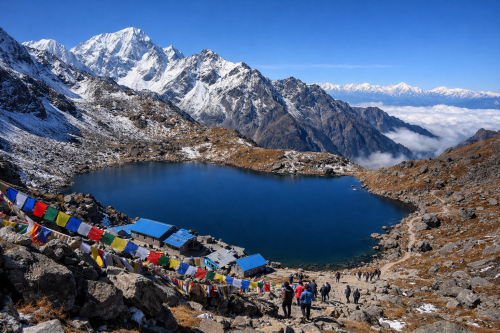
- Panoramic Mountain Views – Breathtaking views of Langtang, Jugal Himal, and Ganesh Himal ranges.
- Dense Forests – Trek through rhododendron and oak forests, rich in biodiversity.
- Tharepati Ridge – The highest point of the trek (3,650m), offering expansive views of snow-capped peaks.
- Ancient Monasteries – Visit the Tarke Ghyang Monastery, adding spiritual and cultural depth to the journey.
- Less Touristy – Enjoy a quiet, peaceful trek away from crowded routes.
- Close to Kathmandu – A scenic and accessible trek just a short drive from the capital.
Helambu Trek Introduction: Overview
Helambu Trek – A Hidden Himalayan Journey Near Kathmandu
Escape the busy city and discover one of Nepal’s best-kept trekking secrets with the Helambu Trek in the beautiful Langtang region. This short yet rewarding adventure combines breathtaking Himalayan scenery, peaceful forests, ancient Buddhist monasteries, and authentic mountain villages, making it an ideal choice for trekkers who want to experience the real beauty of Nepal without venturing into high-altitude expedition territory. Whether you are a beginner or an experienced hiker, the 5 Day Helambu Trek offers the perfect balance of nature, culture, and adventure.
The journey begins with a scenic drive from Kathmandu to Sundarijal, where the trail enters the lush forests of Shivapuri National Park. Walking through Rhododendron woods, stone staircases, and peaceful landscapes, you gradually reach the charming hill village of Chisapani (2,295 m), a popular viewpoint overlooking the Langtang and Ganesh Himal Mountain ranges. Continuing along quiet mountain trails, you’ll pass traditional farming communities before arriving at Kutumsang (2,470 m), where warm local hospitality and spectacular Himalayan views create an unforgettable overnight stop.
As the trail climbs toward Tharepati (3,650 m), the highest point of the Langtang Helambu Trek, the scenery becomes even more dramatic. Dense forests give way to open ridgelines with magnificent views of Langtang Lirung, Dorje Lakpa, Ganesh Himal, and many surrounding snow-capped peaks. Although this is the highest elevation of the trek, the gradual ascent helps reduce the chances of altitude sickness, making the Helambu Trek one of Nepal’s most comfortable highland trekking experiences for travelers with reasonable fitness.
Leaving Tharepati behind, the route descends into the heart of the Helambu Valley, where the ancient Hyolmo village of Tarke Ghyang (2,590 m) welcomes visitors with centuries-old monasteries, beautifully carved wooden houses, and rich Buddhist traditions. The final section continues through peaceful forests and picturesque villages to Sermathang, another cultural gem known for its panoramic mountain views and friendly local community, before returning to Kathmandu by road.
Covering approximately 55 to 65 kilometers, the Helambu Trek distance is ideal for those seeking a short Himalayan holiday without compromising on scenery or cultural experiences. Traveling with an experienced guide for the Helambu Trek allows you to discover hidden viewpoints, understand local traditions, and enjoy a safe, well-organized adventure from beginning to end.
If you are searching for an unforgettable trek close to Kathmandu that combines spectacular mountain views, authentic local culture, moderate walking days, and a low risk of Altitude sickness -related problems, the Helambu Trek is undoubtedly one of the finest choices in the Langtang region of Nepal.
Helambu Trek Route Overview
The Helambu Trek usually begins with a scenic drive from Kathmandu to Sundarijal, the gateway to the trek. The trail passes through Shivapuri National Park, dense rhododendron and oak forests, and charming villages such as Chisapani, Kutumsang, Tharepati, Tarkeghyang, Sermathang, and Melamchi Bazaar.
Along the journey, trekkers experience beautiful Hyolmo and Tamang villages, Buddhist monasteries, terraced fields, and panoramic views of the Langtang, Ganesh Himal, Dorje Lakpa, and Jugal Himal ranges. The trek ends with a scenic drive back to Kathmandu from Melamchi Bazaar, completing a rewarding cultural and nature-filled Himalayan adventure.
Best Months for Helambu Trek:
How Difficult is Helambu Trek?
The Helambu trek is a moderate-level trek, making it one of the more accessible Himalayan routes near Kathmandu.
The trail involves 5–7 hours of walking per day with steady uphill and downhill sections. It does not require technical climbing skills, but a reasonable level of fitness is recommended.
At a maximum altitude of around 3,500 meters, the risk of altitude sickness is relatively low compared to higher Himalayan treks. Still, a slow pace and proper hydration are important for a comfortable journey.
Overall, Helambu is ideal for trekkers who want a short, scenic, and culturally rich Himalayan experience without extreme physical difficulty.
Why the Helambu Trek is suitable for many trekkers?
- Helambu Trek is close to Kathmandu, so you can reach the starting point within a few hours.
- It is a short trek (5–7 days), perfect for limited holiday time.
- The trail is moderately easy, suitable for beginners and average fitness trekkers.
- Lower altitude reduces the risk of serious altitude sickness.
- It offers rich Hyolmo culture with Buddhist monasteries and traditional villages.
- The route is less crowded, giving a peaceful trekking experience.
- You enjoy diverse scenery, including forests, rivers, and mountain views.
- The trek can be easily extended to Langtang Valley or nearby hikes.
- It is budget-friendly compared to longer Himalayan treks.
- It is suitable for trekking in multiple seasons with flexible conditions.
Helambu Trek: A Gateway to the Langtang Region
The Helambu Trek is a stunning journey located in the Langtang region of Nepal, known for its beautiful landscapes, rich culture, and welcoming communities. This trek offers a unique blend of lush forests, terraced fields, and panoramic mountain views, making it a perfect escape for nature lovers and adventure seekers.
Starting from Kathmandu, the trek takes you through charming villages like Sundarijal, Chisapani, and Melamchi Gaon, where you can experience the vibrant culture of the Tamang and Sherpa people. The trails are surrounded by rhododendron forests and offer breathtaking views of the Langtang range, including peaks like Langtang Lirung.
Extensions to Other Treks
If you have extra time, the Helambu Trek serves as an excellent starting point for further adventures. You can extend your trek to Nagarkot, famous for its stunning sunrise views over the Himalayas. Alternatively, you can venture towards Ganjala Pass, which connects to the Langtang Valley, offering even more spectacular mountain scenery and unique cultural experiences.
This combination of treks allows you to explore the diverse beauty and culture of the Langtang region, making your trekking experience truly memorable!
Why Our Helambu Trek is Better Than Others?
The Helambu trek becomes more meaningful when it is well-organized and guided by the right team. Here’s why our package stands out:
- Experienced local guides with deep knowledge of trails and culture
- Well-planned itinerary with a balanced pace and no rush
- Safe and reliable service from start to finish
- Comfortable teahouse stays with proper arrangements
- Complete support for permits, logistics, and on-trail assistance
- Personalized care based on your fitness and travel style
With us, you don’t just trek—you enjoy a smooth, safe, and authentic Helambu experience.
Helambu Trek Outline Itinerary:Outline Itinerary
Helambu Trek Itinerary Option One:
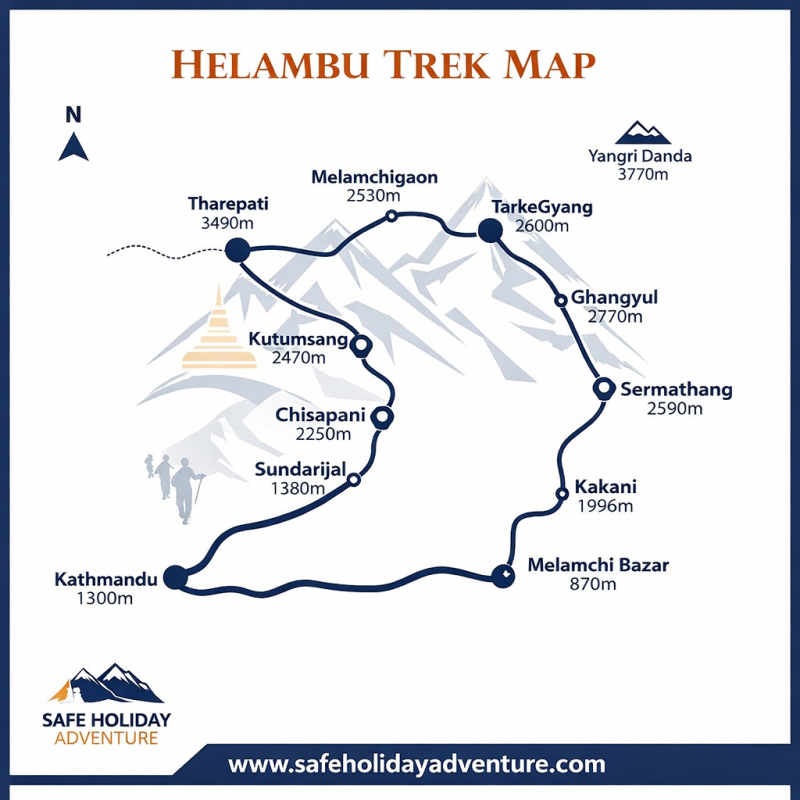
Day 1: Drive to Sundarijal (1 hour) and trek to Chisapani (4-5 hours, 2,295m).
Day 2: Trek from Chisapani to Kutumsang (6-7 hours, 2,470m).
Day 3: Trek from Kutumsang to Tharepati (6-7 hours, 3,650m).
Day 4: Trek from Tharepati to Tarke Ghyang (5-6 hours, 2,590m).
Day 5: Trek from Tarke Ghyang to Sermathang (4-5 hours) and drive back to Kathmandu.
Recommended Optional Itinerary:
Day 1: Drive from Kathmandu to Nakhote (6 hours) and then trek from Nakhote to Melamchi Gaon (3 hours). Visit Milarepa Meditation Cave and Guru Rinpoche Meditation Place (Jun Tara Cave).
Day 2: Trek from Melamchi Gaon to Thadepati (5 hours) at an altitude of 3,652 meters.
Day 3: Visit Suli Viewpoint (4,800 meters) for 4 hours and then the second viewpoint for 2 hours.
Day 4: Trek from Thadepati to Kutumsang (6 hours).
Day 5: Trek from Kutumsang to Chipling (5 hours) and then drive back to Kathmandu from Chipling (3 hours).
Helambu Trek Cost Includes/Excludes:
- Private Ground Transportation: Transfer from Kathmandu to Sundarijal before the trek and Sermathang to Kathmandu after completing the trek.
- Experienced Licensed Guide: A government-licensed, English-speaking Helambu trekking guide with many years of experience in the Langtang and Helambu region.
- Accommodation During Trek: Comfortable tea house accommodation on a twin-sharing basis throughout the trek.
- Three Daily Meals: Breakfast, lunch, and dinner during the trek, prepared fresh at local tea houses.
- Guide’s Expenses: All guide salary, meals, accommodation, transportation, insurance, and government taxes.
- Seasonal Fresh Fruits: Fresh seasonal fruits served after dinner each evening during the trek.
- Duffel Bag: A complimentary agency duffel bag for use during the trek (returned after the trip if required).
- First Aid Support: A basic first aid kit carried by your guide throughout the trek.
- Trek Completion Certificate: An official Helambu Trek Certificate presented after successfully completing the trek.
- Government Taxes: All applicable government taxes and company service charges.
- Nepal Entry Visa: Nepal visa fees and related processing charges.
- Travel Insurance: Personal insurance covering trekking, medical treatment, and emergency evacuation.
- Trekking Permits: Shivapuri Nagarjun National Park Entry Permit and Langtang National Park Entry Permit.
- Personal Expenses: Snacks, bottled drinks, alcoholic beverages, laundry, souvenirs, and other personal purchases.
- Hot Showers & Wi-Fi: Charges for hot showers, internet, and battery charging at tea houses.
- Personal Trekking Equipment: Sleeping bag, trekking poles, clothing, and other personal gear (unless specified).
- Tips: Gratuities for Crew Members,
- Additional Costs: Expenses caused by flight or road delays, natural disasters, political events, or any circumstances beyond our control.
Dates and Availability Departures
All our published dates are guaranteed departures. We also provide customized departures tailored to your travel plans.
There are no group joining dates available at the moment. Please contact us for a private trip.
Travellers Reviews
Helambu Trek Information:Infos
Helambu Trek for Beginners:
The Helambu Trek is one of Nepal’s best trekking routes for beginners. The trails are well established, daily walking hours are moderate, and the highest point is Tharepati (3,690 m), making it easier than many high-altitude Himalayan treks. A reasonable level of fitness is enough for most first-time trekkers.
The trek passes through peaceful forests, traditional Hyolmo and Tamang villages, and beautiful mountain landscapes without requiring technical climbing skills. With comfortable tea houses, short daily distances, and easy access from Kathmandu, the Helambu Trek is an excellent choice for anyone looking for their first Himalayan adventure.
Where is Helambu Trek?
The Helambu Trek is a beautiful short trekking adventure in the Langtang region of Nepal, located approximately 80 km north of Kathmandu. Starting from Sundarijal, the trail leads through the scenic Helambu Valley, where you’ll walk across peaceful forests, terraced farmlands, and traditional mountain villages while enjoying spectacular views of the Langtang Himal, Ganesh Himal, and surrounding snow-capped peaks.
One of the highlights of the trek is the opportunity to visit authentic Hyolmo (Yolmo) and Tamang communities, where centuries-old Buddhist culture, ancient monasteries, and warm local hospitality remain an important part of everyday life. With its easy access from Kathmandu, moderate walking trails, and unforgettable Himalayan scenery, the Helambu Trek is an excellent choice for trekkers looking for a rewarding adventure within a limited time.
Difficulty Level of Langtang Helambu Trek:
The Langtang Helambu Trek is considered a moderate trekking adventure, making it suitable for beginners with a reasonable level of fitness as well as experienced hikers. The trail includes a mix of stone staircases, forest paths, ridgelines, and gradual ascents, with daily walking times ranging from 4 to 7 hours. While no technical climbing or mountaineering skills are required, good physical preparation will help you enjoy the trek more comfortably.
The highest point of the trek is Tharepati (3,650 m), where some trekkers may experience mild effects of altitude sickness. However, because the ascent is gradual and the elevation remains below 4,000 meters, the risk is relatively low compared to many other Himalayan treks. Walking at a steady pace, staying well hydrated, and taking regular breaks are usually enough to prevent altitude-related discomfort.
The route passes through beautiful forests, traditional villages, and peaceful mountain landscapes, making the journey enjoyable rather than physically demanding. Hiring an experienced guide for the Langtang Helambu Trek is highly recommended, as they can assist with navigation, accommodation, local culture, and your overall safety. With proper preparation and a positive attitude, the Langtang Helambu Trek is an excellent choice for anyone looking to experience the beauty of the Himalayas without tackling an extremely challenging route.
Helambu Trek vs Langtang Valley Trek
Helambu Trek Permits and Entry Requirements
To enjoy the Helambu Trek, every traveler must carry the necessary entry permits before entering the protected trekking areas. Trekkers starting from Sundarijal are required to obtain a Shivapuri Nagarjun National Park Entry Permit, as the trail begins inside this nationally protected forest. A Langtang National Park Entry Permit is also required for the Helambu trekking route. These permits are checked at designated checkpoints, so it is important to keep them with you throughout the journey.
The permit fees directly support the conservation of Nepal’s forests, wildlife, mountain trails, and local communities, helping preserve the natural beauty of the Langtang and Helambu region for future generations. Most trekkers arrange their permits through a licensed trekking company before departure, making the process simple and hassle-free. Traveling with the correct permits not only ensures compliance with local regulations but also allows you to enjoy a safe, well-organized, and unforgettable Helambu Trek experience.
Meals and Tea Houses on the Langtang Helambu Trek:
The Langtang Helambu Trek is well supported by family-run tea houses in every major village. These lodges provide clean twin-sharing rooms, warm dining halls, and friendly local hospitality. Most tea houses follow a fixed menu with similar prices, making it easy for trekkers to choose meals and estimate daily food costs throughout the journey.
You can enjoy a variety of freshly prepared dishes, including Dal Bhat, momo, fried rice, noodles, pasta, Tibetan bread, chapati, pancakes, eggs, porridge, soups, potatoes, seasonal vegetables, tea, coffee, hot chocolate, and ginger-lemon-honey tea. Dining in these tea houses is a great way to experience authentic mountain cuisine while supporting the local Tamang and Hyolmo communities.
What to Pack for the Langtang Helambu Trek:
Packing wisely makes your Langtang Helambu Trek safer, more comfortable, and more enjoyable. Bring lightweight essentials that keep you warm, dry, and prepared for changing mountain weather without carrying unnecessary weight.
- Clothing: Moisture-wicking shirts, thermal base layers, fleece jacket, insulated down jacket, waterproof jacket and pants, trekking pants, gloves, warm hat, sun hat, hiking socks, and comfortable underwear.
- Footwear: Sturdy trekking boots, lightweight sandals or camp shoes, and gaiters (optional).
- Trekking Gear: Daypack, trekking poles, sleeping bag (recommended), rain cover, reusable water bottles, headlamp, sunglasses, sunscreen, and a power bank.
- Personal Items: Toiletries, quick-dry towel, personal medications, first-aid kit, lip balm, hand sanitizer, wet wipes, and passport-sized photos.
- Documents & Money: Passport, trekking permits, travel insurance, cash for personal expenses, and copies of important documents.
With the right packing list, you can focus on enjoying the beautiful forests, traditional villages, and breathtaking Himalayan views instead of worrying about the weather or missing essential gear. Traveling light while carrying the right equipment will make your Langtang Helambu Trek more comfortable from start to finish.
Detailed ItineraryItinerary
Drive from Kathmandu to Sundarijal and Trek to Chisapani (2,295 m)
Your Helambu Trek with Safe Holiday Adventure begins with a scenic one-hour drive from Kathmandu to Sundarijal, the gateway to the trek. After completing the entry formalities, the trail enters the beautiful Shivapuri Nagarjun National Park, where you will walk through lush oak and rhododendron forests, cross clear mountain streams, and enjoy the peaceful surroundings. After about 3 hours of trekking, stop at a local tea house for a freshly prepared lunch.
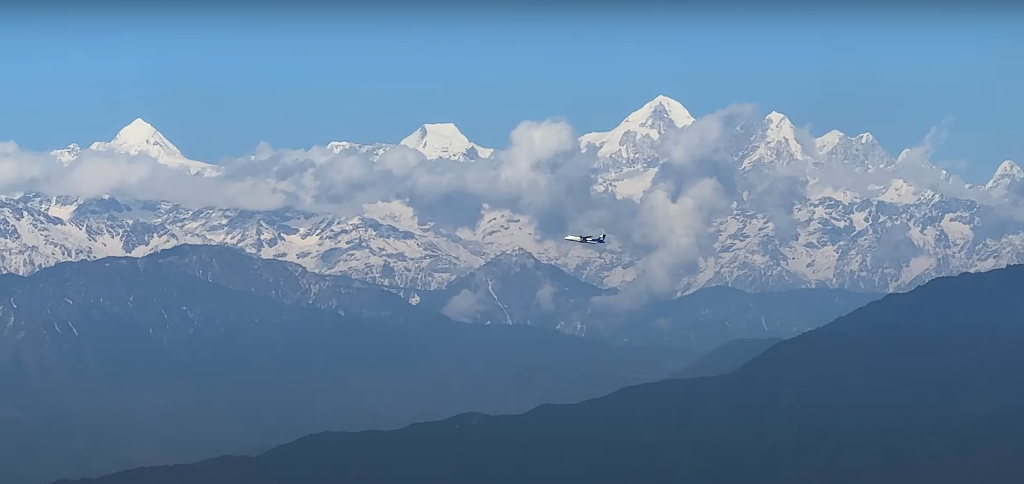
Following lunch, continue ascending through the forest on a well-maintained trail towards Chisapani (2,295 m). The final section rewards you with refreshing mountain air and the first panoramic views of the Himalayas. Upon arrival, check into a comfortable tea house, relax, and witness a spectacular sunset over the surrounding hills and snow-capped peaks, making it a perfect beginning to your Helambu Trek adventure.

Accommodation : Lodge Meals : Lunch & Dinner
Trek from Chisapani (2,295 m) to Kutumsang (2,470 m)
Wake up to the crisp mountain air and enjoy breakfast before beginning today’s trek from Chisapani (2,295 m). The trail gently climbs through Shivapuri Nagarjun National Park, passing beautiful forests, open ridges, and traditional villages including Pati Bhanjyang (1,860 m) and Gul Bhanjyang (2,140 m). Along the way, enjoy spectacular views of the surrounding hills and distant Himalayan peaks while observing the peaceful rural lifestyle of the local communities.
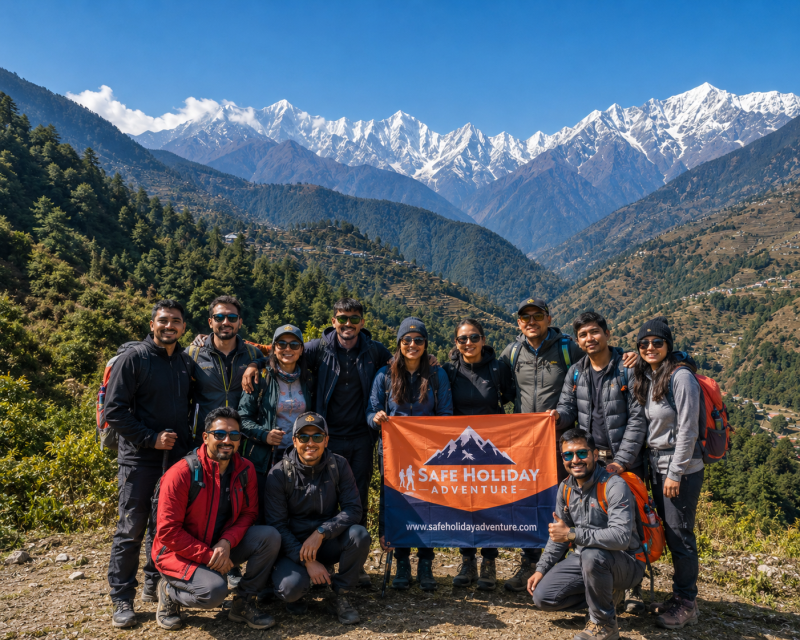
After stopping for lunch at Gul Bhanjyang, continue the gradual uphill walk to Kutumsang (2,470 m). The final section passes through terraced farmland and rhododendron forests before reaching this charming mountain village. Upon arrival, check into a comfortable tea house, relax with a warm meal, and enjoy the peaceful atmosphere surrounded by the beautiful landscapes of the Helambu region.
Accommodation : Lodge Meals : Breakfast, Lunch & Dinner
Trek from Kutumsang (2,470 m) to Tharepati (3,650 m)
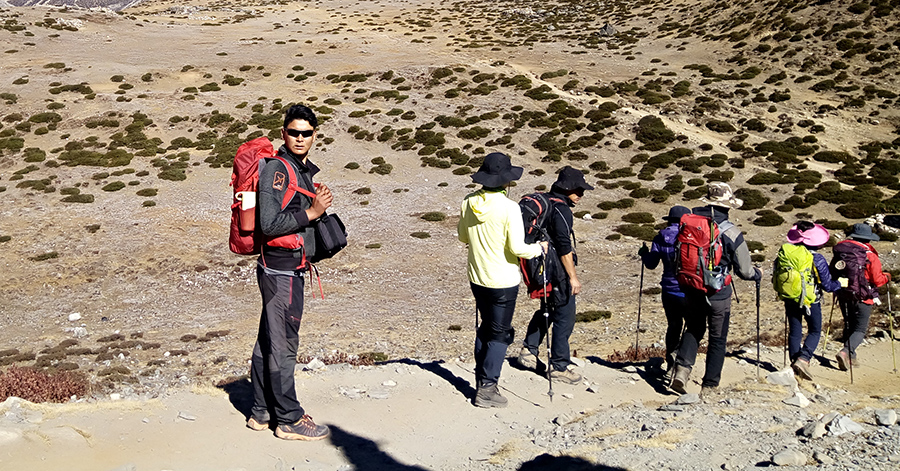
After a delicious breakfast, begin today’s scenic trek from Kutumsang (2,470 m) to Tharepati (3,650 m). The trail gradually climbs through dense rhododendron and oak forests, crossing peaceful ridges and quiet mountain paths while offering spectacular views of the surrounding Himalayan landscape.
As you gain elevation, the forests become more tranquil, and the scenery becomes increasingly dramatic. Stop at a local tea house along the route for a freshly prepared lunch before continuing the steady ascent toward Tharepati, one of the highest points of the Helambu Trek.
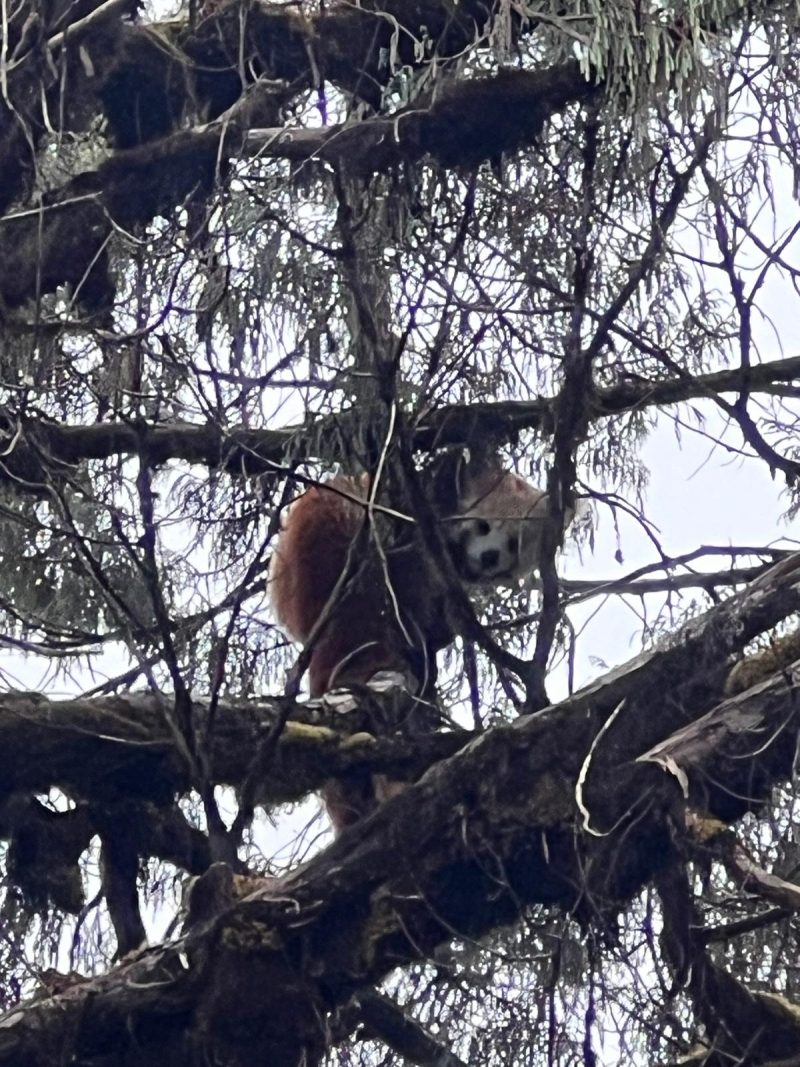
Upon reaching Tharepati (3,650 m), you will be rewarded with breathtaking panoramic views of the Langtang Himal, Dorje Lakpa, Jugal Himal, and other snow-capped peaks. After checking into a comfortable tea house, relax, enjoy the peaceful mountain atmosphere, and prepare for another memorable day of trekking.
Accommodation : Lodge Meals : Breakfast, Lunch & Dinner
Trek from Tharepati (3,650 m) to Tarke Ghyang (2,590 m)
After breakfast, descend from Tharepati (3,650 m) through beautiful rhododendron forests, crossing peaceful hillsides and enjoying magnificent views of the surrounding Himalayan peaks. Stop at a local tea house for lunch before continuing the gradual descent toward the Helambu Valley.
Arrive at Tarke Ghyang (2,590 m), the largest and most culturally significant Hyolmo village in the region. Visit the ancient Buddhist monastery, interact with friendly locals, and experience the rich Himalayan culture before spending the night at a comfortable tea house.
Accommodation : Lodge Meals : Breakfast, Lunch & Dinner
Trek from Tarke Ghyang (2,590 m) to Sermathang (2,610 m) and Drive Back to Kathmandu
Enjoy your final breakfast in the mountains before beginning a pleasant trek from Tarke Ghyang (2,590 m) to Sermathang (2,610 m). The trail passes through peaceful forests, traditional Hyolmo villages, terraced farmlands, and beautiful viewpoints, offering a relaxing end to your Helambu Trek.
After lunch in Sermathang, board your private vehicle for the scenic 4–5 hour drive back to Kathmandu. As you descend from the hills, reflect on the unforgettable memories of the trek, from spectacular Himalayan views and rich local culture to the warm hospitality of the Helambu region.
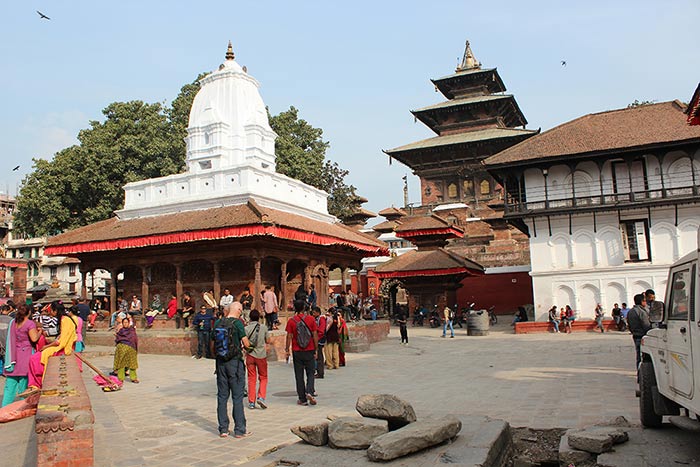
Accommodation : Hotel in Kathmandu Meals : Breakfast
Helambu Trek- 5 Days FAQs
The highest point of the trek is Tharepati, located at approximately 3,690 meters (12,106 ft) above sea level. From here, trekkers enjoy spectacular views of the Langtang, Jugal Himal, and Ganesh Himal mountain ranges.
Most villages along the Helambu Trek have basic mobile network coverage. You can also find Wi-Fi in some teahouses, though it may be slow and unreliable. It’s a good idea to inform friends or family about your trekking schedule in advance.
Most tea houses provide battery charging for phones, cameras, and other electronic devices. Charging usually costs a small additional fee, especially at higher elevations where electricity is more limited.
Yes. Comprehensive travel insurance is strongly recommended. A policy covering trekking activities, medical treatment, trip delays, and emergency helicopter evacuation provides valuable protection during your journey.
Yes. The Helambu Trek is suitable for many active families with children who enjoy walking. Choosing a relaxed itinerary with shorter hiking days makes the experience more comfortable and enjoyable for younger trekkers.
No. There are no reliable ATMs along most of the trekking route. It is best to withdraw enough Nepalese Rupees in Kathmandu before starting the trek to cover personal expenses.
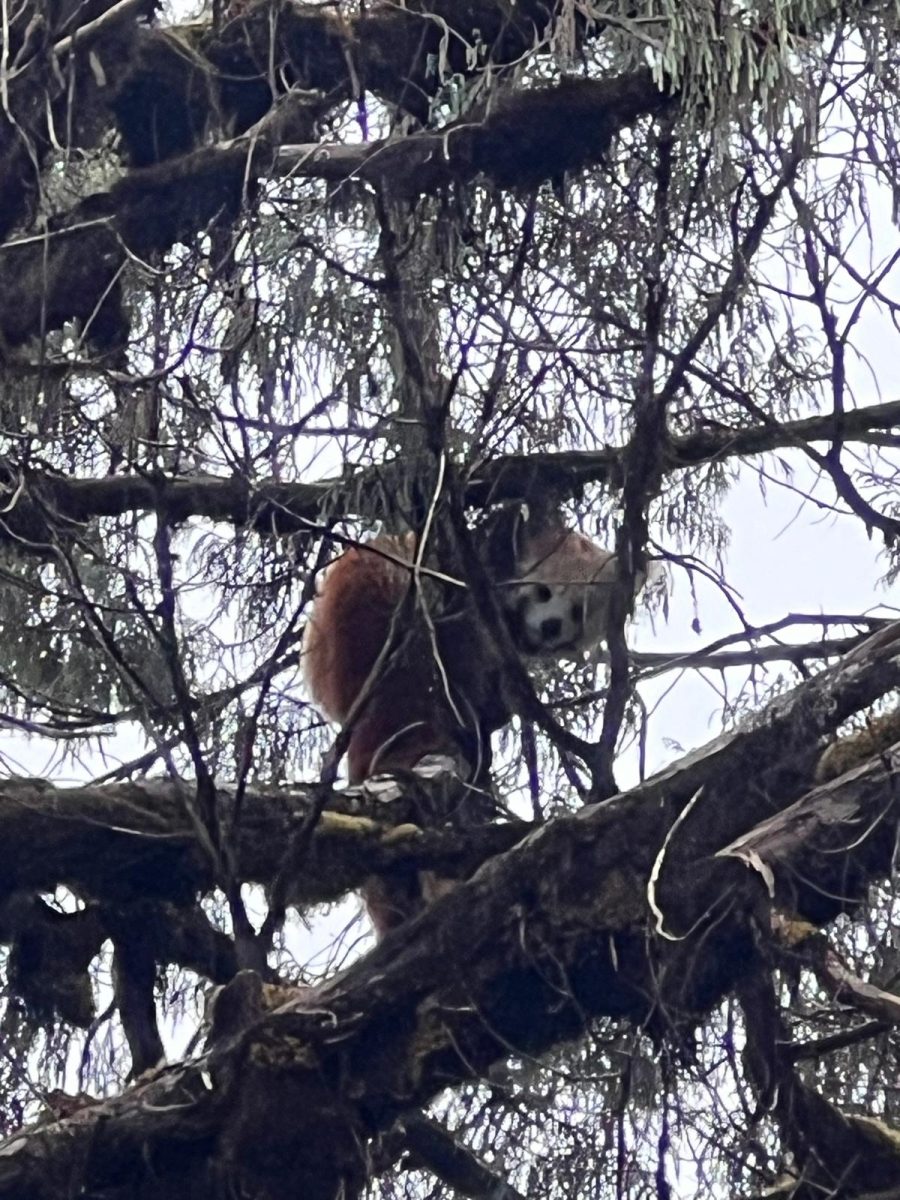
The forests of the Helambu region are home to red pandas, Himalayan monkeys, musk deer, langurs, colorful pheasants, and many species of birds. Lucky trekkers may also spot rare wildlife living inside the protected forest areas.
The Helambu Trek offers a peaceful Himalayan experience with fewer crowds, beautiful forests, authentic villages, rich Buddhist culture, and impressive mountain views. It is an excellent option for travelers seeking a quieter trekking adventure close to Kathmandu without the busy trails of more famous destinations.
The Helambu Trek begins with a scenic drive from Kathmandu to Sundarijal, located about 15 km northeast of the capital. From Sundarijal, the trail enters Shivapuri Nagarjun National Park and gradually climbs through lush forests, traditional villages, and beautiful mountain landscapes, marking the official starting point of the Helambu trekking adventure.
Yes. Drinking water is available in almost every village and tea house. Many trekkers refill reusable bottles and use water purification tablets, filters, or UV purifiers instead of purchasing bottled water to reduce plastic waste.
Yes. The Helambu Trek can easily be combined with the Langtang Valley Trek, Gosainkunda Trek, or Tamang Heritage Trail to create a longer and more diverse Himalayan adventure.
The risk of altitude sickness is relatively low because the trek stays below 4,000 meters. Most trekkers complete the journey without problems by walking slowly, drinking enough water, and allowing their bodies to adjust naturally
While hiring a guide is not mandatory for the Helambu Trek, it is highly recommended, especially for first-time trekkers. A guide can help navigate the trails, provide insights into local culture, and assist in case of emergencies.
To reach the starting point of the Helambu Trek in Sundarijal, trekkers usually use private vehicles, local buses, or shared jeeps. The journey from Kathmandu to Sundarijal takes about one hour.
The maximum altitude on the Helambu Trek is approximately 3,650 meters at Tharepati. This altitude is manageable for most trekkers, but it’s important to acclimatize properly to avoid altitude sickness.
It is not recommended to drink tap water during the Helambu Trek. Instead, use water purification tablets or a filter to treat water from streams or purchase bottled water from teahouses along the way.
The weather in the Helambu region can vary. During spring and autumn, days are usually sunny and warm, while nights can be chilly. Be prepared for possible rain, especially in the pre-monsoon months.
There are limited cash withdrawal facilities in the Helambu region. It’s advisable to withdraw enough cash in Kathmandu before starting the trek, as ATMs may not be available in remote areas.
In case of an emergency, it’s important to stay calm. If you are with a guide, inform them immediately. For serious medical issues, you may need to be evacuated by helicopter or taken to the nearest medical facility.
Yes, there are options to extend the Helambu Trek or add side trips, such as visiting the Langtang Valley or exploring nearby villages. Discussing your preferences with your guide can help plan additional adventures.
The standard Helambu Trek takes 5 to 7 days, depending on your itinerary and walking pace. Many trekkers also customize the route by extending or shortening the trek to match their available time and fitness level.
Refund & Cancellation Policy
- Booking requires 20% non-refundable deposit (Nepal) or 100% upfront (Tibet/Bhutan).
- Remaining payment due before the trip or on arrival (trip-dependent).
Cancellation charges:
- 31+ days: 20%
- 16–30 days: 45%
- 8–15 days: 75%
- 7 days or less: 90%
- Prices may change due to flights, taxes, or exchange rates.
- Trip changes are allowed, but extra costs apply.
- If the company cancels, a full refund, except for unavoidable events (some costs deducted).
- Good health and travel insurance are mandatory.
- No refund if removed for unsafe or illegal behavior.
- Travel involves personal risk, which the client accepts.