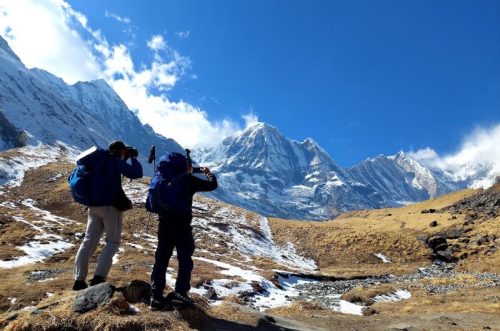

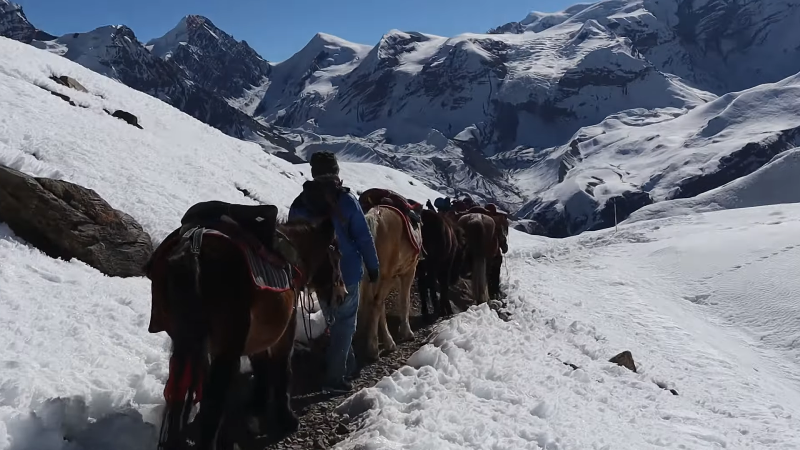
Keep electronics safe by keeping them insulated, storing them in inner pockets, avoiding sudden temperature changes, using waterproof cases, carrying spare batteries (cold drains them fast), and limiting exposure to high altitudes.
Fastest Annapurna Circuit Trek Key Highlights: Highlights
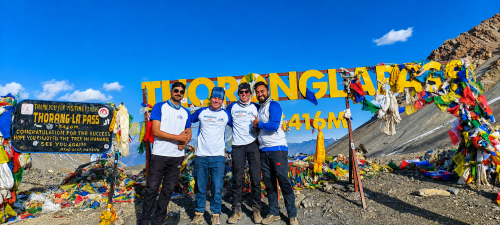
- Thorong La Pass Adventure – Cross the famous Thorong La Pass (5,416m / 17,769 ft)
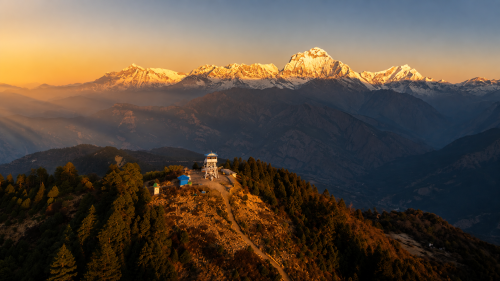
- Spectacular Mountain Views – Enjoy breathtaking panoramas of Annapurna, Dhaulagiri, Manaslu, and Tilicho peaks
- Authentic Himalayan Culture – Explore traditional Gurung, Thakali, and Manangi villages
- Diverse Landscapes – Trek through forests, rivers, waterfalls, alpine valleys, and dry mountain deserts
- Sacred Muktinath Temple – Visit one of Nepal’s most important pilgrimage sites for Hindus and Buddhists
- Beautiful Suspension Bridges – Walk across thrilling bridges above deep river gorges
- Natural Hot Springs – Relax in the hot springs at Tatopani after long trekking days
- Tilicho Lake Side Trip – Optional visit to one of the world’s highest lakes
- Traditional Local Food – Taste authentic Nepali and Himalayan cuisine along the trail
- Unique Mountain Lifestyle – Experience yak caravans, stone villages, monasteries, and local farming culture
- Changing Climate & Scenery – Witness dramatic landscape changes from subtropical hills to high Himalayan terrain
- World-Famous Trekking Route – Experience one of the best and most legendary trekking adventures in Nepal
Fastest Annapurna Circuit Trek Overview: Overview
The Fastest Annapurna Circuit Trek with Safe Holiday Adventure offers a thrilling 6-day journey through the heart of the Annapurna region, tailored for those seeking a swift yet immersive Trekking/Hiking experience.
The adventure starts with a scenic drive from Kathmandu to Chame (2,670 meters (8,760 feet), the gateway to the fastest Annapurna Circuit. This drive takes you through the lush valleys and picturesque landscapes of Nepal, setting the stage for the trek ahead.
From Chame, we begin our trek towards Upper Pisang (3,300 meters (10,827 feet). The trail here is relatively gentle, allowing you to acclimatize while enjoying the dramatic mountain views. Upper Pisang is a beautiful village offering spectacular vistas of the Annapurna range and a rich cultural experience. As you walk, you’ll cross charming suspension bridges and pass through traditional villages.
The journey continues to Manang (3,540 meters (11,614 feet), passing through Dhikur Pokhari (Popular Lunch Place)—a serene spot perfect for a rest and brief exploration. Manang is renowned for its stunning scenery and offers a valuable rest day to acclimatize. This day includes visits to the ice lake and Chugkar Viewpoint, where you can enjoy panoramic views of the Annapurna and Gangapurna peaks (7,455 meters (24,459 feet).
From Manang, the trek proceeds to Ledar( 4,200 meters (13,780 feet), with a stop at Yak Kharka (4,050 meters (13,287 feet) along the way. The path features a mix of rugged terrain and lush meadows, providing breathtaking views of the surrounding peaks. Ledar is a small village that serves as a base for the final push towards the Thorong La Pass.
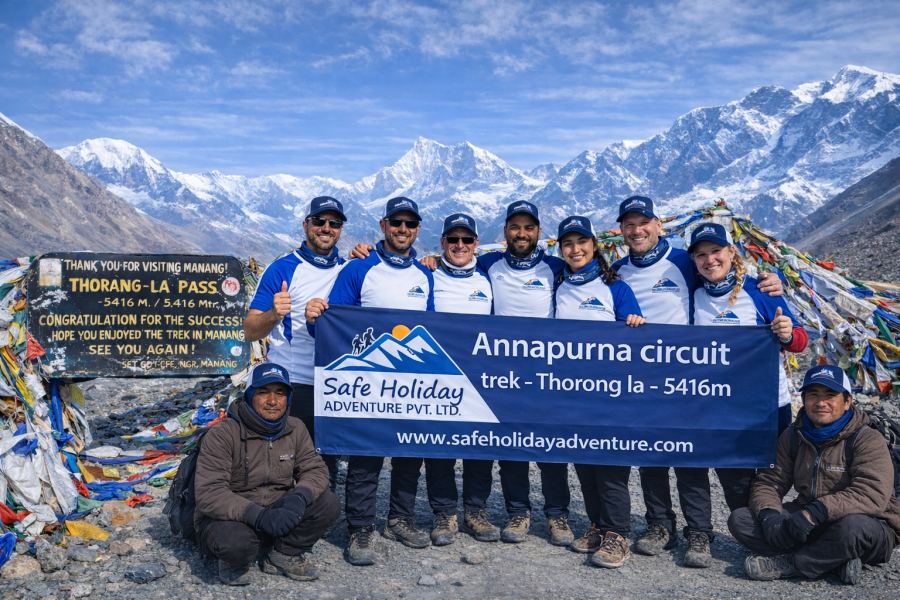
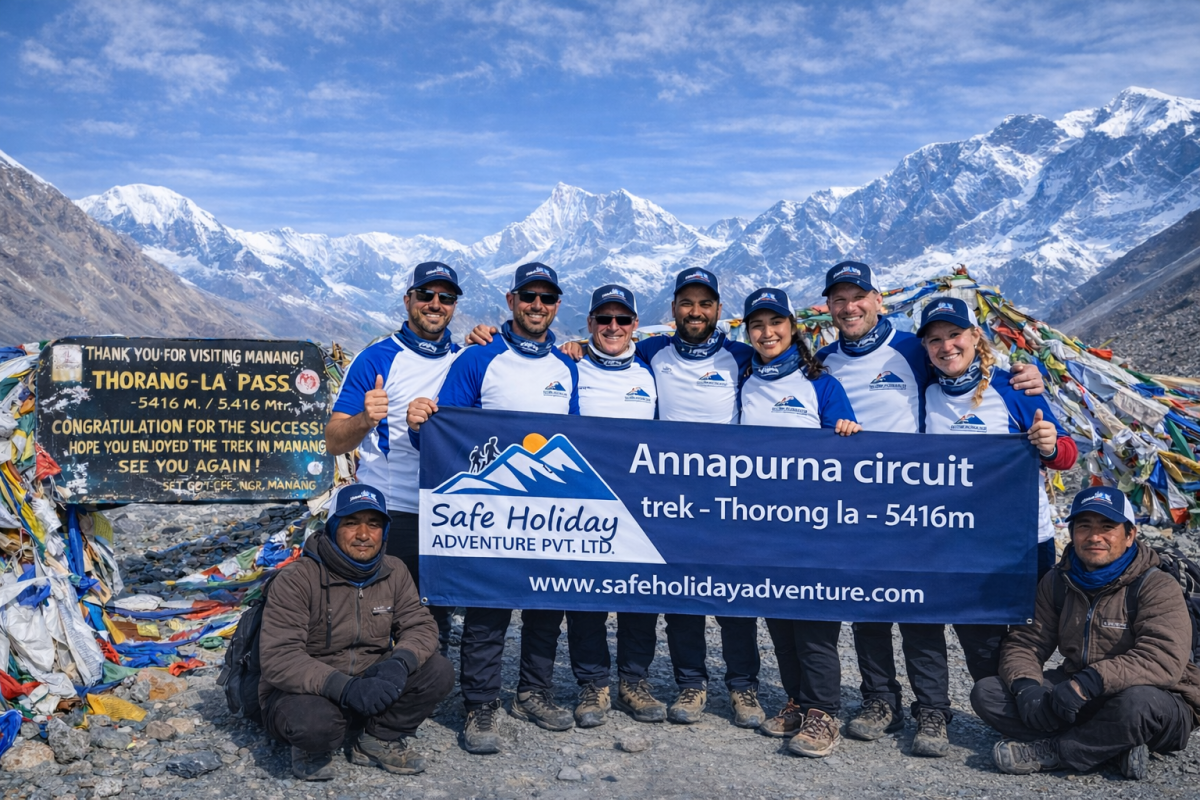
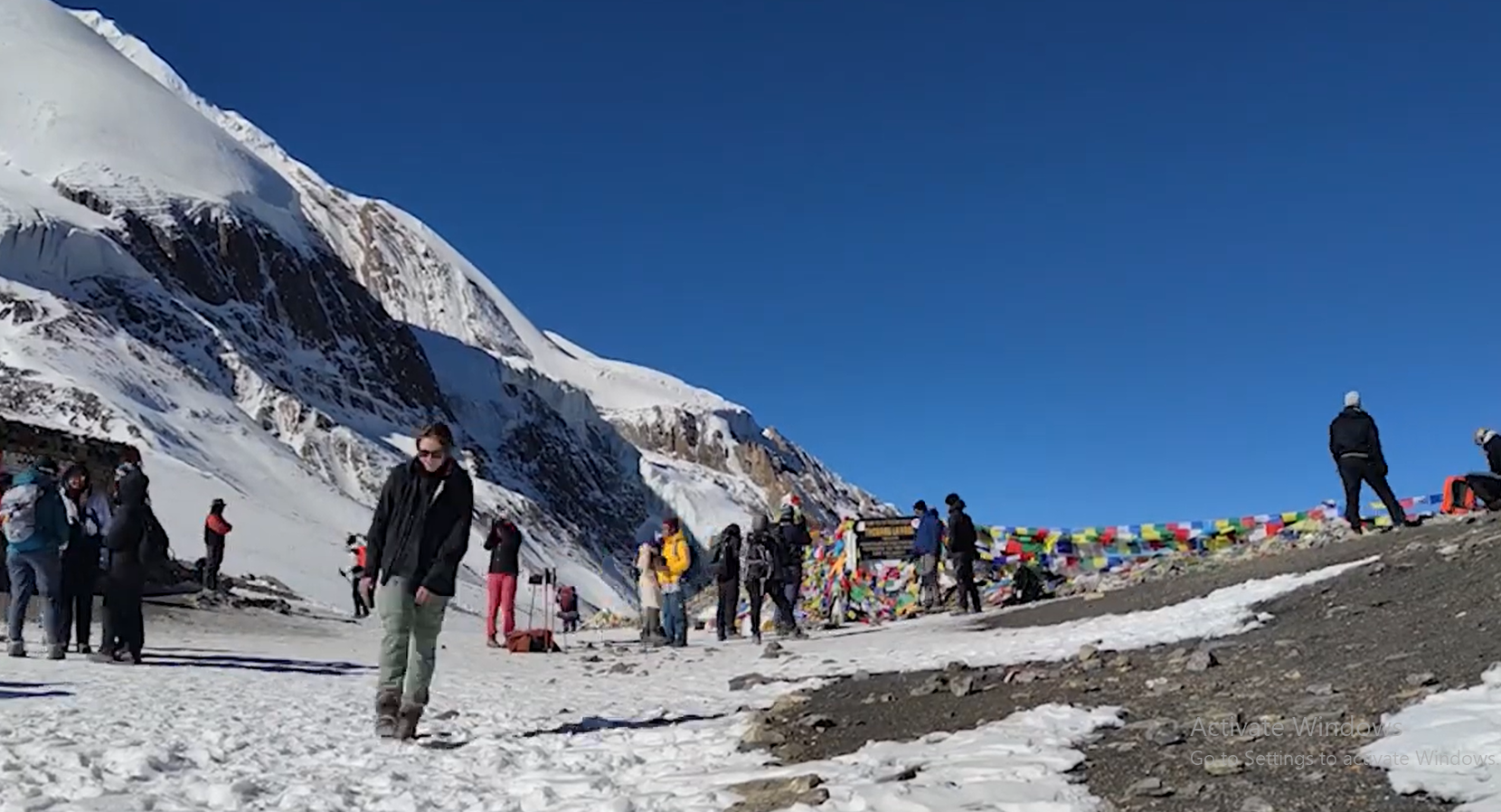
The next segment of the trek takes us to Thorong Phedi (4,540 meters (14,895 feet). For those in good condition, an optional extra hour’s ascent to High Camp at 4,850 meters can offer a head start for the challenging crossing of Thorong La Pass (5,416 meters (17,769 feet). This high-altitude pass, standing at 5,416 meters, is one of the highest trekking passes globally and provides incredible views of the Himalayas.
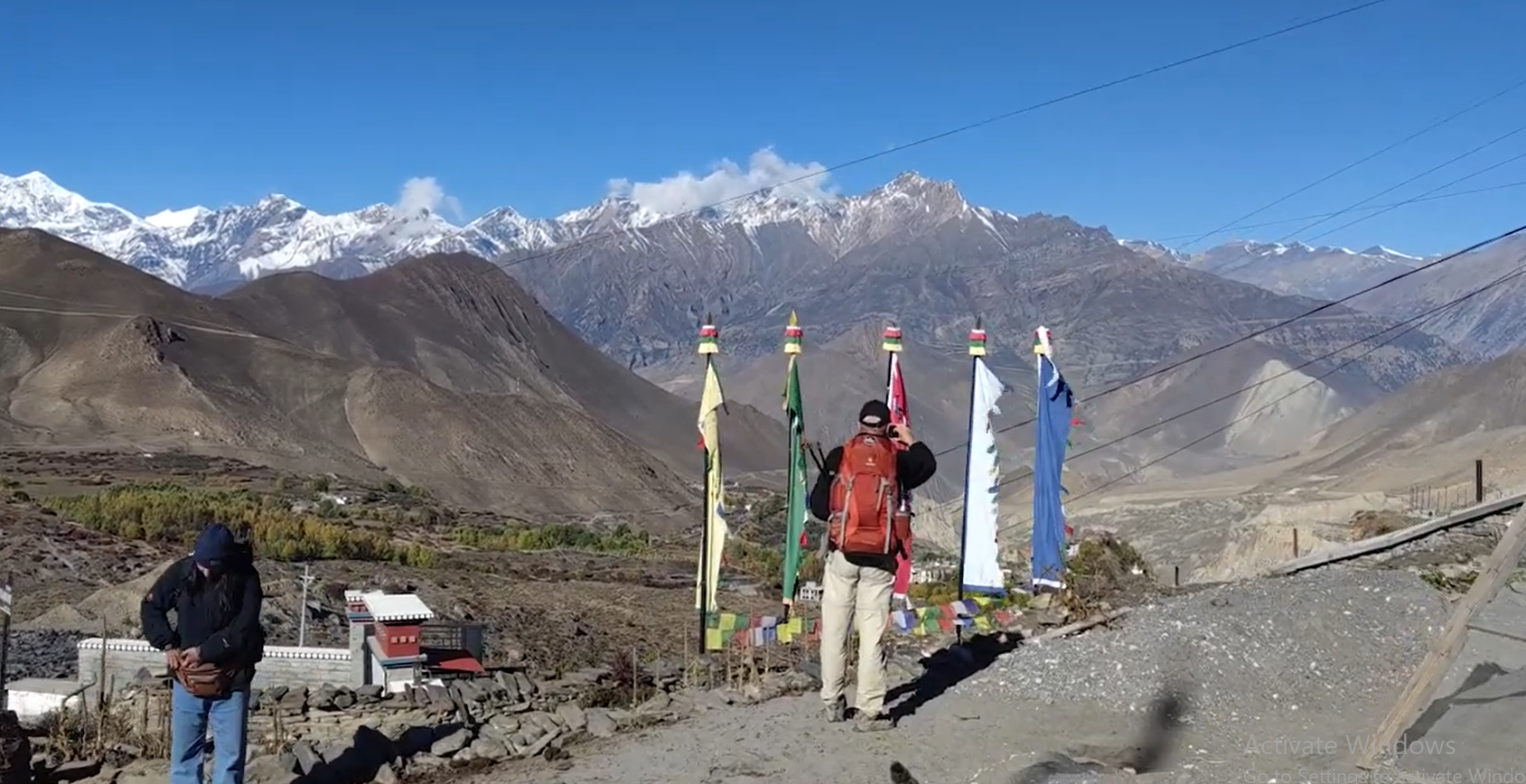
On the morning of the pass crossing, we navigate the rugged path to Thorong La, 5,416 m. The descent of 1,600 meters to Muktinath follows. Muktinath is a sacred site for both Hindus and Buddhists, featuring important temples and spiritual significance. Pilgrims from around the world visit this revered place.
The trek concludes with an 8-9 hour drive from Muktinath ( 3,800 meters (12,467 feet) to Pokhara. This scenic journey through diverse landscapes—from lush forests to terraced fields—offers a fitting end to this memorable trek.
After arriving at Tatopani (1,190 meters (3,904 feet), some people follow the trails to Ghorepani Poon Hill or continue to Annapurna Base Camp at 4,130 meters. If you have 3 to 4 days, that’s enough time to complete the Poon Hill sunrise trek. If you have an additional 6 to 7 days, you can also reach Annapurna Base Camp via Ghorepani Poon Hill. However, the 6-day Fastest Annapurna Circuit Trek is the fastest option, allowing you to experience the beauty of the entire Annapurna Circuit in a shorter time.
Safe Holiday Adventure ensures a well-organized trek with the best package cost for an unforgettable 6-day Fastest Annapurna Circuit Trek experience. Whether you are looking for a budget Annapurna circuit trek or the shortest Annapurna circuit trek itinerary, this trek delivers an exceptional adventure within a week.
Why the Fastest Annapurna Circuit Trek is a Great Choice?
- Budget-Friendly: This trek is more affordable because it’s shorter, saving you on overall costs
- Time-Efficient: Ideal for those with limited time who want to experience the Annapurna Circuit.
- High Altitude: You’ll reach a high altitude of 5,416 meters quickly, providing a sense of achievement.
- Save Money: With fewer days on the trek, you’ll spend less on food and accommodation.
- Efficient Plan: The trek covers the main highlights of the Annapurna Circuit in just 6 days.
- Varied Scenery: Experience diverse landscapes in a shorter time, from lush forests to high mountain views.
- Cultural Insights: Get a taste of local culture by visiting traditional villages along the route.
- Physical Challenge: It’s a great way to test your fitness with a rewarding challenge.
- Quick Return: Complete the trek and return to your schedule faster, making it convenient.
- Safer than a longer trek: A shorter trek reduces the risk of altitude sickness, making it a safer choice.
Annapurna Circuit Trek Packing List:
A proper packing list is very important for the Annapurna Circuit Trek because the route has changing weather, high altitude, and long walking days. Packing light but smart will make your trek easier and safer.
Clothing
You should carry warm and comfortable clothes. Include quick-dry trekking shirts, thermal layers, a warm fleece jacket, and a down jacket for cold areas. Pack waterproof jackets and pants because the weather can change quickly. Bring 2–3 pairs of trekking pants, warm socks, gloves, a hat, and a buff or scarf for dust and wind.
Trekking Gear
A good backpack (30–50L for carrying essentials) and a duffle bag (if using porters) are important. You also need trekking shoes with a strong grip, trekking poles for support, a sleeping bag rated for cold temperatures, and a headlamp for night use.
Personal Items & Health
Carry sunscreen, lip balm, sunglasses, toiletries, and a small towel. Include basic medicines like pain relief tablets, altitude sickness medicine, and band-aids. A water bottle or hydration system is also very important.
Documents & Essentials
Don’t forget your passport, trekking permits, cash (Nepali rupees), and a copy of your travel insurance. A power bank and charger are also useful because charging points are limited in higher areas.
Final Tip
Pack light and only carry what you truly need. Proper packing helps you enjoy the Annapurna Circuit Trek safely and comfortably.
OutlineOutline Itinerary
Day 1: Kathmandu → Chame
Drive 9–10 hours (~240 km); easy travel day through mountain roads and river valleys.
Day 2: Chame → Upper Pisang
Trek 5–6 hours (~13–15 km); moderate walking through forests with views of Annapurna II.
Day 3: Upper Pisang → Manang
Trek 5–6 hours (~17–19 km); moderate day across dry high-mountain landscapes.
Day 4: Manang → Yak Kharka
Trek 4–5 hours (~10–12 km); easier moderate ascent with noticeable altitude gain.
Day 5: Yak Kharka → Thorong Phedi / High Camp
Trek 4–5 hours (~8–10 km); difficult day due to steep climb and high altitude.
Day 6: Thorong La Pass → Muktinath
Trek 7–8 hours (~15–18 km); very difficult day crossing 5,416m pass followed by a long descent.
– Optional extension to Ghorepani Poon Hill and Annapurna Base Camp.

Transportation & Arrival Information for the Trek Package:
This package includes a local bus ride from Kathmandu to Besi Sahar. However, for an extra cost, you can book a private jeep. Similarly, we recommend you book a private jeep instead of a local bus while traveling from Besi Sahar to Chame for a smoother journey. Though it will cost you a little more, you will be comfortable, as the road from Besi Sahar to Chame is very rough, and the drive is long.
In addition, while returning, you have the option for a self-funded (flight cost not covered in the package) flight from Pokhara to Kathmandu.
We also want our guests to arrive in Kathmandu one day before the trip departure day (before 3 p.m.) for last-minute preparations.
Whats Included?
Package Highlights
- Annapurna Conservation Area Permit (ACAP) included
- All required trekking permits and essential documents arranged
- Licensed, experienced, and trained trekking guide throughout the journey
- Guide’s salary, food, accommodation, and local taxes fully covered
Accommodation & Meals
- Comfortable tea house accommodation during the trek
- Daily breakfast included (standard tea house menu)
- 1-night stay in a standard hotel in Pokhara
Transportation
- Kathmandu → Besisahar Bus
- Besisahar → Chame Sharing Jeep,
- Public bus: Muktinath → Pokhara
- Lunch and dinner during the trek and the entire trip,
- Travel insurance (strongly recommended but not included),
- Personal expenses (shopping, snacks, laundry, etc.),
- Bar bills and any additional beverage costs,
- Tea, Coffee, chocolate, hot shower, wifi, charging, etc.
- Alcoholic and non-alcoholic drinks of any kind,
- Domestic flights or extra transport not mentioned in the itinerary,
- Tips for guide and driver (highly expected but not included).
Dates and Availability Departures
All our published dates are guaranteed departures. We also provide customized departures tailored to your travel plans.
There are no group joining dates available at the moment. Please contact us for a private trip.
Travellers Reviews
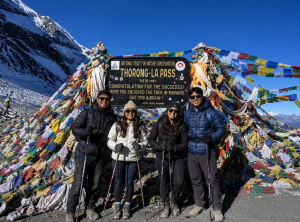
Luka Mories
New Zealand | 2024, oct
Unforgettable Family Adventure on the Annapurna Circuit in Nepal
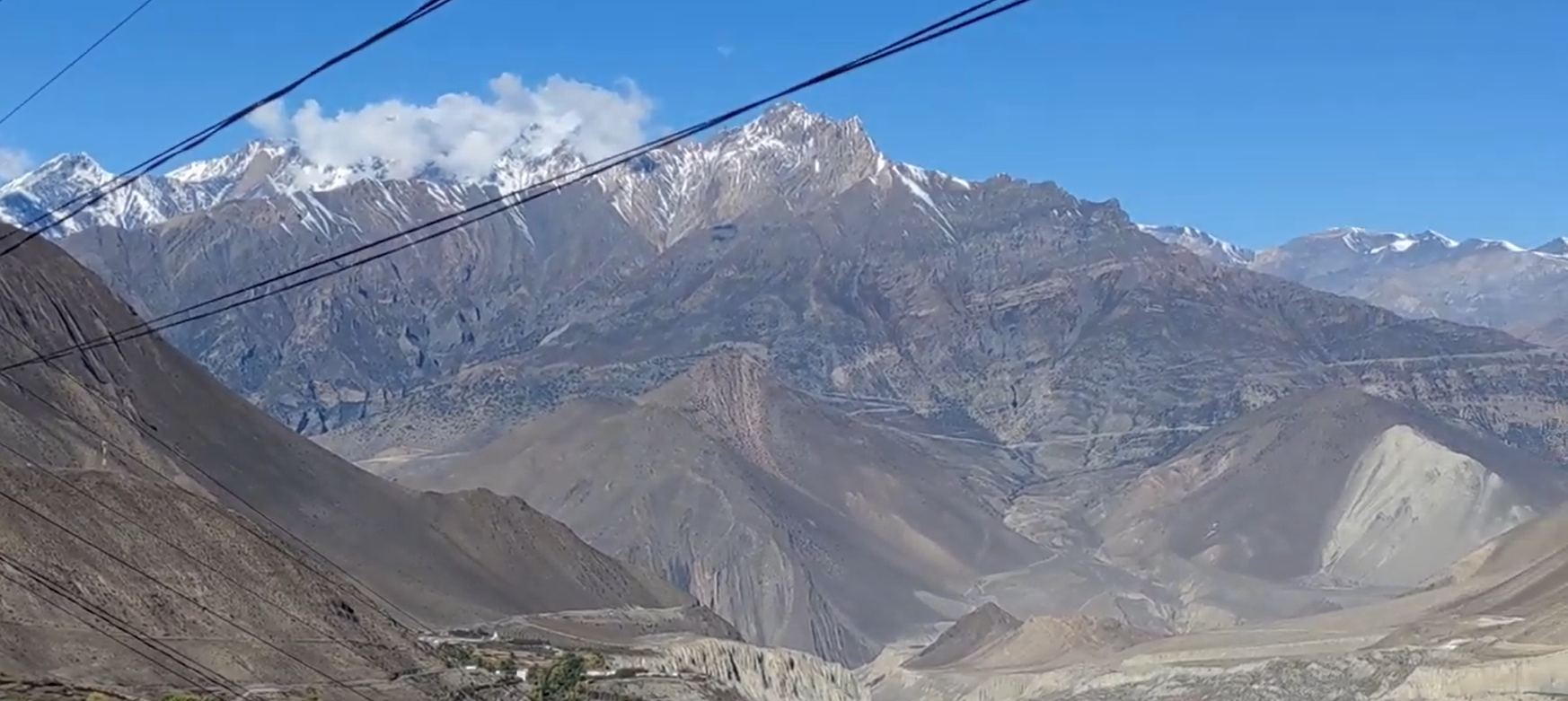
Our family from New Zealand had an incredible experience on the Luxury Annapurna Circuit Trek – 14 Days with Safe Holiday Adventure Pvt. Ltd. Everything was perfectly organized from beginning to end, and the mountain scenery was simply breathtaking. The combination of comfortable lodges, beautiful Himalayan landscapes, and authentic local culture made this trek truly unforgettable.
A very special thanks to our guide Santosh, who was professional, knowledgeable, caring, and always attentive to our needs throughout the journey. He explained the culture, mountains, and local traditions with great passion and made us feel safe and comfortable every day. His positive attitude and friendly nature added so much joy to our trek.
We would also like to sincerely thank our porter Dharma for his hard work, kindness, and constant support during the trek. He always carried our luggage with a smile and helped make our journey easier and more enjoyable. His dedication and warm personality were greatly appreciated by our whole family.
Crossing the Thorong La Pass and walking through the beautiful villages of the Annapurna region was an amazing adventure we will always remember. We highly recommend this luxury trekking experience to anyone looking for comfort, adventure, and excellent service in Nepal.
Thank you again to Santosh, Dharma, and the entire team for giving our family such wonderful memories in the Himalayas.
— Luka Mories and Family, New Zealand

Laura Gambador
Australia | Dec, 2024
Family Trekking Experience on the Annapurna Circuit
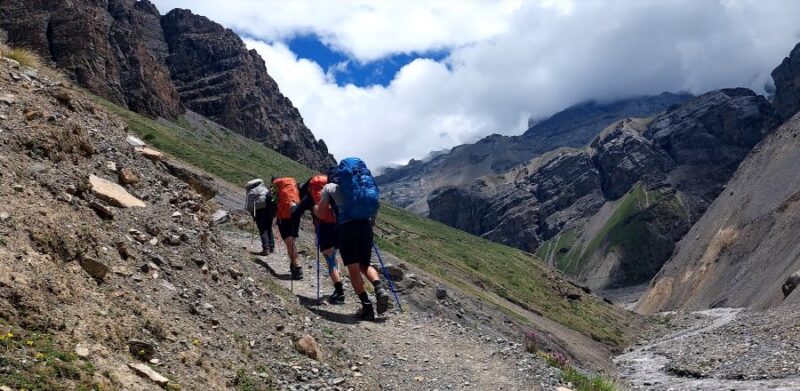
Laura Gambador and her parents from Australia had a wonderful experience trekking the Annapurna Circuit with Safe Holiday Adventure. The trip was well organized, and guide Dharma was professional, caring, and highly experienced, ensuring a safe and enjoyable journey. Stunning scenery and excellent support throughout made this trek truly memorable. Highly recommended for trekking in Nepal.

Richards Dolly,
Australia | October 12–22, 2025
Incredible 15-Day Annapurna Circuit Trek with Safe Holidays Adventure
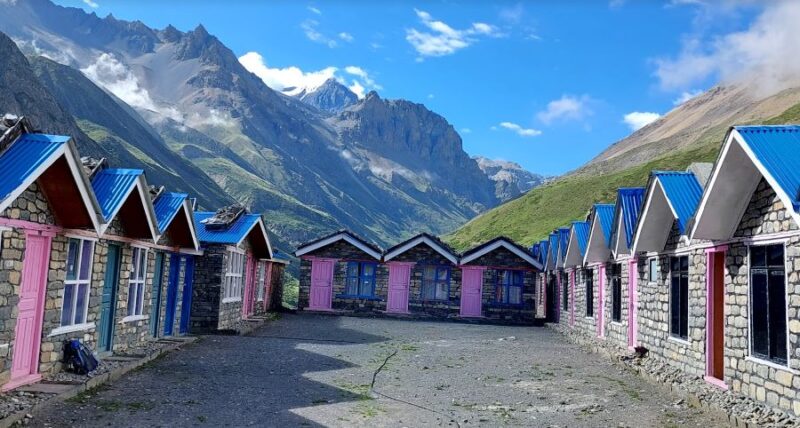
From October 12 to 22, 2025, I had the privilege of trekking the Annapurna Circuit in Nepal, organized by Safe Holidays Adventure. The 15-day journey was flawlessly executed, offering the perfect mix of adventure, culture, and natural beauty.
The trek was expertly planned and coordinated by MD Santosh Gauli, whose professionalism and attention to every detail made the entire experience smooth and stress-free.
Our guide Dharma was outstanding—knowledgeable, approachable, and highly experienced. He guided us safely through the trails while sharing fascinating insights about the region and local communities. Porter Ram was equally remarkable, always attentive and ensuring our gear was managed effortlessly, making the trek completely comfortable and enjoyable.
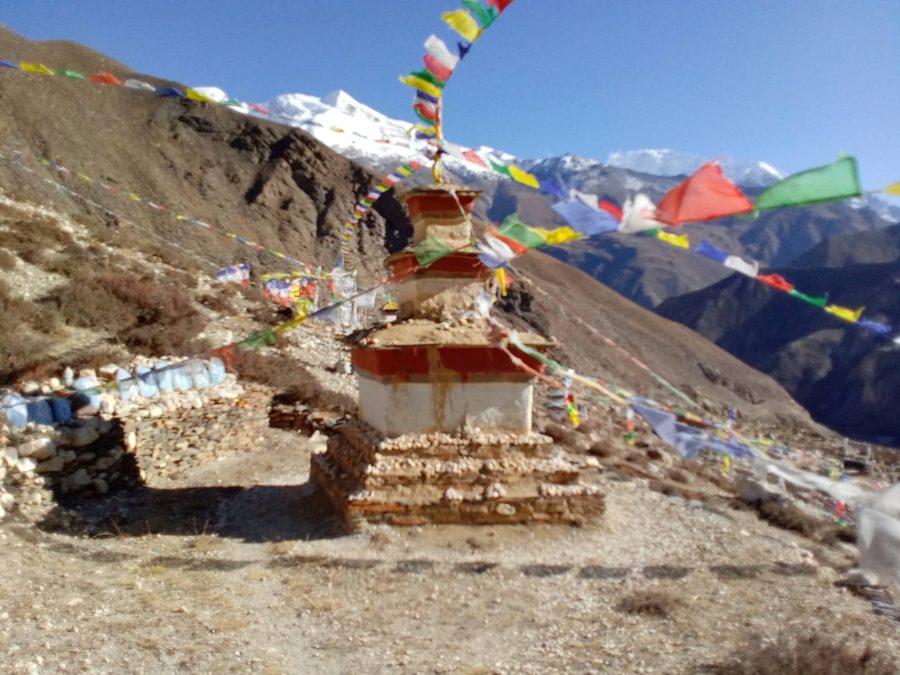
The Annapurna Circuit’s landscapes were truly breathtaking—towering snow-capped peaks, lush valleys, and charming Himalayan villages at every turn. Each day’s itinerary was well-balanced, providing both adventure and the chance to soak in Nepal’s natural and cultural wonders.
I highly recommend Safe Holidays Adventure to anyone planning a trek in Nepal. The team is professional, reliable, and genuinely committed to creating safe, memorable trekking experiences. This trek is a must-do for adventurers seeking both challenge and beauty in one of the world’s most iconic trekking destinations.


Fastest Annapurna Circuit Trek Information:Infos
Food & Accommodation on Fastest Annapurna Circuit Trek
During the fastest version of the Annapurna Circuit Trek, food and accommodation are simple but reliable throughout the route.
- Tea house stays: Basic lodges are available in all main stops like Chame, Manang Village, and Yak Kharka.
- Simple rooms: Twin-sharing beds, shared bathrooms, limited heating at higher altitudes.
- Local meals: Dal Bhat, noodles, rice, soups, eggs, and basic continental options.
- High-altitude menu: Fewer choices above 4,000 m, but enough for energy needs.
- Hot drinks: Tea, coffee, and ginger lemon honey are widely available.
- Cost increases with altitude: Prices rise as transport becomes difficult.
- No luxury facilities: Fast routes prioritize functionality over comfort.
Fastest/Short Annapurna Circuit Trek Weather:
Spring (March to May): Spring offers mild and pleasant weather with daytime temperatures between 10°C and 20°C (50°F to 68°F). Expect sunny days with occasional rain showers. Snow is rare at lower elevations but possible at higher altitudes.
Summer/Monsoon (June to August): This season is marked by heavy rainfall, particularly in July and August, with temperatures ranging from 15°C to 25°C (59°F to 77°F). Trails can be muddy and slippery, and there’s a risk of landslides. The landscape becomes lush and green.
Autumn (September to November): Autumn features clear skies and stable weather, making it ideal for trekking. Daytime temperatures range from 10°C to 20°C (50°F to 68°F), with cooler nights above 3,000 meters (10,000 feet). The views are spectacular and the weather is generally dry.
Winter (December to February): Winter brings cold temperatures, especially at higher altitudes, with daytime highs from -5°C to 10°C (23°F to 50°F) and even colder nights. Snow is common above 3,000 meters (10,000 feet), making trails icy and challenging. The snowy landscape offers stunning views, though some lodges may be closed.
Practical Tips: Dress in layers to handle changing temperatures and bring season-appropriate gear. Waterproof clothing is important during the monsoon, while warm clothing and a good sleeping bag are essential in autumn and winter. Always check current weather conditions before your trek.
How to Plan a Short Annapurna Circuit Trek Without Altitude Sickness
- Keep it 6–8 days – Start from Chame or Besisahar
- Acclimatize in Manang – Spend 1 full day at 3,500 m.
- Sleep low, trek high – Hike higher during the day, sleep lower.
- Go slow above 4,000 m – Take breaks and start early.
- Drink lots of water – 3–4 liters daily; avoid alcohol.
- Eat well – Warm meals and energy snacks.
- Know the warning signs – Headache, dizziness, nausea → descend immediately.
- Optional medicine – Diamox can help, but only with a doctor’s advice.
Tip: Slow and steady keeps you safe and helps you enjoy the trek!
Best Time for the Fastest Annapurna Circuit Trek
The best time to do a fast Annapurna Circuit Trek is in autumn, from September to November. During these months, the weather is stable, and the skies are usually clear, giving you the best views of the mountains. The trails are safer and less slippery, which is very important if you are trekking quickly. This period also has comfortable temperatures for trekking—not too hot or too cold—making it easier to cover long distances in a short time. Autumn is the most reliable season to enjoy a fast and safe trek.
Tea Houses Along the Fastest Annapurna Circuit Trek:
Tea houses along the Fastest Annapurna Circuit Trek provide simple, comfortable, and affordable accommodation throughout the route. They are found in almost every major village, from Dharapani and Chame to Muktinath and Tatopani, making it easy for trekkers to find lodging without carrying camping gear. These family-run lodges are the backbone of trekking in the region, offering a warm and practical resting place after long hiking days.
Rooms in most tea houses are basic but cozy, typically featuring twin beds, warm blankets, and shared bathroom facilities. At lower elevations, trekkers may also find charging points and limited Wi-Fi, while facilities become more basic as altitude increases. Despite the simplicity, the environment is welcoming and designed to meet the essential needs of trekkers on a fast-paced itinerary.
Food and hospitality are highlights of the experience, with freshly prepared meals such as dal bhat, noodles, soups, pasta, eggs, and pancakes widely available. Hot drinks like tea, coffee, and ginger lemon honey are served in nearly every stop, offering comfort in colder conditions. Since rooms are usually available on arrival, especially outside peak trekking seasons, tea houses make the Fastest Annapurna Circuit Trek flexible, social, and culturally enriching.
Food and Hydration Tips for Fastest/short Annapurna Circuit Trek:
- Drink 2–3 L of water/day
- Sip every hour
- Use electrolytes/ORS
- Avoid alcohol & too much caffeine
- Breakfast: oats + nuts + dried fruits, energy bars
- Snacks: trail mix, chocolate, biscuits, energy gels
- Lunch/Dinner: dal bhat, instant noodles, soup, dehydrated meals
- Eat small, frequent meals
- Focus on carbs for energy
- Carry lightweight, high-calorie snacks
- Avoid heavy meals at high altitude
Kathmandu to Chame: How to Get There for the Short/ Fastest Annapurna Circuit Trek:
Reaching Chame from Kathmandu is the most efficient way to begin the Annapurna Circuit Trek. The journey starts with a drive from Kathmandu to Besisahar, the main trekking entry point. Travelers can take a public bus from Gongabu Bus Park (about 6 hours) or opt for a private vehicle for a faster, more comfortable ride with fewer delays.
From Besisahar, the adventure continues with a scenic but rugged 4WD jeep drive to Chame, which takes about 2–3 hours. This off-road section follows mountain terrain and marks the true beginning of the high Himalayan experience.
In total, the Kathmandu to Chame journey takes approximately 8–9 hours, maki
What to Wear & Expect: Fastest Annapurna Circuit Trek Weather Guide:
Is the Short Annapurna Circuit Trek Very Difficult?
The short Annapurna Circuit Trek is considered moderately challenging, but not extremely difficult for fit and prepared trekkers. It is a condensed version of the classic route, meaning you cover more distance in fewer days, which can make the trek feel more demanding.
The main challenge comes from long daily walking hours, rapid altitude gain, and crossing the high Thorong La Pass (5,416m). At this altitude, the air is thinner, so even simple walking can feel tiring if you are not acclimatized properly.
However, the trek does not require technical climbing skills. With a reasonable fitness level, proper pacing, and acclimatization days, most trekkers can complete it successfully. Good preparation, slow ascent, and hydration are key to making it manageable.
In short, the short Annapurna Circuit is physically demanding but achievable, especially for trekkers who are used to hiking and high-altitude walking.
Common Myths About High-Altitude Trekking
Many people believe you must be extremely fit or that altitude sickness happens to everyone. In reality, any reasonably healthy person can trek with proper pacing, hydration, and acclimatization. Another myth is that you can’t eat or drink at high altitude—actually, eating small, frequent meals and drinking plenty of water helps prevent sickness. Wearing all heavy clothes all the time is also unnecessary; layering is more effective. Knowledge and preparation make high-altitude trekking safe and enjoyable.
Fastest Annapurna Circuit Trek distance:
A fast 6-day Annapurna Circuit Trek from Chame to Muktinath is about 65–85 km in total. Each day you walk 4–10 hours through mountains, villages, and high valleys like Manang and Yak Kharka. The trail goes up slowly in altitude until you reach Thorong La Pass at 5,416 meters, the highest point. The journey is hard because of steep climbs and thin air, but it shows forests, rivers, and snow mountains.
After crossing the pass, you go down to Muktinath at 3,800 meters. This part is easier but still long and tiring. The trek is very fast, so only strong and fit trekkers should try it.
What permits are required for Annapurna Circuit Trek:
To trek the Annapurna Circuit in Nepal, you need two official permits. The first is the Annapurna Conservation Area Project (ACAP) permit, which is required for entering the Annapurna Conservation Area. This permit helps protect nature and supports local communities along the trail.
Both permits are checked at different points on the trekking route. You can obtain them in Kathmandu or Pokhara through trekking agencies or official tourism offices. Without these permits, you are not allowed to enter or continue the Annapurna Circuit Trek.
How to Handle Sudden Weather Changes on Trek:
The weather in the mountains can change fast. Always carry layers: base, warm, and waterproof. Keep a rain jacket and hat handy. Check forecasts daily and adjust plans if needed. Stay calm, find shelter, and avoid risky areas during storms. Carry extra food and water just in case. Being prepared helps you stay safe, warm, and dry on the trek.
Annapurna Circuit Trek (6 Days) Cost Breakdown:
This is a detailed cost breakdown for the 6-day fast Annapurna Circuit Trek. The total budget is approximately USD 450 per person, depending on transport options, services, and personal spending habits.
Transportation Costs
Kathmandu to Besisahar (local bus):
800 – 1,200 NPR (approximately USD 6 – 9)
Besisahar to Chame (jeep, recommended for comfort):
14,000 – 17,000 NPR (approximately USD 105 – 128)
Alternative jeep option:
Besisahar to Dharapani: 12,000 – 14,000 NPR (approximately USD 90 – 105)
Muktinath to Pokhara (tourist bus):
2,000 – 3,000 NPR (approximately USD 15 – 23)
Pokhara to Kathmandu (tourist tourist bus):
USD 10 – 15 per ticket
Food Cost During Trek
Food prices vary depending on altitude and location.
Per meal cost: USD 4 – 8
Three meals per day: USD 12 – 24
Estimated total for 6 days: USD 72 – 144
Guide and Porter Cost
Licensed trekking guide:
USD 25 – 40 per day
Total for 6 days: USD 150 – 240
Optional porter service:
USD 20 – 30 per day
Total for 6 days: USD 120 – 180
Accommodation (Tea Houses)
Tea house accommodation cost per night:
USD 5 – 15 per room
Estimated 5 nights total:
USD 25 – 75
Trekking Permits
Annapurna Conservation Area Permit (ACAP) and TIMS card:
3,000 NPR (approximately USD 22 – 25)
Estimated Total Cost for 6-Day Annapurna Circuit Trek
With guide only (no porter):
USD 405 – 660 per person
With guide and porter:
USD 525 – 840 per person
Drinking water facilities on trek:
On the Annapurna Circuit Trek, drinking water is available in almost every village at teahouses. However, tap water is not safe to drink directly, so you must treat it first.
The safest option is boiled water, which you can buy from lodges. It is clean but becomes more expensive at higher altitudes. Bottled water is also available, but it is costly and creates plastic waste.
Many trekkers use water filters or purification tablets to make tap or stream water safe. This is a cheaper and more eco-friendly option.
You should not drink directly from rivers or streams, even if the water looks clean, because it may contain germs.
Altitude Sickness on the Annapurna Circuit Trek:
Altitude sickness happens when your body cannot adjust to low oxygen at high altitude. On the Annapurna Circuit, it usually starts above 2,500 meters.
Common symptoms are headache, dizziness, nausea, and tiredness. If ignored, it can become serious.
To prevent it, walk slowly, take rest days, drink enough water, and avoid alcohol. If you feel worse, stop going higher and go down immediately.
Detailed ItineraryItinerary
Day 01
Drive from Kathmandu to Chame (2,760m)
Duration : 8-9 hours Elevation : Chame (2,760m)
You will start your journey early in the morning, driving from Kathmandu to Chame. The drive takes around 8 to 9 hours. The road is long and winding, passing through beautiful hills and small villages. Along the way, you will see terraced fields and lush landscapes. After several hours, you will stop for lunch at a local eatery. In the evening, you arrive in Chame, which is situated at an altitude of 2,760 meters. Here, you will check into a tea house where you can rest and enjoy your evening meal.
Accommodation : tea house
Day 02
Trek from Chame to Pisang (3,300m)
Duration : 5-6 hours Elevation : Pisang (3,300m)
In the morning, you start your trek from Chame to Pisang. This trek takes about 5 to 6 hours. The trail goes through pine forests and offers views of the surrounding mountains. The trek is mostly uphill but not too steep. You will have a break for lunch along the way. By the afternoon, you will reach Pisang, which is at 3,300 meters. After checking into your tea house, you can relax and enjoy the local surroundings.
Accommodation : Teahouse
Day 03
Trek from Pisang to Manang (3,500m)
Duration : 5-6 hours Elevation : Manang (3,500m)
Today, you will trek from Pisang to Manang. The trek takes around 5 to 6 hours. The path ascends gently, passing through small villages and fields with beautiful views of the mountains. You will stop for lunch during the trek. By late afternoon, you will arrive in Manang, which is at 3,500 meters. In Manang, you will stay in a tea house where you can rest and explore the village.
Accommodation : Teahouse
Day 04
Trek from Manang to Thorong Phedi (4,600m)
Duration : 5-6 hours Elevation : Thorong Phedi (4,600m)
On this day, you will trek from Manang to Thorong Phedi. The trek takes about 5 to 6 hours. The trail climbs steadily through rugged terrain with stunning mountain views. You will have a break for lunch along the way. By the afternoon, you reach Thorong Phedi, located at 4,600 meters. Here, you will stay in a tea house and prepare for the challenging trek over Thorong La Pass the next day.
Accommodation : Teahouse
Day 05
Trek to Muktinath via Thorong La Pass (5,416m)
Duration : 7-8 hours Elevation : Thorong La Pass (5,416m)
Today is a long and challenging day as you trek from Thorong Phedi over Thorong La Pass to Muktinath. The trek takes around 7 to 8 hours. You start early in the morning to avoid strong winds at the pass. The climb to the pass is steep, but the views are incredible. After crossing the pass at 5,416 meters, you descend to Muktinath. You will stop for lunch on the way. By evening, you arrive in Muktinath, where you can stay in a tea house and rest.
Accommodation : Teahouse
Day 06
Drive from Muktinath to Pokhara (850m)
Duration : 7-8 hours Elevation : Pokhara (850m)
On the final day, you drive from Muktinath to Pokhara. The drive takes about 7 to 8 hours. The journey is long but offers scenic views of the landscape as you descend from the high mountains to the lower altitudes. After arriving in Pokhara, which is at 850 meters, you will check into your hotel. You can relax and enjoy the city after your long trek.
Accommodation : Hotel
Fastest Annapurna Circuit Trek FAQs
Yes, but only if you start from a closer point like Chame or Besisahar. Rushing too much increases the risk of altitude sickness.
No, skipping acclimatization increases the risk of serious altitude sickness. One full day in Manang is essential. But if you are fully fit and adventurious than iwth out rest, you can do it and complete it within 6 days too.
Start around 4–5 AM. Early morning crossing avoids bad weather and helps your body adjust slowly.
While it is possible to do the Mini Annapurna Circuit trek independently, it is recommended to hire a guide or porter to assist with navigation and carrying gear.
Stop immediately, rest, and descend to a lower altitude. Do not continue until symptoms fully improve.
3–4 liters of water daily. Staying hydrated helps prevent altitude sickness.
Yes, but only after consulting a doctor. It helps prevent symptoms but does not replace acclimatization.
Yes, if you choose a moderate route, move slowly, and include rest days for acclimatization.
Winter and monsoon are risky for a short trek due to snow, landslides, and cold. The best months are March–May and September–November.
It is possible to do the Mini Annapurna Circuit trek independently, but many trekkers prefer to book a tour with a reputable company for assistance with logistics and guide services.
Walk slowly, take breaks, avoid heavy backpacks, and follow the “sleep low, climb high” rule.
For a 6-day fast trek, you can plan your daily expenses like this:
- Food: ~$30 per day (meals at tea houses)
- Accommodation: $10–15 per night (basic tea house)
- Guide: $25–35 per day
- Porter: $20–22 per day
Overall, expect around $85–100 per day if hiring a guide and porter. You can adjust if you skip a porter or choose simpler meals.
During peak trekking season, tea houses fill up quickly. It’s recommended to book your accommodation at least 6–7 days before you reach each stop. This ensures you have a room and avoids last-minute stress. For popular villages like Manang or Thorong Phedi, booking earlier is even better. If you prefer flexibility, carry a list of alternative tea houses, but booking is the safest choice during busy months.
Refund & Cancellation Policy
- Booking requires 20% non-refundable deposit (Nepal) or 100% upfront (Tibet/Bhutan).
- Remaining payment due before the trip or on arrival (trip-dependent).
Cancellation charges:
- 31+ days: 20%
- 16–30 days: 45%
- 8–15 days: 75%
- 7 days or less: 90%
- Prices may change due to flights, taxes, or exchange rates.
- Trip changes are allowed, but extra costs apply.
- If the company cancels, a full refund, except for unavoidable events (some costs deducted).
- Good health and travel insurance are mandatory.
- No refund if removed for unsafe or illegal behavior.
- Travel involves personal risk, which the client accepts.