

Budget Langtang Gosaikunda Trek Key Attractions: Highlights
- Majestic Mountain Views – Spectacular views of Langtang Lirung, Ganesh Himal, and more,
- Cultural Encounters – Interact with friendly Tamang and Sherpa communities,
- Scenic Landscapes – Traverse through lush forests, glacial valleys, and serene meadows,
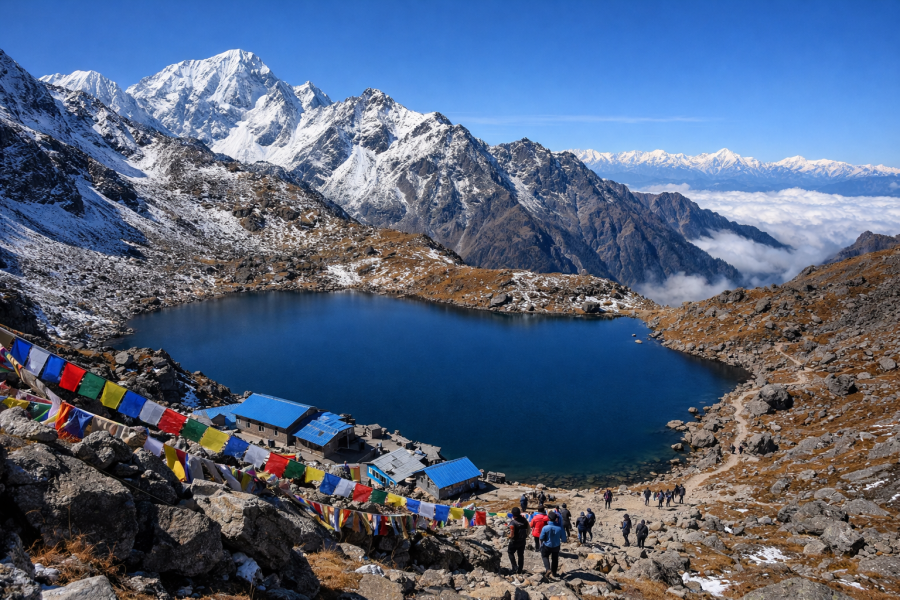
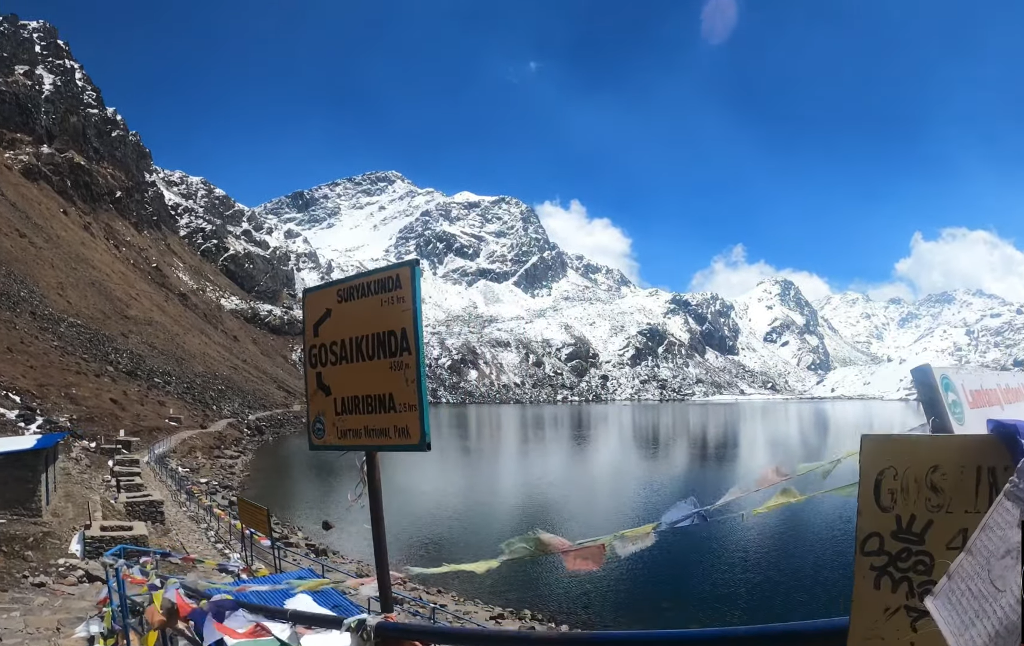
- Gosaikunda Lake – Discover the sacred high-altitude lakes amidst stunning surroundings,
- Spiritual Experience – Visit ancient monasteries and experience local religious customs,
- Snowy Passes – Cross challenging yet rewarding high-altitude mountain passes,
- Seasonal Flora – Witness beautiful blooms during spring and autumn,
- Tea Houses – Experience cozy stays in local tea houses along the trail,
- Sunrise Views – Capture mesmerizing sunrise vistas from strategic viewpoints,
- Wildlife Sightings – Spot Himalayan wildlife like Red Panda, Himalayan Thar, and more.
Budget Langtang Gosaikunda Trek Introduction: Overview
Budget Langtang Gosaikunda Trek is a popular trekking destination in Nepal, located in Langtang National Park. The trek takes you to the holy lake of Gosaikunda, situated at an altitude of 4380 meters. The trek offers stunning views of the Himalayan mountain ranges, including Langtang Lirung, Ganesh Himal, and Manaslu.
The trek starts from Syabru Besi, which is a 7-8 hour drive from Kathmandu. The trail takes you through dense forests, terraced fields, and picturesque villages inhabited by the Tamang and Sherpa people. Along the way, you will cross several suspension bridges, waterfalls, and pass by small lakes.
One of the highlights of the trek is the visit to the holy lake of Gosaikunda, believed to be the abode of the Hindu gods Lord Shiva and Goddess Gauri. The lake is surrounded by high peaks and glaciers, making it an awe-inspiring sight.
The Budget Langtang Gosaikunda Trek is physically demanding, but the spectacular views and cultural experiences along the way make it a worthwhile adventure. Accommodation during the trek is available in lodges, with basic facilities.
The best time to go on the Budget Langtang Gosaikunda Trek is from September to November and March to May, when the weather is clear, and the views are unobstructed. It is also possible to do the trek during the monsoon season, but the trails can be slippery and challenging.
Overall, the Budget Langtang Gosaikunda Trek is an ideal adventure for those who love to explore nature and culture, and who are physically fit enough to take on the challenge.
The Gosaikunda Trek in Langtang is considered moderately difficult, primarily due to the high altitude, challenging terrain, and long trekking hours. The trek involves walking through diverse landscapes, including dense forests, alpine meadows, and rugged, rocky trails. The altitude gain is significant, with the highest point being Gosaikunda Lake at 4,380 meters, which increases the difficulty level. The trail can be steep in sections, requiring good physical endurance, and trekkers may experience fatigue or shortness of breath due to the elevation. The trek typically takes 5-8 days, with 5 to 7 hours of walking per day, depending on the pace.
One of the main challenges of the Gosaikunda Trek is acclimatization. As trekkers gain elevation quickly, there is a risk of altitude sickness, so proper acclimatization is essential. The trek also passes through remote villages, where facilities can be basic, and the weather, especially at higher altitudes, can be unpredictable. In the winter, temperatures can drop significantly, requiring warm clothing and gear. Despite these challenges, the trek offers spectacular views of the Langtang Mountain Range and the sacred Gosaikunda Lake, making it a rewarding experience for those well-prepared and in good physical condition.
Gosaikunda Trek Difficulty: Challenges and Preparation Tips
The Gosaikunda Trek in Langtang is a rewarding moderate adventure that blends natural beauty with a touch of challenge. Crossing lush forests, alpine meadows, and rugged mountain trails, the journey leads to the stunning Gosaikunda Lake at 4,380 meters. Trekkers can expect 5–8 days of scenic walking, with breathtaking views of the Langtang range throughout.
While the altitude and terrain add a sense of adventure, proper acclimatization and preparation make the trek accessible and enjoyable. With its sacred lake, dramatic landscapes, and authentic Himalayan experience, the Gosaikunda Trek is perfect for those seeking both challenge and unforgettable mountain beauty.
Budget Langtang Gosaikunda Trek Permit & Regulations:
To trek in the Gosaikunda area, you will need to obtain two permits:
Langtang National Park Permit:
This permit is required to enter Langtang National Park, which is the protected area that encompasses the Gosaikunda trek. The cost of the permit is around 3,000 Nepalese Rupees (NPR) for foreigners and 1,000 NPR for SAARC nationals.
TIMS (Trekker’s Information Management System) Card:
This card is issued by the Nepal Tourism Board and is a record of all trekkers entering the Langtang National Park. The cost of the TIMS card is around 2,000 NPR for foreigners and 1,000 NPR for SAARC nationals.
Both permits can be obtained in Kathmandu from the Nepal Tourism Board or from authorized trekking agencies. It’s important to note that the fees and requirements for obtaining these permits may change, so it’s always best to check with the latest information from a local trekking agency before embarking on your trek.
Best time to go to Gosaikunda Trek:
The best time to go on the Gosaikunda trek is from late September to November and from March to May. During these months, the weather is generally clear and dry, offering good visibility and comfortable trekking conditions.
September to November is the post-monsoon season, and the skies are clear, the temperatures are mild, and the rhododendron forests are in bloom, making for a beautiful trek.
March to May is the pre-monsoon season, and the weather is dry and warm. The snow has melted, making it easier to trek and offering great views of the surrounding mountains.
June to August is the monsoon season, and the trek can be challenging due to heavy rainfall and landslides.
December to February is winter, and the trek can be very cold and snowy, making it more difficult and potentially dangerous.
It’s important to note that weather conditions can change rapidly in the mountains, so it’s always best to check the latest information from a local trekking agency and to be prepared for any conditions.
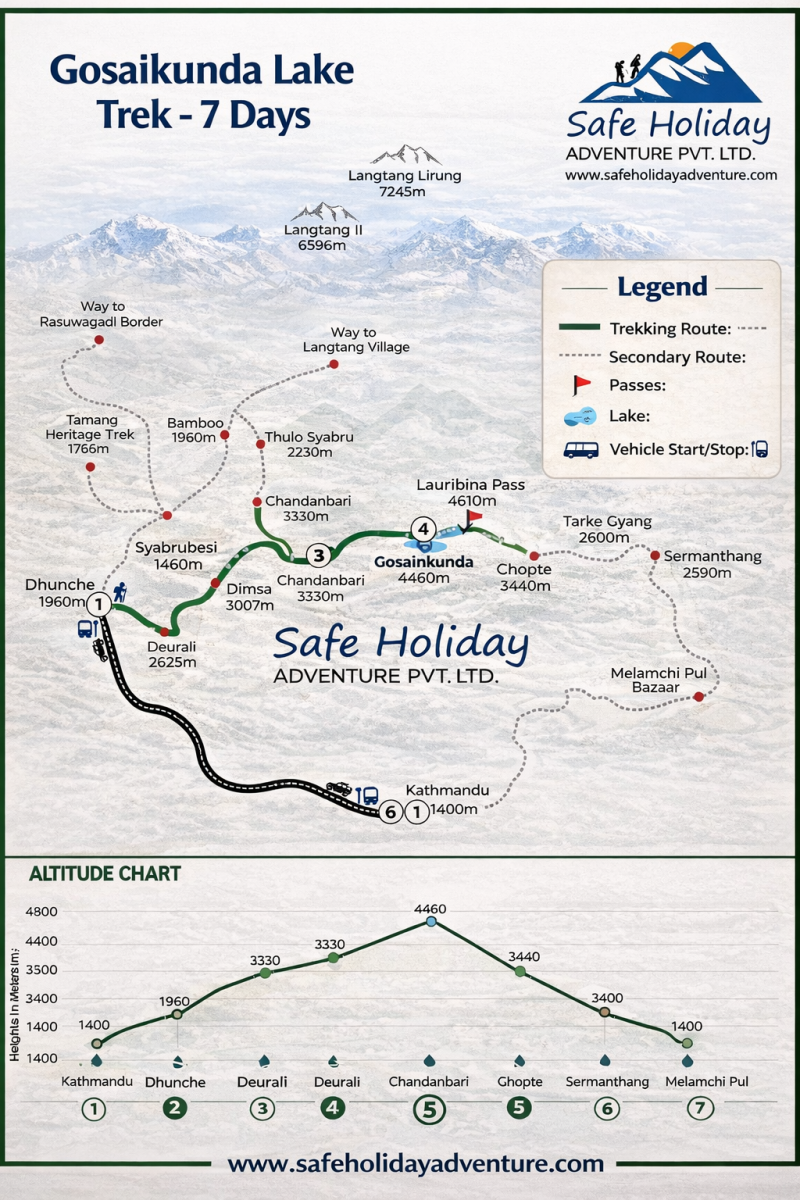
Budget Langtang Gosaikunda Trek OutlineOutline Itinerary
Day 01: Drive from Kathmandu to Syabru Besi (1600m).- 6 Hrs.
Day 02: Trek from Syabru Besi (1600m) to Lama Hotel (2470m) – 5.30 Hrs.
Day 03: Trek from Lama Hotel to Langtang village (3430m)- 6hrs
Day 04: Trek from Langtang Village to Kyangjin Gompa (3870m) -3hrs
Day 05: Rest day at Kyangjin Gompa.
Day 06: Trek from Kyangjin Gompa to Lama Hotel- 6 Hrs.
Day 07: Trek from Lama Hotel (2470m) to Thulo Syabru (2260 m)-5 hrs.
Day 08: Trek from Thulo Syabru to Sing Gompa or Chandan Bari (3330m)- 5 to 6 hrs.
Day 09: Trek from Sing Gompa to Gosaikunda (4460m) via Lauribinayak La (3920m)- 6 hrs. walk
Day 10: Trek from Gosainkunda to Lauribinayak Pass (4610m) to Ghopte (3,430m)
Day 11: Trek from Ghopte to Kutumsang (2,446m)- 5hrs walking
Day 12: Trek from Kutumsang to Chisopani(2,150m)-6 hrs. walking
Day 13: Trek from Chisopani to Sundarijal, then drive to Kathmandu- 3 hrs. walk & 1 Hrs Drive
Whats Included?
- Airport Pick-up and Drop-off – Transportation from and to Tribhuvan International Airport, Kathmandu.
- Kathmandu Hotel Accommodation – Pre and post-trek accommodation in a 3-star hotel in Kathmandu.
- Private Transportation – To and from trekking starting and ending points (Kathmandu to Dhunche).
- Experienced Trekking Guide – A knowledgeable and friendly guide for the entire trek.
- Porter Service – One porter per two trekkers to carry luggage (up to 15 kg per person).
- Trekking Permits – Langtang National Park entry permit and TIMS card.
- Meals during the Trek – Breakfast, lunch, and dinner are provided during the trek at tea houses.
- Accommodation during the Trek – Tea house or lodge accommodation along the trekking route.
- First Aid Kit – Basic medical supplies for emergencies.
- Local Tax and VAT – All necessary local taxes and government fees.
- Emergency Helicopter Evacuation – In case of emergencies, arrangements for helicopter evacuation.
- Farewell Dinner – Traditional Nepali dinner with the trekking team after completing the trek.
- Trip Briefing and Assistance – Pre-trip briefing and assistance with necessary preparations.
- Your Travel Insurance – Travel insurance for trekking and emergency evacuation.
- Lunch and Dinner in Kathmandu – Meals outside of the trek.
- Hotel in Kathmandu (Pre/Post-Trek) – Accommodation in Kathmandu (except for the package-provided stay).
- International Airfare and Visa Fees – Flights to and from Nepal and visa processing.
- Extra Meals and Donations – Any additional meals or donations made during the trek.
- Porters – Extra porter services (additional charges may apply for extra luggage).
- Personal Expenses – Such as hot showers, laundry, internet, phone calls, and alcoholic drinks.
- Tips for Guides, Porters, and Other Staff Members – Gratuities for trekking staff.
- Any Other Expenses are not mentioned in the inclusive services section of the package.
Dates and Availability Departures
All our published dates are guaranteed departures. We also provide customized departures tailored to your travel plans.
There are no group joining dates available at the moment. Please contact us for a private trip.
Travellers Reviews

Steva Plaie
Australia | March, 2024
Adventure of a Lifetime: Langtang Ganja La Pass Trek
I’m Steva Plaie from Australia. In March 2024, I trekked the Langtang Ganja La Pass – 10 Days with SafeHolidayAdventure.com, guided by Ram Porter Hari. The trek was breathtaking, with amazing Himalayan views and a well-organized, safe journey. Highly recommended for anyone wanting an unforgettable Nepal trekking adventure.


Genaral Trip InfoInfos
Best time to go on Budget Langtang Gosaikunda trek:
The best time to go on a budget Langtang Gosaikunda Trek is during the spring (March to May) and autumn (September to November) seasons. These months offer the most favorable weather conditions with mild temperatures, clear skies, and stable trekking trails. Spring brings blooming rhododendrons and lush vegetation, while autumn offers excellent visibility and stunning mountain views. Additionally, during these seasons, there are plenty of budget-friendly accommodation and food options available, making it an ideal time for budget travelers to experience this beautiful trek in Nepal.
Langtang Gosaikunda Trek Difficulty:
The Langtang Gosaikunda trek can be moderately difficult due to its steep and rugged terrain, high altitude sections, and occasional challenging weather conditions. Proper physical fitness and acclimatization are essential for a successful and enjoyable trek. However, with adequate preparation and guidance, it is achievable for most moderately experienced trekkers.
Food and Accommodation:
During the Langtang Gosaikunda trek, you’ll find teahouses and lodges along the trail providing basic accommodation. These lodges offer simple rooms with shared facilities like bathrooms and common dining areas. The food options are typically Nepali and Tibetan cuisine, including dal bhat (rice and lentil soup), momo (dumplings), and noodles. Clean drinking water is available in most places.
Trekking Permit
To trek in the Langtang Gosaikunda region, you will need two permits. First, the Langtang National Park Entry Permit is required, issued in Kathmandu or Dhunche. Second, the TIMS (Trekkers’ Information Management System) card is necessary, which you can obtain from the Nepal Tourism Board in Kathmandu. These permits help support conservation efforts and ensure your safety during the trek.
Transportation:
The Langtang Gosaikunda Trek typically begins from Syabrubesi, accessible from Kathmandu by bus or private jeep, taking about 7-8 hours. The journey passes through scenic landscapes, providing a glimpse of rural life in Nepal.
Weather and Temperature:
The weather during the Langtang Gosaikunda Trek varies with the seasons. In spring (March to May) and autumn (September to November), the weather is generally stable with mild temperatures during the day (10-20°C) and cold nights (0-10°C). In winter (December to February), temperatures can drop below freezing, and there may be snowfall. Monsoon season (June to August) brings heavy rain and occasional landslides.
Local Culture in Langtang Gosaikunda area
The Langtang Gosaikunda Trek provides a unique opportunity to immerse oneself in the local culture of the region. The trek takes you through traditional villages inhabited by Tamang and Sherpa communities, where you can experience their distinct customs, lifestyle, and hospitality. Along the trail, you’ll encounter Buddhist monasteries, prayer flags, and mani walls, reflecting the religious significance of the area. The local people often welcome trekkers warmly and share insights into their daily lives and spiritual practices. Respecting their culture and traditions is crucial to creating a positive and meaningful trekking experience.
Detailed ItineraryItinerary
Drive from Kathmandu to Syabru Besi (1600m).- 6 Hrs.
The picturesque drive from Kathmandu to Syabru Besi takes around 6 hours. To avoid traffic delays, it’s best to start early by bus or private transport. The journey offers stunning views of villages, forests, and bridges, showcasing Nepal’s natural beauty. Syabru Besi, a charming Tamang village situated by the river, provides a serene ambiance for an overnight stay. Immerse yourself in the local culture and enjoy the peaceful surroundings before continuing your adventure to nearby destinations like Langtang Valley. The trip promises an unforgettable experience, with glimpses of Nepal’s diverse landscapes and warm hospitality.
Accommodation : Tea House
Trek from Syabru Besi (1600m) to Lama Hotel (2470m) – 5.30 Hrs.
We will have an early breakfast at the lodge and begin to walk. In the first part of the day, we will cross the Bhote Koshi River and follow the small damp trail along the Langtang Khola. The walking route then gradually ascends to Bamboo through some landslide area; it is where we should walk carefully and in a group. After that, we have to walk gently and gradually down to Rimche (2390m) than Lama Hotel, which is located at the Side of Langtang Khola (stream). While you are walking in this part you may see some wild and rare animals such as Red Panda, Monkey, bears, etc. We will stay one night in Lama Hotel Teahouse.
Accommodation : Tea House
Trek from Lama Hotel to Langtang village (3430m)- 6hrs
The trail from Lama Hotel to Langtang village (3430m) is a 6-hour trek. The path gradually ascends through rhododendron and oak forests, offering views of the Langtang Lirung peak. As we gain elevation, the landscape changes to alpine terrain with scrub and meadows. The trail eventually leads to Langtang village, a traditional settlement surrounded by towering peaks.
Accommodation : Tea House
Trek from Langtang Village to Kyangjin Gompa (3870m) -3hrs
The hike from Langtang Village to Kyangjin Gompa is a delightful journey that takes around 3 hours to complete. The trail meanders through the enchanting Langtang Valley, presenting a picturesque landscape adorned with lush yak pastures and glistening streams. As you ascend, the majestic peaks of the surrounding mountains gradually come into focus, creating a truly awe-inspiring spectacle.
The trek provides an opportunity to immerse yourself in the natural beauty of the Langtang region, with each step offering new breathtaking vistas. The rugged and ruggedly beautiful terrain, combined with the serene atmosphere, makes this trek a memorable experience.
Kyangjin Gompa is a small yet significant settlement, acting as the heart of the Langtang region. Surrounded by towering peaks, including the prominent Langtang Lirung, the village offers mesmerizing panoramic views. The spiritual ambiance of the gompa (monastery) adds to the charm of this place, making it a perfect spot for reflection and relaxation.
Visitors to Kyangjin Gompa can engage in various activities, such as exploring nearby glaciers, going on short hikes to surrounding viewpoints, and experiencing the warm hospitality of the locals. The tranquil surroundings and the towering mountains create an atmosphere of tranquility and wonder, leaving travelers with lasting memories of their Langtang Valley adventure.
Accommodation : Tea House
Rest day at Kyangjin Gompa.
A rest day at Kyangjin Gompa is an important part of the Langtang trek. The day can be spent exploring the surrounding area, visiting the cheese factory, or just relaxing and taking in the stunning views of the peaks. This rest day also allows time for acclimatization to the higher elevation and prepares for the remainder of the trek. Optional hikes to nearby ridges or glaciers can also be arranged for those who want to further explore the area.
Accommodation : Tea House
Trek from Kyangjin Gompa to Lama Hotel- 6 Hrs.
The journey from Kyangjin Gompa to Lama Hotel spans about 6 hours, encompassing a scenic trail that meanders through the Langtang Valley. As trekkers retrace their steps, they traverse past charming yak pastures and babbling streams, relishing the chance to appreciate the breathtaking vistas from a fresh angle. Ultimately, the trail guides them back to Lama Hotel, a welcome resting place to rejuvenate and spend the night, preparing for the onward expedition. This remarkable trek presents an opportunity to savor the natural beauty once more, fostering a deep connection with the awe-inspiring landscape and its ever-changing allure.
Accommodation : Hotel
Trek from Lama Hotel (2470m) to Thulo Syabru (2260 m)-5 hrs
The trek from Lama Hotel (2470m) to Thulo Syabru (2260m) takes approximately 5 hours. The trail descends through dense forests of rhododendron and oak, passing by traditional Tamang villages along the way. As the trail drops in elevation, the landscape changes to lush, subtropical forests with a diverse array of flora and fauna. Thulo Syabru is a traditional village located in the lush green forests of the Langtang region.
Accommodation : Tea House
Trek from Thulo Syabru to Sing Gompa or Chandan Bari (3330m)- 5 to 6 hrs.
The trek from Thulo Syabru to Sing Gompa or Chandan Bari (3330m) takes approximately 5 to 6 hours. The trail climbs through dense forests, offering views of the surrounding peaks. As the trail gains elevation, the landscape changes to alpine terrain with scrub and meadows. Sing Gompa or Chandan Bari is a small settlement located in the high mountains, offering breathtaking views of the surrounding peaks and glaciers.
Accommodation : Tea House
Trek from Sing Gompa to Gosaikunda (4460m) via Lauribinayak La (3920m)- 6 hrs. walk
Today, The trek from Sing Gompa to Gosaikunda (4460m) via Lauribinayak La (3920m) takes approximately 6 hours. The trail climbs steeply through alpine meadows and rocky terrain, eventually reaching the summit of Lauribinayak La Pass. From the pass, the trail descends to the sacred lake of Gosaikunda, surrounded by high peaks and glaciers. The journey offers breathtaking views of the surrounding mountains and a chance to visit the revered Gosaikunda Lake, a pilgrimage site for both Hindu and Buddhist pilgrims.
Accommodation : Tea House
Trek from Gosainkunda to Lauribinayak Pass (4610m) to Ghopte (3,430m)
The hike from Gosaikunda to Lauribinayak Pass (4610m) and then to Ghopte (3430m) is tough and takes around 6 to 7 hours. The trail goes up steeply to Lauribinayak Pass, offering great views of nearby mountains and glaciers. After the pass, it goes down through meadows and forests, passing traditional Tamang villages. Ghopte is a small village in the lower part of the Langtang region, surrounded by lush green forests and terraced fields.
Accommodation : Tea House
Trek from Ghopte to Kutumsang (2,446m)- 5hrs walking
The trek from Ghopte to Kutumsang (2446m) lasts for about 5 hours. It presents a scenic journey through dense forests and quaint villages, with breathtaking vistas of the nearby mountains and hills. As the trail descends to lower elevations, the scenery transforms into lush green forests and terraced fields, creating a striking contrast to the high alpine terrain. The peaceful ambiance of the traditional villages and the vibrant natural beauty along the way make this part of the trek truly captivating and rewarding for adventurers seeking a diverse and fulfilling experience in the Langtang region.
Accommodation : Tea House
Trek from Kutumsang to Chisopani(2,150m)-6 hrs. walking
The trek from Kutumsang to Chisopani (2150m) takes approximately 6 hours. The trail passes through forests and traditional villages, offering scenic views of the surrounding hills and mountains. As the trail descends, the vegetation changes to lush green forests and terraced fields, providing a stark contrast to the alpine terrain of the previous days. Chisopani is a small village located in the hills above the Kathmandu Valley, known for its traditional culture and stunning views of the surrounding landscape.
Accommodation : Tea House
Trek from Chisopani to Sundarijal then Drive to Kathmandu- 3 hrs. walk & 1 Hrs Drive
The trek from Chisopani to Sundarijal takes approximately 3 hours. The trail follows a well-trodden path through the forest and hills, offering scenic views of the surrounding landscape. Upon arrival in Sundarijal, you will take a drive back to Kathmandu, which takes approximately 1 hour, depending on traffic conditions. The journey offers a glimpse into the bustling streets and vibrant culture of Kathmandu, as well as the stunning mountain scenery along the way.
Accommodation : Hotel
Budget Langtang Gosaikunda Trek FAQs
The cost of the Langtang Gosaikunda trek can vary depending on the duration of the trek, the level of comfort, and the services you require. A budget trek can cost anywhere from $500 to $1000, while a more luxurious trek can cost upwards of $1500.
You can do the trek independently, but it’s recommended to go with a guide who has local knowledge and experience, especially if you’re new to trekking.
Accommodation during the trek is available in the form of lodges or tea houses, which offer simple rooms with shared facilities.
Hot showers are not widely available along the trail, and when they are available, there may be an additional cost.
Wi-Fi and mobile phone coverage are not widely available along the trail.
You should bring warm clothing and gear, including a waterproof jacket, hiking shoes, a hat, sunglasses, and a sleeping bag.
The best time to do the Langtang Gosaikunda trek is from late September to November and from March to May.
Yes, it is possible to rent gear in Kathmandu.
You need a TIMS (Trekkers’ Information Management System) card and a Langtang National Park permit for the Langtang Gosaikunda trek.
The Langtang Gosaikunda trek is considered to be of moderate difficulty and requires a good level of fitness.
Yes, it is possible to acclimatize during the trek by taking rest days and ascending gradually.
Yes, it is possible to hire a porter during the trek, but it’s important to ensure that the porter is well treated and properly equipped.
The best way to get to the starting point of the trek is to take a local bus or a private jeep from Kathmandu to Dhunche.
To ensure that your trek is environmentally responsible, you should follow Leave No Trace principles, such as properly disposing of waste, using eco-friendly products, and respecting the local culture and environment.
Refund & Cancellation Policy
- Booking requires 20% non-refundable deposit (Nepal) or 100% upfront (Tibet/Bhutan).
- Remaining payment due before the trip or on arrival (trip-dependent).
Cancellation charges:
- 31+ days: 20%
- 16–30 days: 45%
- 8–15 days: 75%
- 7 days or less: 90%
- Prices may change due to flights, taxes, or exchange rates.
- Trip changes are allowed, but extra costs apply.
- If the company cancels, a full refund, except for unavoidable events (some costs deducted).
- Good health and travel insurance are mandatory.
- No refund if removed for unsafe or illegal behavior.
- Travel involves personal risk, which the client accepts.