

EBC trek and Helicopter Return key Highlights: Highlights
- Trek to the iconic Everest Base Camp (5,364 m),
- Scenic hike to Kala Patthar (5,545 m) for close-up views of Mount Everest,
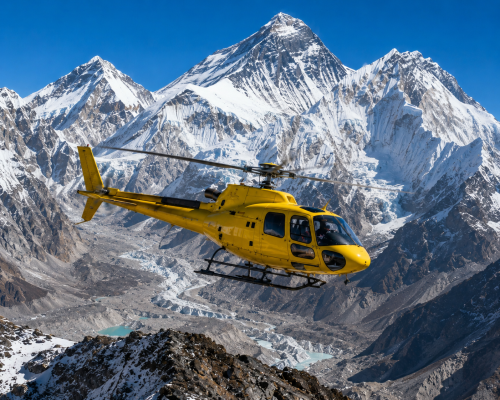
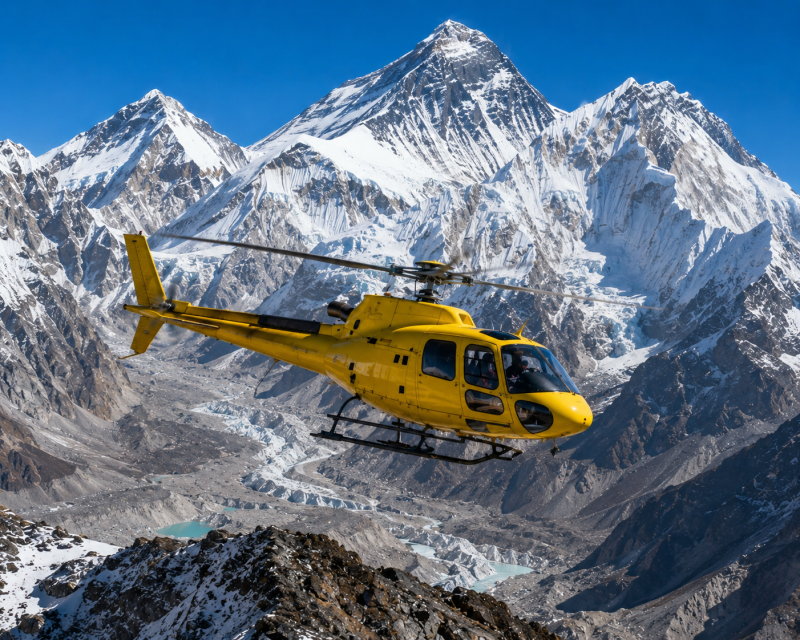
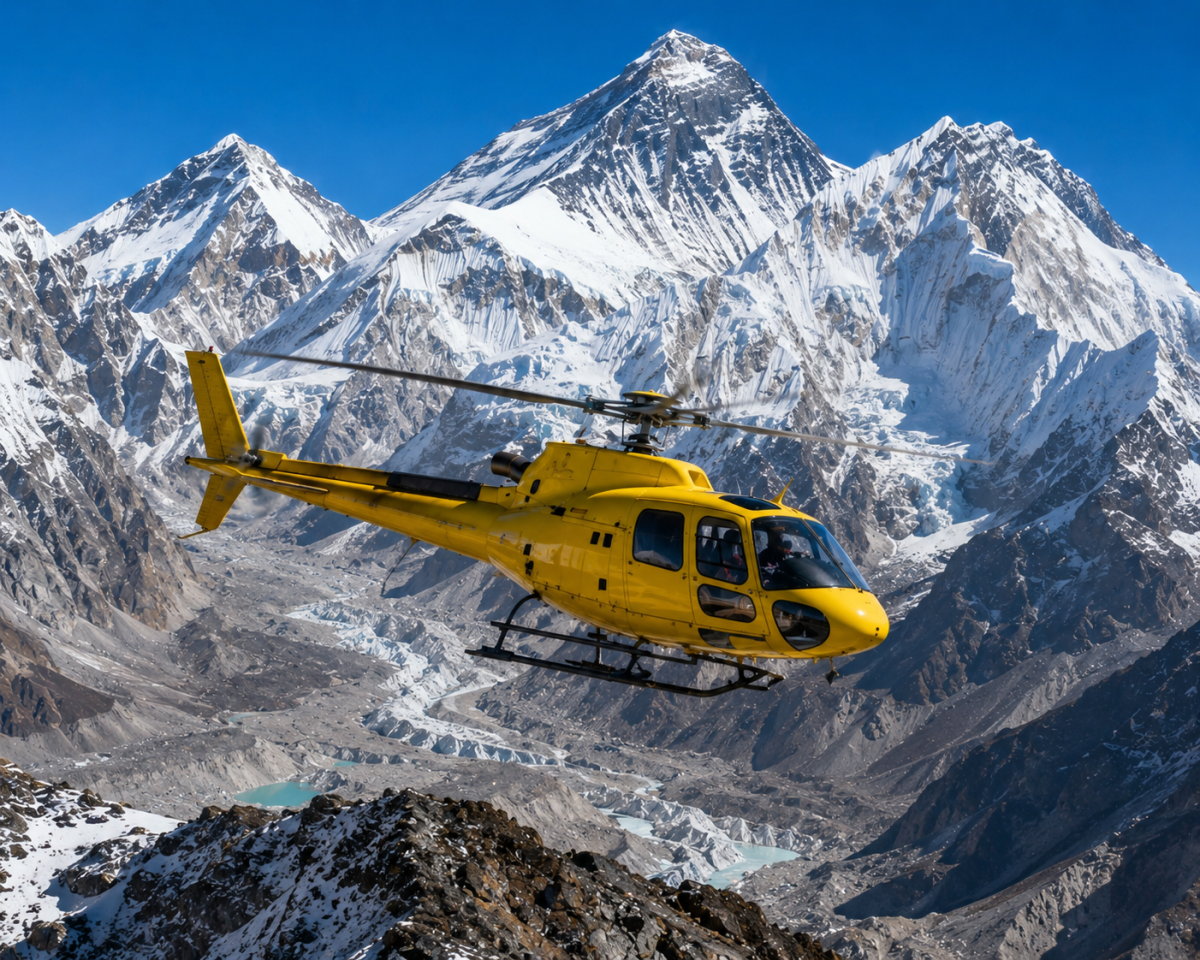
- Spectacular helicopter flight from Gorakshep, offering aerial views of Everest, Lhotse, Nuptse, and Khumbu Glacier,
- Faster and more comfortable return, avoiding long descents,
- Walk through legendary Sherpa villages like Namche Bazaar, Tengboche, and Dingboche,
- Visit the famous Tengboche Monastery, the spiritual heart of the Khumbu region,
- Gradual ascent with acclimatization days for safety and comfort,
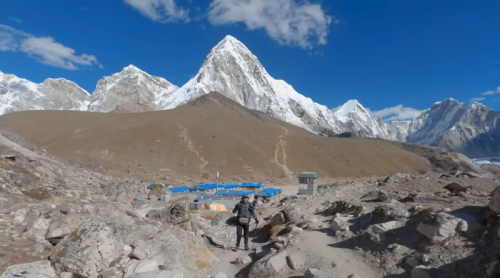
- Panoramic views of Ama Dablam, Thamserku, Pumori, and Cho Oyu,
- Trek through Sagarmatha National Park, a UNESCO World Heritage Site,
- Experience authentic Sherpa culture, traditions, and hospitality,
- A combination of classic trekking adventure and luxury helicopter experience,
- Ideal option for trekkers with limited time but high adventure goals.
Overview of Everest Base Camp Trek with Helicopter Return from Gorakshep Overview
The Everest Base Camp Trek with Helicopter Return is a premium Himalayan adventure that starts with your arrival in Kathmandu, Nepal, where we arrange your Permits, briefing, and final preparation. From here, you take a scenic flight to Lukla (2,860m), the gateway to the Everest region, with breathtaking views of the Himalayas, including Mount Everest (8,848.86m), Lhotse (8,516m), and Ama Dablam (6,812m) on clear days.
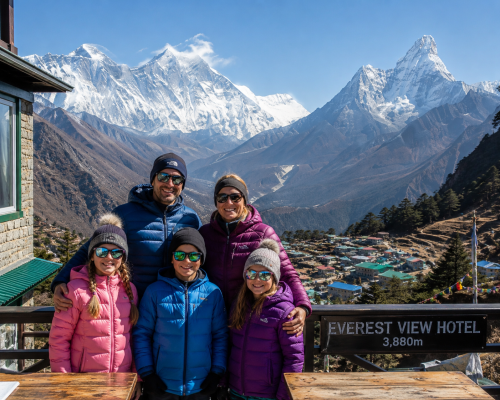
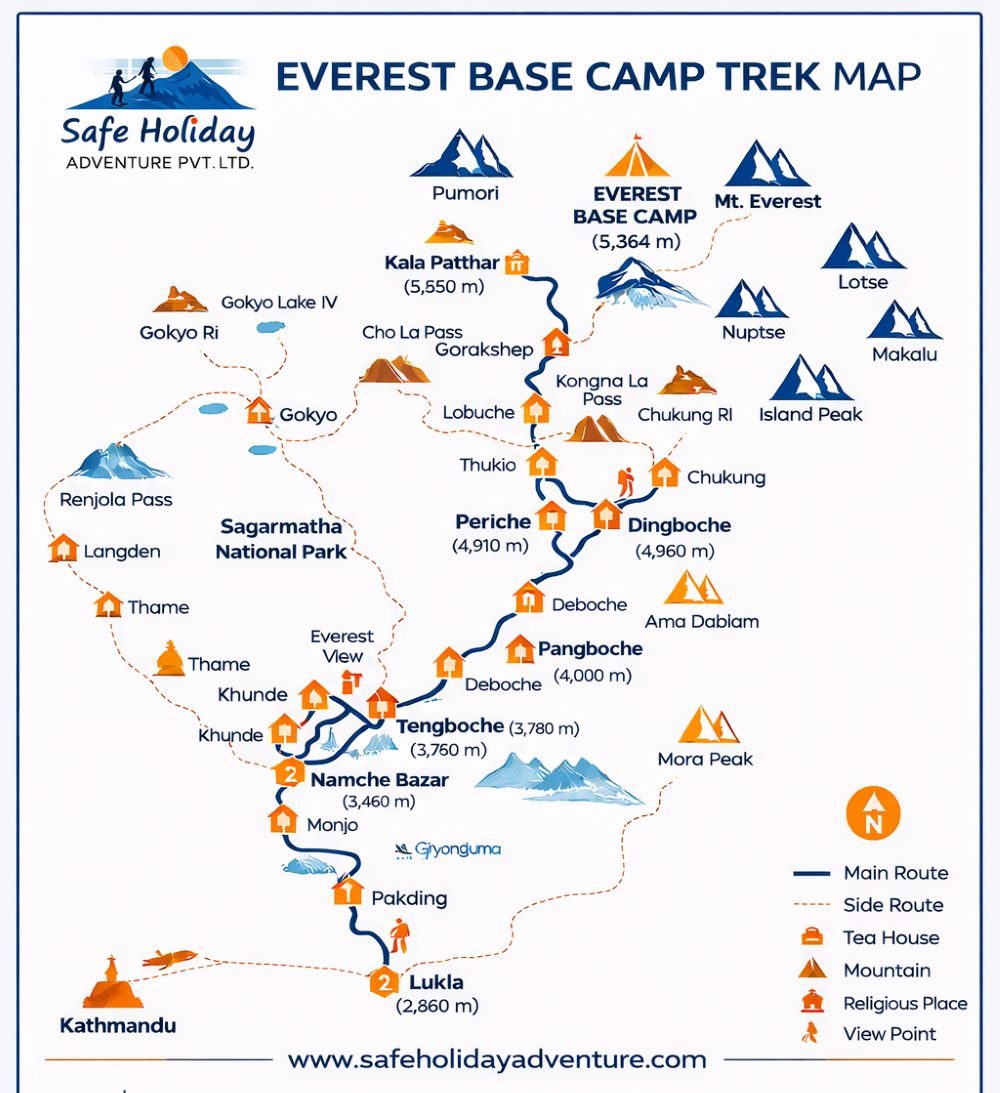
The trek begins from Lukla and follows beautiful trails through Phakding (2,610m) and Namche Bazaar (3,440m), crossing suspension bridges over the Dudh Koshi River and walking through pine forests, Sherpa villages, and peaceful mountain landscapes. On average, you walk 5–7 hours per day, depending on the section. Namche Bazaar ( 3,450m) is an important acclimatization stop, where you spend an extra night to adjust to the altitude and take a short hike to Everest View Hotel for panoramic sights of Everest, Thamserku (6,623m), and Kongde Ri (6,187m).
From Namche, the trail continues to Tengboche (3,860m), famous for Tengboche Monastery with stunning views of Ama Dablam, and then to Dingboche (4,410m), another key acclimatization village surrounded by Nangkartshang Peak (5,083m) and Island Peak (6,189m). As you gain altitude, the landscape becomes more rugged and alpine with fewer trees and more dramatic mountain scenery. We carefully manage altitude safety with proper rest, hydration, and slow ascent.
The journey then continues to Lobuche (4,910m), passing Thukla, memorial sites for climbers, and glacier terrain near the Khumbu Glacier. From here, you reach Gorakshep (5,164m), the final settlement before Everest Base Camp. You then hike to Everest Base Camp (5,364m), standing at the foot of the world’s highest peak, with views of the Khumbu Icefall and surrounding Himalayan giants.
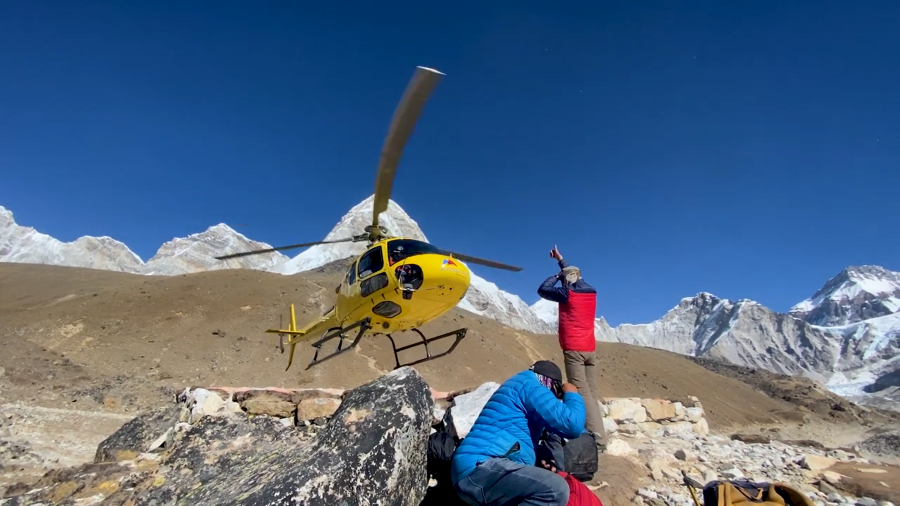
After completing EBC, you return to Gorakshep, and the highlight of this Everest Base Camp Trek with Helicopter Return begins. Instead of trekking back for several days, you take a scenic helicopter flight directly from Gorakshep or nearby Lobuche, flying over glaciers, deep valleys, and iconic peaks like Everest, Nuptse (7,861m), and Pumori (7,161m), returning comfortably to Kathmandu.
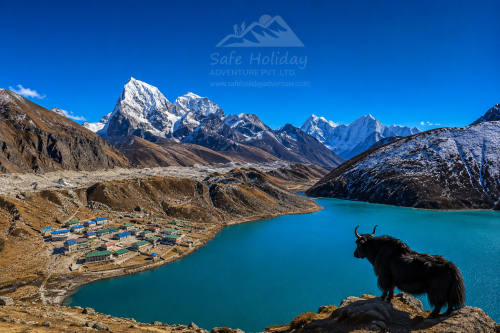
This package is ideal for trekkers who want adventure with comfort and time efficiency. It can also be customized to extend your journey to Gokyo Valley, crossing Cho La Pass (5,420m) or Renjo La Pass (5,360m), offering even more dramatic Lakes, Llaciers, and high mountain passes for a complete Everest region experience.
In summary, the Everest Base Camp Trek with Helicopter Return is perfect for adventure seekers who want to experience Everest in a comfortable and time-efficient way. It is suitable for trekkers with moderate fitness who can walk around 5–7 hours a day and are prepared for high-altitude trekking up to 5,364m.
This package is ideal for first-time Himalayan trekkers, busy travelers, photographers, and nature lovers who wish to enjoy breathtaking views of Everest, Lhotse, and Ama Dablam without trekking the long return route. The helicopter return adds extra comfort, safety, and a premium touch, making it one of the most rewarding ways to explore the Everest region.
Everest Base Camp Trek with Helicopter Return Price
The cost of the Everest Base Camp Trek with Helicopter Return depends on group size. Below is the updated package price for 2026 bookings.
| Group Size | Price per Person (USD) | Package Type |
|---|---|---|
| 1 Person | US$ 2,130 | Solo Private Trek |
| 2 – 4 Persons | US$ 2,075 | Small Group Booking |
| 5 – 10 Persons | US$ 2,045 | Group Discount Package |
The cost of the Everest Base Camp Trek with Helicopter Return varies depending on group size and service level. Below is a simple price breakdown for different group categories.
Prices may vary depending on season, accommodation type, and customization options, but all packages include trekking permits, guide service, accommodation, meals during trek, and helicopter return to Kathmandu.
Is the Everest Base Camp Trek with Helicopter Return Right for You?
This trek is a great option for many travelers, but it is especially suitable if you match the following:
Trek to Everest Base Camp and Fly Back by Helicopter
Option 1: Fly from Gorakshep to Lukla
After visiting Everest Base Camp, you can take a mesmerizing helicopter flight from Gorakshep to Lukla. This flight offers stunning views of the Everest Himalayas, Imja Valley, and Tengboche Hill Station.
Our team leader will coordinate with central management in Kathmandu to arrange the helicopter. They will inform you of the flight schedule, weather updates, and other details so you can be ready to enjoy the magical helicopter ride from Gorakshep to Lukla.
The helicopter flight from Gorakshep to Lukla takes about 18 minutes. During this short journey, you will see pristine peaks like Ama Dablam, Thamserku, and Khagtega, along with many other famous mountains.
The flight also offers views of Sherpa villages such as Dingboche, Pangboche, Tengboche, Kyanjuma, Namche Bazaar, and Manjo, providing a truly unforgettable adventure.
Once you reach Lukla, you have the option to fly back to Kathmandu on the same day or spend the night in Lukla. Lukla offers a rich Sherpa and Tamang culture with bars, hotels, bakeries, and more. If you choose to stay, you can fly to Kathmandu early the next morning.
Option 2: Trek to Everest Base Camp and Fly to Kathmandu via Lukla
The most common option is to trek from Lukla to Everest Base Camp, which takes about 8 days, including 2 acclimatization days in Namche and Dingboche. On the 9th day, you can hike up to Kala Patthar for an incredible view of Mount Everest. If you’re physically fit, we highly recommend this hike for its indescribable views.
After returning to Gorakshep, your guide will update you on the helicopter flight time. From Gorakshep, you’ll fly to Lukla for a refueling stop and then continue to Kathmandu.
The total flight time is about 55 minutes, offering scenic views of rolling green hills and valleys.
Due to unpredictable weather, we recommend taking the helicopter from Gorakshep to Lukla and then to Kathmandu if you don’t mind the extra cost. The airplane option from Lukla to Kathmandu is less reliable, making the helicopter a better choice if you’re short on time.
Are Helicopter Flights to Everest Base Camp Safe?
Everest Base Camp trek with helicopter flights is safe, as evidenced by the hundreds of people who fly daily from Kathmandu during peak seasons in October, November, March, April, and May.
There are several key reasons why helicopter travel to Everest is considered safe:
- Experienced Pilots: Skilled pilots with knowledge of local terrain and weather.
- Routine Maintenance: Regular upkeep to ensure helicopters are safe.
- Weather Monitoring: Flights are scheduled during safe weather conditions.
- Emergency Preparedness: Equipped with supplies and trained for emergencies.
- Regulatory Compliance: Follow strict safety rules set by authorities.
- Altitude Expertise: Trained for high-altitude operations.
- Advanced Systems: Helicopters equipped with modern navigation tools.
- Aircraft Variety: Different models used for various conditions.
- Emergency Capabilities: Efficient for urgent evacuations.
- Local Knowledge: Aware of local conditions and emergency options.
Tips for a Successful Everest Base Camp Trek with Helicopter Return
- Start getting fit early to get your body ready.
- Take your time to get used to the new place and listen to your guide.
- Pack light, but bring everything you need.
- Drink lots of water and eat well to keep your energy up.
- Respect local traditions and ways of life.
- Bring enough cash because ATMs at Lukla and Namche Bazaar are never sure.
- Bring a good camera to take pictures.
- Be ready for weather changes and pack for them.
- Stay positive and enjoy the trip, even if it’s hard.
- Be ready for changes in plans due to weather or other things.
EBC Trek with Helicopter Return from Gorakshep OutlineOutline Itinerary
Day 01: Flight to Lukla (2,860m) and trek to Phakding (2,610m) — 3–4 hrs
Day 02: Trek from Phakding to Namche Bazaar (3,440m) — 6–7 hrs
Day 03: Acclimatization day in Namche Bazaar (3,440m) — optional 3–4 hrs hike
Day 04: Trek from Namche Bazaar to Tengboche (3,860m) — 5–6 hrs
Day 05: Trek from Tengboche to Dingboche (4,410m) — 5–6 hrs
Day 06: Acclimatization day in Dingboche (4,410m) — optional 3–4 hrs hike
Day 07: Trek from Dingboche to Lobuche (4,910m) — 5–6 hrs
Day 08: Trek to Gorakshep (5,180m), hike to Everest Base Camp (5,364m), return to Gorakshep — 7–8 hrs
Day 09: Hike to Kala Patthar (5,545m) and helicopter flight to Lukla — 2–3 hrs hike + 45 min flight
Whats Included?
- Breakfast, Lunch, and Dinner included tea & coffee in the Morning,
- Twin Bed sharing room in Kathmandu(2-3 ***) for 2 Nights,
- Twin-sharing Tea House accommodation during the Trek,
- All required permits for the Everest region trek,
- Flight from Kathmandu to Lukla and back (Bothway)with airport taxes,
- Gorekshep to Kathmandu helicopter flight via Lukla,
- Experienced local trek leader who speaks good English,
- Transportation for International/Domestic airport as per Itinerary,
- Comprehensive first aid kit with high-altitude medicines,
- Staff Salary, food, Accommodation and Insurance,
- Farewell dinner at Kathmandu.
- International airfare, Nepal Visa, and travel insurance,
- Meals at Kathmandu,
- Extra night accommodation in Kathmandu on The trek,
- Personal expenses,
- Donations or Beg,
- Extra meals if you order your meals yourself during the trek,
- Tip for Staffs.
Dates and Availability Departures
All our published dates are guaranteed departures. We also provide customized departures tailored to your travel plans.
There are no group joining dates available at the moment. Please contact us for a private trip.
Travellers Reviews
Skye Knutzen
Germany | April,2026
The Best Way to Experience Mount Everest in a Day
Our Everest Base Camp Helicopter Tour was an unforgettable experience and one of the highlights of our trip to Nepal. The breathtaking views of Mount Everest and the surrounding Himalayan peaks were simply amazing. Seeing the world’s highest mountain up close from the helicopter was a dream come true.
Everything was well organized, from hotel pickup to the helicopter flight itself. The pilot was professional and ensured a safe and enjoyable journey. The aerial views of glaciers, valleys, and snow-covered mountains were spectacular throughout the tour.
A special thank you to the Safe Holiday Adventure team for their excellent service, friendly support, and outstanding organization. They made the entire experience smooth, comfortable, and memorable.
We, Skye Knutzen and friends from Germany, highly recommend this Everest Base Camp Helicopter Tour to anyone looking for a once-in-a-lifetime adventure in Nepal. Thank you, Safe Holiday Adventure, for helping us create such wonderful memories.

Soom Louise
London | may, 2025
Helicopter Return from Everest Base Camp – A Once-in-a-Lifetime Experience
I am from London, visiting Nepal with my boyfriend for the Everest Base Camp Trek with Helicopter Return, organized by Safe Holiday Adventure Pvt. Ltd.. From the very beginning, everything was handled with great care and professionalism. The entire journey was beautifully arranged, and we felt well supported and comfortable throughout. Reaching Everest Base Camp was an unforgettable highlight for us, and the helicopter return gave us stunning panoramic views that we will always remember.
We would like to sincerely thank our guide Dharma and porter Prem for their kindness, patience, and outstanding support during the trek. Dharma’s experience and calm guidance made us feel safe and confident at every step, while Prem’s hard work and helpful nature made the journey much easier and more enjoyable. We are deeply grateful to the whole team at Safe Holiday Adventure Pvt. Ltd. and would highly recommend this experience to anyone looking for a truly memorable Himalayan adventure.
Genaral Trip InfoInfos
Accommodation on the Everest Base Camp Helicopter Trek
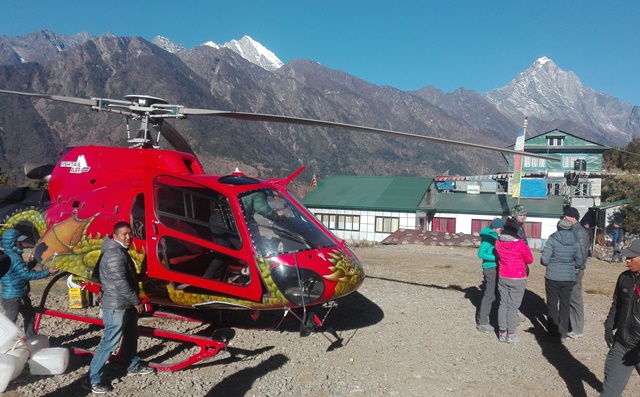
Accommodation during the trek is mainly in traditional Himalayan teahouses. These mountain lodges are simple, welcoming, and specially designed for trekkers traveling through the Everest region.
In lower villages like Lukla, Phakding, and Namche Bazaar, teahouses are relatively comfortable and often include:
- Twin-sharing rooms
- Comfortable mattresses and blankets
- Attached or shared bathrooms
- Dining halls with heating systems
- Wi-Fi and charging facilities
As the altitude increases toward Dingboche, Lobuche, and Gorakshep, accommodation becomes more basic due to the remote mountain environment. Rooms are smaller, temperatures become colder, and facilities are more limited.
Most trekking packages include hotel accommodation in Kathmandu before and after the trek, giving trekkers time to prepare, relax, and recover comfortably.
Food and Meals During the Trek
Food and Drinks Available During the Trek
Food on the Everest Base Camp trail is fresh, filling, and designed to provide energy for high-altitude trekking. Teahouses offer a wide variety of local and international meals.
Common foods available during the trek include:
- Dal Bhat (traditional Nepali meal with rice, lentils, vegetables)
- Fried rice and noodles
- Pasta and spaghetti
- Soups and potatoes
- Eggs, toast, pancakes, and porridge
- Tea, coffee, hot lemon, and ginger tea
Dal Bhat is especially popular among trekkers because it is nutritious, warm, and often comes with unlimited refills.
As you move higher into the mountains, food prices increase because supplies are transported by porters, yaks, or helicopters.
Drinking enough water is extremely important during the trek. Trekkers are encouraged to drink 3–4 liters of water daily to stay hydrated and help prevent altitude sickness.
Best Time for Everest Base Camp Trek with Helicopter Return
The best seasons for the Everest Base Camp Helicopter Return Trek are spring and autumn.
Spring Season (March to May)
Spring is one of the most popular trekking seasons in Nepal. Weather conditions are generally stable, temperatures are moderate, and the trails are colorful with blooming rhododendron forests.
Advantages of spring trekking:
- Clear mountain views
- Pleasant daytime temperatures
- Vibrant natural scenery
- Good helicopter flight conditions
Autumn Season (September to November)
Autumn is considered the best overall season for Everest trekking because of its dry weather and crystal-clear visibility.
Advantages of autumn trekking:
- Stable weather conditions
- Excellent visibility for mountain photography
- Comfortable trekking temperatures
- Lower chances of snowfall or heavy rain
Winter and Monsoon
Winter (December to February) is colder but quieter with fewer trekkers. Monsoon season (June to August) brings rain, clouds, slippery trails, and more frequent flight delays.
Impact of weather conditions on helicopter flights
Weather conditions have a significant impact on helicopter flights, influencing safety, scheduling, and route planning. Adverse weather, such as fog, rain, snow, or high winds, can restrict visibility and affect helicopter operations. Pilots must adhere strictly to weather forecasts and assessments to determine if conditions are suitable for flying. Poor weather can lead to flight delays or cancellations to ensure passenger safety.
In mountainous regions like Everest, weather changes rapidly and can be unpredictable, posing additional challenges for helicopter operations. Clear skies are essential for safe navigation and landing, especially when flying at high altitudes. Pilots rely on instruments and visual cues to navigate safely through potentially hazardous weather conditions.
Permits Required for the Everest Base Camp Trek
Trekkers need two important permits for the Everest region:
Sagarmatha National Park Entry Permit
This permit allows entry into Sagarmatha National Park, a UNESCO World Heritage Site that protects the Everest region.
Khumbu Pasang Lhamu Rural Municipality Permit
This local permit supports tourism management and development within the Khumbu region.
Most trekking agencies arrange all permits before the trek begins, making the process simple and convenient for travelers.
Acclimatization and Altitude Management during EBC Trek with Helicopter return Trip
Acclimatization is one of the most important safety factors during the Everest Base Camp trek. As trekkers gain altitude, oxygen levels become lower, making it harder for the body to adjust.
To reduce the risk of altitude sickness, trekking itineraries include acclimatization days in important locations such as:
- Namche Bazaar
- Dingboche
During acclimatization days, trekkers usually take short hikes to higher viewpoints before returning to sleep at a lower altitude. This method helps the body adapt more effectively.
Good acclimatization practices include:
- Walking slowly
- Drinking plenty of water
- Avoiding alcohol
- Eating properly
- Getting enough rest
Difficulty Level and Fitness Requirement
The Everest Base Camp Trek with Helicopter Return is considered a moderate to challenging trek. While technical climbing skills are not required, the trek still demands good physical endurance.
Trekkers should be prepared for:
- Daily walks of 5–7 hours
- Rocky and uneven terrain
- Cold temperatures
- High-altitude conditions
The helicopter return option makes the overall journey easier because trekkers do not need to walk back down for several extra days after reaching Everest Base Camp.
People with average fitness can complete the trek successfully with proper preparation, pacing, and acclimatization.
Everest Base Camp Trek Route and Helicopter Return
The standard trekking route usually follows:
Kathmandu → Lukla → Phakding → Namche Bazaar → Tengboche → Dingboche → Lobuche → Gorakshep → Everest Base Camp
Many trekkers also hike to Kala Patthar for sunrise views of Mount Everest before the helicopter return.
The helicopter return is normally operated from Gorakshep depending on weather conditions and group arrangements.
This return flight offers incredible aerial views of:
- Mount Everest
- Lhotse
- Nuptse
- Ama Dablam
- Khumbu Glacier
The helicopter ride significantly reduces trekking time and physical fatigue.
Altitude Sickness and Safety Information
Altitude sickness can affect anyone regardless of age or fitness level. Common symptoms include:
- Headache
- Nausea
- Dizziness
- Loss of appetite
- Fatigue
Ignoring symptoms can become dangerous, so communication with guides is extremely important.
Safety measures during the trek include:
- Slow walking pace
- Proper acclimatization
- Regular hydration
- Health monitoring by guides
- Emergency helicopter evacuation support if needed
Choosing a professional trekking company with experienced guides greatly improves overall safety.
Weather, Internet, and Charging Facilities
Weather during the Everest Base Camp Trek with Helicopter Return changes quickly. Spring and autumn offer the best conditions with clear skies, stable temperatures, and better mountain views. Winter is very cold, while the monsoon season brings rain, clouds, and possible flight delays.
Internet and Wi-Fi are available in most villages, especially in Lukla and Namche Bazaar. However, the connection becomes slower and less reliable at higher altitudes.
Charging facilities are available in teahouses along the trail. Most lodges charge an extra fee for charging phones, cameras, and power banks, especially in higher regions.
Group Joining vs Private Everest Helicopter Trek
Travelers can choose between:
- Group joining trek
- Private customized trek
Group treks are more affordable and social, while private trips offer flexibility, personal pace, and luxury upgrades. Private helicopter returns are especially popular among couples, families, and premium travelers.
Travel Insurance for Everest Base Camp Trek
Travel insurance is strongly recommended for all trekkers. Insurance should include:
- High-altitude trekking coverage
- Emergency helicopter evacuation
- Medical treatment
- Trip cancellation protection
Without proper insurance, emergency rescue costs in the Himalayas can become very expensive.
Internet and Mobile Network on the Trek
Most villages along the Everest trail offer Wi-Fi services and limited mobile coverage. Internet becomes slower and more expensive at higher elevations.
Popular network providers in the Everest region include:
- Ncell
- Nepal Telecom (NTC)
A local SIM card can be purchased in Kathmandu before the trek.
Drinking Water During the Everest Base Camp Trek with Helicopter Return
Safe drinking water is available throughout the Everest Base Camp Trek with Helicopter Return. Trekkers can buy boiled water, filtered water, or bottled water at teahouses along the trail. Boiled and purified water is the safest and most eco-friendly option in the Everest region.
It is highly recommended to carry a reusable water bottle and water purification tablets or a filter bottle. Staying hydrated is very important at high altitude, as it helps reduce the risk of altitude sickness and keeps your body energized during the trek.
Helicopter Weight Limit and Sharing System
Helicopter flights in the Everest region operate under strict weight limitations due to altitude and weather conditions.
In many cases:
- Passengers may be divided into smaller shuttle groups
- Weight is checked before boarding
- Shared helicopter flights are common for cost efficiency
This system helps maintain safe flight operations in the Himalayas.
Detailed ItineraryItinerary
Flight to Lukla, Trek to Phakding
We begin our 9-day Everest Base Camp Trek with Helicopter Return by catching an early flight from Tribhuvan International Airport to Lukla, covering a distance of 138 km in just 40 minutes. During the flight, we can enjoy the stunning aerial view of Kathmandu’s hills, rivers, and urban settings. Upon arrival in Lukla, we’ll take a moment to appreciate the fresh mountain air, have breakfast, and start our trek to Phakding. The 9.4 km trek will take us approximately 3 hours, and we’ll climb up the hills on the left bank of Dudh Koshi River, stopping to rest and enjoy the scenery in Ghat before continuing to Phakding. We’ll spend the night at a lodge in Phakding before continuing our journey the next day
Distance:6.2 km / Flight Distance about 138 km
Accommodation : Lodge
Trek to Namche Bazaar
Starting our day with a hearty breakfast, we will hit the trail. The trek to Namche Bazaar can take 6-7 hours, depending on your pace and physical ability. The trail begins with a gentle stroll along the Dudh Koshi River Valley and climbs through a beautiful Rhododendron forest. We will pass through small villages such as Monjo before entering the Sagarmatha National Park, where we will have to show our passports, fill out a form, and submit a passport-sized photograph. Once inside the park, we will cross several suspension bridges before finally arriving at Namche Bazaar.
The trek from Jorah to Namche Bazaar is particularly challenging, with steep climbs and on descents. This section of the trail can take over three hours to complete, so we’ll take several breaks to catch our breath and admire the breathtaking scenery. Finally, after a long and tiring trek, we’ll arrive at Namche Bazaar.
Distance: 7.4 km/Time: 4-6 hours
Accommodation : Tea House
Acclimatization in Namche Bazaar
Acclimatizing in Namche Bazaar is very important for the Everest Base Camp trek. At 3,440 meters high, it is necessary to rest so your body can adjust to the altitude. On this rest day, we will take a short hike to the Everest View Hotel, which is at 3,962 meters. The climb to the hotel is steep, but the views of Mount Everest, Lhotse, Ama Dablam, and other peaks are amazing. After some time at the hotel, we will hike back to Namche Bazaar and explore the town. Namche Bazaar is a busy place with many shops, cafes, and bakeries. It’s a great opportunity to meet local Sherpa people and learn culture. Taking this day to acclimatize is very important to avoid altitude sickness and ensure a safe and enjoyable trek to Everest Base Camp.
Sighit walks for about 2-4 Hours to Everest View Hotel and Sagarmatha National Park Hill Station
Accommodation : Tea House
Trek from Namche Bazaar to Tengboche
On the 4th day of our 9-day Everest Base Camp Trek with Helicopter Return by Safe Holiday Adventure, we hike to Tengboche at 3860 meters. After breakfast and enjoying the views from our lodge, we leave Namche. We walk on a stone staircase and zigzag trails. It takes about 4 to 5 hours to reach Tengboche. The trails are well-marked, with great views of Lhotse and Ama Dablam.
We walk on a flat path and reach a point where the trail splits to Gokyo and Everest Base Camp. We decent by the Dudh Koshi River and stop for lunch at Pungi Thenga. After lunch, we continue on a dusty path to Tengboche. After about 2 hours of walking, we arrive at Tengboche village. In the evening, we can join a pilgrimage tour at the monastery. We spend the night at a cozy teahouse, ready for another day of adventure.
Distance:9.3 km/ Time: About 5 hours
Accommodation : Tea House
Trek from Tengboche to Dingboche
On the 4th day of our 9-day Everest Base Camp trek with Helicopter Return, organized by Safe Holiday Adventure, we will wake up early in Tengboche to witness the stunning sunrise from the hilltop. After a delicious breakfast prepared by our teahouse cook, we’ll set out on our trek for the day.
The trek to Dingboche is approximately 9 kilometers long and takes 5-6 hours to complete. We’ll begin our journey with a gentle climb up a steep trail and then descend through a forested area, crossing several suspension bridges along the way. As we move towards the remote settlement of Tengboche, we’ll pass by the beautiful Pangboche village, which is home to a 16th-century monastery.
The trail then ascends above the valley to the right of Imja Tse and after hiking for almost 6 hours, we’ll finally reach the charming village of Dingboche, which is located at an altitude of 4410 meters. Once we arrive in Dingboche, we’ll take some time to explore the village and its surroundings, before heading back to our teahouse for an overnight stay. It’s important to take it easy and acclimatize properly at this altitude, to ensure that we’re ready for the rest of our trek.
Distance: 10.8km
Accommodation : Tea House
Acclimatization in Dingboche
Dingboche is a popular acclimatization spot for trekkers on the Everest Base Camp trek. At an altitude of 4,410 meters, it’s important to take a break and allow your body to adjust to the high altitude. We’ll be spending a full day in Dingboche for this purpose.
During the acclimatization day, we’ll take short hikes around the village to keep our bodies active while allowing for rest periods. We may choose to climb up to the ridge behind the village for panoramic views of the surrounding peaks including Ama Dablam and Lhotse. It’s important to drink plenty of fluids and eat well during the day to keep energy levels up and help with acclimatization.
Dingboche is also home to a few bakeries and shops where we can stock up on snacks and supplies. We can spend the evening relaxing and enjoying the stunning mountain views from our lodge. It’s crucial to properly acclimatize to avoid altitude sickness and ensure a successful trek to Everest Base Camp.
Distance: 10.8km/Hike to Nangkartshang Peak(5083m):/Distance:About 6 km/Time: 5 hours
Trek From Dingboche to Lobuche
We are on the fourth day of our 9-day Everest Base Camp Trek with Helicopter Return. Today, we will hike from Dingboche to Lobuche. It is a hard 10.6 km walk. The highest point is 4,930 meters. We start with a steep climb through Thokla Pass. Here, we will see memorials for climbers who died on Mount Everest.
As we continue, the trail becomes more strenuous as we cross the moraine wall of Khumbu Glacier. But soon after, the trail levels out and becomes easier to navigate. After hiking for 5-6 hours, we will arrive in Lobuche.
We will spend the night at a cozy lodge in Lobuche, surrounded by the majestic Himalayan peaks. This is a perfect opportunity to rest and recharge for the next day’s adventure.
Distance: 8.4 km/Duration:5 – 6 hours
Accommodation : Lodge
Trek to Gorakshep, Hike to Everest Base Camp, and Return to Gorakshep(5,180m)
In just two days, our 9-day Everest Base Camp Trek with helicopter return will be finish, but there’s still excitement ahead. Our trek will cover a distance of 15 kilometers and take approximately 7-8 hours with a maximum altitude of 5545 meters. After breakfast, we’ll depart from the village and embark on a challenging trek over a rocky trail. Starting on a flat terrain, we’ll gradually increase our pace as we ascend uphill toward Gorak Shep. The journey to Gorak Shep will be strenuous and will involve scaling boulders. Once we settle, we’ll take a break and enjoy a delicious lunch. We’ll then trek for nearly 3 miles, crossing glacial moraines and rocks to reach Gorak Shep. It takes us 2-3 hours to arrive at the base camp, where we’ll have a breathtaking view of Mt. Everest and Lhotse. Take a moment to appreciate the beauty of the landscape and the incredible Khumbu Glacier. After exploring the base camp, we’ll retrace our steps back to Gorak Shep, where we’ll spend the night at one of the lodges in the village.
Distance: 15 km/Time: 7-8 hours
Accommodation : Lodge
Trek to Kala Patthar, Flight from Gorakshep to Lukla on a Helicopter
After breakfast, we start hiking towards Kala Patthar, where we’ll climb up to 5645 meters. The path is moderate to tough, but if the weather is good, then it is not. It might take us 1-2 hours to get to the top. From there, we can see amazing views of Mount Everest, Nupse, Lhotse, Changgatshe, Khumbutse, Pumori, Lingdern, and many other snowcap peaks in the Everest region.
After enjoying the views, we Return to Gorakshep, we take our Bags and, get on a helicopter for a quick 20-minute flight from Gorakshep to Lukla. During the flight, we’ll see the Dudh Koshi River valley below us, with its forests and rivers. When we land in Lukla, we’ll take you to your hotel so you can rest.
Distance: 3.5km/Time: 2-4 hours
Accommodation : Tea House
Everest Base Camp Trek with Helicopter Return FAQs
The Everest Base Camp Trek with Helicopter Return from Gorakshep is a unique trekking experience that combines the classic Everest Base Camp trek with a helicopter return from Gorakshep, saving time and providing an aerial view of the magnificent Himalayan landscape.
The entire trek usually takes around 12 to 14 days, depending on your itinerary and acclimatization needs.
The maximum altitude reached during the Everest Base Camp Trek with Helicopter Return from Gorakshep is approximately 5,364 meters (17,598 feet) at Kala Patthar.
While prior trekking experience is not mandatory, it is recommended to have a good level of physical fitness and some hiking experience to tackle the challenges of the trail.
The trek is considered moderately challenging. It involves steep ascents and descents, as well as walking on rocky terrain and glaciers. Proper acclimatization and physical fitness are essential.
The best time for the Everest Base Camp Trek with Helicopter Return from Gorakshep is during the spring (March to May) and autumn (September to November) seasons when the weather is generally stable and the views are spectacular.
Yes, you will need to obtain the Sagarmatha National Park Entry Permit and the Khumbu Pasang Lhamu Rural Municipality Entrance Permit before starting the trek.
Accommodation along the trail consists of teahouses, which are basic but comfortable lodges offering meals and a place to rest. It is advisable to carry a sleeping bag for extra warmth.
Yes, altitude sickness can be a concern during the Everest Base Camp Trek. It is crucial to acclimatize properly by taking rest days and ascending slowly to minimize the risk.
Yes, it is possible to do the trek in the reverse direction, starting with a helicopter flight from Lukla to Gorakshep and then trekking back to Lukla.
The highlights include stunning views of Mount Everest and other Himalayan peaks, visiting iconic landmarks like Everest Base Camp and Kala Patthar, and experiencing the unique thrill of a helicopter ride.
Yes, helicopter rescue services are available in case of emergencies. However, it is essential to have travel insurance that covers such services.
While there are no strict age restrictions, it is advisable to consult with a medical professional before undertaking the trek, especially for older individuals or those with pre-existing health conditions.
It is recommended to check with the tour operator or helicopter service provider for specific weight restrictions. These restrictions ensure the safety and proper functioning of the helicopter during the flight.
Yes, many tour operators offer customizable itineraries based on your preferences and requirements. You can discuss your specific needs with the tour operator to create a personalized trekking plan.
While Gorakshep offers a fantastic view of the surrounding Himalayan peaks, including Nuptse and Pumori, Mount Everest itself is not visible from Gorakshep. To get a clear view of Everest, you can hike up to Kala Patthar, which is nearby.
Yes, there are alternative routes available, such as the Gokyo Lakes Trek or the Three Passes Trek, which offer different perspectives and additional scenic attractions. However, the Everest Base Camp Trek with Helicopter Return from Gorakshep follows the classic route.
Yes, most teahouses along the trail offer vegetarian and vegan food options. However, the variety may be limited in some remote areas. It is recommended to inform your guide or teahouse in advance about your dietary preferences.
Yes, most teahouses provide charging facilities for a fee. Keep in mind that the availability of electricity may be limited, especially in higher-altitude regions. It is advisable to carry a portable charger or spare batteries.
Refund & Cancellation Policy
- Booking requires 20% non-refundable deposit (Nepal) or 100% upfront (Tibet/Bhutan).
- Remaining payment due before the trip or on arrival (trip-dependent).
Cancellation charges:
- 31+ days: 20%
- 16–30 days: 45%
- 8–15 days: 75%
- 7 days or less: 90%
- Prices may change due to flights, taxes, or exchange rates.
- Trip changes are allowed, but extra costs apply.
- If the company cancels, a full refund, except for unavoidable events (some costs deducted).
- Good health and travel insurance are mandatory.
- No refund if removed for unsafe or illegal behavior.
- Travel involves personal risk, which the client accepts.